
Review · OSAKA
Live the Shōgun Story Samurai Knives and Tea Ceremony in Sakai
Sakai’s samurai story is told here through things you can see, taste, and use. The highlight is the hands-on visit to Sakai Tōji, where you fit a knife handle and take home an engraved blade tied to the city’s long craft tradition. You also sit for tea at Rishō-no-Mori and eat seasonal kaiseki at Ume-no-Hana.
I like the mix of practical craft and quiet tradition, and I like that the private format lets guide Junya adjust the experience when food preferences become an issue. The main consideration is the $379 price, which is high for five hours, and the strict no-refund policy leaves little room for a change of plans.
Key points to know before booking

- A personalized Sakai knife: Fit a handle at Sakai Tōji and take home an engraved blade.
- Three distinct cultural settings: See Porto no Suke Bridge, Rishō-no-Mori, and Xavier Park.
- Seasonal kaiseki lunch: Ume-no-Hana serves a multi-course meal, with vegan options available.
- Private five-hour format: Only your group participates, with a 10:50 am start.
- Guide Junya: Expect history explained in a relaxed, accessible way, with some flexibility around food.
- A costly but substantial outing: The price includes several connected cultural experiences, not just a walking tour.
Why Sakai gives this tour its character
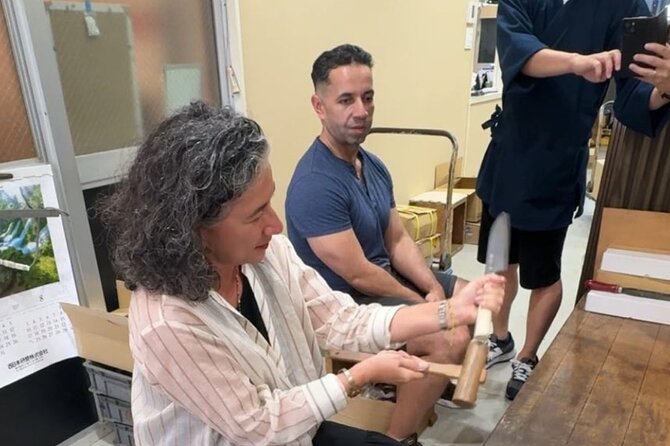
Sakai is in Osaka Prefecture, but it feels like a worthwhile change of pace from the city’s major urban sights. The town’s identity here comes from trade, blades, tea, and contact with the outside world. This tour links those subjects instead of treating them as separate museum displays.
The samurai theme is not just decoration. You see how Sakai’s past is connected to trade during the Edo period, the work of skilled blade makers, and the tea tradition associated with Sen no Rikyu. Food then adds another layer, since the meal gives you a direct way to experience seasonal Japanese dining.
I like this approach because it gives you several ways into the subject. You do not need to be an expert in Japanese history or tea ceremony. You can follow the story through a bridge, a meal, a bowl of tea, and a knife handle.
The tour lasts about five hours and is private. That matters here. Tea ceremony and craft work can feel rushed in a large group, while a private outing gives you more room to ask questions or explain what you prefer. Guide Junya is specifically named in the available feedback, and the experience is described as educational without making the history feel heavy.
More Tea Ceremonies in Osaka
- Osaka: Tea Ceremony Experience
★ 4.9 · 1,426 reviews - Tea Ceremony Experience in Osaka Doutonbori
★ 5.0 · 754 reviews - Osaka: Tea Ceremony, Calligraphy, and Kimono Experience
★ 4.9 · 130 reviews
Starting at Sakai Station and Porto no Suke Bridge
The meeting point is at the Sakai Station East Exit taxi stand, at 3 Chome Ebisujimacho, Sakai Ward, Sakai, Osaka 590-0985. The start time is 10:50 am, so you need to plan your route to Sakai carefully and arrive ready to begin on time.
The first stop is Porto no Suke Bridge. The purpose is not simply to admire a bridge. You learn why Sakai mattered as a trading center during the Edo period. This opening gives the rest of the tour a useful frame: the city’s crafts and food developed in a place where goods, ideas, and people moved through.
I appreciate starting with trade rather than jumping straight to the knife workshop. It helps explain why Sakai became associated with skilled production. You begin to see the knife as part of a wider local story, not just as a souvenir chosen at the end of a tour.
The history is presented as part of a walking route, so this is a good fit if you prefer context in manageable pieces. If you want a long, formal history lecture, this is not that kind of experience. The focus is on keeping the story connected to the places you visit.
Seasonal kaiseki at Ume-no-Hana
After Porto no Suke Bridge, lunch takes place at Ume-no-Hana, a restaurant known for seasonal kaiseki cuisine. The meal is multi-course, so this is more than a quick lunch break between activities.
Kaiseki is built around presentation, timing, and seasonal ingredients. The value for you is not only the amount of food on the table. It is the chance to see how Japanese dining can be treated as part of a cultural practice, with each course contributing to the experience.
Vegan options are available, which is important to confirm when booking or at the beginning of the tour. At the same time, you should not assume the meal will suit every palate. One person who joined the experience was not a fan of the traditional Japanese food, and Junya was flexible about adjusting things to personal taste. That suggests a helpful attitude, but it does not turn a traditional meal into a fully customizable menu.
The lunch can be one of the strongest parts of the day if you enjoy trying carefully prepared Japanese food. If you are selective about ingredients or prefer familiar meals, contact the provider in advance and explain your needs clearly. Since the tour is private, the guide has more room to respond than on a large group excursion.
A quiet pause at Rishō-no-Mori
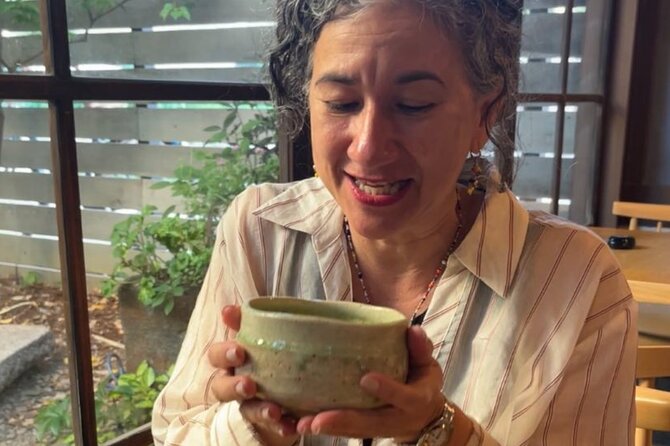
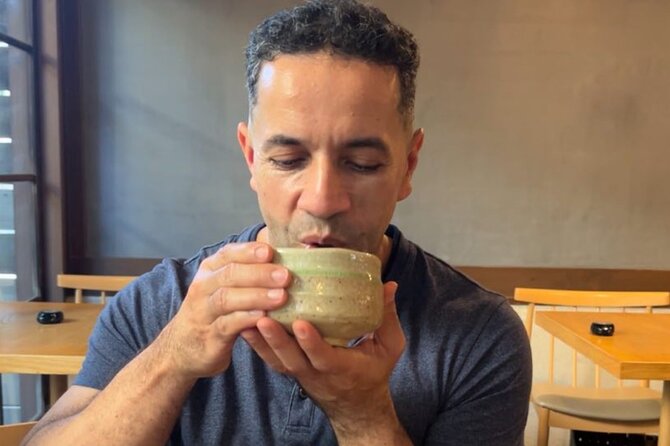
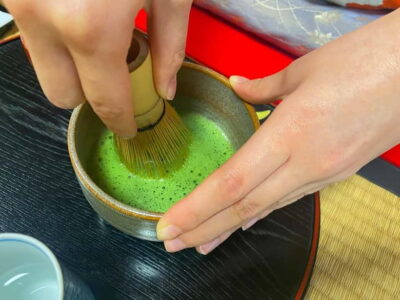
The next stop is Rishō-no-Mori, where you take part in a traditional Japanese tea ceremony. After the movement of the morning and the courses at lunch, the change in pace is deliberate.
Tea ceremony asks you to pay attention to small actions, from the setting to the preparation and serving of tea. The experience offers a look at a tradition tied closely to Sakai and to Sen no Rikyu, the influential tea master associated with the city.
You should approach this as a cultural activity rather than a performance designed for quick photos. Its appeal is the calm setting and the chance to understand why tea has such a serious place in Japanese culture. The ceremony may be less appealing if you want constant activity, conversation, or sightseeing. That slower rhythm is part of the point.
I like the placement of the tea ceremony after lunch. The day moves from public trade, to food, to a more reflective tradition, then on to hands-on craft. That sequence makes the five hours feel like a connected story rather than a list of unrelated stops.
Same leaf, a different ritual:
- Matcha Making Class in Osaka with Authentic Japanese Sweets Set
★ 5.0 · 509 reviews - Osaka: Matcha Making Experience with Japanese Sweets
★ 5.0 · 146 reviews - Osaka: Japanese Traditional Sweets Making and Tea Ceremony
★ 4.7 · 118 reviews - Osaka Temple Cool Foot Bath & Matcha Experience〈45min〉
★ 4.9 · 82 reviews
Fitting a handle at Sakai Tōji
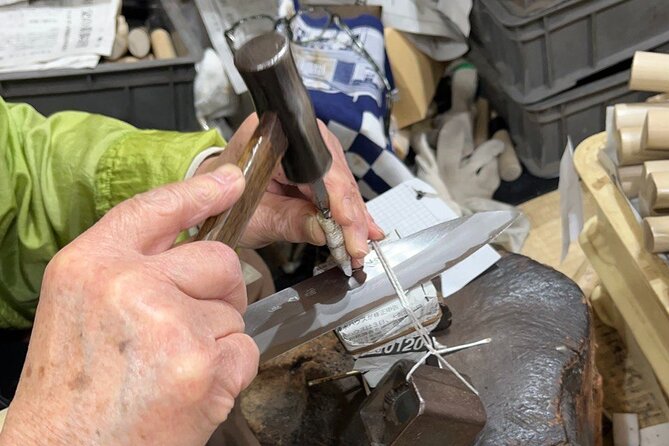
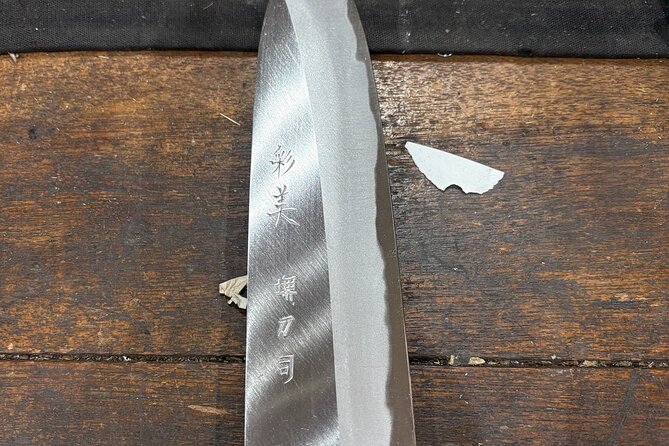
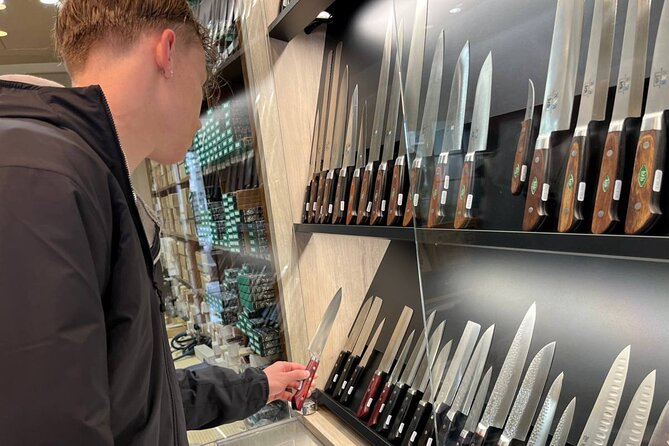
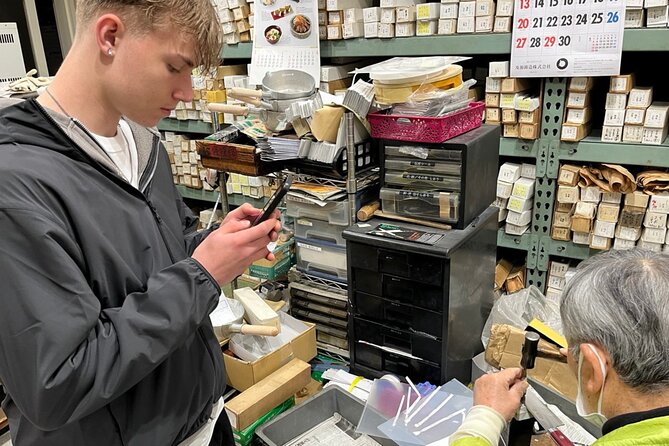
The most distinctive part of the tour takes place at Sakai Tōji, a workshop known for traditional blade-making. Here, you take part in a knife handle fitting experience and receive your own engraved, personalized blade.
This is the moment that gives the tour lasting value. A guided explanation of knife making can be interesting, but working with a knife handle gives you a direct connection to the craft. You are not only looking at finished objects. You are involved in completing one.
The knife also has practical meaning. It is a useful item with a personal mark, rather than a generic gift-shop purchase. The experience is especially suited to anyone interested in cooking, Japanese tools, traditional production, or objects with a clear sense of place.
You should keep expectations sensible. The information provided describes handle fitting and personalization, not forging a blade from raw steel. That distinction matters. You are participating in a specific workshop step, not becoming a master bladesmith in an afternoon.
The available comments place strong emphasis on the pleasure of making something beautiful with local assistance and taking home an object that can be treasured. I agree with that assessment of the tour’s main strength. The personalized knife gives you a physical reminder of Sakai long after the tea and lunch are over.
Xavier Park and Sakai’s contact with Europe
The final stop is Xavier Park, reached by a short walk from the workshop. Here, you learn about European missionaries, including Francis Xavier, who visited Japan in the 16th century.
This closing stop broadens the story again. Sakai was not only a place of Japanese tradition turned inward. It also had links to foreign visitors and new religious and cultural influences. The park adds a different historical thread after the focus on samurai culture, food, tea, and tools.
Because it comes at the end, the stop works best as a final piece of context rather than the main attraction. If your main reason for booking is the knife, Xavier Park will be a shorter historical visit. If you enjoy seeing how local history connects to international events, it gives the day a useful finish.
The activity ends back at the original meeting point. That makes the return simple, although the tour does involve walking between several locations, including the short walk to Xavier Park.
What the $379 price really covers
At $379 per person, this is not a budget sightseeing tour. The price needs to be judged against the full package: a private guide, roughly five hours, historical interpretation, a multi-course kaiseki lunch, a tea ceremony, and a personalized engraved knife.
The knife is the key value question. If you want to take home a meaningful Japanese craft item and you would otherwise pay separately for a high-quality blade and a workshop experience, the price becomes easier to justify. If you mainly want to see Sakai’s sights, the cost may feel steep.
The private format also changes the calculation. You are paying for a focused experience with only your group, rather than joining a large public tour. That can be useful for couples, families, or small groups with different food preferences and questions.
Still, you should book only if you value participation. Much of the appeal comes from doing things, eating a carefully prepared meal, and taking part in a ceremony. If you prefer a low-cost walking tour with lots of free time, this is probably not the best use of your money.
Timing, transport, and planning details
The tour begins at 10:50 am and lasts approximately five hours. Since it starts at a specific taxi stand by Sakai Station’s East Exit, allow enough time to find the exact meeting point. The activity is near public transportation, but the supplied details do not specify a pickup service from Osaka hotels.
Your mobile ticket is convenient, but it does not remove the need to check the meeting point before leaving. Save the address and confirm that you are heading to Sakai Station in Osaka Prefecture, not a similarly named destination.
The tour ends back at the meeting point. That is useful if you want to continue exploring the area afterward or return by train. The route includes walking, a meal, a tea ceremony, and workshop time, so wear clothing that lets you stay comfortable through several different settings.
The experience is private, but the exact group size is not stated. Only your own party participates. Confirmation arrives at booking, which gives you the basic information needed to plan the day.
The cancellation policy is strict: the experience is non-refundable and cannot be changed for any reason. If you cancel or request an amendment, the amount paid is not refunded. I would not book this until your schedule is firm.
Who will enjoy this Sakai experience most
I would recommend this tour to you if you want a cultural day with real participation. It suits people who like Japanese food, traditional crafts, tea, local history, and useful souvenirs more than people who want a rapid checklist of famous sights.
It is also a strong choice for anyone who finds history easier to remember when it is tied to objects and places. Porto no Suke Bridge explains trade. Ume-no-Hana brings seasonal dining into the picture. Rishō-no-Mori shows the quiet side of tea. Sakai Tōji lets you work with a blade. Xavier Park adds the international connection.
Families and small private groups may appreciate the flexibility. Guide Junya adjusted the experience when traditional food was not a good fit for one participant, and the private setting makes those conversations easier.
I would be more cautious if you dislike formal food, quiet ceremonies, or walking between stops. The tour does not offer much free time within its five-hour schedule, and the price is hard to justify if you have little interest in taking part.
Should you book the Samurai Knives and Tea Ceremony tour?
Book it if the idea of returning from Sakai with a personalized knife appeals to you, and if you want that object connected to a wider story about trade, tea, food, and samurai-era craft. The strongest parts are the private format, Junya’s friendly and flexible guiding style, and the chance to make something with lasting practical value.
Skip it if you are looking for a cheap introduction to Sakai or if you want to choose each stop independently. At $379, this is a focused cultural package, not a casual city walk. For the right visitor, the knife and the hands-on workshop make the cost worthwhile. Just confirm your food needs, arrive at the Sakai Station meeting point on time, and book only when your plans are firm.
FAQ
Where does the tour start?
The tour starts at the Sakai Station East Exit taxi stand, at 3 Chome Ebisujimacho, Sakai Ward, Sakai, Osaka 590-0985, Japan.
What time does the experience begin?
The start time is 10:50 am.
How long does the tour last?
The experience lasts approximately five hours.
Is the tour private?
Yes. Only your group participates in the activity.
Where does the tour end?
The tour ends back at the original meeting point.
Is lunch included?
The itinerary includes a multi-course lunch at Ume-no-Hana, a restaurant known for seasonal kaiseki cuisine.
Are vegan meal options available?
Yes. Vegan options are available at the lunch restaurant.
What do I take home from the knife workshop?
You take home your own engraved, personalized blade after taking part in the knife handle fitting experience at Sakai Tōji.
Newly steeped around Osaka
- Osaka:Zen Tea Ceremony and Foot Bath Experience<45min>★ 5.0 · 7 reviews
- Osaka Japanese Cooking And Matcha Class near Osaka Castle★ 5.0 · 22 reviews
- Nara Deer Park, Uji Matcha, & Hot Spring Full-Day Tour from Osaka★ 4.0 · 21 reviews
- Osaka: Tea Ceremony, Calligraphy, and Kimono Experience★ 5.0 · 6 reviews
- Tea and Calligraphy Session at a Table in Osaka★ 5.0 · 4 reviews
- Osaka: Nara, Todaiji, Uji Matcha, and Hot Spring Tour★ 4.0 · 7 reviews
- Craft Sushi and Matcha Ice Cream in Central Osaka (3-Course Meal)★ 5.0 · 2 reviews
- ZEN therapy | Shiatsu-style massage, EnergyTherapy & Japanese Tea★ 5.0 · 5 reviews
Tea Ceremony Experiences, compared.
Kyoto: Tea Ceremony in a Traditional Tea House in Kiyomizu
Read our review →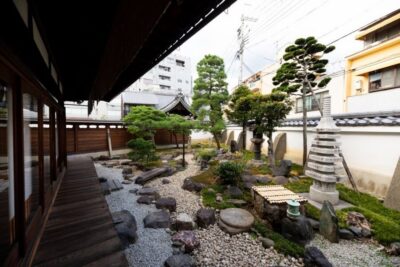
Kyoto: 45-Minute Tea Ceremony Lesson Experience
Read our review →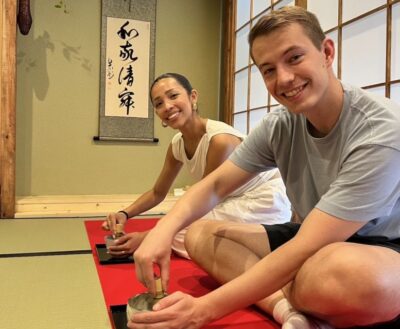
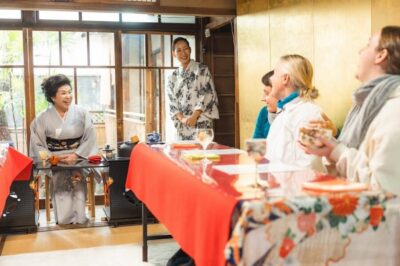
Kyoto: Table-Style Tea Ceremony at a Kyo-Machiya
Read our review →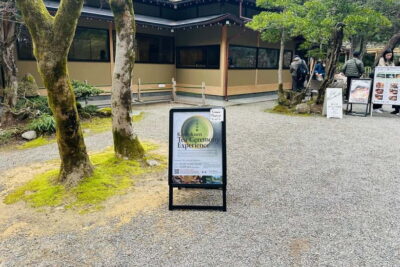


Browse the lists this tea experience appears in