
Review · OSAKA
Osaka: Traditional Tea Ceremony Experience
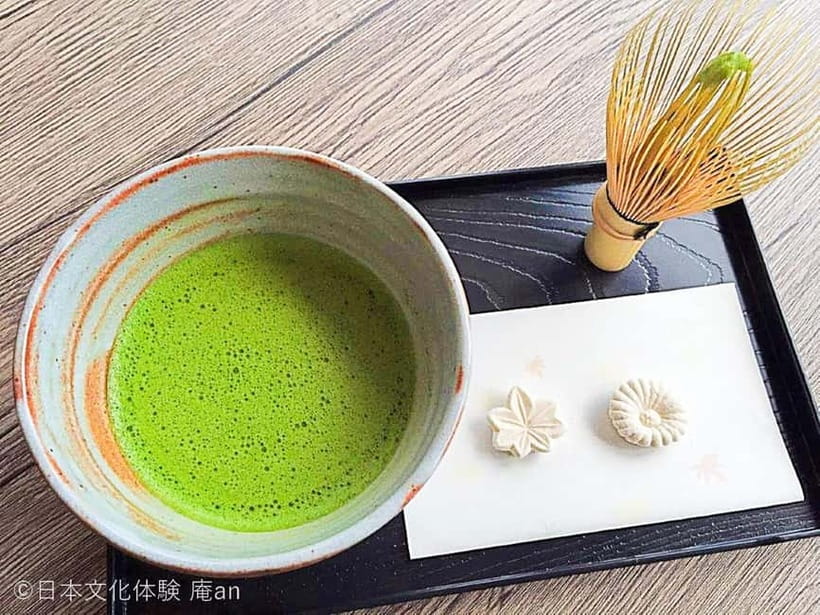
Osaka’s traditional tea ceremony can be surprisingly easy to fit into a busy sightseeing day. In about 30 minutes, you learn the basic steps, watch a matcha-grinding demonstration, prepare your own tea, and enjoy it with a Japanese sweet called ohigashi.
I like the low $7 price, which makes this a simple way to try a famous Japanese custom without giving up half a day. I also like the casual setup and central location near Higobashi Station. The main consideration is that instruction is in Japanese, with English translation provided as much as possible, so communication may take a little patience.
Key points to know before you book
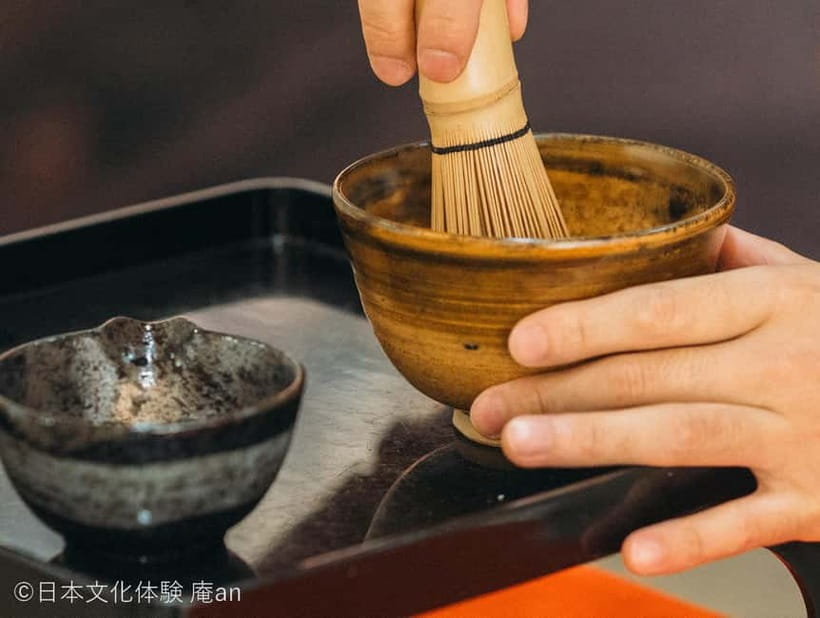
- Watch matcha being ground: The session includes a demonstration before you make your own tea.
- Enjoy single-origin matcha: The experience uses special matcha from a single source.
- Taste traditional ohigashi: Japanese dry sweets are included with the tea.
- Fit it between major sights: The activity lasts 30 minutes and sits within easy reach of several train stations.
- Suitable for solo visitors and groups: You can take part alone or with other people.
- Expect stairs: The building has no elevator, and every venue is reached by stairs.
A short, hands-on introduction to matcha
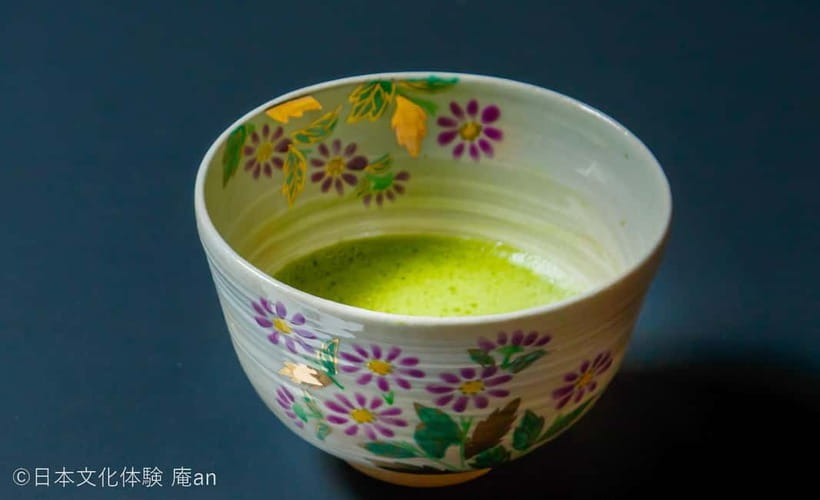
This is not a long, formal tea-school lesson. It is a compact introduction designed for people who want to try matcha during a day in Osaka.
You begin with an explanation of tea and the basic ideas behind the ceremony. The instructor then demonstrates how matcha is ground. After that, you take part in the tea-making process yourself and drink what you prepare.
That hands-on part is the reason to book. You are not only watching someone whisk tea from across a room. You get to handle the process and see how a few careful movements turn powdered tea and water into the drink served in tea rooms across Japan.
The experience uses single-origin special matcha. The supplied information does not identify the growing region or producer, so you should not book this expecting a detailed lesson in Japanese tea farming. Still, the choice gives the session a little more substance than a generic green-tea tasting.
The tone is casual. That matters in Osaka, a city where food, conversation, and everyday enjoyment often feel more relaxed than highly ceremonial. You can learn the etiquette without feeling that you need prior knowledge or perfect manners.
More Tea Ceremonies in Osaka
- Osaka: Tea Ceremony Experience
★ 4.9 · 1,426 reviews - Tea Ceremony Experience in Osaka Doutonbori
★ 5.0 · 754 reviews - Osaka: Tea Ceremony, Calligraphy, and Kimono Experience
★ 4.9 · 130 reviews
The 30-minute schedule, step by step
The activity follows a clear schedule. At the start, you receive an explanation about Japanese tea and the tea ceremony. This gives you the basic setting before you begin making matcha.
Next comes the matcha-grinding demonstration. Watching this stage helps you understand that matcha is not simply ordinary green tea placed in a blender. The powder is prepared in a particular way, and the demonstration gives the instructor a chance to show the process before you try the next part.
The tea-ceremony experience follows. You make your own matcha after the short lesson. The exact level of help will depend on the group and the instructor, but the session is designed so one person or a group can take part easily.
There is also time for pictures. This is useful if you want a record of the activity, though the time is short, so you should not expect a long photo session with many different setups.
At about 20 minutes, the formal experience ends and you move into eating and drinking time. You can enjoy the matcha and ohigashi at a slower pace before leaving at the 30-minute mark.
The schedule is short enough to be practical, but it also means the session cannot cover every part of tea ceremony culture. If you want an extended lesson on utensils, seasonal customs, Zen ideas, tea-room design, or the full formal procedure, you will need a longer experience elsewhere.
Ohigashi and the taste of matcha
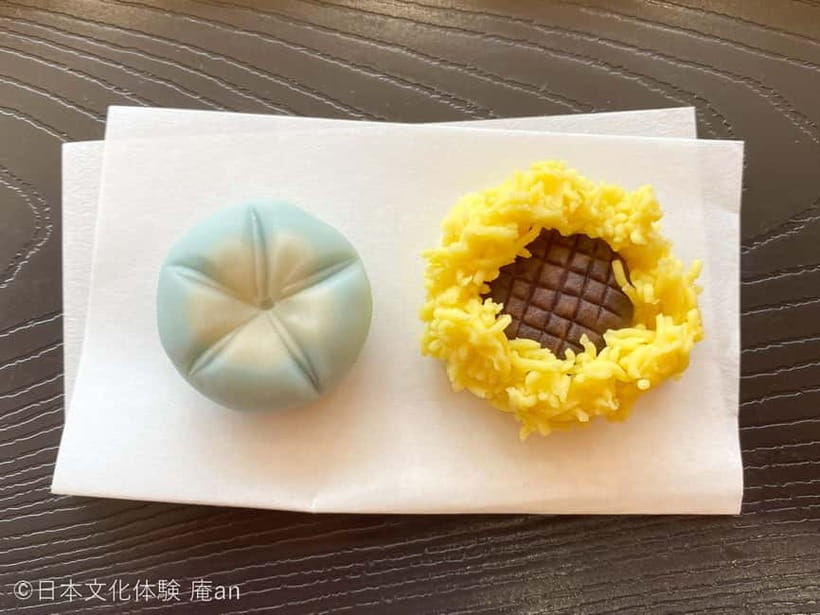
The included ohigashi is a Japanese dry sweet traditionally served with tea. It is not just a small extra. The sweet taste helps balance matcha’s strong, grassy bitterness and gives you a more complete sense of how the two are enjoyed together.
Matcha has a flavor that can surprise first-time drinkers. It is concentrated, earthy, and sometimes bitter. You drink the entire powder rather than steeping leaves and removing them, so the taste is fuller than a typical cup of green tea.
The sweet is part of the lesson in balance. You get a small taste of the custom rather than simply receiving a drink and a snack with no explanation.
The available information does not specify the exact ohigashi served or provide a menu of alternatives. If you have food allergies or dietary restrictions, you should contact the provider before booking. The supplied details do not confirm allergy accommodations.
Why the $7 price works well
At $7 per person, this is one of the easier cultural activities to add to an Osaka itinerary. The value comes from the combination of instruction, participation, matcha, and ohigashi in a central location.
You are not paying for a long event or an elaborate meal. You are paying for a quick introduction and the chance to prepare tea yourself. That makes the price particularly fair for a first visit to Japan, a family looking for a short activity, or anyone curious about matcha but not ready to commit to a formal half-day program.
The low cost also reduces the risk of disappointment. If you already know tea ceremony well, you may find the lesson too basic. At this price and length, though, it is easy to view the session as a pleasant cultural stop rather than the main event of your Osaka visit.
The activity completion certificate costs an additional 300 yen. It is not included, so you should only add it if you specifically want a keepsake or proof of participation.
Same leaf, a different ritual:
- Matcha Making Class in Osaka with Authentic Japanese Sweets Set
★ 5.0 · 509 reviews - Osaka: Matcha Making Experience with Japanese Sweets
★ 5.0 · 146 reviews - Osaka: Japanese Traditional Sweets Making and Tea Ceremony
★ 4.7 · 118 reviews - Osaka Temple Cool Foot Bath & Matcha Experience〈45min〉
★ 4.9 · 82 reviews
The location near Higobashi Station
The meeting point is particularly convenient for central Osaka. It is a one-minute walk from Exit 10 of Higobashi Station on the Osaka Metro Yotsubashi Line.
You can also reach it from several other stations:
- Five minutes from Exit 7 of Watanabebashi Station on the Keihan Nakanoshima Line
- Seven minutes from Exit 10 of Yodoyabashi Station on the Osaka Metro and Keihan lines
- Ten minutes from Exit 11-5 of Kitashinchi Station on the JR Tozai Line
- Fifteen minutes from the South Central Gate of Osaka Station
For most people, Higobashi is the simplest choice. Check the station exit before you leave, since large Osaka stations can take longer to navigate than the walking distance suggests.
The location works best as a planned stop near your other central Osaka activities. You can book a morning session, take a break in the middle of sightseeing, or use it as a short cultural activity before continuing toward Osaka Station.
If you drive, you need to use nearby coin-operated parking. Parking is not listed as included, so public transportation is the more practical choice.
Language and the instructor
The listed activity language is Japanese. English translation is provided as much as possible, and one English-speaking participant described the instructor as patient while explaining how to prepare and drink matcha.
Another participant had a good time even though the session was in Japanese, noting that the presenter made a strong effort and brought humor to the explanation. That gives you a useful picture of the language situation: you may receive some English assistance, but you should not assume that every part of the lesson will be fully translated.
The instructor is identified as Japanese, but no personal name is provided. I would contact the provider in advance if detailed English instruction is important to you.
Visual demonstrations also help. The matcha-grinding and tea-making stages can be followed by watching the movements, even when you do not understand every spoken explanation. Still, the language limitation is the clearest drawback for anyone seeking a detailed cultural lecture.
Who will enjoy this experience most
I would recommend this to first-time matcha drinkers, couples, solo visitors, and small groups looking for a low-cost activity with a clear ending time.
It is also a good choice for families who want to introduce children to Japanese culture without asking them to sit through a long formal ceremony. Children under two who sit on a parent’s lap are free, according to the conditions provided.
You will probably like it if you want to do something distinctly Japanese but do not want to spend several hours in a class. The combination of a short lesson, hands-on preparation, and a sweet makes the activity easy to understand and easy to fit into a crowded schedule.
I would be more cautious if you want a fully traditional, highly formal ceremony or fluent English throughout. This is an accessible introduction, not an advanced study of tea culture.
Practical details that can affect your visit
The operation hours are 10:00 to 17:00. Reservations received after 17:00 are processed the next day, so late-night booking may not receive an immediate response.
The building has no elevator. You will need to use stairs to reach each venue, making this important for anyone with mobility concerns, a stroller, or heavy luggage.
Arrive on time. The event cannot be held for delayed arrivals, and the provider does not compensate you for travel expenses if you miss the activity because of a delay or cancellation.
Only people taking part in the experience may enter. If someone in your party wants to wait inside without participating, that is not permitted under the stated rules.
Free cancellation is available up to 24 hours before the activity for a full refund. You can also reserve now and pay later, which helps if your Osaka schedule is still changing.
The overall rating is 4.2 from eight ratings. That suggests a generally positive response, while also reminding you that this short experience will not suit every expectation, especially around language and ceremony length.
How this compares with a longer tea ceremony
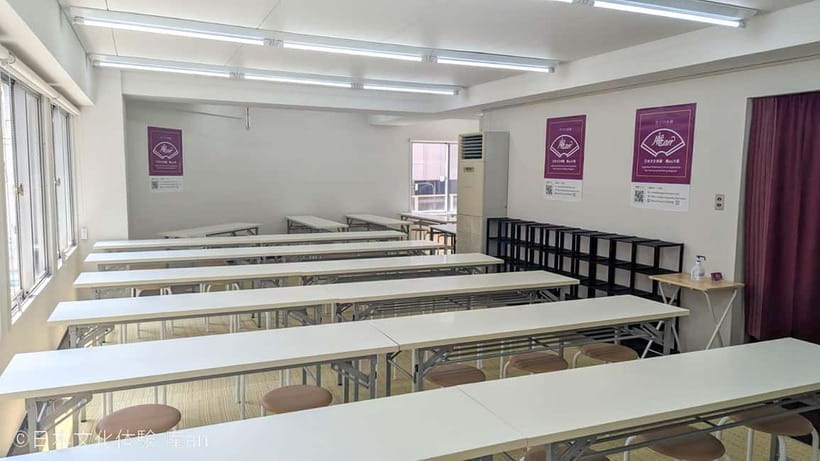
A full tea ceremony often asks you to spend more time observing etiquette, room design, seasonal details, and the host’s movements. This activity gives you only the essentials.
That is not a flaw if you want a quick taste. In fact, the 30-minute format is its strongest feature for many visitors. You can learn the basic process, make a cup, eat ohigashi, take a picture, and return to your Osaka plans.
The tradeoff is depth. There is limited time for extended questions or a detailed explanation of the cultural meaning behind each gesture. The activity is best understood as an entry point.
I like that balance. You get enough context to make the drink feel meaningful, but not so much ceremony that the experience becomes difficult for a first-timer. If the session sparks your interest, you can later seek out a longer tea lesson or visit a tea house with more time to spare.
Should you book the Osaka tea ceremony?
Book it if you want an inexpensive, central, hands-on introduction to matcha. The single-origin tea, ohigashi, matcha-grinding demonstration, and short format give you more than a simple drink stop.
I would especially choose it for a free pocket of time near Higobashi, Yodoyabashi, Kitashinchi, or Osaka Station. The $7 price makes it easy to add without reshaping your day.
Skip it if you need a fully English-language class, an elevator-accessible building, or a long and formal ceremony. For everyone else, this is a practical way to pause, learn a little, and enjoy one of Japan’s best-known cultural traditions without making the experience feel stiff.
FAQ
How long does the tea ceremony experience last?
The experience lasts 30 minutes. The formal activity ends at about 20 minutes, followed by eating and drinking time until departure.
How much does the experience cost?
The listed price is $7 per person.
What is included?
The experience includes a set of OTE-MAE, described as a Japanese tea ceremony experience. Matcha and Japanese ohigashi sweets are part of the activity.
Is the completion certificate included?
No. An experience completion certificate costs an additional 300 JPY.
Where does the activity meet?
The meeting point is near Osaka Metro Yotsubashi Line Higobashi Station. It is one minute from Exit 10. The activity can also be reached from Watanabebashi, Yodoyabashi, Kitashinchi, and Osaka Station.
What language is used during the activity?
The listed language is Japanese. English translation is provided as much as possible, and you can contact the provider if you would like English assistance.
Can one person take part alone?
Yes. The experience is available for one person or for a group.
Are children allowed to join?
Yes. Children under two years old who sit on a parent’s lap are free of charge.
Is the venue accessible by elevator?
No. The building has no elevator, and you need to use stairs to reach each venue.
Can I cancel for a full refund?
Yes. You can cancel up to 24 hours in advance for a full refund.
Newly steeped around Osaka
- Osaka:Zen Tea Ceremony and Foot Bath Experience<45min>★ 5.0 · 7 reviews
- Nara Deer Park, Uji Matcha, & Hot Spring Full-Day Tour from Osaka★ 4.0 · 21 reviews
- Osaka: Tea Ceremony, Calligraphy, and Kimono Experience★ 5.0 · 6 reviews
- Osaka Japanese Cooking And Matcha Class near Osaka Castle★ 5.0 · 22 reviews
- Tea and Calligraphy Session at a Table in Osaka★ 5.0 · 4 reviews
- Osaka: Nara, Todaiji, Uji Matcha, and Hot Spring Tour★ 4.0 · 7 reviews
- Craft Sushi and Matcha Ice Cream in Central Osaka (3-Course Meal)★ 5.0 · 2 reviews
- ZEN therapy | Shiatsu-style massage, EnergyTherapy & Japanese Tea★ 5.0 · 5 reviews
Tea Ceremony Experiences, compared.
Kyoto: Tea Ceremony in a Traditional Tea House in Kiyomizu
Read our review →
Kyoto: 45-Minute Tea Ceremony Lesson Experience
Read our review →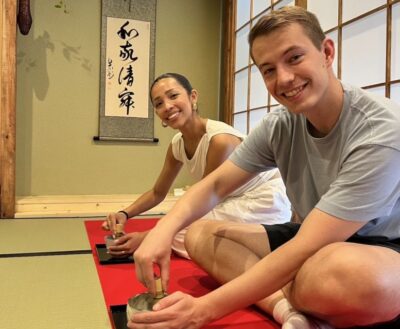
Kyoto: Table-Style Tea Ceremony at a Kyo-Machiya
Read our review →


Browse the lists this tea experience appears in