
Review · OSAKA
Samurai Show, Tea Ceremony, Japanese Traditional Activities
Osaka’s samurai show is only the opening act. You also learn the careful movements of a tea ceremony, brush Japanese characters onto paper, and try traditional instruments with help from the staff. It is less a quiet museum visit than a lively cultural workshop.
I like the strong mix of watching and doing. The tea ceremony and calligraphy give you a real feel for Japanese manners and craft, while the music and sword practice keep children and adults involved. The main drawback is that the advertised 2.5 hours may not be enough if you want to try every station, and the costume options cost extra.
Key points at a glance
- Samurai performance with safe practice moves: Watch a staged sword show, then join a lighthearted practice session with non-real swords.
- Tea ceremony you can take part in: Learn the correct process for preparing and serving green tea rather than only observing.
- Calligraphy with a take-home keepsake: Practice brush writing and create a personalized fan to bring home.
- Traditional music you can try yourself: Listen to Japanese instruments, then have a go with staff assistance.
- Optional kimono and samurai armor: Dress-up is not part of the $44.92 basic price, but upgrades are available at the venue.
- A useful rainy-day choice: Most of the program takes place indoors, near Shinsaibashi and Dotonbori.
A cultural workshop near Dotonbori
The meeting point is Shinsaibashi ARTY Inn, at 2-chōme-17-3 Nishishinsaibashi in Chuo Ward. That puts you close to one of Osaka’s easiest areas for eating, shopping, and nightlife, with public transportation nearby. The activity returns to the same meeting point, so you do not need to arrange a second pickup location.
The venue is described as a large facility rather than a small, hushed tea room. That matters. You are moving between several activities, performances, and teaching areas, and the format works best if you enjoy a little energy and audience participation.
The scheduled program runs for about 150 minutes. In practice, you should allow three hours or more if you want to take your time. Some participants stayed three and a half to four hours because there was more to see and do than the basic schedule suggested.
The maximum group size is 20 people. That is large enough to create an audience for the shows, but still small enough for staff to help with calligraphy, instruments, photographs, and the hands-on sections.
More Tea Ceremonies in Osaka
- Osaka: Tea Ceremony Experience
★ 4.9 · 1,426 reviews - Tea Ceremony Experience in Osaka Doutonbori
★ 5.0 · 754 reviews - Osaka: Tea Ceremony, Calligraphy, and Kimono Experience
★ 4.9 · 130 reviews
The samurai show is part theater, part play
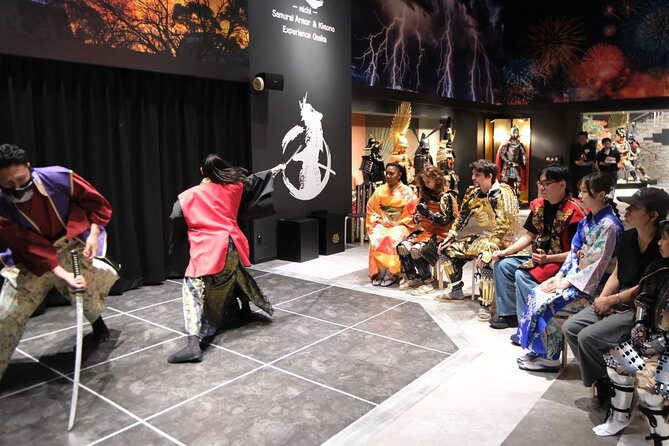
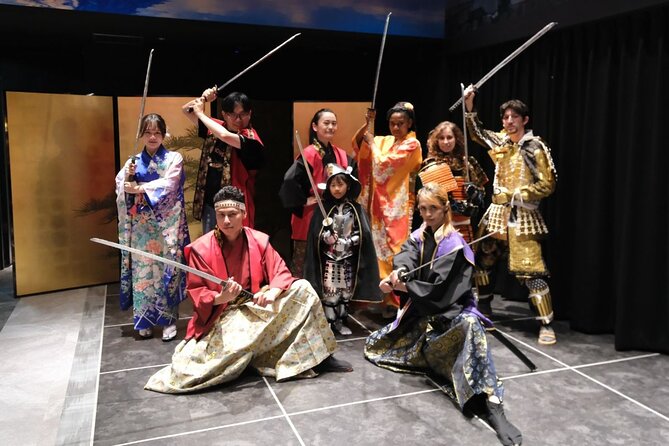
The samurai performance gives the experience its biggest burst of drama. You watch a staged battle, then learn a few basic moves and take part in a safe practice segment. The swords used for participation are not real, so this is theatrical entertainment rather than martial-arts training.
The tone can be playful. One popular part has a staff performer acting as the practice opponent, with plenty of humor aimed at making children and adults feel comfortable. If you are expecting a serious historical reenactment, adjust your expectations. The show is designed to entertain and teach, not to recreate combat with museum-level precision.
That said, the activity has value because it turns a distant image of the samurai into something physical. You learn how a stance feels, how a movement is performed, and how much timing matters. It is a better fit for families, first-time visitors to Japan, and anyone who prefers participation to a lecture.
One important detail: the armor on display or available for dressing is not included in the basic ticket. The description notes samurai armor made by Marutake Industries, a maker known for detailed craftsmanship, but you need to select and pay for the armor option separately if you want to wear it. Ninja dress-up is also not included.
A small criticism is fair here. One person found the samurai section less convincing than the tea, music, and calligraphy. The performance uses reproductions, and the staged action can feel light rather than historically exact. Treat it as a fun cultural show with audience participation, not as a professional sword demonstration.
Tea ceremony teaches quiet Japanese etiquette
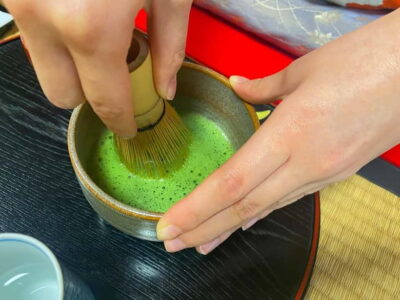
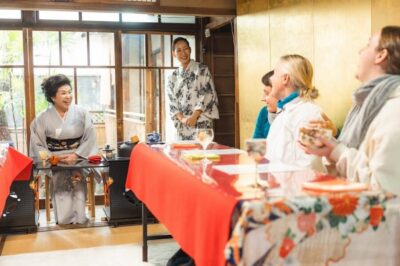
The tea ceremony is likely to be the most focused part of the afternoon. You learn how green tea is prepared and served, along with the small gestures that give the ceremony its calm rhythm. Staff explain what you are doing, so you are not left guessing when to bow, hold the bowl, or drink.
This is valuable even if you have already seen a tea ceremony elsewhere. Watching is one thing. Trying the process yourself helps you notice the care given to movement, order, and presentation.
The contrast with the samurai show works well. You move from bold gestures and comic sword practice to a slower activity built around attention and respect. I like that balance because it prevents the program from becoming a string of loud performances.
Do not expect a long, formal ceremony in a traditional Kyoto tea house. The setting is part of a larger activity center, and the goal is to teach you the basics in an approachable way. It is an introduction, not an advanced study of tea culture.
The staff’s help is especially useful if you are curious about Japanese language and manners. One family group noted that the team was patient with a large party, and several people appreciated help with simple Japanese phrases. You can ask questions as you go, which makes the activity more useful than a staged photo opportunity.
Calligraphy gives you something to take home
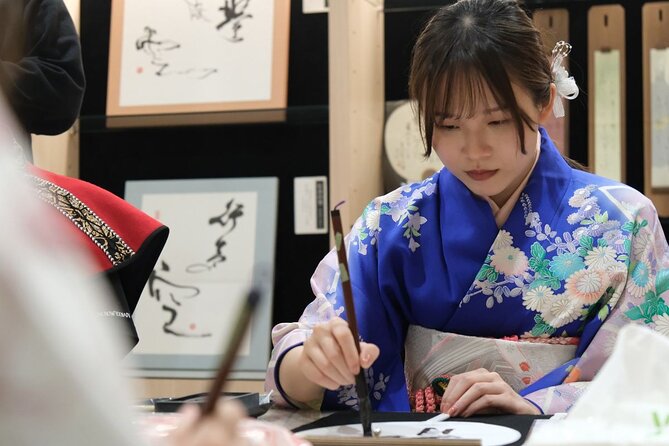
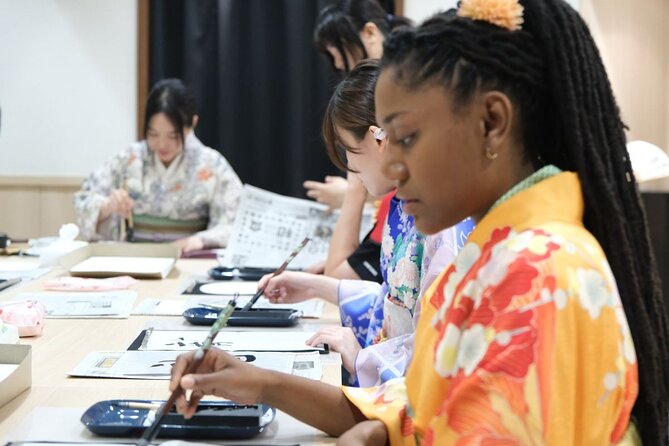
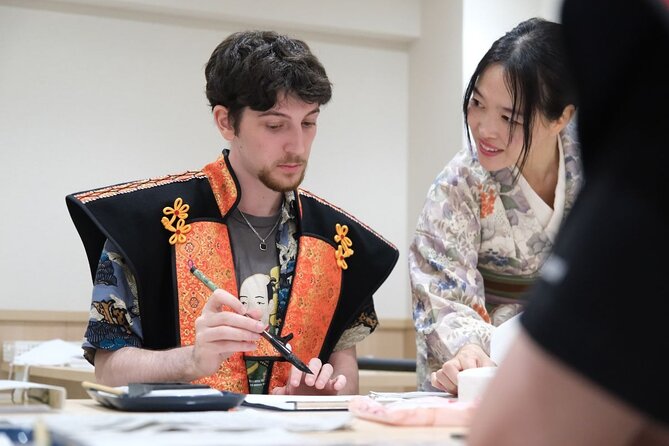
At the calligraphy station, you practice Japanese brush writing under instruction. This is a hands-on craft, so expect to make a few imperfect marks before your brush begins to feel familiar. That is part of the fun.
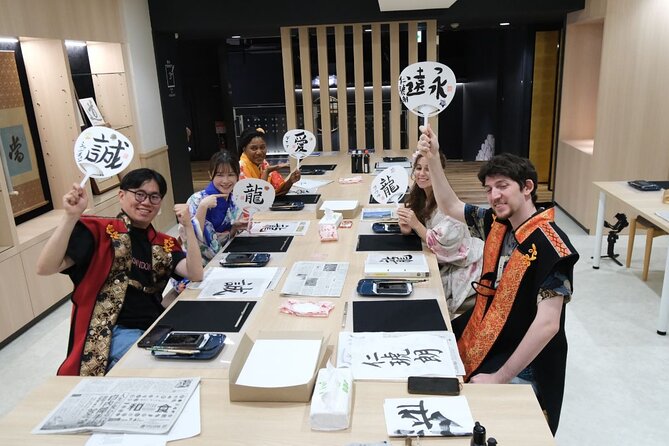
The activity has a practical souvenir built into it. You can create a personalized fan and take it home. Compared with buying a mass-produced souvenir in a shop, a piece you made during the experience has a stronger connection to your time in Osaka.
Calligraphy also suits people who like a quiet break between performances. You must slow down, hold the brush correctly, and pay attention to pressure. I would not book this expecting to leave with professional lettering, but you should leave with a better sense of why Japanese brush work demands patience.
Staff support is important here, especially if you do not read Japanese. The program provides English interpreters around the activity areas, and they help explain the steps. You can focus on the brush rather than worry that you have missed an instruction.
If you are visiting with children, calligraphy gives them a clear task and a finished item. Younger children may need close help with the brush and ink, but the activity has enough movement and variety to hold attention when combined with the show and instruments.
Same leaf, a different ritual:
- Matcha Making Class in Osaka with Authentic Japanese Sweets Set
★ 5.0 · 509 reviews - Osaka: Matcha Making Experience with Japanese Sweets
★ 5.0 · 146 reviews - Osaka: Japanese Traditional Sweets Making and Tea Ceremony
★ 4.7 · 118 reviews - Osaka Temple Cool Foot Bath & Matcha Experience〈45min〉
★ 4.9 · 82 reviews
Traditional music lets you try the instruments
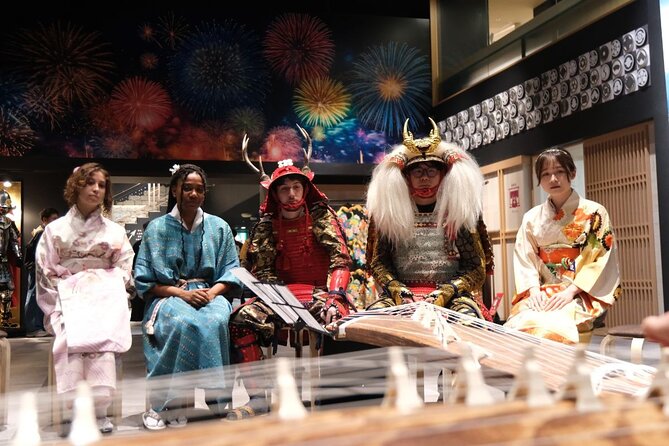
Music is another major part of the program. You watch performances featuring Japanese instruments, then try playing some of them yourself. The exact instrument available to you can vary, but the supplied details mention experiences with a Japanese guitar, a complex Japanese keyboard-style instrument, harp, and flute.
The practical lesson is simple: traditional music can be far harder to play than it looks. You may manage a few notes with help, but do not expect to master the Japanese flute in one afternoon. That small failure is part of the charm, and the staff keep the mood friendly rather than formal.
This section works well for families because it turns a performance into a short workshop. Instead of sitting quietly for a full concert, you hear the sound, see how the instrument is handled, and then test your own coordination.
It also adds variety. Tea and calligraphy are controlled and quiet. Music is more social, and the chance to make a sound yourself breaks down the distance between performer and audience.
The English support is useful here. Staff guide you through the basic technique and help keep the program moving between stations. They may also assist with photographs, which is helpful if you want a picture of your first attempt without asking another person in the group.
Kimono and armor upgrades change the experience
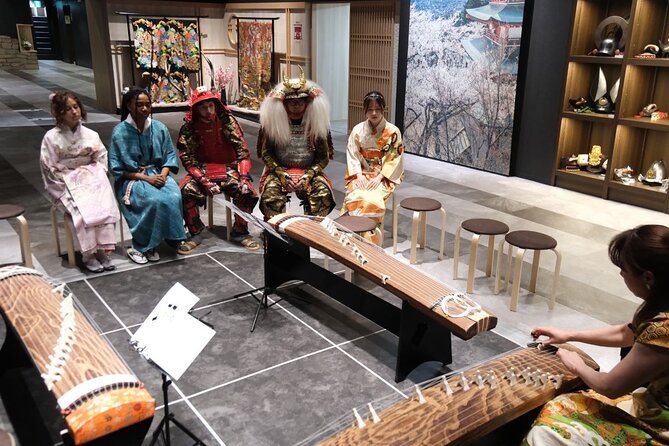
The basic ticket does not include kimono, samurai armor, or ninja dress-up. This is one of the most important details to understand before booking.
A kimono upgrade has been offered for about ¥5,000, though you should confirm the current price and availability at booking. Staff dress you, help you move around the venue, and take photographs. One useful detail is that the socks and undergarments used for the option can be kept.
The kimono is not required to enjoy the tea, calligraphy, music, or samurai show. I would see it as a photo and cultural add-on, not as a necessary part of the program. If you want the full visual experience, it can make the afternoon feel more special. If you mainly want activities, the basic ticket already includes plenty.
Samurai armor is another separate option. The attraction of wearing it is obvious, especially for children and anyone interested in Japanese military dress, but the extra cost means you should compare the add-on with your overall Osaka budget.
The distinction between costume and activity matters. You do not need to dress up to participate in the sword practice or watch the performances. Book the upgrade because you want the photographs and the feel of the clothing, not because it is required.
How much value do you get for $44.92?
At $44.92 per person, the basic price is reasonable if you use the program fully. You are not paying for one short show. You receive a combination of live performance, tea instruction, calligraphy, music, and guided practice in a single indoor visit.
The value improves for first-time visitors who would otherwise pay separately for several small cultural activities. You get a broad introduction without spending a full day traveling between different parts of Osaka.
The price is less attractive if you only want a serious tea ceremony or a formal samurai demonstration. This is a sampler. It covers several traditions, but none receives the depth of a specialist class.
Time also affects the value. If you rush out after the scheduled 2.5 hours, you may miss some of the extra music, photos, or dress-up opportunities. Set aside at least three hours, and more if you plan to add kimono or armor.
The strong staff support also helps justify the cost. You are shown what to do, helped through the stations, and encouraged to take part even if you do not speak Japanese. That removes much of the uncertainty that can make cultural activities feel intimidating.
Who will enjoy this most?
I would recommend this experience to:
- Families who want several short activities rather than one long lecture
- First-time visitors seeking an easy introduction to Japanese culture
- Couples looking for indoor activities and souvenir photographs
- Anyone with a rainy afternoon in Osaka
- People who enjoy trying instruments, crafts, and performance activities
- Visitors staying near Shinsaibashi, Dotonbori, or central Osaka
It is less suitable if you want a quiet, highly formal ceremony with little audience interaction. It may also disappoint you if you expect real samurai combat, original armor for every participant, or a museum-style presentation.
The format is active. You may be asked to try something, pose for a photograph, or move to the next station. That is a strength for most people, but it is worth knowing before you arrive.
Timing, group size, and practical planning
Confirmation is provided at booking, and the experience uses a mobile ticket. The meeting point is near public transportation, and the activity ends where it begins.
Most people can participate, and the maximum group size is 20. That makes this easier to fit into a family itinerary or a short Osaka visit. You do not need to plan a separate return route after the program.
Book enough space around the scheduled end time. The official duration is approximately two hours and 30 minutes, but the activities can run longer, especially if you add costume experiences or want to spend time at every station.
The cancellation policy allows a full refund when you cancel at least 24 hours before the start time. Changes or cancellations inside that window are not accepted. The stated policy also says that if the activity is canceled because of poor weather, you will be offered another date or a full refund. Most of the experience is indoors, but keep that policy in mind when planning around a tight Osaka schedule.
Should you book the Osaka samurai and tea experience?
Book it if you want a lively, practical introduction to Japanese culture in one place. The best parts are the mix of tea, calligraphy, and music, plus the chance to join the samurai segment rather than only watch it. The friendly staff support and English interpretation make the program easy to follow.
Go in with the right expectations. The samurai performance is theatrical, the equipment includes reproductions, and the costume options cost extra. You may also spend longer than the advertised 2.5 hours.
For $44.92, I think it is a good-value choice for families, first-time visitors, and anyone with a rainy or open afternoon near Dotonbori. If you want serious historical depth, choose a specialist museum or formal tea school instead. If you want to touch, try, laugh, and leave with a fan covered in your own calligraphy, this is a sensible Osaka pick.
FAQ
Where does the experience begin and end?
It begins at Shinsaibashi ARTY Inn, 2-chōme-17-3 Nishishinsaibashi, Chuo Ward, Osaka. The activity ends back at the same meeting point.
How long does the experience last?
The scheduled duration is approximately two hours and 30 minutes. You should allow three hours or more if you want to enjoy all the stations, and some participants stayed three and a half to four hours.
What activities are included?
The basic experience includes a tea ceremony, calligraphy, traditional Japanese music, and a samurai performance with an interactive practice segment.
Are kimono and samurai armor included?
No. Samurai armor, kimono, and ninja dress-up are not included in the basic ticket. They are available as separate options, subject to current availability and pricing.
Is the experience suitable for most people?
The activity states that most people can participate. The maximum group size is 20, and staff provide guidance at the activity stations.
Can I cancel for a refund?
You can cancel for a full refund up to 24 hours before the local start time. Cancellations or changes made less than 24 hours before the experience are not accepted. If the activity is canceled because of poor weather, you will be offered another date or a full refund.
Newly steeped around Osaka
- Osaka:Zen Tea Ceremony and Foot Bath Experience<45min>★ 5.0 · 7 reviews
- Osaka Japanese Cooking And Matcha Class near Osaka Castle★ 5.0 · 22 reviews
- Nara Deer Park, Uji Matcha, & Hot Spring Full-Day Tour from Osaka★ 4.0 · 21 reviews
- Osaka: Tea Ceremony, Calligraphy, and Kimono Experience★ 5.0 · 6 reviews
- Tea and Calligraphy Session at a Table in Osaka★ 5.0 · 4 reviews
- Osaka: Nara, Todaiji, Uji Matcha, and Hot Spring Tour★ 4.0 · 7 reviews
- Craft Sushi and Matcha Ice Cream in Central Osaka (3-Course Meal)★ 5.0 · 2 reviews
- ZEN therapy | Shiatsu-style massage, EnergyTherapy & Japanese Tea★ 5.0 · 5 reviews
Tea Ceremony Experiences, compared.
Kyoto: Tea Ceremony in a Traditional Tea House in Kiyomizu
Read our review →
Kyoto: 45-Minute Tea Ceremony Lesson Experience
Read our review →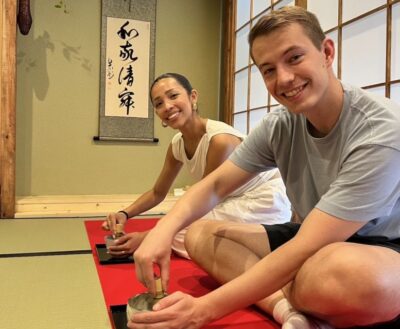
Kyoto: Table-Style Tea Ceremony at a Kyo-Machiya
Read our review →


Browse the lists this tea experience appears in