
Review · OSAKA
Tea ceremony experience in Osaka with a small group
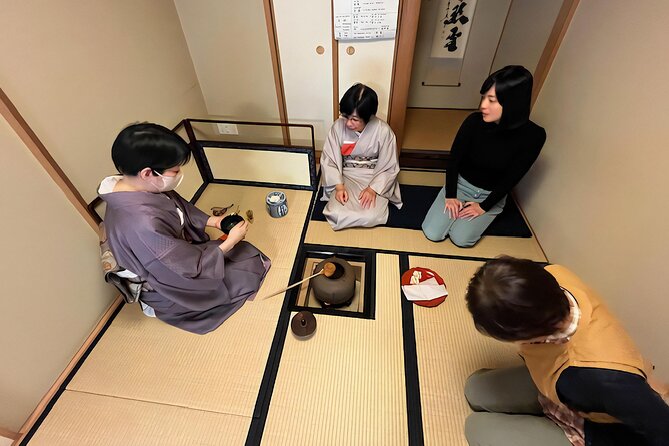
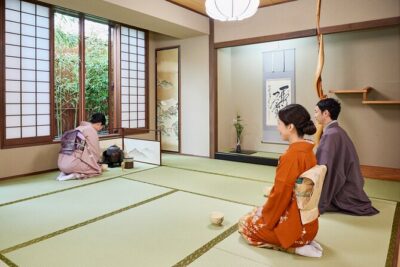
The special part here is the chance to make your own matcha after watching a tea master perform the ceremony. You are not just sitting quietly while someone else handles the tea. You learn how to enter a tatami room, see the formal preparation, taste Japanese sweets, and take part in a table-style version of the ritual.
I like the small private group, limited to four people, and the calm teaching style described by the provider. I also like the balance between formality and welcome. You do not need prior knowledge of Japanese culture, and an assistant helps guide you through each step.
The main consideration is location. The meeting point is about a 10 to 15 minute walk from Ibaraki-shi Station, and the exact address is sent after booking. That makes this less convenient than a tea ceremony in central Osaka, but it also places you between Osaka and Kyoto for an easy addition to a wider day.
Key points to know before booking
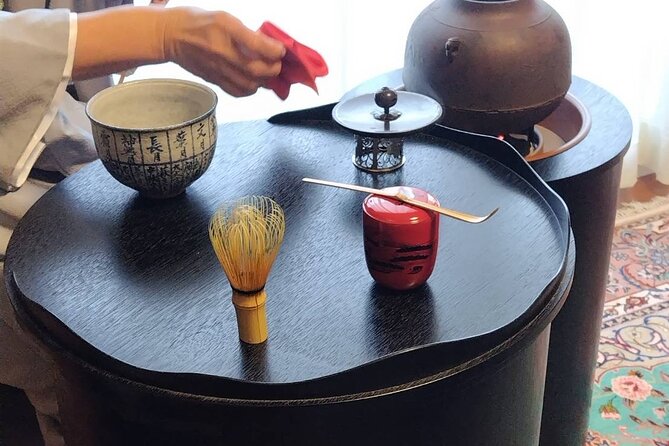
- You make your own matcha: After the demonstration, you prepare tea yourself and drink it with a traditional Japanese sweet.
- The group is capped at four: This is a private activity, so only your party takes part.
- You learn tatami-room etiquette: The session begins with an explanation of how to enter and behave in a Japanese-style room.
- The session lasts 60 to 90 minutes: It is short enough to fit around sightseeing in Osaka or Kyoto.
- Ibaraki-shi is the access point: The meeting place is a 10 to 15 minute walk from the Hankyu Kyoto Line station.
- The price includes the essentials: Matcha, Japanese sweets, and all tools and materials are included.
Why making the tea matters
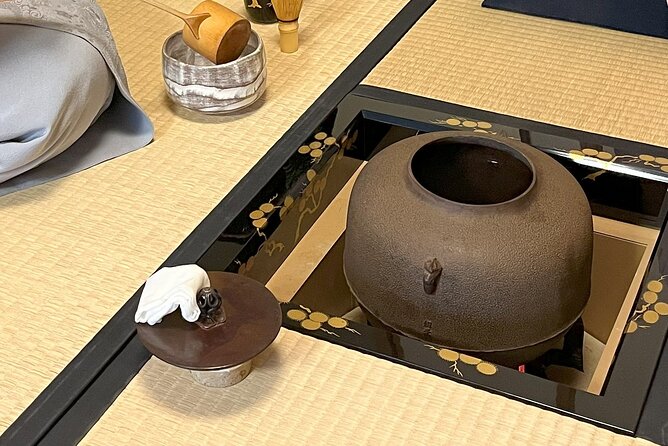
A Japanese tea ceremony can look quiet and precise from the outside. Every movement has a purpose, from entering the room to handling the bowl. If you have never seen one before, it is easy to feel that you are watching a performance with rules you do not understand.
This experience gives you the missing background. The tea master first explains how to enter the tatami room, then demonstrates the ceremony with matcha and a traditional sweet. That order matters. You see the gestures before you are asked to copy any of them.
I especially like that you are not expected to arrive already familiar with Japanese customs. The description is aimed at first-time visitors and people who simply want to enjoy tea and sweets. You can take the formal side seriously without feeling that you need to pass an exam in etiquette.
The most hands-on part comes later. You learn the Ryurei style, which is a table-style tea ceremony, and prepare a bowl of matcha yourself. This gives you a practical feel for the tools and motions. You will not only remember the taste of the tea. You will remember the work involved in making it.
More Tea Ceremonies in Osaka
- Osaka: Tea Ceremony Experience
★ 4.9 · 1,426 reviews - Tea Ceremony Experience in Osaka Doutonbori
★ 5.0 · 754 reviews - Osaka: Tea Ceremony, Calligraphy, and Kimono Experience
★ 4.9 · 130 reviews
Entering the tatami room near Ibaraki-shi
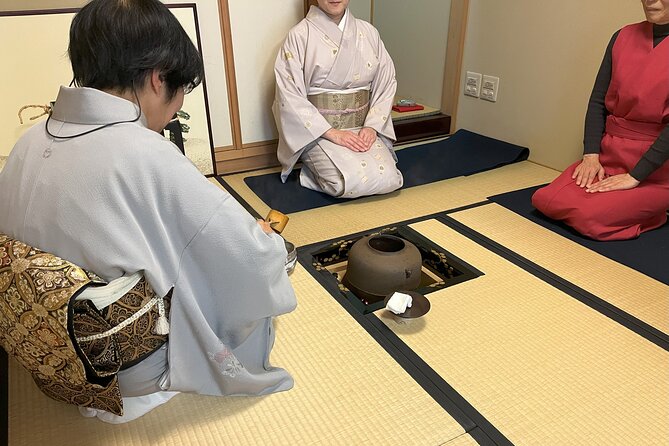
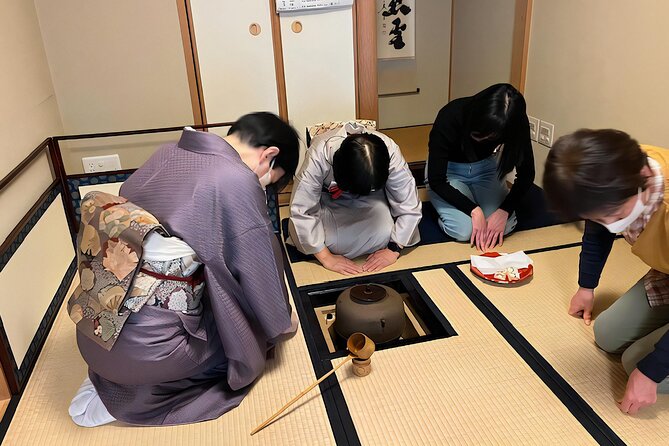
The first stage introduces the Japanese-style room and the proper way to enter it. Tatami is a traditional woven flooring material, and the room changes the pace of the activity as soon as you step inside. You are asked to pay attention to posture, movement, and the setting rather than rushing from one sight to the next.
For a visitor, this is useful cultural context. The ceremony is not simply about drinking green tea. It is also about how host and guest share a small space with care. The entrance lesson helps you understand that the room itself is part of the experience.
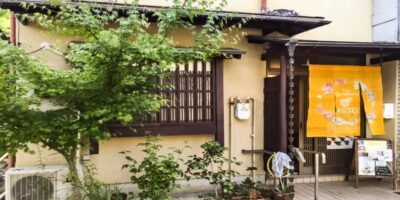
You should arrive on time. The meeting point is listed at Repark Ibaraki Oike 1-Chome, at 1-chōme-14-46 Ōike, Ibaraki, Osaka 567-0826. The activity provider sends detailed location information and a phone number after your reservation, and you are asked to call on arrival so someone can meet you.
That arrangement requires a little planning. You are not simply walking into a clearly marked shop on a main tourist street. From Ibaraki-shi Station on the Hankyu Kyoto Line, allow 10 to 15 minutes on foot, then use the supplied phone number if you get lost or arrive at the meeting place. Keep the confirmation handy on your phone.
Watching the tea master’s demonstration
Once you are settled in the tatami room, the tea master demonstrates the ceremony using matcha and Japanese traditional sweets. This is the quietest part of the session, but it gives you the clearest look at the rhythm of the ritual.
The demonstration is also where the teacher can explain the details that photographs cannot show. You see how the tea is prepared, how the utensils are used, and how the host presents the bowl and sweet. The supplied information does not name the tea master or assistant, so you should not expect a particular individual by name. It does confirm that a tea master leads the session and that an assistant may help with instruction.
The small group makes a real difference here. With no more than four people in your party, you have a better chance to follow the explanation and ask for help than you would in a large cultural demonstration. The one published comment describes the teacher and assistant as attentive and says they taught the participants how to perform the ceremony themselves. That fits the structure of the session: the demonstration is a preparation for your own turn, not the whole event.
Japanese sweets are included and served with the tea. Their role is not just a snack. A sweet can balance the bitterness of matcha, making the tea easier to appreciate if you are trying it for the first time.
Preparing matcha in the Ryurei style
After the formal demonstration, the experience shifts to Ryurei, the table-style form of tea ceremony. This is a practical choice for first-time participants because you can learn the process at a table rather than trying to reproduce every movement on the floor.
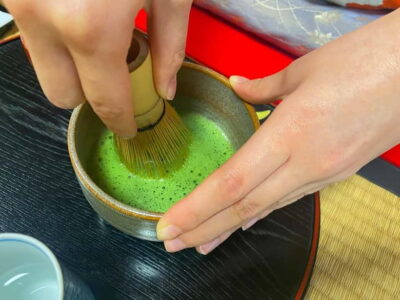
You receive an explanation of how to make matcha, then prepare the tea yourself. The exact teaching sequence is not specified, so the amount of hands-on practice may depend on the pace of your group. Still, the central promise is clear: you make a bowl of matcha and drink it with a Japanese sweet.
This is the part I would value most. Seeing a tea master work is helpful, but handling the tools gives you a stronger memory of the tradition. You may find that whisking matcha looks easier than it feels. The exercise lets you appreciate the care involved without requiring expert technique.
The experience is also designed to be approachable for people who know little about Japan. You do not need to study ceremony etiquette before arriving. Follow the teacher’s instructions, watch closely, and ask when you are unsure. The aim is participation, not perfect performance.
Same leaf, a different ritual:
- Matcha Making Class in Osaka with Authentic Japanese Sweets Set
★ 5.0 · 509 reviews - Osaka: Matcha Making Experience with Japanese Sweets
★ 5.0 · 146 reviews - Osaka: Japanese Traditional Sweets Making and Tea Ceremony
★ 4.7 · 118 reviews - Osaka Temple Cool Foot Bath & Matcha Experience〈45min〉
★ 4.9 · 82 reviews
A private format for families and couples
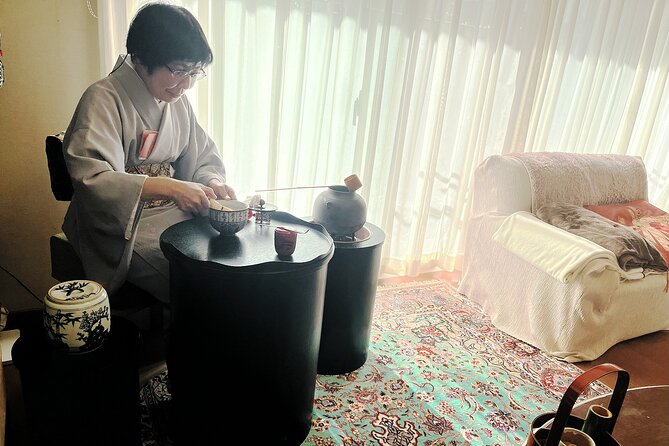
A maximum of four participants makes this a good fit for a family, couple, or small group of friends who want a focused cultural activity. Since only your group takes part, you do not have to adjust your pace to a busload of strangers.
That privacy can be especially useful if someone in your party feels nervous about formal customs. You can make mistakes, ask basic questions, and repeat a step without worrying about a large audience. The teaching can remain personal, which is one reason the activity has received a five-star rating from its eight published ratings.
There is also a useful balance for mixed-interest groups. Someone fascinated by Japanese culture can pay attention to the etiquette and history of the ceremony, while someone less familiar with the subject can focus on the sweets and hands-on tea making. You do not need to arrive with the same level of interest.
The small group does have one limit. If you are traveling alone, the private format may cost more per person than a larger class. The listed price is $67.11 per person, with group discounts available. For four people, the private setting can make that price easier to justify. For one person, compare it with larger public classes if your main goal is simply to taste matcha.
What the $67.11 price includes
The price includes the tools and materials needed for the activity, Japanese sweets, and matcha green tea. You do not need to bring tea equipment or purchase the basic refreshments separately.
The value comes from the teaching as much as the food. You receive an introduction to entering a tatami room, a demonstration by a tea master, instruction in the Ryurei style, and a chance to prepare the tea yourself. It is a compact cultural lesson, not just a beverage tasting.
Travel expenses are not included. You pay for your own transport to and from Ibaraki. That matters because the activity is not located at a central Osaka sightseeing landmark. You should also allow enough time for the walk from Ibaraki-shi Station and for finding the meeting point.
Group discounts may improve the value for a small party. Since the activity is private and limited to four people, check the price shown for your exact group size before confirming. The experience is also booked, on average, 37 days in advance, so planning early is sensible if your Osaka and Kyoto schedule is tight.
Fitting the 90-minute session into Osaka or Kyoto
The session takes about 60 to 90 minutes. That makes it easy to place before or after another activity, provided you allow time for transport and the walk from the station.
Ibaraki is between Osaka and Kyoto, so the location can work well if you are moving between those cities. It is less convenient if your entire day is confined to Osaka’s main central districts and you want to avoid any extra train travel. The activity provider specifically points out that you can continue exploring Osaka or Kyoto afterward.
Do not treat the stated 90 minutes as your full door-to-door commitment. Add time to reach Ibaraki-shi Station, walk to the meeting point, call on arrival, and return to the station. The lesson itself is short, but punctuality matters because the teacher has a set appointment.
The location may be a plus for travelers who want a quieter cultural stop outside the busiest tourist areas. It may be a drawback for anyone with a packed schedule around Dotonbori, Osaka Castle, or other central sights. Check your route before booking instead of assuming the meeting point is close to central Osaka.
Practical details that make the day easier
You receive confirmation within 48 hours of booking, subject to availability. The detailed address and phone number are provided as confirmation, so check your messages before leaving for the activity.
At the meeting point, call the supplied number and the staff will come to meet you. If you are late or lose your way, call rather than trying to solve the problem silently. The instructions clearly place importance on arriving on time.
The activity is near public transportation, but travel expenses are your responsibility. A mobile ticket is available, and free cancellation applies if you cancel at least 24 hours before the start time. Cancellations made less than 24 hours ahead are not refunded, and changes within that period are not accepted.
The experience is not described as wheelchair accessible, and no specific accessibility details are supplied. If you need particular access arrangements, contact the provider before booking rather than assuming the tatami room will suit your needs.
Who should book this tea ceremony
I would choose this for you if you want a cultural activity with real participation rather than a quick photo stop. It suits first-time visitors, couples, families, and small groups who like clear instruction and a quiet setting.
It is also a good option if one person in your party knows a lot about Japanese customs and another knows very little. The teacher begins with basic explanations, then lets you practice. You can enjoy the ceremony at your own level.
I would think twice if you want a central Osaka activity with no extra travel. The walk from Ibaraki-shi Station and the need to confirm the exact address add a little work. I would also compare prices if you are traveling alone and do not care about a private group.
Should you book the Ibaraki tea ceremony?
Book it if making your own matcha, learning tatami-room manners, and having direct instruction matter more to you than being in central Osaka. The private four-person limit, included sweets and equipment, and 60 to 90 minute format give the session a clear purpose and a manageable length.
Skip it if your itinerary leaves no room for the trip to Ibaraki or if you only want to drink matcha without learning the ceremony. For everyone else, this is a thoughtful way to add Japanese culture to a day between Osaka and Kyoto, with enough hands-on practice to make the lesson stick.
FAQ
Where does the tea ceremony take place?
The meeting point is Repark Ibaraki Oike 1-Chome, 1-chōme-14-46 Ōike, Ibaraki, Osaka 567-0826, Japan.
How far is the meeting point from the station?
The nearest station is Ibaraki-shi Station on the Hankyu Kyoto Line. The walk from the station takes about 10 to 15 minutes.
How long does the experience last?
The tea ceremony session takes about 60 to 90 minutes, or approximately 1 hour and 30 minutes.
How many people can join?
This is a private activity for your group, with a maximum of four participants.
What is included in the price?
The price includes the tools and materials needed for the activity, Japanese sweets, and matcha green tea.
Are travel expenses included?
No. You are responsible for your own travel expenses to and from the meeting point.
Do I need prior knowledge of Japanese tea ceremony?
No. The experience is designed for people who are new to Japanese culture as well as those who simply want to enjoy tea and sweets. The tea master provides an explanation and demonstration.
Can I cancel for a full refund?
Yes. You can cancel for a full refund up to 24 hours before the experience start time. Cancellations or changes made less than 24 hours before the start time are not accepted for a refund.
Newly steeped around Osaka
- Osaka:Zen Tea Ceremony and Foot Bath Experience<45min>★ 5.0 · 7 reviews
- Osaka Japanese Cooking And Matcha Class near Osaka Castle★ 5.0 · 22 reviews
- Nara Deer Park, Uji Matcha, & Hot Spring Full-Day Tour from Osaka★ 4.0 · 21 reviews
- Osaka: Tea Ceremony, Calligraphy, and Kimono Experience★ 5.0 · 6 reviews
- Tea and Calligraphy Session at a Table in Osaka★ 5.0 · 4 reviews
- Osaka: Nara, Todaiji, Uji Matcha, and Hot Spring Tour★ 4.0 · 7 reviews
- Craft Sushi and Matcha Ice Cream in Central Osaka (3-Course Meal)★ 5.0 · 2 reviews
- ZEN therapy | Shiatsu-style massage, EnergyTherapy & Japanese Tea★ 5.0 · 5 reviews
Tea Ceremony Experiences, compared.
Kyoto: Tea Ceremony in a Traditional Tea House in Kiyomizu
Read our review →
Kyoto: 45-Minute Tea Ceremony Lesson Experience
Read our review →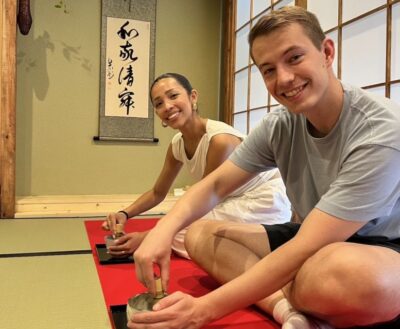
Kyoto: Table-Style Tea Ceremony at a Kyo-Machiya
Read our review →

Browse the lists this tea experience appears in