
Review · KYOTO
Sencha-do the Japanese Tea Ceremony Workshop in Kyoto
Senchado gives you a different taste of Kyoto’s tea culture. Instead of watching a host prepare matcha while you sit quietly, you handle the utensils, brew sencha yourself, and learn why each movement matters. The small class, capped at four people, makes this feel more like a private lesson than a staged cultural show.
I like the hands-on format and the chance to ask detailed questions about tea, ceremony, and school tradition. I also like the calm setting near Kitano Tenmangu, where instructor Kyo and the Higashi Abe school offer a direct introduction to a form of tea ceremony many visitors never encounter. The main drawback is practical: the address can be hard to locate using basic online directions, so allow extra time.
Key points at a glance
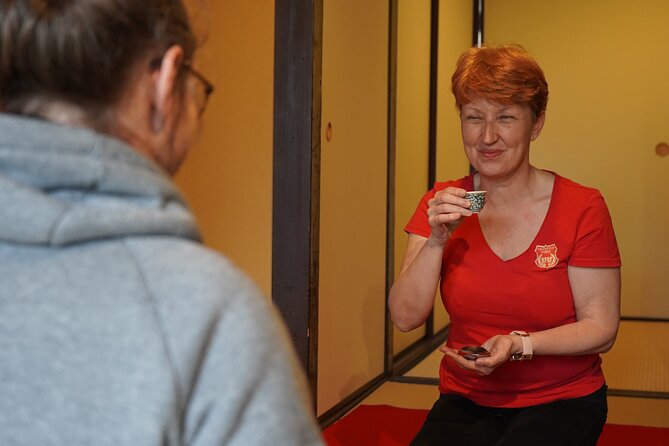
- A rare look at senchado: Learn the Japanese tea ceremony using loose sencha leaves rather than the powdered matcha most visitors know.
- You handle the utensils: The workshop lets you prepare and serve tea yourself under close guidance.
- A tiny class size: With a maximum of four people, you can ask questions and receive step-by-step help.
- Traditional Higashi Abe setting: The class takes place at Higashi Abe School’s Gaisuian in Kyoto’s Kamigyo Ward.
- Tea and wagashi included: Your brewed sencha is served with Japanese sweets.
- Plan for the meeting point: The location is near public transportation and the Kitano area, but the directions may require patience.
Senchado is not the matcha ceremony you may expect
Most visitors arrive in Kyoto having heard about matcha. Senchado offers a useful correction to that narrow picture. Here, the tea is sencha, made from steamed tea leaves and brewed with hot water. The result is a fragrant, flavorful drink that can taste sweet and rounded rather than strongly bitter.
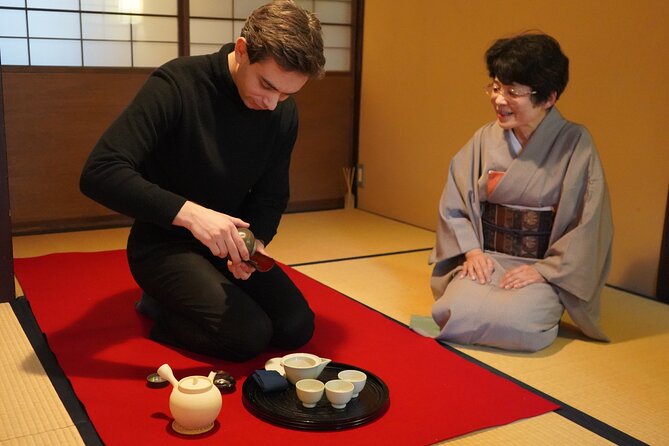
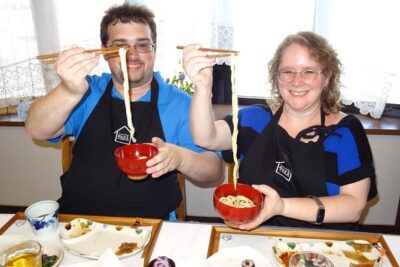
The ceremony is refined, but it is not only about sitting still and observing. You first watch the instructor perform the sequence. Then you take your turn. You learn how the tea is prepared, how the utensils are used, and how the cup is presented. This makes the class especially worthwhile if you want to understand the actions instead of simply photographing them.
Senchado has its own rules, rhythm, and visual style. The instructor pays attention to water, timing, placement, and movement. Those details may look small from the outside, but they show how Japanese tea practice treats ordinary actions as worthy of care.
The workshop is led by a master of the Higashi Abe school. One instructor named in the available information is Kyo, described as patient and respectful of the tradition. The school also has a grandmaster and a young master, so the exact teacher may depend on the day you visit.
More Green Tea Tours in Japan
- Scenic Green Tea Fields of Hidden Kyoto & Local Tea Exp (Private)
★ 5.0 · 32 reviews - Kyoto Matcha Green Tea Tour
★ 4.7 · 28 reviews - Cycling Tour at Uji’s Matcha Green Tea Fields and Heritage
★ 5.0 · 10 reviews
Entering Gaisuian near Kitano
The workshop takes place at Higashi Abe School’s Gaisuian, at 668-12 Toriimaecho, Kamigyo Ward, Kyoto, postal code 602-8393. The address places you in the Kitano area, close to Kitano Tenmangu Shrine, one of northern Kyoto’s major sights.
This location works well as part of a half-day around Kitano. You can pair the tea class with the shrine and nearby streets rather than crossing the city only for a 90-minute activity. The school is near public transportation, but the final approach may not be obvious.
Here is my practical advice: do not leave your hotel at the last possible moment. One person had difficulty finding the school from the supplied directions and needed local help. Use the full Japanese address, 東阿部流(雅翠庵), along with the postal code. Having the exact address ready on your phone is a sensible precaution.
Once you arrive, expect a traditional studio rather than a large commercial attraction. That matters. A small school setting gives the ceremony a more personal feel, but it also means you should not expect a broad reception desk, prominent signs, or the easy-to-spot entrance of a major museum.
The opening demonstration shows the ceremony’s quiet logic
The first part is a demonstration by the host. Watch closely, because this is where you see the complete flow before trying it yourself.
The instructor prepares and serves sencha with careful movements. You will see how the utensils are arranged, how tea is brewed, and how the finished cup is offered. The presentation also provides the context that keeps the ceremony from feeling like a series of unexplained gestures.
A strong feature of this class is the opportunity to ask questions. The teaching includes the story of the tea school and the development of this type of ceremony. You may also learn how senchado differs from other Japanese tea practices in Kyoto.
This introduction is valuable for families and first-time visitors. Children can see the full performance before they attempt it, while adults can focus on the meanings behind the actions. The school’s teachers are accustomed to explaining the process carefully, and the small group limit leaves room for conversation.
Do not expect a quick demonstration designed only for photographs. The ceremony is precise, and the point is to notice the details. The pace may feel slow if you want constant activity, but that quiet rhythm is central to the lesson.
Your turn: brewing and serving sencha
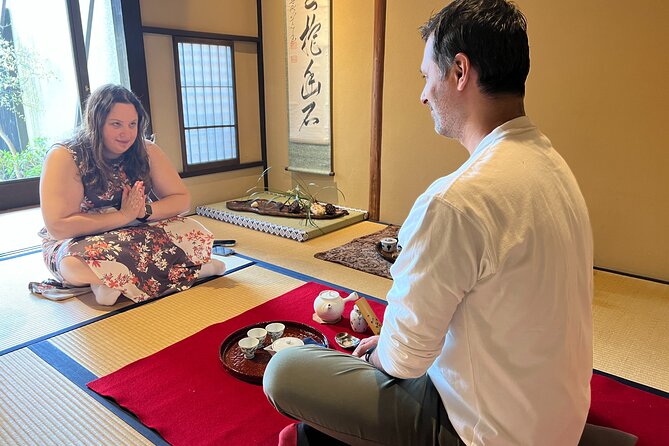
After the demonstration, you become the active participant. Under the master’s direction, you learn how to brew and serve the tea.
This is the heart of the workshop. You can touch the utensils, follow the sequence, and correct your movements as you go. In many tea presentations, the visitor remains an observer. Here, you get a more useful understanding because your hands are involved.
The instructor guides you step by step. You do not need prior tea experience, and the activity states that most people can participate. If you are interested in Japanese culture but do not know the etiquette, that is fine. The lesson is built around instruction rather than prior skill.
The class also suits families. Children may enjoy the practical task of preparing tea, while parents can take in the cultural background. Couples and solo visitors benefit from the same small-group format. A group of four can ask more questions than a large class, and the teacher can give each person attention.
Keep your expectations realistic. In 90 minutes, you will learn an introduction to senchado, not master the school’s full tradition. One of the useful lessons here is realizing how long it takes to learn all the forms and movements properly. The workshop gives you a respectful starting point, not a certificate of expertise.
More Tea Ceremonies in Kyoto
- Kyoto: Tea Ceremony in a Traditional Tea House in Kiyomizu
★ 4.9 · 3,519 reviews - Kyoto: Tea Ceremony Ju-An at Jotokuji Temple
★ 4.9 · 3,207 reviews - Kyoto: 45-Minute Tea Ceremony Lesson Experience
★ 4.3 · 2,378 reviews - Kyoto: Table-Style Tea Ceremony at a Kyo-Machiya
★ 4.9 · 1,211 reviews
Drinking sencha with wagashi
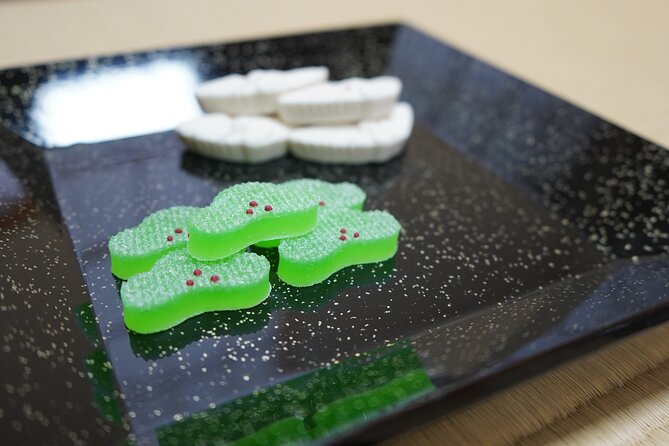
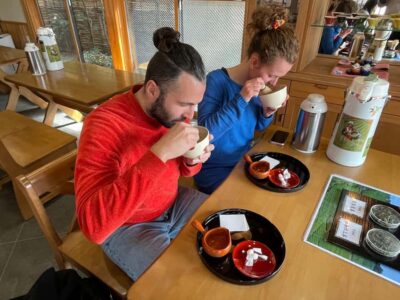
Once you have prepared the tea, you sit down to enjoy it with wagashi, traditional Japanese sweets. This final tasting gives the activity a pleasant finish and lets you notice the relationship between tea and food.
Sencha can be more approachable than visitors expect. It is brewed from leaves rather than whisked from powder, and its flavor can be sweet and full. The wagashi provides a small counterpoint to the tea, making the tasting feel like part of the ceremony rather than a separate snack.
The tea and sweets are included in the price, so you are not paying extra for the basic refreshment. The included food is modest, however. This is a cultural lesson with a tea tasting, not a meal. Schedule lunch or dinner separately if you are hungry.
The tasting also helps connect technique with flavor. You have just learned how the tea is prepared, so you can pay attention to the result in a more informed way. That is one reason I prefer this kind of workshop to a simple cup of tea served without explanation.
Why the four-person limit matters
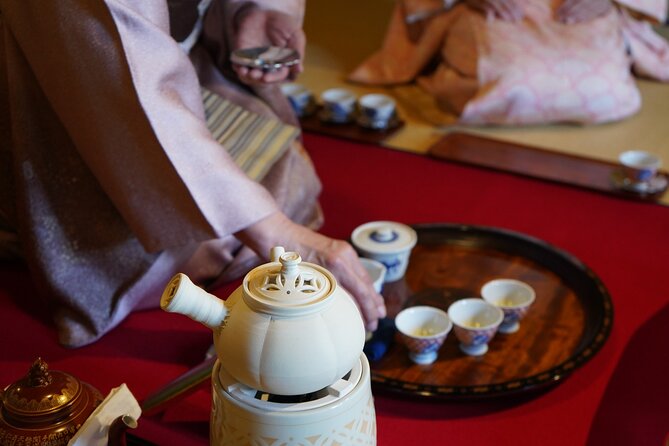
The maximum group size is four people. That is one of the strongest features of the activity.
In a larger class, you might see the demonstration clearly but receive little help during your own attempt. With four participants, the master can watch what you are doing and explain the sequence without rushing. You can also ask about utensils, school customs, and the differences between senchado and matcha practice.
The small size makes this a good choice for a couple, a family, or a solo visitor who prefers direct contact. If you book as a group, you are likely to share the lesson with fewer people than at a mass-market cultural performance.
There is a trade-off. A tiny traditional school may not offer the same range of languages, schedules, or backup arrangements as a large tourist company. The supplied information does not specify the teaching language, so confirm that point if it matters to you.
Photography is welcome, which is useful for recording the utensils and your own tea preparation. Still, use good judgment during the formal demonstration. Let the instructor’s movements guide your attention, and take pictures without turning the ceremony into a photo session.
Is $107.45 a fair price?
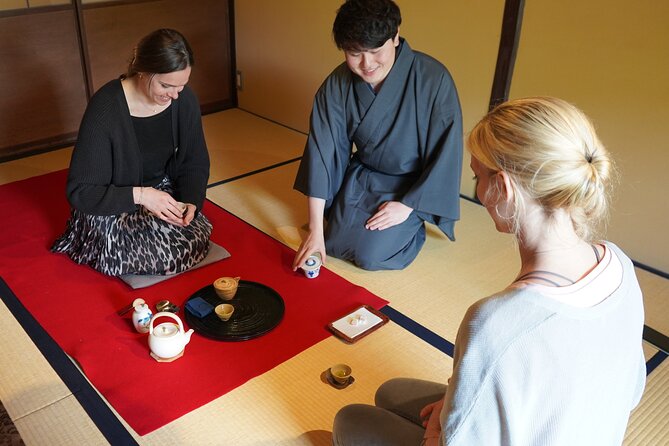
At $107.45 per person, this is not a cheap cup of tea. The price makes more sense if you value instruction, cultural context, and a very small class.
You are paying for about 90 minutes with a school connected to the Higashi Abe tradition, a formal demonstration, direct practice with the utensils, guided brewing and serving, sencha, and wagashi. The maximum of four people is important here. A large group activity at a lower price would offer a different kind of experience.
I would consider the cost reasonable for someone who has already seen Kyoto’s temples and wants a more personal activity. It is also a good choice if you have a strong interest in Japanese tea, religion, etiquette, or traditional arts.
For a family, the calculation depends on how many people want to participate. The activity offers group discounts, which may help. Since private transportation is not included, you also need to arrange your own way to the school.
The booking pattern suggests that people often reserve about 23 days ahead. That is useful planning information, particularly if your Kyoto schedule is tight. I would not wait until the last day if this is one of the experiences you most want to fit in.
Who should book this Kyoto tea workshop?
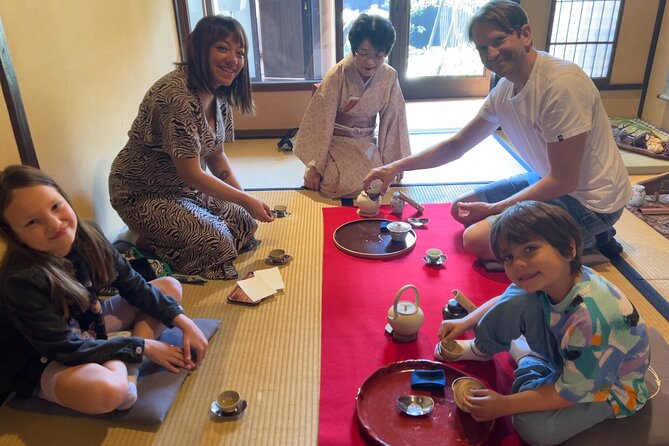
Book it if you want to do more than watch. The hands-on practice is the main reason to choose this class over a standard tea ceremony performance.
It is a strong fit for:
- First-time visitors to Japanese tea culture: You get a clear introduction without needing prior knowledge.
- Families: The practical preparation gives children a role, and the teacher provides step-by-step help.
- Couples and solo visitors: The four-person limit makes the lesson personal.
- Tea enthusiasts: You can explore sencha rather than staying with the more familiar matcha.
- Culture-focused visitors: The school’s background and family tradition add useful context.
- Kitano-area visitors: The location works well with a visit to Kitano Tenmangu Shrine.
You may want another activity if you are looking for a large, theatrical performance, a full meal, or a broad sightseeing tour. This class concentrates on one tradition. Its strength is focus, not variety.
People with mobility concerns should check their personal needs before booking, since the supplied details do not describe the seating arrangement or floor surface. Service animals are allowed, and the activity states that most people can participate.
Timing, cancellation, and weather notes
The activity lasts about one hour and 30 minutes, and it ends back at the meeting point. Build in time before the start to find the school, especially if this is your first visit to the Kitano area.
Free cancellation is available if you cancel at least 24 hours before the start time. Changes made inside that 24-hour window are not accepted, and the payment is not refunded for a late cancellation.
The activity may also be canceled if poor weather affects operation or if the minimum number of participants is not reached. In those cases, you are offered another date or experience, or a full refund. That policy is worth noting even though the class takes place indoors.
My verdict: book it for participation, not spectacle
I would book the Sencha-do Japanese Tea Ceremony Workshop if I wanted a calm, focused cultural lesson with real participation. The combination of a traditional Higashi Abe school, a teacher such as Kyo, hands-on utensil practice, sencha, and wagashi gives the 90 minutes real substance.
The strongest reason to go is simple: you do not just watch someone else make tea. You learn the sequence yourself, ask questions, and taste the result. The main cautions are the price, the sometimes tricky meeting point, and the limited time, which can only introduce a tradition that takes years to master.
Bring the full Japanese address, arrive early, and treat the class as a lesson rather than a quick photo stop. For families, couples, solo visitors, and anyone curious about tea beyond matcha, this is a thoughtful use of an afternoon in Kyoto.
FAQ
Where does the sencha tea ceremony workshop take place?
It takes place at Higashi Abe School’s Gaisuian, at 668-12 Toriimaecho, Kamigyo Ward, Kyoto, 602-8393, Japan. The Japanese name is 東阿部流(雅翠庵).
How long does the activity last?
The workshop lasts approximately one hour and 30 minutes.
What type of tea will I learn to prepare?
You will learn to prepare and serve sencha, a green tea made from steamed tea leaves. This is different from powdered matcha.
Is the workshop hands-on?
Yes. After watching the demonstration, you handle the utensils and prepare and serve sencha with step-by-step guidance.
What is included in the price?
Green tea and Japanese sweets called wagashi are included. Private transportation is not included.
How many people can join the workshop?
The activity has a maximum of four participants.
Can I take photographs?
Yes. Photography is allowed during the experience.
What is the cancellation policy?
You can cancel for a full refund up to 24 hours before the experience start time. Cancellations or changes made less than 24 hours in advance are not accepted for a refund.
More Green Tea Tours in Kyoto
- Matcha Green Tea Plantation and Matcha Factory Visit
★ 5.0 · 6 reviews - Family Mitsui House Museum with green tea admission ticket
★ 4.0 · 5 reviews - Experience all of Japanese culture and Japanese food experience classes “origami, udon, Japanese food, green tea, calligraphy” in 4 hours
★ 5.0 · 105 reviews - Uji: Green Tea Tour with Byodoin and Koshoji Temple Visits
★ 4.8 · 72 reviews
Newly steeped around Kyoto
- Whisk Your Own Matcha: A Zen Matcha Experience at Temple★ 3.6 · 7 reviews
- Uji Walking Tour – Byodo-in temple and Tea Ceremony from Kyoto★ 3.5 · 3 reviews
- Kyoto: Authentic Tea Ceremony in a Small Group★ 5.0 · 7 reviews
- Tea ceremony at Kyoto’s Zen Temple Teahouse★ 5.0 · 2 reviews
- Tea Ceremony Experience in Traditional Kyoto Townhouse★ 5.0 · 19 reviews
- Tea Ceremony in 150 Years Old Townhouse with Tables and Chairs★ 5.0 · 22 reviews
- Silent Beauty of Kyoto Zen Walk and Tea Experience★ 5.0 · 2 reviews
- Traditional Tea Ceremony in Kyoto★ 4.5 · 3 reviews
Green Tea Tours, compared.
Uji: Green Tea Tour with Byodoin and Koshoji Temple Visits
Read our review →
Scenic Green Tea Fields of Hidden Kyoto & Local Tea Exp (Private)
Read our review →
Osaka; Japanese Tea ceremony experience, Macha and Sencha
Read our review →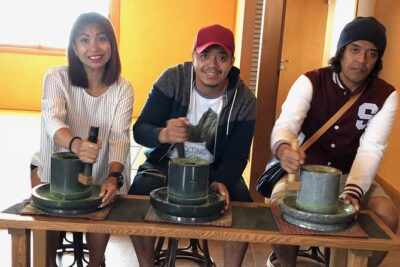
Slow Cycling Tour at Uji’s Matcha Green Tea Fields and Heritage
Read our review →
Uji Tea Ceremony and UNESCO Heritage Walking Tour
Read our review →
Authentic Japanese tea tasting: sencha, matcha and gyokuro
Read our review →Browse the lists this tea experience appears in