

Review · OSAKA
Osaka Sushi Cooking Class
The best part of this Osaka sushi class is that you do not just watch a chef work. You shape the rice, handle the fillings, roll the maki, and sit down to eat what you made. Nigiri and maki give you two very different sushi skills in one compact lesson.
I like the small maximum of eight people, which should make it easier to see the demonstrations and get help with your hands-on work. I also like that ingredients, equipment, water, and green tea are included, so the $78.04 price covers the main parts of the experience.
The main point to consider is location. The class meets at 3-chōme-35-5 Tarumichō in Suita, Osaka, rather than at a major central sightseeing spot. Its 90-minute length is useful for a busy schedule, but it leaves little room for a long lesson or a large meal.
Key points before you book
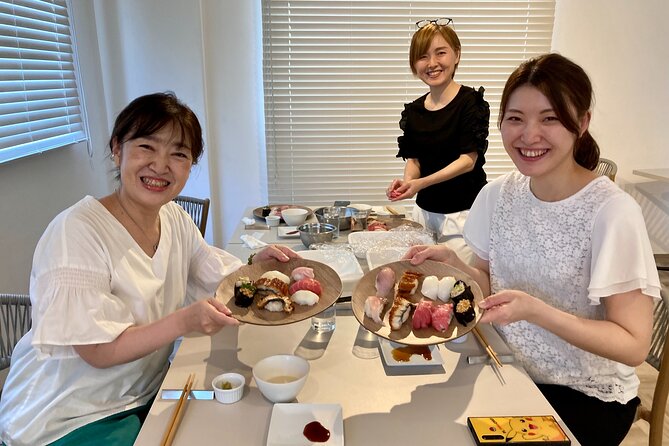
- You make both nigiri and maki: The class covers hand-shaped sushi with toppings and rolled sushi with fillings.
- Kazuki Harada is praised for his teaching: Available feedback describes him as professional, friendly, and helpful enough to give one participant confidence to make sushi at home.
- The class stays small: A maximum of eight people means this is more personal than a large demonstration.
- Tea and basic supplies are included: You receive ingredients, equipment, water, and green tea, while alcohol costs extra.
- The activity returns to its starting point: You meet and finish at the same Suita address.
- Cancellation is flexible up to 24 hours ahead: Cancel at least 24 hours before the start time for a full refund.
What this Osaka sushi class actually offers
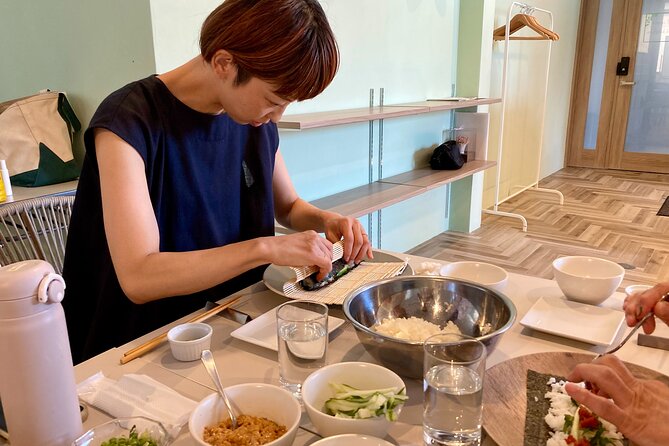
This is a short, hands-on introduction to sushi making. In about an hour and a half, you learn the basic parts of sushi, practice two common styles, discuss flavor additions, and eat your finished work.
That format suits you if you want something practical rather than a long food lecture. You will not spend the whole time watching a chef slice fish behind a counter. The focus is on making sushi yourself, with guidance along the way.
The class is designed for all levels. If you have never touched a sushi mat, the step-by-step format should give you a clear starting point. If you already enjoy sushi, you can use the lesson to improve your rolling and rice-shaping technique.
The setting is in Suita, in Osaka Prefecture. Since the meeting point is near public transportation, reaching it should be manageable, but you will want to check your route carefully before booking. The address is specific: 3-chōme-35-5 Tarumichō, Suita, Osaka 564-0062.
More Cooking Classes with Tea around Osaka:
- Osaka Japanese Cooking And Matcha Class near Osaka Castle
★ 5.0 · 22 reviews - Osaka: Japanese Cooking Class with Matcha Experience
★ 5.0 · 4 reviews - Cultural Cooking Class Featuring Ramen Sushi and Tea Ceremony
★ 5.0 · 2 reviews
Starting with sushi basics
The class opens with a welcome and an explanation of what you will cover. This matters because sushi looks simple on the plate, yet each part has a job.
You learn about rice, seaweed, fillings, and condiments. That foundation helps you understand why sushi depends on balance. Rice gives structure, seaweed holds a roll together, fillings add texture and flavor, and condiments change the final taste.
I like this order. Instead of handing you ingredients without context, the chef first sets out the basic building blocks. You can then understand what you are doing when the practical work begins.
The lesson is also suitable for people who do not cook much. The goal is not to turn you into a professional sushi chef in 90 minutes. It is to give you enough technique to shape and roll sushi with confidence.
One limit is that the available information does not specify the exact fish, vegetables, or other fillings used. If a particular ingredient matters to you, ask the provider before booking. The class description promises ingredients, but it does not provide a full menu.
Making nigiri by hand
Nigiri is the sushi many people picture first: a small portion of rice topped with an ingredient. In this class, the chef shows you how to shape the rice and place the topping.
This is a useful skill because nigiri leaves little room to hide mistakes. The rice needs to hold together without becoming a hard block. The topping needs to sit neatly on top. You learn by copying the chef’s movements, then adjusting your own technique.
For a beginner, the hands-on nature is the point. You get a feel for how much rice to use and how gently to handle it. Those small movements are hard to understand from a recipe alone.
The class does not promise a large selection of toppings or a professional knife lesson. Its focus is shaping and assembly. If you are looking for a detailed fish-cutting workshop, this is probably not the right choice. If you want to learn the basic form of nigiri and eat your own results, it fits well.
The tasting at the end gives this section a clear purpose. You are not practicing with empty ingredients. You make sushi that becomes part of your final plate.
Rolling maki without the guesswork
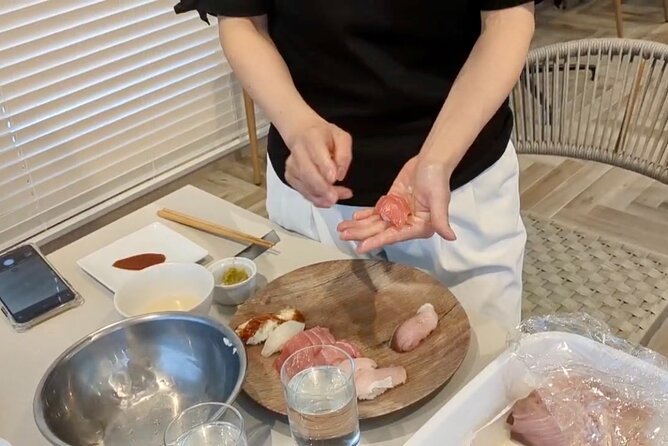
Next comes maki, the rolled style made with seaweed and fillings. The chef guides you through arranging the ingredients and rolling everything into shape.
Maki is a good contrast to nigiri. Nigiri teaches control with rice and toppings. Maki adds another layer of technique, since you need to distribute the filling and apply enough pressure to create a firm roll without crushing it.
This is where a small group can make a real difference. With no more than eight people, you should have a better chance of seeing the demonstration and asking for help if your first roll is loose or uneven.
Do not expect every roll to look like one from a skilled sushi counter. That is part of the fun. Your first attempt may be a little lopsided, but the process shows you how ingredients, rice, and seaweed work together.
The class also leaves room for personal choices with fillings, although the available details do not say exactly how much customization is offered. The description presents maki as a chance to bring creativity into the process, so you can expect some attention to how fillings combine.
Same leaf, a different ritual:
- Osaka: Tea Ceremony Experience
★ 4.9 · 1,426 reviews - Tea Ceremony Experience in Osaka Doutonbori
★ 5.0 · 754 reviews - Matcha Making Class in Osaka with Authentic Japanese Sweets Set
★ 5.0 · 509 reviews - Osaka: Matcha Making Experience with Japanese Sweets
★ 5.0 · 146 reviews
Wasabi, soy sauce, and pickled ginger
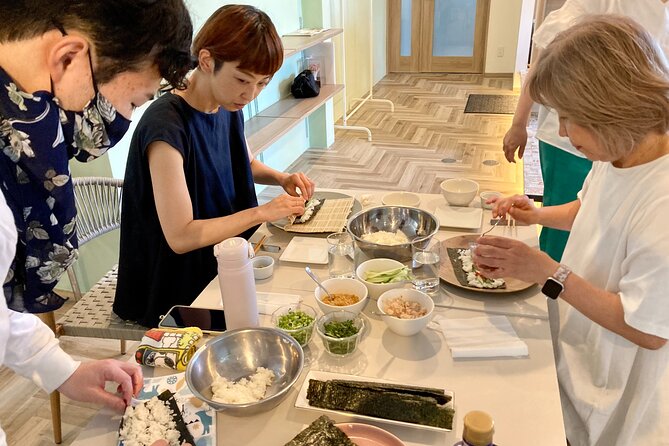
A short section covers the familiar flavor additions served with sushi: wasabi, soy sauce, and pickled ginger.
This may sound basic, but it helps you use these items with more care. Soy sauce can add salt, wasabi brings heat, and pickled ginger refreshes your palate between bites. The class treats them as part of the sushi experience rather than decoration on the side.
You also receive water and green tea. Green tea is included twice in the supplied details, which simply confirms that tea is part of the provision. Alcohol is not included, so Japanese sake and beer would be an additional purchase if available.
I appreciate this simple beverage policy. You know what is covered in the price, and you are not paying for a package filled with drinks you may not want.
The final tasting: your work on the plate
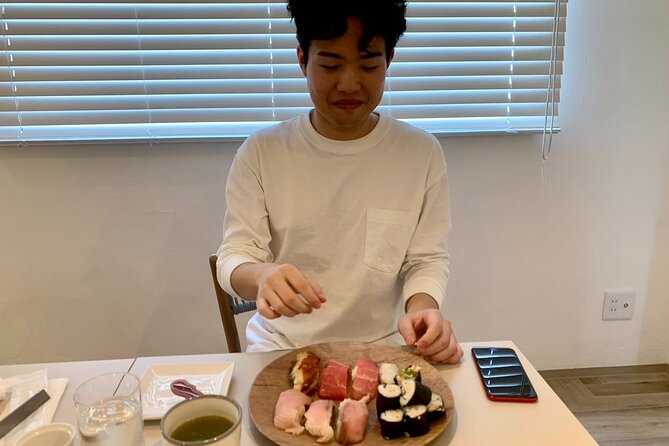
The class ends with a tasting and a chance to share your thoughts. This is the payoff for the earlier instruction. You sit down with the nigiri and maki you prepared, rather than leaving as soon as the rolling is finished.
Eating your own sushi also gives you a practical way to judge the lesson. You can see how the rice holds together, whether the roll has a good balance of filling, and how the condiments change the flavor.
The class is described as a quick experience, not a full dinner. You should think of the tasting as a satisfying sample of your work rather than a large restaurant meal. If you have a big appetite, plan another meal afterward.
The shared tasting also makes the class feel social without requiring a long commitment. You have a clear beginning, a practical middle, and a final moment to enjoy what you made.
The instructor and the small-group format
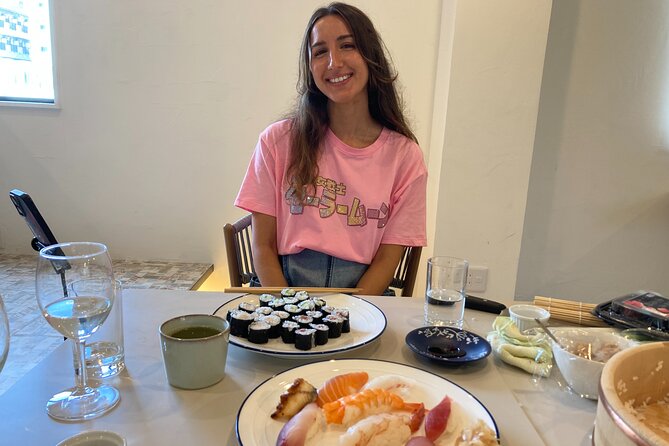
The strongest specific praise goes to Kazuki Harada, who is described as an excellent instructor with a good personality and a professional approach. One participant left feeling able to make sushi for family and friends, which is exactly the sort of useful result this class should aim for.
If Kazuki is leading your session, you can expect the benefit of an instructor who has already made a strong impression through clear teaching and a friendly manner. The supplied details do not guarantee that he will lead every date, so check the booking information if meeting him is important to you.
The group limit is eight people. That is small enough to keep the class from feeling like a staged show, while still allowing a shared atmosphere. It also matters for beginners. You can make mistakes without feeling lost in a crowd, and the chef has a better chance of noticing when your rice shape or roll needs correction.
The tradeoff is that the class may fill quickly, especially because availability is limited. If your Osaka schedule is fixed, book early enough to secure the time that works for you.
Is $78.04 good value?
At $78.04 per person, this is not the cheapest way to eat sushi in Osaka. You could certainly find a less expensive meal. The value comes from combining food with instruction and active participation.
Your price includes the ingredients and equipment needed for the class, plus water and green tea. You are also paying for about 90 minutes with a chef, the chance to practice two sushi styles, and the final tasting.
I think the price makes the most sense in three situations. First, you want an activity rather than another restaurant meal. Second, you enjoy learning skills you can use after your trip. Third, you prefer a small class where you can work directly with the ingredients.
It is less compelling if your only goal is to eat excellent sushi. A skilled sushi restaurant will likely offer more variety and a more polished final product. This class is about the process as much as the taste.
The home-cooking benefit adds some value. The participant whose feedback is available felt ready to make sushi for family and friends after the class. That does not mean you will become an expert in one session, but it suggests the lesson can give you a practical base to repeat at home.
Suita location and timing
The meeting point is in Tarumichō, Suita, north of the busiest central Osaka sightseeing areas. The class is near public transportation, which helps, but the address is not described as being next to a major tourist landmark.
You should allow enough time to reach 3-chōme-35-5 Tarumichō and find the exact entrance. The activity begins and ends at the same location, so you do not need to arrange a separate return transfer.
The 90-minute duration is one of the class’s strengths. You can fit it between other plans without giving up half a day. It also means the lesson stays focused.
The short format has a limit. There is time for the basics, nigiri, maki, flavor additions, and tasting, but not for a long discussion of sushi culture or advanced preparation. Book it for a compact, practical lesson, not an all-day food course.
Who should book this class?
I would recommend it to first-time sushi makers, couples, families, and food-focused visitors who want to do something active. It also works for anyone who has eaten plenty of sushi but never learned how the pieces are formed.
It is a good choice for a short Osaka itinerary because the class has a clear 90-minute schedule. The small group should suit you if you prefer direct help rather than standing at the back of a large demonstration.
You may want to skip it if you are mainly seeking a premium sushi tasting, a wide range of fish, or a detailed lesson in professional knife work. Those are not the focus here.
The class is also worth considering if you want a souvenir that is more useful than a photograph. Afterward, you can try to repeat the nigiri and maki techniques at home, using the lesson as a starting point.
Booking, cancellation, and practical details
Confirmation is provided when you book, and the activity accepts a mobile ticket. That makes it easy to keep the booking on your phone rather than carrying printed paperwork.
The class accepts a maximum of eight people. Free cancellation is available if you cancel at least 24 hours before the local start time. A cancellation made less than 24 hours ahead is not refunded, and changes within that window are not accepted.
Since alcohol is excluded, do not assume sake or beer is part of the experience. Water and green tea are included, along with the ingredients and equipment.
Should you book the Osaka Sushi Cooking Class?
Book this class if you want to make your own sushi, learn two basic styles, and enjoy a small-group activity that fits into 90 minutes. The personal teaching, especially if Kazuki Harada leads your session, is a major reason to choose it. The included supplies and tea also make the price easier to understand.
Skip it if you want a large meal, a central Osaka meeting point, or advanced sushi training. For everyone else, this is a focused and friendly way to turn a familiar Japanese food into a hands-on skill. You leave with a full tasting plate, a better sense of how sushi is assembled, and perhaps enough confidence to make the next batch for friends and family.
FAQ
How long does the Osaka Sushi Cooking Class last?
The class lasts approximately 1 hour and 30 minutes.
Where does the class meet?
It meets at 3-chōme-35-5 Tarumichō, Suita, Osaka 564-0062, Japan.
Where does the activity end?
The activity ends back at the meeting point in Suita.
What types of sushi will I make?
You will learn to make nigiri sushi and maki rolls.
Are ingredients and equipment included?
Yes. Ingredients and equipment are included, along with water and green tea.
Are alcoholic drinks included?
No. Alcoholic drinks such as Japanese sake and beer are not included.
How many people can join the class?
The activity accepts a maximum of eight people.
Can I cancel for a full refund?
Yes. You can receive a full refund if you cancel at least 24 hours before the experience start time.
Newly steeped around Osaka
- Osaka:Zen Tea Ceremony and Foot Bath Experience<45min>★ 5.0 · 7 reviews
- Osaka: Tea Ceremony, Calligraphy, and Kimono Experience★ 5.0 · 6 reviews
- Osaka Japanese Cooking And Matcha Class near Osaka Castle★ 5.0 · 22 reviews
- Nara Deer Park, Uji Matcha, & Hot Spring Full-Day Tour from Osaka★ 4.0 · 21 reviews
- Tea and Calligraphy Session at a Table in Osaka★ 5.0 · 4 reviews
- Osaka: Nara, Todaiji, Uji Matcha, and Hot Spring Tour★ 4.0 · 7 reviews
- Craft Sushi and Matcha Ice Cream in Central Osaka (3-Course Meal)★ 5.0 · 2 reviews
- ZEN therapy | Shiatsu-style massage, EnergyTherapy & Japanese Tea★ 5.0 · 5 reviews
Japan Tea Tours, compared.
Kyoto: Tea Ceremony in a Traditional Tea House in Kiyomizu
Read our review →
Kyoto: 45-Minute Tea Ceremony Lesson Experience
Read our review →
World Heritage Kyoto & Nara Uji Authentic Matcha Experience
Read our review →
Kyoto: Table-Style Tea Ceremony at a Kyo-Machiya
Read our review →

Browse the lists this tea experience appears in