
Review · OSAKA
Tea Ceremony Experience in Osaka Doutonbori
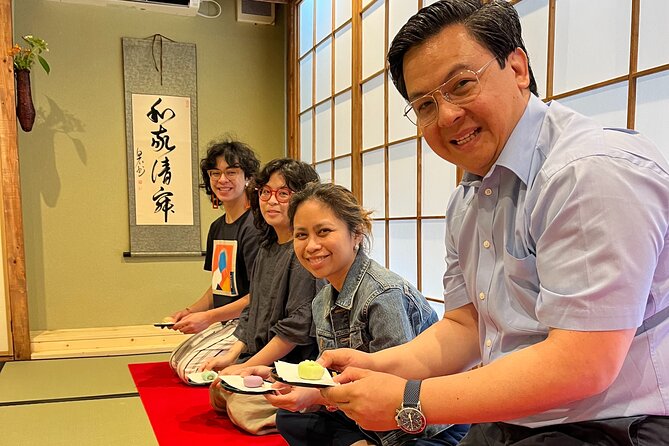
The best part of this Osaka experience is the contrast: you are near Dotonbori’s bright signs and busy streets, yet inside the class the pace slows to careful movements, quiet attention, and a bowl of freshly whisked tea. You learn the cultural meaning of a ceremony that has been practiced as an art form since the 16th century, then take part yourself.
I like the small-group format, with no more than 15 people and often fewer, and the chance to make your own matcha rather than simply watch. I also like the practical teaching. Instructors such as Kazu, Mai, and Soda explain how to prepare, serve, and drink the tea, including the manners behind each step.
The main consideration is the short 45-minute schedule. You get a clear introduction, not a long formal ceremony or a change into traditional clothing. Families should also check the age rule carefully: children under five may not join the regular plan.
Key points to know before you book
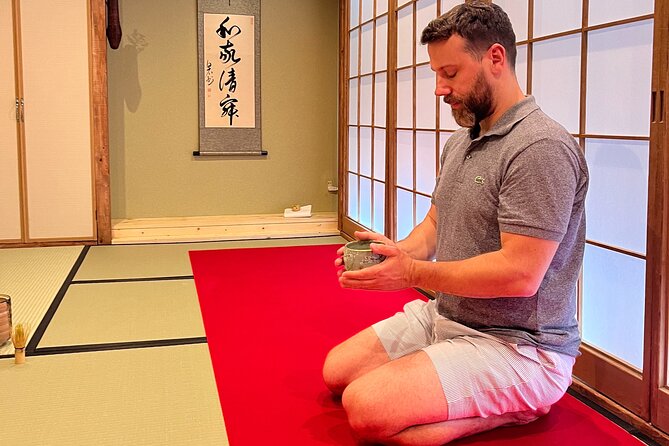
- You make your own matcha: Watch the instructor first, then whisk and drink your own bowl.
- Dotonbori location: The class is in central Osaka, close to the food, lights, and crowds of the canal district.
- Personal instruction: The group limit is 15, with some sessions much smaller.
- Family-friendly option: Children can have caffeine-free matcha milk instead of standard matcha.
- Traditional sweets included: A seasonal Japanese sweet or matcha pastry accompanies the tea.
- Careful arrival matters: Search Google Maps for Tea Ceremony Osaka The Osaka and include Higashi in the address.
A quiet room beside Dotonbori
This is a useful cultural stop when you want more than Osaka food and neon. The meeting point is Tea Ceremony Osaka The Osaka, on the second floor of Dotonbori Building at 1-chome Higashi-5-26, Chuo Ward, Osaka 542-0077.
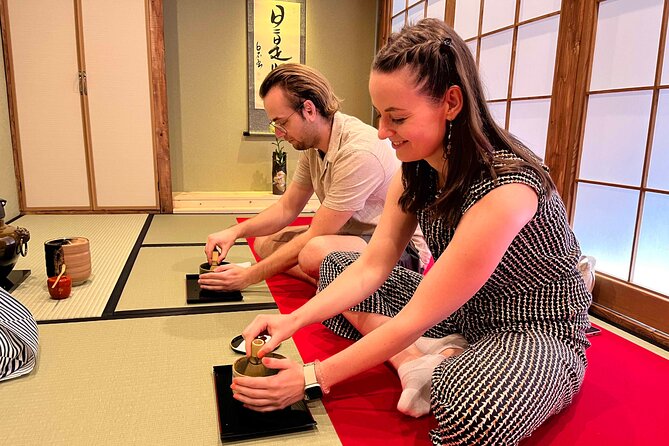
The location puts you in the middle of one of Osaka’s most famous areas, but the activity itself offers a sharp change of mood. You leave the noise of the surrounding streets and focus on the tea bowl, the bamboo whisk, the sweets, and the instructor’s movements.
That setting gives the class much of its appeal. You do not need to spend a full day traveling to a remote temple or tea house to get an introduction to the custom. You can fit it between sightseeing, shopping, or a meal in Dotonbori.
Take care when finding the address. The directions specifically warn that map links may send you to the wrong place. Use the Google Maps app and search for tea ceremony osaka the osaka. The address includes Higashi, written 東. The common mistake is entering 1-5-26 without Higashi.
More Tea Ceremonies in Osaka
- Osaka: Tea Ceremony Experience
★ 4.9 · 1,426 reviews - Osaka: Tea Ceremony, Calligraphy, and Kimono Experience
★ 4.9 · 130 reviews - Osaka: Japanese Traditional Sweets Making and Tea Ceremony
★ 4.7 · 118 reviews
What happens during the 45-minute class
The session begins with an explanation of the ceremony’s background, customs, and etiquette. You learn that tea preparation is not simply a way to make a drink. The gestures, order, and manners all help create a respectful meeting between host and guest.
The instructor explains the tools and shows how the ceremony is carried out. This is the part where you watch the proper rhythm of the preparation before attempting it yourself. The teaching is aimed at first-time participants, so you do not need prior knowledge of Japanese tea practice.
Instructors have more than a decade of experience, and the named hosts include Kazu, Mai, and Soda. The exact instructor depends on the session, but the teaching style described for the experience is warm, clear, and interactive. English guidance is available, and one instructor is noted for speaking very good English.
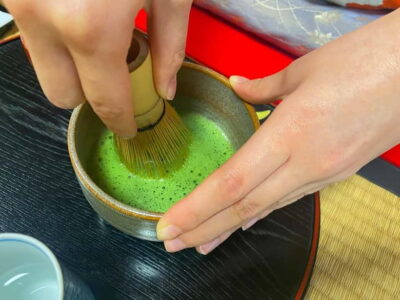
After watching the demonstration, you make your own matcha. You learn how to handle the bowl and whisk, then drink the tea in the traditional manner. This hands-on part is important. It turns the class from a short talk about Japanese customs into something you can physically remember.
The movements are not difficult, but they do require attention. You may also learn a small foot-shuffling movement used during the ceremony. Kazu is known for making this part relaxed and amusing, which helps keep the formal rules from feeling stiff.
Why the history adds meaning
A tea ceremony can look highly formal if you do not know why the details matter. The background lesson helps put the movements into context.
The practice developed as an art form in Japan from the 16th century onward. The class also covers tea’s place among the samurai, including the way tea gatherings could provide a setting for political discussion and strategy. Another point is the idea that participants meet as equals during the ceremony, despite their position outside the tea room.
You do not get a university lecture in 45 minutes, and that is reasonable. Instead, you get enough context to understand why the host cleans, turns, presents, and receives the bowl in a particular way. That makes the ritual easier to appreciate rather than something you simply copy.
I find this background especially useful if you have already seen temples, shrines, and historic streets in Japan. A tea ceremony shows culture through behavior and hospitality, not only through buildings and objects.
Making and drinking your own bowl
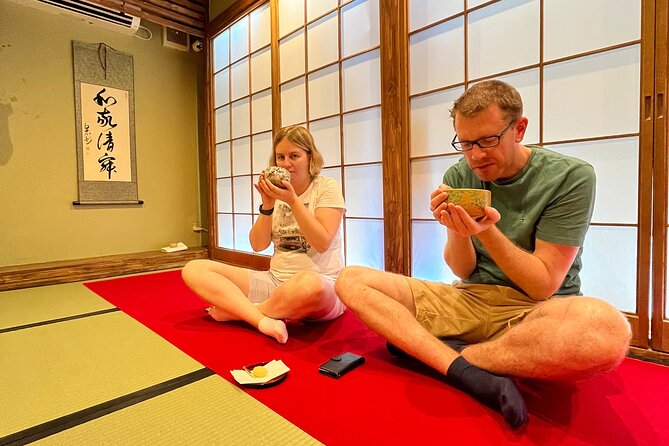
The central activity is the matcha preparation. You first watch the host make the tea, then repeat the basic process yourself. The class explains the proper way to prepare and serve it, as well as how to drink it.
The interactive format suits people who learn by doing. You can see the tools in use, handle them yourself, and taste the result. Your bowl may not look exactly like the instructor’s first time, but that is part of the point. The class gives you a simple way to understand the care involved in a good bowl of matcha.
The tea comes with a traditional Japanese sweet. Seasonal sweets are mentioned, as are matcha pastries, so the exact item may vary. The sweetness helps balance matcha’s strong, grassy taste and gives you another small introduction to Japanese food customs.
Some sessions begin with tea prepared by the host before each person makes a bowl. That lets you taste a properly made serving first and gives you a reference for your own attempt. You also learn that serving and drinking have their own etiquette, not just the preparation itself.
If you already drink matcha, the class still offers value through the cultural side. If you have never tried it, expect a taste that may be more bitter and earthy than sweetened matcha drinks. The included sweet makes the experience easier for first-time drinkers.
Same leaf, a different ritual:
- Matcha Making Class in Osaka with Authentic Japanese Sweets Set
★ 5.0 · 509 reviews - Osaka: Matcha Making Experience with Japanese Sweets
★ 5.0 · 146 reviews - Osaka Temple Cool Foot Bath & Matcha Experience〈45min〉
★ 4.9 · 82 reviews - Samurai Show, Tea Ceremony, Japanese Traditional Activities
★ 5.0 · 56 reviews
The small-group setting matters
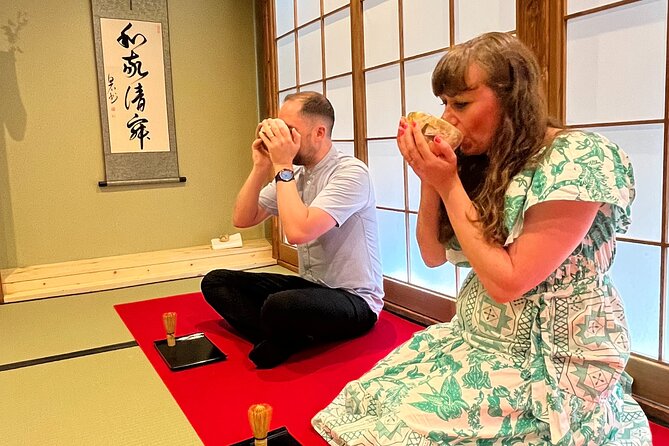
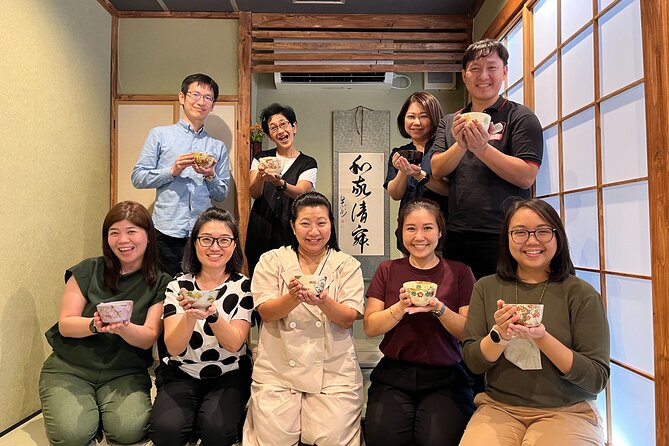
The maximum group size is 15 people, but some sessions are much smaller. One described class had only six people, while another had two couples. A small group gives you more room to ask questions and more direct time with the instructor.
This matters because tea ceremony etiquette is built from small details. In a very large demonstration, you might only see the front of the room. Here, you can watch the host closely and then receive guidance while making your own tea.
The group plan is designed for people who want to share the experience with others. It is not presented as a private booking by default, so you should expect to participate alongside other people. The upside is a social class with a reasonable price. The tradeoff is that the timing and attention are shared.
A group of up to 15 is still intimate compared with a large sightseeing tour, but it is not the same as a private tea lesson. If personal instruction is your main goal, book a time when the group may be smaller or ask the provider about available options.
A good choice for families
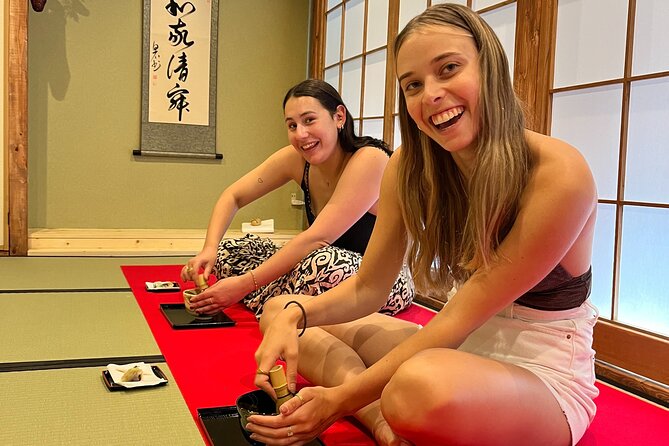
The experience is family-friendly, with a caffeine-free matcha milk option for children. That means younger participants can join the ritual and enjoy a suitable drink without having regular matcha.
Parents should contact the provider in advance if a child under five will accompany them. Children under five cannot join the regular plan, and entry may not be allowed even if an adult has a ticket. This is the one age detail you should settle before booking.
Older children can benefit from the class because it combines a clear activity with a cultural lesson. They can watch the demonstration, try the whisk, taste a sweet, and learn a few basic manners. The ceremony’s slower pace may also be a pleasant change after a day of Osaka attractions.
The short duration helps families. Forty-five minutes is long enough to feel worthwhile but short enough for children who may not manage a longer formal ceremony. Still, the setting asks for some quiet attention, so it suits children who can follow simple instructions.
What the strongest praise points to
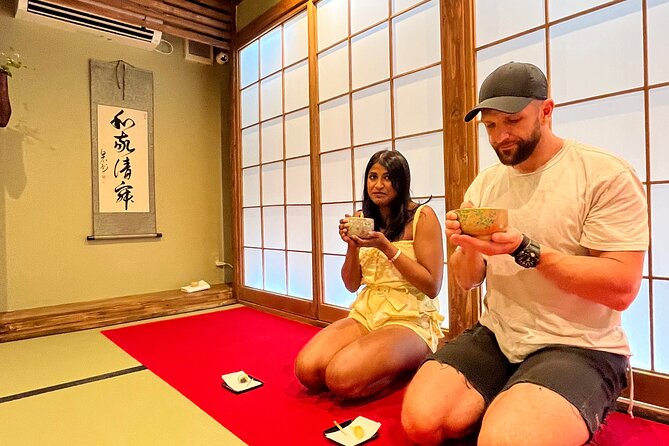
The most consistent strength is the instructors’ manner. Kazu is described as warm, relaxed, and willing to add humor. Mai is praised for explaining the history, preparation, and drinking customs. Soda is noted for creating a calm, graceful lesson.
That personal teaching style makes a difference. Tea ceremony rules could feel intimidating if presented as a list of mistakes. Here, the class is designed to help you try the actions without worrying about getting every movement perfect.
The second major strength is the balance between education and participation. You do not only receive historical information, and you do not only make a drink. You see the ceremony, learn why it is structured as it is, and then take part.
The class also appears dependable in its timing and organization. That is useful when you are fitting it around Osaka plans. The stated duration is about 45 minutes, although some descriptions refer to an hour, so allow a little flexibility rather than planning a train connection immediately afterward.
What this experience does not include
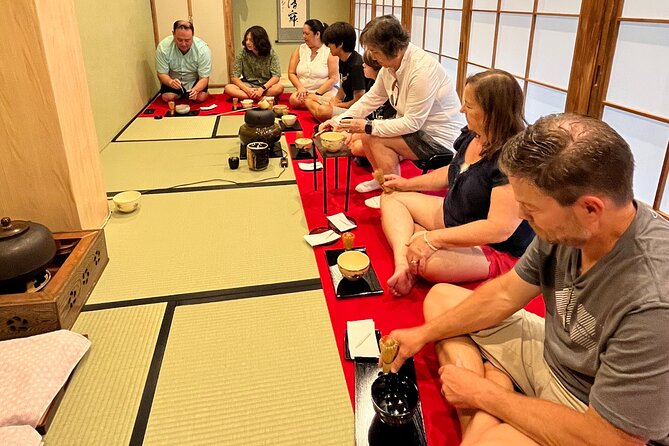
This is an introduction to tea ceremony, not a full formal tea-school training session. You should not expect a long, elaborate ritual, extensive instruction in advanced etiquette, or traditional clothing.
You also return to the same meeting point at the end. The activity does not move between several attractions, so its value comes from the quality of the lesson rather than the number of places visited.
The central Osaka setting is convenient, but it is not a secluded historic tea house. You are paying for access to a focused cultural lesson near Dotonbori, not for a day trip into the countryside. For many people, that convenience is a benefit. If you want a grand setting or a longer ceremonial performance, this may feel limited.
The class is also centered on matcha. You may enjoy the process more than the flavor. The sweet helps, but the tea remains a strong, unsweetened drink unless you choose the caffeine-free matcha milk option.
Is the $20.69 price good value?
At $20.69 per person, this is a modest-cost cultural activity in central Osaka. The price includes instruction, the tea experience, the chance to prepare your own matcha, and a traditional sweet. You also avoid the time and cost of traveling outside the city for a similar introduction.
The value is strongest if you want an activity you can understand and remember, rather than another sightseeing stop. You leave with a basic sense of tea etiquette and a practical memory of whisking the tea yourself.
A private lesson would naturally offer more personal attention, but this is the shared plan. The group size keeps the price down while still allowing interaction. For a family, the caffeine-free drink makes the cost more useful because children can participate rather than simply watch.
You can also buy additional items at the venue, according to the practical information provided. Bring some extra cash if you are interested in purchasing something, but those purchases are separate from the activity price.
Booking, cancellation, and arrival advice
You receive confirmation at booking, and the ticket is mobile, so you do not need to print anything. The meeting point is near public transportation, making it easy to fit into a Dotonbori itinerary.
Free cancellation is available if you cancel at least 24 hours before the start time. Changes or cancellations made less than 24 hours before the local start time are not accepted for a refund.
Plan to arrive with the correct map location already saved. The warning about Higashi is important, since a small address difference can send you to the wrong place. Search by the venue name rather than relying only on the booking page’s map link.
Who should book this Osaka tea ceremony?
I would choose this for a first visit to Japan, a family looking for a short cultural activity, or anyone who wants to slow down between Osaka’s louder attractions. It also works well near the end of a trip, when a calm lesson can provide a thoughtful final memory.
It suits curious beginners more than serious tea students. You get a clear explanation, a demonstration, a chance to prepare tea, and a sweet, all within a compact session.
I would think twice if you dislike matcha, need a fully private experience, or want elaborate costumes and a long ceremonial performance. The class is informal enough for first-timers, but it still asks you to respect quiet, order, and etiquette.
Should you book it?
Yes, if you want an affordable and practical introduction to Japanese culture in the middle of Osaka. The strongest reasons are the hands-on tea making, the small groups, the friendly instruction from hosts such as Kazu and Mai, and the calm contrast with Dotonbori outside.
Book it with realistic expectations. This is a short lesson, not an extended temple ceremony. Check the map carefully, contact the provider about children under five, and allow extra time around the stated 45 minutes. For most first-time visitors, that is a fair trade for a personal, well-organized introduction to matcha and tea etiquette.
FAQ
Where does the tea ceremony take place?
It takes place at Tea Ceremony Osaka The Osaka, on the second floor of Dotonbori Building at 1-chome Higashi-5-26, Chuo Ward, Osaka 542-0077.
How long does the experience last?
The stated duration is approximately 45 minutes. Some descriptions refer to an hour, so allow a little extra time when planning your day.
Will I make my own matcha?
Yes. You first watch the tea ceremony and the instructor’s preparation, then make and drink your own matcha.
Is a Japanese sweet included?
Yes. The experience includes traditional Japanese sweets, with seasonal sweets and matcha pastries mentioned as examples.
Can children take part?
The class is family-friendly and offers caffeine-free matcha milk for children. If a child is under five, contact the provider in advance because children under five may not join the regular plan.
What is the maximum group size?
The maximum is 15 people. The shared plan may have fewer participants, and some sessions have only a small number of people.
Can I cancel for a full refund?
Yes, if you cancel at least 24 hours before the experience’s start time. Cancellations or changes made less than 24 hours in advance are not accepted for a refund.
Newly steeped around Osaka
- Osaka:Zen Tea Ceremony and Foot Bath Experience<45min>★ 5.0 · 7 reviews
- Osaka Japanese Cooking And Matcha Class near Osaka Castle★ 5.0 · 22 reviews
- Nara Deer Park, Uji Matcha, & Hot Spring Full-Day Tour from Osaka★ 4.0 · 21 reviews
- Osaka: Tea Ceremony, Calligraphy, and Kimono Experience★ 5.0 · 6 reviews
- Tea and Calligraphy Session at a Table in Osaka★ 5.0 · 4 reviews
- Osaka: Nara, Todaiji, Uji Matcha, and Hot Spring Tour★ 4.0 · 7 reviews
- Craft Sushi and Matcha Ice Cream in Central Osaka (3-Course Meal)★ 5.0 · 2 reviews
- ZEN therapy | Shiatsu-style massage, EnergyTherapy & Japanese Tea★ 5.0 · 5 reviews
Tea Ceremony Experiences, compared.
Kyoto: Tea Ceremony in a Traditional Tea House in Kiyomizu
Read our review →
Kyoto: 45-Minute Tea Ceremony Lesson Experience
Read our review →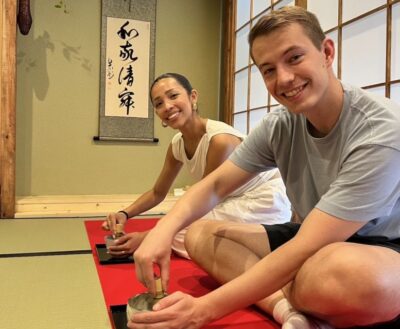
Kyoto: Table-Style Tea Ceremony at a Kyo-Machiya
Read our review →


Browse the lists this tea experience appears in