
Review · TOKYO
Tokyo Tea Ceremony Class at a Traditional Tea Room
The rare thing here is not simply a cup of matcha. It is the traditional wooden tearoom, built with methods and materials intended for tea ceremony, in a quiet Tokyo neighborhood rather than a busy sightseeing district. Ms. Haruki, a tea practitioner from Oita, has studied the ceremony since high school and has presented it in the United States and New Zealand.
I like the small maximum of four people, which gives the instruction room to breathe. I also like that you taste both thin tea and thick tea, called koicha. The drawback is the firm cancellation policy: this booking is non-refundable, and the class meets in Kugayama, so you must arrange your own transport and commit to the date.
Key points at a glance
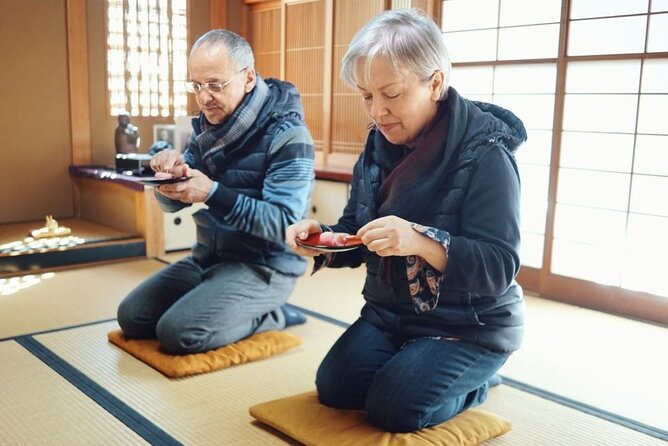
- A real tearoom in Kugayama: The room uses traditional construction methods and specially selected wooden materials.
- English-language instruction: Ms. Haruki is a National Government Licensed Guide Interpreter with long experience presenting Japanese culture abroad.
- Two styles of matcha: You taste usucha, or thin tea, and the less commonly served koicha, or thick tea.
- A hands-on lesson: You watch the formal tea-making procedure, then make matcha yourself.
- Small and personal: The class accepts no more than four people.
- A useful keepsake: Each participant receives a traditional Japanese item made from washi paper.
Why this tea ceremony feels different
Many tea experiences in Tokyo focus on the drink itself. This one gives equal weight to the room, the utensils, the gestures, and the ideas behind the ceremony. That matters because Japanese tea ceremony is not just a recipe for powdered green tea. The setting and the careful sequence are part of the lesson.
You meet at Kugayama Station in Suginami City, away from Tokyo’s main sightseeing centers. That adds travel time for some visitors, but it also helps explain the calm tone of the class. You are not being rushed through a display between major attractions.
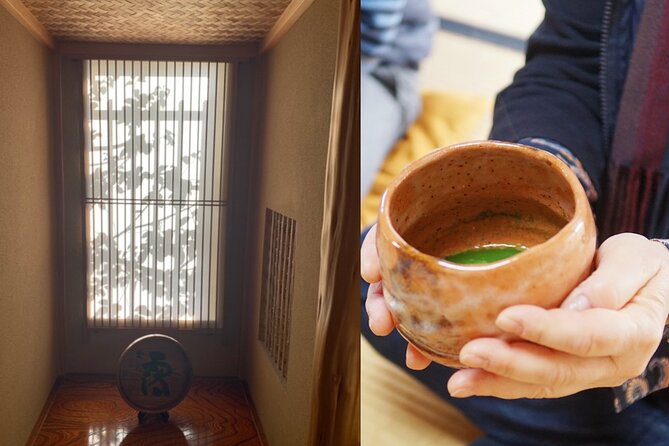
The setting uses traditional building methods and wood selected for this particular tearoom. I would pay attention to that before the ceremony begins. Look at how the room feels, how the materials shape the mood, and how the space is arranged for tea. The room is an object lesson before anyone lifts a whisk.
Ms. Haruki brings a useful mix of experience. She began studying tea ceremony while still in high school, later learned international tea ceremony in Tokyo, and has presented the procedure overseas. Her work as a licensed guide interpreter also means the class is designed for clear explanation, not only silent observation.
More Tea Ceremonies in Tokyo
- Kimono Tea Ceremony at Tokyo, Asakusa Maikoya
★ 5.0 · 638 reviews - Tokyo: Traditional Tea Ceremony with a Tea Master
★ 5.0 · 528 reviews - Tea Ceremony Workshop in Tokyo by the Experienced Instrucor
★ 5.0 · 189 reviews
Meeting Ms. Haruki in Kugayama
The meeting point is Kugayama Station, at 168-0082 Tokyo, Suginami City, Kugayama 4-chome 11-1. The precise address is worth saving before you leave for the appointment. Your own transport to the station and meeting point is not included.
Kugayama is served by public transportation, but it is not the easiest choice if you are planning a packed day around Asakusa, Shibuya, or Tokyo Station. Allow enough time to reach the meeting point without arriving flustered. A tea ceremony asks you to slow down, so a last-minute dash to the station would be a poor beginning.
The activity returns to the same meeting point. That makes the class easier to fit into your day than an experience that ends across town. You can also leave your sightseeing route open after the lesson instead of needing to plan a separate return transfer.
The session is advertised at about two hours, though you should allow closer to two and a half hours. The longer timing comes from the explanations, demonstrations, conversation, and hands-on tea making. It is not a quick photo opportunity.
The opening lesson on tea ceremony
The class starts with a presentation about the history of Japanese tea ceremony. This gives the gestures a reason and a place in Japanese culture. Without that background, the formal movements can seem slow or mysterious. With it, you can understand that the sequence itself is part of the experience.
The lesson is especially useful for first-time visitors. You do not need prior knowledge of tea ceremony, and the English-language format lets you ask questions as the class proceeds. Since the group is limited to four, the instruction should feel more like a conversation than a lecture, though the exact mix of teachers may vary.
The explanations also help you notice things that are easy to miss. Tea ceremony places value on attention, order, and the relationship between host, guest, room, and utensils. The point is not to gulp down matcha and move on. You are being asked to observe what happens before, during, and after the tea is served.
I appreciate that the session makes room for cultural context. A short demonstration without explanation can look decorative. Here, the history and customs give the movements weight and help you understand why a simple bowl of tea requires such care.
Watching temae, the formal tea procedure
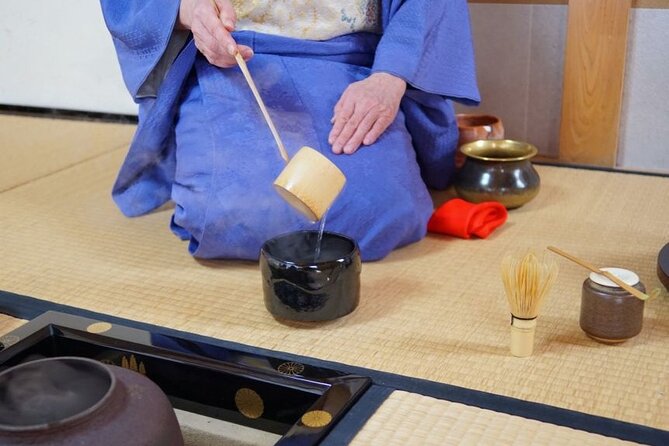
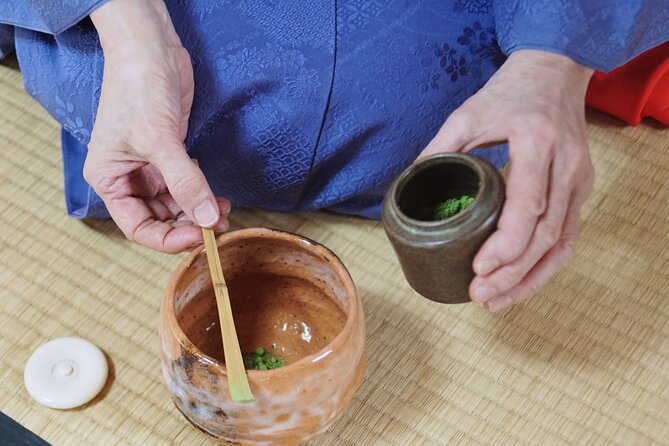
Next comes a demonstration of temae, the tea-making procedure. Watch the order of the actions and the way the practitioner handles each utensil. The pace is deliberate, so resist the urge to treat this as a performance that needs to be rushed toward its ending.
The demonstration is your chance to see the craft before you try it yourself. Notice how the tea is prepared, how the tools are positioned, and how the practitioner keeps the process calm and exact. You will get more from the class if you focus on small details instead of trying to record every movement.
The utensils receive their own attention. You have the chance to look closely at the equipment used in tea ceremony and learn why it matters. This is a strong feature for anyone interested in Japanese design, craft, or traditional domestic life, not only for people who already enjoy matcha.
There is also an important difference between watching a formal procedure and simply drinking tea in a café. A café serves a beverage. This class shows how the beverage fits into a wider set of customs. That distinction is the main reason the price can make sense for the right visitor.
Same leaf, a different ritual:
- Matcha Making Class in Tokyo with Authentic Japanese Sweets Set
★ 5.0 · 744 reviews - Dynamic Tokyo: Tokyo Tower, Tea Experience, Bay Cruise Day Tour
★ 4.5 · 521 reviews - Tokyo: Matcha Making Experience with Mochi Sweets in Asakusa
★ 4.9 · 388 reviews - Asakusa Cultural Walk & Matcha Making Tour
★ 5.0 · 245 reviews
Tasting thin tea and unusual koicha
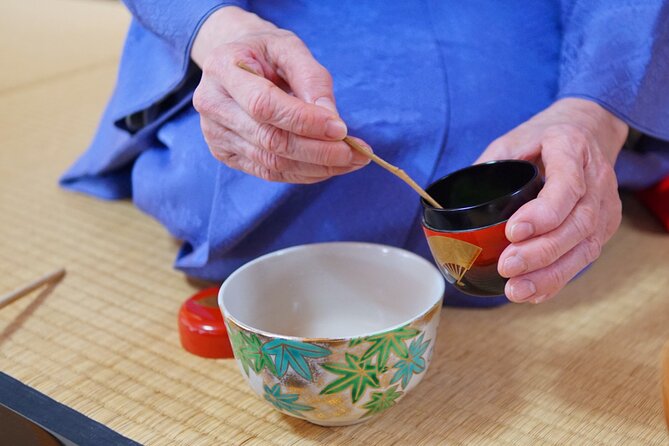
The tea portion includes both thin tea and thick tea. Thin tea, or usucha, is the style most people associate with a modern introductory matcha experience. It is whisked to a lighter consistency and is generally easier for a first-time drinker to approach.
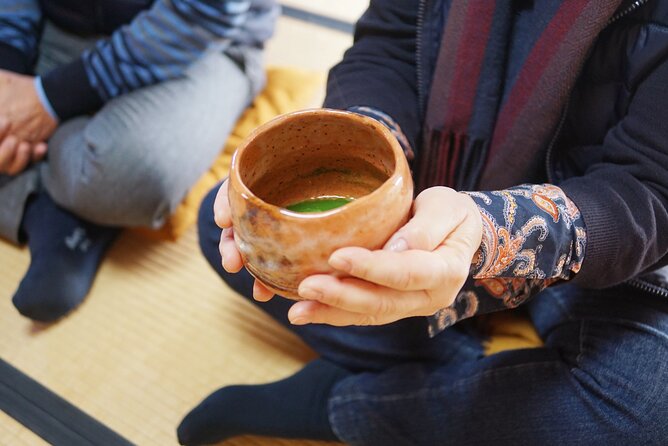
Thick tea, or koicha, is the unusual part. Koicha is normally served at a formal tea ceremony, so having it included here gives you access to a less common form of the tradition. It is thicker and more concentrated than thin tea, and the contrast helps you understand that matcha is not one single drink with one standard texture.
You are instructed in how to drink both kinds of tea. That guidance matters because tea ceremony has its own etiquette, and it is better to learn the expected movements than to guess. The class keeps the customs approachable rather than leaving you to worry about making a mistake.
Sweets are included with the tea. They provide a small food pairing and help balance the bitterness of matcha. The exact sweets are not specified, so do not book this as a meal. Think of them as part of the tea service and a companion to the tasting.
The strongest praise for this experience centers on the tea itself, especially the chance to try both thin and thick matcha. I would choose this class for the koicha alone if you have already attended a basic matcha demonstration and want something more traditional.
Making your own matcha
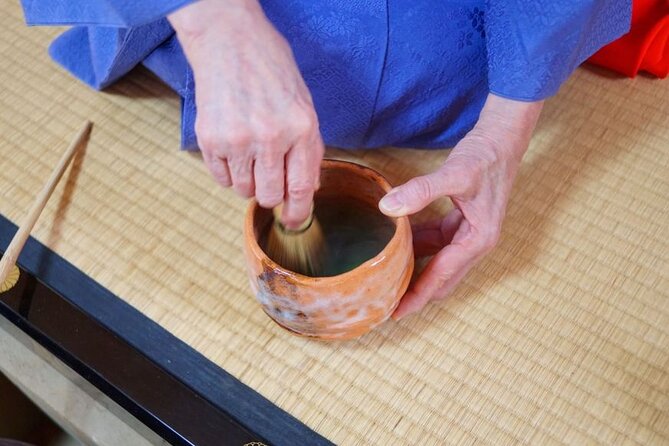
After watching the practitioner, you get a chance to make matcha yourself. This is where the class shifts from observation to participation. You can feel how the whisk, bowl, tea powder, and water work together instead of simply watching someone else handle them.
The hands-on part also makes the formal procedure easier to remember. You will have just seen the correct sequence, heard the explanation, and then tried part of it under instruction. That combination is more useful than a demonstration alone.
Do not expect to become a tea master in one session. The value is in learning the basic motions and gaining respect for the control required to prepare the drink well. The activity gives you a starting point, not a complete course of study.
The small group helps here. With no more than four participants, the teacher has a better chance to see what you are doing and offer guidance. That is a meaningful advantage over a large group class where hands-on participation may be brief or heavily observed from a distance.
The wooden room and the tea utensils
The room is one of the main reasons to choose this activity instead of a generic cultural workshop. It was built specifically for tea ceremony, using traditional methods and wooden materials chosen for the space. The room itself creates the quiet setting needed for the ceremony.
You should take time to examine the room before the demonstration starts. The construction details are not just decoration. They show how tea ceremony depends on a controlled environment, where the host can guide attention toward the tea, the tools, and the guest.
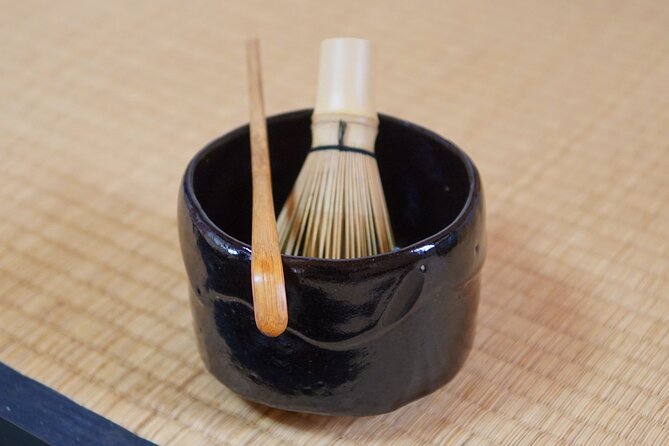
The utensils add another layer. You have an opportunity to look at them closely rather than seeing them only as props in a quick demonstration. Their purpose becomes clearer once you watch them used in sequence and then handle the process yourself.
The room may be less convenient than a central Tokyo venue. Kugayama requires a separate trip, and some visitors may prefer an activity near their hotel or a major station. I see that inconvenience as part of the tradeoff: you give up central convenience for a setting designed around the ceremony.
What is included for $117.87
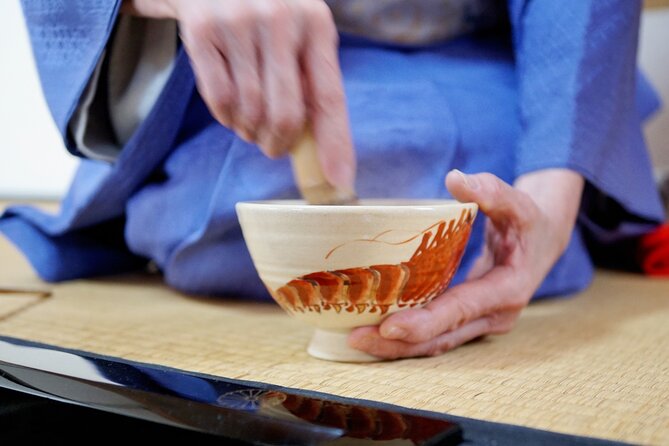
The price is $117.87 per person. That is a sizeable amount for two hours, especially if you compare it with a casual matcha tasting or a short cultural demonstration. The fair comparison, however, is not a café visit. You are paying for instruction, a private-feeling traditional room, two forms of matcha, sweets, hands-on practice, and a souvenir.
The maximum of four is important to the value. A small class gives you more direct attention and makes the room feel less like a stage. If the class were much larger, the same price would be harder to defend.
The experience also includes the rare koicha tasting. Since thick tea is usually associated with formal tea ceremonies, this is more than an extra flavor sample. It gives the lesson a stronger connection to formal practice.
Coffee and matcha green tea are included, along with sweets. The tea ceremony performance and your own tea-making activity are included as well. A traditional Japanese item made from washi paper is provided as a souvenir.
Transport is not included. You also need to account for the time and cost of reaching Kugayama. For someone already interested in Japanese culture and traditional arts, the total value is good. For someone who only wants to try a sweetened matcha drink, it is probably more than necessary.
Who will enjoy this class most
I would recommend this class to you if you want an explanation in English and prefer a quiet, small-group setting. It suits people who care about the room, the tools, and the customs as much as the drink in the bowl.
It is also a good choice for repeat visitors to Tokyo. If you have already seen the major temples and markets, a class in Suginami gives you a different view of the city. You are still learning about a famous Japanese tradition, but you are doing so outside the usual central sightseeing circuit.
The activity works well for visitors with a serious interest in Japanese culture, design, food, or etiquette. The chance to taste koicha makes it especially attractive to anyone who has already tried ordinary matcha and wants a more formal experience.
It may be less suitable for a tight schedule. The advertised duration is about two hours, but the session can run to roughly two and a half hours. Add transport time to and from Kugayama, and this is a substantial part of your day.
Practical details before you book
Confirmation arrives within 48 hours of booking, subject to availability. Since the class is limited to four people and is often booked about 29 days ahead, I would reserve well before your Tokyo visit if the date matters.
The mobile ticket is convenient. Keep it available on your phone when you meet at Kugayama Station. The activity begins and ends at the meeting point.
The cancellation terms require care. This experience is non-refundable and cannot be changed for any reason. If you cancel or request an amendment, the amount paid will not be returned, so book only when your schedule is firm.
The experience is near public transportation, but the listing does not provide accessibility details. If you need specific accessibility arrangements, ask the provider before paying. Do not assume that a traditional tearoom will suit every mobility need.
The provider is H.I.S.Co., Ltd. The class is conducted in English with a tea practitioner experienced in presenting the ceremony internationally. The exact teaching lineup may include more than one tea teacher, as the session has featured three ceremonial tea teachers.
My verdict on this authentic Tokyo tea class
Book this experience if you want more than a quick matcha lesson. The traditional room, small group, English guidance, hands-on preparation, and rare koicha tasting give it real substance. Ms. Haruki’s long practice and experience explaining Japanese culture abroad add confidence for visitors who want context, not just choreography.
Skip it if your Tokyo schedule is packed, your budget is tight, or you only want a casual drink. The non-refundable policy also means you should not book it as a maybe.
For the right person, this is a thoughtful two-hour encounter with tea ceremony in a setting built for it. The trip to Kugayama is the price of admission in time, while the reward is a quieter and more personal look at one of Japan’s most carefully observed traditions.
FAQ
Where does the tea ceremony take place?
The activity meets at Kugayama Station in Suginami City, Tokyo, at 168-0082 Tokyo, Suginami City, Kugayama 4-chome 11-1. It ends back at the meeting point.
How long does the experience last?
The stated duration is about two hours. One session took about two and a half hours, so allow extra time rather than scheduling a tight appointment afterward.
Is the tea ceremony conducted in English?
Yes. The activity is conducted in English with tea practitioner Ms. Haruki, who is also a National Government Licensed Guide Interpreter.
How many people can join?
The activity has a maximum of four participants.
What kinds of tea will I try?
You will learn about and taste thin tea and thick tea. The thick tea is called koicha and is usually served only at a formal tea ceremony.
Can I make matcha myself?
Yes. After the tea-making demonstration, you have an opportunity to make matcha yourself under instruction.
What is included in the price?
The price includes matcha green tea, coffee and/or tea, sweets, the tea ceremony performance, your own tea-making activity, and a traditional Japanese washi souvenir. Transport to the meeting point is not included.
Can I cancel or change my booking?
No. The experience is non-refundable and cannot be changed for any reason. If you cancel or request an amendment, the amount paid will not be refunded.
Newly steeped around Tokyo
- Yokohama : Tea Ceremony with Sweets and Souvenir★ 5.0 · 5 reviews
- Walking Tour: Yanaka,Nezu& Sendagi: Tea Ceremony & Old Tokyo★ 5.0 · 3 reviews
- Private Mochi・Matcha sweets Making Class Near Shibuya Area★ 5.0 · 22 reviews
- 2 Hours Mochi &Nerikiri Making & Matcha Class in Bunkyo★ 5.0 · 21 reviews
- Private Kimono and tea ceremony at local home near Tokyo Disney★ 5.0 · 6 reviews
- Kimono and Tea Ceremony in Asakusa Private Food Tour With Guide★ 5.0 · 4 reviews
- Giant Sushi Cooking Class: Make a 1.5m Sushi Roll in Tokyo★ 5.0 · 9 reviews
- Tokyo: Tea Ceremony & Japanese Sweets Making★ 5.0 · 10 reviews
Tea Ceremony Experiences, compared.
Kyoto: Tea Ceremony in a Traditional Tea House in Kiyomizu
Read our review →
Kyoto: 45-Minute Tea Ceremony Lesson Experience
Read our review →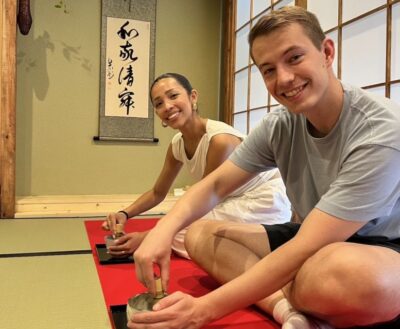
Kyoto: Table-Style Tea Ceremony at a Kyo-Machiya
Read our review →


Browse the lists this tea experience appears in