
Review · TOKYO
Kimono and Tea Ceremony in Asakusa Private Food Tour With Guide
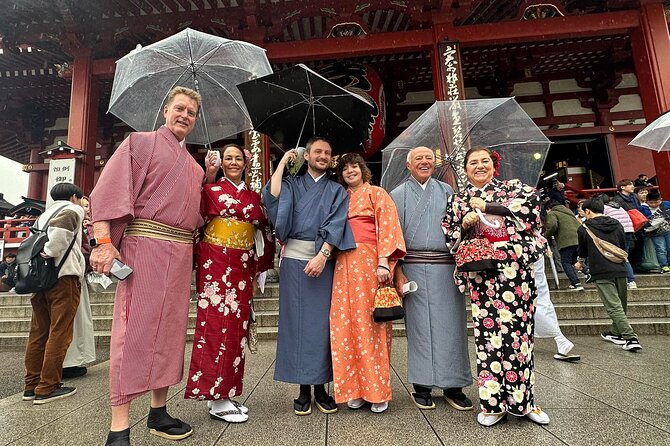
Asakusa is at its most photogenic when you are dressed in a kimono, and this tour gives you time to enjoy the look rather than simply pose for one quick picture. You choose a traditional or modern style, add an obi sash and wooden sandals, then walk to Senso-ji, Nakamise, and Kaminarimon for a four-hour taste of old Tokyo.
I like the small maximum of eight people, which gives a guide room to answer questions and help with the clothing. I also like the food built into the price: A5 wagyu, tea, two soft drinks, water, ice cream, and local desserts make this more than a costume rental. The main consideration is the $290 price per person, especially since hairstyling, alcohol, and overnight kimono rental cost extra.
Key things to know before you book
- Kimono and sightseeing come together: You dress in a traditional or modern kimono, then walk through Senso-ji, Nakamise, and Kaminarimon.
- A5 wagyu is included: The food portion adds a substantial tasting element to the tea and sweets.
- The group stays small: A maximum of eight people is useful when you need help with an obi, sandals, photos, or cultural questions.
- Guide Adam may lead the tour: He is praised for personal stories about living in Japan, clear explanations, humor, and flexibility.
- The schedule uses most of the morning and early afternoon: The start is 11 a.m., and the activity lasts about four hours.
- Extra services cost more: Hairstyling and keeping the kimono overnight are optional add-ons, not part of the base price.
Getting dressed for Asakusa
The tour begins at the Asakusa Culture Tourist Information Center, at 2-chōme-18-9 Kaminarimon, at 11 a.m. This is a practical meeting point near the neighborhood’s main sights and public transportation. You receive a mobile ticket, and the activity finishes back at the same meeting point.
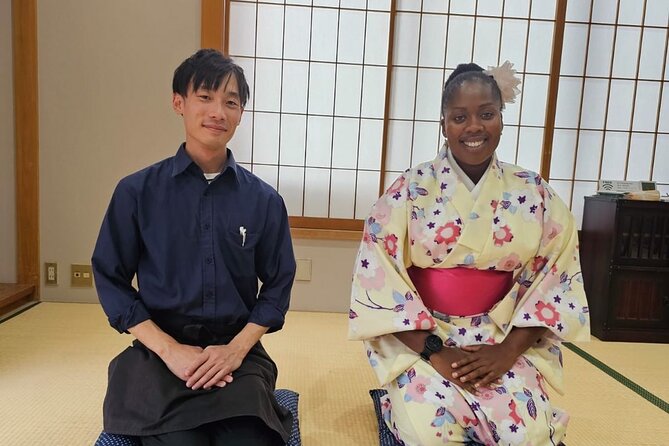
The clothing is the heart of the outing. You choose between a traditional or modern kimono, then receive help with the obi sash and wooden sandals. That assistance matters. A kimono is not simply a robe you slip on, and the sash needs to be arranged properly if you plan to walk, eat, and pose for photographs.
Wear clothing that is easy to change out of, and avoid arriving in jeans and sneakers if you want the dressed-up feeling to begin right away. The activity is designed for most people to participate, but you should remember that you will be walking in wooden sandals and wearing a structured outfit for several hours.
Hairstyling is available for an additional charge. If you want a more polished portrait, ask about that before booking rather than assuming it is included. An overnight rental is also offered at extra cost, which could appeal to you if you want to continue wearing the kimono after the tour.
The product is described as private, but the stated maximum is eight people. Treat it as a small-group outing unless your booking confirmation says your party has exclusive use. A group this size still feels personal, while giving you the social benefit of sharing the food and walk with other people.
More Kimono and Tea Ceremonies in Tokyo
- Kimono Tea Ceremony at Tokyo, Asakusa Maikoya
★ 5.0 · 638 reviews - Tokyo: Matcha and Kimono Experience
★ 4.7 · 219 reviews - Tokyo: Asakusa Kimono Dressing and Matcha Experience
★ 4.9 · 173 reviews
Senso-ji, Asakusa’s grand first stop
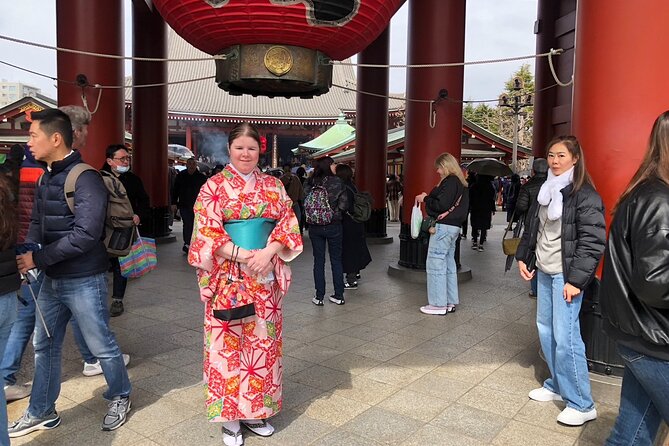
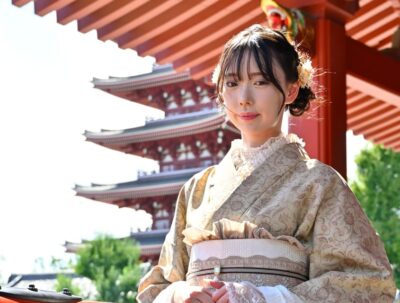
From the dressing experience, the tour moves into Senso-ji, Tokyo’s oldest temple and one of the city’s most important Buddhist sites. You have about an hour here, enough time for the main approach, the temple setting, and photographs in your kimono.
Senso-ji gives the outing a useful sense of place. You are not wearing traditional clothing inside a studio with a painted backdrop. You are seeing it against one of Asakusa’s best-known religious and cultural sites, where the architecture and approach make the photographs feel connected to Tokyo.
The tour includes admission to Senso-ji at no extra charge. The supplied schedule does not promise a special temple entry, private ritual, or exclusive access, so think of this as a guided cultural walk around a major public sight rather than a behind-the-scenes temple visit.
Your guide is important here. Adam is named as one of the guides associated with the experience, and his style is described as personal and informative, with stories about living in Japan and small facts about the area. If he is leading your group, you can expect the temple visit to include more than a quick photo stop.
Walking Nakamise with room for snacks
Nakamise Shopping Street runs for about 250 meters toward Senso-ji. Its shops sell traditional souvenirs, snacks, and sweets, making it a natural place to wear the kimono and sample Japanese treats.
You have about two hours allocated to Nakamise, the longest stop on the schedule. That gives the tour time to combine shopping, food, walking, and explanations rather than pushing you through the street in a hurry.
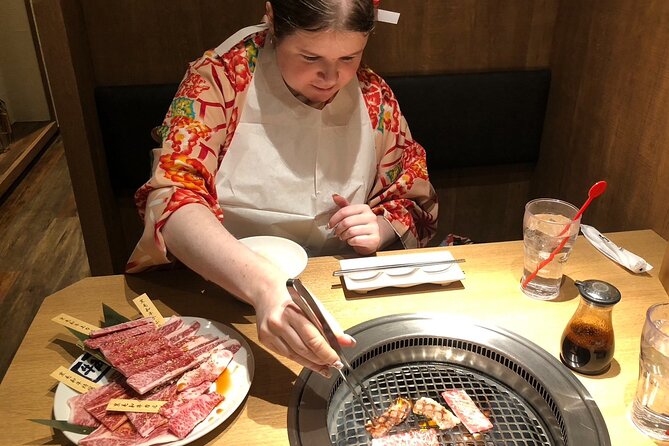
The included food helps make this section feel like a food walk instead of a standard sightseeing route. You receive tea, two soft drinks, water, ice cream, local desserts, and an A5 wagyu experience. The information does not specify the exact wagyu serving, restaurant, cut, or preparation, so you should not book expecting a full steak meal. Think of it as one part of a varied tasting menu.
The sweets and ice cream are especially suited to Asakusa’s shopping street. You can try familiar Japanese-style treats while your guide explains what you are seeing. Since the exact items can vary, anyone with allergies or dietary restrictions should ask the provider before paying.
Nakamise can also be the least relaxed part of the walk. It is one of Asakusa’s busiest visitor areas, and a kimono can attract attention. That is part of the fun for some people, but you should choose another activity if you prefer quiet streets and private photographs.
The guide’s flexibility is a real advantage. The tour has enough room for the group to adjust the pace, and past feedback describes Adam as willing to change plans when the group wanted to skip an onsen and spend more time on other activities. An onsen is not part of the listed itinerary, so do not count on one being included. The useful point is that the guide may be able to respond to the group’s interests.
Kaminarimon and the best photo setting
Kaminarimon, or the Thunder Gate, is the outer gate leading toward Senso-ji. Its large lantern and statues make it one of the most recognizable sights in Asakusa, and the gate is about 11.7 meters tall and 11.4 meters wide.
The schedule allows about an hour here. That may sound long for a single gate, but the stop is also the visual payoff for the kimono portion. You can take photographs from different angles, listen to the guide’s explanation, and watch the flow of people moving between the gate and the temple.
This is where the outfit, food walk, and cultural context meet. You are not just renting formal clothing for a studio portrait. You are using it while seeing a major Tokyo district on foot. If photographs matter to you, tell the guide early so the pace leaves room for them.
The tour does not promise a professional photographer or edited pictures. Bring your phone, and consider arranging a companion to take photos if you are traveling alone. The small group may make this easier, but the information does not guarantee dedicated photo service.
More Tea Ceremonies in Tokyo
- Tokyo: Traditional Tea Ceremony with a Tea Master
★ 5.0 · 528 reviews - Tea Ceremony Workshop in Tokyo by the Experienced Instrucor
★ 5.0 · 189 reviews - Asakusa: Kimono Tea Ceremony with Matcha and Sweet
★ 4.9 · 153 reviews - Tea Ceremony Experience in a Private Tea Room in Shibuya
★ 4.9 · 125 reviews
What the four-hour schedule really gives you
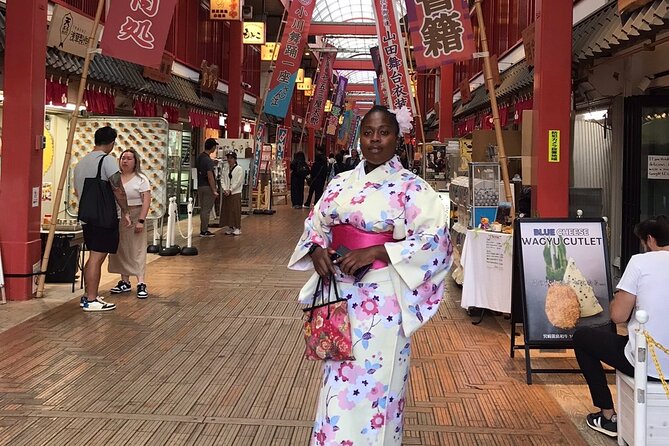
The start time is 11 a.m., and the activity lasts about four hours. That places the finish around 3 p.m., though the exact timing can shift with dressing, food, walking speed, and group preferences.
I like this length for a first visit to Asakusa. You get the clothing experience, a tea ceremony, a food tasting, and three major sights without giving up the entire day. You can still plan an evening meal or another Tokyo neighborhood afterward.
The itinerary lists one hour at Senso-ji, two hours at Nakamise, and one hour at Kaminarimon. These times should be read as a broad structure rather than a promise that every minute is spent at one exact point. The dressing, tea ceremony, eating, and walking connect the stops.
The tea ceremony is included, but the supplied details do not describe the room, ceremony style, length, or whether the tea is prepared in a formal school tradition. That makes it hard to compare this with a dedicated tea ceremony lesson. Here, tea is part of a wider kimono and food outing, which suits you if you want several Japanese experiences in one morning.
Soft drinks and water are included, along with tea. Alcohol is not included but can be purchased by people aged 18 and older. The outing is therefore easy to budget for if you stick to the listed inclusions.
Is $290 a fair price?
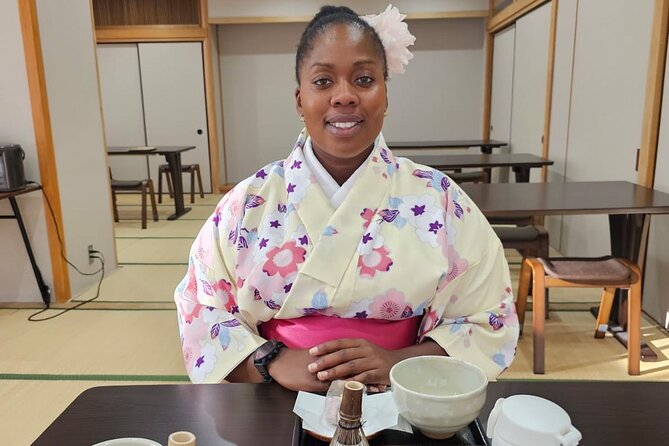
At $290 per person, this is not a low-cost way to see Asakusa. You are paying for a packaged cultural activity that combines kimono assistance, a tea ceremony, guiding, food, drinks, and a small group.
The value improves if you would otherwise book several separate activities. A kimono rental, a tea ceremony, a guided Asakusa walk, and a food tasting could easily take more planning and coordination. This tour puts them into one half-day route and returns you to the original meeting point.
The value is weaker if you mainly want to rent a kimono for photographs. In that case, a basic rental may cost less, and you would not need to pay for the included food or guide. The same is true if you already plan a separate tea ceremony or are not interested in A5 wagyu and Japanese sweets.
The small group helps justify the price. A maximum of eight people gives you a better chance to ask questions and receive practical help with the kimono than you might get in a large bus group. Still, the word private should not lead you to assume a one-party booking without checking the confirmation.
The strongest reason to pay the premium is convenience. You do not need to map out a route between the temple, shopping street, and gate, and you have a guide to connect the sights with food and cultural information. For a first Tokyo visit, that can be worth more than saving money on each individual component.
Who will enjoy this most
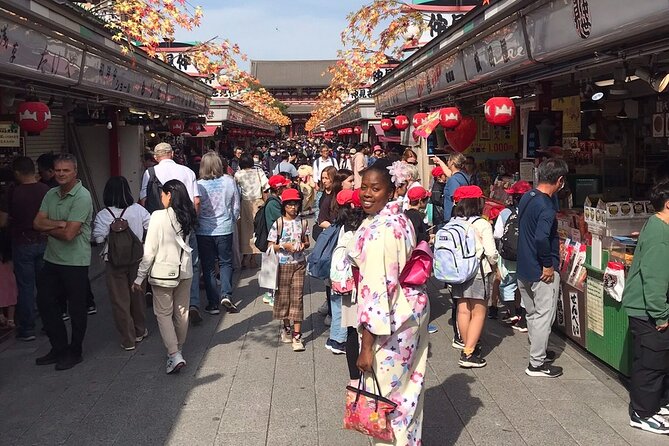
I would recommend this to you if you want a social, photo-friendly introduction to Asakusa and prefer a planned half-day over arranging each piece yourself. It suits couples, families, and small groups who want to dress up, eat, and learn while walking.
It also works well for people who enjoy a guide with a personal storytelling style. Adam has been specifically associated with explanations about life in Japan, local facts, humor, and a flexible approach. Guide assignments can change, so treat his presence as a possibility rather than a guarantee.
You may want another option if your priority is a long, formal tea lesson, a quiet temple visit, or an extensive food tour. This is a broad sampler. It gives you several experiences, but none is described as a full-day specialist course.
You should also think about comfort. A kimono and wooden sandals may not suit someone who dislikes restrictive clothing or extended walking. Most people can participate, but the activity is not a seated tasting from beginning to end.
The tour can work for mixed groups, too. People who have never met before can still share the food and sightseeing, and the small size makes conversation easier than on a large coach excursion. If you prefer complete independence, the fixed route and group format may feel limiting.
Booking details worth checking
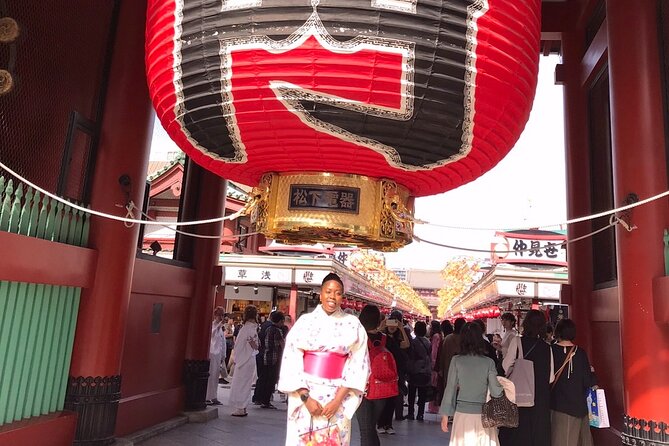
Confirmation is provided when you book, and the activity operates near public transportation. Hotel pickup and drop-off are not included, so you need to reach the Asakusa meeting point yourself.
Free cancellation is available up to 24 hours before the local start time for a full refund. Changes made within 24 hours are not accepted, and cancellations inside that period are not refunded. This is useful flexibility, but it does not protect you from a last-minute change.
Ask about food requirements before booking. A5 wagyu, ice cream, local desserts, tea, soft drinks, and water are listed, but no dietary substitutions are promised. Alcohol is an optional purchase for people aged 18 and older.
If you want hairstyling or to keep the kimono overnight, arrange those extras in advance. They are not part of the $290 base price.
Should you book this Asakusa kimono tour?
Book it if you want one polished half-day that combines dressing, photos, tea, food, and Asakusa’s main sights. The small group, included tastings, and guide-led explanations make it more useful than a simple kimono rental, and the 11 a.m. start leaves your late afternoon open.
Skip it if $290 feels high for a four-hour activity, if you want a serious tea ceremony course, or if you would rather explore Nakamise and Senso-ji at your own pace. Before paying, confirm the guide, ask about food needs, and check the cost of any hairstyle or overnight rental. For the right kind of visitor, this is a convenient and memorable way to experience Asakusa in traditional dress.
FAQ
Where does the tour begin?
It begins at the Asakusa Culture Tourist Information Center, 2-chōme-18-9 Kaminarimon, Taito City, Tokyo 111-0034, Japan.
What time does the activity start?
The start time is 11 a.m.
How long does the experience last?
The activity lasts approximately four hours.
Where does the tour finish?
It ends back at the meeting point.
How many people can join the tour?
The maximum group size is eight people.
Is food included?
Yes. The inclusions list an A5 wagyu experience, tea, two soft drinks, water, ice cream, and local desserts.
Is alcohol included?
No. Alcohol is available to purchase for people aged 18 and older.
Are hairstyling and overnight kimono rental included?
No. Both are available for an additional cost.
Can I cancel for a full refund?
Yes, if you cancel at least 24 hours before the experience start time. Cancellations made less than 24 hours before the start are not refunded.
Newly steeped around Tokyo
- Yokohama : Tea Ceremony with Sweets and Souvenir★ 5.0 · 5 reviews
- Walking Tour: Yanaka,Nezu& Sendagi: Tea Ceremony & Old Tokyo★ 5.0 · 3 reviews
- Private Mochi・Matcha sweets Making Class Near Shibuya Area★ 5.0 · 22 reviews
- Private Kimono and tea ceremony at local home near Tokyo Disney★ 5.0 · 6 reviews
- 2 Hours Mochi &Nerikiri Making & Matcha Class in Bunkyo★ 5.0 · 21 reviews
- Giant Sushi Cooking Class: Make a 1.5m Sushi Roll in Tokyo★ 5.0 · 9 reviews
- Tokyo Tea Ceremony Class at a Traditional Tea Room★ 5.0 · 2 reviews
- Tokyo: Tea Ceremony & Japanese Sweets Making★ 5.0 · 10 reviews
Kimono & Tea Ceremony, compared.


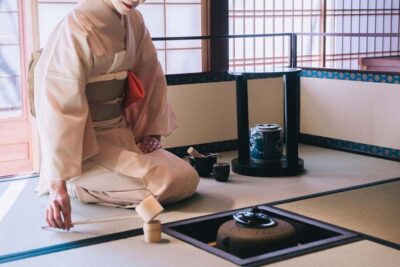
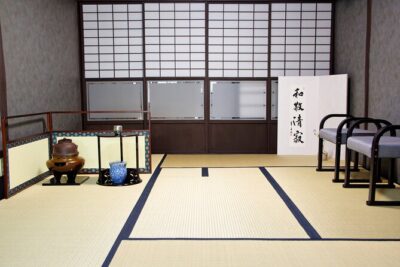
KYOTO Tea Ceremony with kimono near by Imamiya Jinjya Shrine
Read our review →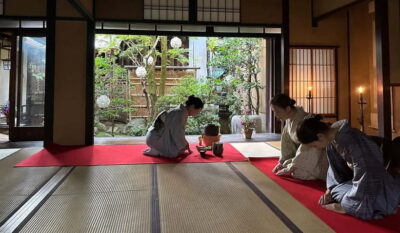
Kyoto: Kimono and Tea Ceremony Experience at Cultural Asset
Read our review →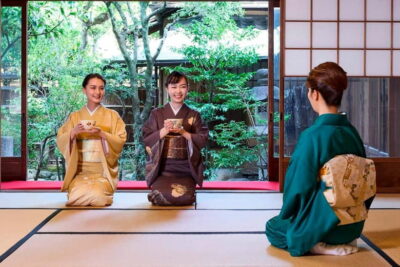
Kyoto: Kimono Tea Ceremony with Matcha and Sweet
Read our review →
Tokyo: Asakusa Kimono Dressing and Matcha Experience
Read our review →Browse the lists this tea experience appears in