
Review · UJI
Kyoto: Tea Museum Tickets and Matcha Grinding Experience
The best part of this Uji experience is the moment tea stops being a powder in a café bowl and becomes something you made yourself. You grind tencha in a traditional tea mill, watch the green powder collect, then learn to whisk it into a fresh cup. I especially like the hands-on work and the way the museum explains the process before you sit down to drink. The one-hour schedule is useful, but it also means the museum visit is fairly compact.
I also like the friendly, light touch of the instructors. Depending on the session, you may meet guides such as Hideko, Keiko, Yano-san, or Sukimoto, and the lessons include clear demonstrations, humor, and time for questions. Plan carefully, though: arrive 15 minutes early, since entry can be refused after 30 minutes and the fee is not refunded for a late arrival.
Key points at a glance
- Grind tencha into matcha: Use a tea mill and create the powder for your own drink.
- Learn from an instructor: Japanese and English instruction covers grinding, whisking, and tea customs.
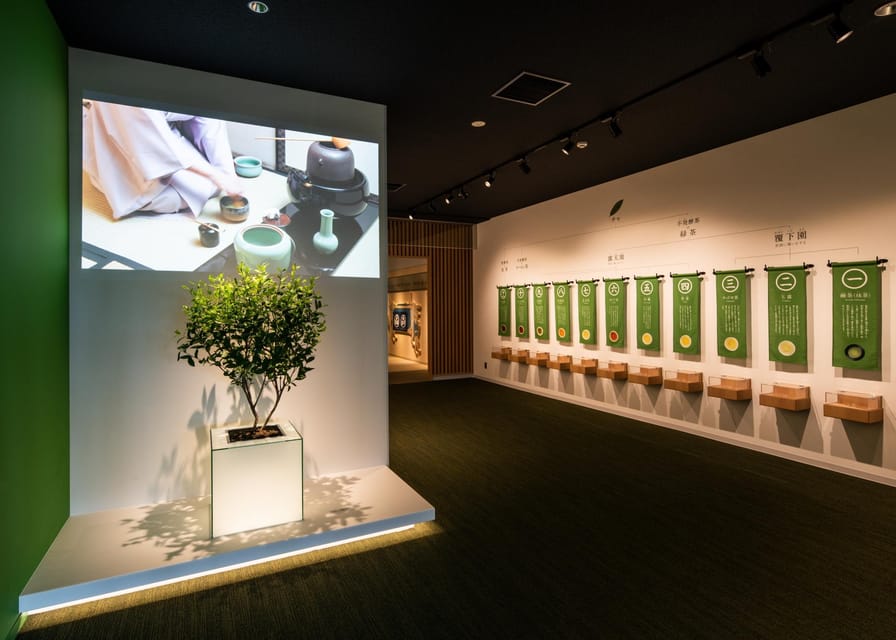
- Explore Chazuna’s museum: Your ticket includes interactive displays, digital town scenes, videos, and tea exhibits.
- See Uji tea in context: The museum explains how tea is grown, harvested, processed, and used.
- Enjoy a seasonal treat: At 2:45 p.m. in summer, pour your matcha over ice cream as well as drinking it.
- Easy Uji location: Chazuna is four minutes from Keihan Uji Station or about 12 minutes from JR Uji Station.
Why grinding your own matcha matters
Uji is one of Japan’s best-known tea areas, and this workshop gives you a practical way to understand why. Instead of simply sipping a prepared drink, you handle the tea at an important stage in its production.
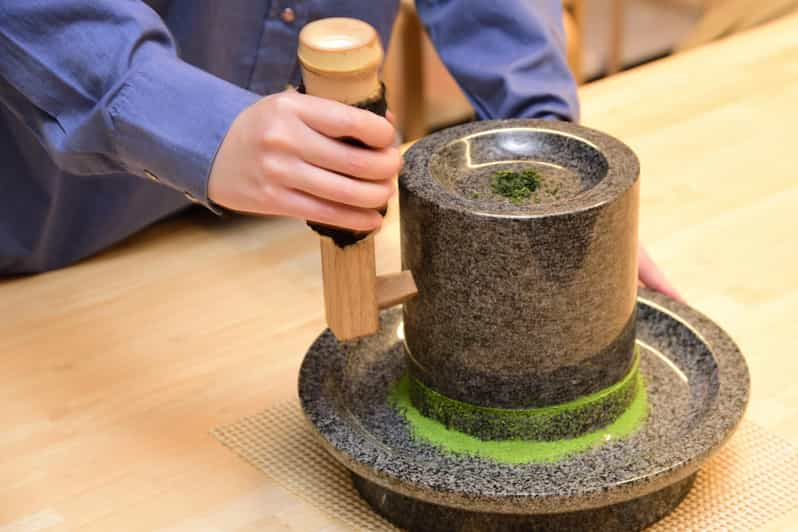
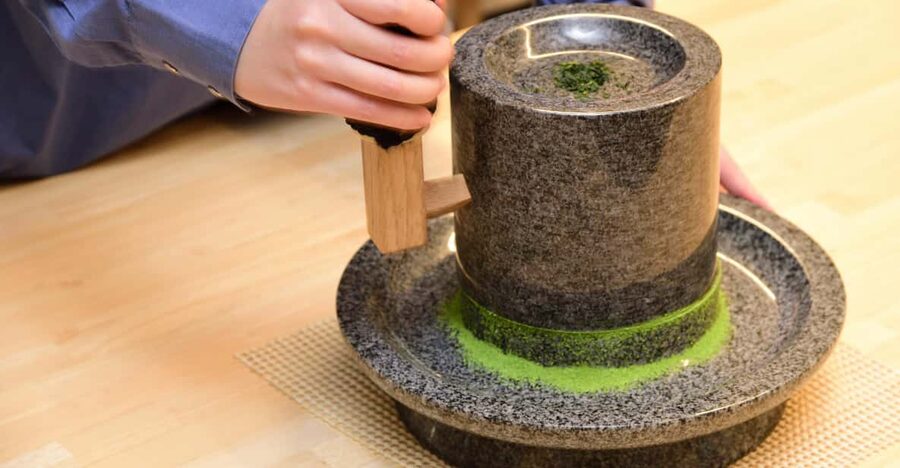
The leaves used for matcha are called tencha. You place them in a tea mill and turn the handle slowly, producing a fine green powder. The work is gentle and repetitive, not strenuous, and that steady motion becomes part of the pleasure. You can watch the texture change and smell the tea before it reaches your bowl.
This is also a useful lesson in freshness. The matcha you drink has just been ground for the session, so it feels less abstract than a lecture about tea production. You see the powder, smell it, whisk it, and taste the result in one continuous process.
The amount you make is intended for the workshop rather than as a large souvenir supply. One person specifically wished the ground matcha could be taken home, so do not book this expecting to leave with a packet of your own freshly milled tea. Chazuna may have tea and tea-making items for sale, but the workshop itself centers on the experience.
More Matcha Experiences in Uji:
- Slow Cycling Tour at Uji’s Matcha Green Tea Fields and Heritage
★ 5.0 · 25 reviews - Kyoto Matcha Green Tea Tour
★ 4.5 · 23 reviews - Uji and Wazuka Matcha Farm Half Day Private Guided Tour
★ 5.0 · 21 reviews
The one-hour session, from tea leaf to cup
The class begins with an explanation of tea in Japan and the place of Uji tea within that story. You may learn about different tea types, how the leaves are grown and harvested, and how processing changes the final drink.
The instructor then demonstrates the tea mill. This is the part that makes the class feel different from a standard museum visit. You are not just watching a traditional method from behind a barrier. You take a turn and make the powder yourself.
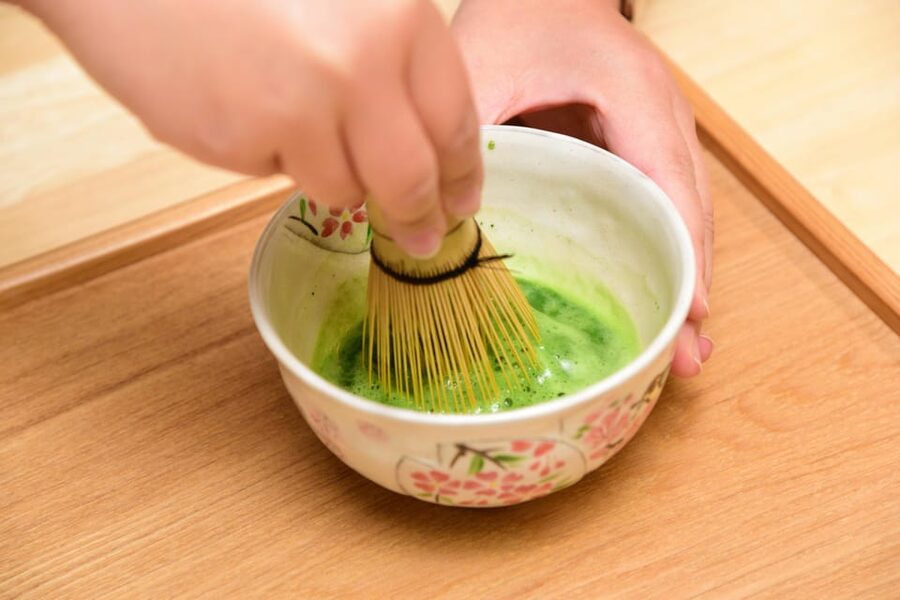
After grinding, the instructor shows you how to brew matcha. You learn the basic whisking technique and prepare your own cup under guidance. The staff are there to correct your method and answer questions, so you do not need previous tea experience.
The tone is educational without being stiff. Guides have been praised for their warmth, humor, and patience, and some instructors take photos of participants during the session. English support is available, though the quality of spoken English can vary by instructor. One session used a textbook and script to help explain each stage, which gave the class structure but felt less natural than the instructor’s own explanations.
You then drink the matcha you made, often with a sweet such as mochi or another small confection. That pairing matters because plain matcha can be grassy, bitter, or quite strong if you are not used to it. The sweet gives your palate a familiar contrast and helps make the tasting more enjoyable.
Chazuna’s interactive museum and digital exhibits
The museum ticket is included, and it adds useful context to the workshop. You can visit the exhibits before or after the class, depending on the schedule and how the reception staff direct you.
The History Room begins with a large 10-yen coin featuring Byodoin Phoenix Hall, a familiar Uji image. From there, the displays introduce Uji as a tea town and connect the area’s cultural identity with its tea production.
This is not a huge museum. One hour is enough for the class and a short museum visit, but you should not expect a full-day institution with dozens of galleries. Its value comes from the way it presents information in a direct, accessible format.
The digital displays are particularly useful if you prefer seeing a process rather than reading a long panel. A large 4K screen shows modernized drawings of the town, based on traditional Meisho-zue illustrations. Touchable exhibits and visual explanations make the material approachable for children and for adults who do not know much about Japanese tea.
There are also videos and displays about tea production and different types of green tea. The information helps explain what you are seeing during the workshop, especially the difference between leaves used for ordinary green tea and the tencha used to make matcha.
A playful photo spot lets you appear to swim in matcha. It is a small touch, but it gives the museum a lighter ending and works well for families or anyone who enjoys a silly holiday photo.
The instructors make the class work
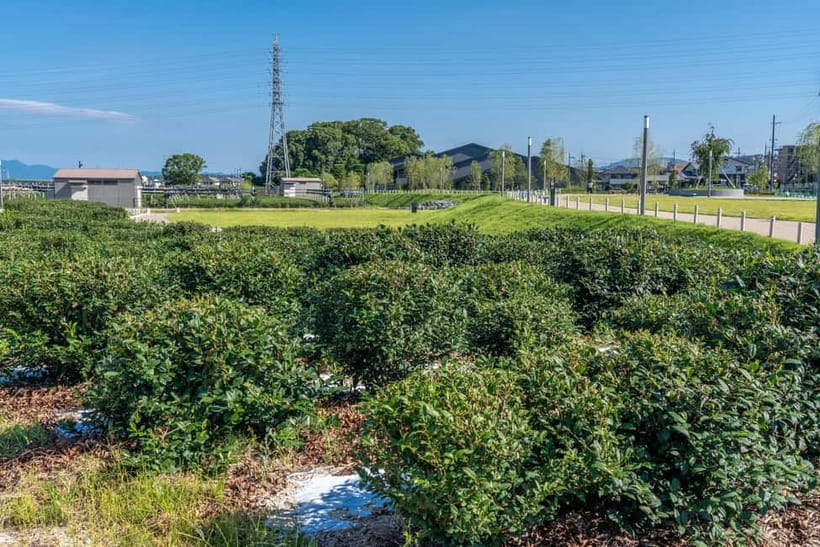
The equipment is important, but the instructor shapes the experience. A good guide explains the steps without rushing and makes a traditional method feel possible for a first-timer.
Hideko has been singled out for a warm and enjoyable teaching style. Keiko has led sessions with a professional but funny approach, explaining how tencha becomes matcha and demonstrating the preparation method. Sukimoto has also been praised for combining careful preparation with humor.
You may also meet Yano-san, who has led small groups with close attention to each person. If English is not her first language, she may rely on a written script at times. That can sound a little formal, but the class still has clear support in English and a textbook to follow.
The group setup can help solo visitors. You are seated with other participants, and the activity gives you something easy to talk about while you grind and whisk. Couples, families, and groups of friends also fit naturally into the format.
This is not a private tea ceremony. You should expect a shared workshop with other people and a set teaching sequence. If you want a silent, highly formal ceremony, this may feel too casual. If you want to understand the basic method and try it yourself, the friendly approach is a strength.
More Tea Factory Tours in Uji:
- Kyoto: Tea Museum and Tsuen Teahouse Guided Tour
★ 5.0 · 2 reviews - Uva Halpewatte Tea Factory Tour in Ella Sri Lanka
★ 5.0 · 653 reviews - Nuwara Eliya: Tea Factory and Pickle Waterfalls Tuk Tuk Tour
★ 4.7 · 113 reviews - From Colombo: Kandy, Pinnawala and Tea Factory Full-Day Trip
★ 4.4 · 99 reviews
The summer-only matcha and ice cream option

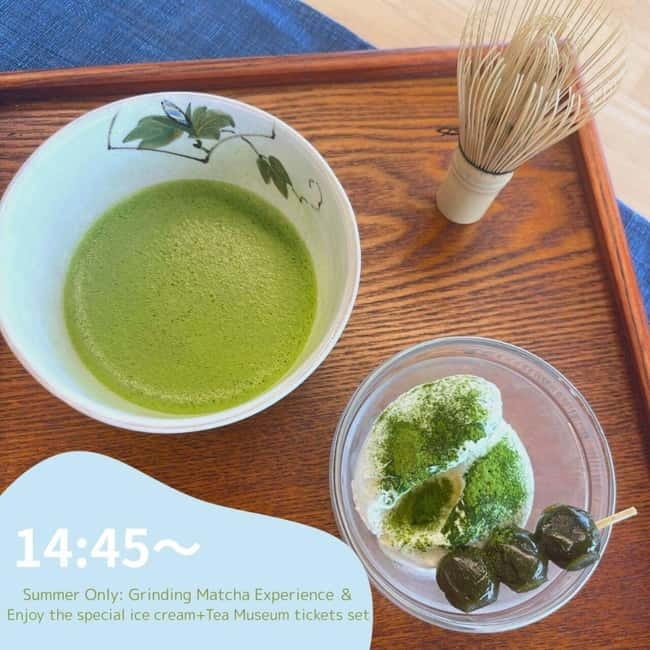
At 2:45 p.m. during summer, the restaurant offers a cool variation on the usual activity. You can pour your freshly ground matcha over ice cream and drink the tea, then pour more over the ice cream and eat it.
This option turns the matcha into both a drink and a dessert. It is especially appealing on a hot day, when a bowl of warm tea may not sound ideal. The seasonal timing is narrow, so do not assume every start time includes it.
The standard workshop remains the core experience. The ice cream is a bonus rather than the main reason to book, and you should check the available start times if this is important to you.
Location and getting there from Kyoto
Chazuna is in the Historical Park of Tea and Uji Town. The reception area is on the first floor, and you should go there before the scheduled class.
From Keihan Uji Station, the walk is about four minutes. From the South Exit of JR Uji Station, allow around 12 minutes. The two stations are not the same, so check which railway line you are using before setting off. The walk from JR is still easy, but it is longer than the Keihan route.
Give yourself more time than the minimum if you are coming from Kyoto with luggage, navigating Uji for the first time, or adding this activity between other sights. The class starts on time, and arriving at the building is not the same as being checked in at reception.
The setting also makes Chazuna a sensible stop during a wider visit to Uji. After the class, you can walk toward the main market street, where tea foods and souvenirs are sold, and continue to Byodoin Temple. Uji itself is pleasant to explore, so I would not treat this as a quick out-and-back activity from Kyoto if you have room for a longer afternoon.
If driving from Osaka, leave the Keiji Bypass at Uji Nishi IC and follow the side road toward Uji, taking about 10 minutes. From Tokyo or Nagoya, use the Uji-higashi IC, then turn left at the traffic light outside the exit. Parking details are not specified here, so confirm arrangements before relying on a car.
Is the $23 price good value?
At $23 per person, the price is fair because it covers two different things: the guided matcha workshop and admission to the museum. The activity also includes the instructor, so you are paying for hands-on teaching rather than only access to equipment.
The museum by itself is fairly short, but it fills an important gap. Without it, grinding matcha could feel like a pleasant craft activity with limited context. With it, you understand the tea town, the production stages, and the cultural setting before or after preparing your drink.
The value is strongest for matcha drinkers, first-time visitors to Uji, families, and anyone who likes learning by doing. If you already attend formal tea ceremonies or know a great deal about tea processing, the basic explanations may feel introductory.
The included tea and sweet, the digital exhibits, and the chance to take photos add to the package. You should still think of this as a focused one-hour activity, not a full Uji sightseeing tour. The price is good when you use it as one part of an afternoon in town.
Who will enjoy this most?

I would recommend it to anyone curious about how matcha is made, even if you are not a serious tea fan. The process is simple enough for beginners, and the instructor guides you through each stage.
Families should find the touchable exhibits, photo spot, and hands-on grinding more engaging than a museum made only of text panels. The activity is also wheelchair accessible, which makes it easier for a wider range of visitors to consider.
Solo visitors can join without feeling awkward, since the shared setup gives you an easy social activity. Couples and friends get a relaxed souvenir of the day, even though the ground tea itself is not designed as a take-home portion.
You may want to skip it if your Uji schedule is already packed and you only have time for Byodoin Temple and the river area. The class requires a fixed arrival time, and the museum visit works best when you are not watching the clock every few minutes.
Practical tips before you book
Book a time that leaves you room to arrive early. The instructions ask you to reach the reception desk 15 minutes before the reservation, and participation can be refused 30 minutes after the start. Late arrival can also disrupt the class for everyone else.
Choose the 2:45 p.m. summer session if the matcha-over-ice-cream option is a priority. Otherwise, pick the time that best fits your Uji sightseeing plan.
Allow time for the museum, even though the class is the main attraction. The exhibits make the tea process easier to understand, and several people find the digital displays and videos worth seeing after the workshop.
English and Japanese instruction are available. If you want to change your date or time, use the website procedure rather than calling, as schedule changes cannot be handled by phone.
Cancellation is free up to 24 hours before the activity, with a full refund. The reserve-now, pay-later option can help if your Kyoto plans are still shifting.
Should you book the Chazuna matcha workshop?
I would book it if you want more than a photo of a matcha latte. The strongest part is the simple chain of actions: grind the leaves, whisk the powder, drink what you made, then see the museum that explains why the process matters.
It is especially good value at $23 because the museum ticket is included, the class is accessible to beginners, and the location fits neatly into a day in Uji. Just remember that it is a short introductory workshop, not an advanced tea ceremony, and arrive early enough to protect your reservation.
If you like tea, hands-on activities, or smaller cultural experiences that give a place more meaning, this is an easy addition to a Kyoto trip. If you are short on time or already have strong tea knowledge, spend the hour elsewhere in Uji.
FAQ
How long does the Chazuna matcha experience last?
The activity lasts one hour. You should also allow extra time before the class to reach the first-floor reception area and check in.
What is included in the ticket?
The ticket includes admission to the Chazuna Museum, the matcha-making experience, and an instructor.
Can I grind my own matcha?
Yes. You use a tea mill to grind tencha leaves into matcha powder, then learn how to whisk and drink the tea you made.
Is the experience available in English?
Yes. The activity is offered in Japanese and English. The instructor assigned to your session may vary.
Where is the meeting point?
Go to the first-floor reception area at Chazuna in the Historical Park of Tea and Uji Town.
How far is Chazuna from the train stations?
Chazuna is about a four-minute walk from Uji Station on the Keihan Uji Line. It is about a 12-minute walk from the South Exit of JR Uji Station on the Nara Line.
Is the activity wheelchair accessible?
Yes, the activity is listed as wheelchair accessible.
Can I make matcha over ice cream?
In summer, the restaurant offers this option at 2:45 p.m. You can pour your ground matcha over ice cream and enjoy it as a drink and dessert.
What happens if I arrive late?
You should arrive 15 minutes before your reservation and report to reception. Entry or participation may be refused after 30 minutes from the start, and the participation fee is not refunded.
More Museum Visits with Tea around Uji
- Afternoon Tea at the British Museum
★ 4.2 · 511 reviews - Private Abu Dhabi Sheikh zayed mosque with Louver Museum & Emirates Place Tea
★ 5.0 · 173 reviews - London: National Gallery Guided Tour and Afternoon Tea
★ 4.5 · 64 reviews - Official National Gallery Highlights Tour and Afternoon Tea
★ 3.5 · 10 reviews
Newly steeped around Uji
- Kyoto tea town for matcha lovers★ 5.0 · 16 reviews
- Uji: Private immersion into Kyoto’s tea and reglious culture★ 5.0 · 17 reviews
- Uji and Wazuka Matcha Farm Half Day Private Guided Tour★ 5.0 · 21 reviews
- Utilising upcycled Matcha! Creating matcha incense (Uji, Kyoto)★ 5.0 · 6 reviews
- Kyoto Matcha Green Tea Tour★ 4.5 · 23 reviews
- Uji Tea Ceremony and UNESCO Heritage Walking Tour★ 5.0 · 20 reviews
- 7 Hours Private Guided Tour Uji and Wazuka Matcha Farm★ 5.0 · 2 reviews
- Half Day Matcha Tour in Uji, home of culture, with a local★ 4.8 · 14 reviews
Matcha Experiences, compared.
World Heritage Kyoto & Nara Uji Authentic Matcha Experience
Read our review →
Matcha Making Class in Tokyo with Authentic Japanese Sweets Set
Read our review →
Kyoto: Tea Ceremony Meditation – Make Matcha with Tea Master
Read our review →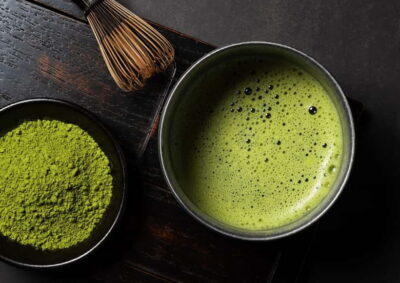
Tokyo: Matcha Making Experience with Mochi Sweets in Asakusa
Read our review →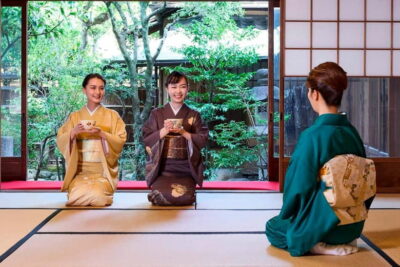
Kyoto: Kimono Tea Ceremony with Matcha and Sweet
Read our review →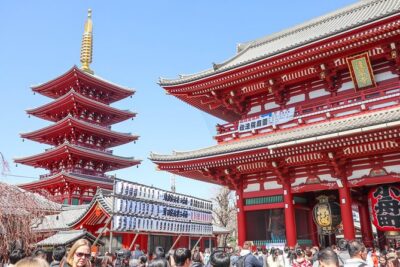
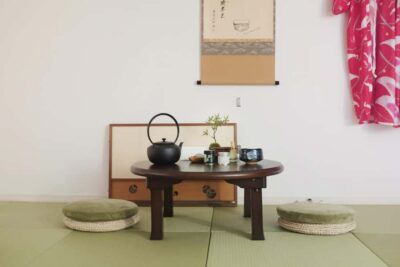
Tokyo: Asakusa Kimono Dressing and Matcha Experience
Read our review →Browse the lists this tea experience appears in