
Review · JAPAN
Nagoya: Japanese Traditional Sweets making and Tea Ceremony
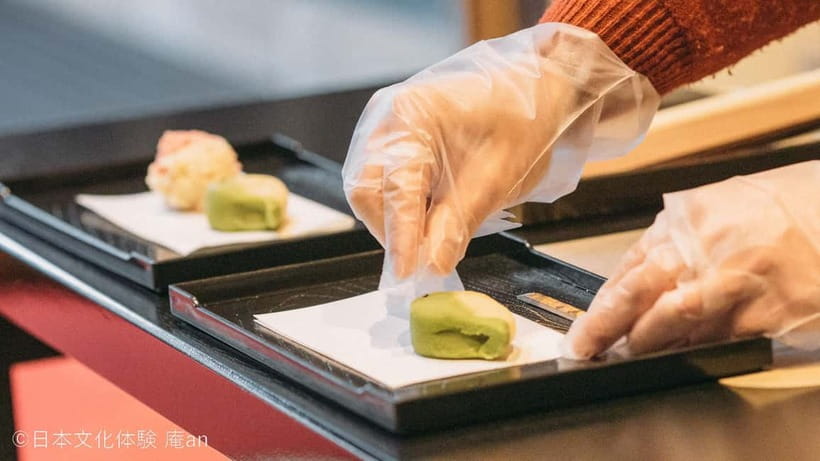
Nagoya’s sweetest cultural lesson starts with a lump of bean paste. You color it, shape it, and turn it into two seasonal nerikiri sweets before preparing your own matcha. I like the hands-on work and the use of bean paste from long-established Kyoto shops. I also like the calm pace, with time to learn instead of simply watching a demonstration.
The main consideration is that this is an introduction to tea ceremony, not a full formal ceremony. English support is available as much as possible, but the instructors are Japanese, so contact the venue in advance if clear English guidance matters to you.
Key points worth knowing
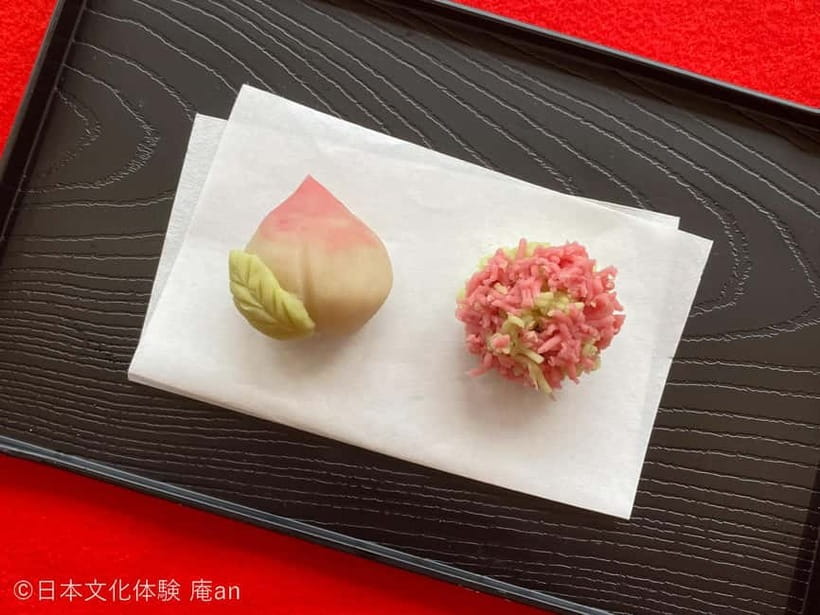
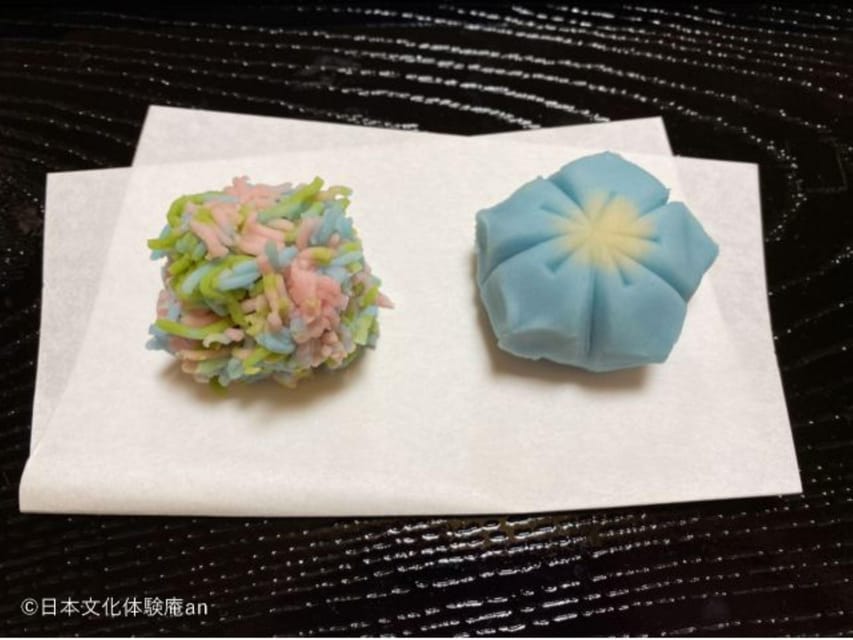
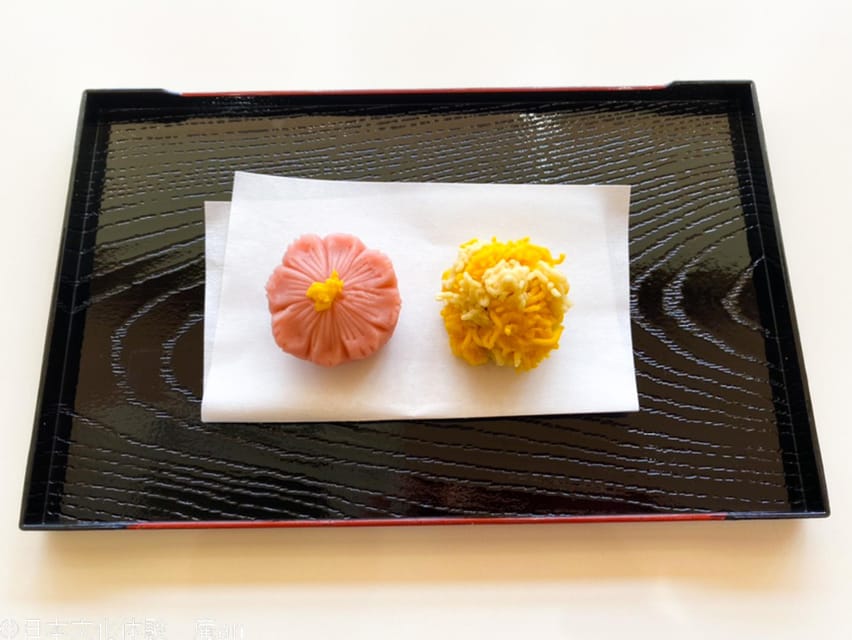
- Two sweets, not just one: You make a flower-shaped nerikiri and a kinton nerikiri, with designs matched to the season.
- Quality ingredients matter: The white and red bean pastes come from long-established Kyoto producers, and the matcha is single-origin Uji tea.
- The class is hands-on: You color the paste, shape the sweets, grind matcha, and prepare the tea yourself.
- It fits neatly into a Nagoya day: The experience lasts 95 minutes and is one minute from Kokusai Center Station.
- Families can join in: Children, including a six-year-old mentioned in the feedback, have been supported during the activity.
- Plan for stairs and timing: The venue is on the third floor with no elevator, and late arrivals cannot be accommodated.
Making nerikiri from Kyoto bean paste
The best part of this experience is that you do not merely sample wagashi, the broad Japanese term for traditional sweets. You make two pieces yourself, beginning with the paste before it takes on its final shape.
Nerikiri is a refined sweet made from colored white bean paste, often formed into flowers, leaves, fruit, or other seasonal images. It looks delicate, but the process is approachable. You work with the paste, add color, and shape it with guidance from the instructor.
That creative step gives the class more value than a standard tasting. You see how a small change in color or pressure alters the final result. Your sweet may not look quite like the instructor’s, and that is part of the fun. One family described the candy-making as challenging in a good way, with plenty of laughs when their shapes came out less polished than planned.
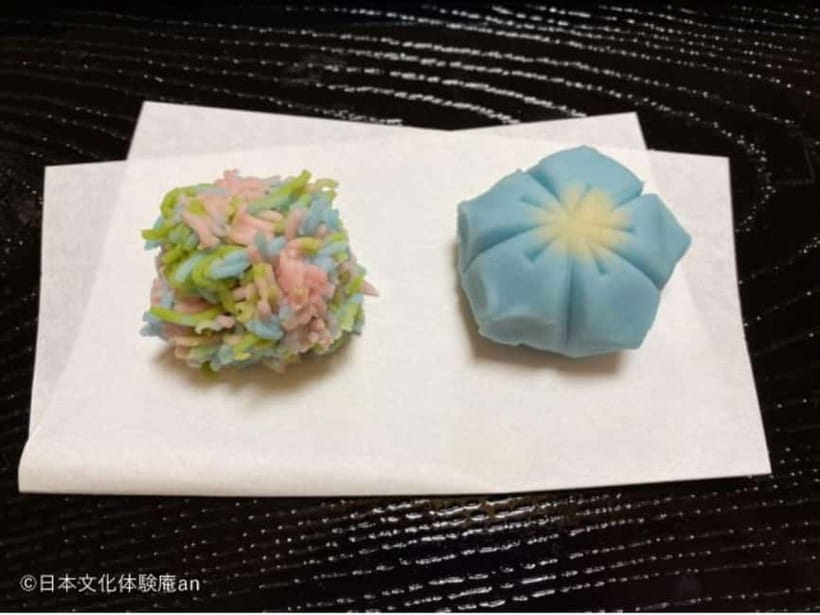
The seasonal designs change. In late autumn, the sweets may take the form of a ginkgo leaf and a chestnut. Other visits may feature flowers or fruit. This keeps the class connected to the Japanese custom of marking the seasons through food.
The ingredients are not an afterthought. The white and red bean pastes come from established Kyoto shops, giving you a chance to work with the same kind of carefully prepared base used in high-quality wagashi. The paste provides sweetness without needing a complicated recipe, so the focus stays on color, texture, and form.
You make two types of nerikiri:
- A flower-shaped nerikiri, which introduces the basic coloring and shaping work.
- A kinton nerikiri, a textured style that gives you a different way to handle the paste.
The class schedule allows about 55 minutes for the sweet-making portion. That is long enough for explanation, practice, and the two finished pieces without turning the session into a rushed craft project.
More Tea and Sweets Making in Japan:
- Matcha Making Class in Tokyo with Authentic Japanese Sweets Set
★ 5.0 · 744 reviews - Matcha Making Class in Osaka with Authentic Japanese Sweets Set
★ 5.0 · 509 reviews - Tokyo: Matcha Making Experience with Mochi Sweets in Asakusa
★ 4.9 · 388 reviews
Why the matcha pairing works
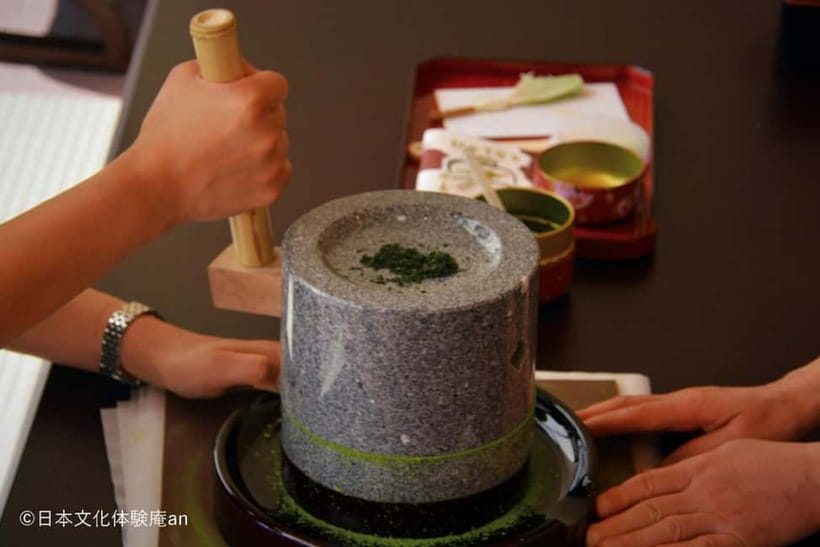
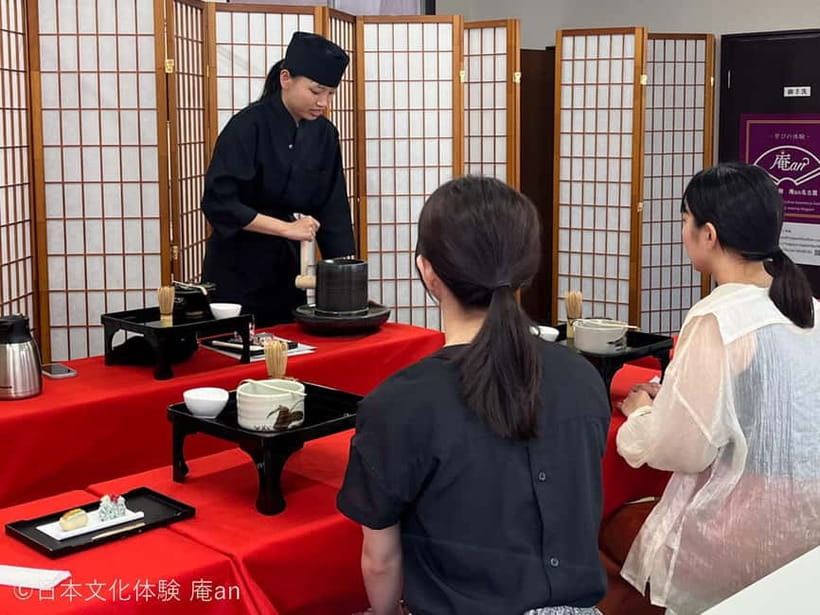
After the sweets are ready, the experience shifts from making food to preparing tea. You receive an explanation of matcha, watch a demonstration of matcha grinding, and take part in a tea ceremony experience using Uji matcha.
The tea is described as single-origin special matcha. It is not simply a green powder added for atmosphere. You learn how the tea is prepared and how to drink it in the proper manner. One useful part of the session is the explanation of tea etiquette, including the way to enjoy matcha respectfully.
The bitter, grassy taste of matcha can surprise first-time drinkers. That is why the sweets matter. The sweetness of the white or red bean paste softens the tea’s sharper notes, while the tea keeps the sweets from feeling heavy. You prepare the matcha and then enjoy it with the nerikiri you have made.
A matcha grinding demonstration adds context. It helps you understand that the powder in your bowl is the result of careful processing, not an ordinary powdered tea. The experience does not turn you into a tea master in one afternoon, but it gives you a clearer idea of the care behind the drink.
At about the 65-minute mark, the instructor explains the tea portion. The tea-making and ceremony experience follows, with picture time before the session ends. The final ten minutes are set aside for eating and drinking.
A gentle introduction, not a formal tea school
Set your expectations correctly. This is a cultural workshop with tea ceremony elements, not an extended, formal tea ceremony conducted in a traditional school setting.
That distinction matters. You will learn about matcha, watch the preparation, and take part in the process. You will also receive guidance on how to drink the tea. But if your goal is to study every movement, utensil, and rule of a formal tea ceremony, this 95-minute class will feel like a first lesson rather than a complete ceremony.
For most people, that is a strength. The format is friendly and practical. You get to make something, drink something, and ask questions through the instructor’s explanations. It avoids the long stretches of observation that can make a formal ceremony difficult for young children or people with limited time.
The quality of instruction appears to be a major part of the experience. Mariko is described as clear and professional, with explanations about the sweets, tea, and ingredients. Saki has also been praised for creating a welcoming class and making the process easy to follow. Since the instructors are Japanese, English translation is offered as much as possible. Several sessions have had fluent English delivery, but you should contact the venue ahead of time if you require full English instruction.
The 95-minute schedule
The timing is compact and easy to follow:
At the start, you receive an explanation of traditional Japanese sweets. This gives you the basic context before you begin handling the bean paste.
During the first 55 minutes, you make the flower-shaped nerikiri and the kinton nerikiri. The work begins with coloring the white bean paste, then moves into shaping and decorating. The designs depend on the season.
At about 55 minutes, there is a break. This creates a natural pause between the craft portion and the tea portion.
At about 65 minutes, the tea explanation begins. You watch a matcha grinding demonstration and then prepare your own matcha as part of the tea ceremony experience.
Before the 85-minute mark, you have time for photographs. The class then moves into eating and drinking.
At 95 minutes, the scheduled experience ends and you leave the room.
This structure suits a busy Nagoya itinerary. You can fit it between sightseeing stops without giving up half a day. It also gives you a calm pause if you have been moving quickly through the city. One family chose the class after having only one full day in Nagoya and found that the slower pace worked well for everyone.
More Tea Ceremonies in Japan:
- Kyoto: Tea Ceremony in a Traditional Tea House in Kiyomizu
★ 4.9 · 3,519 reviews - Kyoto: Tea Ceremony Ju-An at Jotokuji Temple
★ 4.9 · 3,207 reviews - Kyoto: 45-Minute Tea Ceremony Lesson Experience
★ 4.3 · 2,378 reviews - Osaka: Tea Ceremony Experience
★ 4.9 · 1,426 reviews
The $18 price and what it includes
At $18 per person, this is an inexpensive cultural activity, especially because the fee includes two separate parts: traditional sweet-making and tea preparation. You are not paying only for a demonstration or a tasting. You receive ingredients, instruction, two sweets to eat, and matcha to prepare and drink.
The value is strongest if you want an activity that is:
- Hands-on rather than sightseeing from a distance
- Short enough to fit into a packed day
- Suitable for adults and children
- Focused on a specific Japanese food tradition
- More substantial than a quick snack stop
The price does not include a box for taking the sweets away. A take-out box costs 100 yen. You can also purchase an experience completion certificate for 300 yen. If you want a certificate with your name printed on it, provide your names in advance. Otherwise, the name field will be left blank.
The sweets are intended to be enjoyed during the session, alongside the matcha. If you want to carry them around Nagoya, pay for the box and remember that delicate nerikiri may not travel as well as a packaged souvenir.
Location near Kokusai Center Station
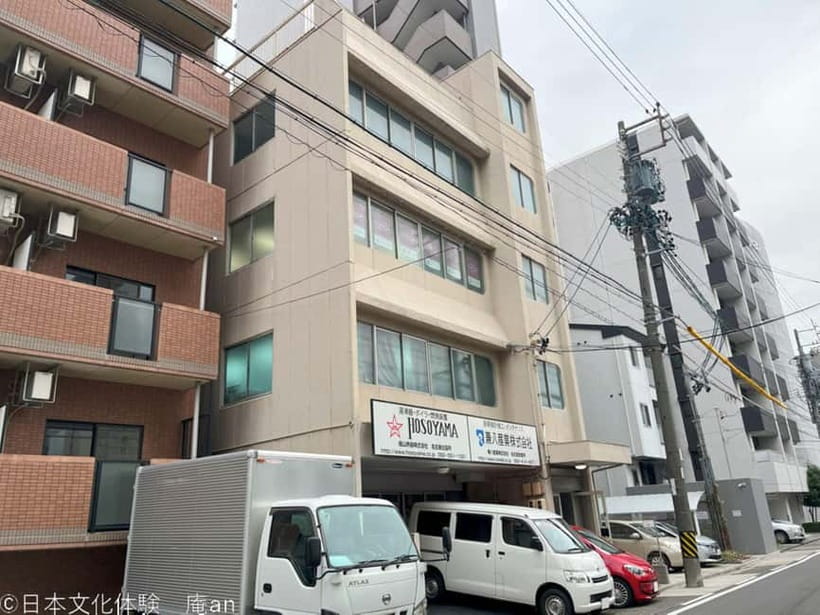
The meeting point is one minute from Exit 3 of Kokusai Center Station on Nagoya’s Sakura-dori Subway Line. From Nagoya Station, it is about a 13-minute walk along the Sakura-dori side.
That location makes the class easy to add to a day based around Nagoya Station. You do not need to arrange a long ride across the city, and the subway exit is close to the venue. The listed coordinates are 35.1715323, 136.891893 if you want to check the location before leaving your hotel.
The venue is on the third floor, and there is no elevator. This is a small but important planning detail for anyone carrying a stroller, using mobility equipment, or traveling with heavy bags. Arrive with enough time to find the building and climb the stairs.
The class cannot be held for late arrivals. That rule matters here because the activity moves through several steps, and missing the opening explanation would make the coloring and shaping work harder to follow. Build in extra time, especially if you are coming from Nagoya Station.
Who will enjoy this most
I would choose this experience if you want to understand a small but meaningful part of Japanese food culture. It works well for first-time visitors who want something beyond temples, shopping, and city views.
Families are a good match. The craft has a clear goal, children can see the paste change shape, and the tea section adds an educational element. A six-year-old was able to join with support from the hosts. Children under two who sit on a parent’s lap are free, according to the stated policy.
Couples and solo visitors can also enjoy the quiet focus of the work. You leave with something you made, rather than only photographs of something someone else prepared. The activity also suits anyone who enjoys food traditions, design, or small creative projects.
This may not be the right pick if you dislike sweet bean paste, cannot manage a third-floor walk-up, or want a long and highly formal tea ceremony. It is also less suitable if you need guaranteed English throughout. Contact the provider before booking if language access is a key concern.
Practical booking advice
The experience operates between 10:00 and 17:00. Reservations received after 17:00 are processed the following day, so do not expect an evening class or a quick late booking after dinner.
You can reserve now and pay later, which helps if you are still arranging your Nagoya schedule. Free cancellation is available up to 24 hours in advance for a full refund. After that point, cancellation fees apply, and a date or time change may also incur a specified fee.
Do not count on reimbursement for transport costs if you cancel. Also, only people taking part in the activity may enter the venue. If someone in your group plans to wait inside without joining, that will not be permitted.
The instructor language is Japanese, with English translation provided as much as possible. Sending a message before arrival is sensible if you want English assistance added to the session.
Should you book the Nagoya sweets and tea class?
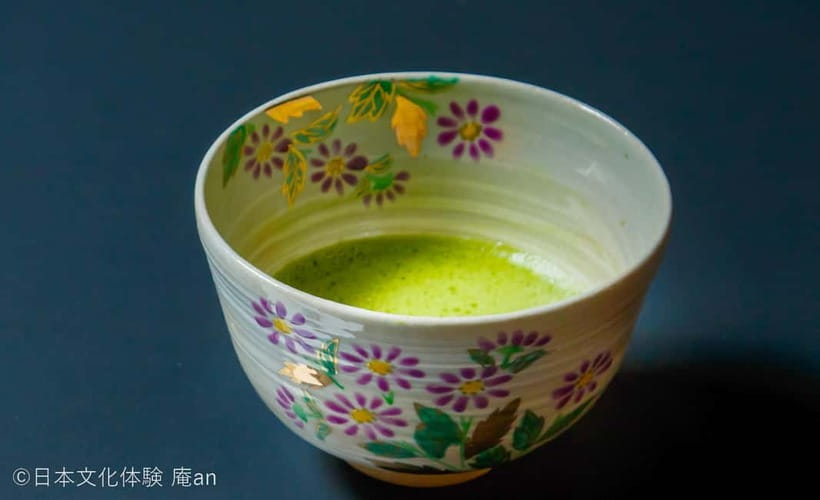
Book it if you want an affordable, compact activity that lets you make two seasonal Japanese sweets and prepare matcha yourself. The Kyoto bean paste, changing designs, and clear step-by-step format give the class more substance than a simple confectionery demonstration.
I especially recommend it for families, first-time visitors to Japan, and anyone who wants a quiet break near Nagoya Station. The $18 cost is fair for two activities and the ingredients included.
Skip it if you are seeking a full formal tea ceremony, guaranteed English instruction, or a venue without stairs. For everyone else, this is a practical way to spend 95 minutes learning, making, and tasting something closely tied to Japanese seasonal culture.
FAQ
How long does the experience last?
The scheduled duration is 95 minutes. The main activity ends around the 85-minute mark, followed by eating and drinking time before room departure at 95 minutes.
Where does the experience take place?
The venue is a one-minute walk from Exit 3 of Kokusai Center Station on the Sakura-dori Subway Line. It is about a 13-minute walk from the Sakura-dori side of Nagoya Station.
What sweets will I make?
You will make two seasonal nerikiri sweets. The schedule includes a flower-shaped nerikiri and a kinton nerikiri. Designs can reflect seasonal flowers, leaves, or fruit.
Is matcha included?
Yes. The experience includes a tea ceremony activity using Uji matcha. You will see a matcha grinding demonstration, prepare your own matcha, and drink it with the sweets you made.
Is English available?
The instructors speak Japanese, and English translation is provided as much as possible. Contact the venue in advance if you would like English assistance added to your session.
Is the venue accessible by elevator?
No. The venue is on the third floor and there is no elevator.
Can I take the sweets home?
A take-out box is available for 100 yen. The standard experience is designed for eating and drinking the sweets during the session.
What happens if I arrive late?
The event will not be held to accommodate delays. Allow extra time to reach the building, especially if you are walking from Nagoya Station or navigating the subway.
Newly steeped around Japan
- Yokohama : Tea Ceremony with Sweets and Souvenir★ 5.0 · 5 reviews
- Whisk Your Own Matcha: A Zen Matcha Experience at Temple★ 3.6 · 7 reviews
- Walking Tour: Yanaka,Nezu& Sendagi: Tea Ceremony & Old Tokyo★ 5.0 · 3 reviews
- Visit local home for music and tea ceremony near Disney★ 4.9 · 13 reviews
- Trip to Kamakura & Enoshima: Shrines, Seaside, Temples &Tea★ 5.0 · 11 reviews
- Yokohama: Sushi & Gyoza Cooking with Matcha & GreenTea Experience★ 5.0 · 3 reviews
- Kyoto tea town for matcha lovers★ 5.0 · 16 reviews
- Uji: Private immersion into Kyoto’s tea and reglious culture★ 5.0 · 17 reviews
Tea & Sweets Making, compared.

Matcha Making Class in Tokyo with Authentic Japanese Sweets Set
Read our review →
Tangier: Sunset, Tea, Sweets, Camel Ride, and Hercules Caves
Read our review →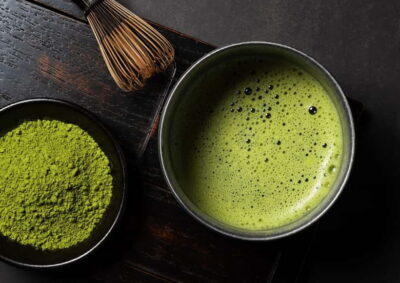
Tokyo: Matcha Making Experience with Mochi Sweets in Asakusa
Read our review →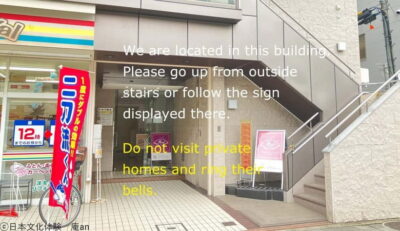
Kyoto: Japanese Traditional Sweets Making and Tea Ceremony
Read our review →
Osaka: Matcha Making Experience with Japanese Sweets
Read our review →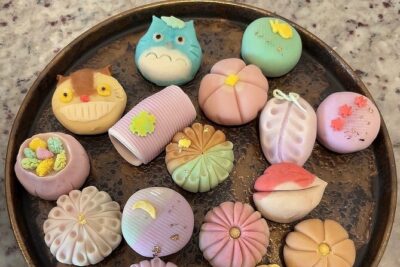
Make Traditional Nerikiri Sweets & Matcha experience in Shibuya
Read our review →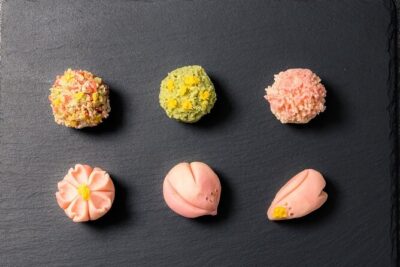
Sweets Making and Kimono Tea Ceremony at Tokyo Maikoya
Read our review →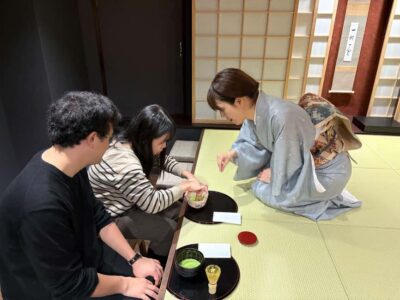
Kyoto: Traditional Tea Ceremony with Matcha & Sweets in Gion
Read our review →Browse the lists this tea experience appears in