
Review · TOKYO
Make Traditional Nerikiri Sweets & Matcha experience in Shibuya
The best part of this Harajuku nerikiri class is that you step away from Tokyo’s bright streets and into a local home. Hana guides you through four delicate Japanese sweets, then serves matcha in a relaxed, table-style tea session. It is a calm way to see how much care goes into a small piece of confectionery.
I like the tiny group size, capped at four people, and the fact that you make every sweet yourself. I also like the useful timing: a 9:00 AM start lets you finish before most shops open, leaving the rest of the day for Meiji Shrine, Takeshita Street, or Shibuya Crossing.
The main consideration is the price, about $60 per person for 90 minutes. That is more than a quick snack or a large group demonstration, but it includes four sweets, matcha, instruction, and a personal setting. The class also takes place in a home, so you should be comfortable with a more intimate experience than a formal cooking school.
Key points at a glance
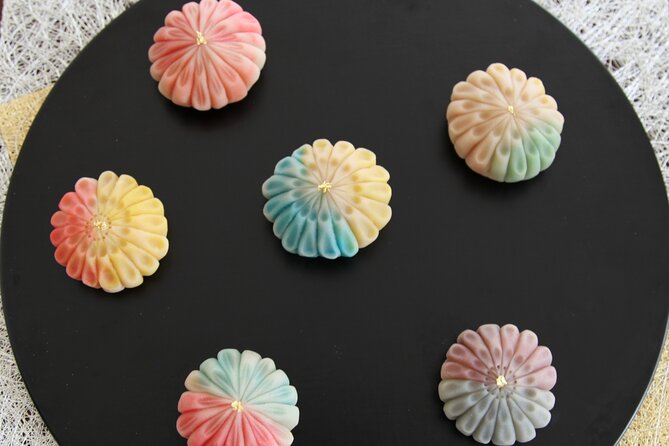
- Make four nerikiri sweets: Choose three designs from examples, then create one original piece.
- Meet Hana near Omotesando: The meeting point is by CHUMS Omotesando, about a three-minute walk from Omotesando Station.
- Enjoy matcha after the craft: The sweets are served with freshly prepared matcha and selected Japanese treats.
- See inside a Tokyo home: The class offers a small glimpse of inner-city life in a central neighborhood.
- Bring the whole family: Children as young as seven have enjoyed the activity, and it suits older adults as well.
- Plan your day around the start time: Sessions are offered at 9:00 AM, 1:00 PM, and 3:30 PM.
Why making nerikiri feels different from a standard food class
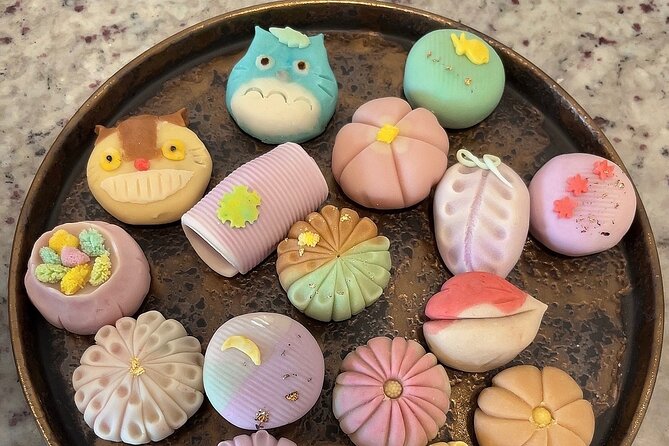
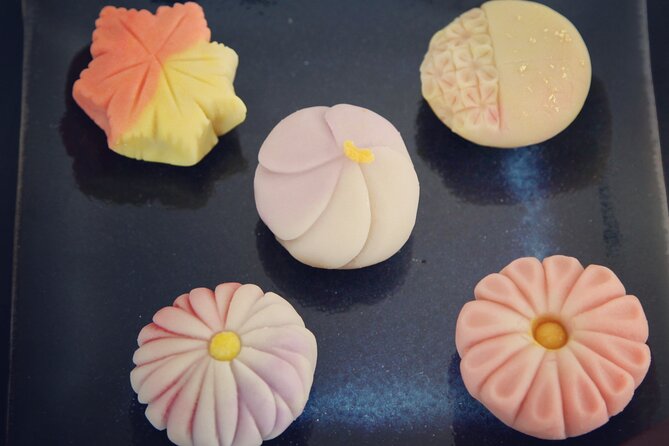
Nerikiri is a traditional Japanese confection made from bean paste, sugar, and other ingredients. It is valued for its appearance as much as its taste, with shapes and colors often linked to flowers, seasons, animals, or other familiar images.
That makes this class less about cooking a large meal and more about small-scale food art. You work with a modest amount of material, shape it carefully, and pay attention to details that are easy to miss when sweets are bought ready-made.
Hana begins with sample designs. You choose three shapes to make with her guidance, then use the final piece to create something of your own. Past examples have included cherry blossoms, flowers, pumpkins, Hello Kitty, Totoro, Pikachu, and other personal designs. The exact choices can vary, but the format gives you both structure and freedom.
That balance matters. If you are new to Japanese sweets, the sample designs give you a clear starting point. If you enjoy drawing, crafts, or hands-on activities, the original design lets you show some personality. You do not need to arrive with artistic talent. The instruction breaks a complicated-looking process into manageable steps.
The sweets are also yours to take home. That gives the activity a useful second life after the class, although you should treat them as delicate handmade food rather than durable souvenirs.
More Matcha Experiences in Tokyo
- Matcha Making Class in Tokyo with Authentic Japanese Sweets Set
★ 5.0 · 744 reviews - Tokyo: Matcha Making Experience with Mochi Sweets in Asakusa
★ 4.9 · 388 reviews - Asakusa Cultural Walk & Matcha Making Tour
★ 5.0 · 245 reviews
Entering Hana’s home near Omotesando
You meet across from CHUMS Omotesando, in front of a brown building at 5-chōme-2-21 Jingūmae. From there, Hana walks with you for about 30 seconds to her home.
The address puts you in one of Tokyo’s most convenient central areas. Omotesando Station is about a three-minute walk from the meeting point, and Harajuku and Shibuya are close enough to combine with the class. This is not an experience that sends you far outside the city center or eats up half a day in transit.
The home setting is one of the more distinctive features. You get a brief look at how an inner-city Tokyo resident lives, rather than entering a large commercial venue designed only for visitors. The tradeoff is that a home can feel less formal and less spacious than a dedicated studio. The group limit of four keeps the setting personal, but it also means this is not designed for a large family reunion or school group.
Hana has received warm praise for her calm teaching style and patient help with children and first-time makers. She speaks English and Japanese, and her teaching includes more than the basic sweet-making steps. She has also offered practical suggestions for places to visit around Tokyo, which can be handy if this is your first day in the city.
The four-piece nerikiri plan
The class follows a simple pattern. First, Hana shows you finished examples and explains the shapes. You then choose three designs and make them one at a time.
This structure gives you time to learn the basic handling of the bean paste before tackling your own idea. The early pieces are useful practice, not just filler. You can watch how the color, form, and fine details come together, then apply those lessons to your fourth sweet.
The final piece is your original design. That might be a flower, an animal, a character, or something entirely personal. Children have made character-shaped sweets, while adults have created flowers and other original forms. If you are worried about making a mistake, remember that the point is not perfect duplication. The class is meant to help you understand the process and try the technique yourself.
The experience is often described as easy to follow, but it still rewards patience. You may need to slow down when shaping small details or adding color. That is part of the appeal. Tokyo sightseeing can involve crowded stations, loud crossings, and a long list of stops. Here, your attention narrows to one small object in front of you.
You make four pieces in total. The activity description calls them nerikiri, though some past participants have casually referred to them as mochi. The distinction is useful: nerikiri is a bean-paste confection, and its appeal lies in its fine shapes and seasonal presentation.
Matcha after the sweets
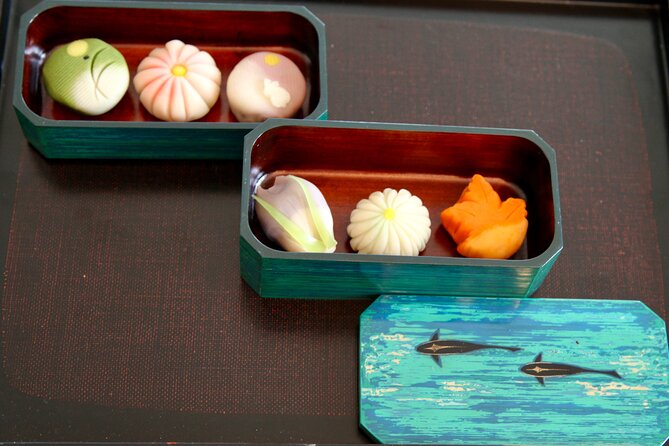
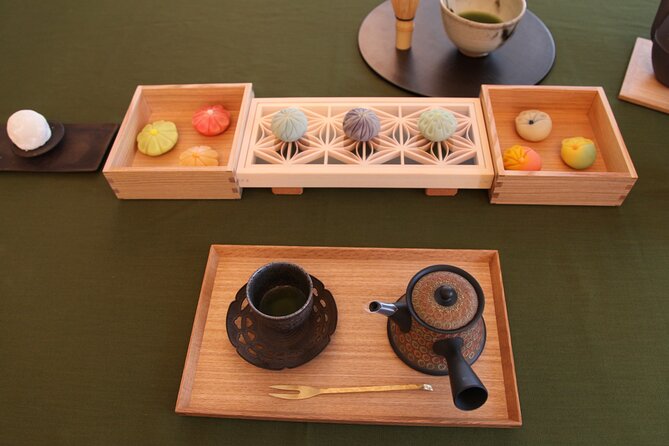
Once the sweets are finished, Hana serves matcha with carefully selected Japanese sweets sourced from different parts of Japan. You also learn how to prepare matcha and take part in a table-style tea ceremony.
This is not presented as a long, highly formal tea-school lesson. Instead, it is a practical introduction that lets you learn the basic etiquette and experience the quiet rhythm of making and drinking the tea. That makes it a good fit if you want cultural context without committing to a lengthy ceremonial program.
The matcha also gives the class a natural second half. You have spent time working with your hands, then sit down to taste what you made. The contrast between the careful craft and the simple act of drinking tea makes the experience feel complete.
Some people may find matcha bitter or unfamiliar, but the accompanying sweets provide balance. If you are interested in Japanese food beyond sushi and ramen, this is a useful chance to understand how taste, texture, appearance, and season can all matter at once.
The tea portion is also a nice choice for a multigenerational group. Young children can focus on shaping sweets, while older family members may appreciate the etiquette and cultural background. The class has worked well for families with children around seven to fourteen, grandparents with grandchildren, couples, and solo participants.
More Tea and Sweets Making in Tokyo
- Sweets Making and Kimono Tea Ceremony at Tokyo Maikoya
★ 5.0 · 57 reviews - Japanese Traditional Sweets making and Tea Ceremony
★ 4.7 · 50 reviews - Mochi Matcha Gluten Free Japanese Sweets Class near Shibuya area
★ 5.0 · 26 reviews - Tokyo: Two Types of Japanese Sweets Making and Tea Ceremony
★ 4.6 · 26 reviews
A good choice for families and creative beginners
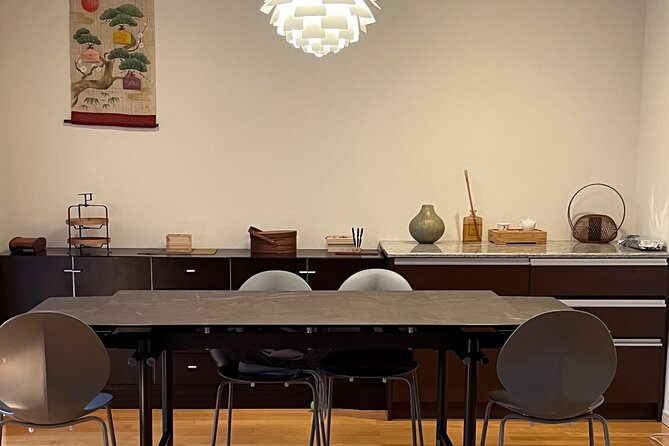
This is one of the more family-friendly cultural activities in central Tokyo. Hana has been praised for giving children individual help while still allowing adults to work on their own pieces. That matters in a small class, where one child losing interest can otherwise take over the whole session.
The activity suits older children who can follow several steps, but it is not limited to them. Adults can enjoy the design challenge, and seniors can take part at a comfortable pace. The format does not depend on physical exertion, long walks, or complicated equipment.
It is also suitable for vegans and vegetarians, according to the activity information. If you have a more specific dietary concern, such as halal requirements, contact the host before the class. One participant noted that Hana was willing to discuss alcohol-containing ingredients and make substitutions where possible. That is encouraging, but you should still explain your needs in advance rather than assuming every ingredient will be changed automatically.
This is not the best pick if you want a serious professional pastry course. You will learn useful techniques you can try at home, but the focus is cultural, creative, and social rather than on advanced confectionery training.
Choosing between 9:00 AM, 1:00 PM, and 3:30 PM
The three available start times shape the rest of your day.
The 9:00 AM session is the smartest choice if you want to use the class as a calm start to a sightseeing day. Many shops do not open until around 11:00 AM, so the early class fills a useful morning gap. Afterward, you can walk toward Harajuku, visit Meiji Shrine, explore Takeshita Street, or continue toward Shibuya.
The 1:00 PM session works well after a morning visit to another part of Tokyo. You can have lunch first, then treat the class as an afternoon cultural stop. Since the experience lasts about 90 minutes, you still have time for shopping or an evening meal.
The 3:30 PM session is better for a slower day or for people who want to sightsee first. It can also be a comfortable choice if you are staying nearby and do not want an early start. Keep in mind that the class ends back at the meeting point, and you will need to plan your evening from there.
Because the class is near Omotesando, you can easily combine it with a walk through Harajuku and Shibuya. The area is convenient, but it is also popular and busy outside the class. Give yourself enough time to find the meeting point, especially if you are arriving by train and navigating a large station.
What the $60 price includes
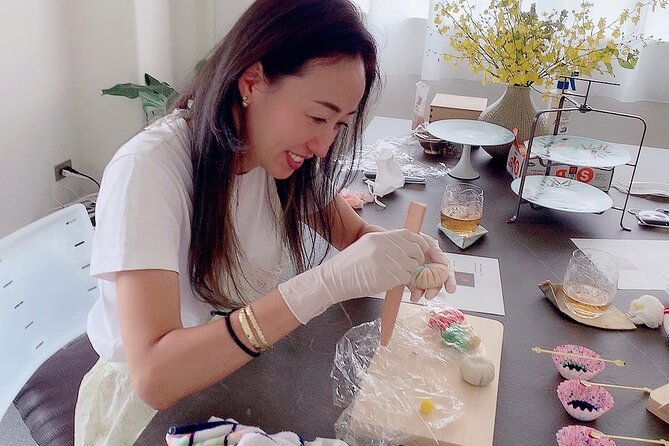
At about $60 per person, this is not a bargain activity in the narrow sense. You are paying for a 90-minute class rather than a full meal or a day-long tour.
The value comes from the combination of several small elements: personal instruction, four handmade sweets, matcha preparation, additional Japanese sweets, and access to a local home. With a maximum of four people, the teacher can give direct help rather than repeating instructions to a large room.
I would compare it with other short cultural workshops, not with a restaurant dessert. If you want to eat as cheaply as possible, this will seem expensive. If you want a practical cultural memory that you can recreate at home, the price is easier to justify.
The class also saves time. It is near public transportation, close to major Tokyo districts, and easy to pair with sightseeing. That location adds value for a short visit because you do not have to spend an hour reaching a distant venue.
The strongest value comes for families, couples, and people who enjoy making things. If you dislike crafts or prefer a tour with constant movement, the 90 minutes may feel slow. If you like quiet, guided activities, the pace is likely to suit you.
Practical details before you book
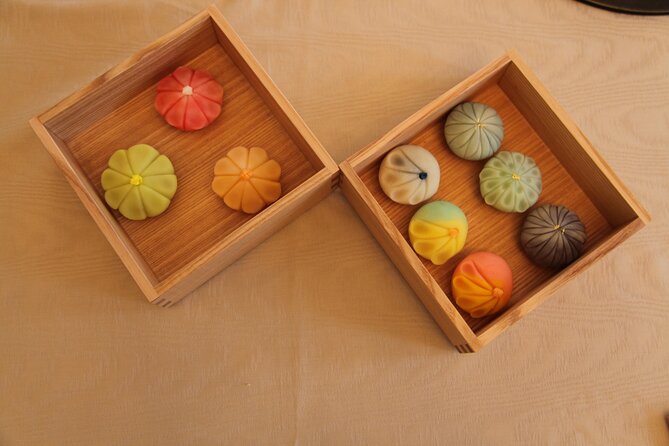
The experience lasts approximately one hour and 30 minutes. It starts and ends at the meeting point near CHUMS Omotesando, and you receive a mobile ticket after booking confirmation.
The maximum group size is four people. That is a major advantage if you want personal attention, but it means popular times can fill quickly. The listed sessions are 9:00 AM, 1:00 PM, and 3:30 PM.
Wear something comfortable for a seated, hands-on activity. The supplied details do not specify a dress code or special equipment, so you should not need to bring cooking tools. The important preparation is to arrive at the stated meeting point rather than going directly to the home.
Free cancellation is available up to 24 hours before the start time for a full refund. Changes or cancellations made less than 24 hours ahead are not accepted, and the cut-off follows Tokyo local time.
The activity is close to public transportation, but the neighborhood has many streets and station exits. I would allow a little extra time to find the meeting point, particularly for the morning session.
Who should book this Harajuku workshop?
Book it if you want a quiet, hands-on break from sightseeing and have an interest in Japanese food or design. It is especially well suited to families with children, couples, grandparents with grandchildren, and solo visitors who prefer meeting a local host rather than joining a large group.
It is also a smart option for a first morning in Tokyo. The early start gives you something organized to do before shops open, and the location lets you continue into Harajuku and Shibuya afterward.
Think twice if your schedule is packed, you dislike sweets, or you want a formal tea ceremony with strict traditional rules. This experience is friendly and practical, with creativity at its center. It introduces tea etiquette without making the class feel stiff.
Should you book it?
I would book this if you want to make something small, tasty, and distinctly Japanese while staying in central Tokyo. The strongest reasons are Hana’s patient instruction, the four-person limit, the chance to create a personal design, and the unusual setting inside a local home.
The $60 cost is fair for a private-feeling cultural activity, though it is not the cheapest way to spend 90 minutes in Tokyo. Choose the 9:00 AM time if you want to build a full Harajuku and Shibuya day around it. Choose a later session if you prefer a slower schedule.
FAQ
Where does the nerikiri class meet?
The meeting point is at 5-chōme-2-21 Jingūmae, Shibuya, Tokyo 150-0001, near CHUMS Omotesando. You meet in front of a brown building and walk together to the host’s home.
How long does the experience last?
The activity lasts approximately one hour and 30 minutes.
How many sweets will I make?
You make four nerikiri sweets in total. Three are based on designs selected from examples, and the fourth is your own original design.
Can I take the sweets home?
Yes. Everything you make can be taken home with you.
Is matcha included?
Yes. The experience includes freshly prepared matcha, a table-style tea session, and carefully selected Japanese sweets.
What times are available?
The listed start times are 9:00 AM, 1:00 PM, and 3:30 PM.
Is the activity suitable for children and vegetarians?
The activity is described as suitable for all ages, including young children and seniors, and is also suitable for vegans and vegetarians. The maximum group size is four people.
Newly steeped around Tokyo
- Yokohama : Tea Ceremony with Sweets and Souvenir★ 5.0 · 5 reviews
- Walking Tour: Yanaka,Nezu& Sendagi: Tea Ceremony & Old Tokyo★ 5.0 · 3 reviews
- Private Mochi・Matcha sweets Making Class Near Shibuya Area★ 5.0 · 22 reviews
- 2 Hours Mochi &Nerikiri Making & Matcha Class in Bunkyo★ 5.0 · 21 reviews
- Private Kimono and tea ceremony at local home near Tokyo Disney★ 5.0 · 6 reviews
- Kimono and Tea Ceremony in Asakusa Private Food Tour With Guide★ 5.0 · 4 reviews
- Giant Sushi Cooking Class: Make a 1.5m Sushi Roll in Tokyo★ 5.0 · 9 reviews
- Tokyo Tea Ceremony Class at a Traditional Tea Room★ 5.0 · 2 reviews
Tea & Sweets Making, compared.

Matcha Making Class in Tokyo with Authentic Japanese Sweets Set
Read our review →
Tangier: Sunset, Tea, Sweets, Camel Ride, and Hercules Caves
Read our review →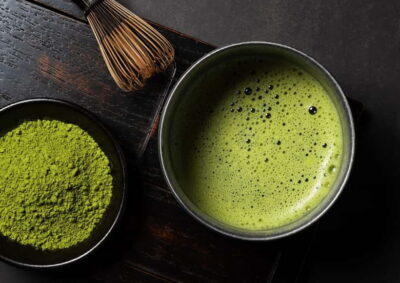
Tokyo: Matcha Making Experience with Mochi Sweets in Asakusa
Read our review →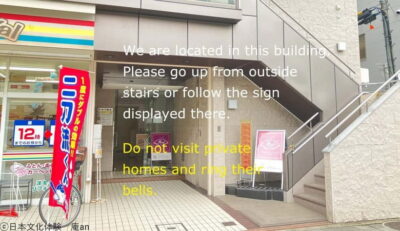
Kyoto: Japanese Traditional Sweets Making and Tea Ceremony
Read our review →
Osaka: Matcha Making Experience with Japanese Sweets
Read our review →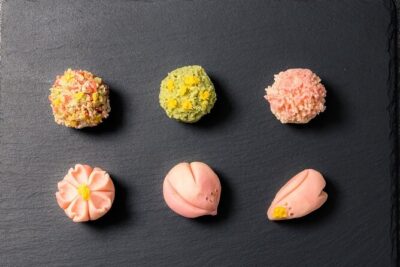
Sweets Making and Kimono Tea Ceremony at Tokyo Maikoya
Read our review →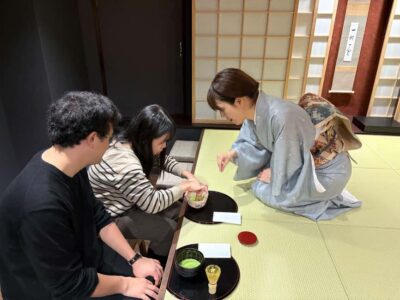
Kyoto: Traditional Tea Ceremony with Matcha & Sweets in Gion
Read our review →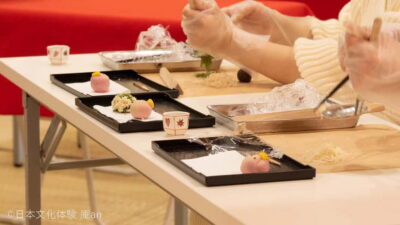
Tokyo: Two Types of Japanese Sweets Making and Tea Ceremony
Read our review →Browse the lists this tea experience appears in