
Review · TOKYO
Tokyo: Private Japanese Traditional Tea Ceremony
A tea ceremony in a 1,200-year-old Buddhist temple offers a quiet break from Tokyo’s noise and neon. In the 24-mat tatami room at Mita Koboji Temple, you learn the meaning behind the movements, taste matcha with wagashi, and take part rather than simply watch.
I like the careful English guidance and the chance to make tea yourself. I also like the small-group setting, which leaves room for questions about the tea, utensils, and temple. The main caution is the kimono expectation: dressing is an optional add-on, not automatically part of the standard experience.
Key points to know before booking
- 1,200-year-old temple setting: The ceremony takes place at Mita Koboji Temple, not in a modern studio.
- Hands-on matcha ritual: You may prepare tea yourself before the master makes another bowl for you.
- English and Japanese guidance: The tea master explains the utensils, etiquette, and movements as you go.
- About 60 minutes: One account found the session closer to 45 minutes, so allow for a shorter presentation.
- Optional kimono dressing: A certified kimono master can dress you in a traditional kimono or Oshima Tsumugi haori for an added fee.
- Matcha and wagashi only: This is a cultural activity, not a meal.
Entering Mita Koboji Temple for a quiet tea lesson
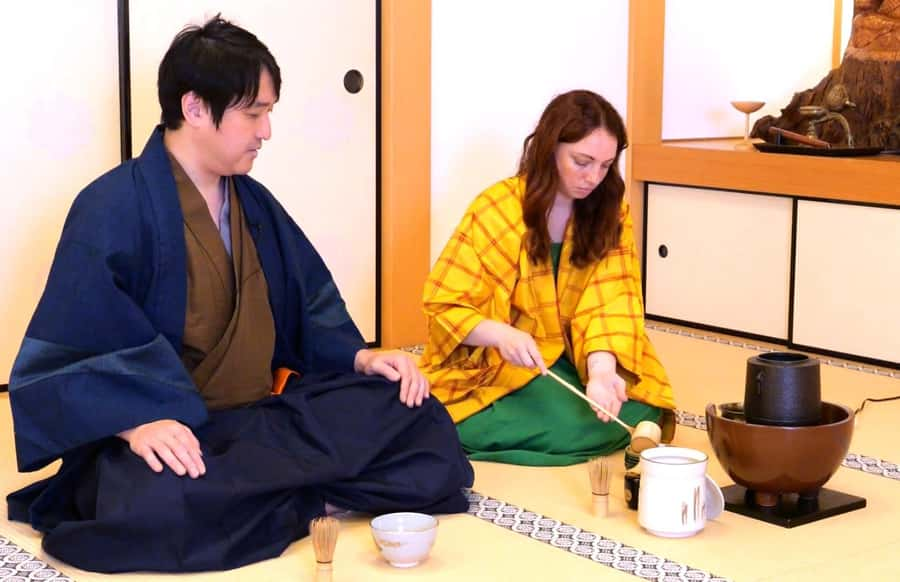
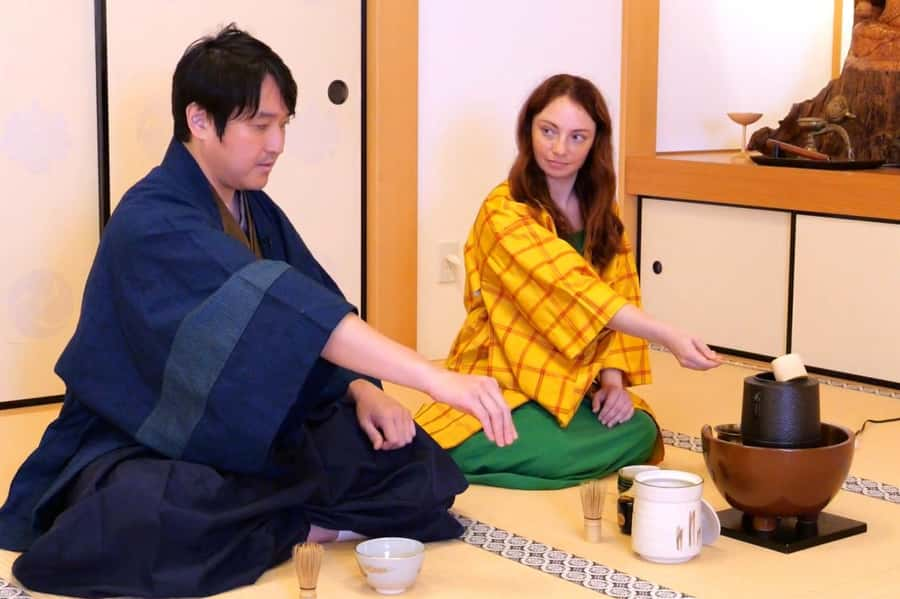
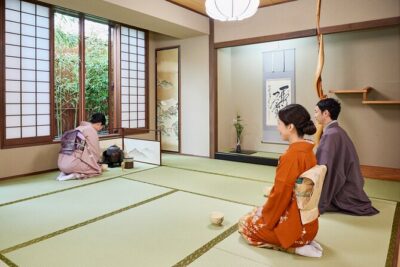
The experience begins at Mita Koboji Temple, where the age of the setting gives the ceremony its strongest sense of place. The temple is described as 1,200 years old, and the ceremony takes place in a spacious 24-mat tatami room.
That room matters. Tatami, low seating, formal utensils, and the calm pace of the host help you understand that tea ceremony is not simply a way to prepare a drink. It is a carefully ordered social ritual shaped by attention, respect, and restraint.
I like this setting more than a generic demonstration room. You are not only learning about tea in theory. You are sitting in a traditional space and following the basic rules of conduct inside it.
The ceremony has roots in samurai culture, where tea became a highly respected form of entertainment and social exchange. You do not need prior knowledge of Japanese history to enjoy the session, but that background helps explain why each movement is deliberate.
The temple setting also gives the activity a slower mood than most Tokyo sightseeing. If your day has been filled with stations, department stores, and crowded streets, this hour can reset your pace.
More Tea Ceremonies in Tokyo
- Kimono Tea Ceremony at Tokyo, Asakusa Maikoya
★ 5.0 · 638 reviews - Tokyo: Traditional Tea Ceremony with a Tea Master
★ 5.0 · 528 reviews - Tea Ceremony Workshop in Tokyo by the Experienced Instrucor
★ 5.0 · 189 reviews
Learning the utensils and etiquette step by step
The tea master introduces the utensils used in the ceremony and explains how they are handled. You learn the basic etiquette as the activity unfolds, so you are not expected to arrive knowing the correct gestures.
This is especially helpful if formal Japanese customs feel intimidating. The explanations are designed for first-time participants, and English guidance is available. One English-speaking host was praised for being attentive and clear, while another session was limited by weaker English. I would treat the language experience as generally workable, but not identical every time.
The best part is the practical format. You do not sit silently while someone performs the entire ceremony at a distance. You may make tea yourself with the master’s help, then watch the master prepare another serving for you.
That two-part structure gives you both sides of the ritual. Making your own matcha shows how much care goes into what can look like a simple bowl of green tea. Watching the master lets you appreciate the smooth, practiced movements without worrying about your own technique.
You should still expect a guided introduction rather than an advanced tea-school lesson. In roughly an hour, the goal is to understand the basic flow, try the principal actions, and gain respect for the discipline behind the ceremony.
Tasting matcha with traditional wagashi
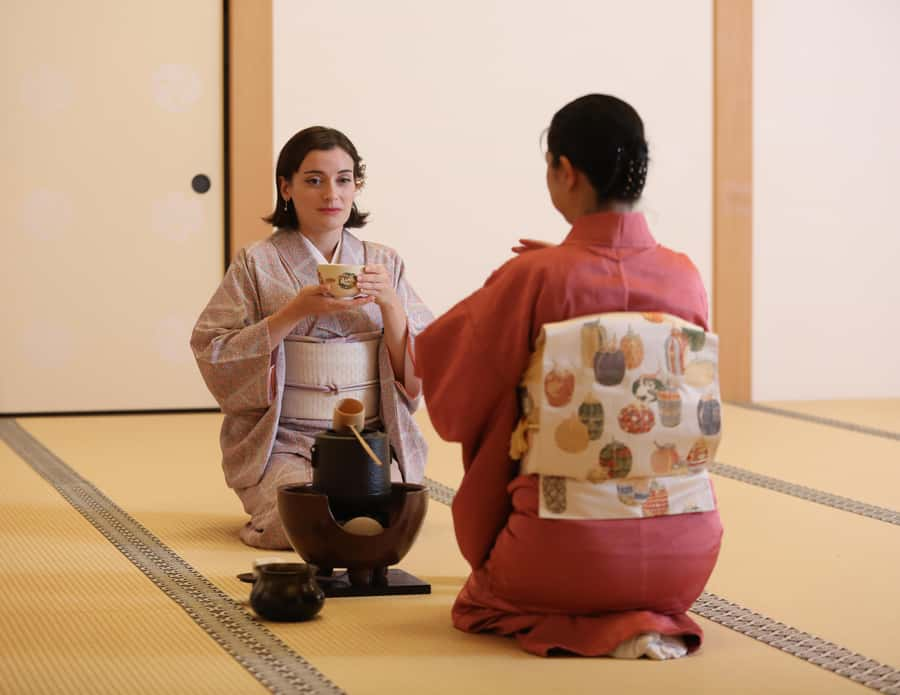
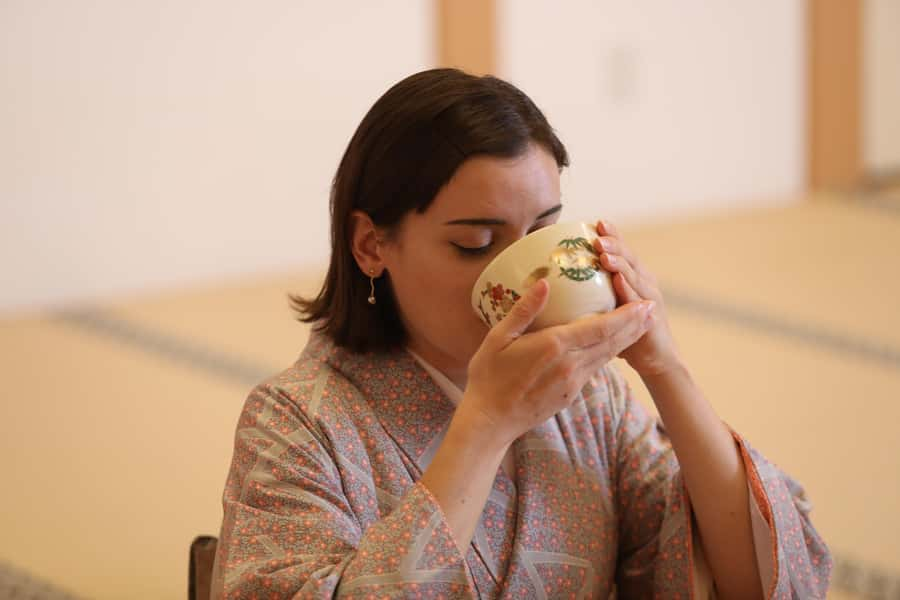
The tea is matcha green tea, served with Japanese wagashi sweets. These sweets are not an extra snack added to the activity. They are part of the tea tradition, balancing the bitterness of matcha with a small, carefully presented taste of sweetness.
The standard experience includes tea and sweets only. Do not arrive expecting lunch, a full refreshment service, or a choice of drinks. The activity makes a good cultural stop before or after a meal, but it does not replace one.
For many first-time visitors, the taste of matcha is part of the lesson. It is earthy and bitter compared with ordinary brewed tea, and the wagashi helps prepare your palate. The combination gives you a better sense of why the sweet is served alongside the tea rather than afterward.
I also like that the food remains simple. The focus stays on the ceremony, the room, and the exchange between host and participant. If you want a longer tasting menu or a broad introduction to Japanese confectionery, this is not the right booking.
The value of a private or semi-private format
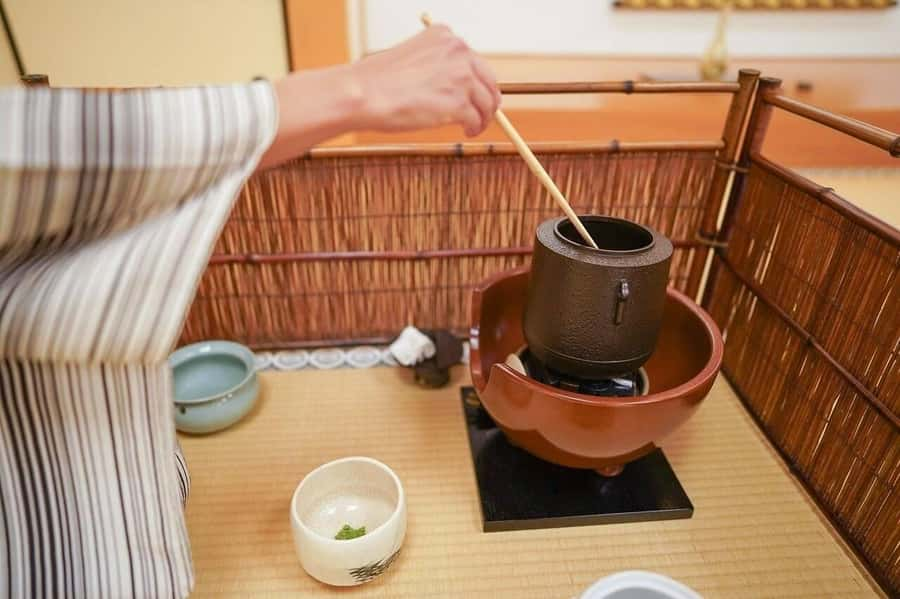
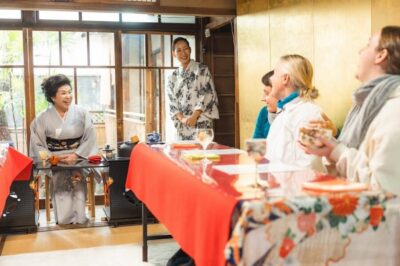
This is a private or semi-private experience, so the atmosphere should be more personal than a large group demonstration. A smaller format makes it easier to follow instructions, ask questions, and take part without feeling lost in a crowd.
That matters during tea ceremony because small actions carry meaning. If the group is too large, you may spend more time watching other people than learning the sequence yourself. Here, the host can focus on your pace and correct your movements as needed.
The available information does not promise a fixed number of participants, so you should not assume the session will be entirely one-to-one. The wording allows for both private and semi-private arrangements.
The activity is conducted in English or Japanese. English explanations have been a strong point when the host is comfortable using the language, with clear instruction on both the ceremony and the temple. At the same time, one session was shortened and the English was difficult to follow. If detailed spoken explanation is essential to you, keep that variation in mind.
Same leaf, a different ritual:
- Matcha Making Class in Tokyo with Authentic Japanese Sweets Set
★ 5.0 · 744 reviews - Dynamic Tokyo: Tokyo Tower, Tea Experience, Bay Cruise Day Tour
★ 4.5 · 521 reviews - Tokyo: Matcha Making Experience with Mochi Sweets in Asakusa
★ 4.9 · 388 reviews - Asakusa Cultural Walk & Matcha Making Tour
★ 5.0 · 245 reviews
Kimono dressing and the important photo warning
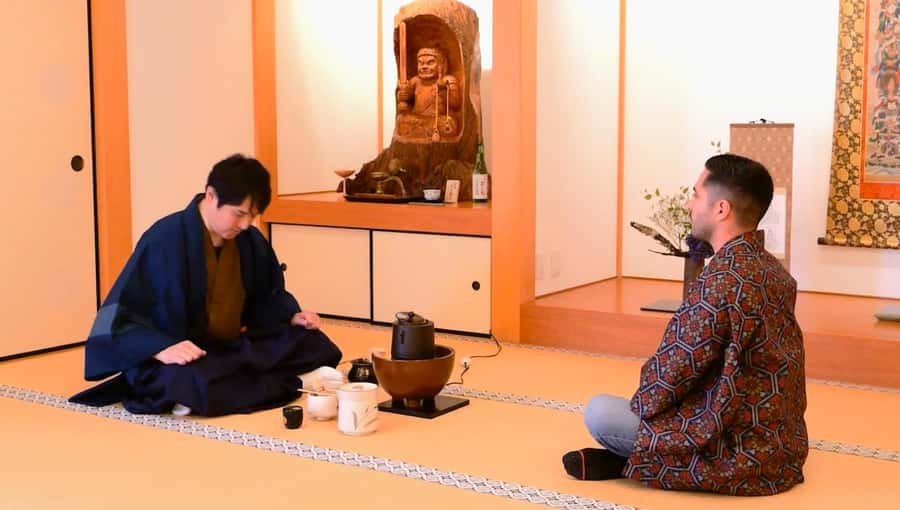
Traditional clothing can add a memorable visual element, but you need to separate the standard tea ceremony from the optional dressing service.
A certified kimono master can dress you in a traditional kimono or in an Oshima Tsumugi haori. Oshima Tsumugi is a high-end silk textile known for mud-dyed color, kasuri patterns, and a light, supple feel. The dressing is designed to be comfortable over a T-shirt or kimono undergarment, and you do not need to bring anything.
This option is useful if you want commemorative photographs or a stronger connection to Japanese clothing traditions. The haori is also a less common choice than a standard kimono, which may appeal to anyone interested in textiles and formal dress.
But do not assume the base price includes kimono rental or dressing. One participant chose the experience partly because of photos and expected to try on a kimono, only to find that this was not included. That disappointment is easy to avoid: confirm the clothing add-on and its cost before booking.
The standard ceremony still includes a kimono-clad tea master, so you will see traditional dress during the ritual. That is different from being dressed yourself.
How the 60-minute schedule feels
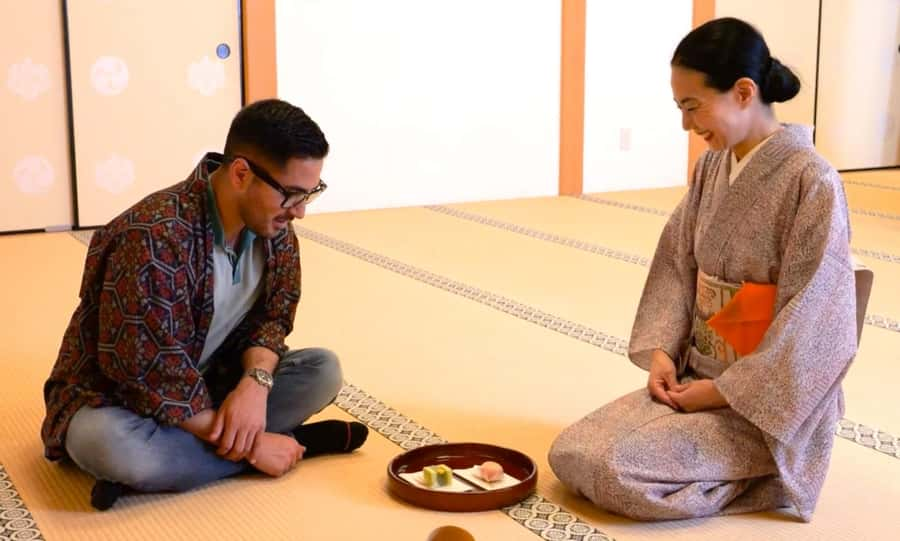
The advertised duration is 60 minutes. That is enough time for an introduction, an explanation of the tools and etiquette, hands-on tea preparation, the master’s demonstration, and the sweets.
You should not expect a long temple visit or a full afternoon program. The activity ends back at Mita Koboji Temple, and no transport between sights is part of the experience.
One participant felt the actual ceremony lasted about 45 minutes. That may reflect the pace of a particular session, so I would leave a little flexibility in your day rather than scheduling a train connection immediately afterward.
The short format is a benefit if you want a focused cultural activity between other Tokyo plans. It is also a limitation if you are looking for a lengthy, highly formal ceremony. The experience gives you a clear introduction, not a complete education in every school of Japanese tea.
Is $74 fair for this Tokyo experience?

At $74 per person, this is not the cheapest way to drink matcha in Tokyo. You can find tea and Japanese sweets for far less in a café or confectionery shop.
The price makes more sense when you count what is included beyond the drink: access to a historic temple, a formal tatami room, instruction on etiquette and utensils, a hands-on activity, and an English or Japanese guide. The private or semi-private format also adds value for people who want personal attention.
Still, the price can feel high if your main goal is simply to taste matcha. One participant considered the cost excessive for a session that felt shorter than advertised, while another found the experience underwhelming at that price.
I would judge the value by your reason for booking:
- If you want a cultural lesson with participation, the price is easier to justify.
- If you want a long ceremony, extensive temple access, or a meal, the price is less attractive.
- If you mainly want kimono photographs, confirm the dressing fee and details first.
- If you are comparing this with a casual tea stop, this is a much more structured experience.
The cancellation policy is useful for uncertain schedules. You can cancel up to 24 hours in advance for a full refund, and the reserve-now, pay-later option lets you hold a place without paying immediately.
Who will enjoy this ceremony most?
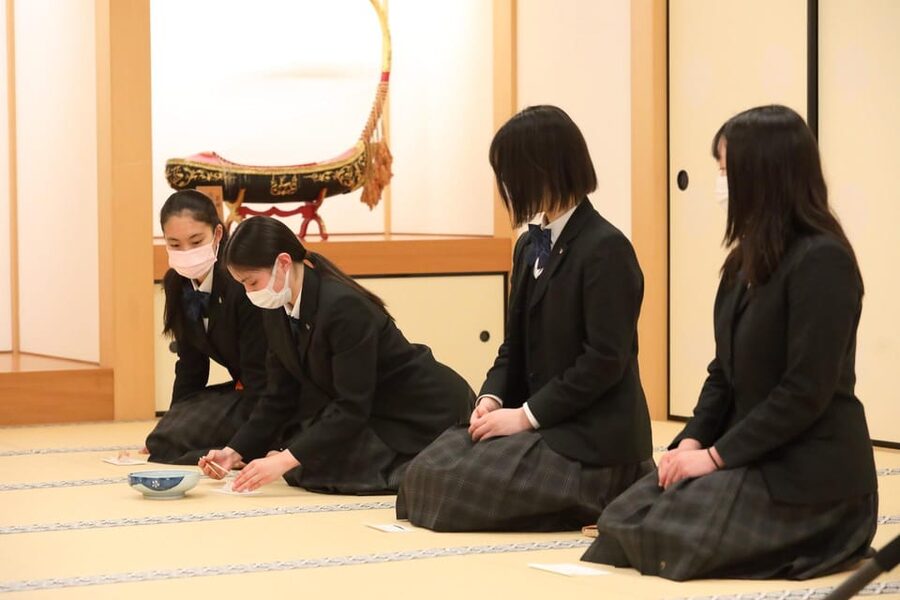
I would recommend it to first-time visitors who want a clear, guided introduction to Japanese culture. The host explains what is happening instead of assuming you already understand the customs.
It also suits couples, families, and small groups who prefer a calm activity over another crowded attraction. The ceremony is peaceful and easy to fit into a Tokyo itinerary because it lasts about an hour.
You do not need to be a tea expert. In fact, beginners are the natural audience. The instructions are meant to help you participate without embarrassment, and the master can show you how to handle the basic steps.
The experience may be less satisfying if you want a full kimono session included in the price, a substantial meal, or a long formal performance. It may also disappoint you if you expect flawless English in every session. English is available, but the clarity can vary by host.
Practical advice before you reserve
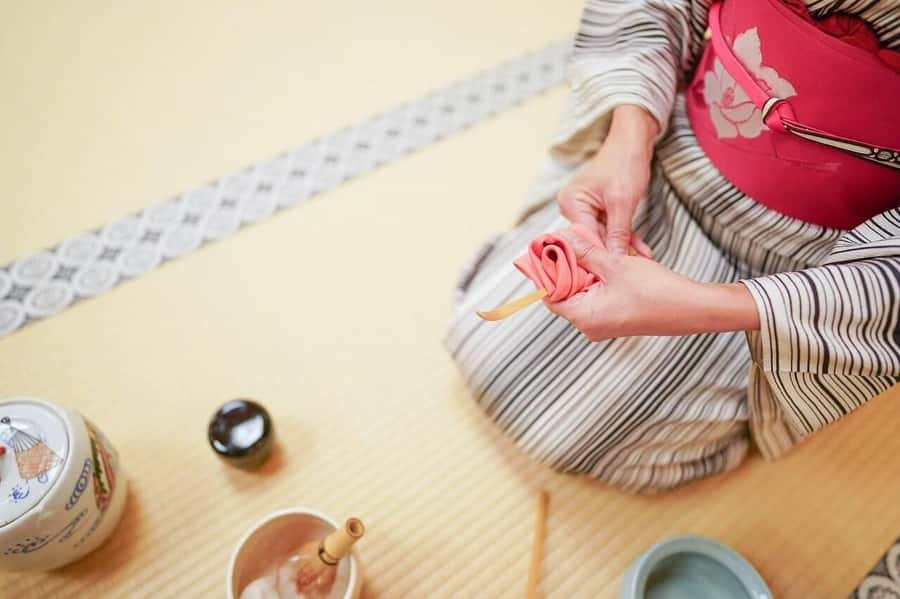
Read the clothing details closely. The photos may show traditional garments, but the standard booking does not automatically mean you will be dressed in a kimono. Choose the add-on if it is offered and important to you, then confirm what it covers.
Plan to eat separately. Matcha and wagashi are included, while other meals are not.
Give yourself more than exactly 60 minutes around the appointment. The planned duration is one hour, but one account found the activity ended after roughly 45 minutes, and you will want time to arrive at Mita Koboji Temple without rushing.
If English matters to you, select the English option and be ready to ask questions during the demonstration. The strongest sessions use clear explanations and welcome questions about both tea and the temple.
Most important, book this for the setting and instruction, not only for the beverage. The tea is the doorway into the experience. The real value is learning why the movements, tools, sweets, and manners fit together.
Should you book it?
Book this experience if you want a hands-on cultural introduction in a historic temple and like the idea of learning directly from a tea master. The peaceful room, matcha, wagashi, and small-group format create a thoughtful hour in the middle of Tokyo.
Think twice if you are mainly seeking a cheap cup of tea or guaranteed kimono dressing. At $74, the ceremony needs to match your interests. Confirm the optional clothing arrangement, allow for possible variation in session length, and treat the meal question clearly: this is tea and sweets, not lunch.
For a first encounter with Japanese tea ceremony, I find the format appealing and easy to fit into a busy itinerary. Its strongest features are the temple setting, the chance to prepare tea yourself, and the patient explanations. Its weaker points are the price and the possibility that the kimono photos set the wrong expectation.
FAQ
Where does the tea ceremony take place?
The ceremony takes place at Mita Koboji Temple in Tokyo, on Honshu.
How long does the experience last?
The planned duration is 60 minutes. One account found the actual session lasted about 45 minutes, so allow some flexibility.
Is the activity private?
It is described as a private or semi-private experience. The exact group size is not specified.
Is English available?
Yes. The activity is available in English and Japanese.
What food and drink are included?
Matcha green tea and traditional Japanese wagashi sweets are included. Other meals are not included.
Do I get to make tea myself?
The experience includes guidance from the tea master, and participants may prepare tea themselves before the master makes another serving.
Is kimono dressing included?
Kimono dressing is an optional add-on, not an automatic part of the standard experience. Traditional kimono and Oshima Tsumugi haori options are available.
What is the cancellation policy?
You can cancel up to 24 hours before the activity for a full refund. You can also reserve and pay later.
Newly steeped around Tokyo
- Yokohama : Tea Ceremony with Sweets and Souvenir★ 5.0 · 5 reviews
- Walking Tour: Yanaka,Nezu& Sendagi: Tea Ceremony & Old Tokyo★ 5.0 · 3 reviews
- Private Mochi・Matcha sweets Making Class Near Shibuya Area★ 5.0 · 22 reviews
- 2 Hours Mochi &Nerikiri Making & Matcha Class in Bunkyo★ 5.0 · 21 reviews
- Private Kimono and tea ceremony at local home near Tokyo Disney★ 5.0 · 6 reviews
- Kimono and Tea Ceremony in Asakusa Private Food Tour With Guide★ 5.0 · 4 reviews
- Giant Sushi Cooking Class: Make a 1.5m Sushi Roll in Tokyo★ 5.0 · 9 reviews
- Tokyo: Tea Ceremony & Japanese Sweets Making★ 5.0 · 10 reviews
Tea Ceremony Experiences, compared.
Kyoto: Tea Ceremony in a Traditional Tea House in Kiyomizu
Read our review →
Kyoto: 45-Minute Tea Ceremony Lesson Experience
Read our review →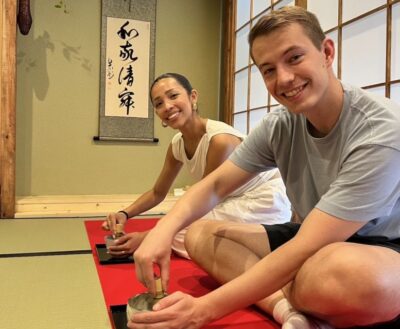
Kyoto: Table-Style Tea Ceremony at a Kyo-Machiya
Read our review →

Browse the lists this tea experience appears in