
Review · TOKYO
Tokyo: Traditional Tea Ceremony with a Tea Master
The most interesting part of this one-hour Tokyo tea experience is its range. You do not simply watch a formal ceremony. You taste four distinct teas, learn how water temperature changes flavor, eat the tea leaves, and prepare your own matcha with a tea master. It is a compact lesson in Japanese tea culture, held across from Tokyo University.
I like the friendly, relaxed teaching style, and I like the chance to try top-grade Gyokuro alongside lesser-known Japanese black tea. The seasonal wagashi from Ougiya adds a fine local touch. The main consideration is pace: 60 minutes goes quickly, and the ceremony is more of an interactive tasting class than a long, highly formal ritual.
Key points to know
- Four different teas in one hour: Try wakocha, Gyokuro sencha, matcha, and genmaicha, each prepared in its own way.
- You make your own matcha: The tea master demonstrates the method, then hands you the whisk and traditional tools.
- Seasonal sweets from Ougiya: Delicate wagashi balance the stronger and more bitter notes of the teas.
- A relaxed English-language lesson: Guides such as Shinichi-san and Ekiko have been praised for clear explanations, humor, and patience.
- A handy central setting: Ocharu is directly opposite Tokyo University and close to the University of Tokyo campus and Ueno Zoo area.
- A small keepsake included: You receive a certificate and group photograph at the end.
What this Tokyo tea ceremony really offers
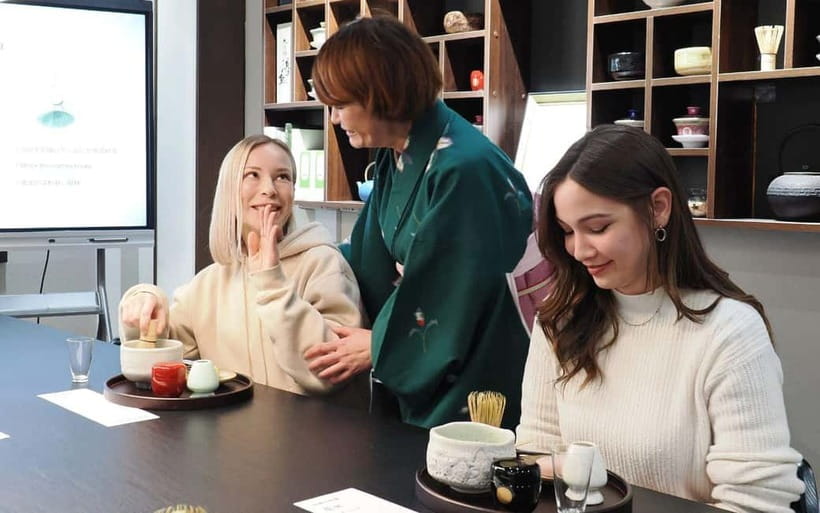
Japanese tea ceremonies can mean different things. Some are quiet, highly choreographed events where you mainly watch. This Ocharu session takes a more open, hands-on approach. You learn the customs, but you also ask questions, handle the tools, taste the leaves, and make the tea yourself.
That makes it a good first encounter with Japanese tea. You are not expected to know the correct gestures or vocabulary before arriving. The tea master explains the purpose behind each step, then lets you try it.
The mood is calm without being stiff. Several guides, including Shinichi-san and Ekiko, have been singled out for warmth, humor, and clear teaching. English is the working language. One English-speaking guide was slightly harder for a participant to follow because of an accent, so if you need very simple spoken instructions, keep that small possibility in mind.
At $38 per person, the price is fair for the amount packed into the hour. You get several tastings, sweets, instruction, use of the tea room, matcha preparation, a certificate, and a group photograph. It is not the cheapest cup of tea in Tokyo, but it gives you context and participation rather than just a drink.
More Tea Ceremonies in Tokyo
- Kimono Tea Ceremony at Tokyo, Asakusa Maikoya
★ 5.0 · 638 reviews - Tea Ceremony Workshop in Tokyo by the Experienced Instrucor
★ 5.0 · 189 reviews - Asakusa: Kimono Tea Ceremony with Matcha and Sweet
★ 4.9 · 153 reviews
Finding Ocharu opposite Tokyo University
The meeting point is easy to place once you are there. Look for the green OCHARU logo on the building wall, directly across from Tokyo University. Arrive five minutes early so you can check in without cutting into the short session.
One practical warning: the green sign may be higher up than you expect. It has been easy for some people to walk past the building more than once. If you are standing near the tea shop and still cannot see the sign, check above eye level rather than assuming you have the wrong address.
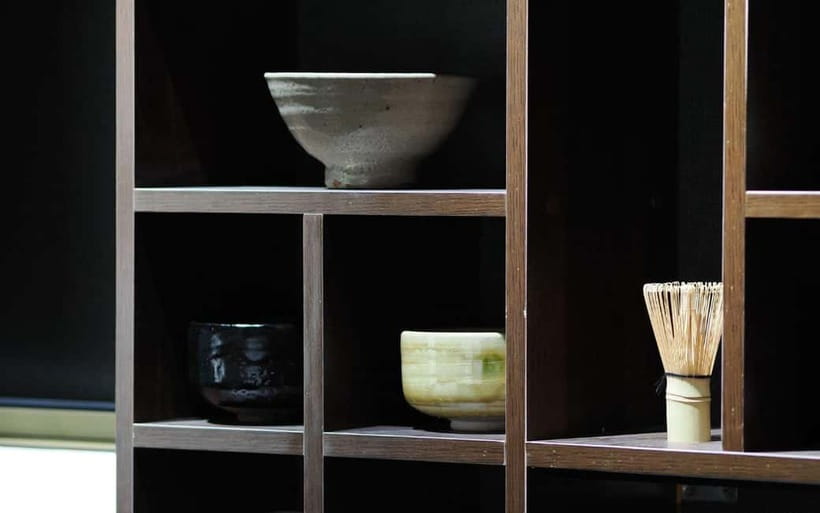
The location works well as part of a north-central Tokyo day. You can pair the tea session with a look at Tokyo University, and the nearby campus and zoo area give you options before or after the class. The location is not a traditional temple setting, so set your expectations accordingly. You are visiting a purpose-designed tea ceremony room, not an old tea house or secluded garden.
That modern setting has an advantage. The room is set up for teaching, and the experience is accessible to people who may feel nervous about entering a formal Japanese ceremony for the first time.
The welcome cup: wakocha and a small sweet
The session begins with wakocha, Japanese black tea from Shizuoka, served with a tea cake. Wakocha is less familiar to many people than Japanese green tea. Its fruit and flower notes give you a softer introduction than you might expect from black tea.
This opening cup is not just a welcome drink. It gives the tea master a chance to explain that Japanese tea is not one single flavor or preparation style. The growing region, processing method, water temperature, and brewing time all affect the result.
I find this a smart way to begin. If you usually think of Japan only in terms of matcha, wakocha broadens the picture at once. The accompanying cake also shows how Japanese sweets are used with tea. The sweetness prepares your palate for the more concentrated green teas that follow.
The setting is informal enough for questions. You can ask about the tea’s origin, taste, or preparation instead of silently waiting for the next step.
Gyokuro sencha and Ougiya wagashi
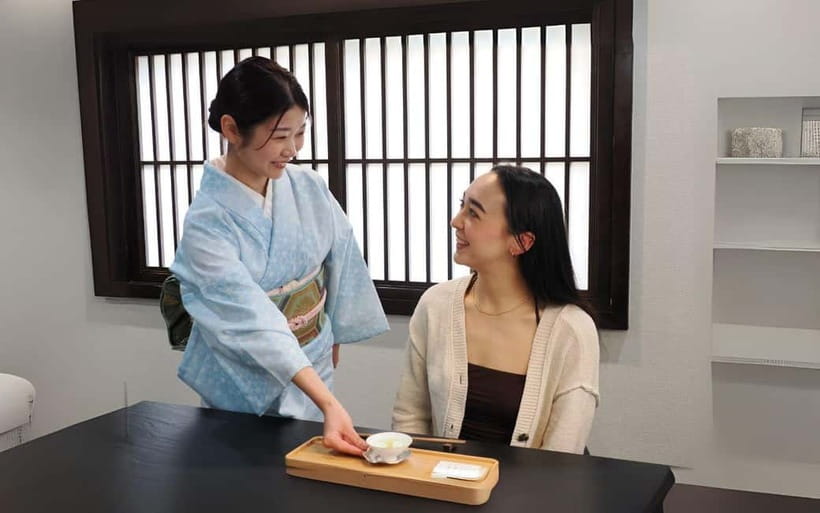
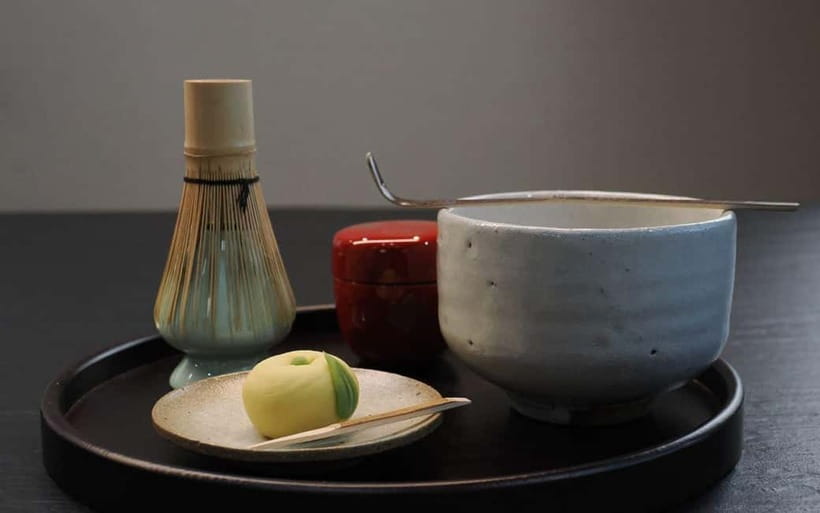
Next comes Gyokuro, one of Japan’s highest grades of green tea. The tea master brews it for you, and you taste both the liquid and the leaves. That second part is easy to overlook, but it is one of the more unusual details of the session.
Gyokuro is prized for its concentrated, savory character. It is not served as a large, casual mug of tea. The careful preparation helps you notice how a premium tea differs from an everyday brew. You also learn why temperature matters, since very hot water can overpower delicate tea flavors.
The seasonal wagashi comes from Ougiya, a confectioner with generations of experience. These sweets are made to look attractive as well as taste good, and their gentle sweetness offsets the green tea’s stronger notes.
This pairing is valuable because it teaches a basic Japanese tea principle through your own palate. The sweet is not an unrelated snack placed beside the cup. It changes how the tea tastes and helps balance its bitterness and umami.
If you are not used to green tea, Gyokuro may taste more intense than expected. That is part of the point. You get a clear sense of why brewing technique matters, and you can compare it with the milder teas served elsewhere in the session.
Same leaf, a different ritual:
- Matcha Making Class in Tokyo with Authentic Japanese Sweets Set
★ 5.0 · 744 reviews - Dynamic Tokyo: Tokyo Tower, Tea Experience, Bay Cruise Day Tour
★ 4.5 · 521 reviews - Tokyo: Matcha Making Experience with Mochi Sweets in Asakusa
★ 4.9 · 388 reviews - Asakusa Cultural Walk & Matcha Making Tour
★ 5.0 · 245 reviews
Making matcha with traditional tools
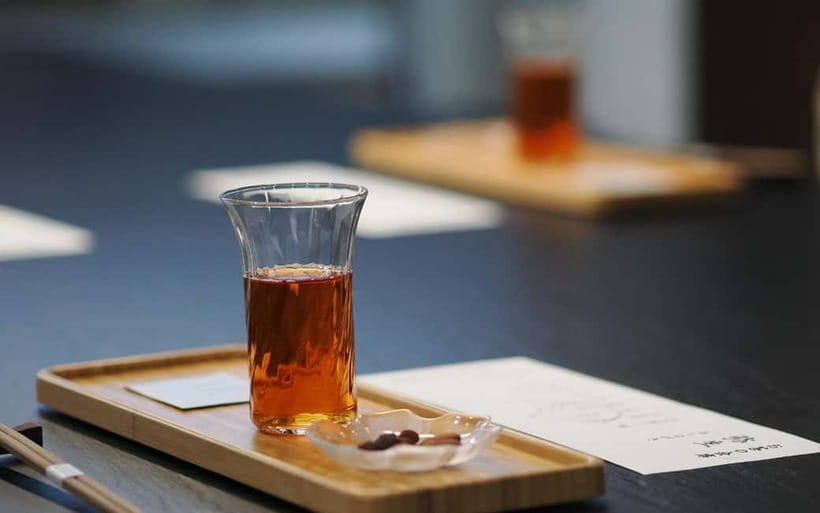
The hands-on matcha portion is the heart of the activity. After watching the tea master, you use a traditional whisk and other utensils to prepare your own bowl. The instructor guides you through the process, so you are not left guessing how vigorously to whisk or how to hold the equipment.
Making matcha is simple in outline but surprisingly physical. You add the powder and water, then whisk until the tea develops a fine layer of foam. It is not about producing a perfect bowl on your first attempt. The value is in understanding the movements and seeing how the powder changes when water and air are worked into it.
The tea master also explains the manners connected with drinking matcha. That gives the activity more substance than a standard cooking demonstration. You learn how the bowl is handled and how the tea fits into the wider customs of a ceremony.
The experience is suitable for complete beginners. You do not need to memorize rules in advance, and the atmosphere is forgiving if your first whisking effort is uneven. Children can take part too. One guide made a special effort to include a ten-year-old, which suggests the class can work well for families, provided everyone can manage the seating and physical setup.
Matcha has a sharp, grassy taste that will not suit every palate. Even so, preparing it yourself makes the flavor more interesting. You leave with a better sense of why matcha is whisked rather than steeped like ordinary tea.
Genmaicha closes the session gently
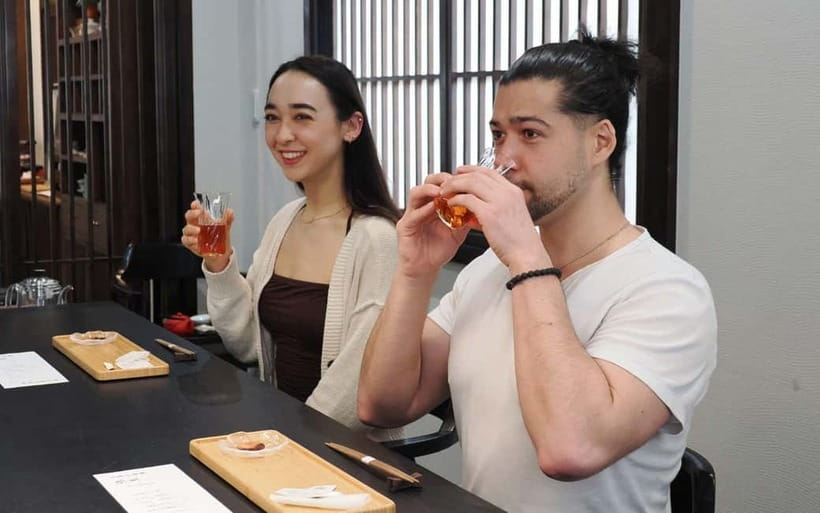
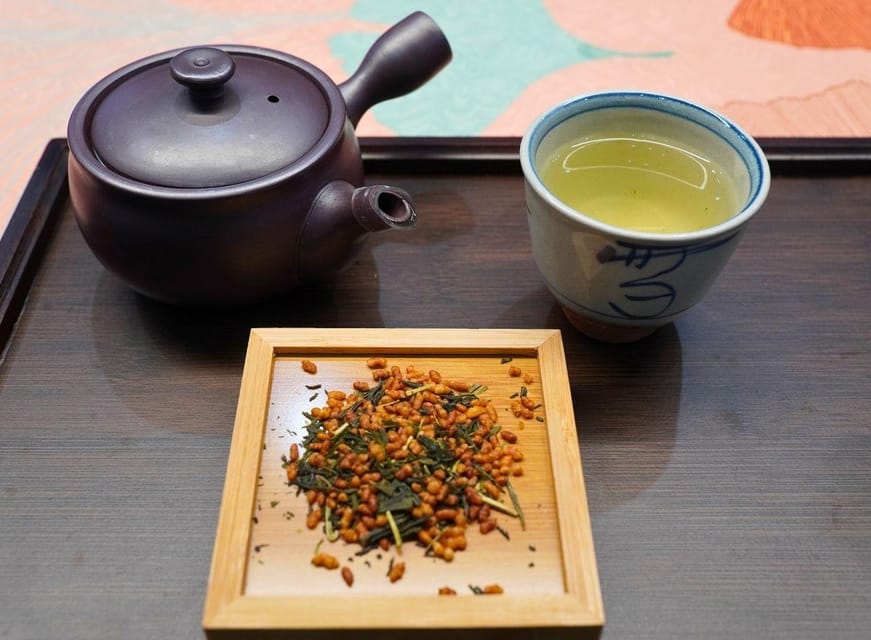
The final cup is genmaicha, a blend of sencha and roasted rice from Niigata Prefecture. Its toasted rice gives it a warm, comforting flavor, making it a natural ending after the more focused Gyokuro and matcha portions.
This last tea also helps you compare regional and processing differences. Wakocha introduced Japanese black tea, Gyokuro showed a premium green tea, matcha demonstrated powdered tea, and genmaicha brought the session back to an easy-drinking blend.
That progression is one of the best features of the hour. You are not tasting four random cups. Each one presents a different side of Japanese tea culture, and the order moves from welcome drink to detailed tasting, hands-on preparation, and a relaxed finish.
Some sessions last closer to 50 minutes rather than a full hour. That is not a major problem, but it is worth knowing if you have a tight connection or another booking immediately afterward. The content remains substantial, yet this is not a slow, half-day ceremony.
A certificate, photo, and tea to take home
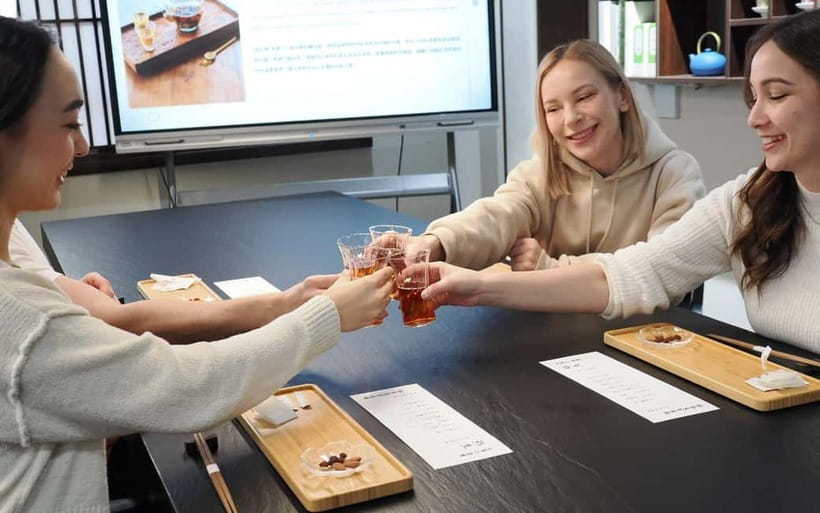
Before leaving, you receive a certificate of completion and a group photograph. The certificate can be a fun souvenir, especially for children or anyone who enjoys collecting small reminders of a trip. In some cases, names have been written in Japanese, adding a personal touch.
The group photo is useful because the activity is participatory. You have something that records the occasion rather than only a cup of tea that will soon be gone.
There is also a small café downstairs where you can drink more matcha and buy tea to take home. Tea accessories are available as well. You do not need to purchase anything for the activity to feel complete, but it is convenient if you discover a tea you want to continue drinking.
One participant ended up buying tea despite arriving with no plan to shop. That is a sensible option if you want a practical souvenir, but treat the shop as an extra, not a required part of the booking.
How the teaching style affects the experience

The guide makes a real difference here. The strongest sessions seem to come from tea masters who combine accurate instruction with an easy manner. Shinichi-san has been praised for his enthusiasm and clear explanations, while Ekiko has been described as patient and willing to answer detailed questions.
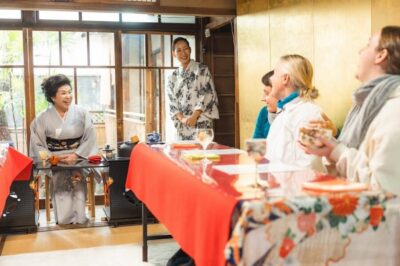
You can expect conversation as well as formal instruction. Guides have discussed tea origins, Japanese customs, water temperatures, local variations, and even everyday topics such as visitors’ home cities and favorite films. That relaxed conversation helps the session feel personal rather than rehearsed.
If you are serious about tea, bring questions. You can ask about the difference between sencha and Gyokuro, how matcha is made, or why genmaicha tastes toasted. If you are simply curious, the guide will still give you enough background to follow along.
The English is generally intended for international visitors, but accents and speaking styles vary. The teaching is supported by demonstration, so you can usually follow the physical parts even if you miss an occasional word.
Who should book this experience
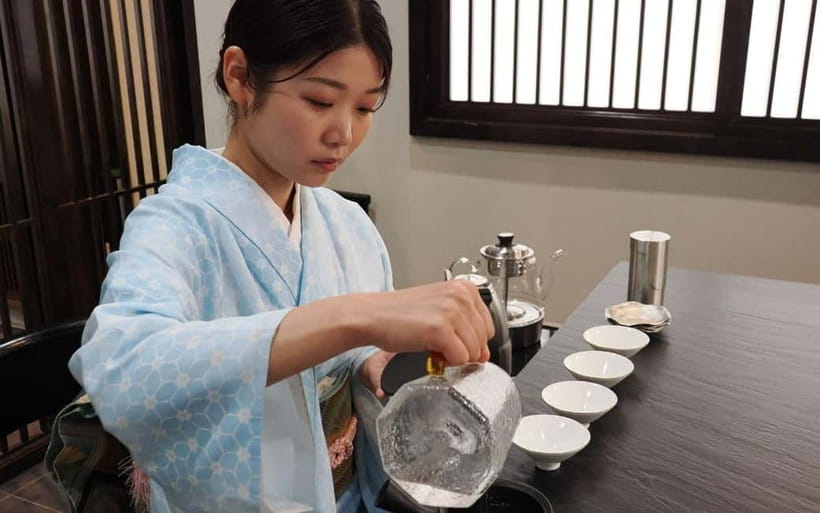
I would recommend this activity to several types of people:
- First-time visitors to Japan: You get a clear introduction to a major part of Japanese food and social culture.
- Tea drinkers: The chance to compare four styles in one sitting makes the $38 cost easier to justify.
- Families with older children: The matcha whisking keeps the session active, and the certificate gives children a tangible souvenir.
- Couples and small groups: The relaxed room encourages conversation, and the photograph makes a nice shared memory.
- People with limited time: The location and one-hour format fit neatly into a Tokyo sightseeing day.
It is less suitable if you want a silent, highly formal ceremony lasting several hours. It is also not suitable for wheelchair users, according to the activity information. The exact seating arrangement is not described, so anyone with mobility concerns should ask before booking.
Timing, cancellation, and value at $38
The session lasts one hour and runs at set starting times, so check the schedule before you commit to another activity. Arriving five minutes early is enough for check-in, but allow extra time to find the green sign if you are unfamiliar with the area.
The booking allows free cancellation up to 24 hours before the start for a full refund. You can also reserve and pay later, which helps if your Tokyo plans are still changing.
At $38, I see this as a good midrange cultural activity. The price includes four tea experiences, sweets, instruction, room access, a certificate, and a photograph. You are paying for a teacher and a structured lesson, not just the ingredients.
The value is strongest if you take part fully. If you only want to drink matcha, cheaper cafés are easy to find. If you want to understand what you are drinking and prepare it yourself, this session offers much more.
Should you book the Ocharu tea ceremony?
Book it if you want a friendly, hands-on introduction to Japanese tea without giving up half a day. The mix of wakocha, premium Gyokuro, homemade matcha, genmaicha, seasonal wagashi, and clear explanations gives you a useful range of tastes and customs.
I especially like that the session does not assume you already understand tea etiquette. You can arrive as a beginner, ask basic questions, and still leave with a better grasp of how tea is grown, prepared, served, and enjoyed in Japan.
Skip it if you are seeking an old temple setting, a garden ceremony, or a long period of quiet observation. For most people comparing cultural activities in Tokyo, though, Ocharu offers strong value, easy access, and enough personal participation to make the lesson stick.
FAQ
How long does the tea ceremony last?
The scheduled duration is one hour. Some sessions may finish closer to 50 minutes, so avoid arranging another booking immediately afterward.
How much does the experience cost?
The listed price is $38 per person.
Where does the tea ceremony take place?
It takes place at the Ocharu Tea Ceremony Room in Tokyo, directly opposite Tokyo University.
What teas will I taste?
You will taste wakocha from Shizuoka, Gyokuro sencha, matcha that you prepare yourself, and genmaicha made with sencha and roasted rice from Niigata Prefecture.
Is the activity taught in English?
Yes. The instructor language is English.
What is included with the booking?
The booking includes the welcome tea and cake, Gyokuro tasting with seasonal wagashi from Ougiya, matcha-making instruction and tools, genmaicha, access to the tea room, a certificate, and a group photo.
Can wheelchair users take part?
The activity is listed as not suitable for wheelchair users.
Newly steeped around Tokyo
- Yokohama : Tea Ceremony with Sweets and Souvenir★ 5.0 · 5 reviews
- Walking Tour: Yanaka,Nezu& Sendagi: Tea Ceremony & Old Tokyo★ 5.0 · 3 reviews
- Private Mochi・Matcha sweets Making Class Near Shibuya Area★ 5.0 · 22 reviews
- 2 Hours Mochi &Nerikiri Making & Matcha Class in Bunkyo★ 5.0 · 21 reviews
- Private Kimono and tea ceremony at local home near Tokyo Disney★ 5.0 · 6 reviews
- Kimono and Tea Ceremony in Asakusa Private Food Tour With Guide★ 5.0 · 4 reviews
- Giant Sushi Cooking Class: Make a 1.5m Sushi Roll in Tokyo★ 5.0 · 9 reviews
- Tokyo Tea Ceremony Class at a Traditional Tea Room★ 5.0 · 2 reviews
Tea Ceremony Experiences, compared.
Kyoto: Tea Ceremony in a Traditional Tea House in Kiyomizu
Read our review →
Kyoto: 45-Minute Tea Ceremony Lesson Experience
Read our review →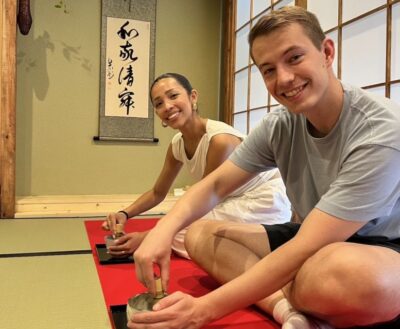
Kyoto: Table-Style Tea Ceremony at a Kyo-Machiya
Read our review →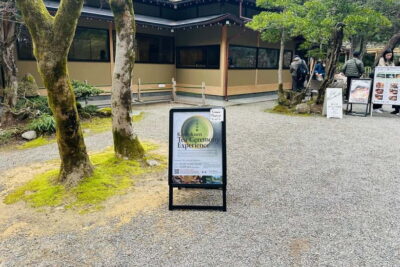


Browse the lists this tea experience appears in