
Review · SOUTH KOREA
Full-day Hadong, Gwangyang, Cherry blossom, Green Tea Fields Private Tour
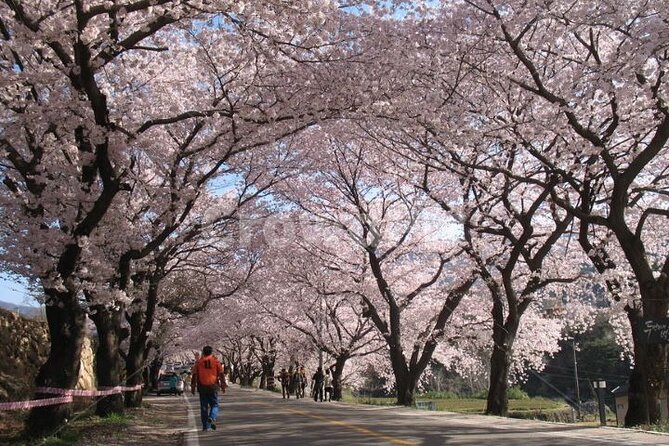
Hadong gives you Korea’s spring countryside in one long, scenic day: cherry trees along the Seomjin River, an old market, a mountain temple, tea fields, plum orchards, and a famous beef dinner. The 4km Shimni Beotkkot road is also called the Wedding Road, thanks to a local legend that couples who walk it hand in hand will stay happy together.
I like the private transport from Busan, which makes these rural sights far easier to reach than they would be by public transport. I also like the range of stops. You are not simply taken to one blossom viewpoint, but get a look at local food, Buddhist culture, tea production, and village life. The main caution is timing: arrive too early or too late in the season and the cherry blossoms may not be at their best.
Key points to know before booking
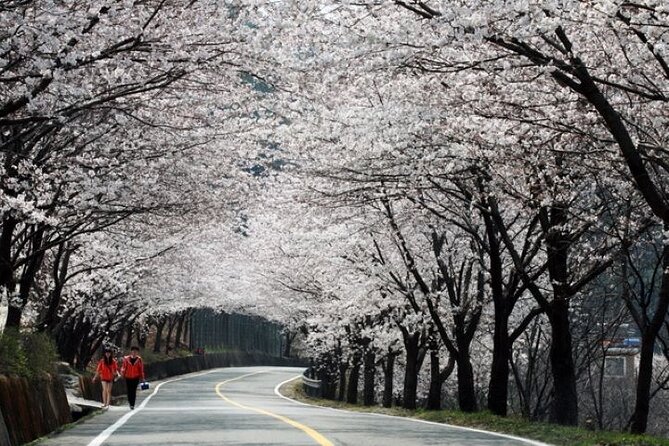
- Four kilometers of cherry trees: The Shimni Beotkkot road is the day’s main spring attraction, with more blossoms along the longer Hwagaedongcheon route.
- Private vehicle from Busan: Pickup, parking, tolls, fuel, and drop-off are included, a useful benefit on a day with several rural stops.
- A full day in the countryside: Expect roughly 9 to 10 hours, including the drive from Busan and the return journey.
- Tea country at its source: Hadong is known as Korea’s first tea-growing region, with museum exhibits and the Dosim Dawon fields.
- Food anchors the day: Hwagae Market offers local products, while Gwangyang’s final stop is a traditional beef barbecue street.
- Spring timing matters: Plum blossoms and cherry blossoms do not necessarily peak together, so confirm the expected bloom conditions before you commit.
Why this day trip works from Busan
The appeal is simple: Hadong is far enough from Busan that visiting on your own takes planning, transfers, and a willingness to manage rural transport. Here, you are collected around 9:00 in the morning and driven toward the Seomjin River area, arriving at about 10:30.
That first drive is a major part of the day. You will spend time in the vehicle, but the private setup lets you avoid changing buses and trains with a group. Your guide can also adjust the pace for your party. Frank Yi is named as the provider, and Robin has handled pickup and English-language guiding for some departures. The information supplied also shows that Frank made extra allowances for a family with two grandmothers, including slower walking and more toilet breaks.
This flexibility matters because the route is not a compact town walking tour. It links Hadong and Gwangyang across a broad rural area. The day ends with dinner, followed by a drive of about 1 hour and 40 minutes back to Busan. You should expect a long day, but one with a clear purpose rather than a string of disconnected stops.
The price is $300 per person. That is a serious amount, especially since meals and admission fees are not included. The value comes from the private vehicle, driver and guide service, fuel, tolls, parking, and door-to-door pickup. For two people, the total is substantial, but it can compare well with arranging a private car and guide independently. A group discount is available, so the price may make more sense for a family or small group sharing the vehicle.
More Green Tea Tours in the world:
- Experience all of Japanese culture and Japanese food experience classes “origami, udon, Japanese food, green tea, calligraphy” in 4 hours
★ 5.0 · 105 reviews - Uji: Green Tea Tour with Byodoin and Koshoji Temple Visits
★ 4.8 · 72 reviews - Scenic Green Tea Fields of Hidden Kyoto & Local Tea Exp (Private)
★ 5.0 · 32 reviews
Seomjin River and the Shimni Beotkkot road
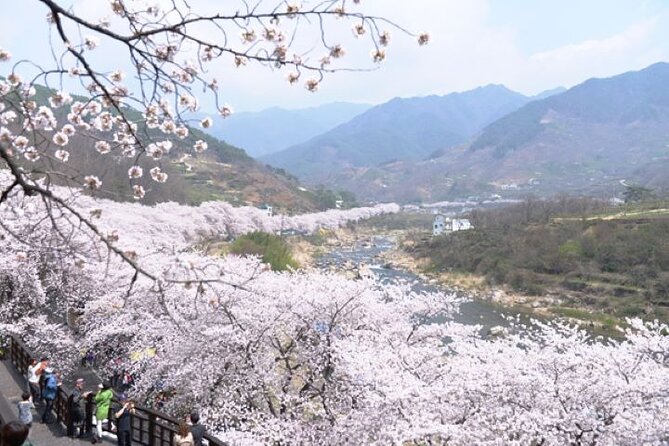
The first proper stop is the Seomjin River cherry blossom road, with about two hours to walk and enjoy the flowering trees. This is the visual heart of the trip.
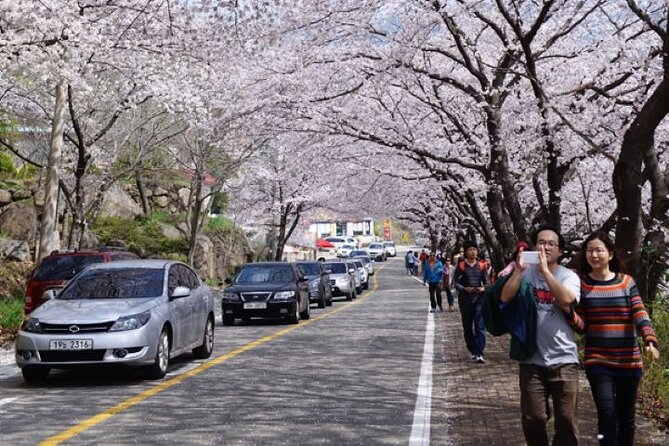
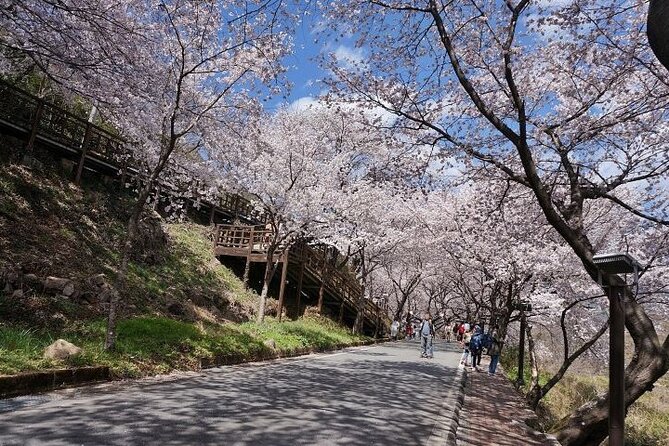
Shimni Beotkkot means 4km of cherry blossoms. The road runs through Hwagae between Jeolla-do and Gyeongsang-do, and the blossoms can appear like pale snow along the roadside. The Wedding Road nickname adds a romantic touch, but you do not need to be part of a couple to enjoy it. The road is simply a pleasant place to walk beneath spring trees and take photographs.
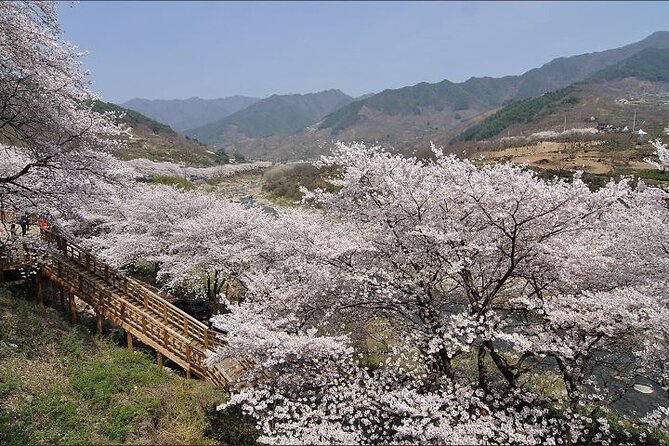
The wider Hwagaedongcheon route extends for about 25km and is connected with seasonal cultural events. That means the exact feel of the stop can vary with the date. You might find a quiet stretch of trees, or a busier festival atmosphere during the main bloom period.
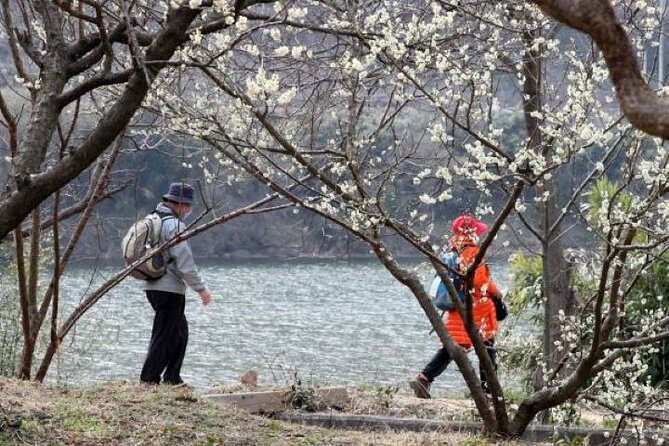
The key issue is the calendar. The tour description places the cherry season in April, after the last cold spell. Yet one family visit happened about a week too early for the cherry trees, even though the group still enjoyed the early signs of spring at the plum flower festival. I would treat the exact bloom date as the deciding factor when booking. Nature does not follow a fixed schedule just because a calendar says April.
Hwagae Market for local flavor
After the river road, you get about 40 minutes at Hwagae Market. This is a traditional market with a long connection to the surrounding mountain and river communities.
The market is known as one of Korea’s five major traditional markets, though its size and activity can change outside festival periods. It appears in Kim Dong-ri’s novel Yeokma and has long drawn people visiting nearby Jirisan, Ssanggyesa Temple, and the cherry blossom road.
Forty minutes is enough to walk through, look at local produce, and pick up a snack if something catches your eye. It is not enough for a slow market lunch and a long browse, so you will want to keep your pace sensible. Since meals are not included, this is also a chance to buy something small before the later barbecue dinner.
I like this stop because it gives the day some ordinary local life. Blossom roads can feel scenic but staged for visitors. A market shows what the area produces, sells, and eats. Bring cash if you prefer to shop at small stalls, though no payment guidance is specified, so do not rely on this as a guaranteed shopping opportunity.
Ssanggyesa Temple beneath Jirisan
Ssanggyesa Temple sits on the southern foothills of Jirisan Mountain. It was founded in 722 during the reign of Silla King Seongdeok, later changed from the name Okcheonsa Temple to Ssanggyesa, and rebuilt in 1632 after destruction during the Imjin War.
You get about one hour here. That is enough to see the main temple grounds and appreciate the setting, but it is a brisk visit if you want to study every building or walk farther toward Burilpokpo Falls. The temple area is also linked with a 6km stretch of cherry trees, so the stop can work as a second blossom location when the season is right.
The temple adds depth to a day that could otherwise become a chain of scenic photo stops. You can see how Buddhist sites, mountain water, tea growing, and seasonal flowers fit together in this part of southern Korea. The supplied details do not promise a hike to the falls, so treat Burilpokpo as a nearby attraction rather than a scheduled walking excursion.
Admission is listed as free in the itinerary, but the general tour terms say meals and admission fees are paid on the spot. I would ask the provider before departure if any temple or museum charge applies on your date.
More Private Tea Experiences in the world:
- Private Tea Ceremony and Sake Tasting in Kyoto Samurai House
★ 5.0 · 163 reviews - Tea Ceremony Experience in a Private Tea Room in Shibuya
★ 4.9 · 125 reviews - One-Day Hangzhou Dragon Well Tea Culture & West Lake Private Tour
★ 5.0 · 98 reviews - Kyoto: Private Tea Ceremony with a Garden View
★ 4.9 · 61 reviews
Hadong Tea Museum and the first tea-growing region
The Hadong Tea Museum sits near Ssanggyesa Temple and the local tea farms. Its purpose is to explain Korean tea culture and show why Hadong is important as the nation’s first tea-producing area.
You have about 40 minutes here. The museum includes an exhibition hall covering tea history and culture, along with a tea-related experience. The short visit makes this more of an introduction than a full museum morning, but it gives useful context before you see the fields themselves.
Hadong tea is made by hand, and the region’s position near Jirisan helps explain the traditional growing methods. Tea plants grow along the banks of the Seomjin River and on the lower slopes of the mountain. That connection between farming and place is one of the most interesting parts of the day.
I would not expect a large commercial tea attraction. The value is in understanding the crop before seeing it in the open air. If you buy tea or tea products, remember that shopping is separate from the tour price.
Dosim Dawon and the old tea trees
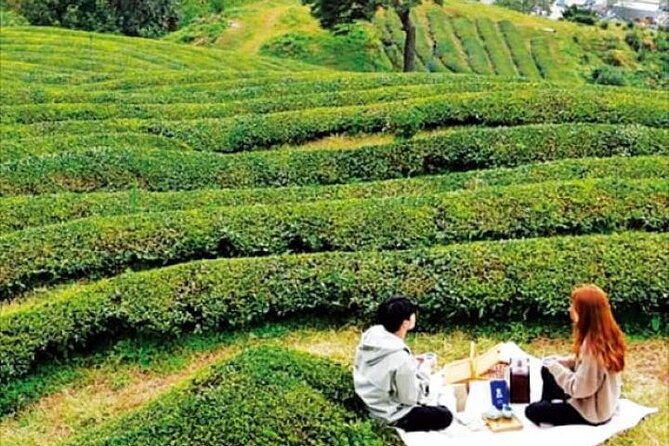
At Dosim Dawon, you spend about an hour among Hadong’s tea fields. The name refers to a tea garden, and this one is tied to the area’s long tea-growing tradition.
Tea bushes grow between rocks and along sloping ground near the southern edge of Jirisan. The effect is very different from a flat plantation. You will see rows of low tea plants fitted into the mountain terrain, with the river and surrounding hills adding to the view.
Dosim Dawon is also associated with an ancient tea tree called Korea’s Oldest Tea Tree, or the Thousand-Year Tree. The nearby original tea field at Ssanggye Temple links the site to a Buddhist tradition that reaches back about a thousand years.
This stop is best for you if you enjoy seeing how food is grown, not only tasting the finished product. It is also a calmer contrast to the flower road and market. Wear shoes you can walk in comfortably, since the fields are on slopes and the exact walking surface is not described as fully paved.
Hong Ssang-ri and the Maehwa plum farm
The itinerary next visits the Hong Ssang-ri plum area in Gwangyang, also called Maehwa Village. This stop is connected with plum farming and Maesil-Cheong, a Korean plum extract syrup.
Hong Ssang-ri began cultivating 2,000 plum trees in 1965. Fresh plums are covered with an oligosaccharide and aged in traditional onggi jars for six months, producing a sweet and tart syrup. It can be used in cooking, added to water as iced plum tea, or consumed directly.
This is a useful food stop because it explains a familiar Korean ingredient rather than simply presenting another pretty orchard. Maesil-Cheong is often used in home cooking in place of sugar, and it is valued for its flavor, vitamins, antioxidants, and aid to digestion.
The timing deserves care here too. Plum flowers can bloom before cherry blossoms, and a visit timed for the plum festival may be too early for the cherry road. One recorded family trip had a crowded Cornus officinalis and apricot flower festival, but missed the cherry bloom by about a week. If blossoms are your main reason for booking, ask which flowers are expected at your chosen date.
Gwangyang beef barbecue to finish
The final major stop is Gwangyang Bulgogi Alley, where you have about an hour for dinner. Gwangyang bulgogi is made with tender beef and a sweet traditional seasoning, served with Korean side dishes.
This is not included in the $300 price, so budget separately for the meal. The benefit of ending here is that you are eating a regional specialty in the place most closely linked with it, rather than fitting in a rushed lunch between attractions.
An hour gives you time for a focused meal, but not an extended restaurant evening. If you have dietary restrictions, provide them when booking. The tour information specifically asks for dietary requirements in advance, which is important for a group meal built around beef and shared side dishes.
After dinner, you drive back to Busan and are dropped at the original pickup point. The schedule lists about two hours for the return portion, with the stated driving time from Gwangyang at roughly 1 hour and 40 minutes. Traffic and festival crowds can affect the exact arrival time.
Who will get the most from this private tour
I would choose this for a first visit to Korea if you want spring scenery outside the main cities but do not want to solve the transport yourself. The route is especially useful for couples, families, and small groups who value a private vehicle and can share the cost.
It also suits older family members better than a do-it-yourself route, since the guide can allow extra time for walking and restroom stops. Robin was specifically praised for arriving on time and speaking very good English, while Frank is described as flexible with a large family’s needs.
You should think twice if your only goal is a perfect cherry blossom photograph. The date is critical, the day is long, and there is no guarantee that every flower will peak together. You may also find festival roads crowded, particularly around the plum flower events.
Pickup is offered from your location, and airport transport from Busan’s PUS airport is possible for passengers with luggage. Confirm the exact arrangement before booking. The tour is private, and only your group participates, with a minimum of two people required.
Free cancellation is available up to 24 hours before the start time. Changes or cancellations inside that window are not accepted for a refund. If the minimum number is not met and the provider cancels, you are offered another option or a full refund.
Should you book this Hadong day trip?
Book it if you want a country-road day from Busan with blossoms, tea, temple architecture, market food, and a proper regional dinner. The guide and driver remove the hardest transport problem, and the private format gives you more breathing room than a fixed large-group coach tour.
The main decision is the season. Ask Frank Yi or the booking contact for a realistic blossom update before you pay, especially if your dates fall near the beginning or end of spring. Plan well ahead too, since this experience is often reserved months in advance, with an average booking lead time of about 193 days.
At $300 per person, this is not a bargain sightseeing bus. It is a high-cost, full-day private excursion. For two people, you are paying for convenience and access. For a family or group, the private vehicle and flexible pacing can make the price easier to justify. If that trade-off suits you, Hadong offers a far more varied day than a simple cherry blossom stop.
FAQ
How long does the Hadong and Gwangyang tour last?
The experience lasts about 9 to 10 hours. Pickup is around 9:00 in the morning, arrival at the Seomjin River area is expected around 10:30, and the return drive to Busan follows dinner in Gwangyang.
Is pickup from Busan included?
Yes. Free pickup and drop-off are included, with pickup at your requested location. Airport transport from Busan’s PUS airport is also possible for passengers with luggage.
Is this a private tour?
Yes. Only your group participates. The tour includes private transportation and a guide and driver, or a driving guide.
Are meals and admission fees included in the price?
No. Meals and admission fees are paid separately on the spot. Fuel, tolls, parking, private transportation, guiding, pickup, and drop-off are included.
What happens if the cherry blossoms are not blooming?
The tour operates during the spring blossom period, but bloom dates can vary. The supplied tour information notes that one visit took place about a week before the cherry blossoms appeared, so you should confirm seasonal conditions before booking.
What is the cancellation policy?
You can cancel up to 24 hours before the experience start time for a full refund. Cancellations or changes made less than 24 hours before the start time are not accepted for a refund.
More Full Days Among the Tea around the world
- Hampton Court Guided Tour. Full day Access & High Tea
★ 5.0 · 270 reviews - Tokyo: Full-Day Tour w/Tea Experience,Buffet Lunch & Cruise
★ 4.9 · 151 reviews - From Colombo: Kandy, Pinnawala and Tea Factory Full-Day Trip
★ 4.4 · 99 reviews - Kanazawa: Samurai, Matcha, Gardens and Geisha Full-Day Tour
★ 4.9 · 75 reviews
More Tea Plantation Tours in the world
- From Taipei: Thousand Island Lake and Pinglin Tea Plantation
★ 4.7 · 519 reviews - Active Volcano, Rice Field, Hot Spring, Fruit market, Tea Plantation with Lunch
★ 5.0 · 513 reviews - Furnas: Tea Plantations, Lake and Volcano Guided Tour
★ 4.8 · 511 reviews - São Miguel: Furnas Volcano & Tea Plantation Tour with Lunch
★ 4.9 · 375 reviews
Newly steeped around the world
- York: Private Horse-Drawn Carriage Ride and Afternoon Tea★ 5.0 · 3 reviews
- Yokohama : Tea Ceremony with Sweets and Souvenir★ 5.0 · 5 reviews
- Washington, D.C.: Tea Around Town Bus Tour with Landmarks★ 3.4 · 7 reviews
- Whisk Your Own Matcha: A Zen Matcha Experience at Temple★ 3.6 · 7 reviews
- Yogyakarta: Prambanan Tour, Sukuh Temple & Tea Plantation★ 5.0 · 3 reviews
- Walking Tour: Yanaka,Nezu& Sendagi: Tea Ceremony & Old Tokyo★ 5.0 · 3 reviews
- Wadi Rum: 2-Hour Jeep Tour with Bedouin Tea★ 5.0 · 11 reviews
- Volcano, Hot Spring, Mud Bath & Tea plantation all included★ 5.0 · 5 reviews
Green Tea Tours, compared.
Uji: Green Tea Tour with Byodoin and Koshoji Temple Visits
Read our review →
Scenic Green Tea Fields of Hidden Kyoto & Local Tea Exp (Private)
Read our review →
Osaka; Japanese Tea ceremony experience, Macha and Sencha
Read our review →
Slow Cycling Tour at Uji’s Matcha Green Tea Fields and Heritage
Read our review →
Sencha-do the Japanese Tea Ceremony Workshop in Kyoto
Read our review →
Uji Tea Ceremony and UNESCO Heritage Walking Tour
Read our review →Browse the lists this tea experience appears in