
Review · KYOTO
Private Tea Ceremony and Sake Tasting in Kyoto Samurai House
The unusual part comes before the first sip: you enter a 300-year-old samurai house and have the traditional tea room to yourself. The tea master explains the ritual, serves organic matcha from Uji, and gives you time to take part rather than simply watch.
I like the private setting, which makes it easy to ask questions, and I like the choice after the ceremony: whisk your own matcha, taste five sakes, or sample two Japanese whiskies. The kimono and katana photos are another strong touch. The main drawback is the short, roughly 50-minute schedule, and there is only one old toilet in the house.
Key points to know before booking
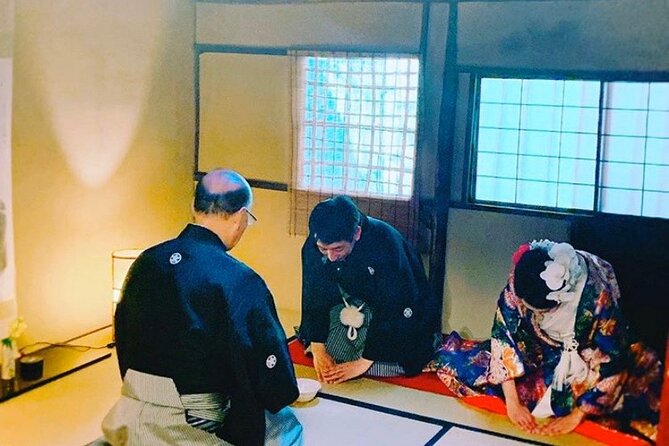
- A 300-year-old family home: The house has remained with the same family, whose roots include samurai ancestors.
- A quiet tea room near Kyoto Station: You can reach the property in about eight minutes on foot from the station.
- Three tasting choices: Pick a hands-on matcha lesson, five sake samples, or two Japanese whisky samples.
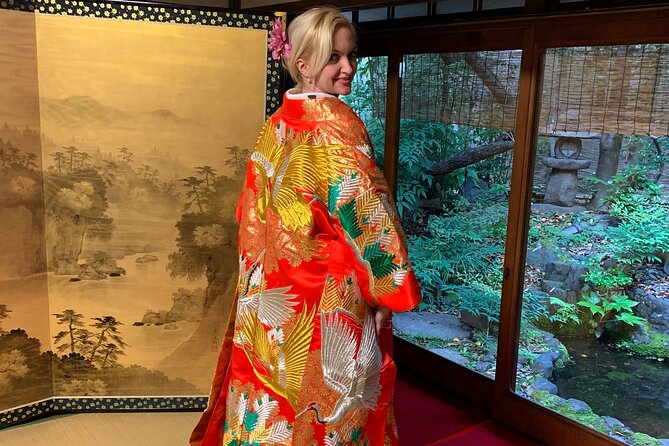
- Dress-up photos included: Women can pose in a wedding kimono, while visitors can handle katana for photographs.
- Private for your party: You do not share the activity with another booking, so questions and photos feel relaxed.
- Alcohol has an age limit: Sake and whisky are for people aged 20 and over. Younger visitors receive the matcha lesson instead.
Entering a 300-year-old samurai house
Kyoto has no shortage of tea ceremonies. Many take place in purpose-built cultural centers or formal rooms designed for short demonstrations. This experience takes a different route. You enter a family home that has been connected to the same lineage for about three centuries, with original samurai ties.
That setting matters. The house is not just a backdrop for a cup of tea. You are sitting in a place where the scale, quiet, and older features help explain why the ceremony values restraint and attention. The hosts welcome you into their home, then guide you toward the tea room and its careful rhythm.
The property is only about an eight-minute walk from Kyoto Station. That makes the experience easy to fit between train arrivals, an afternoon in central Kyoto, or an evening meal. You do not need to spend half a day reaching a remote site.
The home is old, however, so do not expect modern facilities throughout. There is one old toilet, and you are specifically advised to use the restroom before arriving. That is a small point, but it is useful planning advice for families and anyone who prefers easy facilities.
More Private Tea Experiences in Japan
- Kyoto: Private Tea Ceremony with a Garden View
★ 4.9 · 61 reviews - Kyoto Private Tea Ceremony with Tea Master at Home
★ 5.0 · 58 reviews - Stunning Private Tea Ceremony: Camellia Garden Teahouse
★ 5.0 · 28 reviews
The tea ceremony and organic Uji matcha
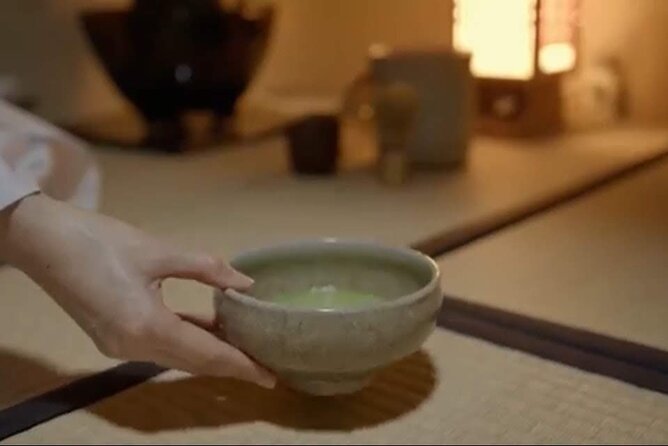
The main event takes place in a traditional tea room. The tea master explains the way of tea, including how to receive and enjoy matcha in a ceremonial setting. You learn that the process is not simply about drinking powdered green tea. The movements, order, utensils, and quiet attention all carry meaning.
The matcha comes from Uji, the Kyoto-area district long associated with high-grade tea. The house serves organic Uji matcha, which gives this part of the visit a clear local connection. You are not being handed a generic green tea in a tourist costume. The ingredients and setting both point back to Kyoto.
I like the pace described by the experience. The tea ceremony itself is formal and meditative, but the teaching makes it accessible. Hosts and the tea master speak English well, and the explanation allows you to ask questions without feeling that you are interrupting a sacred performance.
Do not expect a long tea-school course in 50 minutes. You will receive an introduction and a carefully presented ceremony, not years of training compressed into a morning. Still, the short format works well if you want a meaningful cultural encounter without giving up most of your day.
Choosing matcha, sake, or Japanese whisky
After the ceremony, you choose one of three options. This is important because the activity does not provide all three as the standard program.
Your first choice is a hands-on matcha lesson. You use a bamboo whisk, called a chasen, and try to prepare your own tea. This is the best option for children, non-drinkers, or anyone who wants to stay with the tea theme. It also gives you a better feel for the effort behind the smooth foam and balanced texture in the ceremonial bowl.
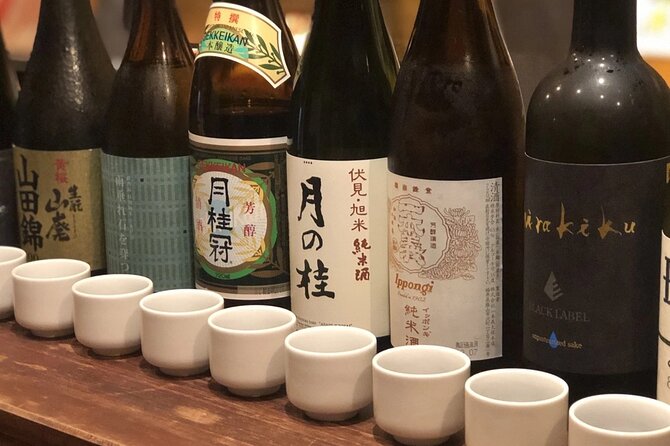
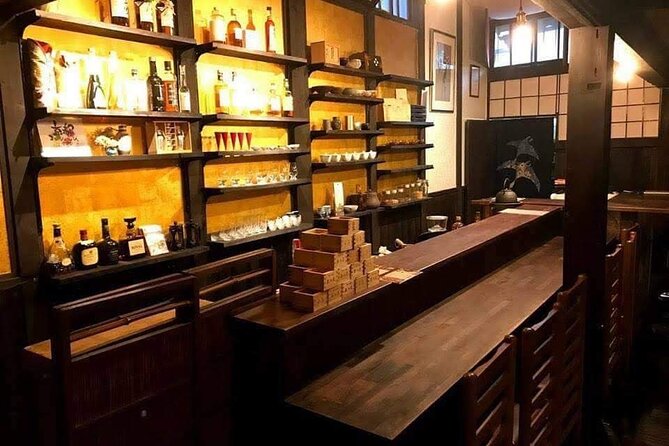
The second choice is a sake tasting with five shots. You learn about different local sake styles and compare their flavors. The tasting gives the tea ceremony a livelier finish, and the host has time to explain what you are drinking rather than simply place glasses on a table.
The third choice is a Japanese whisky tasting with two shots. This suits anyone more interested in spirits than rice wine. Some sessions have included well-known Japanese whisky, including Yamazaki, but the supplied information does not promise a particular bottle, so you should treat that as a possible extra rather than a guarantee.
Sake and whisky are available only to people aged 20 and over. If anyone in your party is younger, that person takes the matcha-whisking lesson after the tea ceremony. The group can still attend together, but each person may have a different final activity.
Kimono, haori, and katana photographs
The dress-up portion adds a playful change of mood. Women can wear an authentic silk wedding kimono for photographs, while men can wear samurai-style clothing or a haori and pose with a katana. The hosts help direct poses, and you are welcome to take photographs during the visit.
This is not a full-day kimono rental for walking around Kyoto. That is actually a benefit if you want the visual memory without spending hours managing a formal outfit through crowded streets. You enter, dress for the photographs, and return to the tea and tasting program.
The wedding kimono is limited to women, according to the activity details. If you want to wear kimono during the tea ceremony itself, allow an extra 30 minutes and expect an additional charge. That option is limited to one group in the house, while other time slots may require a separate booking through the provider’s own website.
The katana photographs are especially useful for families. Children have enjoyed the samurai theme, and the hosts have made an effort to keep younger participants involved. One family even received a toy umbrella shaped like a sword, though that kind of extra should not be treated as part of the fixed program.
Bring your own camera or phone. Photos are allowed, and the hosts may also take pictures for you. The house, clothing, and formal poses give you something more personal than a standard group snapshot outside a temple.
More Private Tea Experiences in Kyoto
- KYOTO: Private Tea Ceremony in Hidden Townhouse (Kid-Friendly)
★ 5.0 · 20 reviews - Kyoto Private Tea Ceremony at a Japanese Inns
★ 5.0 · 12 reviews - Kyoto Private Tea Ceremony at a Japanese Inns
★ 5.0 · 3 reviews - Kyoto Newly Opened Private Tea Ceremony – Sanjo Chasuian
★ 5.0 · 2 reviews
A private format that changes the mood
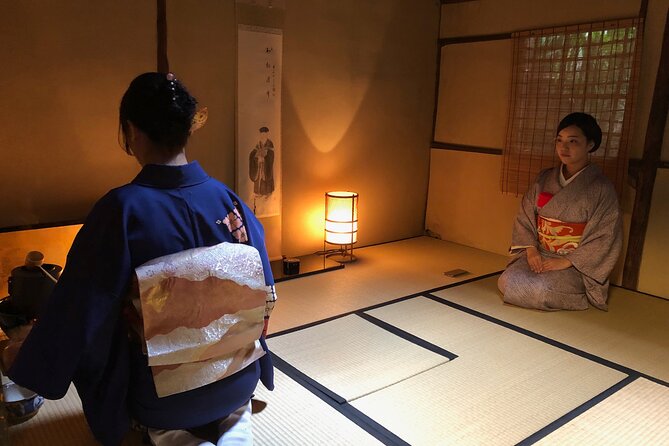
The booking is private for your group. That is one of the strongest reasons to consider it over a cheaper shared ceremony.
In a public demonstration, you may hesitate to ask why a bowl is turned a certain way or what a particular gesture means. Here, you can ask freely. The host family has been described as warm and easy to talk with, and the tea master can spend time explaining the ceremony at a pace that suits your party.
Private does not mean unstructured. The tea ceremony still follows a formal pattern, and the setting asks for respect. But the experience can adjust around your group. A couple may want a quiet, reflective visit. A family may need a little more help with photographs and clothing. A group of adults may spend more time talking over sake or whisky.
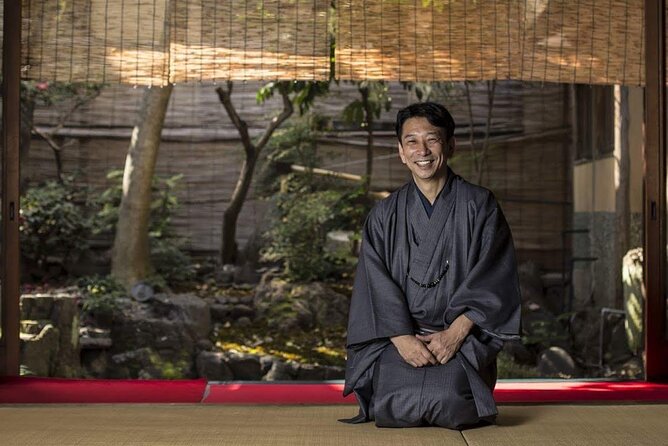
This is also a good choice if you want a personal cultural moment rather than a large presentation. The host family connection gives the visit a human scale. You are not only watching a ceremony. You are meeting the people who care for the house and keep this tradition in use.
Is $99 a fair price?
At $99, the experience is not the cheapest way to taste matcha in Kyoto. The price makes more sense when you consider what it combines: a private booking, access to a 300-year-old home, a tea ceremony, an educational explanation, a choice of matcha preparation or alcohol tasting, and dress-up photographs.
A shared tea demonstration may cost less, especially if you only want to drink matcha. This experience earns its higher price through privacy and the setting. You are paying for the house, the personal attention, and the chance to ask questions without a crowd.
The value is strongest for two or more people who will enjoy the full mix. Couples get a calm indoor activity and photographs. Families get an easy cultural lesson with a fun samurai element. Adult friends can add sake or whisky to the ceremony.
The minimum booking is two people, so solo visitors cannot book this particular activity. Group discounts are available, which may improve the value for a larger party. The duration is about 50 minutes, so you should not expect an entire afternoon of entertainment for the price.
Who will enjoy this Kyoto experience most
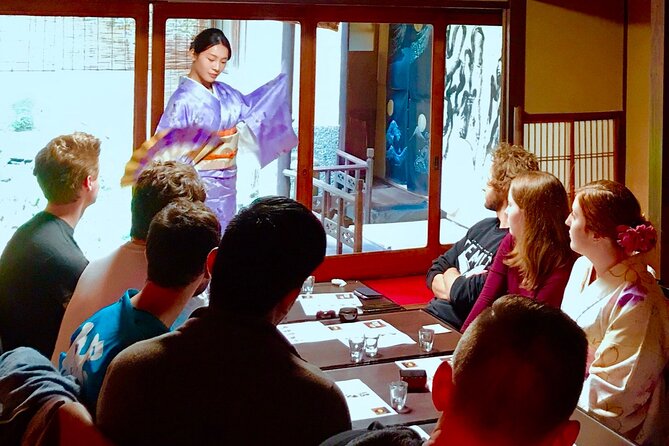
I would put this high on the list for couples. The private room, formal tea, kimono photographs, and sake option create a special shared memory without requiring a full day. It also works well as a wedding or anniversary gift.
Families can enjoy it too, especially with children who like swords, costumes, and hands-on activities. The younger members may not sit through a long temple lecture, but whisking matcha and posing in samurai clothing give them something active to do. Keep in mind that wedding kimono is for women, and alcohol is not available to anyone under 20.
It also suits first-time Kyoto visitors who want context for Japanese customs. The ceremony introduces the principles of tea in a manageable way, while the house and family connection add background that a quick photo stop cannot provide.
You may be less satisfied if you want a full technical lesson in tea ceremony, a long kimono dressing session, or a tour of samurai artifacts. The program offers a taste of each subject. Its strength is the combination, not specialist training in one field.
People over 120 kilograms are advised against booking. The property is old, and the clothing options may not suit every body. Ask about fit before committing if that is a concern.
Timing, etiquette, and useful planning tips
The activity ends where it begins, at Kyoto Samurai House, 384 Mongakucho, Shimogyo Ward. Since the house is close to Kyoto Station, I would allow extra time to find the entrance and arrive unhurried. A quiet ceremony feels much better when you are not rushing from a train platform.
Wear clothing that allows comfortable sitting and movement. The activity takes place in a traditional tea room, where the posture and floor-level setting may feel different from a Western chair. The supplied information does not promise special seating, so contact the provider before booking if you need adaptations.
Use the restroom before arrival. This is worth repeating because the house has only one old toilet. It is a practical issue, not a reason to avoid the experience.
Alcohol tastings are optional, but you must choose in advance among the matcha lesson, sake, and whisky options. Confirm your preference when booking, especially if your party includes children or non-drinkers.
The experience is non-refundable and cannot be changed after booking. Plan carefully before paying, since a cancellation or amendment does not result in a refund. If the provider cancels because the minimum number of people has not been met, you are offered another date or experience, or a full refund.
My verdict on the tea house visit
I like this experience because it joins several pieces of Kyoto culture without making you spend a full day on them. You get the calm formality of tea, the personal welcome of a family home, the fun of samurai and kimono photographs, and a choice of sake, whisky, or hands-on matcha.
The short schedule is both its strength and its limit. It fits neatly into a busy Kyoto plan, but anyone seeking a long tea-school lesson should choose a more specialized program. The old toilet, minimum of two people, alcohol age rule, and strict cancellation terms also deserve attention.
Book it if you want a private, personal introduction to Japanese tea in a real historic home, especially as a couple or family. Skip it if your main goal is a long kimono outing or serious sake education. For most people seeking a memorable Kyoto activity near the station, the mix of ceremony, conversation, and photographs offers solid value.
FAQ
How long does the private tea ceremony and tasting last?
The activity lasts approximately 50 minutes.
Where does the experience take place?
It takes place at Kyoto Samurai House, 384 Mongakucho, Shimogyo Ward, Kyoto, 600-8222, Japan.
How far is the samurai house from Kyoto Station?
The house is about an eight-minute walk from Kyoto Station.
Is the experience private?
Yes. Only your own group takes part in the activity.
What do I choose after the tea ceremony?
You choose one option: a matcha-whisking lesson, a tasting of five sake shots, or a tasting of two Japanese whisky shots.
Can children take part?
Yes. Visitors under 20 do not receive alcohol and take the matcha-whisking lesson instead.
Can I wear a kimono and pose with a katana?
Yes. Women can wear a wedding kimono for photographs, and visitors can pose with samurai katana. Wearing kimono during the tea ceremony requires an extra 30 minutes and an additional cost.
Is the booking refundable?
No. The experience is non-refundable and cannot be changed after booking. If the provider cancels because the minimum number of people is not met, you are offered another date or experience, or a full refund.
More Tea Ceremonies in Kyoto
- Kyoto: Tea Ceremony in a Traditional Tea House in Kiyomizu
★ 4.9 · 3,519 reviews - Kyoto: Tea Ceremony Ju-An at Jotokuji Temple
★ 4.9 · 3,207 reviews - Kyoto: 45-Minute Tea Ceremony Lesson Experience
★ 4.3 · 2,378 reviews - Kyoto: Table-Style Tea Ceremony at a Kyo-Machiya
★ 4.9 · 1,211 reviews
Newly steeped around Kyoto
- Whisk Your Own Matcha: A Zen Matcha Experience at Temple★ 3.6 · 7 reviews
- Kyoto: Authentic Tea Ceremony in a Small Group★ 5.0 · 7 reviews
- Tea ceremony at Kyoto’s Zen Temple Teahouse★ 5.0 · 2 reviews
- Uji Walking Tour – Byodo-in temple and Tea Ceremony from Kyoto★ 3.5 · 3 reviews
- Tea Ceremony in 150 Years Old Townhouse with Tables and Chairs★ 5.0 · 22 reviews
- Tea Ceremony Experience in Traditional Kyoto Townhouse★ 5.0 · 19 reviews
- Sencha-do the Japanese Tea Ceremony Workshop in Kyoto★ 5.0 · 21 reviews
- Silent Beauty of Kyoto Zen Walk and Tea Experience★ 5.0 · 2 reviews
Private Tea Experiences, compared.
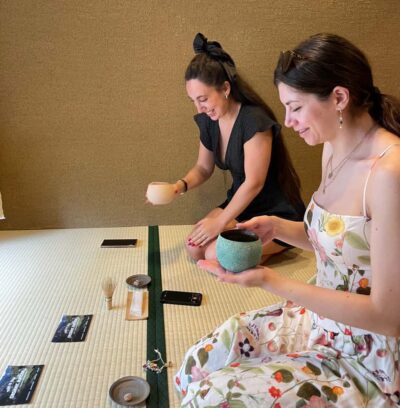
Tea Ceremony Experience in a Private Tea Room in Shibuya
Read our review →
One-Day Hangzhou Dragon Well Tea Culture & West Lake Private Tour
Read our review →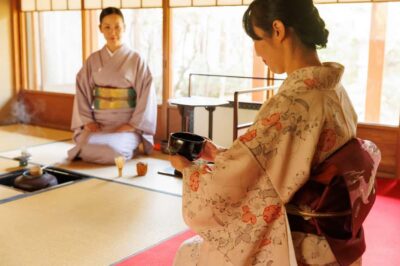
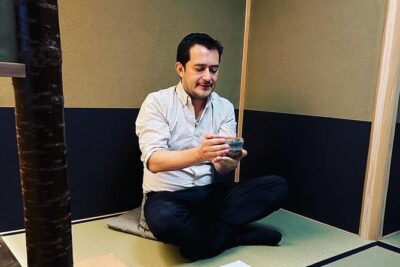
Kyoto Private Tea Ceremony with Tea Master at Home
Read our review →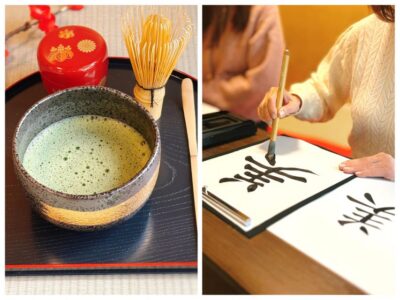
Osaka: Private Tea Ceremony and Calligraphy Experience
Read our review →
Private Tour: Royal High Tea At Kensington Palace Gardens
Read our review →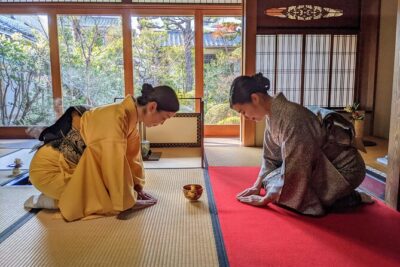
Stunning Private Tea Ceremony: Camellia Garden Teahouse
Read our review →
Private tour from Auckland – Waitomo Glowworm Caves, Zealong Tea & Kiwi Bird
Read our review →Browse the lists this tea experience appears in