
Review · TOKYO
Shibuya Authentic Tea Ceremony with experienced instructor
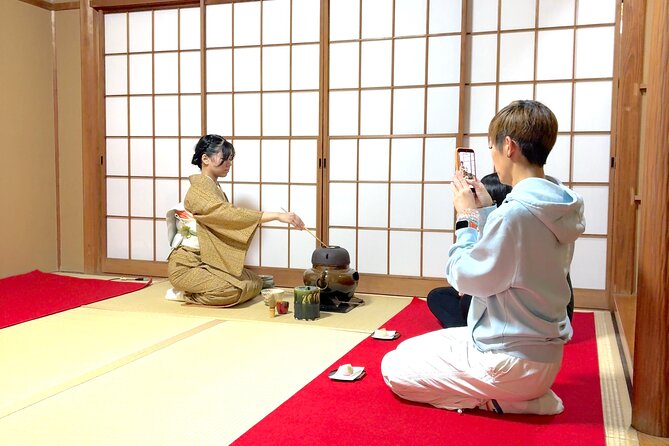
The best part of this Shibuya experience is the sharp change of pace. One minute you are near the bright streets of Dōgenzaka, and the next you are watching matcha being prepared in a quiet, old-style tea house. The session covers both the meaning behind the ritual and the practical skill of whisking your own tea.
I like the small maximum of eight people, which gives the instructor room to explain the tools and answer questions. I also like the simple price, $25.76, for a 50-minute cultural activity that includes sweets, a demonstration, and hands-on practice. The main consideration is time: this is an introduction, not a long formal tea-school lesson.
Key points to know before booking
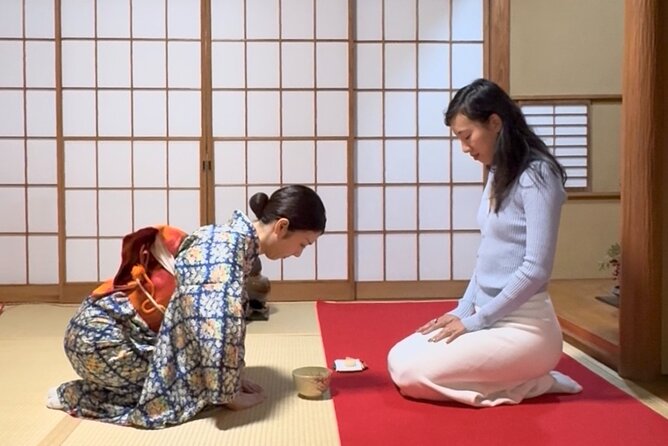
- You watch a traditional tea ritual first, then prepare matcha yourself.
- The session includes nerikiri, a Japanese sweet served with freshly made tea.
- You can choose your own chawan, or matcha bowl, from a selection of designs.
- A small stone mill is shown during the explanation of how matcha is made.
- The group is capped at eight people, keeping the lesson personal.
- The experience lasts about 50 minutes and begins and ends at the Dōgenzaka meeting point.
A quiet tea room in the middle of Shibuya
Shibuya is famous for giant screens, packed crossings, shopping, and late-night energy. This experience gives you a useful pause from all that noise without asking you to leave the district. The meeting point is at 万字ビル, 1-chōme 15 Dōgenzaka, Tokyo 150-0043.
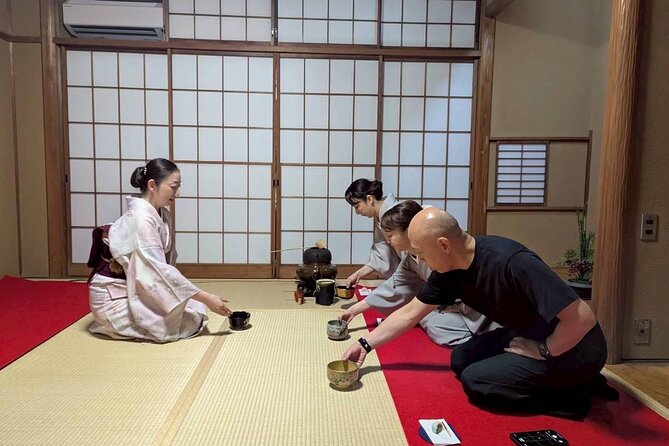
The tea house is described as an old, original place on a small side street. That detail matters. You are not simply sitting in a modern café with a matcha drink. The setting helps the ceremony feel separate from the busy streets outside, even though you remain close to central Shibuya.
You should allow enough time to find the address, especially if you are arriving during a crowded sightseeing day. The exact meeting point is provided after booking, and the activity returns there at the end. Since the tour lasts only around 50 minutes, arriving late would take a noticeable portion of the session.
More Tea Ceremonies in Tokyo
- Kimono Tea Ceremony at Tokyo, Asakusa Maikoya
★ 5.0 · 638 reviews - Tokyo: Traditional Tea Ceremony with a Tea Master
★ 5.0 · 528 reviews - Tea Ceremony Workshop in Tokyo by the Experienced Instrucor
★ 5.0 · 189 reviews
The opening lesson: tea history and the stone mill
The first part is a short introduction to tea in Japan. You learn how tea developed in Japanese culture before seeing more closely how matcha is produced.
A particularly interesting detail is the small traditional stone mill. Matcha is not simply ordinary green tea poured into hot water. The leaves are ground into a fine powder, and the powder is whisked directly into water. Seeing the mill gives you a physical sense of that process.
This opening section is useful for first-time visitors because it explains what you are about to watch. Without that context, the movements of a tea ceremony can look slow or mysterious. With it, the tools and gestures begin to make sense.
The explanation is brief, so you will not receive a full academic study of Japanese tea. That is a good fit if you want cultural background without spending half a day in a classroom. If you already know a great deal about tea history, this part may feel basic.
Watching a ceremony with more than 500 years of tradition
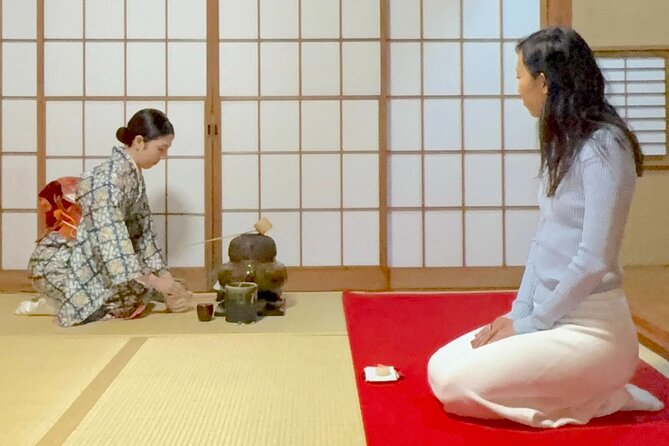
Next, the tea master performs the traditional tea-making ritual. The practice is described as having more than 500 years of history, and the point is not simply to produce a cup of tea. The order of movements, the handling of the bowl, and the use of each tool all matter.
Watch the demonstration closely before worrying about your own turn. The instructor shows how the elements work together, and you can ask questions as the ceremony unfolds. The hosts, including Mai, are described as friendly and welcoming, which helps if you are unfamiliar with Japanese customs.
The freshly prepared matcha is served with nerikiri, a traditional Japanese sweet. This pairing is important because nerikiri balances matcha’s bitter, grassy flavor with sweetness. The treat is part of the ceremony rather than an unrelated snack added to the booking.
You should expect a focused cultural demonstration, not a theatrical show. The value comes from seeing the care given to a simple bowl of tea. The quiet setting also gives you time to notice small details that are easy to miss in a larger, crowded session.
Whisking your own matcha
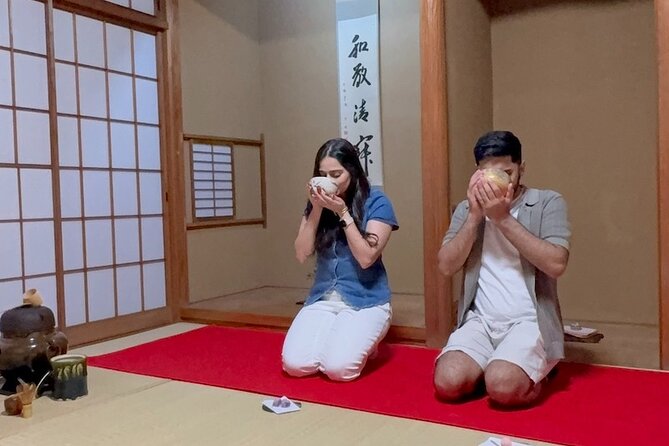
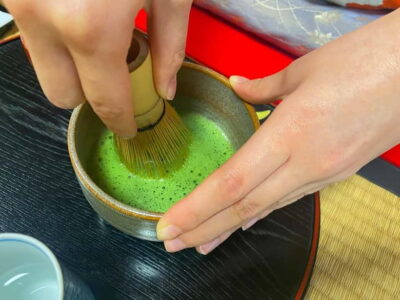
The hands-on portion is the practical heart of the experience. You use traditional tea tools to make your own bowl of matcha after watching the instructor.
Whisking looks easy until you try it. The motion has a technique, and the instructor can show you how to work the whisk through the tea and water. You do not need to arrive with previous experience. The activity is designed to let you learn by following the demonstration.
I like this part because it gives you something useful to take home beyond a photograph. You learn a basic method that you can try again if you buy matcha and a whisk later. The lesson may not turn you into a tea master, but it can help you understand the difference between simply stirring powdered tea and preparing it properly.
The experience also lets you choose a chawan from several beautiful matcha bowls. That choice adds a personal touch to the session. You are not given one identical cup and sent through a fixed routine. Selecting a bowl makes you pay closer attention to the object in your hands and to the role of the bowl in the ceremony.
The supplied information does not specify how many bowls are available or whether every design can be used by every participant. Still, the choice is a welcome feature for anyone who enjoys Japanese ceramics.
Same leaf, a different ritual:
- Matcha Making Class in Tokyo with Authentic Japanese Sweets Set
★ 5.0 · 744 reviews - Dynamic Tokyo: Tokyo Tower, Tea Experience, Bay Cruise Day Tour
★ 4.5 · 521 reviews - Tokyo: Matcha Making Experience with Mochi Sweets in Asakusa
★ 4.9 · 388 reviews - Asakusa Cultural Walk & Matcha Making Tour
★ 5.0 · 245 reviews
What the 50-minute format really means
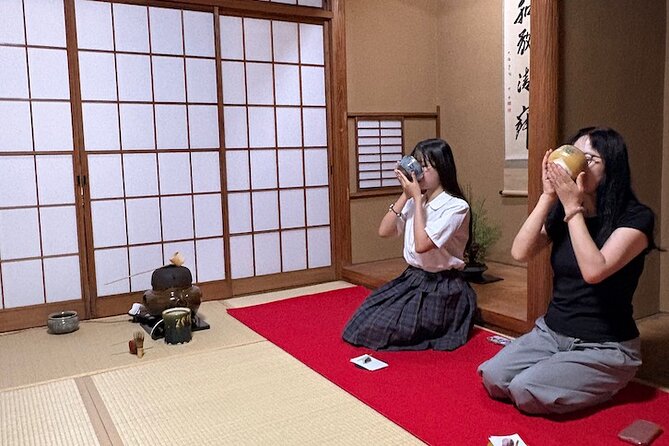
Fifty minutes is enough time for a clear introduction, a formal demonstration, sweets, and your own matcha preparation. It also fits neatly into a Shibuya sightseeing day. You could schedule it between shopping, a visit to a nearby attraction, or an evening meal.
The tradeoff is depth. A short session cannot cover every school of tea, every utensil, or the full etiquette expected in a formal tea gathering. You will receive a focused lesson rather than an extended ceremony.
That shorter format may suit you better than a longer cultural program if you want an activity that is easy to fit into a busy Tokyo itinerary. Families, first-time visitors, and people curious about matcha can get a clear taste of the tradition without committing several hours.
If your main goal is detailed study, extended meditation, or advanced tea practice, you may find the program too brief. The description promises an introduction and a hands-on experience, not professional training.
A small group makes the lesson more useful
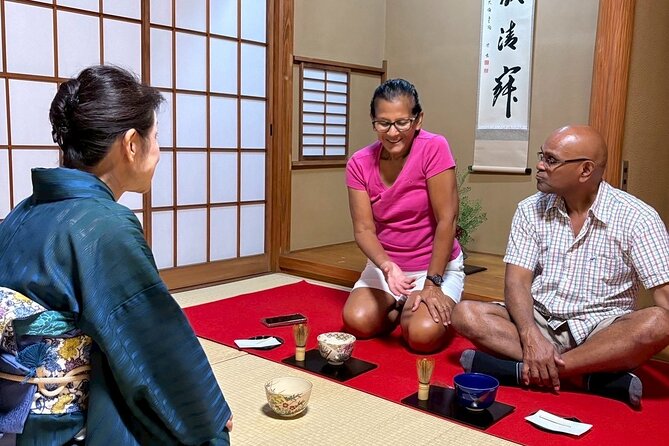
The maximum group size is eight people. That is one of the strongest practical features because tea preparation involves small tools and specific hand movements. A very large group would make it harder to see the demonstration or receive individual help.
With up to eight participants, you should have a better chance of following the instructor’s actions and asking a question. The setting remains personal without being entirely private.
The small-group format does not guarantee a private booking. Other people may attend, and the atmosphere can vary depending on the group. Still, eight is a manageable number for a demonstration where everyone prepares tea.
The experience is provided by Shibuya Tea Ceremony Tokyo-Chaan. Mai is named in one of the especially positive accounts, so she may be your instructor, though the supplied details do not guarantee that she leads every scheduled session. You should book this for the format and subject rather than for a specific individual unless your confirmation names the instructor.
What the price includes in practical terms
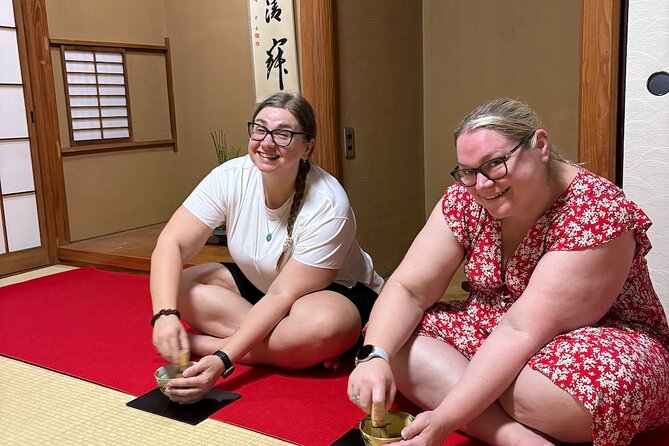
At $25.76 per person, the price is reasonable for central Tokyo if you want an activity rather than just a drink. You are paying for instruction, a ceremonial demonstration, matcha, nerikiri, traditional tools, and the chance to prepare your own bowl.
The value improves if you care about context. A café matcha might cost less, but it would not normally include an explanation of Japanese tea, a stone-mill demonstration, a formal tea ritual, or guided practice.
The price is less compelling if you only want to taste matcha and take a quick photo. You can find tea elsewhere, but the cultural instruction is the main reason to choose this experience.
The mobile ticket also keeps the booking simple. Confirmation is received at the time of booking, and free cancellation is available if you cancel at least 24 hours before the local start time. Cancellations or changes made inside that window are not refunded or accepted, so check your Tokyo schedule before reserving.
Who will enjoy this tea ceremony most
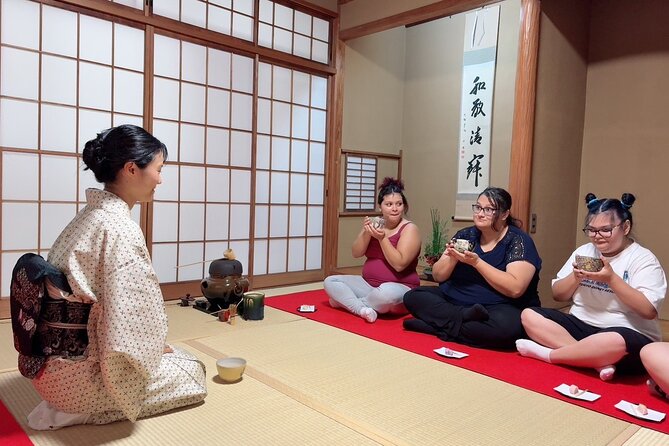
I would recommend this to you if you want a compact cultural activity in Shibuya with real participation. It suits first-time visitors who want an approachable introduction to tea ceremony, as well as people already interested in matcha, Japanese sweets, or ceramics.
It also works well for a couple, a small family group, or anyone who prefers a calm activity after a busy morning. The quiet room provides a welcome contrast to Shibuya’s energetic streets.
The format should appeal to people who like learning through demonstration. You watch first, taste the finished tea, and then try the process yourself. That progression is more memorable than a lecture alone.
You may want to choose another activity if you dislike powdered green tea, have no interest in ceremonial customs, or want a long and highly formal experience. The session is designed for broad appeal, so advanced tea students should keep their expectations modest.
Useful things to know before you go
Plan to arrive at the Dōgenzaka address with enough time to locate the building. The experience is short, and the meeting point is also the finishing point, so there is no transport segment to worry about after the session.
Wear something that lets you sit and handle a bowl comfortably, although no specific clothing requirement is provided. The available information also does not state accessibility details, seating arrangements, or dietary alternatives for the nerikiri. If any of those points matter to you, ask the provider before booking.
The activity uses traditional tools, so listen closely during the demonstration. The whisk, bowl, and other utensils are part of the lesson, not just decoration.
You will not need to bring a tea set. The activity provides the tools used for preparing your matcha, and you choose a chawan during the session.
Should you book the Shibuya tea ceremony?
Book it if you want a short, well-priced introduction to Japanese tea culture with a calm setting, a formal demonstration, sweets, and your own hands-on bowl of matcha. The group limit of eight and the chance to choose a tea bowl add real value for $25.76.
I would be especially happy to fit this into a first visit to Tokyo, when Shibuya is already on your route. The session gives you more than a café stop, but it does not demand the time of a full-day cultural program.
Skip it if you want advanced instruction or a long ceremonial gathering. For most curious visitors, though, this is a practical way to slow down, learn the basic meaning of tea ceremony, and leave with a skill you can try again at home.
FAQ
How long does the tea ceremony last?
The experience lasts approximately 50 minutes.
How much does the experience cost?
The listed price is $25.76 per person.
Where does the activity begin?
It begins at 万字ビル, 1-chōme 15 Dōgenzaka, Shibuya, Tokyo 150-0043, Japan.
Where does the activity end?
The activity ends back at the meeting point.
How many people can join the session?
The group can include a maximum of eight people.
Is the ticket available on a mobile device?
Yes. The experience includes a mobile ticket.
Will I see how matcha is made?
Yes. The introduction includes an explanation of tea history and a look at matcha being made with a traditional stone mill.
Do I get to watch a formal tea ceremony?
Yes. A tea ceremony master performs a traditional tea-making ritual described as having more than 500 years of history.
Can I prepare my own matcha?
Yes. You use traditional tea tools to make your own bowl of matcha.
Are sweets included?
Yes. The freshly prepared matcha is served with nerikiri, a traditional Japanese sweet.
Can I choose the tea bowl I use?
Yes. You can choose a chawan from a selection of matcha bowls.
Can I cancel for a full refund?
Yes, if you cancel at least 24 hours before the experience start time. Cancellations made less than 24 hours before the start time are not refunded.
Newly steeped around Tokyo
- Yokohama : Tea Ceremony with Sweets and Souvenir★ 5.0 · 5 reviews
- Walking Tour: Yanaka,Nezu& Sendagi: Tea Ceremony & Old Tokyo★ 5.0 · 3 reviews
- Private Mochi・Matcha sweets Making Class Near Shibuya Area★ 5.0 · 22 reviews
- 2 Hours Mochi &Nerikiri Making & Matcha Class in Bunkyo★ 5.0 · 21 reviews
- Private Kimono and tea ceremony at local home near Tokyo Disney★ 5.0 · 6 reviews
- Kimono and Tea Ceremony in Asakusa Private Food Tour With Guide★ 5.0 · 4 reviews
- Giant Sushi Cooking Class: Make a 1.5m Sushi Roll in Tokyo★ 5.0 · 9 reviews
- Tokyo Tea Ceremony Class at a Traditional Tea Room★ 5.0 · 2 reviews
Tea Ceremony Experiences, compared.
Kyoto: Tea Ceremony in a Traditional Tea House in Kiyomizu
Read our review →
Kyoto: 45-Minute Tea Ceremony Lesson Experience
Read our review →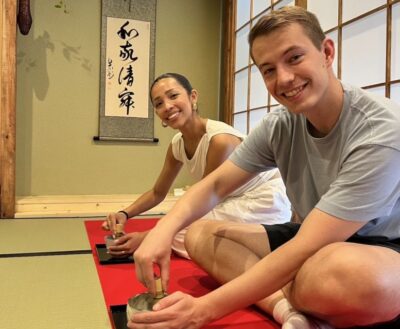
Kyoto: Table-Style Tea Ceremony at a Kyo-Machiya
Read our review →


Browse the lists this tea experience appears in