
Review · JAPAN
Supreme Sencha: Tea Ceremony & Making Experience in Hakone
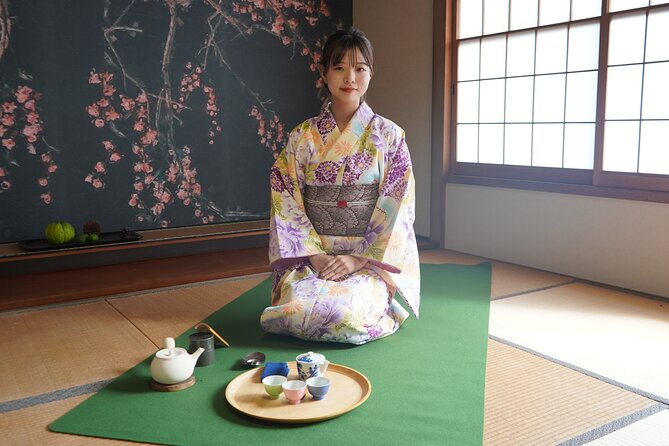
Sencha-do gives you a different view of Japanese tea culture. Instead of whisking powdered matcha, you watch green tea leaves slowly release their flavor through careful brewing. Then you get to handle the utensils yourself, which makes this a hands-on lesson rather than a performance.
I like two things right away: the ceremony comes first, so you understand the manners and mood before trying it, and the English-speaking tea master teaches the process patiently. The Japanese sweets add a small but worthwhile touch, giving you something to enjoy while you take in the setting.
The main consideration is price. At $130.82 per person for about two hours, this is not a quick budget activity, and the group can reach 20 people. It makes the most sense if you want cultural instruction and participation, not just a cup of tea.
Key points to know before booking
- You brew the tea yourself: Unlike many formal demonstrations, this class lets you touch the utensils and prepare sencha from the beginning.
- This is sencha-do, not matcha preparation: The tea is brewed from green leaves rather than whisked as a powder.
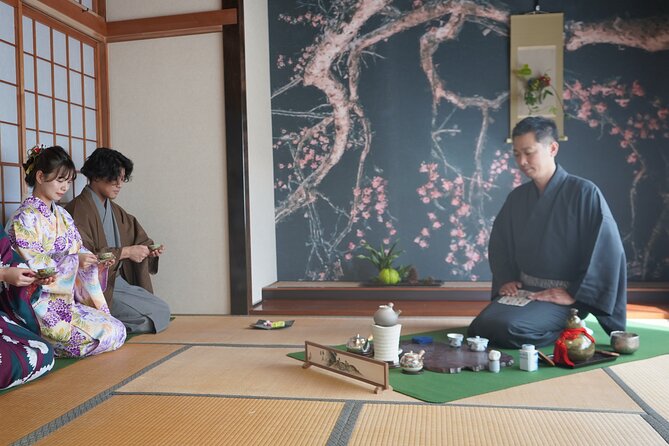
- You begin by watching a full ceremony: The opening demonstration helps you understand the gestures, pace, and setting before taking your turn.
- A fifth-generation tea master teaches the class: The instructor is a master of the Higashi Abe school and speaks excellent English.
- Japanese sweets are served: They provide a traditional companion to the tea and help make the ceremony feel complete.
- The meeting point is in Gora: The two-hour activity begins and ends at Chaseki, 1300-307 Gora, Hakone.
Why sencha-do feels different from a standard tea ceremony
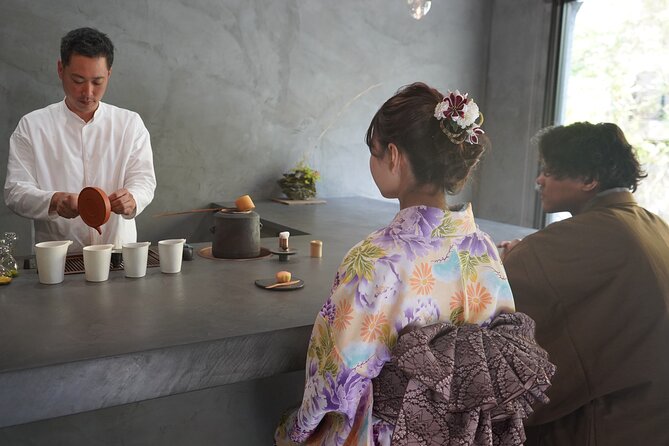
When many people picture Japanese tea, they picture matcha: bright green powder whisked into a bowl. Sencha-do follows another path. The tea leaves are infused in hot water, and the flavor depends on measured brewing rather than vigorous whisking.
That difference matters because the tea itself becomes the focus. You can watch how the leaves are handled, how water is added, and how the finished drink is poured. The process is quieter and more measured, with small movements carrying much of the meaning.
I like this format for first-time visitors because it gives you something clear to watch and something real to do. You are not expected to know the rules before arriving. First you observe, then you repeat the process with guidance.
The ceremony also gives you a closer look at a part of Japanese culture that can be missed on a busy sightseeing day. Hakone is known for hot springs, mountain views, museums, and transport rides, but this experience asks you to slow down for two hours and pay attention to a domestic art form.
More Green Tea Tours in Japan
- Experience all of Japanese culture and Japanese food experience classes “origami, udon, Japanese food, green tea, calligraphy” in 4 hours
★ 5.0 · 105 reviews - Uji: Green Tea Tour with Byodoin and Koshoji Temple Visits
★ 4.8 · 72 reviews - Scenic Green Tea Fields of Hidden Kyoto & Local Tea Exp (Private)
★ 5.0 · 32 reviews
The opening ceremony sets the pace
The first part is observation. The tea master prepares the tea while explaining the ceremony and its cultural meaning. This opening is useful because it gives you a sense of the correct rhythm before you touch the equipment.
Do not expect a rushed demonstration. Tea ceremony depends on care and order, so the slower pace is part of the point. Watch where the utensils are placed, how the tea is poured, and how the sweets fit into the experience.
The instructor teaches in English, which removes one of the biggest worries for international visitors. You can follow the steps and ask questions without trying to guess what each movement means. The teacher is a master of the Higashi Abe school and has experience guiding students through the method.
This is also the time to settle into the atmosphere. The ceremony is not only about drinking tea. It is about attention, courtesy, and the relationship between the person preparing the tea and the person receiving it.
Japanese sweets add more than decoration
Japanese sweets are served during the ceremony. Their role is not simply to make the table look attractive. Sweets traditionally offer a contrasting taste alongside tea, and they give you a small pause between observing and brewing.
For you, this means the experience has a pleasant sequence: watch the tea ceremony, enjoy the sweet, then learn to make the tea. It avoids the feeling of a technical workshop where you are handed equipment and told to copy a set of motions.
The exact sweet is not specified, so do not book this expecting a particular flavor or confection. Still, the inclusion gives the session a more rounded feel and helps explain why tea ceremonies are social as well as practical.
Your turn with the tea utensils
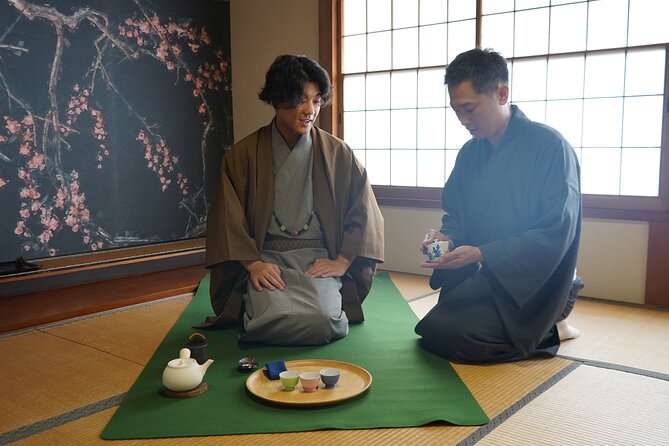
The most valuable part comes after the demonstration. You are allowed to handle the utensils and brew the tea from scratch. That is not always permitted in tea ceremony workshops, so this is an important difference when comparing options.
The instructor guides you through each stage rather than leaving you to work it out alone. You can pay attention to the details, then see how your own brewing changes the taste. The experience encourages you to compare your tea with the cups prepared by friends or family members.
This personal element makes the lesson memorable. You are not only hearing about tea preparation. You are seeing the result of your own choices and discovering how a simple process can produce a different taste in your cup.
I would especially recommend this format for families and mixed-age groups. One account describes a visit involving an 83-year-old mother, a 23-year-old adult, and a 13-year-old child, with everyone able to take part. That age range suggests the activity can work well when a group wants a shared cultural experience that does not depend on strenuous movement.
It may also suit people who enjoy food and drink workshops. You will not leave with a full meal or a packet of tea to take home, based on the information provided, but you will gain a better sense of how preparation affects flavor.
Same leaf, a different ritual:
- Kyoto: Tea Ceremony in a Traditional Tea House in Kiyomizu
★ 4.9 · 3,519 reviews - Kyoto: Tea Ceremony Ju-An at Jotokuji Temple
★ 4.9 · 3,207 reviews - Kyoto: 45-Minute Tea Ceremony Lesson Experience
★ 4.3 · 2,378 reviews - World Heritage Kyoto & Nara Uji Authentic Matcha Experience
★ 5.0 · 1,573 reviews
A fifth-generation teacher and an English-friendly lesson
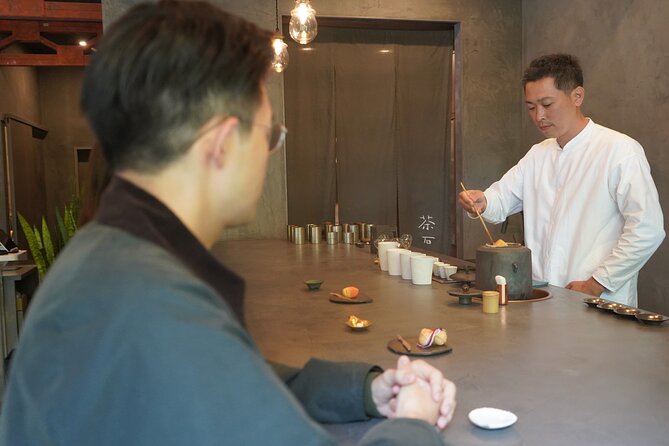
The instructor is described as a fifth-generation tea master and a master of the Higashi Abe school. That background gives the class a strong link to an established tradition, while the teaching format keeps it approachable.
English ability is another practical advantage. The tea master is described as speaking impeccable English, so you should be able to follow explanations about the ceremony and the brewing method without needing a translator.
That combination is valuable. A formal cultural activity can become frustrating if you only understand the motions and not the reason behind them. Here, the instruction is meant to explain both the how and the why.
The teacher’s role is not to impress you with difficult rules. It is to help you notice the meaning in small actions, then give you enough confidence to try the process yourself.
Kimono help and the visual side of the visit
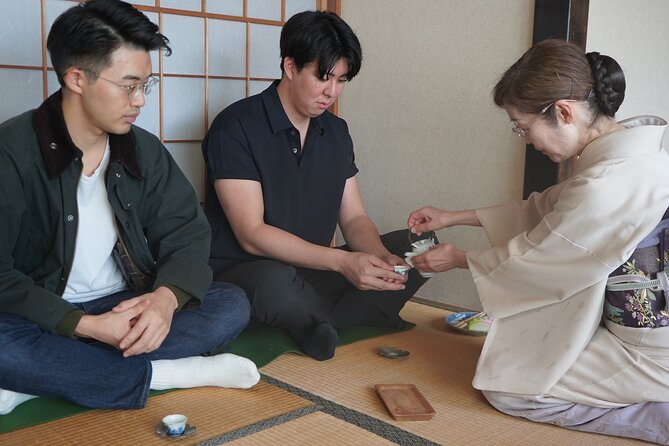
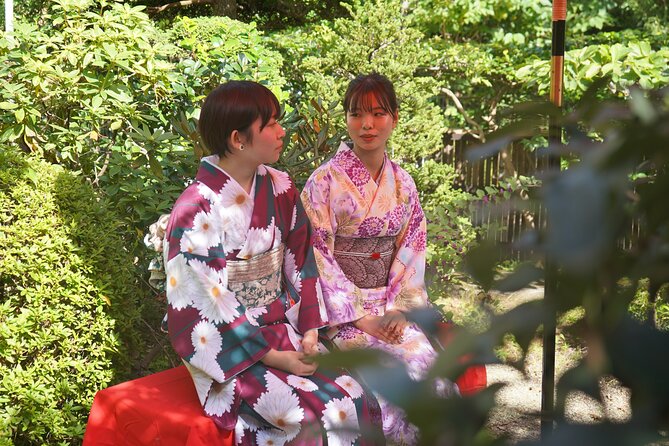
Kimono assistance is part of the experience described for this activity. The people helping with the kimono are noted as friendly, and the kimonos are described as beautiful.
Treat this as an added visual and cultural feature, not the sole reason to book. The main activity remains the sencha-do ceremony and tea preparation. Still, kimono can make the occasion feel more special, particularly if you are marking a birthday, family trip, or first visit to Japan.
Photography is welcome, so you can take pictures during the experience. Be sensible about timing. The ceremony depends on calm attention, and it is better to watch the demonstration first rather than spend the entire opening section looking through your phone.
The permission to take pictures is useful because many cultural activities limit photography. Here, you can record the utensils, sweets, tea, and your own participation, giving you a visual reminder of the lesson.
What two hours in Gora gives you
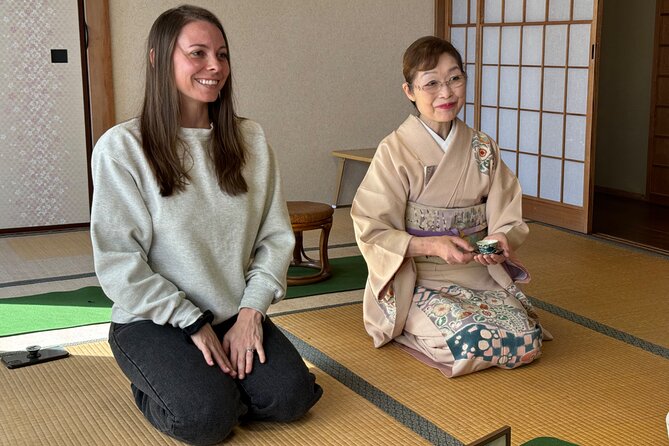
The experience lasts about two hours, with both the demonstration and the hands-on brewing included. That is long enough to provide context without taking up an entire day in Hakone.
The meeting point is Chaseki, 1300-307 Gora, Hakone, Ashigarashimo District, Kanagawa 250-0408. The activity ends back at the same location, so you do not need to arrange a separate finish point.
The location is near public transportation, which helps if you are building the class into a day of sightseeing. You should still allow time to reach Gora and find the meeting point, since Hakone outings often involve several transport connections. The supplied details do not specify the closest station, exact walking time, or a hotel pickup service, so check your route before booking.
The group can include up to 20 people. That is a reasonable maximum for a class, but it is not a private lesson. If you want extended one-to-one instruction, ask about group arrangements before paying. If you are comfortable learning alongside other people, the group setting can make tea comparison more interesting.
Is $130.82 a fair price?
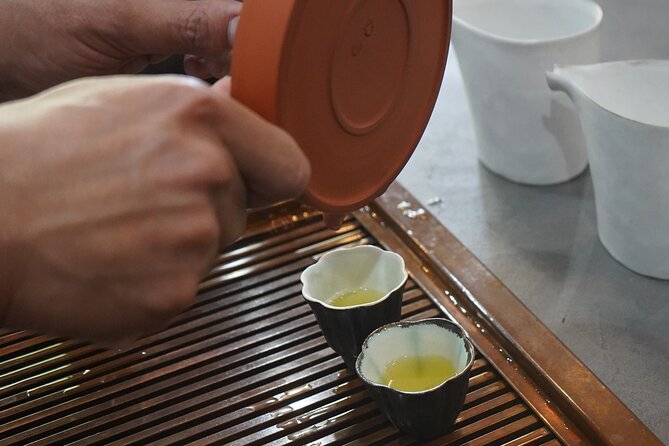
At $130.82 per person, this is a premium two-hour activity. You are paying for more than tea: the ceremony, instruction from a traditional tea master, Japanese sweets, hands-on use of the utensils, and the chance to take photographs.
The value is strongest for someone who wants a guided cultural lesson. If your goal is simply to drink green tea in Hakone, you can find less expensive ways to do that. If you want to understand sencha-do and prepare the tea yourself, the price is easier to justify.
The class also offers something that a museum display cannot. You use the utensils, follow the process, taste the result, and compare cups with people in your group. Those practical steps turn an unfamiliar custom into something you can remember and explain later.
I would think of it as a special-occasion activity rather than a casual stop between sights. The positive choice is clearer for couples, families, or small groups who value guided instruction and want a shared experience.
The average booking lead time is 31 days, so plan ahead if your Hakone dates are fixed. That does not guarantee that every date requires advance booking, but it does suggest that leaving the decision until the last minute may limit your choices.
Weather, confirmation, and cancellation details
Confirmation is normally sent when you book. If you book within one day of the activity, confirmation is sent as soon as possible, subject to availability.
You can cancel up to 24 hours before the start time for a full refund. Cancellations or changes made less than 24 hours before the start time are not accepted for a refund, and all cut-off times use local time in Japan.
The experience requires good weather. If poor weather causes a cancellation, you are offered another date or a full refund. A minimum number of participants is also required, and if that minimum is not reached, you are offered another date or experience, or a full refund.
Those terms make early planning sensible, especially if the tea class is a key part of your Hakone day. Keep your schedule flexible enough to accept another date if weather or minimum numbers affect the original booking.
Who should book this Hakone tea experience?
I would recommend it to you if you want:
- A cultural activity with explanation, not just a photo opportunity
- A chance to handle traditional tea utensils
- An English-speaking instructor
- A calm two-hour experience in Gora
- A family activity that can suit several generations
- A special setting for photos, sweets, and tea tasting
It may not be the right fit if you are looking for a low-cost refreshment stop, a private class, or a broad tour of Hakone. The experience stays focused on sencha-do. That narrow focus is its strength, but it will not satisfy you if you want several attractions packed into one booking.
The group size also deserves thought. Up to 20 people can attend, so the atmosphere may feel more like a small class than a private tea ceremony. The instructor’s teaching experience and strong English help, but personal attention may vary with the final number.
Should you book Supreme Sencha in Hakone?
Book this experience if you want to understand Japanese tea through your own hands. The best features are specific: you watch the ceremony first, learn from a fifth-generation tea master with excellent English, brew the tea yourself, enjoy Japanese sweets, and can take photos.
At $130.82, the class asks for a serious budget, but it offers more than a standard tasting. I would choose it for a family group, a special trip, or anyone who prefers a thoughtful cultural activity over another fast-moving Hakone attraction.
If you are unsure, ask yourself one question: do you want to learn why the tea is prepared this way, or do you only want to drink it? If the first answer is yes, this two-hour Gora experience is a strong choice.
FAQ
Where does the tea ceremony experience begin?
It begins at Chaseki, 1300-307 Gora, Hakone, Ashigarashimo District, Kanagawa 250-0408, Japan.
Where does the activity end?
The activity ends back at the meeting point.
How long does the experience last?
The experience lasts approximately two hours.
What type of tea ceremony is included?
It is sencha-do, a ceremony that brews green tea leaves by infusion rather than using powdered green tea.
Can I handle the tea utensils?
Yes. This hands-on class allows you to touch the utensils and learn to brew the tea from the beginning.
Is the instructor able to teach in English?
Yes. The tea master is described as speaking impeccable English.
How many people can join the activity?
The maximum group size is 20 people.
Can I cancel for a full refund?
Yes, if you cancel at least 24 hours before the experience start time. Cancellations made less than 24 hours in advance are not refunded.
More Tea Ceremonies in Japan
- Osaka: Tea Ceremony Experience
★ 4.9 · 1,426 reviews - Kyoto: Table-Style Tea Ceremony at a Kyo-Machiya
★ 4.9 · 1,211 reviews - Kanazawa: Kenrokuen Tea Ceremony Experience
★ 4.8 · 1,139 reviews - Kimono Tea Ceremony at Kyoto Maikoya, NISHIKI
★ 5.0 · 911 reviews
Newly steeped around Japan
- Yokohama : Tea Ceremony with Sweets and Souvenir★ 5.0 · 5 reviews
- Whisk Your Own Matcha: A Zen Matcha Experience at Temple★ 3.6 · 7 reviews
- Walking Tour: Yanaka,Nezu& Sendagi: Tea Ceremony & Old Tokyo★ 5.0 · 3 reviews
- Visit local home for music and tea ceremony near Disney★ 4.9 · 13 reviews
- Trip to Kamakura & Enoshima: Shrines, Seaside, Temples &Tea★ 5.0 · 11 reviews
- Yokohama: Sushi & Gyoza Cooking with Matcha & GreenTea Experience★ 5.0 · 3 reviews
- Kyoto tea town for matcha lovers★ 5.0 · 16 reviews
- Uji: Private immersion into Kyoto’s tea and reglious culture★ 5.0 · 17 reviews
Green Tea Tours, compared.
Uji: Green Tea Tour with Byodoin and Koshoji Temple Visits
Read our review →
Scenic Green Tea Fields of Hidden Kyoto & Local Tea Exp (Private)
Read our review →
Osaka; Japanese Tea ceremony experience, Macha and Sencha
Read our review →
Slow Cycling Tour at Uji’s Matcha Green Tea Fields and Heritage
Read our review →
Sencha-do the Japanese Tea Ceremony Workshop in Kyoto
Read our review →
Uji Tea Ceremony and UNESCO Heritage Walking Tour
Read our review →Browse the lists this tea experience appears in