
Review · TOKYO
【NEW】Matcha Making Experience and Matcha Comparison in Tokyo
Tokyo’s matcha scene gets much more interesting when you stop treating every green powder as the same drink. Here, you taste 10 matchas from five Japanese tea regions, then learn how farming, soil, processing, color, aroma, and flavor shape the cup.
I like the small maximum of five people, which gives you room to ask questions. I also like that Chisei brings six years of experience as a Kyoto tea farmer, while the team adds a practical health and food perspective through an assistant who works as a pharmacist. The one drawback is price: at $62.12, this is a focused lesson, not a quick drink stop.
Key points to know before you book
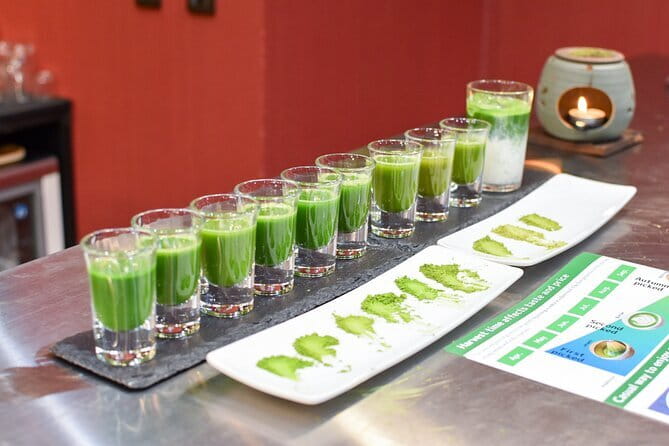
- Ten matchas in one sitting: Compare teas from Kyoto, Shizuoka, Aichi, Fukuoka, and Kagoshima.
- Former tea farmer as guide: Chisei has worked with tea from cultivation through processing in Kyoto.
- A useful reality check: Eight samples are served for comparison, including six ceremonial-grade matchas and two products sold worldwide as matcha but not defined as matcha.
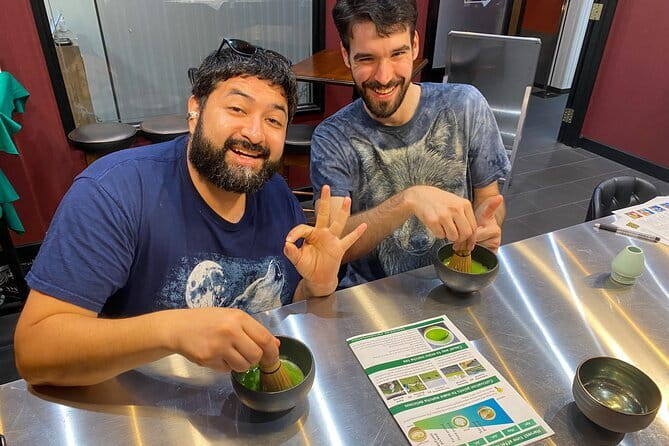
- You make your own cup: Choose your favorite and whisk traditional usucha with a bamboo tea whisk.
- Small group format: The experience accepts a maximum of five participants and runs about 90 minutes.
- More than bitter green tea: The session ends with a matcha latte and sweets made with a blend suited to milk and sugar.
Why tasting ten matchas changes the picture
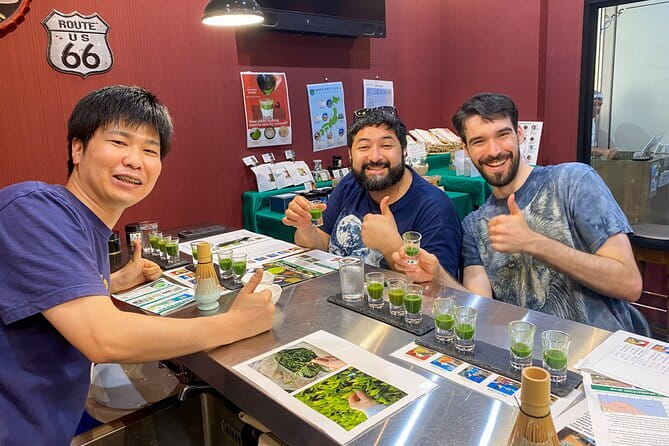
Many people first meet matcha in a sweet latte or a bright green dessert. That is a pleasant introduction, but it can flatten the differences between teas. This experience gives you ten small portions side by side, so you can compare them while the details are fresh.
The teas come from Kyoto, Shizuoka, Aichi, Fukuoka, and Kagoshima, five important Japanese tea-producing areas. You are not simply drinking one cup and receiving a general lesson. You are looking at color, smelling the tea, tasting each sample, and noticing how one region can differ from another.
The comparison includes eight samples in the main tasting. Six are ceremonial-grade matchas, while two are products commonly sold as matcha around the world but are not technically defined as matcha. That distinction gives the class a useful edge. You learn not only what good matcha can taste like, but also why the word matcha is often used loosely.
You should expect small servings rather than ten full bowls. That is a sensible approach. Ten full portions would be too much for a 90-minute session, and small pours let you focus on the differences without turning the morning into a caffeine contest.
More Matcha Experiences in Tokyo
- Matcha Making Class in Tokyo with Authentic Japanese Sweets Set
★ 5.0 · 744 reviews - Tokyo: Matcha Making Experience with Mochi Sweets in Asakusa
★ 4.9 · 388 reviews - Asakusa Cultural Walk & Matcha Making Tour
★ 5.0 · 245 reviews
Meeting Chisei and the small Tokyo tea team
The main instructor, Chisei, is a former tea farmer who spent six years growing tea in Kyoto. His work covered the process from cultivation to processing, so the lesson is tied to actual production rather than only tea-shop vocabulary.
Chisei also has a bachelor’s degree in agricultural science, with particular interest in soil science. That matters because tea flavor begins long before the whisk touches the bowl. Soil, growing conditions, cultivation methods, harvesting, and processing all influence what you taste.
The assistant, Rina, has a bachelor’s degree in pharmacy and works as a practicing pharmacist. That gives the team a different professional angle, though the session is presented as a tea experience rather than a medical consultation. You can ask questions, but you should not treat the class as personal health advice.
The group limit is five people. I see this as one of the experience’s strongest features. Matcha preparation involves close attention to small details, and a tiny group makes it easier to see the demonstration, ask about a flavor, or get help with the whisk.
A single participant left especially interested in the differences between Japanese matcha and tea from India, and Chisei’s response suggests that questions can lead to longer tea conversations. If you enjoy asking about farming, processing, or regional flavor, plan to use the question time.
The welcome drink and the story behind the powder
The session begins at the meeting point in Taito City, Tokyo. The listed start time is 9:30 am, and the experience takes place at matcha tripJapan, on the second floor of the Henn Na Hotel at 3-19-8 Kotobuki, in Sports Bar Leaf.
You begin with a welcome drink while the team explains the history and production of the matcha you will taste. This opening helps put the tasting in context. Instead of hearing technical terms after you have already formed opinions, you get a basic framework before the comparison begins.
The word matcha refers to powdered tea made from leaves that are cultivated and processed in a particular way. The point of this class is to explain that definition and show where products can differ. You will hear about cultivation methods and production, with the agricultural side receiving more attention than you might get at a standard tea café.
Because the guide has worked on a tea farm, the explanation can connect the finished drink with the work behind it. For you, that means the session is not only about preparing a photogenic bowl. It is also about understanding why matcha costs what it does and why two green powders may have very different qualities.
Comparing Kyoto, Shizuoka, Aichi, Fukuoka, and Kagoshima
The main tasting is the heart of the morning. You first look at the color of each matcha, then the tea is prepared for you to taste. Pay attention to the sequence. Color gives you an initial clue, but fragrance and taste may tell a different story.
The five production areas give the comparison a clear structure:
- Kyoto brings the connection to Chisei’s farming background and to one of Japan’s best-known tea regions.
- Shizuoka lets you compare another major growing area with Kyoto.
- Aichi, Fukuoka, and Kagoshima add further regional examples, so the tasting is not limited to one traditional center.
The supplied details do not assign a precise flavor profile to each region, and that is useful to remember. You should not arrive expecting a fixed chart that says one area is always sweet and another is always bitter. Farming and processing create variation within a region, too.
Instead, use the tasting to find your own preferences. You might notice differences in fragrance, bitterness, sweetness, body, or aftertaste. The goal is not to memorize a ranking. It is to discover the type of matcha you would actually want to drink again.
The two non-matcha products are an especially practical part of the lesson. If you buy green powder at home, packaging can make it hard to tell what you are getting. Seeing and tasting the difference here may help you read labels and shop with more care later.
Same leaf, a different ritual:
- Kimono Tea Ceremony at Tokyo, Asakusa Maikoya
★ 5.0 · 638 reviews - Tokyo: Traditional Tea Ceremony with a Tea Master
★ 5.0 · 528 reviews - Dynamic Tokyo: Tokyo Tower, Tea Experience, Bay Cruise Day Tour
★ 4.5 · 521 reviews - Mt. Fuji & Lake Kawaguchiko Ropeway Panorama Full-Day Tour
★ 4.6 · 236 reviews
From observer to whisker: making usucha yourself
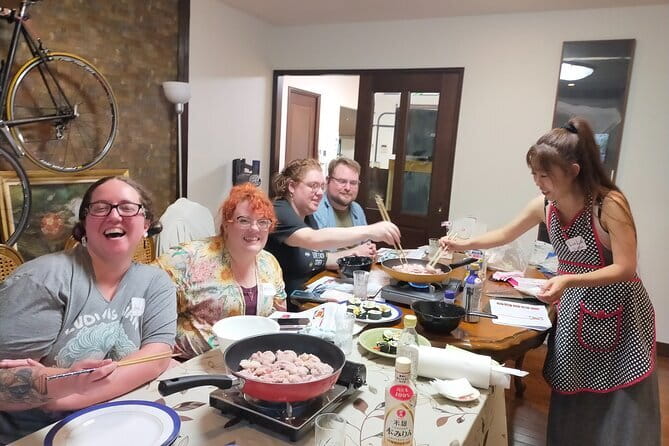
After comparing the teas, you choose the matcha you like best. Then you prepare it yourself with a bamboo tea whisk.
The drink made in this section is usucha, the thinner style of matcha most people recognize as a bowl of whisked tea. You will learn the basic process and get the satisfaction of turning powder and water into a finished drink with your own hands.
This is a modest but valuable shift in the itinerary. Tasting teaches you what changes from one tea to another. Whisking teaches you what it takes to make the drink properly. You leave with a method you can repeat at home, not only a memory of someone else preparing the tea.
Do not expect a full formal tea ceremony. The experience is built around tasting, explanation, and practical preparation. That makes it approachable if you want to learn without committing to a long ceremonial program, but it may feel less suitable if your main goal is an elaborate traditional performance.
The bamboo whisk is important here. It is the tool that creates the characteristic texture, and using it gives the class a hands-on finish. You can choose your preferred matcha based on what you tasted, which makes the final bowl personal rather than random.
Matcha latte and sweets to finish the session
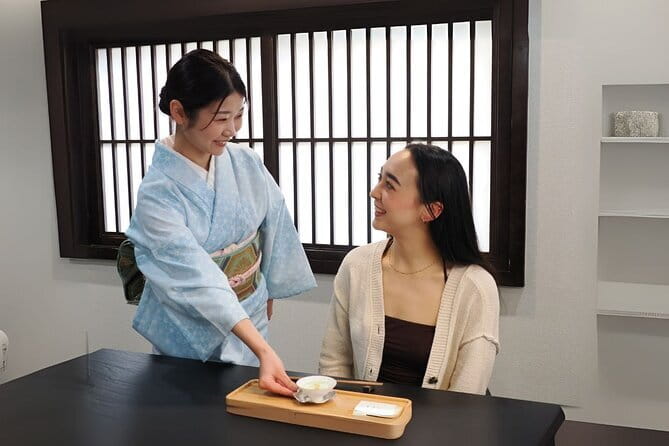
The experience closes with a matcha latte and matcha sweets. The team uses an original matcha blend designed to work with milk and sugar.
This final course serves a useful purpose. Strong, unsweetened matcha can be challenging if you are new to it, while a latte shows how the same general flavor works in a more familiar format. The sweets provide another comparison point, although the supplied details do not specify the exact desserts.
You should not confuse this closing treat with the main educational tasting. The latte blend is made to pair with milk and sugar, while the earlier samples are there for comparison and drinking on their own. That difference is worth noticing. A matcha that tastes excellent in a latte may not be your favorite as usucha, and the reverse can also be true.
For some people, the latte and sweets will be the most immediately enjoyable part. For others, the unsweetened comparison will be the reason to book. The experience works for both groups because it lets you move between traditional preparation and everyday café culture.
Is $62.12 a fair price?
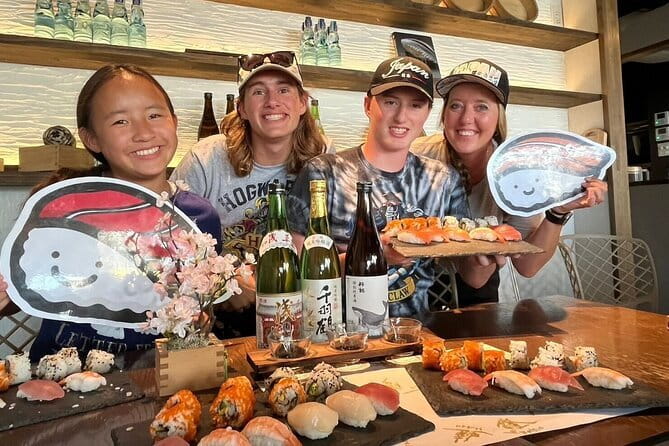
At $62.12 per person, this is not the cheapest way to drink matcha in Tokyo. You can find a bowl or a latte for far less. The value comes from the number of teas, the agricultural context, the guided comparison, and the chance to make your own bowl.
You are paying for about 90 minutes with a former tea farmer, ten matcha samples, instruction in production and history, a hands-on preparation, and a latte with sweets. The maximum group size of five also matters. A private lesson would normally cost more, while a large class would offer less room for questions.
I would consider the price reasonable if you are already curious about Japanese tea, planning to buy matcha at home, or looking for a Tokyo activity with a clear local connection. It is less attractive if you only want a sweet drink or a short cultural photo stop.
The price also makes sense for visitors who have tried matcha but cannot tell why one product costs more than another. You get a direct comparison instead of a vague explanation. That practical learning can save money later if it helps you avoid buying poor-quality powder based only on color or packaging.
Timing, location, and the small practical details
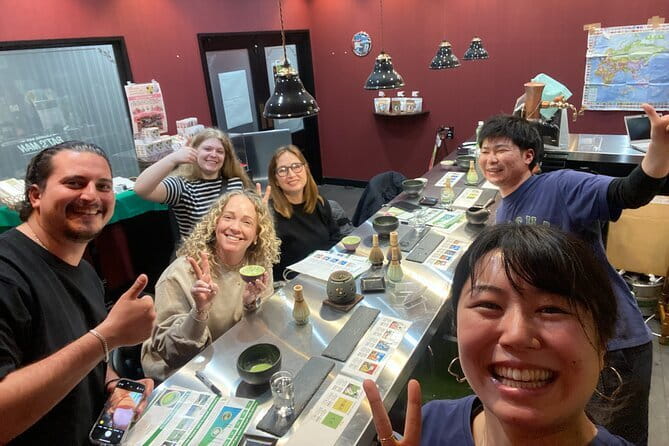
The experience starts at 9:30 am and ends back at the meeting point. Since it lasts about an hour and a half, it can fit neatly into a morning in Tokyo, though you should avoid scheduling another activity with no margin immediately afterward.
The meeting location is in Taito City at the Henn Na Hotel, on the second floor in Sports Bar Leaf. The site is near public transportation, which helps, but you should still allow time to find the correct floor and business within the hotel.
A mobile ticket is provided, and confirmation arrives when you book. Service animals are allowed. The activity is available with an English or Japanese local guide.
The maximum group size is five, but the information does not promise that every session will have a particular number of people. You should think of it as a small-group experience rather than a guaranteed private appointment.
Cancellation is free if you cancel at least 24 hours before the 9:30 am start time. Cancellations or changes made less than 24 hours ahead are not accepted for a refund. That is a fair enough policy, but keep the local cut-off time in mind when your booking is close to the date.
Who will get the most from this experience?
I would point this experience toward several kinds of visitors:
- Tea beginners who want a clear introduction without signing up for a formal ceremony.
- Matcha drinkers who want to understand why powders taste different.
- Food-focused visitors who enjoy comparing regional products.
- Shoppers who plan to take matcha home and want better buying judgment.
- Repeat visitors to Tokyo who have already covered the major sights and want a focused local activity.
- Small groups who prefer direct conversation and hands-on instruction.
It is also a good choice for anyone who likes a lesson with a practical result. You taste the products, pick a favorite, whisk it yourself, and finish with a latte and sweets.
I would hesitate if your schedule is tight, you dislike powdered tea, or you only want a traditional ceremony with formal movements and a long presentation. The activity is more like a compact tea workshop and tasting than a grand cultural show.
Should you book the matcha comparison?
Book it if you want to understand matcha through direct comparison rather than a single cup. The combination of ten teas, five growing areas, a former Kyoto tea farmer, and a five-person maximum gives you more substance than a typical café visit.
The strongest reason to choose it is the chance to taste products that are often treated as interchangeable. You can see, smell, and taste the difference, then make your own usucha and decide which matcha suits you.
Skip it if $62.12 feels high for a morning drink or if the hands-on lesson does not interest you. But if you are curious about Japanese tea and want an experience you can continue at home, this is a smart use of 90 minutes in Tokyo.
FAQ
Where does the matcha experience meet?
It meets at matcha tripJapan, at 3-19-8 Kotobuki in Taito City, Tokyo. The listed location is on the second floor of the Henn Na Hotel, in Sports Bar Leaf.
What time does the experience start?
The start time is 9:30 am.
How long does the experience last?
It lasts approximately 1 hour and 30 minutes.
How many people can join?
The maximum group size is five participants.
How many kinds of matcha will I taste?
You can enjoy 10 kinds of matcha from five production areas: Kyoto, Shizuoka, Aichi, Fukuoka, and Kagoshima. The comparison portion serves eight types.
Are all the samples technically matcha?
No. Six of the eight comparison samples are ceremonial grade. Two are not defined as matcha but are sold as matcha around the world.
Do I make matcha myself?
Yes. After tasting the samples, you choose your favorite and make usucha with a bamboo tea whisk.
Are food and drinks included?
Yes. The experience includes 10 kinds of matcha, one matcha that you prepare yourself, a welcome drink, a matcha latte, and matcha sweets.
What is the cancellation policy?
You can cancel for a full refund up to 24 hours before the experience start time. Changes or cancellations made less than 24 hours before the start are not accepted for a refund.
Newly steeped around Tokyo
- Yokohama : Tea Ceremony with Sweets and Souvenir★ 5.0 · 5 reviews
- Walking Tour: Yanaka,Nezu& Sendagi: Tea Ceremony & Old Tokyo★ 5.0 · 3 reviews
- Private Mochi・Matcha sweets Making Class Near Shibuya Area★ 5.0 · 22 reviews
- Private Kimono and tea ceremony at local home near Tokyo Disney★ 5.0 · 6 reviews
- 2 Hours Mochi &Nerikiri Making & Matcha Class in Bunkyo★ 5.0 · 21 reviews
- Kimono and Tea Ceremony in Asakusa Private Food Tour With Guide★ 5.0 · 4 reviews
- Giant Sushi Cooking Class: Make a 1.5m Sushi Roll in Tokyo★ 5.0 · 9 reviews
- Tokyo Tea Ceremony Class at a Traditional Tea Room★ 5.0 · 2 reviews
Matcha Experiences, compared.
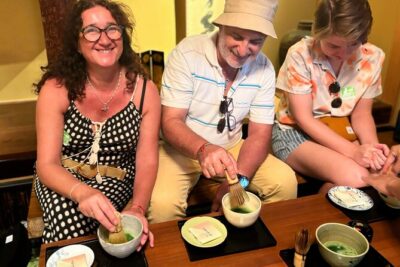
World Heritage Kyoto & Nara Uji Authentic Matcha Experience
Read our review →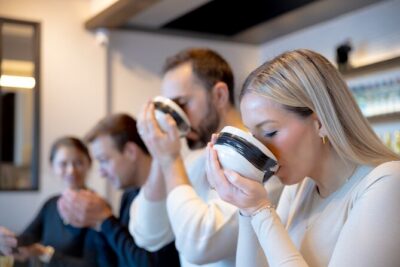
Matcha Making Class in Tokyo with Authentic Japanese Sweets Set
Read our review →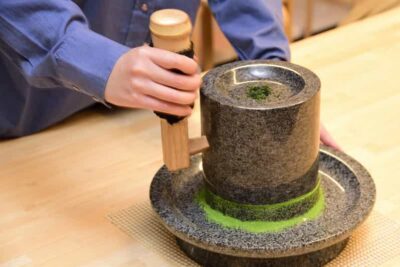
Kyoto: Tea Museum Tickets and Matcha Grinding Experience
Read our review →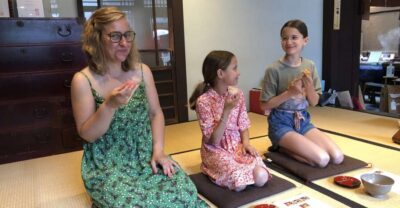
Kyoto: Tea Ceremony Meditation – Make Matcha with Tea Master
Read our review →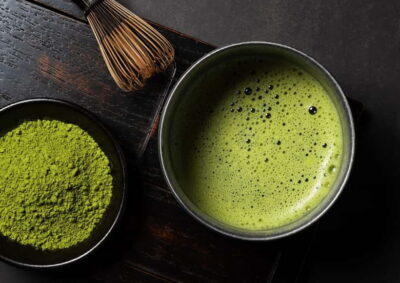
Tokyo: Matcha Making Experience with Mochi Sweets in Asakusa
Read our review →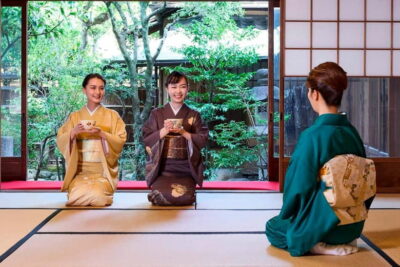
Kyoto: Kimono Tea Ceremony with Matcha and Sweet
Read our review →
Browse the lists this tea experience appears in