
Review · KYOTO
Tea ceremony and kimono experience at Kyoto, Tondaya
The most memorable part of Tondaya is not the cup of matcha. It is being dressed in a silk kimono inside a real Kyoto machiya, then walking through a 140-year-old home with gardens, wooden rooms, and quiet corners made for photographs. This is a cultural visit with a dress-up element, not a full formal tea-school lesson.
I like the historic house, which gives the experience a sense of place that a modern studio cannot match. I also like the chance to take photos in the kimono before and after the ceremony, with the house and its traditional furnishings as a backdrop. The main concern is group size: when the room fills, seeing and hearing the ceremony can be difficult.
Key points at a glance
- Silk kimono fitting: Staff dress you over your own clothes, with colors and garments selected on site.
- Meiji-period machiya: Tour a traditional Nishijin townhouse with historic rooms, furnishings, and gardens.
- Short tea presentation: Watch matcha being prepared, learn how to drink it, and receive a sweet.
- Photography welcome: You can take photos around the house and during parts of the experience.
- Group size matters: The advertised maximum is 20, but several accounts describe crowded sessions, so a private booking may be worth considering.
- Bring socks: Socks are required to protect the historic interior. Geta sandals, hair styling, makeup, lunch, and socks are not included.
A real Kyoto townhouse, not a purpose-built tea room
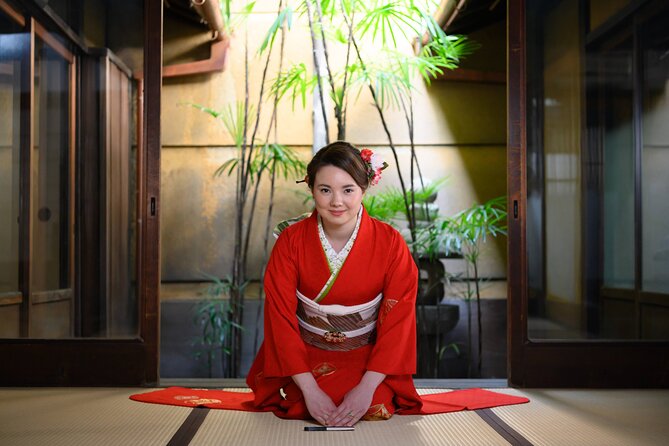
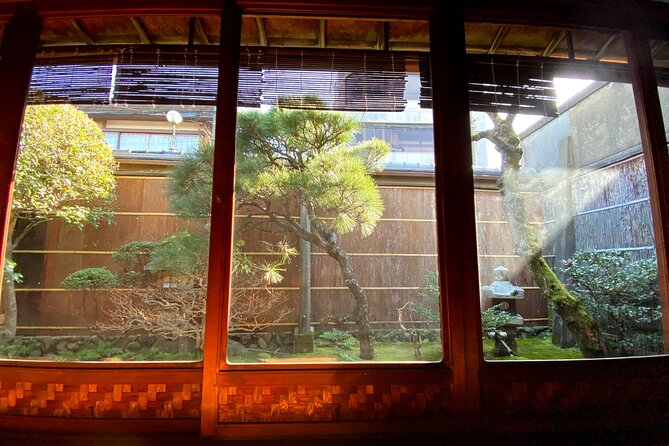
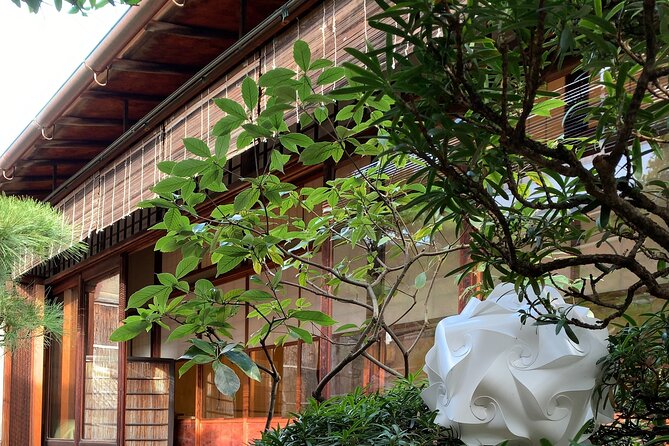
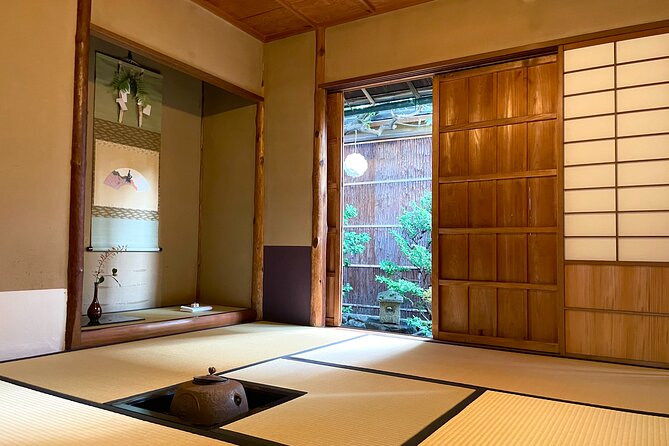
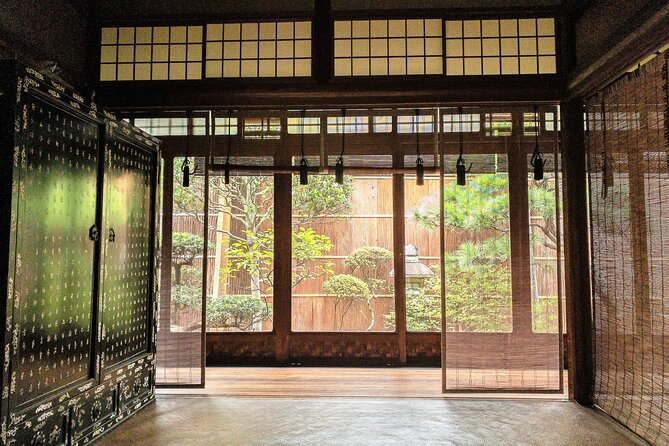
Tondaya operates inside the Nishijin Japanese Cultural Experience Museum at 697 Ishiyakuchicho in Kyoto’s Kamigyo Ward. The building is a traditional wooden townhouse, or machiya, dating from the Meiji period. That detail matters. You are not simply entering a room arranged to look Japanese for an afternoon. You are visiting an old home with narrow passages, tatami rooms, gardens, and the gentle air flow that comes with traditional construction.
The house is part of the appeal even if the tea presentation itself is brief. You can look at the rooms, furniture, decorative objects, and small details that are easy to miss on a normal Kyoto sightseeing day. The setting also gives your photographs more meaning than a plain studio backdrop.
Finding the entrance may take patience. The house can be easy to miss, especially before opening time, and the signage is not especially clear. Use the full address and allow extra time. This is one of those Kyoto stops where arriving early does not necessarily make the building easier to spot.
More Kimono and Tea Ceremonies in Kyoto
- Kimono Tea Ceremony at Kyoto Maikoya, NISHIKI
★ 5.0 · 911 reviews - Kyoto: Kimono Tea Ceremony at Orizuruya Gion
★ 4.9 · 618 reviews - KYOTO Tea Ceremony with kimono near by Imamiya Jinjya Shrine
★ 5.0 · 343 reviews
The kimono fitting is the social heart of the visit
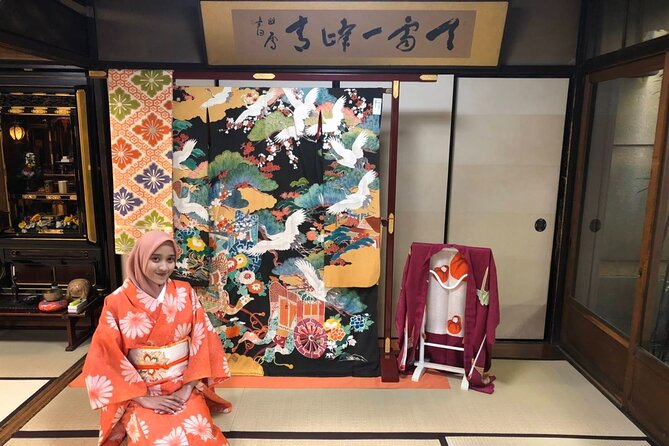
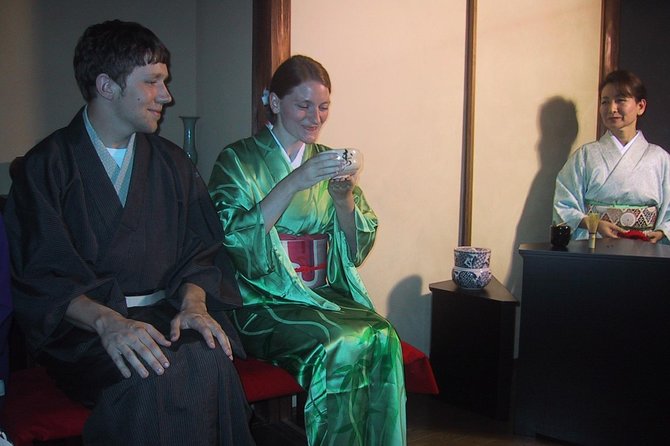
On arrival, staff fit you with an authentic silk kimono. You wear it over your own clothing, so this is not a full traditional dressing appointment with hair and makeup. The fitting is designed to move a group through the house efficiently, and several staff members may be helping people at once.
The garments are attractive and well made. You can choose among colors, and the finished outfit usually includes accessories. The women who assist with dressing are described as kind and respectful, and their speed is impressive. If you have never worn a kimono, this is a simple way to experience one without committing to a full-day rental and city walk.
Do not expect a detailed lesson on every layer, pattern, or historical meaning. Some people receive more explanation than others, depending on the guide and the pace of the session. If the clothing itself interests you, ask questions while you are being dressed. The house is connected with Japanese clothing, so this is a good moment to ask about what you are wearing.
The fitting area can feel crowded. With a full group, people may be standing close together while staff work quickly. The experience is more enjoyable if you treat the kimono as one part of the visit rather than expecting a slow, private styling session.
Photos in a 140-year-old home
Once dressed, you have time to take photographs around the house. This is one of the strongest reasons to choose Tondaya over a basic tea demonstration. The wooden architecture, tatami rooms, garden areas, and traditional objects provide several backdrops, and you can take photos with your own phone or camera.
The schedule may affect how much time you get. The stated duration is about 90 minutes, but the total can change with crowding and late arrivals. A busy session may move people quickly from fitting to photographs to the tea room. If photographs are important to you, take them early instead of waiting until the last few minutes.
You do not receive professional hair styling or makeup. Geta, the wooden sandals often associated with kimono, are also not included. You can still photograph the kimono indoors, and the fitting takes place over your regular clothing.
Please bring socks. They are required inside the historic house to help protect the floors and other cultural property. This is an easy detail to overlook, and buying socks on site may be possible, but packing your own is simpler.
The tea ceremony: what you actually learn
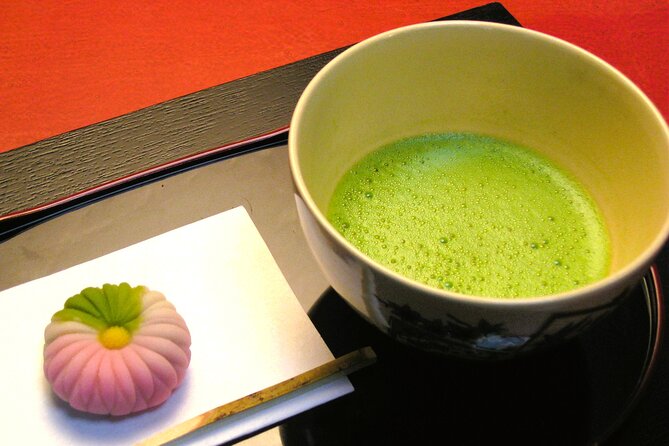
The tea portion is a demonstration of matcha preparation and service. You watch the host prepare the tea, then learn the basic way to receive and drink it. A traditional sweet accompanies the tea.
The ceremony is not always a long, formal performance. In some sessions, the actual preparation takes only a few minutes. The tea may be prepared by the main host and then served to the rest of the group on a tray. That format allows Tondaya to handle several people, but it can feel more like an introduction than a complete tea-school ceremony.
The strongest sessions include an explanation of the steps, the reason for the gestures, and the role of the room and equipment. Some English-speaking guides provide a clear introduction to Japanese customs and answer questions well. One particularly well-regarded guide was a young woman from Holland living in Japan, though no guide names are supplied for regular scheduling.
The quality of the explanation may vary. If the room is crowded or another group is moving through the house, it can be hard to hear. You may see the tea being made without learning much about the history or meaning behind each action. That is the central risk at this price.
The tea itself is a matter of taste. Matcha is naturally grassy and bitter, and the sweet is meant to balance it. Some sessions use a packaged sweet, which may seem modest compared with the cost of the experience. If you have already attended a formal tea ceremony in Japan, you may find this version too short and simple.
More Tea Ceremonies in Kyoto
- Kyoto: Tea Ceremony in a Traditional Tea House in Kiyomizu
★ 4.9 · 3,519 reviews - Kyoto: Tea Ceremony Ju-An at Jotokuji Temple
★ 4.9 · 3,207 reviews - Kyoto: 45-Minute Tea Ceremony Lesson Experience
★ 4.3 · 2,378 reviews - Kyoto: Table-Style Tea Ceremony at a Kyo-Machiya
★ 4.9 · 1,211 reviews
Why group size changes the whole experience
The activity is sold as a group experience, with a stated maximum of 20 people. Yet the most serious complaints describe sessions that felt much larger, with several groups sharing small rooms or moving through the house at the same time. Even when the official number is lower, overlapping activities can create the same problem.
A crowded tea room changes the mood. You may sit behind someone taller, struggle to hear the explanation, or watch the ceremony from an angle. Traditional tea is meant to reward attention to small movements, so poor visibility matters more here than it would on an ordinary sightseeing tour.
Heat is another practical issue. Sitting close together in a kimono inside a small room can become uncomfortable, especially if ventilation is limited. One account describes people leaving early because the room was hot and crowded.
You can choose a private option if you want more control. The private experience costs more, but it may be the better value for couples, families, or anyone who cares about the ceremony itself. A private booking should give you a calmer setting and a better chance to ask questions, though the supplied information does not promise a particular guide or exact format.
If you book the standard group visit, keep expectations realistic. You are likely to get a kimono fitting, photos, a house tour, and a short tea presentation. You are not guaranteed a quiet, extended lesson.
Is $178.34 a fair price?
At $178.34 per person, Tondaya is expensive for a 90-minute activity. The price makes more sense if you value three things together: access to a historic machiya, the kimono fitting, and an introduction to tea customs.
If you count only the drink and the length of the ceremony, the cost is hard to justify. You receive one serving of matcha and a sweet, and the tea preparation may be over in minutes. The experience does not include lunch, hair styling, makeup, or geta.
The value improves for a first-time visitor who wants a compact cultural activity without arranging separate kimono rental, museum admission, and tea instruction. You save the trouble of organizing those pieces yourself, and the setting is more distinctive than a hotel or modern cultural center.
The price becomes poor value when the group is too large for you to see or hear. That is why I would pay close attention to the private option if available for your date. You are paying for atmosphere and access, not a large quantity of food or a long class.
The overall rating is 4.1 from 90 ratings, which fits the experience’s mixed nature. Many people find it personal, educational, and memorable. Others find it rushed, chaotic, and mainly a photo opportunity. Both reactions are plausible because the group conditions appear to shape the visit.
Getting there and planning your timing
The meeting point is Tondaya, Nishijin Japanese Cultural Experience Museum, at 697 Ishiyakuchicho, Kamigyo Ward, Kyoto, postal code 602-8226. The activity begins and ends there.
The site is near public transportation, but the entrance can be hard to identify. Do not rely on a quick glance from a passing taxi or bus. Use GPS, compare the building with photographs if available, and arrive with enough time to locate the door without rushing.
The maximum stated duration is 1 hour 30 minutes. It may be shorter or longer depending on crowding and late arrivals. Plan your day with a buffer after the activity rather than booking a train, meal, or timed attraction immediately afterward.
Confirmation is provided at booking, and the mobile ticket makes entry simple once you reach the house. Cancellation is free if you cancel at least 24 hours before the local start time. Changes or cancellations inside that window are not accepted for a refund.
Who will enjoy Tondaya most?
I would choose this experience if you want a first look at traditional Japanese customs, enjoy taking photographs, and prefer a historic home to a modern demonstration room. It works well for someone who wants to wear a kimono without spending a full day dressed for walking around Kyoto.
It also suits families and couples who are more interested in the overall setting than in studying every tea gesture. The fitting is accessible to most people, and most participants can take part.
I would hesitate if you have already attended a formal tea ceremony and want a slow, precise presentation. I would also hesitate if you dislike crowded rooms, have difficulty sitting close to the floor, or want a detailed lesson on kimono construction and tea history.
For serious tea enthusiasts, a private booking is the safer choice. For casual visitors, the standard option can work, but only if you accept that the ceremony may be brief.
Small details that improve the visit
Bring clean socks, since they are required inside. Wear simple clothing underneath the kimono so the fitting stays comfortable and quick.
Have your camera or phone ready before the fitting ends. The staff can help you get dressed, but the photo time may pass quickly once other people are ready.
Ask questions early. If you want to know why the tea bowl is handled in a certain way, what your kimono fabric means, or how the room is used, do not wait until everyone is being sent out.
Keep the address open on your phone. The building can be difficult to find, and poor signage has caused frustration for people arriving for the first time.
If calm matters most, select the private format rather than hoping a group session will be quiet. The extra cost may buy a better view, clearer explanations, and a less hurried visit.
Should you book the Tondaya tea ceremony?
Book it if your priority is a kimono photo experience in an authentic Kyoto house, with a short introduction to matcha and traditional customs. The Meiji-period machiya, gardens, helpful dressing staff, and chance to take photographs are genuine strengths.
Think twice if your main goal is a formal, detailed tea ceremony. The standard group visit can be rushed, and crowding may limit what you see and hear. At this price, I would favor the private option for anyone who cares more about the tea lesson than the costume.
For a first visit to Kyoto, Tondaya offers a convenient taste of several traditions in one stop. Just arrive prepared for a compact group activity, not an unhurried afternoon with a tea master.
FAQ
Where does the tea ceremony take place?
It takes place at Tondaya, the Nishijin Japanese Cultural Experience Museum, at 697 Ishiyakuchicho, Kamigyo Ward, Kyoto, Japan, postal code 602-8226.
How long does the experience last?
The estimated maximum duration is 1 hour 30 minutes. The actual time may vary depending on crowding and the pace of the group.
Is the kimono included?
Yes. The activity includes a kimono experience, and staff fit you with an authentic silk kimono over your own clothing.
Are hair styling and makeup included?
No. Makeup and hair styling are not included.
Do I need to bring socks?
Yes. You must bring socks to help protect the historic interior. Socks may also be available to buy on site.
Are traditional geta sandals included?
No. Geta, the traditional wooden sandals, are not included.
Can I take photographs?
Yes. You are welcome to take photos around the house and during the experience, subject to staff instructions.
Is this a private tea ceremony?
The standard activity is conducted with other participants. A private option is available for people who prefer a more personal setting.
How many people can join the group?
The stated maximum is 20 participants, though the use of overlapping groups may make some areas feel more crowded.
What does the price include?
The price includes the tea ceremony experience, kimono experience, and entrance fee. Lunch, makeup, hair styling, socks, and geta are not included.
Newly steeped around Kyoto
- Whisk Your Own Matcha: A Zen Matcha Experience at Temple★ 3.6 · 7 reviews
- Uji Walking Tour – Byodo-in temple and Tea Ceremony from Kyoto★ 3.5 · 3 reviews
- Kyoto: Authentic Tea Ceremony in a Small Group★ 5.0 · 7 reviews
- Tea ceremony at Kyoto’s Zen Temple Teahouse★ 5.0 · 2 reviews
- Tea Ceremony Experience in Traditional Kyoto Townhouse★ 5.0 · 19 reviews
- Tea Ceremony in 150 Years Old Townhouse with Tables and Chairs★ 5.0 · 22 reviews
- Sencha-do the Japanese Tea Ceremony Workshop in Kyoto★ 5.0 · 21 reviews
- Silent Beauty of Kyoto Zen Walk and Tea Experience★ 5.0 · 2 reviews
Kimono & Tea Ceremony, compared.

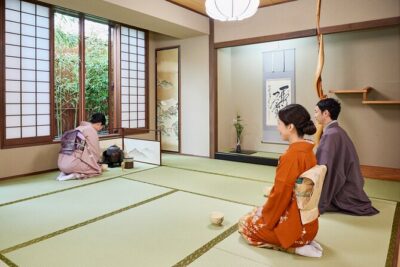
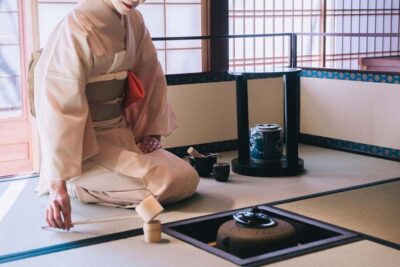
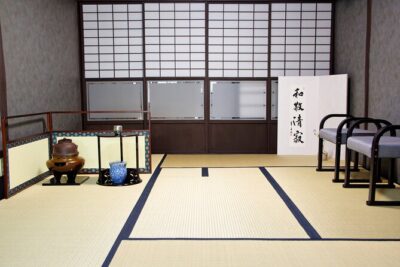
KYOTO Tea Ceremony with kimono near by Imamiya Jinjya Shrine
Read our review →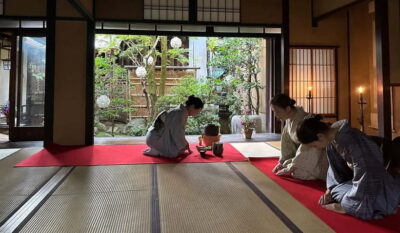
Kyoto: Kimono and Tea Ceremony Experience at Cultural Asset
Read our review →
Kyoto: Kimono Tea Ceremony with Matcha and Sweet
Read our review →
Tokyo: Asakusa Kimono Dressing and Matcha Experience
Read our review →Browse the lists this tea experience appears in