
Review · JAPAN
Tea ceremony experience with simple kimono in Okinawa
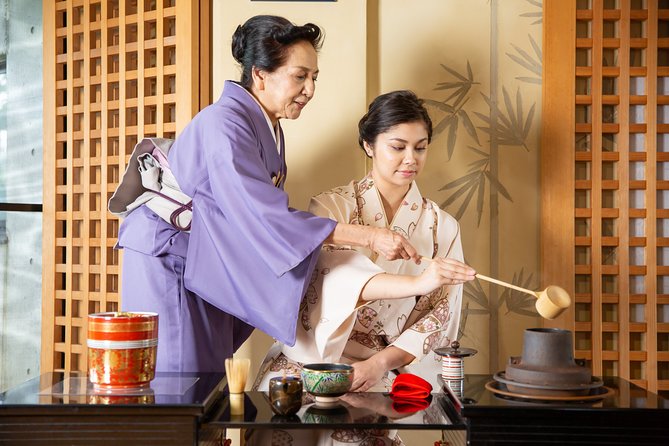
The best part of this Onna experience is the chance to enter a real traditional tea room, not just watch a staged demonstration. You learn why the small entrance matters, notice the hanging scroll and flowers, and handle the tea tools before making matcha yourself at a table and chair.
I like the simple kimono and the quiet attention to detail. I also like the Okinawan sweets, which give the lesson a local touch rather than making it feel like a generic Kyoto-style activity. The main drawback is its fixed schedule and small-group format: you need at least two people, must reserve at least three days ahead, and the session may be canceled for poor weather.
Key points at a glance
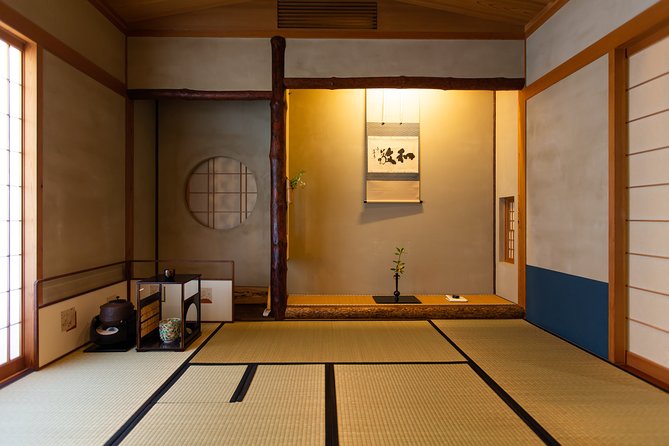
- Enter through a small tea-room doorway: You learn the meaning and manners of entering a traditional tea space.
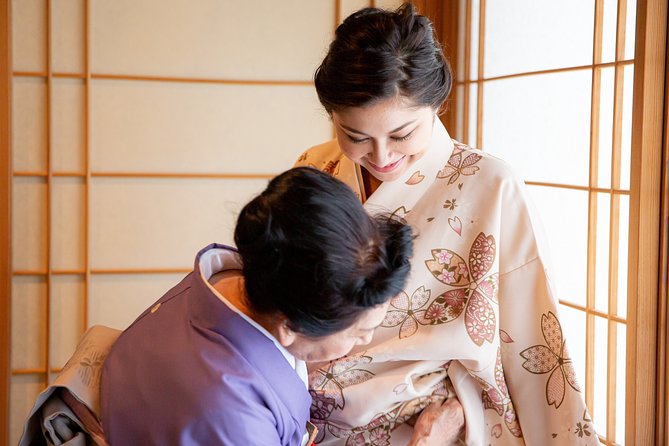
- Wear a simple kimono: The clothing adds a memorable visual and cultural part to the visit without requiring a full formal dressing session.
- Taste Okinawan and Japanese sweets: Sweets come before the bitter matcha, helping you understand the balance of the ceremony.
- Make your own matcha: You handle the silk cloth, clean the tea tools, add tea and hot water, and taste your own preparation.
- Enjoy a small group: The published maximum is six people, though another description gives a maximum of eight, so confirm the current size when booking.
- Finish with photos: You can take pictures in front of a gold folding screen before changing back.
A traditional tea room in Onna
Sasagirian, or 笹桐庵, is in Nakama, Onna-son, at 1765-8 Nakama. The setting is designed around the customs of Japanese tea, beginning before you even take your first sip.
You first change into a simple kimono. This is not presented as a long costume rental or a formal fashion session. Instead, it gives you the right clothing for the occasion and helps mark a clear change from ordinary sightseeing to a more focused cultural activity.
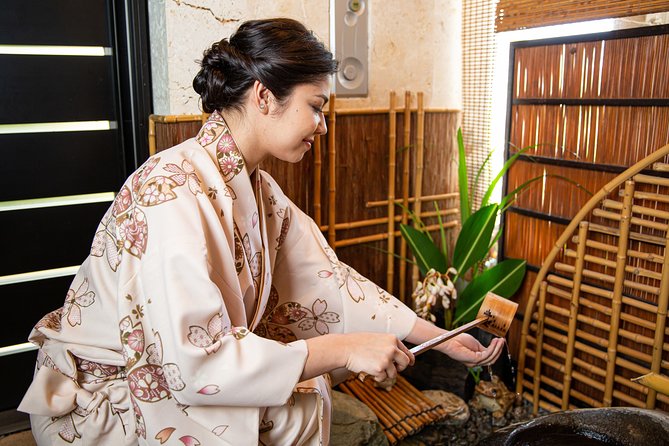
You then cleanse your hands before entering the tea room. That small action matters. Japanese tea ceremony places weight on preparation, respect, and awareness, so the ceremony does not begin with a cup being pushed across a table. It begins with how you enter the space.
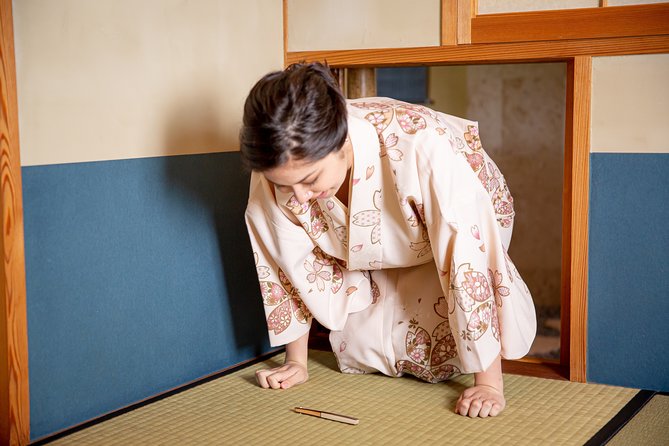
The small doorway is one of the most distinctive parts of the visit. You learn how to pass through it and why the entrance is designed that way. The low opening asks you to slow down and pay attention. It also gives the tea room a feeling separate from the outside world, even though the entire visit lasts only about 75 minutes.
More Kimono and Tea Ceremonies in Japan:
- Kimono Tea Ceremony at Kyoto Maikoya, NISHIKI
★ 5.0 · 911 reviews - Kimono Tea Ceremony at Tokyo, Asakusa Maikoya
★ 5.0 · 638 reviews - Kyoto: Kimono Tea Ceremony at Orizuruya Gion
★ 4.9 · 618 reviews
Looking closely at the scroll, flowers, and tools
Inside the tea room, the instructor introduces the main tea utensils and explains the manners of the space. You also have time to appreciate the hanging scroll, flower arrangement, and other details.
This is where the activity differs from a simple matcha-making class. You are not only learning a recipe. You are being shown how the room, objects, and movements fit together. The flowers and scroll are not random decorations, and the tools are treated with care. Even if you know little about tea ceremony before arriving, this part gives you a useful framework for understanding what follows.
The pace sounds gentle rather than hurried. That is good news if you want something calm during a busy Okinawa holiday. It may feel too quiet if you are hoping for a fast demonstration with lots of sightseeing information, but the whole point is to notice small actions.
A tea master leads the ceremony, with a translator helping explain what you need to understand. The translator is especially useful because tea ceremony manners can be difficult to follow from gestures alone. The available information does not give their names, so you should not expect a named guide-led tour in the usual sightseeing sense. The focus is on the demonstration, instruction, and atmosphere.
Ryu-Rei tables make the ceremony easier
After the initial visit to the traditional tea room, you move to a room arranged in the Ryu-Rei style. This means the ceremony takes place at tables with chairs rather than on the floor.
That design makes a real difference. Sitting in the formal kneeling position can be uncomfortable, especially for children, older adults, or anyone with limited mobility. Here, you can take part from a chair. The activity specifically confirms that you can participate even if you cannot sit upright, which makes the format more welcoming than a floor-based ceremony.
The table arrangement also lets you watch the instructor’s hands clearly. You can see how the silk cloth is handled, how the utensils are cleaned, and how the tea bowl is prepared. For a first visit, that practical view may be more useful than a highly formal setup where you struggle to see what is happening.
The change from the small tea room to the Ryu-Rei room gives the session a natural rhythm. First you learn how to approach the tea space. Then you sit down for the hands-on portion.
Sweets first, matcha second
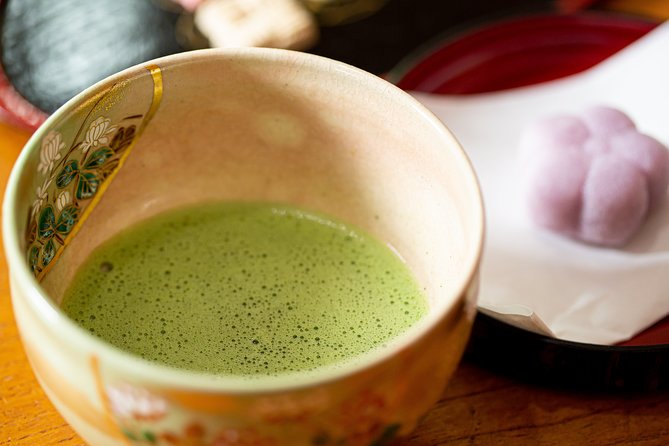
Before making tea, you taste Japanese and Okinawan sweets. This order is important. The sweets prepare your palate for matcha, which has a distinct bitter taste that may surprise you if you are used to sweetened green tea.
The Okinawan element gives this activity a local identity. You are not simply repeating a ceremony found anywhere in Japan. The sweets connect the tea lesson to the island, while the tea room and utensils introduce a wider Japanese custom.
The information does not specify exactly which sweets are served, and that may change. You should think of them as a tasting built into the lesson rather than a full snack or meal. If you need lunch, eat beforehand or plan another stop afterward.
I like this part because it turns a rule into something you can understand. When you eat the sweet first, the bitter tea makes more sense. You experience the contrast instead of being told about it in abstract terms.
More Tea Ceremonies in Japan:
- Kyoto: Tea Ceremony in a Traditional Tea House in Kiyomizu
★ 4.9 · 3,519 reviews - Kyoto: Tea Ceremony Ju-An at Jotokuji Temple
★ 4.9 · 3,207 reviews - Kyoto: 45-Minute Tea Ceremony Lesson Experience
★ 4.3 · 2,378 reviews - Osaka: Tea Ceremony Experience
★ 4.9 · 1,426 reviews
Learning to handle the tea tools
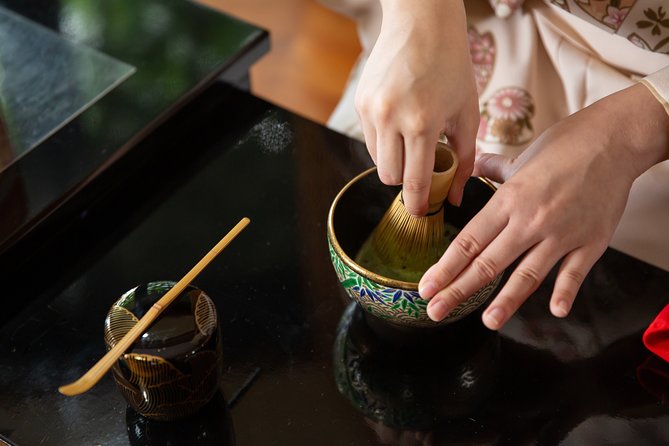
The practical lesson begins with the silk cloth and the tea utensils. You are shown how to handle the cloth and cleanse the tools. These movements may look simple, but the ceremony gives them a particular order and purpose.
This is a hands-on class, not only a performance. You get to repeat some of the steps yourself, which makes the visit more memorable for children and adults alike. You also gain a better sense of the patience involved in preparing tea properly.
Do not expect to master every movement in one short session. The value is in learning the basic sequence and understanding the care behind it. If you tend to worry about doing something incorrectly, the presence of the tea master and translator should help. The activity is designed for beginners, and everyone is welcome within the stated age limits.
The small group size should also help. The published information gives a maximum of six people, while another description says up to eight. Since those details do not match, confirm the current limit when you reserve. Either way, this is intended to be a small activity rather than a large public demonstration.
Making your own bowl of matcha
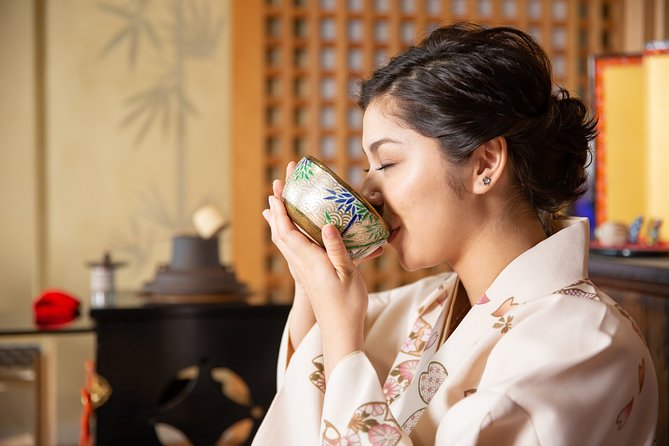
The highlight is preparing your own green tea. You add matcha powder and hot water to a tea bowl, then make the tea under instruction.
That final step gives the session a satisfying finish. You have already learned how to enter the room, observed the tools, tasted sweets, and watched the tea master. Now you put the sequence into practice.
Your bowl may not look perfect. That is part of the fun. The goal is not to produce a professional tea master’s matcha in one attempt. It is to understand the basic process and taste the result of your own work.
The matcha is described as bitter, so first-time drinkers should expect a strong, unsweetened flavor. The sweets help balance it, but they do not turn it into a sugary café drink. If you already enjoy matcha, you will likely appreciate the direct taste. If you do not, treat the sip as part of the lesson rather than ordering a beverage you already know you like.
A quiet photo finish by the gold screen
After the tea, you can take photos in front of a gold folding screen. This gives you a clear keepsake from the visit, especially while still wearing the simple kimono.
The photo opportunity is useful because the rest of the experience is intentionally restrained. You spend much of the time watching hands, objects, and small movements. The screen creates a more obvious final picture for family albums or social media without turning the activity into a photo shoot.
You then change back into your regular clothes. The entire visit lasts about one hour and 15 minutes, so it fits neatly into a day exploring Onna. It is long enough to include explanation, tasting, practice, and photos, but short enough to combine with other plans.
Is $85.39 a fair price?
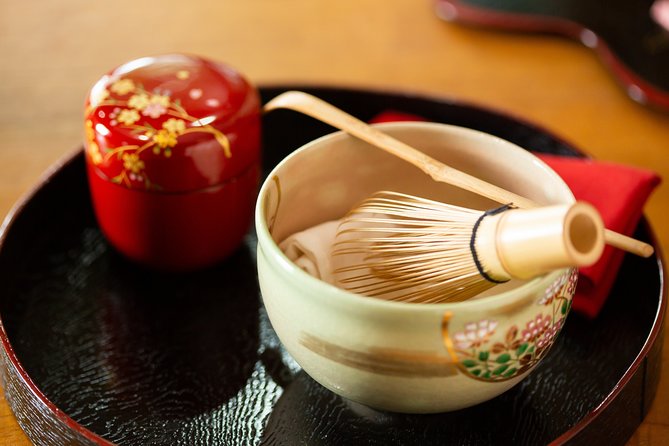
At $85.39 per person, this is not the cheapest way to drink matcha in Okinawa. You are paying for more than tea. The price includes the use of the tea room, a simple kimono, instruction from a tea master, translation support, sweets, hands-on practice, and a small-group setting.
The value depends on what you want from the visit. If you only want a quick cup of green tea, the price is too high. If you want a structured cultural activity where you learn the manners, handle the tools, dress for the occasion, and make your own bowl, the cost is easier to justify.
I see the strongest value for couples, families, and relatives sharing a special afternoon. The activity works across ages, and the stories from family groups include children and adults taking part together. Children as young as four can participate, while children under three cannot.
The booking pattern also matters. This activity averages booking about 22 days ahead, which suggests that you should not leave it until the last minute, particularly if your Okinawa dates are fixed. A reservation is required at least three days before the experience.
Getting there and planning your time
The meeting point is Japanese Cultural Experience Facility Sasagirian, 1765-8 Nakama, Onna, Kunigami District, Okinawa 904-0401, Japan. The experience begins and ends there.
It is described as near public transportation, and a mobile ticket is provided. You should still allow time to reach the facility, since the tea ceremony itself has a fixed start and the session is not designed for late arrival.
Plan for the full 75 minutes, plus time to change into and out of the kimono. The clothing change is part of the stated sequence, but the total duration is approximate, so avoid placing a tight appointment immediately afterward.
The activity requires at least two people. That makes it better suited to a pair, family, or small private group than to a solo visitor. The published information says most people can participate, and the chair-based Ryu-Rei format is helpful if sitting on the floor is difficult.
Free cancellation is available if you cancel at least 24 hours before the start time. Changes or cancellations inside that window are not accepted for a refund. The experience also depends on good weather, and if poor weather causes cancellation, you are offered another date or a full refund.
Who will enjoy this most?
I would recommend this to you if you want a cultural activity with real participation rather than a short photo stop. It suits people who enjoy quiet settings, craft, food customs, and learning the reason behind small actions.
Families should find the format approachable. The age rule allows children over four, and the activity includes enough variety to hold attention: dressing, entering the room, sweets, tools, tea-making, and photos. Younger children may find the calm pace harder, and children under three cannot join.
It is also a good choice for relatives visiting Okinawa who want one shared activity. The kimono and gold screen create memorable pictures, while the tea lesson gives the visit more substance than dressing up alone.
You may want to skip it if you dislike bitter tea, have no interest in Japanese customs, or prefer a fast-moving schedule. This is a careful, respectful introduction, not an entertainment show. The quiet moments are central to the experience.
Should you book Sasagirian?
Book it if you want to slow down for an hour, learn the basic manners of tea ceremony, and take part in the preparation yourself. The combination of a simple kimono, a traditional tea room, Okinawan sweets, translator support, and a chair-based Ryu-Rei ceremony gives you plenty for the price.
I would reserve early, especially because the activity needs at least two people, has a small stated capacity, and is commonly booked well ahead. Confirm the current maximum group size when booking, then leave enough time around the 75-minute session.
Skip it if you are looking only for a cheap drink or a formal full-day tea study. For everyone else, this is a thoughtful and accessible way to add Japanese culture to an Okinawa itinerary without giving up an entire day.
FAQ
Where does the tea ceremony take place?
It takes place at Japanese Cultural Experience Facility Sasagirian, 1765-8 Nakama, Onna, Kunigami District, Okinawa 904-0401, Japan.
How long does the activity last?
The experience lasts approximately one hour and 15 minutes.
What does the activity include?
It includes changing into a simple kimono, entering the tea room, learning tea manners and utensil handling, tasting Japanese and Okinawan sweets, making matcha, drinking your tea, taking photos by a gold folding screen, and changing back.
Do I make my own matcha?
Yes. You add matcha green tea and hot water to a tea bowl, prepare the tea, and taste what you make.
Is the ceremony held on the floor?
The hands-on portion takes place in a Ryu-Rei-style room with tables and chairs. The activity also confirms that you can participate even if you cannot sit upright.
Can children join?
Children over four can participate. Children under three cannot participate.
How many people can join?
The published details require at least two people. They give a maximum of six in one place and up to eight in another, so you should confirm the current group limit when booking.
Do I need to book in advance?
Yes. A reservation is required at least three days before the experience. Booking is commonly made about 22 days ahead.
Can I cancel for a refund?
You can receive a full refund if you cancel at least 24 hours before the start time. Cancellations or changes made less than 24 hours before the start are not accepted for a refund. If poor weather cancels the activity, you are offered another date or a full refund.
Newly steeped around Japan
- Yokohama : Tea Ceremony with Sweets and Souvenir★ 5.0 · 5 reviews
- Whisk Your Own Matcha: A Zen Matcha Experience at Temple★ 3.6 · 7 reviews
- Walking Tour: Yanaka,Nezu& Sendagi: Tea Ceremony & Old Tokyo★ 5.0 · 3 reviews
- Visit local home for music and tea ceremony near Disney★ 4.9 · 13 reviews
- Trip to Kamakura & Enoshima: Shrines, Seaside, Temples &Tea★ 5.0 · 11 reviews
- Yokohama: Sushi & Gyoza Cooking with Matcha & GreenTea Experience★ 5.0 · 3 reviews
- Kyoto tea town for matcha lovers★ 5.0 · 16 reviews
- Uji: Private immersion into Kyoto’s tea and reglious culture★ 5.0 · 17 reviews
Kimono & Tea Ceremony, compared.


KYOTO Tea Ceremony with kimono near by Imamiya Jinjya Shrine
Read our review →
Kyoto: Kimono and Tea Ceremony Experience at Cultural Asset
Read our review →
Kyoto: Kimono Tea Ceremony with Matcha and Sweet
Read our review →
Tokyo: Asakusa Kimono Dressing and Matcha Experience
Read our review →Browse the lists this tea experience appears in