
Review · TOKYO
EDOCCO Tea House–A Quick Dive into Japanese Traditional Culture
Tokyo can feel like a lot to take in at once. At EDOCCO STUDIO, you get a tidy, one-hour introduction through matcha, dance, kimono, calligraphy, and origami. The best part is the variety: you are not just watching a performance or sitting through a talk. You take part.
I like the small-group setting, with a maximum of 20 people, and the patient English explanations. I also like that you leave with more than photos. You make tea, write a character, and fold paper yourself. The main thing to keep in mind is the short running time. The dance performance can last less than 10 minutes, so anyone hoping for a long stage show may find it brief.
Key points to know before booking
- Five cultural activities in one hour: Matcha preparation, a Japanese dance performance, kimono dressing, shodo calligraphy, and origami.
- A friendly English-language introduction: Hosts including Ori and Mr. Bambu explain the activities and help first-timers.
- A good family option: Children as young as 8 have enjoyed taking part in the tea, crafts, calligraphy, and dress-up.
- Located at EDOCCO STUDIO: The meeting point is 2-chome-16-2 Sotokanda in Chiyoda City, near public transportation.
- The dance is short: It is a lovely part of the program, but it may take less than 10 minutes.
- Good value for a compact activity: At $72.48 per person, the price covers several hands-on activities, sweets, matcha, and the performance.
A compact introduction to Japanese culture in Akihabara
EDOCCO Tea House is designed for visitors who want a first taste of Japanese tradition without giving up half a day. The setting combines an old-style feel with a modern visitor program, making it easier to enjoy customs that can otherwise seem formal or difficult to approach.
You meet at EDOCCO STUDIO in Tokyo’s Chiyoda City, in the Sotokanda area. The activity begins and ends at the same place, which is useful if you are fitting it between sightseeing stops. The location is near public transportation, and the full program takes about one hour.
That timing is one of the strongest reasons to book it. You can add the session to a busy Tokyo day without building your entire schedule around it. At the same time, one hour means each section moves quickly. You get a sampling of several customs rather than a long, detailed study of any one of them.
More Tea Experiences around Tokyo:
- Matcha Making Class in Tokyo with Authentic Japanese Sweets Set
★ 5.0 · 744 reviews - Kimono Tea Ceremony at Tokyo, Asakusa Maikoya
★ 5.0 · 638 reviews - Tokyo: Traditional Tea Ceremony with a Tea Master
★ 5.0 · 528 reviews
Starting with matcha and a Japanese sweet
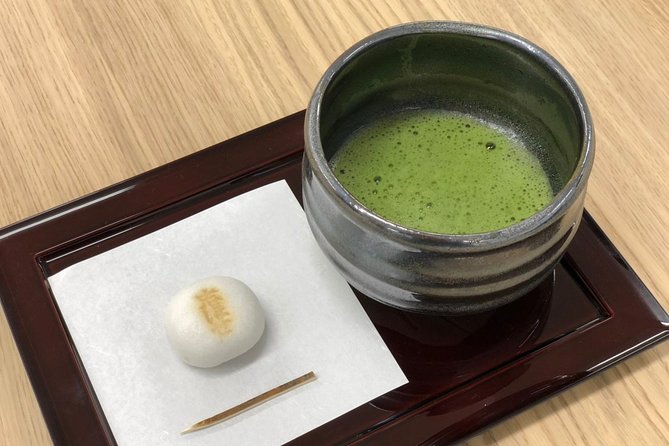
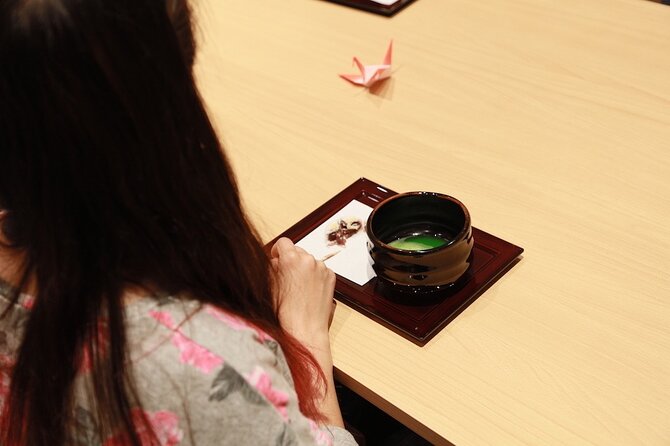
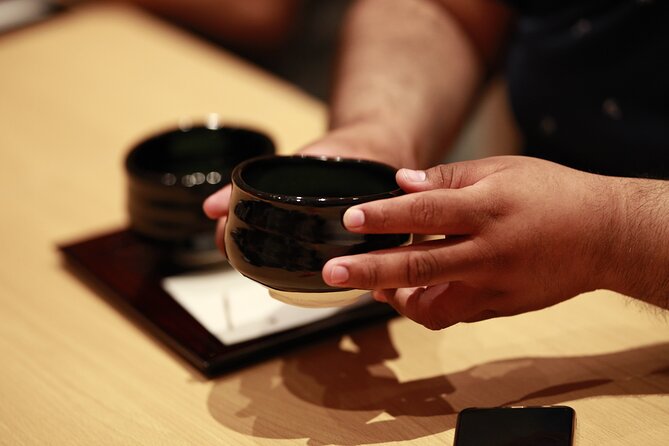
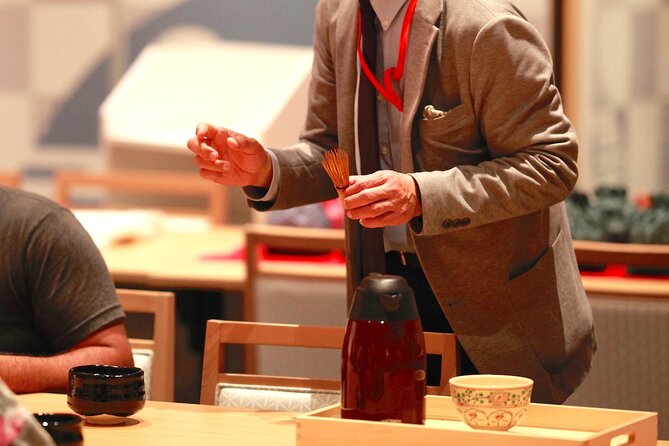
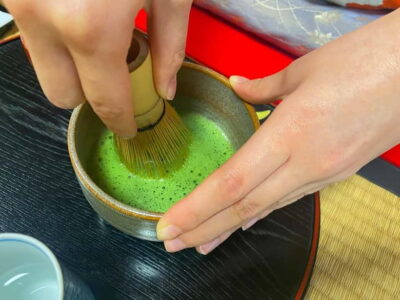
The tea portion opens the activity with a quiet change of pace. An instructor shows you how to prepare and serve matcha, using the familiar tea bowl, bamboo whisk, matcha powder, and related tools. You also receive a Japanese sweet with the tea.
This is not simply a cup of green tea handed to you. You take part in the preparation, which gives you a better sense of the controlled movements and attention behind the ceremony. The steps may look simple at first, but the tools and motions give the process its own rhythm.
I especially like this part for first-time visitors. You do not need prior knowledge, and the instructor guides you through the process. English explanations help you understand why the ceremony is performed in such a careful way.
The included snack set adds useful value to the price. A complete matcha set is not included for taking home, though the tea bowl, powder, whisk, and other tools are available to buy separately. If you enjoy the activity and want to repeat it later, ask about the set before you leave.
Watching the Japanese dance performance
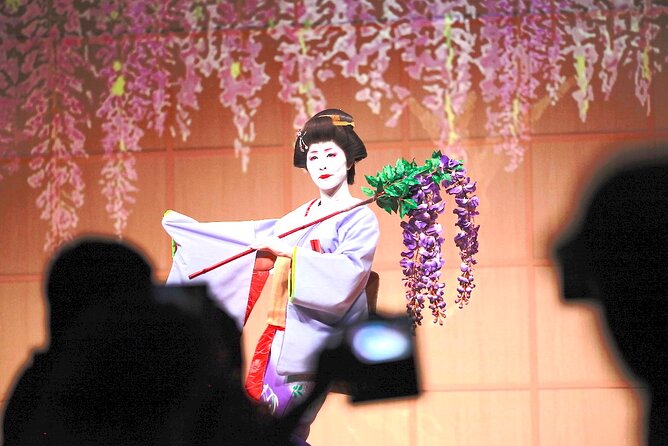
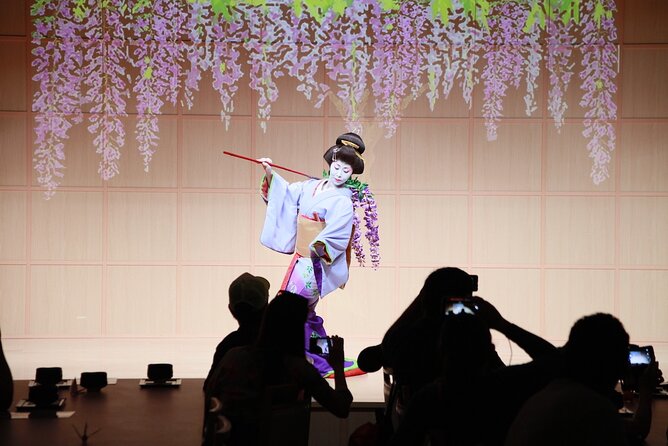
The dance show gives the program its most visual moment. The performance is presented along with matcha and a sweet, and the English explanation helps connect the gestures, costume, and movements with Japanese culture.
Several parts of the dance are especially easy to appreciate when someone explains what you are seeing. A fan, a turn, or a small hand movement can carry meaning that is easy to miss if you only watch from a distance. The explanation keeps the performance from feeling like a decorative interruption between workshops.
The main limitation is length. The dance may be less than 10 minutes. I would treat it as a short cultural presentation, not a full evening performance. If Japanese dance is your main reason for booking, you may want a longer show elsewhere. If you want a brief performance included with several hands-on activities, it fits the program well.
Trying on a kimono for an Edo-style photo
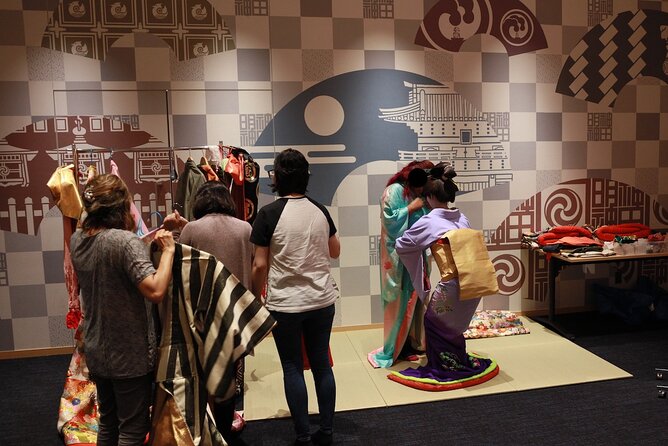
The kimono activity lets you change from observer to participant. You dress in a kimono and take photos in the traditional setting, giving the hour a playful side that works particularly well for families and first-time visitors.
This is described as a cosplay experience, so you should think of it as a short dress-up activity rather than a full lesson in kimono construction or formal dressing. Still, the clothing changes the feel of the session. You are not just hearing about the past. You get a visual reminder of how clothing, posture, and movement shape a cultural experience.
Children can enjoy this section because it is immediate and easy to understand. Adults often appreciate it for the same reason. It also gives you a clear souvenir through your own photographs, even though a professional photo package is not listed as part of the activity.
The program also introduces traditional dance movements, including the use of a fan. That connection between the clothing and the performance helps the different parts of the session feel related instead of random.
Same leaf, a different ritual:
- Dynamic Tokyo: Tokyo Tower, Tea Experience, Bay Cruise Day Tour
★ 4.5 · 521 reviews - Tokyo: Matcha Making Experience with Mochi Sweets in Asakusa
★ 4.9 · 388 reviews - Asakusa Cultural Walk & Matcha Making Tour
★ 5.0 · 245 reviews - Mt. Fuji & Lake Kawaguchiko Ropeway Panorama Full-Day Tour
★ 4.6 · 236 reviews
Writing your own character in shodo
The calligraphy workshop is one of the most satisfying parts because it leaves you with something you create yourself. An instructor explains the basics of brush strokes and helps you write a Japanese character.
Japanese calligraphy looks effortless when an experienced writer does it. Your first brush stroke may tell a different story. That is part of the fun. The activity gives you a small, manageable challenge, and the guidance keeps it from becoming frustrating.
You do not need to know Japanese to take part. The focus is on handling the brush, following the stroke order, and producing a character with care. English instruction makes the activity accessible, while the hands-on format gives you a better memory of the writing than a museum display would.
For many people, the calligraphy and origami become the most useful take-home memories. They are simple activities, but they connect you directly with Japanese art rather than leaving you as a spectator.
Folding paper into origami
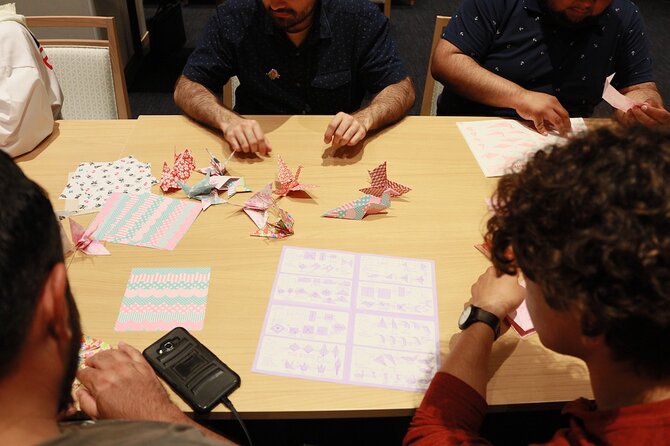
The origami mini workshop follows the same practical approach. You learn how one sheet of paper can become a figure or design through a series of folds. The program includes simple forms such as cranes and may also introduce more detailed shapes.
Origami is a good choice for mixed-age groups because everyone can work at the same table, even if people finish at different speeds. Children can focus on the fun of making a shape, while adults may enjoy the precision and patience involved.
The instructor’s help matters here. Paper folding can become confusing after a few steps, especially when the model has to be turned or opened in a particular way. The small-group format gives you a better chance to ask for help than a large demonstration would.
The workshop also adds a calm counterpoint to the dance and kimono sections. You spend a few minutes concentrating on your hands, which makes the hour feel varied without becoming hectic.
Why the small group changes the experience
The maximum group size is 20 people, though some sessions may be much smaller. One couple had the activity to themselves, and another session continued even with only one participant. That suggests the program can still feel personal when attendance is light.
A small group matters most during the tea, calligraphy, and origami sections. These are the moments when you need to see a demonstration clearly and ask for help. Patient instruction also helps families, since children may need more time with the brush or paper folds.
The hosts receive repeated praise for their warmth and English skills. Ori is described as detail-oriented and helpful with cultural explanations, while Mr. Bambu is also singled out as a friendly and informative host. Staff members guide you through the activities without making the hour feel rushed.
That said, the short schedule means you should expect an introduction, not a specialist course. You will learn the main idea behind each activity and try it yourself. You will not become a tea practitioner or calligrapher in 60 minutes.
Is $72.48 a fair price?
At $72.48 per person, this is not the cheapest cultural activity in Tokyo. The value comes from the amount packed into the hour. Your booking includes matcha and a Japanese sweet, the dance presentation, calligraphy, origami, and kimono dress-up.
If you paid separately for several short cultural activities, the total could easily become less convenient, even if individual low-cost options exist. Here, one booking gives you a clear structure and an English-speaking host. You also avoid spending time figuring out where to find each activity.
The price makes the most sense if you plan to participate fully. If you only want to watch a dance show or drink matcha, other options may suit you better. If you want several quick, guided activities in one stop, the package offers solid value.
The average booking point is about 17 days before the activity. That is a useful planning clue, especially if you are visiting during a busy period. I would reserve ahead rather than assume you can easily find a last-minute place.
Who will enjoy this one-hour program?
I would recommend EDOCCO Tea House to first-time visitors who want an easy entry into Japanese customs. It works well near the start of a Tokyo trip because it gives you basic context for tea, dress, dance, writing, and paper arts before you encounter them elsewhere.
Families are another strong match. Children can make tea, fold paper, write with a brush, see a dance, and wear a kimono. The one-hour length also helps prevent the session from becoming tiring.
Couples and solo visitors can enjoy it too, especially if they prefer activities that produce photos and small handmade keepsakes. The program can continue with very few participants, which is useful if you are traveling outside the busiest times.
I would be more cautious if you already have a serious background in Japanese arts. The tea ceremony, shodo, and dance portions are short introductions. You may want a longer specialist workshop instead.
Practical details for planning your visit
The meeting point is EDOCCO STUDIO at 2-chome-16-2 Sotokanda, Chiyoda City, Tokyo 101-0021. The activity ends at the same location, so you do not need to arrange a separate return transfer.
The venue is near public transportation. One detailed set of directions describes arriving at Ochanomizu Station on the Marunouchi Line, crossing toward a pedestrian overpass, and walking a short distance after turning at the intersection. Since Tokyo station exits can be confusing, allow extra time and check the exact meeting instructions on your booking.
A mobile ticket is provided. Confirmation normally arrives at booking, though reservations made within one day of the start time are confirmed as soon as possible and depend on availability.
Free cancellation is available up to 24 hours before the start time for a full refund. Changes or cancellations inside that window are not accepted for a refund. The operator also lists weather and minimum-participant conditions that can lead to a date change or full refund.
My verdict on the EDOCCO Tea House experience
Book this if you want a friendly, well-organized introduction to several Japanese traditions in one hour. I like the mix of active and quiet moments: you prepare matcha, watch dance, try on a kimono, write calligraphy, and fold origami. The English guidance and small groups make it comfortable for beginners.
Go in with the right expectations. The dance is short, the workshops are introductory, and the price is easiest to justify when you value variety and personal instruction. For a family, first-time visitor, or anyone wanting a practical cultural start to a Tokyo trip, this is a sensible choice.
FAQ
Where does the EDOCCO Tea House experience take place?
It takes place at EDOCCO STUDIO, 2-chome-16-2 Sotokanda, Chiyoda City, Tokyo 101-0021, Japan.
How long does the activity last?
The activity lasts approximately one hour.
What activities are included?
The program includes a matcha and Japanese sweet set, Japanese dance appreciation, calligraphy, origami, and a Japanese dress-up experience.
Is the experience offered in English?
English explanations are provided during the cultural activities, including the Japanese dance presentation.
What is the maximum group size?
The activity has a maximum of 20 participants.
Can I buy a matcha tea set?
Yes. A tea bowl, matcha powder, bamboo whisk, and other tools are available for purchase, but the set is not included in the activity price.
Does the activity return to the meeting point?
Yes. The activity ends back at EDOCCO STUDIO.
What is the cancellation policy?
You can cancel at least 24 hours before the start time for a full refund. Cancellations or changes made less than 24 hours before the start time are not refunded or accepted.
Newly steeped around Tokyo
- Yokohama : Tea Ceremony with Sweets and Souvenir★ 5.0 · 5 reviews
- Walking Tour: Yanaka,Nezu& Sendagi: Tea Ceremony & Old Tokyo★ 5.0 · 3 reviews
- Private Mochi・Matcha sweets Making Class Near Shibuya Area★ 5.0 · 22 reviews
- 2 Hours Mochi &Nerikiri Making & Matcha Class in Bunkyo★ 5.0 · 21 reviews
- Private Kimono and tea ceremony at local home near Tokyo Disney★ 5.0 · 6 reviews
- Kimono and Tea Ceremony in Asakusa Private Food Tour With Guide★ 5.0 · 4 reviews
- Giant Sushi Cooking Class: Make a 1.5m Sushi Roll in Tokyo★ 5.0 · 9 reviews
- Tokyo Tea Ceremony Class at a Traditional Tea Room★ 5.0 · 2 reviews
Japan Tea Tours, compared.
Kyoto: Tea Ceremony in a Traditional Tea House in Kiyomizu
Read our review →
Kyoto: 45-Minute Tea Ceremony Lesson Experience
Read our review →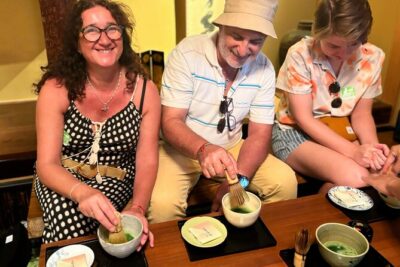
World Heritage Kyoto & Nara Uji Authentic Matcha Experience
Read our review →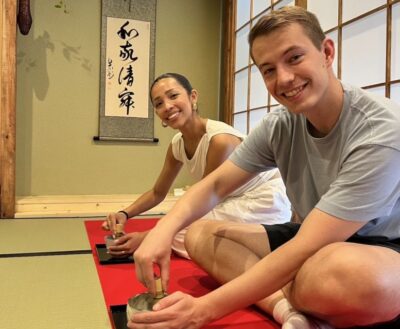
Kyoto: Table-Style Tea Ceremony at a Kyo-Machiya
Read our review →

Browse the lists this tea experience appears in