
Review · KYOTO
Kyoto Fushimiinari:Wagashi Making & Small Group Tea Ceremony
The best part of this Kyoto experience is that you do not simply watch a tea ceremony. You make a Japanese sweet with your own hands, then sit in a traditional tatami room and prepare matcha yourself. It is a quiet cultural lesson inside a local-style house, with a garden adding a welcome pause from Kyoto’s busy streets.
I like the hands-on wagashi class, especially because the sweets are used during the ceremony rather than treated as a separate cooking demo. I also like the small group size, capped at six, and the clear English explanations from licensed guide interpreters, including hosts such as Miho.
The main consideration is the floor seating. Chairs and tables are available if you request them ahead of time, but the experience is not suitable for wheelchair users, and you must wear socks rather than go barefoot.
Key points to know before booking
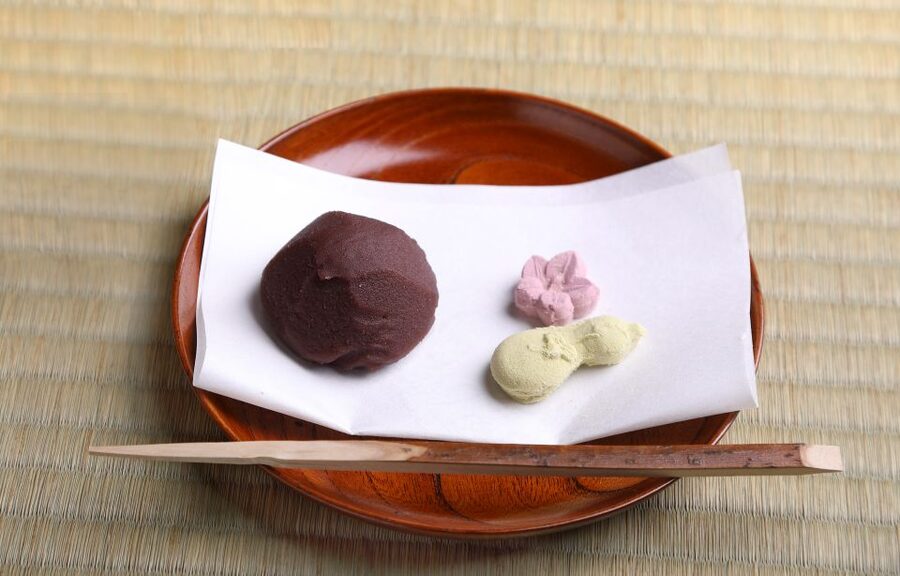
- Make the sweet you later eat: You prepare one type of wagashi, with mochi and bean paste among the sweets made in some sessions.
- Prepare your own matcha: You receive two bowls, one demonstrated by the host and one whisked by you.
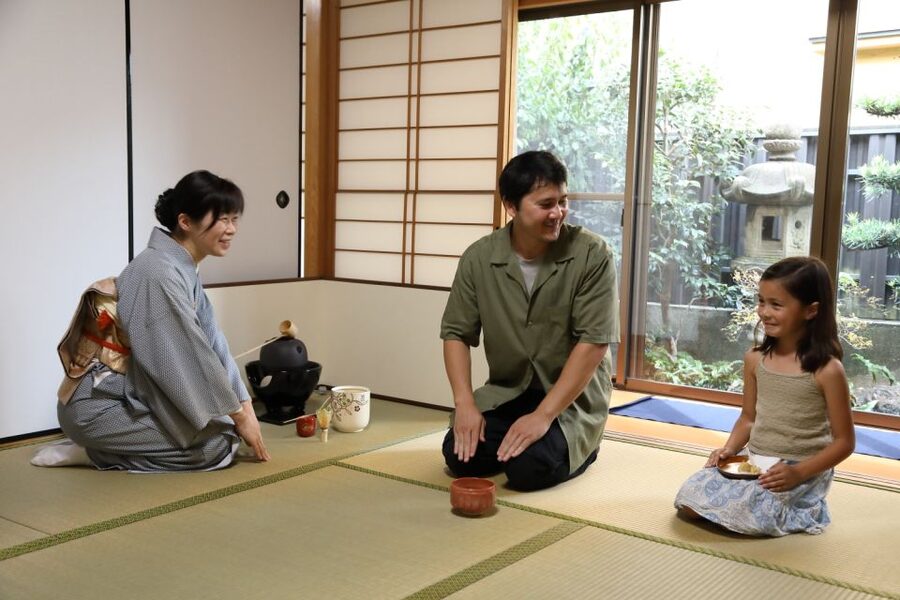
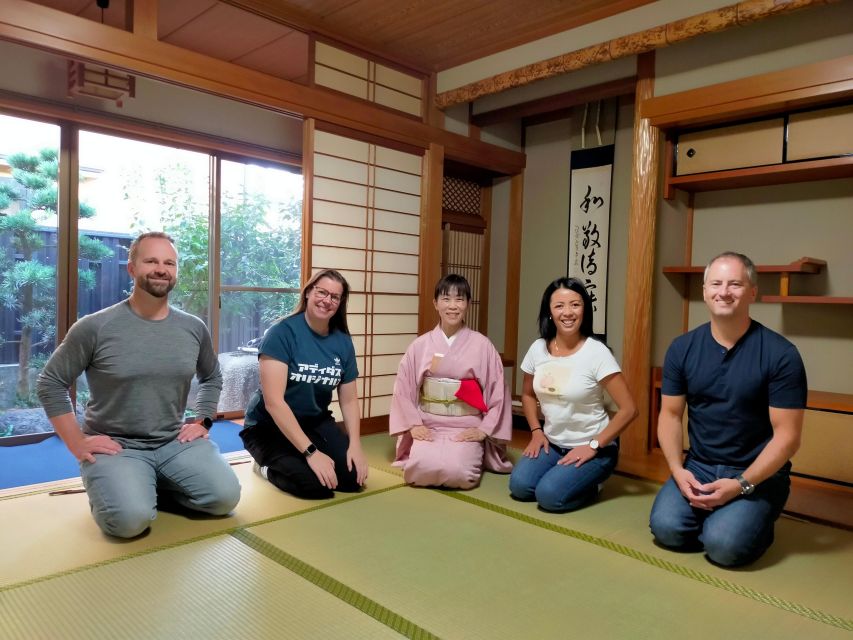
- Enter a real Japanese-style room: The ceremony takes place on tatami beside a hanging scroll and alcove when weather allows.
- Keep the group small: No more than six participants makes it easier to ask questions and follow each step.
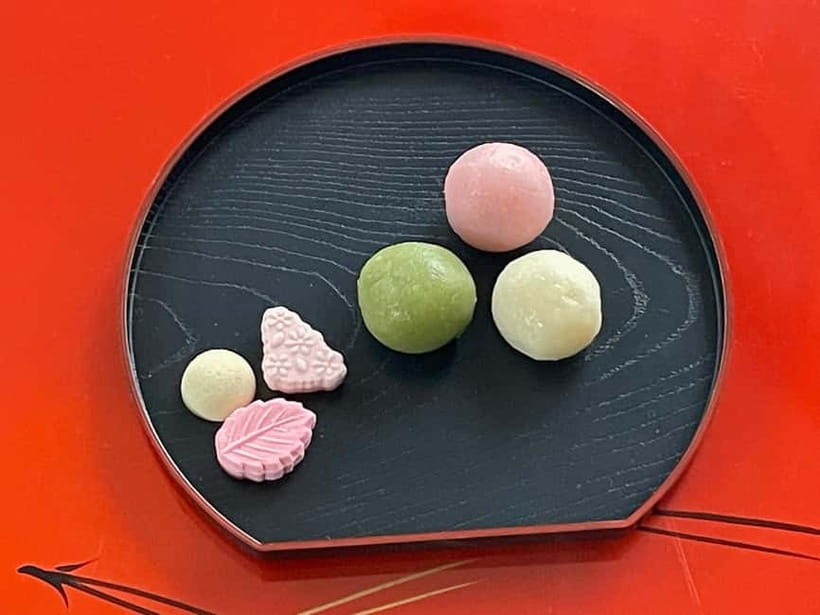
- Expect seasonal changes: The Japanese sweet may differ from the pictures depending on the time of year.
- Plan for a quiet, structured hour: The whole session lasts 75 minutes, with cooking, explanation, demonstration, and practice.
Making wagashi in a Kyoto home
You begin by meeting an English-speaking host at the house and going to the kitchen. This first section is practical and friendly rather than a show put on from a distance. You make one kind of wagashi yourself, following the host’s instructions as you work.
That hands-on format matters. Japanese sweets can look simple, but their shapes, fillings, and finish often require care. Here, you get to handle the ingredients and see how the sweet comes together. In some sessions, the class has included mochi with red bean paste and white bean paste. The exact sweet changes with the season, so do not book expecting one fixed design.
Your finished wagashi is not just a take-home item. You later eat it with matcha during the tea ceremony. That gives the cooking section a clear purpose and helps you understand the traditional pairing of a sweet with bitter tea.
The instructors explain how to make the sweet as you go, and the small group limit should give you room to ask for help. The English support is a major advantage here. The instructors are licensed guide interpreters, so the cultural information is presented in English rather than left to guesswork.
You should tell the provider about food restrictions or allergies in advance. The information provided does not list every ingredient or promise a particular substitute, so advance notice is important.
More Tea and Sweets Making in Kyoto
- Kyoto: Japanese Traditional Sweets Making and Tea Ceremony
★ 4.4 · 314 reviews - Kyoto: Traditional Tea Ceremony with Matcha & Sweets in Gion
★ 4.9 · 27 reviews - 2 Types of Japanese Sweets making and Tea Ceremony
★ 4.6 · 17 reviews
Walking through the little garden
After the kitchen session, you move into the tea ceremony portion. When the weather is dry, the route goes outside through a tiny garden before you enter the Japanese-style room. It is a short transition, but it helps mark the change from cooking lesson to formal cultural activity.
The garden view is one of the pleasant details of this experience. You are not being taken to a large temple garden or a famous scenic site. Instead, you get a small domestic garden attached to a local house. That modest setting is part of the appeal. It feels closer to seeing how a Japanese room and garden work together in everyday cultural space.
Rain changes this part of the plan. The ceremony still takes place, but the outdoor walk may not happen. You should also expect some limits on photography. Flash photography and video recording are not allowed, and the host may ask you to put your camera away during certain parts so everyone can pay attention.
That rule may disappoint anyone hoping to record every whisk movement. Still, it makes sense for a ceremony built around quiet attention. Take a few permitted photos, then put the phone away and let the session unfold.
Sitting on tatami and learning the ritual
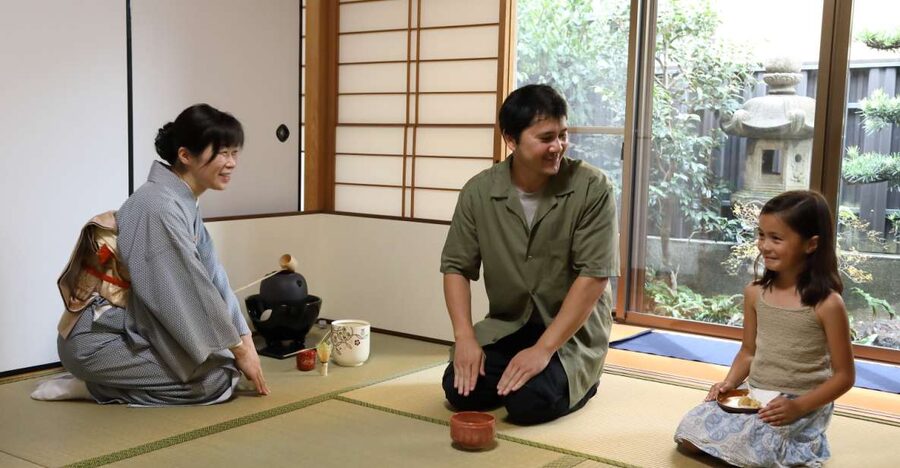
Before the ceremony begins, the host explains how to behave in the Japanese room. You learn the basic manners involved in attending a tea ceremony, including how to approach the sweets and tea. This is useful because tea ceremony customs are not always obvious to first-time visitors.
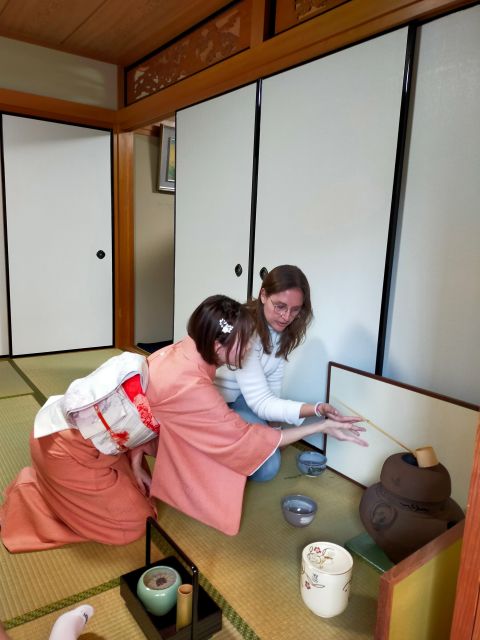
You then sit on the tatami floor while the instructor explains the history of tea, the ceremony itself, and the meaning of the hanging scroll in the alcove. These details give the room more meaning. You are not only watching a sequence of hand movements. You are learning why the room is arranged as it is and why the scroll matters.
The session is informative without being presented as a severe test of etiquette. You are shown the proper way to take part, but the instructions allow you to follow at your own pace. That balance suits first-time visitors who want a genuine introduction without worrying about making one small mistake.
The tea ceremony also gives you a different view of Japanese culture than a standard sightseeing stop. At a shrine or temple, you mainly look. Here, you take part in a set of actions, listen to an explanation, and taste what you have prepared. The experience is still carefully guided, but your own hands are involved.
Tasting your wagashi with matcha
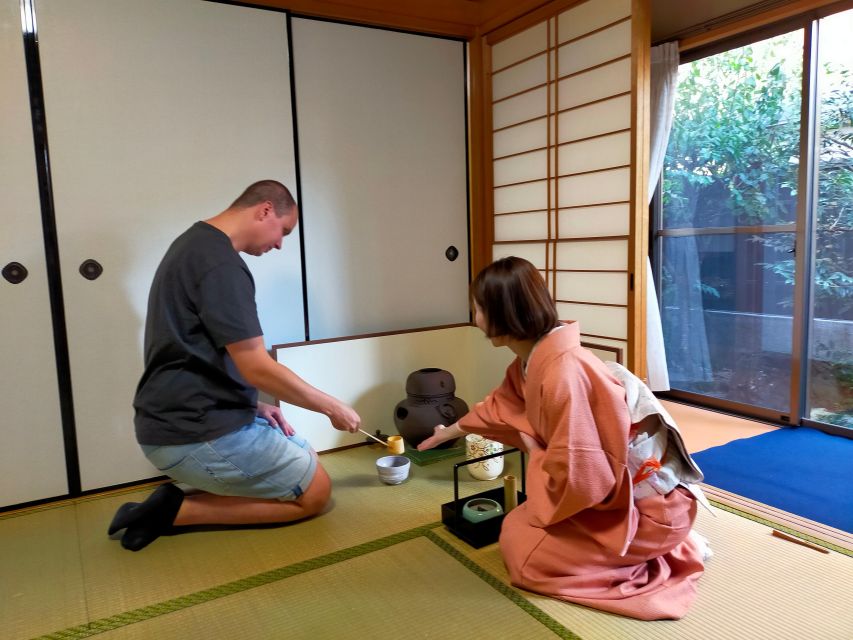
Once you are seated, you eat the wagashi you made earlier while the instructor demonstrates how to drink matcha. The sweet and tea are meant to work together. The confectionery softens the sharp, grassy taste of the tea, and the tea keeps the sweet from feeling too heavy.
You receive two bowls of matcha in total. The host prepares one for you, and you make the other yourself. This is a better arrangement than simply watching a professional prepare tea because you can compare the two experiences and practice the movements while the instructions are fresh.
The tea master demonstrates the ceremonial preparation, then shows you how to use a bamboo whisk. You get the chance to whisk your own bowl and drink it. The point is not to produce a perfect bowl on your first attempt. The value is in learning the order, the tools, and the care behind the preparation.
You should leave able to prepare and serve matcha in the basic manner shown during the class. That makes the activity a useful souvenir. A photograph fades into the camera roll, but the ability to make wagashi and whisk matcha for friends or family can stay with you.
More Tea Ceremonies in Kyoto
- Kyoto: Tea Ceremony in a Traditional Tea House in Kiyomizu
★ 4.9 · 3,519 reviews - Kyoto: Tea Ceremony Ju-An at Jotokuji Temple
★ 4.9 · 3,207 reviews - Kyoto: 45-Minute Tea Ceremony Lesson Experience
★ 4.3 · 2,378 reviews - Kyoto: Table-Style Tea Ceremony at a Kyo-Machiya
★ 4.9 · 1,211 reviews
What the English instruction is like
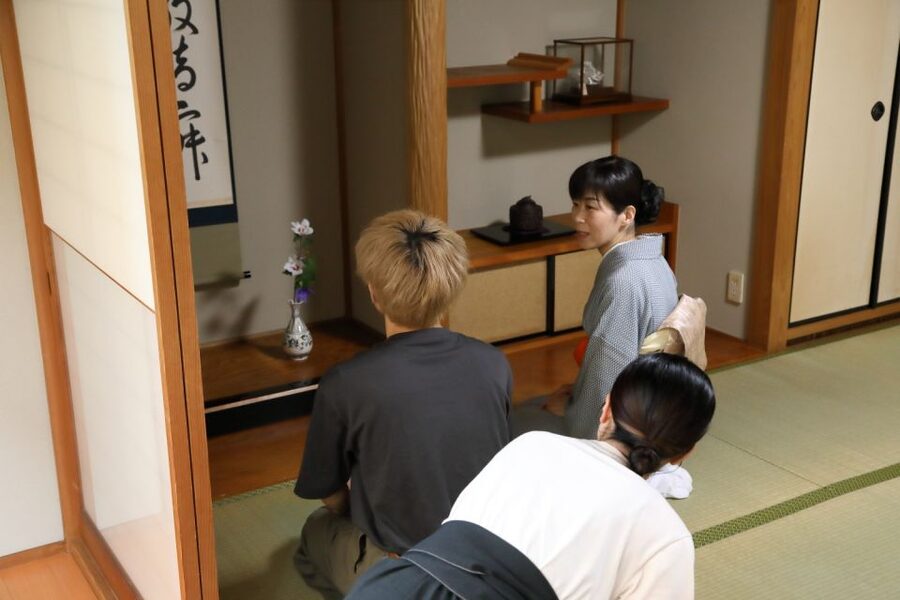
English guidance is central to the experience. Every instructor is described as a licensed guide interpreter, and the class covers more than physical instructions. You receive explanations about Japanese tea, room etiquette, the hanging scroll, the sweets, and the meaning of the ceremony.
The English level also makes a difference during questions. The host can explain the steps and discuss Japanese culture, rather than leaving you with a memorized demonstration. Miho has been one of the hosts connected with the session, and the tea master is available to answer questions about the cultural side of the ritual.
The approach is welcoming rather than stiff. The ceremony has formal elements, but you are not expected to arrive with prior knowledge. If you are curious about why the tea is prepared in a certain way or how the sweet fits into the ritual, this is a good setting to ask.
The group size helps here. With six participants at most, the instructor can watch your technique and respond to questions. A larger class would make the same activity feel more like a stage demonstration.
Is $55 a fair price?
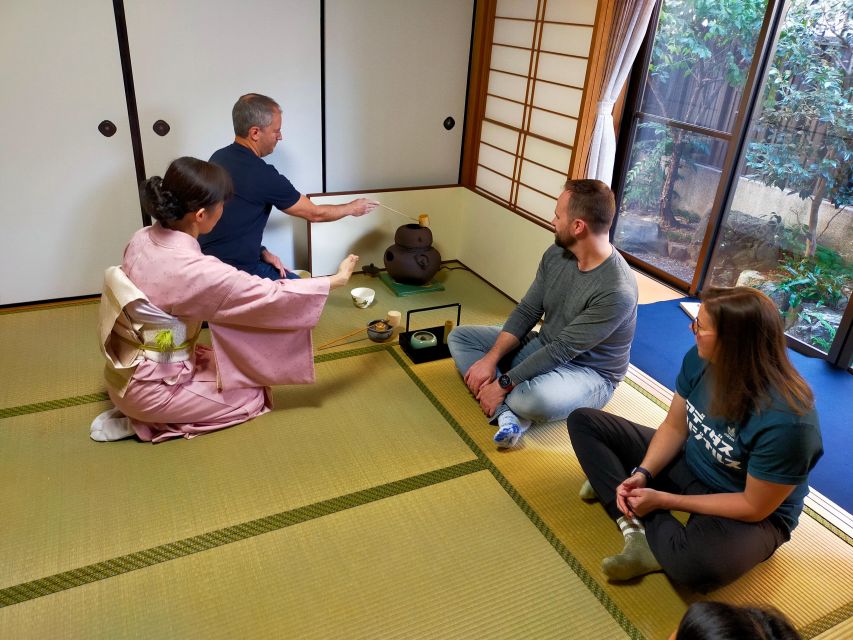
At $55 per person, the price is reasonable for a 75-minute experience that combines a cooking class, a cultural explanation, two bowls of matcha, a traditional sweet, and personal instruction. You are paying for more than tea tasting. You are receiving ingredients, guidance, the use of the house and tea equipment, and a chance to make the food and drink yourself.
The value is strongest if you want participation. Someone looking only for a quick cup of matcha can find cheaper options. Someone who wants a formal tea ceremony with an elaborate production may want a longer or more specialized event. This session sits in the middle: it offers an authentic-style setting and clear instruction without requiring a full afternoon or advanced knowledge.
The 75-minute length is also practical. Kyoto days fill quickly with shrines, markets, and transport. This experience fits into a busy schedule while still giving you enough time to cook, hear the explanation, watch the ceremony, and practice matcha.
The price does not include hotel pickup, taxi arrangements, or gratuity. You need to make your own way to the house and plan any transport yourself. Those exclusions are standard for a short local activity, but they matter if you are building a tightly timed day.
You can cancel up to 24 hours in advance for a full refund, and the reserve-now, pay-later option gives you some flexibility while your Kyoto plans change.
Who will enjoy this experience most?
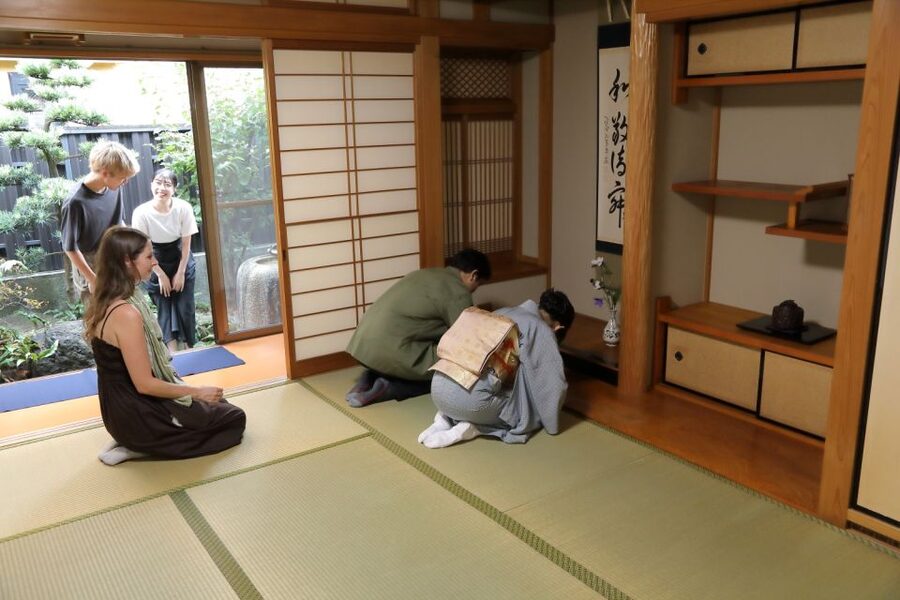
This activity suits adults and children aged eight or older who like food, craft, and cultural explanation. It works especially well for first-time visitors who want to understand tea ceremony without committing to a long, highly formal event.
It is also a good choice if you prefer a small room and direct contact with an instructor. The six-person limit keeps the atmosphere calm and gives you a better chance to ask questions. Couples, families with older children, and solo visitors who enjoy guided activities should find the format easy to follow.
The experience is less suitable if you dislike floor seating, cannot wear socks, or want to record everything on video. Bare feet are not allowed, and flash photography and video recording are prohibited. Chairs and tables can be arranged for people who find sitting on the floor difficult, but you must request this in advance.
Children under eight cannot join, and the activity is not suitable for wheelchair users. Food allergies and restrictions should also be shared before arrival.
Practical tips for a smooth visit
Wear clean, comfortable socks. You will be entering a Japanese-style room, and bare feet are not permitted.
Arrive ready to listen as well as participate. The wagashi section is hands-on, but the tea ceremony depends on watching the demonstration and following the sequence.
Tell the provider about food restrictions before the day of the activity. Seasonal sweets can change, and the exact ingredients may vary with the confectionery being prepared.
Request chair seating ahead of time if sitting on tatami is difficult. Do not assume the change can be made at the last minute.
Keep your camera ready for permitted moments, but expect to stop taking photos during parts of the ceremony. The host may limit photography to protect the quiet mood and allow everyone to take part.
Allow enough time around the 75-minute session for finding the house and leaving afterward. Hotel pickup is not included, and the provider does not call a taxi for you.
Should you book this Kyoto tea ceremony?
I would book this if you want a short, personal introduction to Japanese food and tea rather than a passive demonstration. The combination of making wagashi, eating it in a tatami room, learning about the hanging scroll, and whisking your own matcha gives the session a clear beginning, middle, and end.
The strongest reasons to choose it are the small group, excellent English support, and chance to practice the tea preparation yourself. It also offers a quiet setting that contrasts nicely with Kyoto’s more crowded sights.
Skip it if you need wheelchair access, cannot sit on the floor even with advance chair arrangements, or mainly want photography and video. For everyone else, the $55 price buys a useful cultural lesson and a skill you can repeat at home.
FAQ
How long does the wagashi and tea ceremony experience last?
The experience lasts 75 minutes.
How much does the experience cost?
The price is $55 per person.
How many people can join the group?
The group is limited to six participants.
Is the experience conducted in English?
Yes. The instructor language is English, and the instructors are licensed guide interpreters.
How many bowls of matcha are included?
Two bowls of matcha are included. One is prepared by the host, and you prepare the other yourself with a bamboo whisk.
Do I make Japanese sweets during the session?
Yes. You learn to make one type of wagashi in a hands-on kitchen class.
Can the wagashi differ from the pictures?
Yes. The Japanese sweets may change according to the season.
Can I sit on a chair instead of the tatami floor?
Chairs and tables are available for people who find floor seating difficult, but you need to request them in advance.
What should I bring?
You should bring or wear socks. Bare feet are not allowed.
Can I cancel the booking?
You can cancel up to 24 hours in advance for a full refund. You can also reserve now and pay later.
Newly steeped around Kyoto
- Whisk Your Own Matcha: A Zen Matcha Experience at Temple★ 3.6 · 7 reviews
- Uji Walking Tour – Byodo-in temple and Tea Ceremony from Kyoto★ 3.5 · 3 reviews
- Kyoto: Authentic Tea Ceremony in a Small Group★ 5.0 · 7 reviews
- Tea ceremony at Kyoto’s Zen Temple Teahouse★ 5.0 · 2 reviews
- Tea Ceremony Experience in Traditional Kyoto Townhouse★ 5.0 · 19 reviews
- Tea Ceremony in 150 Years Old Townhouse with Tables and Chairs★ 5.0 · 22 reviews
- Sencha-do the Japanese Tea Ceremony Workshop in Kyoto★ 5.0 · 21 reviews
- Silent Beauty of Kyoto Zen Walk and Tea Experience★ 5.0 · 2 reviews
Tea & Sweets Making, compared.
Matcha Making Class in Tokyo with Authentic Japanese Sweets Set
Read our review →
Tangier: Sunset, Tea, Sweets, Camel Ride, and Hercules Caves
Read our review →
Tokyo: Matcha Making Experience with Mochi Sweets in Asakusa
Read our review →
Kyoto: Japanese Traditional Sweets Making and Tea Ceremony
Read our review →
Osaka: Matcha Making Experience with Japanese Sweets
Read our review →
Make Traditional Nerikiri Sweets & Matcha experience in Shibuya
Read our review →
Sweets Making and Kimono Tea Ceremony at Tokyo Maikoya
Read our review →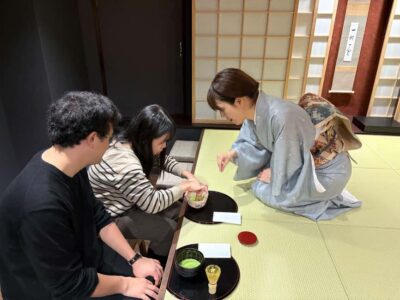
Kyoto: Traditional Tea Ceremony with Matcha & Sweets in Gion
Read our review →Browse the lists this tea experience appears in