
Review · TOKYO
Asakusa: Geisha Performance and Tea House Experience
Meeting real geisha in a small Asakusa tea house gives you more than a staged dance show. You see polished performance, hear live shamisen music, play Konpira Fune Fune, and have time to ask questions about a world most visitors only glimpse from afar.
I especially like the direct conversation and the mix of beauty with good humor. The matcha and seasonal sweets add a quiet finish, while the game breaks the formality. The main thing to watch is the extra drink charge, since every person must order an alcoholic or non-alcoholic drink beyond the included matcha.
Key points to know before booking
- Real geisha and live music: Meet performers in person and watch dance accompanied by shamisen and singing.
- A small-group feel: One reported session had about 16 people, giving the room a more personal mood.
- More than a performance: You can ask questions, learn about geisha life, and join a traditional ozashiki game.
- Matcha and seasonal sweets: The tea service is included, but it is not a full meal.
- Extra drink required: Each person must order one alcoholic or non-alcoholic drink.
- Easy planning: The visit lasts 75 minutes, has English host or greeter support, and allows free cancellation up to 24 hours ahead.
Entering Miyakodori’s Asakusa tea house
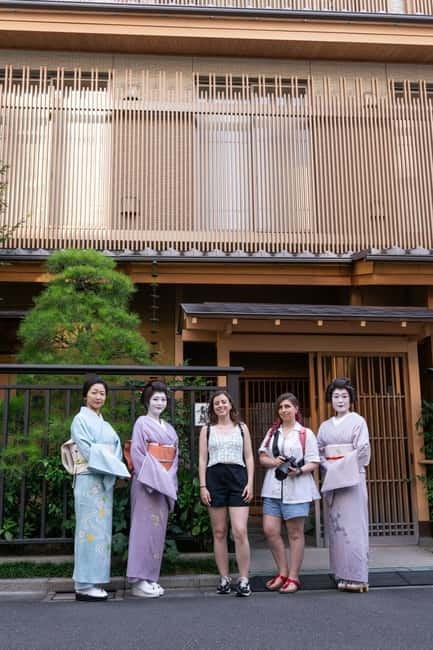
Asakusa is one of Tokyo’s best areas for a traditional Japan experience, with temple grounds, old-style shopping streets, and long-standing entertainment customs close together. This visit takes place at Miyakodori’s Ozashiki Tea House, not on a sightseeing bus or in a large theater.
The setting matters. Ozashiki entertainment was once arranged for a select circle of patrons, with music, dance, conversation, food, and games all part of the evening. Here, you get a short public introduction to that world without needing a private connection or an elaborate dinner reservation.
The welcome is part of the experience. One account describes entering through a discreet door, meeting the owner, choosing a drink, and then moving into the banquet area. You may sit on low stools rather than ordinary chairs, so this is worth keeping in mind if getting up and down is difficult.
The room is designed for attention rather than spectacle. You are close enough to see the costumes, hand movements, instruments, and facial expressions. That closeness also means the performance feels personal, but it leaves less room for you to sit quietly at the back and remain unnoticed.
The group size can vary. One particularly useful account describes a group of around 16 people, which allowed plenty of interaction without making the room feel crowded. The listed format is suited to solo visitors, couples, and small groups.
More Tea Experiences around Tokyo:
- Matcha Making Class in Tokyo with Authentic Japanese Sweets Set
★ 5.0 · 744 reviews - Kimono Tea Ceremony at Tokyo, Asakusa Maikoya
★ 5.0 · 638 reviews - Tokyo: Traditional Tea Ceremony with a Tea Master
★ 5.0 · 528 reviews
The opening dance and shamisen performance
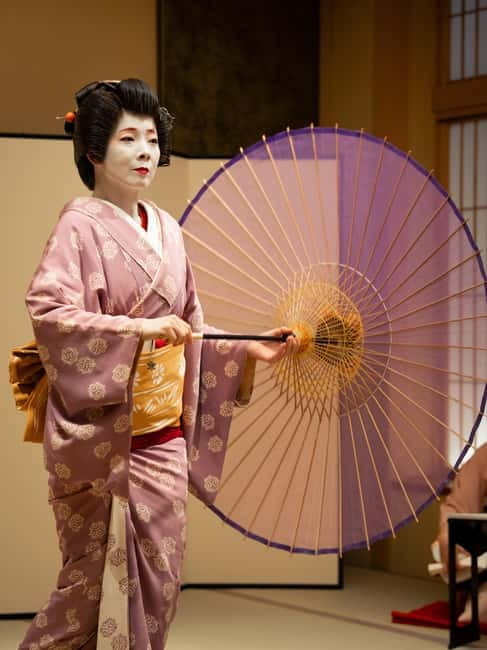
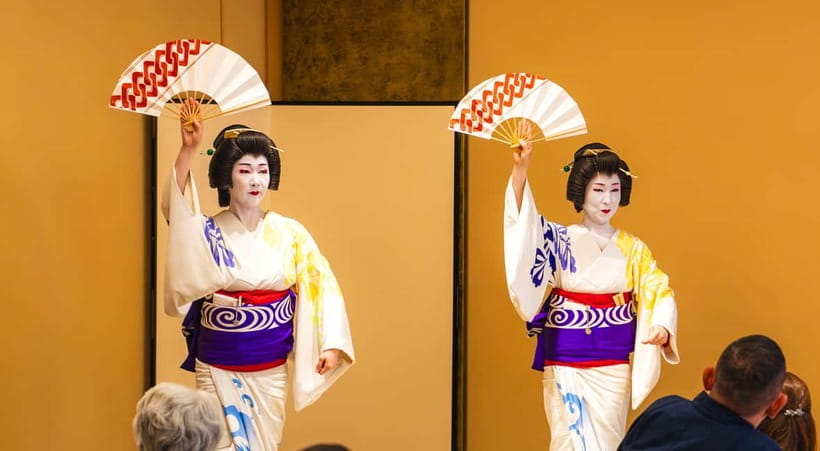
The formal performance begins with a graceful dance. Geisha movement is controlled and economical, so do not expect a fast stage show. A small turn of the wrist, the angle of a fan, or a measured step can carry more weight than a big gesture.
Live shamisen music gives the dance its pulse. The shamisen is a traditional three-stringed instrument with a sharp, expressive sound. In this setting, you hear the music at close range rather than through a large sound system, and the connection between musician and dancer is easy to follow.
The performances have included geiko Chizuru and maiko Tamaaki, accompanied by Shisa on shamisen and vocals. These names come from specific sessions, so the lineup can change, but they give you a sense of the trained artists involved.
This is one of the strongest parts of the visit for anyone interested in traditional performance. You get costuming, music, movement, and etiquette together, rather than a quick photo opportunity with a performer.
I also like the change in mood after the opening dance. The first part asks you to watch quietly. Later, you become part of the activity. That shift keeps the 75-minute visit from feeling like a lecture or a one-way show.
Conversation with the geisha
After the performance, you have a chance to ask questions. An English-speaking host or translator helps connect you with the performers, which is important because the most useful part of the visit may be the conversation that follows the dance.
You can ask about geisha life and the work behind the performance. The activity offers a glimpse into Japan’s living cultural heritage, not a museum display of clothing and props. The people in the room are working artists, and the discussion helps explain the training, discipline, and social skills behind the polished presentation.
Keep your questions respectful and practical. You might ask how a performer learned a dance, what the shamisen contributes to the performance, or how a formal entertainment setting differs from a casual social gathering. The host can help with language and context.
This conversation is especially useful if you have seen geisha portrayed in films or popular culture. Those images often flatten the subject into costume alone. Meeting performers directly gives you a more grounded view of the people and skills involved.
The atmosphere is formal but not stiff. The geisha interact with the room, laugh with the group, and make room for questions. Several sessions have been described as friendly and welcoming, with the conversation helping visitors feel included rather than kept at a distance.
Learning Konpira Fune Fune
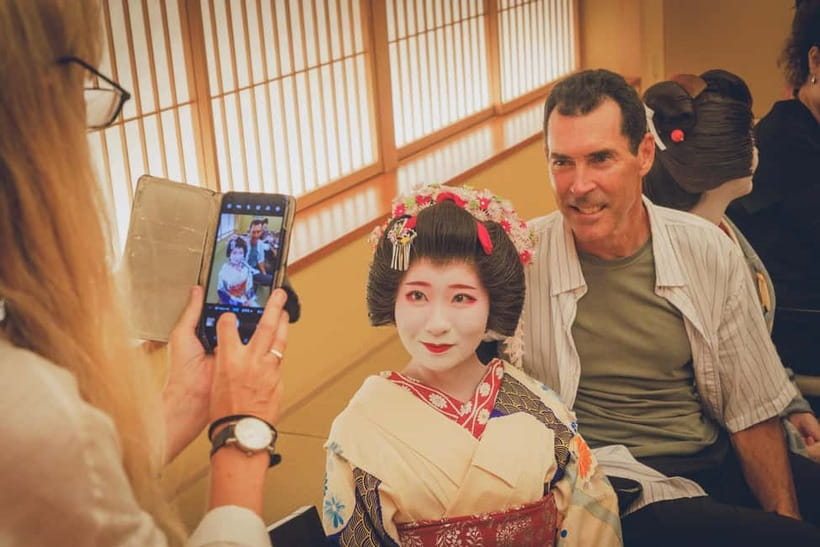
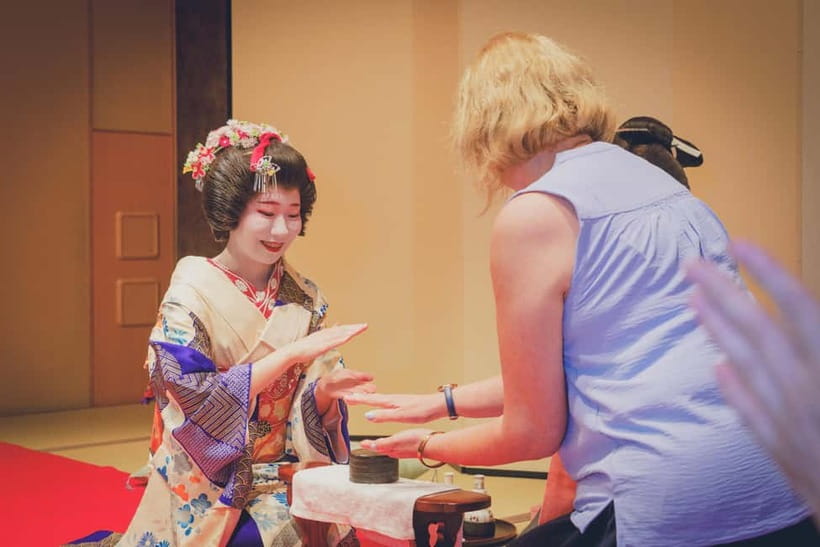
The traditional game is called Konpira Fune Fune, an ozashiki-asobi game designed for quick reactions and good humor. The basic idea is easy to learn once the host demonstrates it, and you do not need prior knowledge of Japanese games.
This is where the room loosens up. You watch the geisha perform with precision, then suddenly find yourself concentrating on a simple movement and trying not to make a mistake. It is playful, social, and a useful reminder that ozashiki entertainment was not only about sitting quietly and admiring art.
One family with children aged three to ten found the performance captivating and the later drinking game especially funny. The game can be adapted to the group, but remember that the activity requires a drink order from each person. You can choose an alcoholic or non-alcoholic drink, so children and people avoiding alcohol can still take part.
The game is not the main cultural lesson, but it may be the part you remember most clearly. It gives you a small taste of how music, manners, competition, and humor can share the same room.
Same leaf, a different ritual:
- Dynamic Tokyo: Tokyo Tower, Tea Experience, Bay Cruise Day Tour
★ 4.5 · 521 reviews - Tokyo: Matcha Making Experience with Mochi Sweets in Asakusa
★ 4.9 · 388 reviews - Asakusa Cultural Walk & Matcha Making Tour
★ 5.0 · 245 reviews - Mt. Fuji & Lake Kawaguchiko Ropeway Panorama Full-Day Tour
★ 4.6 · 236 reviews
Matcha, sweets, and the required drink
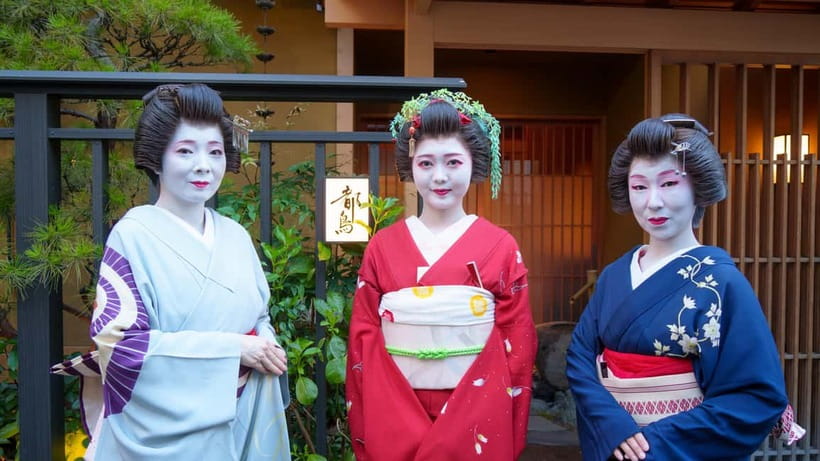
The tea service includes freshly whisked matcha and seasonal Japanese sweets. The sweets are a light accompaniment, not a meal, so plan to eat before or after if you need dinner.
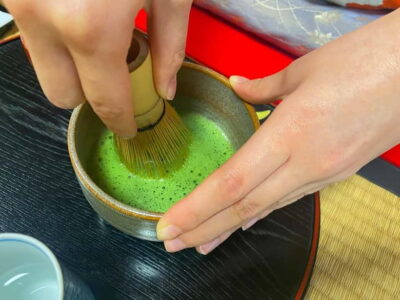
Matcha can be more bitter and grassy than the green tea served in many restaurants. The sweetness of the seasonal confection balances it, and the pairing gives you a simple introduction to Japanese tea customs without turning the visit into a long tea ceremony.
The required drink order is the main cost detail to remember. The $106 price covers the 75-minute cultural program, geisha meeting, dance, shamisen music, game, sweets, matcha, and commemorative photo, but each person must also order one drink. That drink may be alcoholic or non-alcoholic.
At this price, I would judge the visit as a special cultural outing rather than a cheap entertainment stop. You are paying for access to live artists, a small setting, English support, conversation, and a structured activity. If you only want to watch a short dance, it may feel expensive. If you want performance plus personal contact, the price makes more sense.
The commemorative photo at the end
The visit finishes with a photo with the geisha. This is a useful closing touch because the experience includes both formal performance and direct interaction.
Treat the photo as a keepsake, not the purpose of the visit. The dance, music, questions, and game are what give the photograph meaning. You will remember more if you pay attention during the performance instead of thinking only about the final picture.
If you are visiting as a couple or family, the photo gives you a clear record of the occasion. One couple used the experience as part of a honeymoon, while another family celebrated a birthday during the visit. These personal occasions fit the setting, provided you remain respectful of the performers and the formal atmosphere.
Why the 75-minute format works
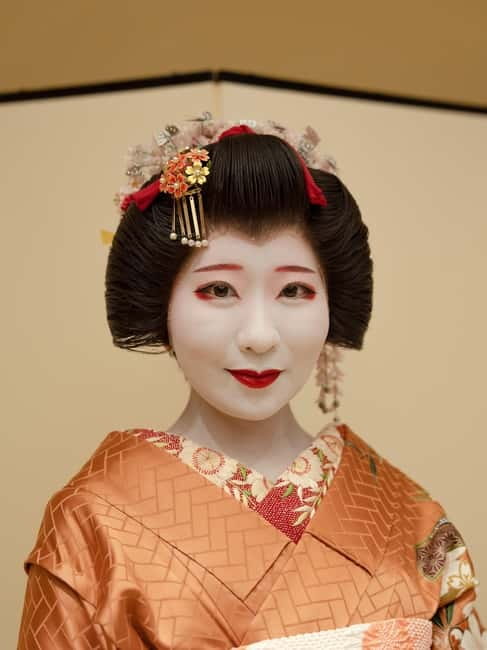
Seventy-five minutes is long enough for several distinct parts without asking you to commit to a full evening of entertainment. You get a welcome, performance, game, tea and sweets, questions, and a photo in one compact visit.
The short format also works well in an Asakusa sightseeing day. You can schedule it between temple visits, shopping, or dinner, though the exact starting times vary. Check the available time before booking so you can fit it around your plans.
I would arrive early. One person specifically advised this, and arriving ahead gives you time to find the venue without rushing into a formal room. Transportation is not included, so you need to make your own way to the Asakusa location.
The English support is another practical advantage. The host or greeter language is English, and a translator may assist with conversation. This does not mean every exchange will be fully translated word for word, but it makes the cultural explanation and question period much more useful for English speakers.
Who will get the most from this experience
I would choose this for you if you want a close look at Japanese performance, enjoy asking questions, or prefer a small cultural activity to a large stage show. Solo visitors can join without needing a companion, and couples have a natural setting for a memorable evening.
Families can also make it work. The dance requires quiet attention, but the game gives children a more active part later. Very young children may find the formal opening slow, and the low seating may not suit every family.
This is also a good option for a honeymoon or birthday. The staff have helped mark a special occasion, and the photo provides a simple souvenir. Still, the activity remains a cultural program first, not a private celebration package.
You may want to skip it if you dislike group participation, have no interest in traditional music or dance, or expect a substantial meal. The sweets are included, but this is not dinner. You also need to budget for the required drink.
Price, cancellation, and planning details
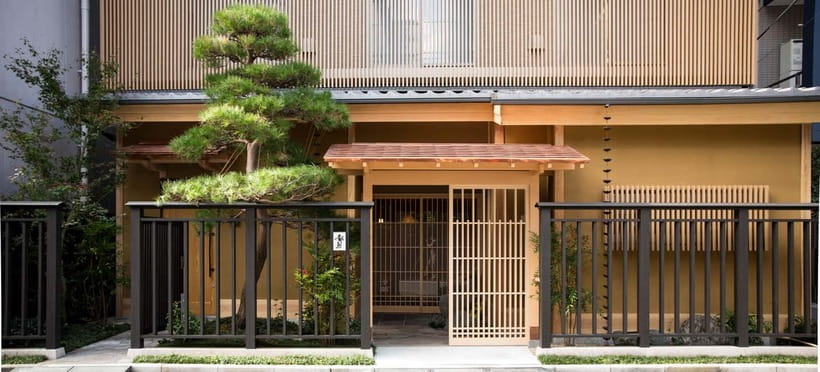
The listed price is $106 per person. The cost includes the complete 75-minute program, including the performance, live music, game, matcha, sweets, and photo. Add the price of one drink for each person when working out your total.
You can cancel up to 24 hours before the activity for a full refund. A reserve now and pay later option is also available, which helps if your Tokyo schedule is still changing.
The provider is 料亭都鳥. The experience takes place in Asakusa, a Tokyo district on Honshu, and transportation to the venue is not included. English is the stated language for the host or greeter.
Should you book the Asakusa geisha experience?
I would book it if you want a rare chance to meet real geisha, watch live traditional performance, and take part instead of simply sitting in an audience. The strongest reasons are the close setting, the question period, the skilled shamisen accompaniment, and the amusing Konpira Fune Fune game.
Go in with clear expectations. You receive seasonal sweets, not a meal. You must pay for one drink per person. The 75 minutes move quickly, and the experience works best when you are willing to participate, listen carefully, and treat the performers with respect.
For a first visit to Tokyo, this is a thoughtful choice for adding traditional culture to an Asakusa day. It is not the cheapest activity on the menu, but it offers access and interaction that a standard performance cannot. If that personal connection matters to you, the cost is reasonable.
FAQ
Where does the geisha experience take place?
It takes place at Miyakodori’s Ozashiki Tea House in Asakusa, a district of Tokyo on Honshu.
How long does the activity last?
The experience lasts 75 minutes.
What is included in the price?
The price includes the cultural experience, meeting real geisha, a dance performance, live shamisen music, an ozashiki-asobi game, seasonal Japanese sweets, freshly whisked matcha, and a commemorative photo.
Is a meal included?
No. Seasonal sweets and matcha are included, but meals are not.
Do I have to buy a drink?
Yes. Each person must order one alcoholic or non-alcoholic drink in addition to the complimentary matcha.
Is the activity offered in English?
The host or greeter language is English. A translator may help you communicate with the performers during the question period.
Can I ask the geisha questions?
Yes. The experience includes an opportunity to speak with the geisha and ask questions about their lives and work.
Is the activity suitable for children?
The experience is suitable for solo visitors, couples, and small groups. A family with children aged three to ten took part, enjoyed the performance, and joined the game. The information provided does not state a specific minimum age.
Can I cancel for a refund?
Yes. You can cancel up to 24 hours in advance for a full refund. A reserve now and pay later option is also available.
Newly steeped around Tokyo
- Yokohama : Tea Ceremony with Sweets and Souvenir★ 5.0 · 5 reviews
- Walking Tour: Yanaka,Nezu& Sendagi: Tea Ceremony & Old Tokyo★ 5.0 · 3 reviews
- Private Mochi・Matcha sweets Making Class Near Shibuya Area★ 5.0 · 22 reviews
- 2 Hours Mochi &Nerikiri Making & Matcha Class in Bunkyo★ 5.0 · 21 reviews
- Private Kimono and tea ceremony at local home near Tokyo Disney★ 5.0 · 6 reviews
- Kimono and Tea Ceremony in Asakusa Private Food Tour With Guide★ 5.0 · 4 reviews
- Giant Sushi Cooking Class: Make a 1.5m Sushi Roll in Tokyo★ 5.0 · 9 reviews
- Tokyo: Tea Ceremony & Japanese Sweets Making★ 5.0 · 10 reviews
Japan Tea Tours, compared.
Kyoto: Tea Ceremony in a Traditional Tea House in Kiyomizu
Read our review →
Kyoto: 45-Minute Tea Ceremony Lesson Experience
Read our review →
World Heritage Kyoto & Nara Uji Authentic Matcha Experience
Read our review →
Kyoto: Table-Style Tea Ceremony at a Kyo-Machiya
Read our review →

Browse the lists this tea experience appears in