
Review · OSAKA
Osaka: Tea Ceremony and Matcha Tea Bowl Making Workshop
The most unusual part of this Osaka experience is that you do not just drink matcha. You learn the quiet manners behind the tea ceremony, then make the bowl you will eventually use for it. Tea master instruction and pottery with Anna give the two-hour workshop a nice balance of tradition and hands-on work.
I like the private English-language format, which should make it easier to ask questions and work at your own pace. I also like the personal result: your finished bowl is sent to you after about two months, along with a small dish you can use for tea sweets.
The main drawback is time. Two hours goes quickly when it includes both tea ceremony and pottery, and the bowl cannot be taken home that day. You also pay shipping separately, and the workshop is not suitable for children under 13 or wheelchair users.
Key points
- Two Japanese traditions in one session: Learn tea ceremony basics, then shape and decorate a matcha bowl.
- Anna leads the pottery work: Your ceramist studied pottery in Osaka and Barcelona.
- Private English-language setting: The format allows direct help and questions during both activities.
- Matcha and sweets are included: You prepare the tea and enjoy Japanese sweets alongside it.
- Your bowl arrives later: It is sent to your provided address after about two months, with shipping charged separately.
- Easy meeting point: Meet staff holding a Ceramics Tocoton sign at the north exit of JR Teradacho Station.
A two-hour introduction to tea, clay, and local Osaka
This workshop works because it joins two activities that are often sold separately. First, you learn how matcha is prepared and served. Then you use your hands to make the bowl that gives the drink its proper home.
I find that combination more rewarding than a short demonstration. You get a little cultural context, a taste of the finished ritual, and a creative task that asks you to slow down. The result is not simply a souvenir bought in a shop. It is something you shape yourself, with the understanding that it will later be used for tea.
The experience takes place in Osaka’s Ikuno Ward, away from the city’s most famous sightseeing stops. After the workshop, you can spend time exploring the local area. The activity itself lasts two hours, so plan it as a focused morning or afternoon rather than a full-day outing.
You meet at JR Teradacho Station, specifically at the north exit. Look for a staff member holding a Ceramics Tocoton signboard. This detail matters in a busy station, so give yourself enough time to find the correct exit rather than arriving at the last moment.
More Matcha Experiences in Osaka
- Matcha Making Class in Osaka with Authentic Japanese Sweets Set
★ 5.0 · 509 reviews - Osaka: Matcha Making Experience with Japanese Sweets
★ 5.0 · 146 reviews - Osaka Temple Cool Foot Bath & Matcha Experience〈45min〉
★ 4.9 · 82 reviews
Starting with matcha and Japanese sweets
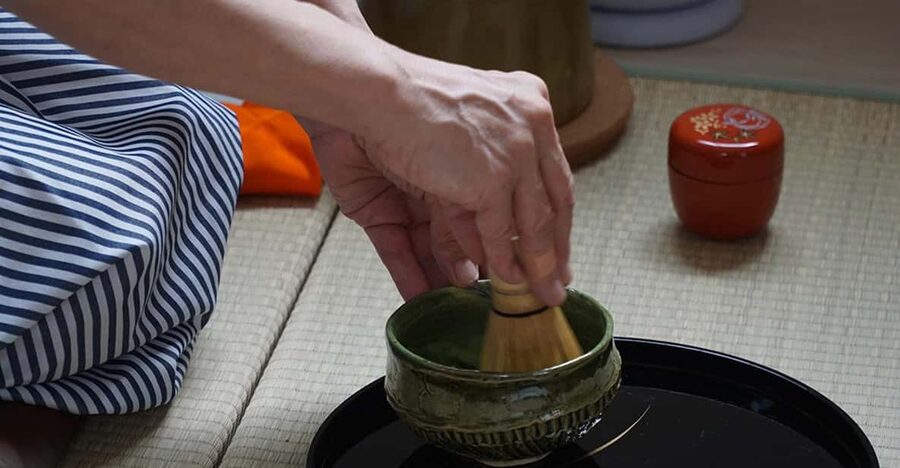
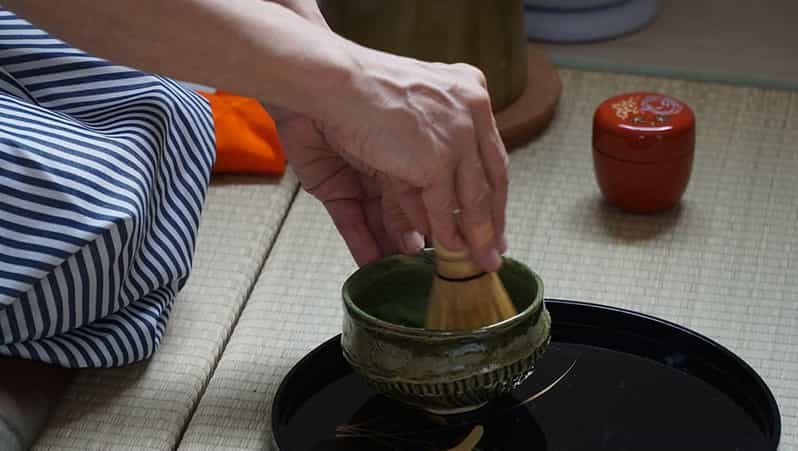
The first half introduces you to the basic ideas of the Japanese tea ceremony. A tea ceremony master guides you through preparing matcha, then you drink it with Japanese sweets.
You should not expect a long formal ceremony built for specialists. This is an introduction, designed to help you understand what you are doing and why. The value is in learning the simple actions and attention behind the tea rather than merely receiving a bowl of prepared matcha.
Matcha has a firm, grassy taste that can surprise anyone used to ordinary green tea. The Japanese sweets provide a small sweet counterpoint, making the tea easier to appreciate. Since both the matcha and sweets are included, you do not need to budget extra for this part.
I especially like the pace suggested by the experience. The tea ceremony gives you a quiet pause before the more active pottery session. One guest described the atmosphere as peaceful and calming, and that is a useful way to think about this part of the workshop. It asks you to pay attention to the cup, the tea, and the small movements instead of rushing to the next photo.
The tea master also gives the workshop cultural weight. You are not simply stirring green powder for fun. You learn the basics of a practice in which preparation, presentation, and respect all matter.
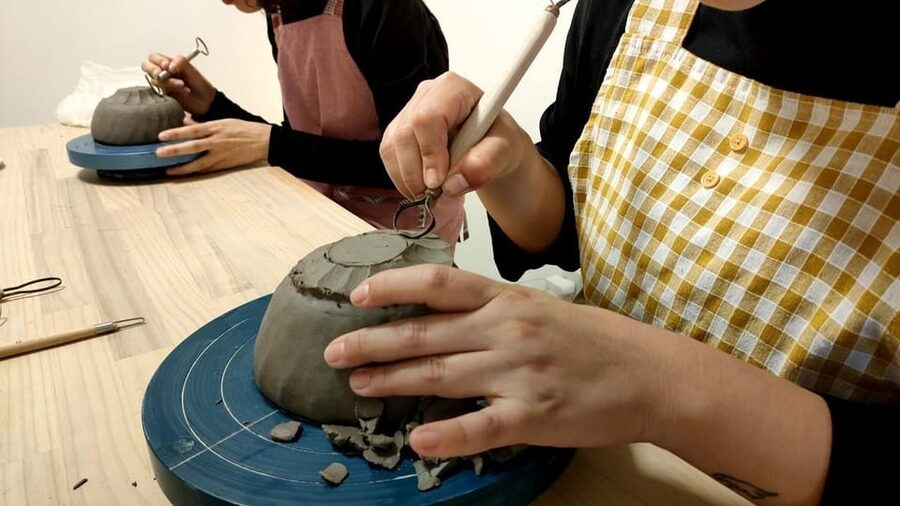
Shaping your own matcha bowl with Anna
After the tea, you move to the pottery portion with Anna. She studied pottery in Osaka and Barcelona, bringing together training in Japan with experience abroad.
You shape and decorate a bowl using traditional Japanese pottery techniques. The supplied information does not promise a particular style, glaze, or firing method, so you should arrive ready to make a personal piece rather than copy a guaranteed model. Your bowl will reflect your choices and the guidance you receive during the session.
This is where the private group format matters. Pottery can feel awkward at first, especially if you are unsure how much pressure to use or how to shape the walls. Anna is there to offer direct help, and one participant specifically praised her encouragement throughout the process. That kind of support is useful for beginners, who may otherwise worry about ruining the clay.
You should also remember that pottery is not instant. The bowl must be finished and sent later, after about two months. The wait is part of the process, but it means you cannot judge the final result before leaving Osaka.
Shipping costs are not included in the $134 price. You provide an address for delivery, so make sure you understand the shipping arrangement before booking. If your itinerary involves frequent hotel changes or a move between countries, check that the address you give will still be suitable when the bowl is ready to be sent.
Why the finished bowl matters
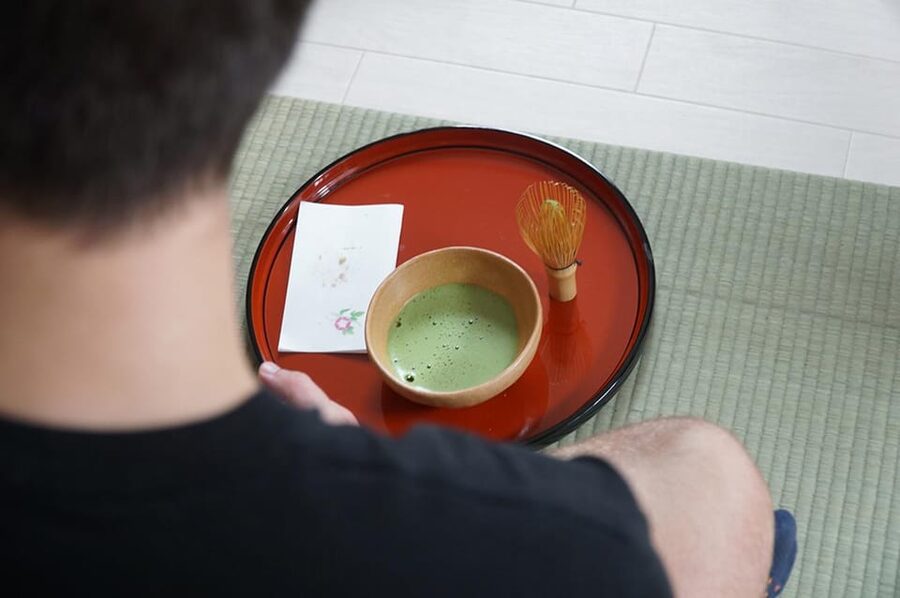
The bowl gives this workshop a practical thread. You are learning about matcha and then making an object suited to that drink. A handmade tea bowl can also make the ceremony feel less distant. Instead of seeing tea preparation as something reserved for a formal room, you leave with an item connected to your own experience.
A small dish is also provided as a gift. You can use it to hold sweets for a future tea ceremony, which makes it more than a decorative extra. Together, the bowl and dish create the beginnings of a small tea set.
The two-month wait can be a pleasant reminder of Osaka, but it is worth setting realistic expectations. Handmade pottery may have small variations in shape, color, or finish. Those differences are part of making an individual piece, though the available information does not specify the exact final firing or finish.
If you need a souvenir immediately, this is not the right choice. If you like the idea of receiving something later that connects to an activity you did in Japan, the delay adds anticipation.
More Tea Ceremonies in Osaka
- Osaka: Tea Ceremony Experience
★ 4.9 · 1,426 reviews - Tea Ceremony Experience in Osaka Doutonbori
★ 5.0 · 754 reviews - Osaka: Tea Ceremony, Calligraphy, and Kimono Experience
★ 4.9 · 130 reviews - Osaka: Japanese Traditional Sweets Making and Tea Ceremony
★ 4.7 · 118 reviews
What $134 gets you
At $134 per person, this is not a cheap way to fill two hours. You are paying for a private English-language workshop, instruction from a tea ceremony master, pottery guidance from Anna, matcha, Japanese sweets, and a handmade bowl that will be sent later.
The value depends on what you want from Osaka. If you only want to taste matcha, the price is high. If you want a guided cultural activity with a physical result, the cost is easier to justify. The private format is important here, since you are not being placed into a large public demonstration with limited time for personal help.
You also receive a small dish for tea sweets, adding useful value after the session. Shipping is the main extra cost to remember. Since it is not included, the true final price will be higher than the booking price.
I would compare this with the cost of buying a quality handmade bowl and taking a separate tea class. The workshop combines both, but it also asks you to wait for the bowl and arrange delivery. For someone who values personal instruction and a story behind the souvenir, that tradeoff makes sense.
The private format and English instruction
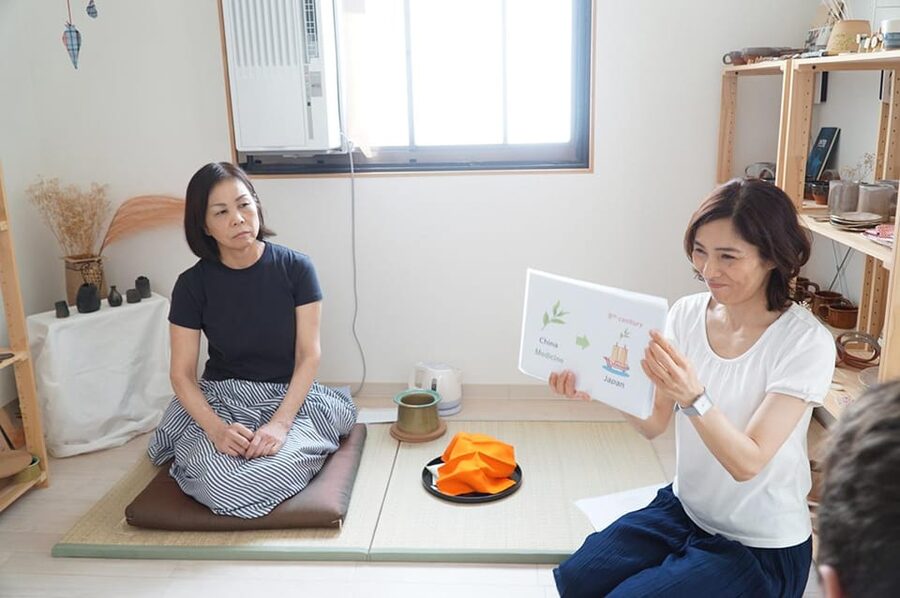
The workshop is offered in English and operates as a private group. That should suit couples, friends, and families with teenagers who want to share one activity without being mixed into a large class.
Private does not mean informal in every sense. The tea ceremony has its own manners and rhythm, while the pottery session requires concentration. You can ask questions directly and receive help with the bowl, which is especially useful if you have never worked with clay.
The experience is not suitable for children under 13. It is also not suitable for wheelchair users, so check this carefully when planning your Osaka activities. Smoking, alcohol, and drugs are not allowed.
I would choose comfortable clothing that you do not mind wearing during a craft session. The supplied information does not specify a dress code or the exact pottery setup, so avoid assuming that this is a polished sightseeing presentation. It is a practical workshop where you will be making something with your hands.
Meeting at JR Teradacho Station
The meeting point is JR Teradacho Station’s north exit. Find the staff member holding a Ceramics Tocoton signboard.
This is a straightforward arrangement, but punctuality matters. If you will be more than 15 minutes late, contact the provider. Arriving more than 15 minutes late is treated as a no-show, so do not rely on being able to join halfway through the tea ceremony.
I would arrive early enough to identify the north exit and locate the sign. Stations can be confusing when you are carrying luggage or trying to manage a new train system, and the workshop is short enough that a late start costs you a meaningful part of the experience.
The station meeting point also makes this easy to fit into an Osaka day. You can plan the workshop around JR travel, then continue exploring the city afterward. The activity specifically points you toward Ikuno Ward once the workshop ends, giving you a reason to stay in the area instead of rushing back to the better-known tourist districts.
Exploring Ikuno Ward afterward
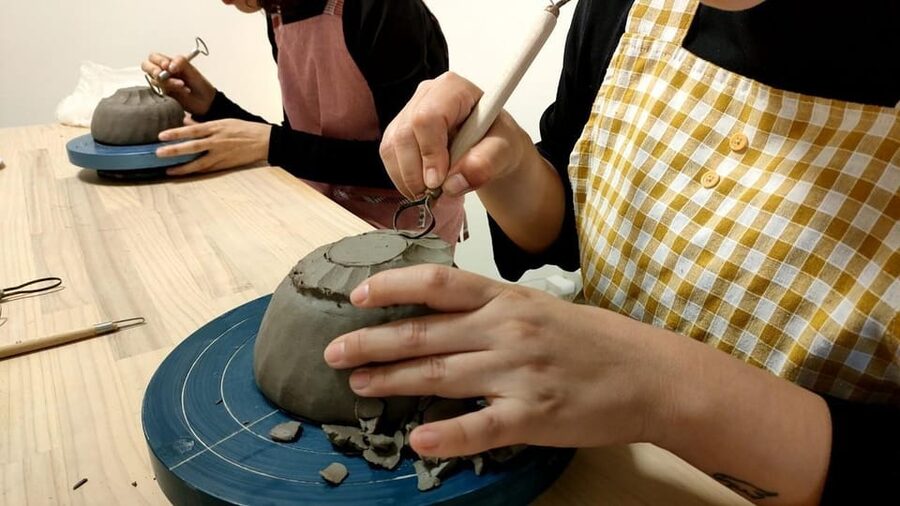
The workshop gives you a local Osaka setting rather than placing you in a major sightseeing complex. Afterward, you can explore Ikuno Ward at your own pace.
No fixed post-workshop route is included, so you should treat this as extra time rather than part of the guided program. That flexibility is useful if you want a relaxed meal, a neighborhood walk, or a look at a different side of Osaka. It also means you should do your own planning if you want specific shops or sights.
I like this arrangement because the workshop already has a clear ending. You receive your small dish, finish the pottery work, and then decide how long to remain nearby. You are not pushed onto another scheduled stop.
The area is best treated as a chance to slow down after the workshop. The tea ceremony sets a calm tone, and the pottery keeps you focused on small physical details. A local walk afterward lets the experience remain part of your day rather than a sealed-off activity that ends at the studio door.
Who will enjoy this experience most
I would recommend this to you if you want more than a photo and a quick taste of matcha. It suits people who like making things, asking questions, and taking home an object tied to a place.
It is also a strong choice for couples and friends. The private format lets you share the tea ceremony, compare your bowl designs, and enjoy the process without a crowded class.
This may be one of the better options in Osaka for a first introduction to Japanese tea culture. You do not need prior knowledge of tea ceremony or pottery, and the instructors provide guidance in English. The positive feedback points repeatedly to helpful hosts, professional instruction, and a calm atmosphere, which are exactly the qualities beginners need.
I would be more cautious if you have a tight budget, need an immediate souvenir, or dislike delayed shipping. You should also skip it if you need wheelchair access or are traveling with children under 13.
Timing, cancellation, and practical planning
The workshop lasts two hours, with starting times available according to the booking calendar. Since it combines two substantial activities, I would avoid scheduling a major attraction immediately afterward. Allow time to finish the pottery session, collect your belongings, and move on without turning the last part into a race.
You can cancel up to 24 hours in advance for a full refund. The reserve-now-and-pay-later option also helps if your Osaka plans are still shifting.
The most important practical detail is the bowl delivery. It is sent to the address you provide after about two months, and shipping is extra. Make sure you understand this before booking, especially if you will not be able to receive packages at home or at the address you list.
Should you book the tea and pottery workshop?
I would book this if you want a calm, personal Osaka activity that combines instruction with making. The tea ceremony gives you an introduction to matcha customs, Anna’s pottery session lets you work with traditional techniques, and the bowl and small sweets dish give the experience a life beyond your trip.
I would not book it simply because you want a fast souvenir or a low-cost tea tasting. The price is significant, the bowl arrives later, and shipping costs extra.
For the right person, this is a memorable way to spend two hours. You learn, make, taste, and leave with a future reminder of Osaka. That combination explains the perfect five-star rating across the available six bookings, with particular praise for the peaceful tea ceremony, helpful instructors, and enjoyable bowl-making.
FAQ
Where does the workshop meet?
Meet at the north exit of JR Teradacho Station. Look for a staff member holding a Ceramics Tocoton signboard.
How long does the experience last?
The workshop lasts two hours. Starting times depend on availability.
Is the workshop conducted in English?
Yes. English instruction is provided, and the group format is private.
What is included in the price?
Matcha tea and Japanese sweets are included. You also receive a small dish as a gift for serving sweets during tea ceremony.
When will I receive the matcha tea bowl?
The bowl is sent to the address you provide after about two months. Shipping costs are not included in the price.
Is the activity suitable for children and wheelchair users?
The workshop is not suitable for children under 13 or wheelchair users.
Newly steeped around Osaka
- Osaka:Zen Tea Ceremony and Foot Bath Experience<45min>★ 5.0 · 7 reviews
- Osaka Japanese Cooking And Matcha Class near Osaka Castle★ 5.0 · 22 reviews
- Nara Deer Park, Uji Matcha, & Hot Spring Full-Day Tour from Osaka★ 4.0 · 21 reviews
- Osaka: Tea Ceremony, Calligraphy, and Kimono Experience★ 5.0 · 6 reviews
- Tea and Calligraphy Session at a Table in Osaka★ 5.0 · 4 reviews
- Osaka: Nara, Todaiji, Uji Matcha, and Hot Spring Tour★ 4.0 · 7 reviews
- Craft Sushi and Matcha Ice Cream in Central Osaka (3-Course Meal)★ 5.0 · 2 reviews
- ZEN therapy | Shiatsu-style massage, EnergyTherapy & Japanese Tea★ 5.0 · 5 reviews
Matcha Experiences, compared.
World Heritage Kyoto & Nara Uji Authentic Matcha Experience
Read our review →
Matcha Making Class in Tokyo with Authentic Japanese Sweets Set
Read our review →
Kyoto: Tea Museum Tickets and Matcha Grinding Experience
Read our review →
Kyoto: Tea Ceremony Meditation – Make Matcha with Tea Master
Read our review →
Tokyo: Matcha Making Experience with Mochi Sweets in Asakusa
Read our review →
Kyoto: Kimono Tea Ceremony with Matcha and Sweet
Read our review →
Browse the lists this tea experience appears in