
Review · JAPAN
Tea Ceremony experience with simple kimono in Okinawa
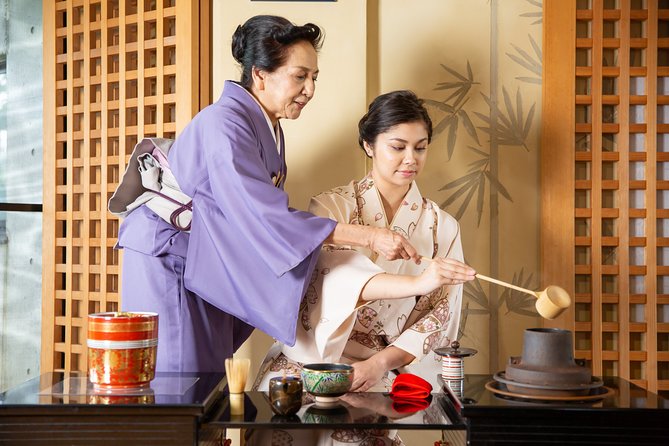
Okinawa’s tea ceremony experience begins with an unusual detail: you learn to enter through the small doorway of a traditional tea room. Then you change into a simple kimono, study the utensils, and move to a table-and-chair setting where you prepare your own matcha. It is a hands-on cultural lesson, not just a photo stop.
I like the calm, step-by-step teaching and the chance to taste both Okinawan and Japanese sweets before the bitter tea. I also like the small group limit of six, since the instructor can watch how you handle the cloth, bowl, and tea tools. The main consideration is access: the experience is not suitable for wheelchair users, and the minimum booking is two people.
Key details at a glance
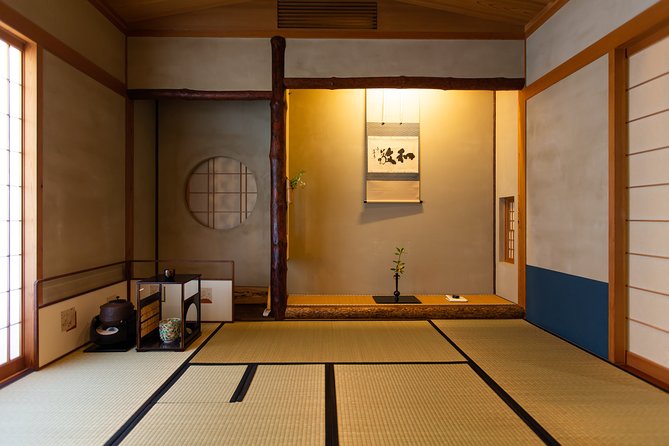
- Enter a real traditional tea room: Learn the etiquette of passing through its small entrance and notice the hanging scroll, flowers, and tea utensils.
- Wear a simple kimono: The rental is included, giving you a clear sense of occasion without the cost or formality of a full ceremonial outfit.
- Make your own matcha: You handle the tea tools, add hot water, whisk or prepare the tea as instructed, and taste the result yourself.
- Taste Okinawan sweets first: The sweet course helps balance the bitterness of matcha and adds a local Okinawan touch.
- Learn in a small group: Six participants is the maximum, with instruction available in English and Japanese.
- Take home an origami crane: Photography and a small paper-crane souvenir are included.
A quiet cultural lesson in the middle of Okinawa
Many Okinawa activities focus on beaches, food, or outdoor scenery. This one takes a slower route. For 90 minutes, your attention stays on a bowl, a bamboo or silk tool, a sweet, and the careful movements that connect them.
That change of pace is the point. You are not simply watching a tea master perform. You learn why you enter in a certain way, how to cleanse the utensils, and how to treat the tea bowl. The lesson gives you enough structure to understand the ceremony without expecting you to arrive with prior knowledge.
The setting matters. The traditional tea room is described as something you may not find elsewhere in Okinawa, and the small entrance immediately signals that this is a formal cultural space. It also gives the activity a physical rhythm: you prepare yourself, cleanse your hands, enter with care, observe the room, and only then move on to the tea-making lesson.
The atmosphere is relaxed rather than stern. English-speaking instruction is available, with Japanese also offered, and the experience has received a 4.7 rating from seven ratings. Several participants specifically praised the clear explanations, friendly teaching, and professional help from the instructor and interpreter.
More Kimono and Tea Ceremonies in Japan:
- Kimono Tea Ceremony at Kyoto Maikoya, NISHIKI
★ 5.0 · 911 reviews - Kimono Tea Ceremony at Tokyo, Asakusa Maikoya
★ 5.0 · 638 reviews - Kyoto: Kimono Tea Ceremony at Orizuruya Gion
★ 4.9 · 618 reviews
Changing into the simple kimono
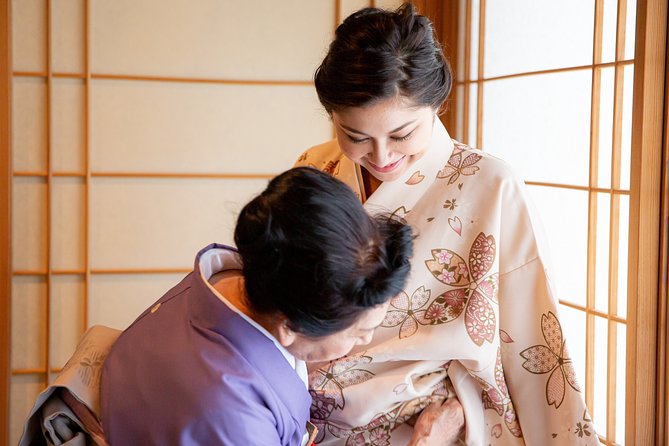
Your first step is changing into a simple kimono. The rental fee is included, so you do not need to arrange traditional clothing separately or pay an extra charge at the venue.
This is a practical middle ground. You get the visual and physical feel of wearing Japanese clothing, plus the chance to take photographs later, but the experience does not require the full preparation of a formal kimono appointment. The description does not promise an elaborate dressing service, so you should think of this as simple cultural attire rather than a complete professional styling session.
The kimono also changes how you move. You become more aware of posture and small gestures, which fits the tea ceremony’s careful pace. I would arrive ready to follow instructions and avoid treating the clothing as a costume. It is part of the lesson, not just an accessory for pictures.
After the ceremony, you change back into your regular clothes. The stated activity sequence takes about 75 minutes, while the booking information lists 90 minutes. That difference likely allows time for changing, photographs, and movement between rooms, but you should check the available start time and exact schedule when reserving.
Entering through the small tea-room door
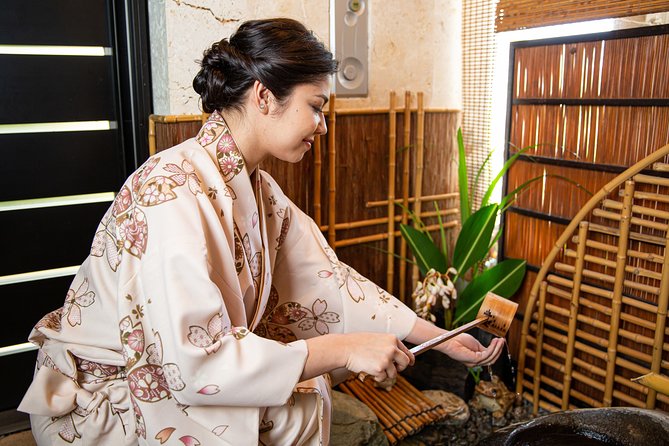
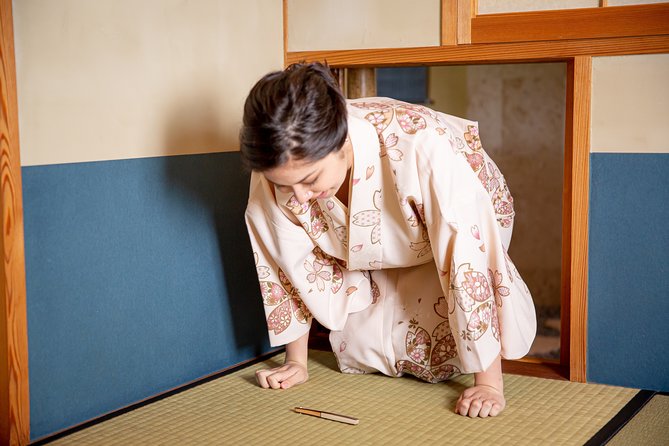
Next comes hand cleansing and entry into the tea room. The low or small entrance is one of the most distinctive parts of the experience because it makes you slow down before the ceremony begins.
You will be shown how to enter and where to direct your attention. Inside, the instructor introduces the tea utensils and explains how to appreciate the hanging scroll and flowers. These details are not decoration alone. They help show how Japanese tea ceremony uses the room, season, objects, and movements as part of one complete setting.
You do not need to know the correct etiquette in advance. The instructor leads you through it, and the English-language support is useful here because the meanings behind the gestures can be harder to understand than the physical actions. One participant described the explanations as detailed and professional, while another noted that an interpreter helped make each part clear.
The small group is valuable in this room. With no more than six participants, you have a better chance to see the utensils and hear the explanations without the activity becoming a large demonstration. The tradeoff is that this is not an open-ended museum visit. You follow the ceremony’s order, and the quiet pace may feel too slow if you want a fast sightseeing stop.
Moving to the Ryurei-style table
After the traditional room, you move to a Ryurei-style tea setting. Here, the tea ceremony takes place at tables and chairs rather than on the floor.
That detail makes the activity more approachable. Some visitors are comfortable sitting on the floor, while others find it difficult, especially in formal clothing. The chair-based arrangement gives you a more relaxed way to focus on the tools and instructions. It does not make the ceremony casual, but it removes one physical challenge.
The change of room also gives the lesson two different moods. First, you learn about entering and appreciating the traditional space. Then you sit at the table and perform the tea-making steps yourself. That combination gives you both context and practice.
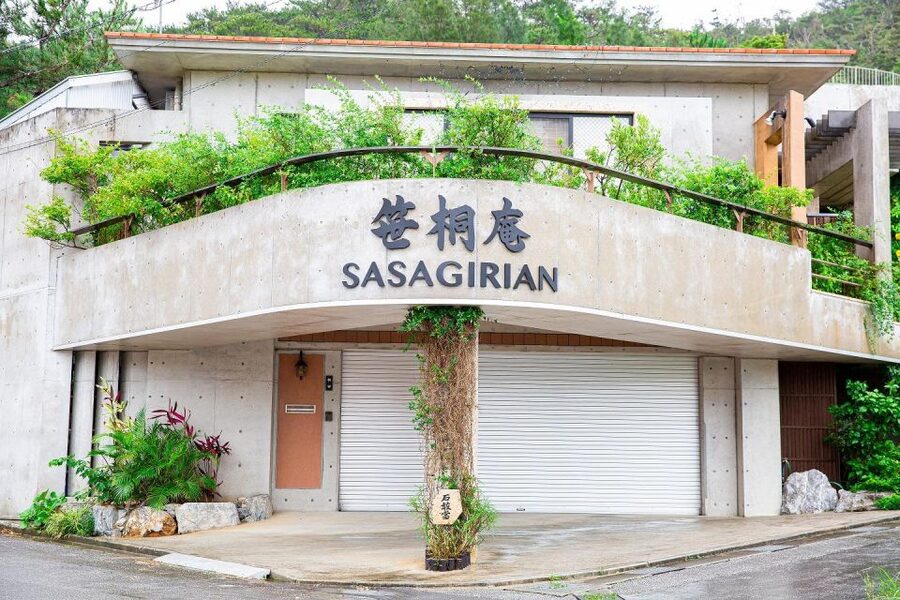
The experience is not wheelchair accessible, however. The supplied information does not explain the exact obstacles, so you should contact the provider, SASAGIRIAN OKINAWA, before booking if mobility access is important. Children under three are also not accepted.
More Tea Ceremonies in Japan:
- Kyoto: Tea Ceremony in a Traditional Tea House in Kiyomizu
★ 4.9 · 3,519 reviews - Kyoto: Tea Ceremony Ju-An at Jotokuji Temple
★ 4.9 · 3,207 reviews - Kyoto: 45-Minute Tea Ceremony Lesson Experience
★ 4.3 · 2,378 reviews - Osaka: Tea Ceremony Experience
★ 4.9 · 1,426 reviews
Okinawan sweets before the bitter tea
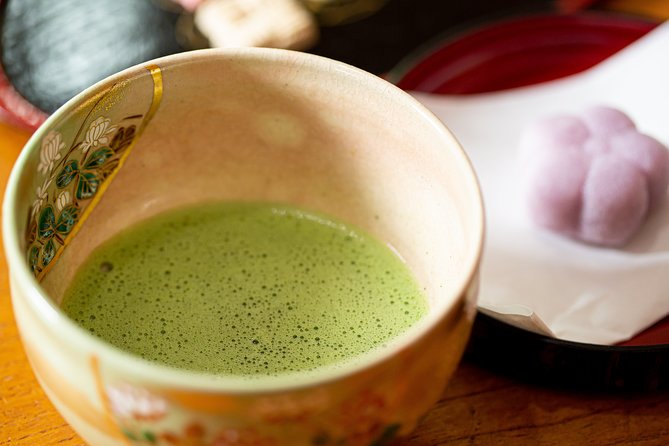
The sweets arrive before the matcha. You taste Okinawan and Japanese treats, then prepare for the tea.
This order is more than a snack break. Matcha has a distinct bitter taste, and the sweetness prepares your palate for it. The Okinawan element also keeps the lesson connected to its setting rather than presenting tea ceremony as a generic activity that could happen anywhere in Japan.
The exact sweets are not specified, so do not book this expecting a particular dessert. The value is in the pairing and in the chance to compare local Okinawan sweets with Japanese sweets in the same sitting.
For me, this is one of the strongest parts of the experience because it gives you a simple way to understand the ceremony. You feel the contrast between sweet and bitter, and the food helps make the sequence memorable. If you have allergies or dietary restrictions, the provided details do not confirm substitutions, so ask before reserving.
Learning the tea tools and silk cloth
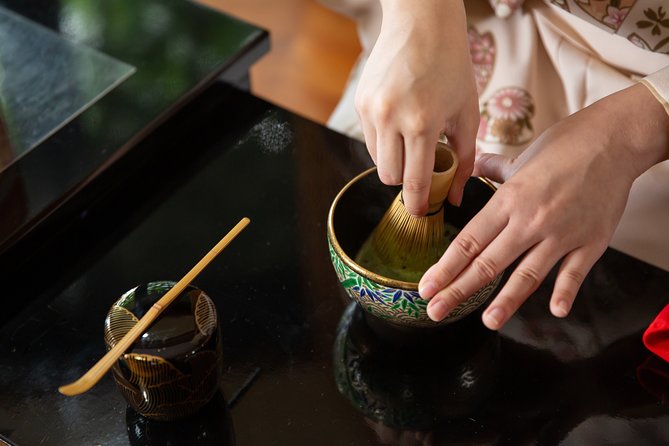
The lesson becomes more hands-on when you learn to handle the silk cloth and cleanse the tea utensils. These movements can look small, but they are central to the ceremony’s sense of care.
You are not just told that the tools are important. You are shown how to treat them, where to place them, and how to clean them as part of the process. The instructor watches while you practice, which is helpful because the details are easy to miss when you only observe someone else.
The teaching style appears friendly and patient. One participant described preparing and drinking the tea under the host’s watchful eye, while another praised the relaxed atmosphere and frequent smiles. That combination matters. The ceremony has rules, but the lesson is designed for beginners rather than people who already know Japanese tea etiquette.
English and Japanese are the listed languages. If you need every explanation in English, confirm the language arrangement at booking, since the available support may involve both an instructor and an interpreter. The experience provider is SASAGIRIAN OKINAWA.
Making and tasting your own matcha
At the heart of the activity, you add matcha and hot water to the tea bowl and make your own green tea. This is the point where the ceremony shifts from demonstration to participation.
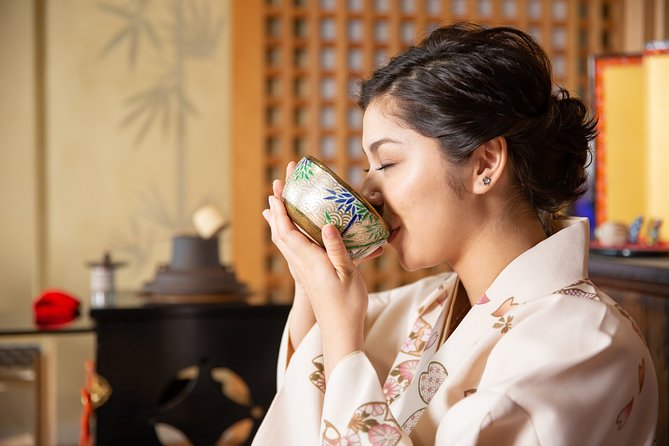
You will handle the tea bowl and utensils under instruction, then taste the tea you prepared. That personal step gives you a better sense of why the tools, water, powder, and movements matter. Your cup may not look like a tea master’s, and it does not need to. The goal is to learn the process and experience the taste.
The tea itself is bitter, which is why the sweets come first. If you normally add sugar or milk to tea, this may be a sharp change. The activity is a good fit if you want to try matcha in its traditional form rather than receive a sweetened café drink.
I also like that making the tea yourself creates a clear memory of the experience. You can describe the ceremony afterward, but you can also remember the physical steps: handling the cloth, cleansing the tools, adding the powder, and tasting the final bowl.
Photos in front of the gold folding screen
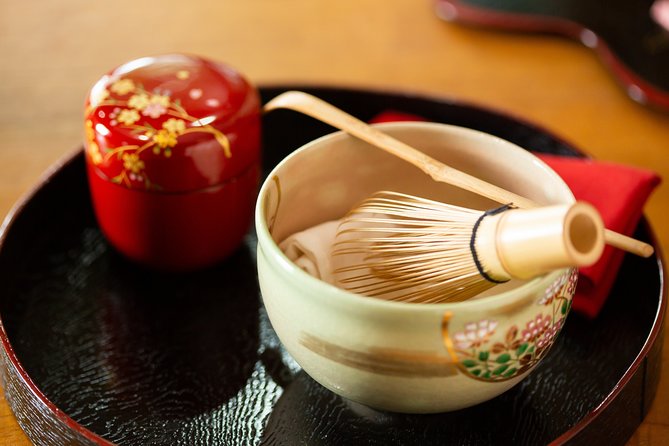
After the tea, you have time for photographs in front of a gold folding screen. The photo is included, along with the kimono rental, tea utensils, instruction, sweets, matcha, and an origami crane souvenir.
The photograph works best as a record of the lesson rather than the main reason to book. You will have a traditional setting, simple kimono, and a recognizable Japanese cultural backdrop. Still, the activity’s main value comes from the teaching and participation, not from a styled photo session.
The included photography is useful if you are visiting alone or do not want to ask someone else to take pictures. The details do not say how many photos you receive or whether they are printed or digital, so ask the provider if that matters to you.
The origami crane is another small but thoughtful touch. It is not a major financial benefit, but it gives you a physical reminder of the activity and fits the quiet, handmade character of the lesson.
Is $83 a fair price?
At $83 per person, this is not the cheapest way to try matcha in Japan. You could spend far less on a bowl of tea and a sweet at a café. That comparison, however, misses what you are paying for here.
The price includes the simple kimono, tea tools, instruction, Okinawan and Japanese sweets, matcha, photography, and the souvenir. More important, it includes access to a traditional tea-room setting and a structured lesson in etiquette. The group is limited to six, so you are paying for personal guidance rather than a large public demonstration.
I consider the price reasonable for visitors who want a cultural activity with teaching, clothing, and a hands-on component. It is less attractive if you only want to taste matcha or take a quick kimono photo. In that case, a café or photo-focused experience may offer better value.
The experience also has free cancellation up to 24 hours before the start for a full refund, and you can reserve now and pay later. You must book at least three days before the desired date, with at least two people required and no more than six accepted. Those rules make it a better fit for couples, families with older children, and small groups than for a solo visitor.
Who will enjoy this Okinawa experience?
I would recommend it to you if you want a quiet cultural activity that explains what you are doing at each stage. It suits first-time visitors to tea ceremony particularly well because the instructor covers the basic manners and tool handling from the start.
It is also a good option for couples or friends who want a shared activity and a few photographs without spending half a day in costume. The 90-minute duration fits neatly into a broader Okinawa schedule, though you should leave room for the stated 75-minute activity sequence, changing, and any transition around the start and finish.
Families can consider it for children older than three, but the ceremony requires attention and calm movements. The information only excludes children under three, so older children are permitted, yet parents should decide if they will enjoy a quiet lesson rather than assume it will feel like a play activity.
I would be more cautious if you dislike bitter tea, have difficulty with movement in traditional spaces, need wheelchair access, or want a completely informal experience. The small entrance and formal handling of utensils are part of the appeal, but they may also be the least comfortable parts for some people.
Should you book it?
Book this experience if you want to understand tea ceremony through your own hands, not just watch someone perform it. The small tea room, simple kimono, Okinawan sweets, English-language support, and six-person maximum give the activity a personal shape.
Skip it if your priority is a low-cost drink, a quick photo, or a flexible drop-in visit. You need at least two people, must reserve three days ahead, and should confirm access and language details before committing.
For the right visitor, $83 buys more than matcha. It buys a calm lesson, a local Okinawan touch, and a chance to take part in a tradition with care and guidance. That makes it one of the more distinctive short cultural activities available in Okinawa.
FAQ
Where does the tea ceremony experience take place?
It takes place in Okinawa, Japan, in a traditional tea-room setting followed by a Ryurei-style room with tables and chairs.
How long does the experience last?
The booking information lists a duration of 90 minutes. The step-by-step activity description gives a duration of 75 minutes, likely covering the main ceremony sequence.
How much does the experience cost?
The price is $83 per person.
How many people can join?
The minimum is two people, and the maximum is six participants.
Can a solo visitor book the experience?
No. At least two people are required for a reservation.
Is instruction available in English?
Yes. The listed languages are English and Japanese. An interpreter may assist with the English explanations.
What does the price include?
It includes simple kimono rental, use of the tea tools, instruction, Okinawan and Japanese sweets, matcha green tea, photography, and an origami crane souvenir.
Do I need to bring a kimono?
No. A simple kimono rental is included in the experience.
Is the activity suitable for wheelchair users?
No. The experience is listed as not suitable for wheelchair users.
Are young children allowed?
Children under three are not allowed. The supplied information does not give a different age limit for older children.
Can I cancel for a full refund?
Yes. You can cancel up to 24 hours in advance for a full refund.
How far ahead must I reserve?
A reservation is required at least three days before the desired experience date.
Newly steeped around Japan
- Yokohama : Tea Ceremony with Sweets and Souvenir★ 5.0 · 5 reviews
- Whisk Your Own Matcha: A Zen Matcha Experience at Temple★ 3.6 · 7 reviews
- Walking Tour: Yanaka,Nezu& Sendagi: Tea Ceremony & Old Tokyo★ 5.0 · 3 reviews
- Visit local home for music and tea ceremony near Disney★ 4.9 · 13 reviews
- Trip to Kamakura & Enoshima: Shrines, Seaside, Temples &Tea★ 5.0 · 11 reviews
- Yokohama: Sushi & Gyoza Cooking with Matcha & GreenTea Experience★ 5.0 · 3 reviews
- Kyoto tea town for matcha lovers★ 5.0 · 16 reviews
- Uji: Private immersion into Kyoto’s tea and reglious culture★ 5.0 · 17 reviews
Kimono & Tea Ceremony, compared.

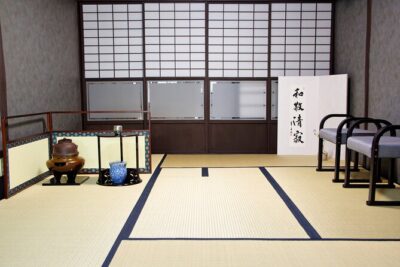
KYOTO Tea Ceremony with kimono near by Imamiya Jinjya Shrine
Read our review →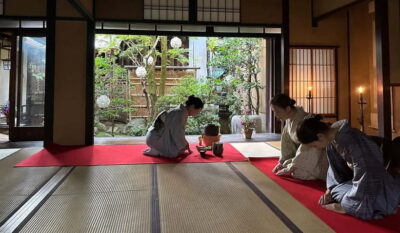
Kyoto: Kimono and Tea Ceremony Experience at Cultural Asset
Read our review →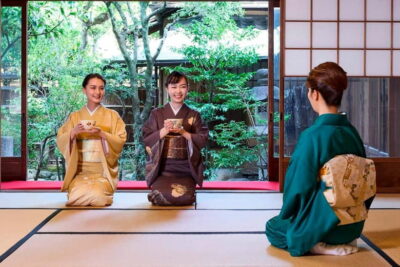
Kyoto: Kimono Tea Ceremony with Matcha and Sweet
Read our review →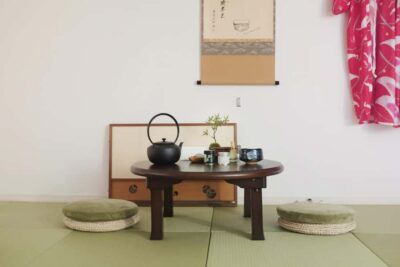
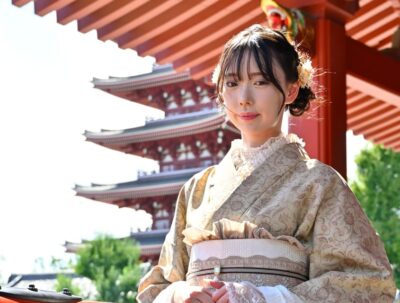
Tokyo: Asakusa Kimono Dressing and Matcha Experience
Read our review →Browse the lists this tea experience appears in