
Review · KYOTO
Elegant Tea Ceremony While Wearing Kimono Experience in Kyoto
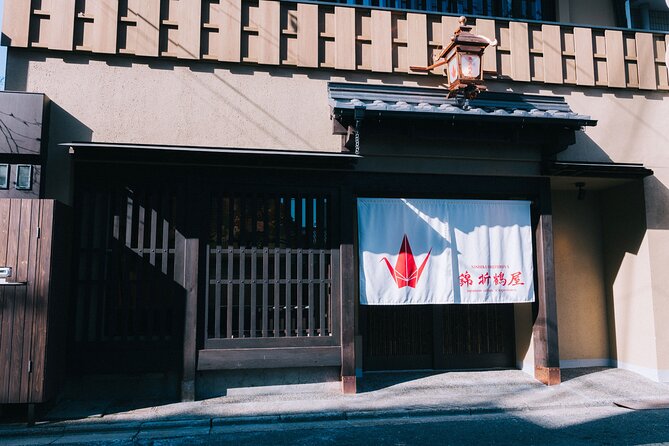
Kyoto’s traditional tea ceremony can feel formal from the outside. This experience makes it approachable: you choose a kimono, have your hair styled if you’re a woman, then learn to whisk your own matcha in a quiet tea room. The setting is Nishiki Orizuruya, only a minute from Nishiki Market.
I especially like the chance to choose your own kimono and accessories, and the small-group limit of 10 people. I also like that you can add an activity with a lasting result, from calligraphy on washi paper to a small gold-leaf plate. The main consideration is that the ceremony may not provide as much historical explanation as you expect, and men may find the kimono selection less varied.
Key points
- Kimono dressing and hair styling: Choose from available kimono and accessories, with free hair styling for women.
- Hands-on matcha: Watch the tea master, then prepare your own bowl with a bamboo whisk.
- Seasonal wagashi: Taste traditional sweets supplied by a confectionery with a century of history.
- Three add-on choices: Pick calligraphy, gold leaf art, or an English-guided walk around Nishiki Market.
- Central Kyoto setting: Nishiki Orizuruya is about a minute from Nishiki Market and near public transportation.
- Small-group format: The activity accepts a maximum of 10 people and lasts about 2 to 2.5 hours, depending on the plan.
Choosing a Kimono at Nishiki Orizuruya
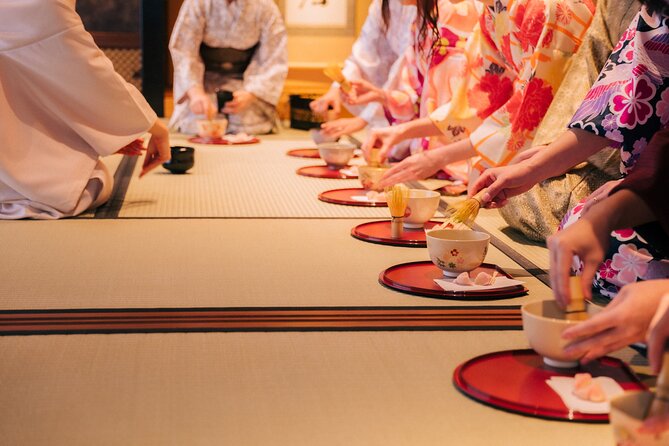
The experience begins with the part many people look forward to most: choosing what you’ll wear. Staff help you dress in a traditional kimono and select matching accessories. For women, hair styling is included, with decorative touches that make the outfit feel finished rather than simply rented.
This is more than a quick costume change. The dressing process helps you understand how much care goes into the appearance of a kimono. Staff have been described as patient and attentive with different body sizes, and a chair can be provided if sitting on the floor is difficult.
You’ll also have time for photographs before the ceremony begins. Staff may help take pictures, which is useful because the kimono and hair styling are a major part of the experience. Men can participate, though the selection may feel more limited than the women’s range of colors and accessories.
One practical detail is worth checking at the venue: some arrangements allow you to keep the kimono on after the activity and walk around Kyoto until 6 p.m. This is a terrific bonus when available, but do not assume every booking includes the same amount of free time. Ask the staff what applies to your plan.
More Kimono and Tea Ceremonies in Kyoto
- Kimono Tea Ceremony at Kyoto Maikoya, NISHIKI
★ 5.0 · 911 reviews - Kyoto: Kimono Tea Ceremony at Orizuruya Gion
★ 4.9 · 618 reviews - KYOTO Tea Ceremony with kimono near by Imamiya Jinjya Shrine
★ 5.0 · 343 reviews
A Tea Ceremony You Can Actually Take Part In
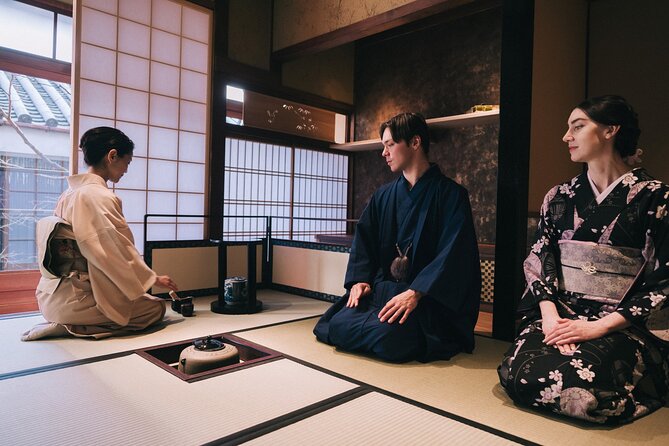
The tea ceremony lasts about 90 minutes on the standard plan. A professional tea master demonstrates the basic process, explains the customs in English, and shows you how the movements fit together. You then prepare your own matcha with a bamboo whisk.
That hands-on step is the heart of the activity. You are not only sitting quietly while someone else performs a formal ritual. You get to try the whisking yourself, which gives you a better feel for the care, rhythm, and concentration involved in Japanese tea.
The tea is served with seasonal wagashi, traditional Japanese sweets. These balance the bitterness of matcha and give the ceremony a small taste of the seasons. The sweets come from a confectionery with 100 years of history, adding a useful bit of context to what might otherwise seem like a simple snack.
The room is intended to feel calm and intimate. The group limit of 10 helps keep the demonstration visible and gives you a fair chance to ask questions or receive help. English guidance is included, and the tea master has been praised for clear explanations and strong English.
Still, set your expectations correctly. This is an accessible cultural activity, not a long academic lesson on tea history. One experience found that the ceremony offered limited explanation of the meaning behind each step. If you want a detailed study of tea schools, etiquette, and religious history, you may want a separate visit to a specialist cultural institution.
For most visitors, that lighter approach is a benefit. You can enjoy the ritual without feeling tested on every movement. The ceremony is formal enough to feel special, but practical enough for a first attempt.
Calligraphy, Gold Leaf, or Nishiki Market
After the tea ceremony, you choose one of three extensions. This choice changes the character of the booking, so it is worth matching the option to your interests.
Calligraphy on Washi Paper
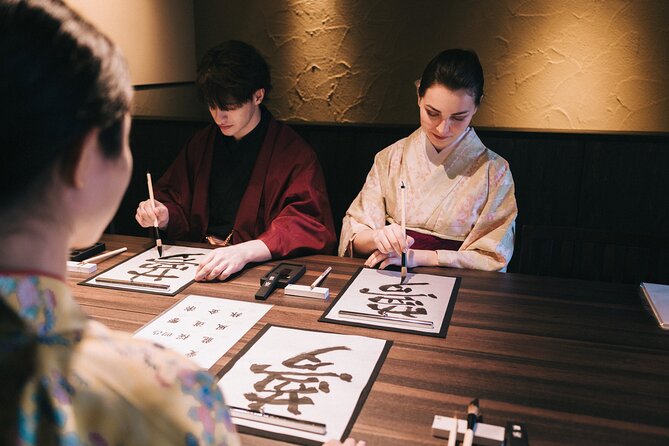
The tea ceremony and calligraphy plan adds a brush-and-ink lesson. You learn to write a favorite kanji and create a washi paper piece to take home.
This is a good choice if you want a quiet activity and a personal souvenir. The finished work can carry more meaning than a standard shop purchase because you made it during the experience. Families may also like it because children can take part in the brushwork rather than only watching.
The main thing to remember is that Japanese calligraphy takes practice. Your final character may not look like a professional’s work, and that is part of the point. The value is in learning the brush technique and producing something connected to your day in Kyoto.
More Tea Ceremonies in Kyoto
- Kyoto: Tea Ceremony in a Traditional Tea House in Kiyomizu
★ 4.9 · 3,519 reviews - Kyoto: Tea Ceremony Ju-An at Jotokuji Temple
★ 4.9 · 3,207 reviews - Kyoto: 45-Minute Tea Ceremony Lesson Experience
★ 4.3 · 2,378 reviews - Kyoto: Table-Style Tea Ceremony at a Kyo-Machiya
★ 4.9 · 1,211 reviews
Gold Leaf on a Small Plate
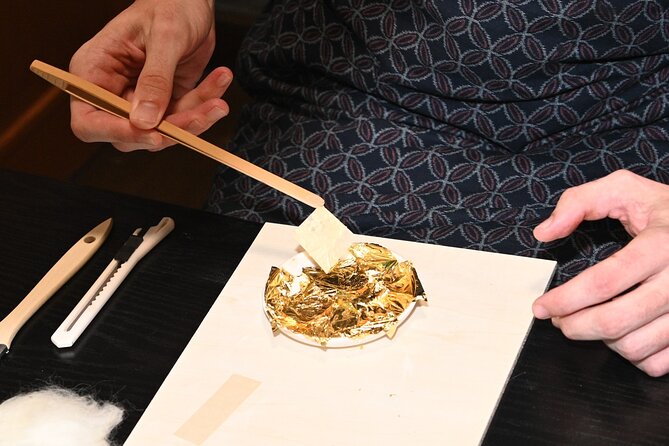
The gold-leaf plan lasts about 130 minutes. After tea, you decorate a small plate with high-purity gold leaf in a guided, hands-on workshop. You take the finished piece home.
This option suits you if you prefer craft work to writing. It also produces a useful keepsake, though the result will depend on your design and the care you take with the delicate material. The plan gives the tea ceremony a more active finish and may be especially appealing if you want something decorative rather than a sheet of paper.
Because gold leaf is delicate, follow the instructions closely. The workshop is meant to be accessible and enjoyable, not a professional ceramics class. You are making a small souvenir, not a museum-quality object.
Nishiki Market and the Local Streets
The longest plan lasts about 150 minutes and pairs tea with an English-guided walk around Nishiki Market and the nearby area. Nishiki Market is often called Kyoto’s Kitchen, and this option connects the tea room with the food culture that surrounds it.
The walk includes local shrines, historic shops, food-related sights, and nearby shopping streets. This makes the plan useful for first-time visitors who want cultural activity and local orientation in one booking. Guide Lina has received specific praise for the market walk, so this option may be a strong choice if you want more time outside the tea room.
The trade-off is time. The walk adds context and movement, but it leaves less time for a slow craft activity. Nishiki Market can also become crowded on weekends, holidays, and during special events. If you prefer a peaceful room and a personal souvenir, choose calligraphy or gold leaf instead.
Why the Nishiki Location Helps
Nishiki Orizuruya is at 452 Jūmonjichō in Nakagyo Ward, just a minute from Nishiki Market. The location is near public transportation, and the activity ends back at the meeting point.
That central position makes it easy to combine the experience with other Kyoto plans. You can schedule it near a visit to Nishiki Market, nearby shopping streets, or shrines in the central area. The market walk option takes advantage of this location directly, while the tea-only and craft plans give you a calm indoor activity in the middle of a busy sightseeing day.
The location also creates a useful contrast. You begin in a traditional tea room, then can step into one of Kyoto’s best-known food areas. That shift helps you see both the quiet, formal side of Japanese culture and the everyday energy of a central market.
Plan to arrive at least 10 minutes before your scheduled start. Kimono dressing takes time, so arriving late could affect the whole schedule. Confirmation is sent within 48 hours of booking, subject to availability.
The Real Value at About $50.58
At approximately $50.58 per person, this is not the cheapest way to drink matcha in Kyoto. You could buy tea and a sweet for far less. The price makes more sense when you count the included kimono rental, dressing assistance, women’s hair styling, English guidance, the tea lesson, matcha, wagashi, and the selected extra activity.
The value is strongest for you if you want several Kyoto experiences joined together. Kimono rental alone can involve separate choices, dressing arrangements, and return times. Here, it is part of a planned cultural session, with staff helping you through the process.
The calligraphy and gold-leaf plans add a take-home item, while the Nishiki plan adds a local walk. The standard tea ceremony gives you the lowest price and the shortest commitment, but it may feel less complete if you are hoping for a souvenir or a neighborhood introduction.
For a family, the cost can add up quickly because children aged 5 and older pay the same price as adults. There is no child discount. On the other hand, children can take part in the kimono dressing, tea preparation, and calligraphy or gold leaf, so the booking can work well when your family enjoys hands-on activities.
The experience is limited to 10 people. That is not a private tour, but it is small enough to keep the ceremony manageable and give the staff room to help. A full group may feel less intimate, especially during busy periods, but the small maximum is preferable to a large, staged performance.
Comfort, Crowds, and What to Wear
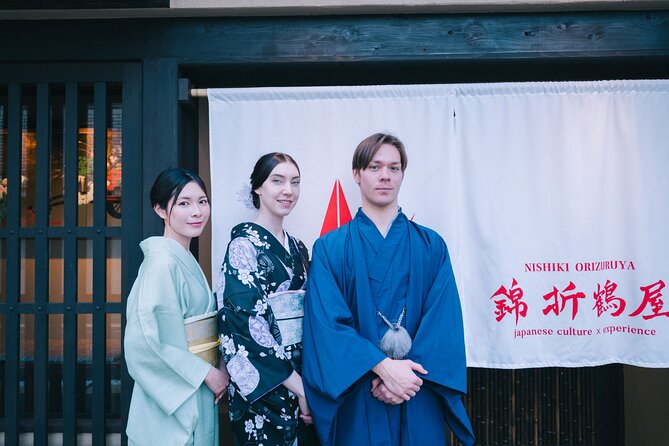
The kimono is supplied, so you do not need to arrive in traditional clothing. Wear something comfortable underneath, since the dressing process and formal sitting can be tiring for some people.
The tea ceremony may involve sitting on the floor. If that is difficult, tell the staff. A chair has been provided for someone who could not sit comfortably, which suggests that the venue can make at least some practical adjustments.
Crowding is most likely on weekends, public holidays, and during special events. The tea room itself may remain controlled, but the nearby Nishiki area can be busy. The market walk is therefore best for you if you enjoy a lively food district, while the tea and craft plans are better if you want a more settled pace.
Keep valuables with you. The activity provider states that you are responsible for your belongings. Severe weather or a natural disaster such as a typhoon can cancel the activity, in which case the experience is fully refunded.
The booking is non-refundable and cannot be changed for any reason. That matters more than usual because this is a timed activity with limited capacity. Check your Kyoto schedule carefully before paying.
Who Will Enjoy This Kyoto Experience Most
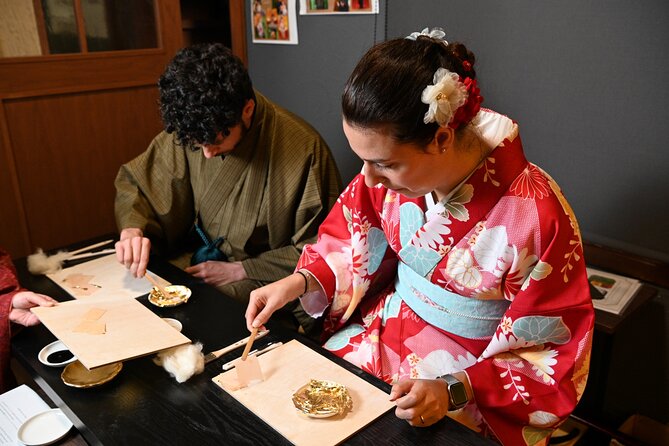
I would recommend this for first-time Kyoto visitors who want a clear introduction to several traditions without committing to a full-day cultural course. It also suits families, couples, and anyone who wants photographs in a kimono without arranging clothing rental separately.
The experience works particularly well for:
- Families with children aged 5 and older who enjoy making things
- Visitors who want an English-guided cultural activity
- People interested in Japanese food culture and Nishiki Market
- Anyone looking for a small souvenir made during the trip
- Visitors who prefer a structured introduction to tea ceremony etiquette
You may want to skip it if you dislike formal clothing, floor-based ceremonies, or planned activities. It is also not the best match if your main goal is a long, detailed explanation of tea history. The presentation is designed to be welcoming and practical rather than highly scholarly.
Women receive free hair styling, which adds considerable visual impact to the kimono experience. Men can join, but the clothing choices may feel less varied. If your group includes people with allergies, mention them in advance or at the venue, since accommodations for sweets and tea have been made before.
Should You Book the Tea Ceremony?
Book it if you want more than a cup of matcha and a photograph. The strongest part is the combination of dressing, guided tea preparation, seasonal sweets, and a choice of calligraphy, gold leaf, or a Nishiki Market walk. You get a real activity, not just a short photo stop.
Choose calligraphy for a personal paper keepsake, gold leaf for a decorative handmade plate, and the Nishiki option for food culture and neighborhood context. Select the standard tea plan if the ceremony itself is your priority and you want to keep the time and cost lower.
I would be cautious only if you need a flexible booking, since the reservation cannot be changed or refunded, or if you expect a long historical lecture. For most people seeking a polished, friendly introduction to Kyoto’s traditional arts, the price is fair and the format is easy to fit into a central Kyoto day.
FAQ
Where does the tea ceremony take place?
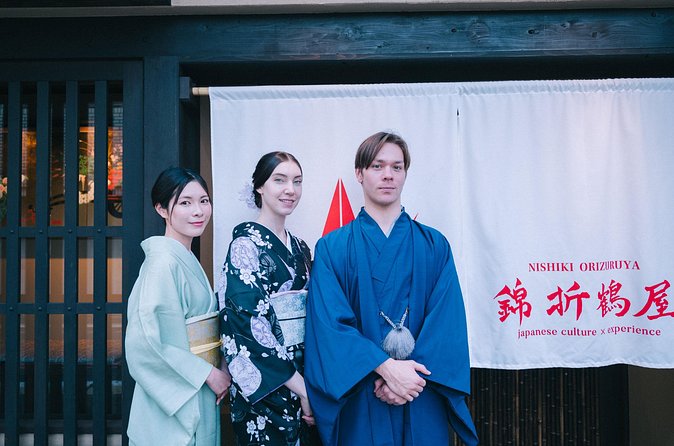
It takes place at Nishiki Orizuruya, 452 Jūmonjichō, Nakagyo Ward, Kyoto, 604-8121, Japan.
How far is the venue from Nishiki Market?
Nishiki Orizuruya is about a one-minute walk from Nishiki Market.
How long does the experience last?
The standard tea ceremony lasts about 90 minutes. The gold-leaf plan lasts about 130 minutes, and the Nishiki Market plan lasts about 150 minutes.
Is kimono rental included?
Yes. All plans include kimono rental. Free hair styling is included for women.
Is the activity guided in English?
Yes. The experience is guided in English, including the tea ceremony and the Nishiki Market option.
Can I make my own matcha?
Yes. You watch a demonstration and then prepare your own matcha using a bamboo whisk.
What activities can I choose after the tea ceremony?
You can choose Japanese calligraphy, gold-leaf art, or an English-guided walk around Nishiki Market and the nearby area.
Can children join?
Children aged 5 and older may join. There is no child discount.
What happens if the weather is dangerous?
The activity may be canceled because of severe weather or a natural disaster such as a typhoon. In that situation, it is fully refunded.
Newly steeped around Kyoto
- Whisk Your Own Matcha: A Zen Matcha Experience at Temple★ 3.6 · 7 reviews
- Kyoto: Authentic Tea Ceremony in a Small Group★ 5.0 · 7 reviews
- Tea ceremony at Kyoto’s Zen Temple Teahouse★ 5.0 · 2 reviews
- Uji Walking Tour – Byodo-in temple and Tea Ceremony from Kyoto★ 3.5 · 3 reviews
- Tea Ceremony Experience in Traditional Kyoto Townhouse★ 5.0 · 19 reviews
- Tea Ceremony in 150 Years Old Townhouse with Tables and Chairs★ 5.0 · 22 reviews
- Sencha-do the Japanese Tea Ceremony Workshop in Kyoto★ 5.0 · 21 reviews
- Silent Beauty of Kyoto Zen Walk and Tea Experience★ 5.0 · 2 reviews
Kimono & Tea Ceremony, compared.


KYOTO Tea Ceremony with kimono near by Imamiya Jinjya Shrine
Read our review →
Kyoto: Kimono and Tea Ceremony Experience at Cultural Asset
Read our review →
Kyoto: Kimono Tea Ceremony with Matcha and Sweet
Read our review →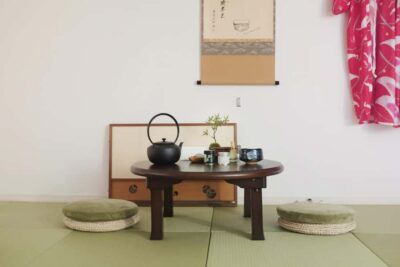
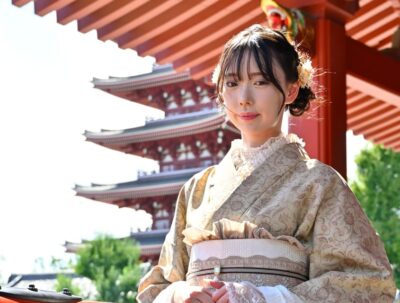
Tokyo: Asakusa Kimono Dressing and Matcha Experience
Read our review →Browse the lists this tea experience appears in