
Review · KANAZAWA
Full-Day Tour from Kanazawa: Samurai, Matcha, Gardens and Geisha
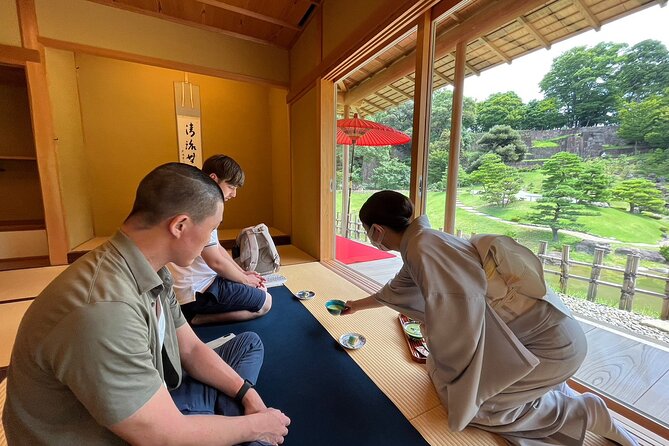
Kanazawa reveals itself best on foot, and this full-day route links its samurai quarter, castle grounds, famous garden, and geisha districts in one well-planned sweep. I especially like the small maximum group of 15, which gives guides such as Mike, Garrett, Lee, and Akari room to explain details and adjust the pace. The matcha served at Gyokusen-an, with a centuries-old garden in view, is another lovely pause.
The catch is simple: this is a serious walking day, not a gentle sightseeing stroll. You may cover roughly 10 to 12 kilometers, and several hours can pass before the final tea district. The one-hour lunch break helps, but older visitors or anyone managing knee, hip, or foot trouble should think carefully before booking.
Key points to know before booking
- About 10 to 12 kilometers on foot: You walk between most stops, with no sightseeing bus to shorten the day.
- Nine major cultural stops: The route covers samurai homes, Oyama Shrine, Kanazawa Castle, Kenrokuen Garden, and three tea districts.
- Matcha with a garden view: Gyokusen-an includes matcha and wagashi sweets in a traditional tea house setting.
- A real look at geisha culture: Ochaya Shima is a preserved tea house with colorful rooms and musical instruments.
- Lunch is flexible: The one-hour break is included, but you choose and pay for your own meal.
- Small-group guiding: The maximum is 15 people, with English-speaking guides including Mike, Garrett, Lee, Akari, and others depending on the date.
Why this route works for a first day in Kanazawa
Kanazawa can feel spread out when you first arrive. Its best sights are not packed into one compact historic center, so a good route matters. This tour begins at Kanazawa Station and walks west toward the old samurai quarter, then continues through shrines, castle grounds, gardens, and the eastern tea districts before returning to the station.
I like the order. You begin with the quieter streets of Nagamachi, where the story of the old feudal city comes into focus. Later, the grand gardens and castle give you a sense of the ruling Maeda family’s wealth. The day ends among wooden tea houses and former geisha establishments, a fitting change of mood after the formal samurai neighborhoods.
The guides are an important part of the experience. The named guides associated with this route include Mike, Garrett, Lee, Akari, Fadir, Daniel, Mohammed, and others. The strongest feedback centers on guides who explain Japanese history and present-day culture in plain language, keep the group moving, and adjust the pace when needed. Garrett, in particular, is repeatedly praised for his detailed explanations and ability to adapt the route for different ages.
The tour is rated 4.9 from 68 ratings, with 97 percent recommending it. That points to a consistently strong experience, though you should not mistake high marks for a relaxed day. The walking is the defining feature.
More Matcha Experiences in Japan:
- World Heritage Kyoto & Nara Uji Authentic Matcha Experience
★ 5.0 · 1,573 reviews - Kyoto: Arashiyama Bamboo Forest, Monkeys, Matcha & Temple Tour
★ 5.0 · 759 reviews - Matcha Making Class in Tokyo with Authentic Japanese Sweets Set
★ 5.0 · 744 reviews
Ashigaru Museum and the samurai quarter
The first stop is the Ashigaru Museum, where you enter two homes once occupied by ashigaru, the lower-ranking samurai who served regional lords. These houses are useful because they show a side of samurai life that grand castles and elegant residences often miss.
You see how status worked within the old military order. The homes were not designed for the richest warriors, and that makes them a practical introduction to the city’s social structure. I would pay attention to the layout and scale rather than expect lavish decoration.
From there, your guide takes you through the former Nagamachi Bukeyashiki district. Its narrow streets and preserved appearance make it one of Kanazawa’s most atmospheric areas. You may feel as if the city has suddenly traded modern traffic for old Japan, though keep in mind that this is a living neighborhood, not a film set.
This part of the walk is especially valuable with a guide. Without context, you might simply admire the earthen walls and traditional facades. With an explanation of who lived here and how the district functioned, the streets become easier to read.
The first two stops take about two hours. That is a generous opening, but it also means you begin the long day with plenty of walking already under your feet.
Oyama Shrine and the approach to Kanazawa Castle
The route then leaves Nagamachi and heads toward Oyama Shrine. Its entrance gate is unusual in Japan because it uses brick and includes design influences not normally associated with a traditional Shinto shrine.
The stop lasts about 40 minutes and is free to enter. The shrine provides a change of architectural mood before the castle, and your guide can explain why its gate looks so different from the wooden torii and gate structures you may see elsewhere in Japan.
Next comes Kanazawa Castle. The visit is brief, about 20 minutes, and focuses on the grounds rather than a long interior tour. You pass restored buildings and open lawns that give you a sense of the castle’s scale.
Do not expect a complete castle museum visit here. The value is in seeing how the castle connects the samurai district, shrine, garden, and old political center into one route. The restored structures are imposing, but the short stop means you will have to keep moving.
Matcha at Gyokusen-an
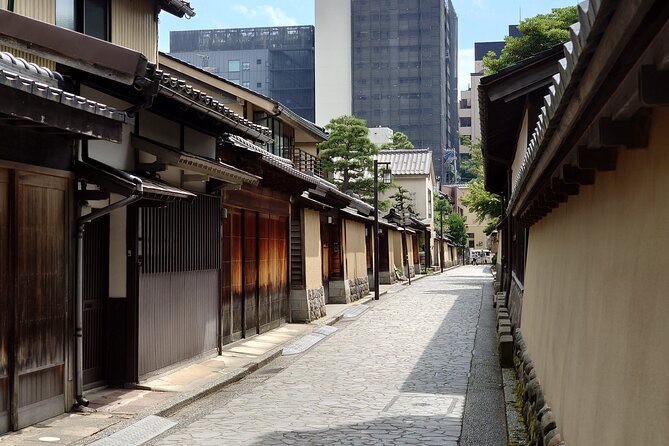
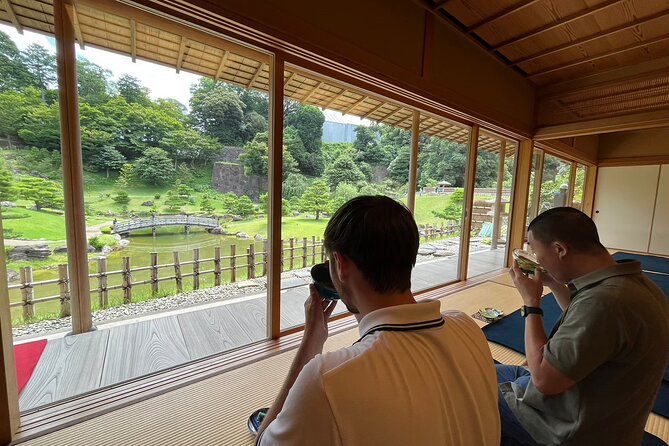
Gyokusen-an is one of the day’s most appealing pauses. Inside the tea house, you receive matcha and wagashi sweets while looking out toward an old garden near the castle grounds.
This is not just a snack break. The setting gives you a practical introduction to the quiet rituals of Japanese tea culture without requiring a separate formal tea ceremony booking. Matcha can taste grassy and strong if you are not used to it, while wagashi provides a sweet counterpoint.
I particularly like the timing. By this point, you have walked through samurai streets and castle grounds, so sitting in a tea house feels earned. The one-hour stop also gives your legs a useful rest before Kenrokuen.
The tea experience is included in the $151.30 price, along with entry to Kenrokuen and Ochaya Shima. That helps the price make more sense, especially if you value having several admissions, a guide, and a planned route bundled together. It is less attractive if you prefer to move slowly, spend long periods at one site, or choose every stop yourself.
More Full Days Among the Tea around Japan:
- Mt. Fuji & Lake Kawaguchiko Ropeway Panorama Full-Day Tour
★ 4.6 · 236 reviews - Tokyo: Full-Day Tour w/Tea Experience,Buffet Lunch & Cruise
★ 4.9 · 151 reviews - Kanazawa: Samurai, Matcha, Gardens and Geisha Full-Day Tour
★ 4.9 · 75 reviews - Nara Deer Park, Uji Matcha, & Hot Spring Full-Day Tour from Osaka
★ 4.0 · 21 reviews
Kenrokuen Garden: the visual centerpiece
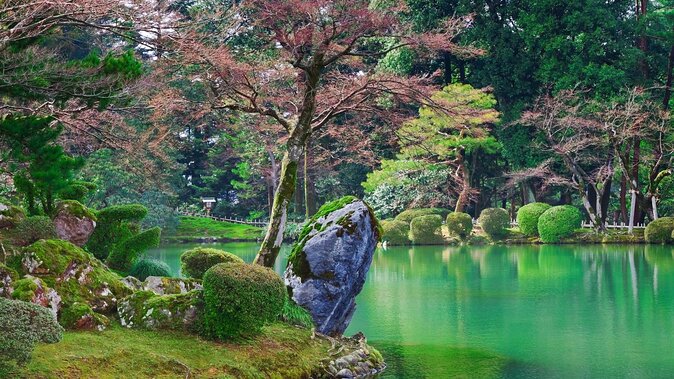
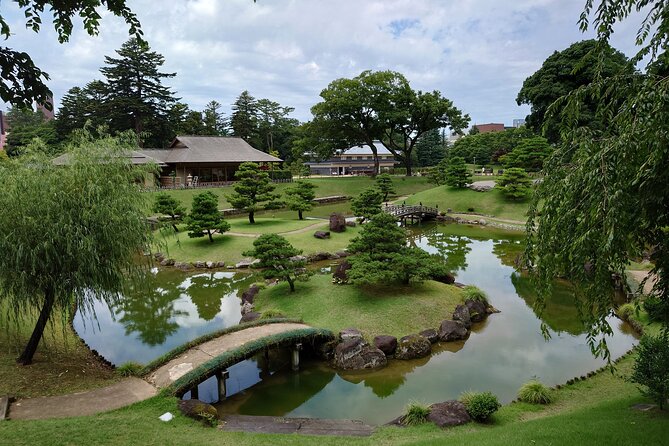
Kenrokuen takes about 90 minutes, making it the longest sightseeing stop of the day. It is one of Japan’s best-known gardens, designed around traditional ideas of balance, borrowed scenery, water, trees, paths, and seasonal beauty.
You can expect ponds, teahouses, carefully shaped trees, and broad views over the city. The garden changes with the calendar. One visitor described seeing early cherry blossoms, but the tour information does not promise a particular season or bloom. Visit for the design and atmosphere first, with flowers as a bonus.
The guide adds useful structure here. Kenrokuen is large enough that it is easy to wander without understanding why one view works better than another. You will have time to stroll and enjoy the garden, while also receiving an explanation of the design principles behind it.
There is a trade-off. Ninety minutes is enough for a strong first look, but not enough to inspect every path or enter every possible building at leisure. If Kenrokuen is your main reason for visiting Kanazawa, you may want to return independently on another day.
Lunch is your choice, not a restaurant stop
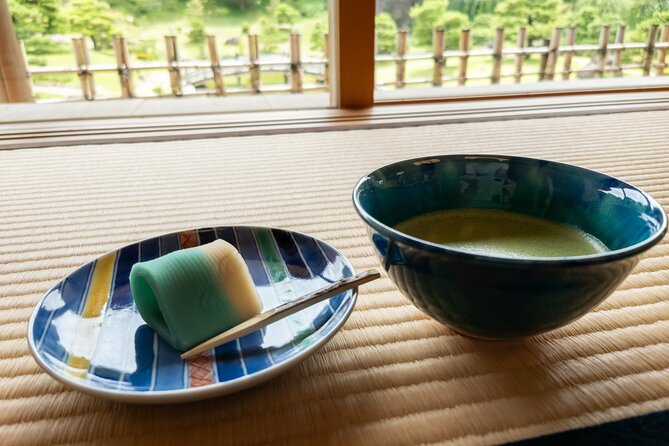
The schedule includes a one-hour lunch break, but lunch is not included in the price. You choose your own restaurant, with suggestions from the guide.
I consider this a sensible arrangement. It avoids forcing a large group into one fixed restaurant and lets you choose according to appetite and budget. The drawback is that you should not assume a meal is waiting for you. Keep the break in mind when comparing the price, since your food cost comes separately.
The overall experience is advertised as about nine hours, starting at 9:00 a.m. The lunch hour is part of that schedule, so the active sightseeing time is roughly one hour less than the full duration. You finish back at Kanazawa Station, which is convenient if you have an evening train or are staying near the station.
Higashi Chaya and the geisha districts
After Kenrokuen, the route continues to Higashi Chaya, Kanazawa’s best-known traditional tea district. Wooden buildings line the streets, many now housing restaurants, craft shops, and small businesses.
The district can feel more polished and commercial than Nagamachi, but it remains an important part of Kanazawa’s cultural identity. Your guide can help separate the architecture from the modern shopping activity and explain how tea districts operated.
You receive about an hour here, including free time. That is useful because this is the place where you may want to browse, take photographs, or pause for a small purchase. Keep your expectations realistic: the tour does not promise a geisha performance or a meeting with a geisha.
The next stop, Ochaya Shima, gives you a more direct look at that world. This preserved tea house was once used by geisha and their wealthy patrons. Inside, colorful walls and musical instruments help show the refined entertainment culture that developed around these establishments.
Admission to Ochaya Shima is included. The visit lasts about 30 minutes, so it is a focused stop rather than an extended museum visit. I like this pairing: Higashi Chaya gives you the street scene, while Shima provides an interior and a sense of how the district functioned behind its traditional facades.
Kazuemachi and the final walk back
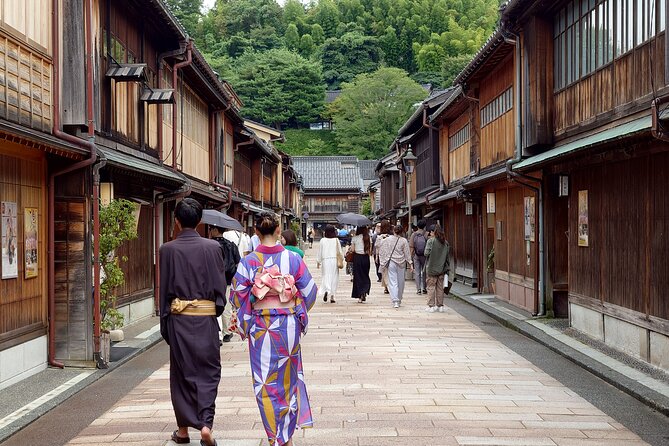
The last tea district is Kazuemachi Chayagai, reached on the walk back toward the station. It is less crowded than Higashi Chaya and sits along the Asano River, giving the final section a quieter character.
The stop lasts about 30 minutes and is free. You may see traditional establishments where geisha still entertain customers, but the tour does not guarantee a sighting. That uncertainty is part of the area’s character, and it is best approached respectfully rather than as a performance for visitors.
By this point, your legs will know you have had a full day. The route’s final stretch is not difficult because of any single attraction, but because the distance adds up. You can enjoy Kazuemachi more if you pace yourself earlier and use the seated opportunities at the tea house, garden, and lunch break.
How much value do you get for $151.30?
At $151.30 per person, this is not a cheap walking tour. Its value depends on what you want from Kanazawa.
You are paying for a full day with an English-speaking guide, a small group capped at 15, matcha and wagashi, entry to Kenrokuen, and entry to Ochaya Shima. You also get a route that links major sights without having to study bus connections or decide what to skip.
The price is easier to justify if Kanazawa is new to you and you want cultural explanation rather than a simple checklist of buildings. It is also useful if you have only one full day in town. Several guides, including Garrett and Mike, are praised for adding context about how Kanazawa developed as an alternative to Kyoto and how old customs connect with modern Japan.
The value is weaker for independent visitors who enjoy researching routes, walking at their own pace, or spending half a day in one garden. You will see many places, but the schedule keeps you moving. Admission to some stops is free, so you are paying mainly for the guide, planning, group experience, and included tea and admissions.
Who will enjoy this day, and who should skip it?
I would choose this tour if you want a strong first look at Kanazawa and enjoy learning while walking. It suits couples, families, and solo visitors who prefer company and explanation, especially if Japanese history and traditional architecture are unfamiliar territory.
The small group is a real advantage. A maximum of 15 is far more manageable than a large coach group, and guides can often adjust the pace or answer questions without turning every stop into a crowd scene.
I would hesitate if you have limited stamina. The route is fully on foot, and direct feedback from the experience puts the distance at about 10 to 12 kilometers, with one account estimating about 10 miles. Hot weather, rain, or hail can make the day harder, though the tour has operated in wet conditions.
Wear comfortable shoes, carry water, and treat the weather as an important factor. The tour requires good weather and may be canceled in poor conditions, in which case you are offered another date or a full refund. You can also cancel for a full refund up to 24 hours before the start time. The cutoff uses local time.
Should you book the Kanazawa walking tour?
Book it if you want one well-organized day covering samurai homes, castle grounds, a first-rate garden, matcha, and geisha districts. The route is broad, the guides bring useful context, and the tea house stop breaks up what would otherwise be a demanding march.
Skip it if your priority is a slow visit to Kenrokuen, a formal geisha performance, or independent meals and transport. The best reason to book is not simply the number of sights. It is the chance to understand how Kanazawa’s samurai power, gardens, tea culture, and old entertainment districts fit together.
FAQ
Where does the tour start?
It starts at Kanazawa Station in Kanazawa, Japan.
What time does the tour begin?
The tour starts at 9:00 a.m.
Where does the tour finish?
The experience ends back at Kanazawa Station, the meeting point.
How long does the tour last?
It lasts about nine hours, including a one-hour lunch break. The active sightseeing portion is roughly one hour shorter than the total posted duration.
How much walking is involved?
This is a fully walking tour. The total distance is approximately 10 to 12 kilometers, and one account estimated about 10 miles.
Is lunch included?
No. The one-hour lunch break is included in the schedule, but you choose and pay for your own restaurant. The guide can provide recommendations.
What is included in the price?
The price includes matcha and wagashi sweets at a tea house, admission to Kenrokuen Garden, admission to the Shima preserved geisha house, and an English-speaking guide.
What is the maximum group size?
The tour has a maximum of 15 participants.
Can I cancel for a refund?
You can cancel at least 24 hours before the start time for a full refund. Cancellations or changes made less than 24 hours before the start are not accepted for a refund. If poor weather causes the tour to be canceled, you are offered another date or a full refund.
Newly steeped around Japan
- Yokohama : Tea Ceremony with Sweets and Souvenir★ 5.0 · 5 reviews
- Whisk Your Own Matcha: A Zen Matcha Experience at Temple★ 3.6 · 7 reviews
- Walking Tour: Yanaka,Nezu& Sendagi: Tea Ceremony & Old Tokyo★ 5.0 · 3 reviews
- Visit local home for music and tea ceremony near Disney★ 4.9 · 13 reviews
- Trip to Kamakura & Enoshima: Shrines, Seaside, Temples &Tea★ 5.0 · 11 reviews
- Yokohama: Sushi & Gyoza Cooking with Matcha & GreenTea Experience★ 5.0 · 3 reviews
- Kyoto tea town for matcha lovers★ 5.0 · 16 reviews
- Uji: Private immersion into Kyoto’s tea and reglious culture★ 5.0 · 17 reviews
Matcha Experiences, compared.
World Heritage Kyoto & Nara Uji Authentic Matcha Experience
Read our review →
Matcha Making Class in Tokyo with Authentic Japanese Sweets Set
Read our review →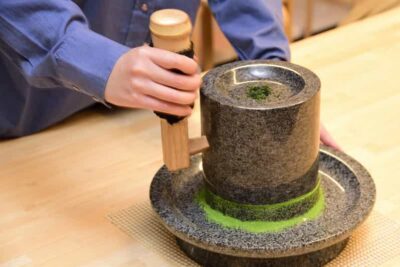
Kyoto: Tea Museum Tickets and Matcha Grinding Experience
Read our review →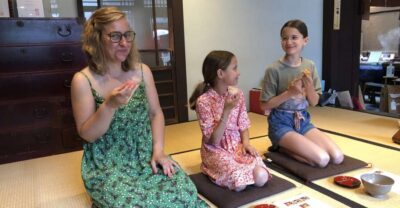
Kyoto: Tea Ceremony Meditation – Make Matcha with Tea Master
Read our review →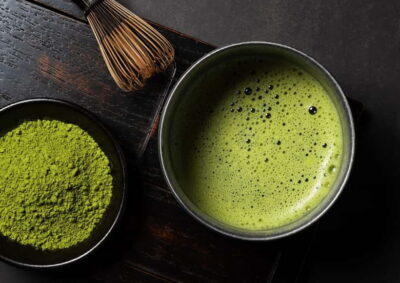
Tokyo: Matcha Making Experience with Mochi Sweets in Asakusa
Read our review →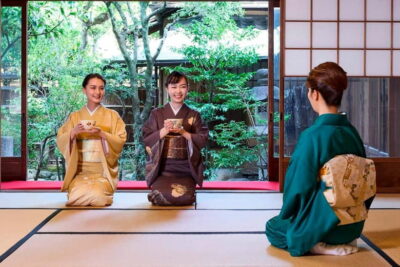
Kyoto: Kimono Tea Ceremony with Matcha and Sweet
Read our review →
Browse the lists this tea experience appears in