
Review · TOKYO
Matcha table tea ceremony experience in Tokyo
Matcha is not simply poured into a cup here. Masumi Matsumoto, a master instructor with the Japan Table Tea Ceremony Association, first prepares the tea for you, then hands you the whisk and teaches you to make it yourself. The chair-and-table format keeps the ceremony approachable, while the quiet setting leaves room for the small details: how to receive the bowl, how to enjoy the seasonal sweet, and how tea manners fit into Japanese culture.
I like two things especially. The group is capped at five, so this feels more like a lesson than a staged show. I also like that you leave with a skill you can repeat at home, not just a few photos. The main consideration is the price, $65.04 per person, which is fair for a private-feeling cultural lesson but more than a quick matcha tasting.
Key points to know before booking
- Master instructor Masumi Matsumoto leads the session and teaches tea manners, preparation, and the spirit behind the ceremony.
- Chair seating replaces floor sitting, making the experience easier for anyone who finds traditional floor positions uncomfortable.
- You first drink tea prepared by the instructor, then make and serve your own matcha with a special whisk.
- Seasonal Japanese wagashi is served with the tea, and the sweet changes during the year.
- The group maximum is five people, which suits families and visitors who prefer a quieter lesson.
- The meeting point is a two-minute walk from Toritsudaigaku Station in Meguro City.
A chair-seated tea ceremony in Meguro
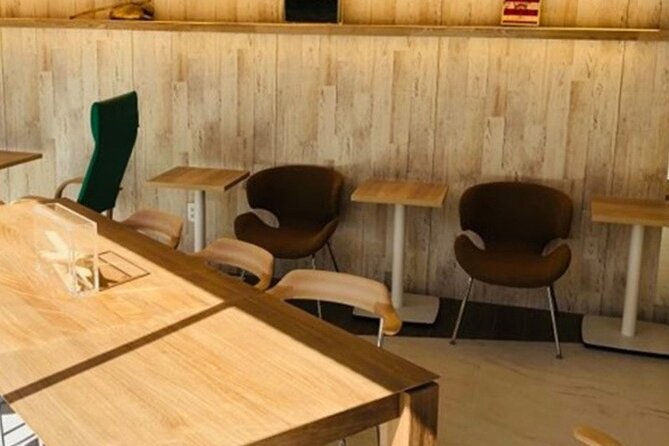
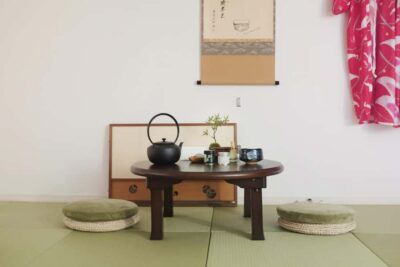
This is a good choice if the thought of a formal tea ceremony makes you curious but slightly nervous. The table tea ceremony format places you at a table on a chair rather than on the floor. You still learn the manners and rhythm of the ceremony, but without the physical challenge of kneeling or sitting with your legs folded beneath you.
The setting in Meguro-ku gives the experience a local feel. You meet at 1-chōme-9-1 Nakane, only about two minutes from Toritsudaigaku Station. The activity begins and ends at the same place, so you will not need to track down a second meeting point after the lesson.
The neighborhood also gives you options before or after the class. Meguro River, Nakameguro Park, and the sweets theme park in Jiyugaoka are nearby area attractions, though the tea session itself does not include visits to them. I would plan this as one stop in a Meguro afternoon rather than expect a full sightseeing tour.
More Matcha Experiences in Tokyo
- Matcha Making Class in Tokyo with Authentic Japanese Sweets Set
★ 5.0 · 744 reviews - Tokyo: Matcha Making Experience with Mochi Sweets in Asakusa
★ 4.9 · 388 reviews - Asakusa Cultural Walk & Matcha Making Tour
★ 5.0 · 245 reviews
The first taste, prepared for you
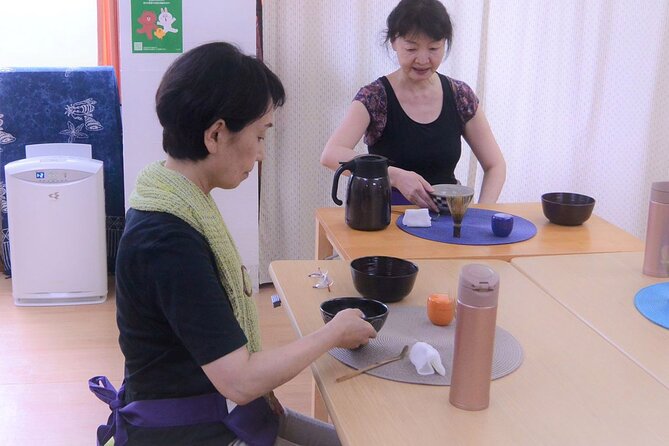
The first half begins with an explanation of how to enjoy matcha. Masumi introduces the tea and explains its manners and background before preparing a bowl for you. This opening matters because matcha can seem formal when you only see the finished ritual. Watching each step first helps you understand what you will later do yourself.
Your prepared tea is served with a seasonal Japanese sweet, known as wagashi. The sweet changes with the season, so the food is part of the cultural lesson rather than a fixed snack. Wagashi often balances the bitterness of matcha, giving your palate a reason for the order of the experience.
This is also the point where the ceremony becomes more than a demonstration. You are not just watching someone with polished movements. You are learning why the tea is received and enjoyed in a certain way. The instructions are presented in English, and Masumi’s teaching style is friendly enough for people who arrive unsure of the etiquette.
Several families have found this part especially useful. Children can follow the simple sequence of tea, sweet, and explanation without needing prior knowledge. The ceremony has rules, but the tone is casual enough that a first attempt does not feel like a test.
Making matcha with the whisk
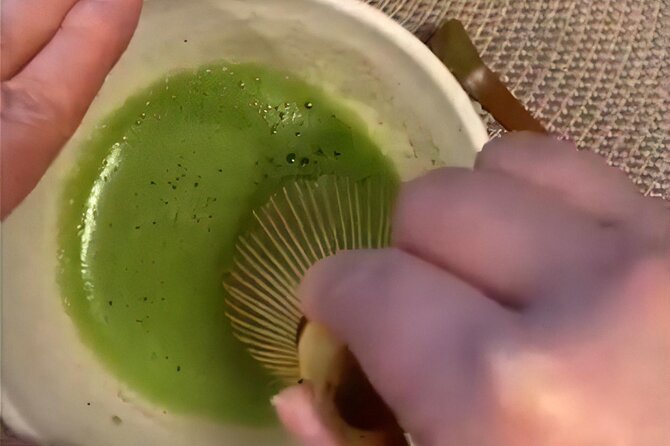
The second half puts the whisk in your hands. You learn how to prepare and serve matcha using the special bamboo tea whisk, then repeat the basic process yourself. This hands-on section is the practical heart of the class.
If you have only ordered matcha in a café, you may be surprised by the difference. Traditional preparation is not about stirring a powder into hot water with a spoon. The whisk creates the texture, and the movement requires a little practice. The instructor can guide you through the process so you can focus on the feel of the whisk instead of worrying about doing everything perfectly.
You also learn how to serve the tea, not only how to make it. That distinction gives the lesson more depth. Japanese tea culture places weight on hospitality and attention, and serving another person gives you a simple way to understand that idea in practice.
The class is also useful after you return home. The stated aim is to teach a preparation skill you can recreate, and the small group helps make that possible. You have space to watch the instructor, try the method, and receive corrections without competing with a large audience.
Do not expect a professional tea-school qualification in two hours. You will learn the basic preparation and manners, not every detail of a formal tea tradition. That is a strength for most visitors. The lesson gives you a clear introduction without turning the afternoon into a demanding course.
Why the five-person limit matters
A maximum of five participants changes the mood. In a large group, tea ceremony can become a performance viewed from the back of a room. Here, you should be close enough to see the whisk, bowl, hand movements, and serving gestures clearly.
The small size is especially helpful for families. Children can ask questions and try the whisk without getting lost in a crowd. The available comments also point to Masumi’s patient explanations and fluent English, important details if you are concerned about a language barrier.
Small does not mean private, however. The experience is listed as a group activity, so you may share it with other people unless your booking arrangement says otherwise. The five-person limit gives you an intimate class, not necessarily a one-to-one appointment.
That distinction helps explain the price. At $65.04 per person, you are paying for about two hours of instruction, tea prepared by a master instructor, seasonal wagashi, a hands-on lesson, and a group small enough for personal attention. It is not the cheapest way to taste matcha in Tokyo, but comparing it with a quick café drink misses the point. The value is in the teaching and the chance to repeat the skill later.
More Tea Ceremonies in Tokyo
- Kimono Tea Ceremony at Tokyo, Asakusa Maikoya
★ 5.0 · 638 reviews - Tokyo: Traditional Tea Ceremony with a Tea Master
★ 5.0 · 528 reviews - Tea Ceremony Workshop in Tokyo by the Experienced Instrucor
★ 5.0 · 189 reviews - Asakusa: Kimono Tea Ceremony with Matcha and Sweet
★ 4.9 · 153 reviews
A relaxed introduction to Japanese manners
The ceremony is formal in origin, but this class is designed to be comfortable. The instructor explains the history, spirit, and manners in a way that beginners can follow. You do not need to arrive knowing how to hold the bowl or when to eat the sweet.
I like this balance. A ceremony without any etiquette would lose much of its meaning. A class that treats every small movement as a serious mistake could leave you too tense to enjoy the tea. This experience aims for the middle: enough structure to feel genuine, enough warmth to let you learn.
The family comments also point to humor and clear explanations. That can make a real difference when you are learning customs that do not have an obvious Western equivalent. You can ask what to do, copy the instructor, and keep going if your first whisking attempt is less than graceful.
The chair seating is another practical advantage. Traditional tea ceremonies often involve floor seating, which can be uncomfortable for people with stiff knees, limited flexibility, or simply no practice sitting that way. Here, you can take part in the ceremony while seated at a table. That makes the activity suitable for a wider range of ages and physical comfort levels.
Still, chair seating means this is not the exact format of every traditional tea gathering. If your main goal is to practice sitting on tatami and experience a highly formal tea-room ritual, you may want a different type of ceremony. If your goal is to understand the basics and participate without physical strain, the table format is a smart choice.
Timing, location, and planning advice
The session lasts about two hours. That is long enough for explanation, tasting, and hands-on practice, but short enough to fit into a day of Tokyo sightseeing. Since the activity returns to the meeting point, you can continue exploring Meguro afterward without arranging transport from another part of the city.
Toritsudaigaku Station is the key landmark for planning. The meeting point is a short walk away, about two minutes, and the activity is near public transportation. Allow yourself enough time to find 1-chōme-9-1 Nakane rather than arriving at the last second. A calm arrival suits the tone of the class better than rushing in from a distant attraction.
This experience is often booked well ahead, with an average booking lead time of 98 days. That does not guarantee every date will sell out, but it is a useful warning if your Tokyo schedule is fixed. Confirmation is sent within 48 hours of booking, subject to availability.
The cancellation terms are simple but strict near the start time. You can cancel for a full refund up to 24 hours before the experience. Cancellations and changes made less than 24 hours before the start are not accepted for a refund, and cut-off times use Tokyo local time.
Who will enjoy this matcha lesson
I would recommend this to you if you want a cultural activity that asks you to participate rather than stand and watch. It suits first-time visitors, families, couples, and solo visitors who want a calm introduction to Japanese tea.
It is particularly useful for:
- People interested in Japanese customs but unsure about formal etiquette
- Families looking for an activity children can take part in
- Anyone who wants to learn a repeatable matcha preparation method
- Visitors who prefer chairs to floor seating
- People who appreciate small groups and direct instruction
- Anyone staying near Meguro, Nakameguro, or other western Tokyo neighborhoods
The experience may be less suitable if you want a grand historic tea house, elaborate costumes, or a long formal ceremony. The information provided does not promise those features. This is a lesson and tasting in a table format, with a friendly tone and practical instruction.
It is also not ideal if you dislike tea, powdered green tea, or sweets. The session centers on drinking matcha and learning how to make it. You can observe the demonstration, but the point is to take part.
Should you book the Tokyo table tea ceremony?
Book it if you want a small, hands-on cultural lesson led by an instructor who can explain the details in English. Masumi Matsumoto’s role as a master instructor gives the class authority, while the five-person limit and chair seating keep it manageable for beginners.
The strongest reason to choose it is the combination of tasting and practice. You first receive tea prepared by the instructor, enjoy it with seasonal wagashi, then learn to whisk and serve your own bowl. That progression gives you context before asking you to try the technique.
I would skip it if you are looking only for a quick photo opportunity or a grand ceremonial display. For everyone else, especially families and visitors who want to understand rather than simply watch, the $65.04 cost is reasonable for two hours of instruction and a skill you can use at home.
FAQ
Where does the matcha tea ceremony take place?
The meeting point is 1-chōme-9-1 Nakane, Meguro City, Tokyo 152-0031, Japan. It is about a two-minute walk from Toritsudaigaku Station.
How long does the experience last?
The tea ceremony lasts approximately two hours.
Who teaches the tea ceremony?
Masumi Matsumoto leads the activity. She is a master instructor with the Japan Table Tea Ceremony Association.
Do I have to sit on the floor?
No. This is a table tea ceremony, so you sit on a chair at a table instead of sitting on the floor.
What happens during the first half?
The instructor explains how to enjoy matcha and introduces its history and manners. She then prepares matcha for you to enjoy with a seasonal Japanese sweet.
Do I get to make my own matcha?
Yes. During the second half, you learn to make and serve matcha using a tea whisk.
How many people can join?
The activity has a maximum of five participants.
Can I cancel for a full refund?
Yes, if you cancel at least 24 hours before the experience start time. Cancellations or changes made less than 24 hours before the start are not accepted for a refund.
Newly steeped around Tokyo
- Yokohama : Tea Ceremony with Sweets and Souvenir★ 5.0 · 5 reviews
- Walking Tour: Yanaka,Nezu& Sendagi: Tea Ceremony & Old Tokyo★ 5.0 · 3 reviews
- Private Mochi・Matcha sweets Making Class Near Shibuya Area★ 5.0 · 22 reviews
- 2 Hours Mochi &Nerikiri Making & Matcha Class in Bunkyo★ 5.0 · 21 reviews
- Private Kimono and tea ceremony at local home near Tokyo Disney★ 5.0 · 6 reviews
- Kimono and Tea Ceremony in Asakusa Private Food Tour With Guide★ 5.0 · 4 reviews
- Giant Sushi Cooking Class: Make a 1.5m Sushi Roll in Tokyo★ 5.0 · 9 reviews
- Tokyo Tea Ceremony Class at a Traditional Tea Room★ 5.0 · 2 reviews
Matcha Experiences, compared.
World Heritage Kyoto & Nara Uji Authentic Matcha Experience
Read our review →
Matcha Making Class in Tokyo with Authentic Japanese Sweets Set
Read our review →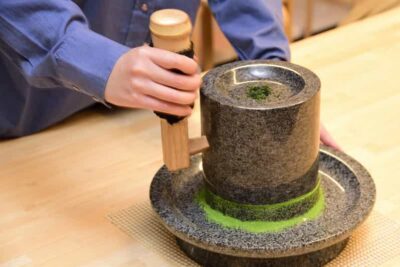
Kyoto: Tea Museum Tickets and Matcha Grinding Experience
Read our review →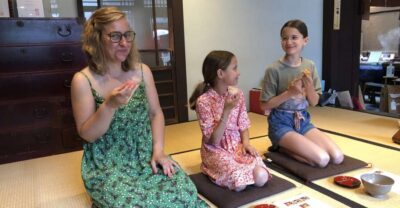
Kyoto: Tea Ceremony Meditation – Make Matcha with Tea Master
Read our review →
Tokyo: Matcha Making Experience with Mochi Sweets in Asakusa
Read our review →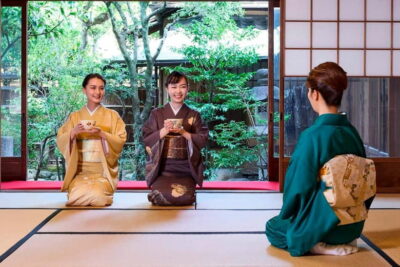
Kyoto: Kimono Tea Ceremony with Matcha and Sweet
Read our review →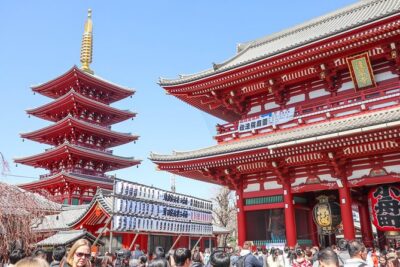
Browse the lists this tea experience appears in