
Review · TOKYO
[NEW]JPN CULTURE – Buy@Toyosu Market SUSHI Making +TEA +Maid Cafe
The best part of this six-and-a-half-hour experience is getting beyond Toyosu Market’s viewing windows. With special permission, you can browse the market with your guide, choose fresh neta for lunch, then use it in a sushi class. I like the direct connection between shopping and cooking: you see the ingredients, buy them, and soon eat them.
I also like the unusual pairing of hands-on sushi making with a formal tea ceremony. You prepare temari, maki, chirashi, and oshi sushi, then make sweets before tasting high-grade matcha with a qualified tea master. The main consideration is the long, full schedule, and the optional Maid Café visit requires advance notice if you want to add it.
Key points to know before booking
- Toyosu shopping with special access: You do more than look down at the market from an observation deck. Your guide takes you among the stalls to buy ingredients for the meal.
- Four sushi styles in one class: You learn temari, maki, chirashi, and oshi sushi, then receive a menu so you can try them again at home.
- Tea sweets are part of the lesson: You make the confectionaries yourself instead of simply watching a tea ceremony.
- Small groups matter: The maximum is eight people, which gives you a better chance to follow the demonstrations and ask questions.
- Two very different Tokyo moods: The core activity joins market food and traditional tea, while the optional Maid Café adds a modern Akihabara stop.
- A full half-day commitment: The activity lasts about six hours and 30 minutes and ends back at the meeting point.
Starting at Toyosu Market with a real shopping mission
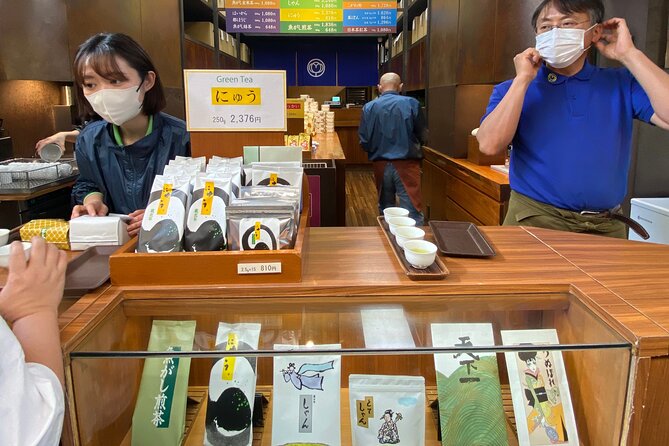
Your meeting point is Shijō-mae Station, at 6 Chome-3 Toyosu in Koto City. This is a practical start because the market is the main setting for the first part of the day, and the station is near public transportation.
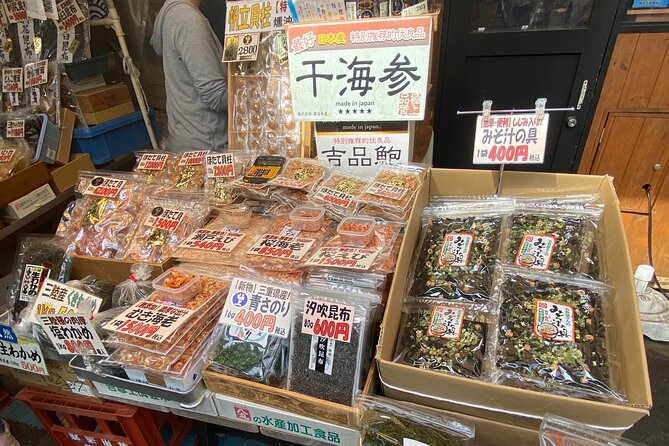
The market visit is not just a walk past stalls. You and your guide buy the fish and other sushi ingredients you will later prepare and eat. That gives the visit a clear purpose. Instead of trying to understand every part of a large wholesale market at once, you can focus on the ingredients that become your lunch.
This access is a major reason to consider the tour. Ordinary visitors usually view the market action from narrow observation windows. Here, special permission allows you to browse the stalls with your guide. That does not mean you should expect unlimited access to every part of the market, but it does give you a closer look than a standard observation visit.
The food focus also makes the market easier to appreciate. Your guide can help you choose suitable neta, the fish and seafood used for sushi. You are not simply buying a souvenir or sampling a snack. You are selecting the main material for a meal you will make shortly afterward.
Some of the supplied feedback refers to shopping at Tsukiji rather than Toyosu. The stated meeting point for this activity is Toyosu, so check the final booking details carefully for the exact market route and meeting instructions. That distinction matters, since Toyosu and Tsukiji are separate parts of Tokyo with different settings and access arrangements.
More Tea Experiences around Tokyo:
- Matcha Making Class in Tokyo with Authentic Japanese Sweets Set
★ 5.0 · 744 reviews - Kimono Tea Ceremony at Tokyo, Asakusa Maikoya
★ 5.0 · 638 reviews - Tokyo: Traditional Tea Ceremony with a Tea Master
★ 5.0 · 528 reviews
From market ingredients to four kinds of sushi
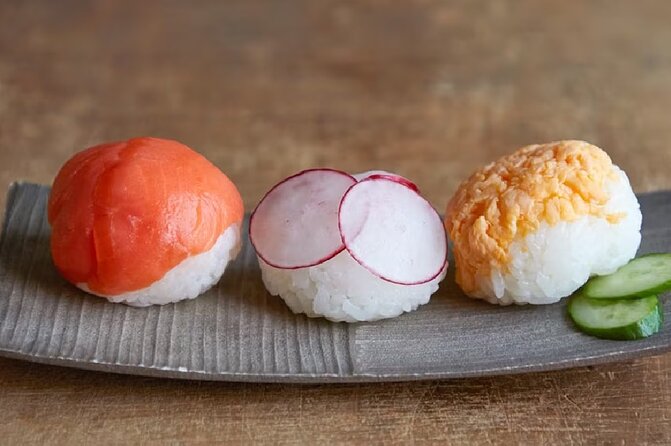
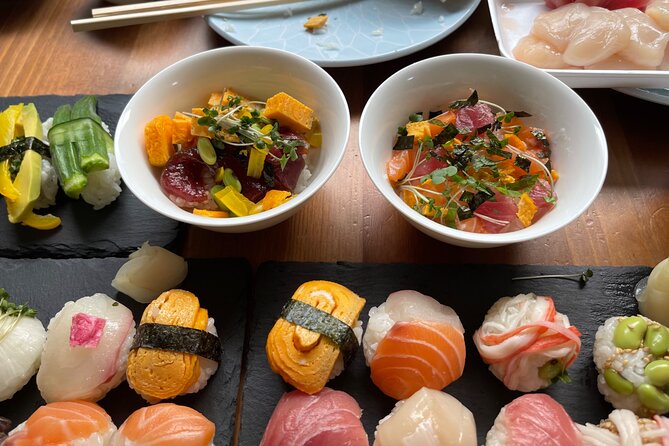
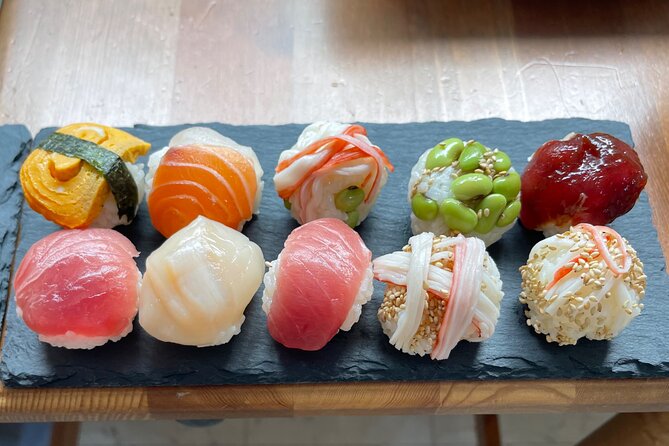
After the market visit, you relocate to a studio for the cooking lesson. The class covers four preparations: temari sushi, maki sushi, chirashi sushi, and oshi sushi.
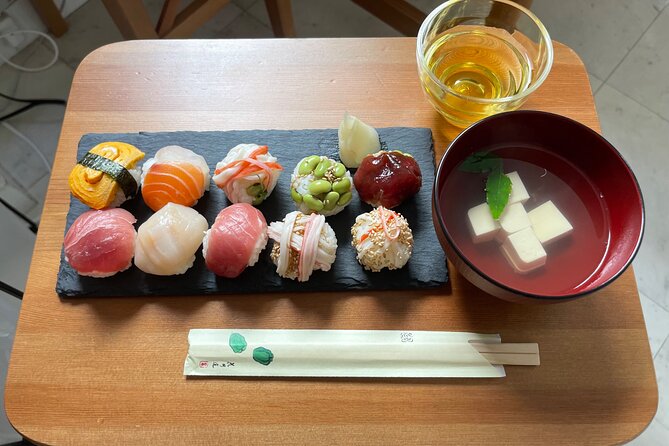
Each style gives you a different way to work with the same fresh ingredients. Temari sushi is shaped into small rounded pieces. Maki sushi is rolled. Chirashi sushi is arranged over rice rather than wrapped into a roll, while oshi sushi is pressed into shape.
This mix is more useful than a class that teaches only one basic roll. You get a broader look at Japanese sushi preparation and several formats that you can repeat at home. A menu is provided, so you do not have to rely on memory after the lesson.
The class is aimed at beginners learning the basics, not at professional cooks. You should expect instruction and practice rather than a long technical course on knife skills or fish preparation. Still, the range of sushi styles gives the session enough variety to keep it interesting for adults and families.
The food is bought the same day, which is an important part of the experience. Freshness is not treated as an abstract idea here. You see the market, help select the ingredients, and then eat the finished sushi for lunch.
The small group limit of eight should help during this stage. Sushi shaping can be difficult to follow if you are standing far from the instructor or waiting too long for help. A group of this size should give you a more personal feel, though the exact amount of individual instruction will depend on the people attending and the pace of the class.
Eating the lunch you helped prepare
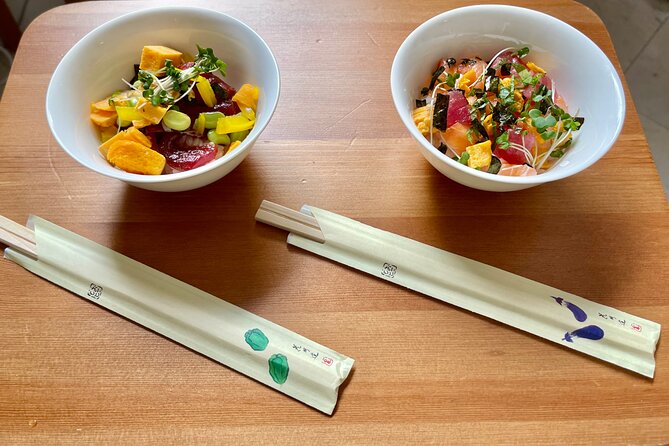
The sushi you make becomes your lunch. That simple detail gives the class a satisfying structure: shop, prepare, and eat.
I like this better than a cooking demonstration where the food appears on a plate without showing you where it came from. You have already seen the ingredients at the market, so the meal carries a clear sense of place. You also get a chance to judge which techniques you might repeat at home.
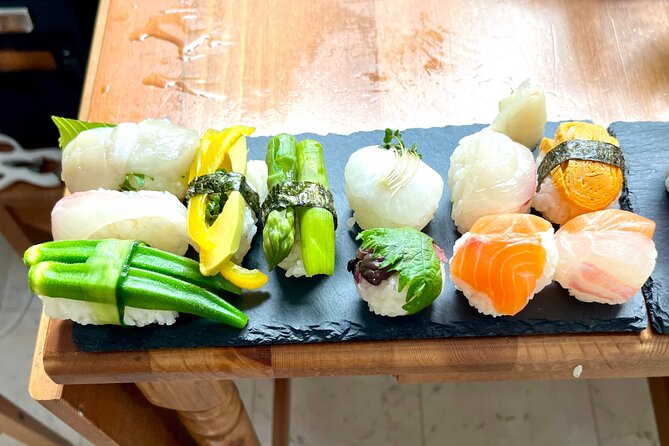
The supplied feedback points to the food being fresh and delicious, with particular approval for the thick rolls, chirashi sushi, and temari sushi. Treat those comments as useful clues about the range of the meal, not as a promise that every menu will be identical. The activity says the ingredients and sushi menu can be selected during the market visit, so the exact fish and final dishes may vary.
This is also a good choice if you want a Tokyo food activity that goes beyond restaurant dining. You still get to eat, but you also learn how the meal is assembled. If you prefer to sit down and be served, this will feel like work before lunch. If you enjoy taking part, the preparation is part of the reward.
Making sweets before the matcha ceremony
After lunch, the focus shifts from seafood to tea culture. You make confectionaries that serve as the sweets for the tea ceremony. This is a thoughtful link between the cooking class and the next part of the day, since the dessert is not an unrelated snack added at the end.
The sweets are made to accompany matcha, so their role is different from a Western dessert course. The lesson gives you a small task before the ceremony and helps you understand that tea service involves food, presentation, and careful movement as well as the tea itself.
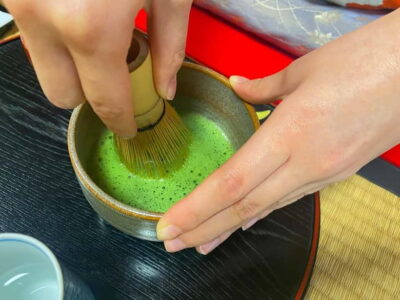
You then take part in an actual tea ceremony led by a qualified tea master. The matcha used is described as high grade and suitable for tea ceremony masters. The session is likely to feel quieter and more formal than the market and sushi class, which gives the day useful contrast.
The ceremony is not presented as a quick photo stop. You prepare the sweets, take part in the tea experience, and learn the basics of the practice. Still, the provided information does not set out the exact ceremony style, length, or every ritual step, so you should not book expecting a full practitioner’s course.
For many people, this will be the cultural heart of the activity. You see a traditional side of Japan after spending the morning with a modern wholesale food market. That old-and-new pairing is one of the strongest reasons to choose this tour instead of a sushi class alone.
Same leaf, a different ritual:
- Dynamic Tokyo: Tokyo Tower, Tea Experience, Bay Cruise Day Tour
★ 4.5 · 521 reviews - Tokyo: Matcha Making Experience with Mochi Sweets in Asakusa
★ 4.9 · 388 reviews - Asakusa Cultural Walk & Matcha Making Tour
★ 5.0 · 245 reviews - Mt. Fuji & Lake Kawaguchiko Ropeway Panorama Full-Day Tour
★ 4.6 · 236 reviews
The optional Akihabara Maid Café visit
The activity can also include a visit to a Maid Café in Akihabara. This is optional, and you should tell the provider when you reserve if you want that part included.
The Maid Café option changes the feel of the day. Toyosu market and the tea ceremony connect you with food traditions and formal customs. Akihabara adds a playful, modern Tokyo experience. Putting all three together creates a broad Japan-themed day, but it also makes the itinerary feel less focused.
You can skip the Maid Café and end the activity after the tea ceremony, continuing with your own plans. That flexibility is useful if you have dinner reservations, want to visit another Tokyo neighborhood, or simply prefer the market, sushi, and tea portions.
Because the optional visit involves a separate location, expect the day to include a move away from Toyosu. The supplied details do not provide the exact transport plan or the amount of time spent there, so confirm those points before booking the upgrade. The main activity ends back at the meeting point, but the optional Akihabara portion may affect how you plan the rest of your day.
What the six-and-a-half-hour schedule means
At approximately six hours and 30 minutes, this is not a quick market outing. The time includes the market visit, ingredient shopping, relocation to the studio, sushi preparation and lunch, sweets, and the tea ceremony. The optional Maid Café adds another stop.
I would reserve this for a day when you can stay present from start to finish. A packed schedule with another fixed booking soon afterward could create stress, especially if the activity moves between locations or the optional Akihabara visit is added.
The length works well for people who want one substantial cultural activity rather than several short stops. You do not need to arrange separate market, cooking, and tea bookings. On the other hand, visitors who prefer to set their own pace may find the schedule too structured.
The group maximum is eight. That is small enough to support questions and hands-on practice without the feel of a large class. It also means availability may be limited, especially since the activity is often booked well in advance. Confirmation is sent within 48 hours of booking, subject to availability.
Is the $78.04 price good value?
At $78.04 per person, the price covers several connected parts: guided market access, fresh ingredients, a sushi lesson, lunch, tea sweets, and a tea ceremony with a qualified tea master. You are paying for instruction and access as well as food.
The value is strongest if you would otherwise book these pieces separately. A market visit alone would not teach you how to use the ingredients, and a sushi class alone would not give you the same shopping context. The tea ceremony adds a second cultural subject rather than another version of the cooking lesson.
The price may feel less attractive if you mainly want to eat sushi or take a brief tea ceremony. In that case, a restaurant meal or shorter class could suit you better. This activity earns its price through the range of experiences and the small group size, not through a single luxury meal.
Since the menu depends on what you and your guide buy, you should judge the value by the learning and access as much as by the fish served. The fresh ingredients are a strong feature, but this is still a hands-on class, not an omakase meal.
Who will enjoy this Tokyo experience most?
I would recommend it to first-time visitors who want several classic Tokyo experiences in one day. It also suits returning visitors who have seen the main sights and now want a closer look at food shopping, sushi preparation, and tea practice.
Families may like the variety, since the day changes pace several times. People who enjoy cooking will get more from the tour than those who want a passive sightseeing trip. The menu provided after the class is another plus if you want to recreate the dishes at home.
English-speaking participants should find the activity workable. The available feedback describes the guides as speaking excellent English and explaining the market and cooking steps clearly. The guide names are not provided in the booking details, so you should not expect a named guide to be guaranteed.
I would hesitate to book this for someone with only a few free hours, someone who dislikes structured group activities, or anyone who wants a quiet and purely traditional tea ceremony. The optional Maid Café also makes the day more playful and pop-culture focused, which will appeal to some people and not to others.
You receive a mobile ticket, and the meeting point is near public transportation. Free cancellation is available up to 24 hours before the start time for a full refund. Changes or cancellations made less than 24 hours before the start time are not accepted for a refund, and the activity requires a minimum number of participants.
Should you book it?
Book this if you want a hands-on Tokyo food day that connects Toyosu Market with sushi, homemade tea sweets, and a formal matcha ceremony. The freshest part of the concept is the market-to-table link: you help buy the ingredients, prepare them, and eat them soon afterward.
Skip it if you want a short activity, a single polished meal, or a detailed specialist course in one subject. Before reserving, confirm the Toyosu meeting details, decide if you want the optional Maid Café, and leave enough room in your schedule for the full six-and-a-half-hour program.
FAQ
Where does the activity start?
It starts at Shijō-mae Station, 6 Chome-3 Toyosu, Koto City, Tokyo 135-0061, Japan.
Where does the main activity end?
The activity ends back at the meeting point.
How long does the experience last?
The activity lasts approximately six hours and 30 minutes.
How many people can join?
The tour has a maximum of eight participants.
What will I do at Toyosu Market?
You will visit the market with your guide and buy fresh ingredients, including sushi neta, for the cooking session.
What types of sushi will I learn to make?
The class covers temari, maki, chirashi, and oshi sushi.
Do I eat the sushi I make?
Yes. The sushi you prepare is served as your lunch.
Is the tea ceremony included?
Yes. You make sweets for the ceremony and then take part in a tea ceremony led by a qualified tea master.
Is the Maid Café visit required?
No. The Maid Café visit is optional. You can end the day after the main activity and continue with your own plans.
Can I cancel for a full refund?
Yes. You can cancel at least 24 hours before the experience start time for a full refund. Cancellations or changes made less than 24 hours before the start time are not accepted for a refund.
Newly steeped around Tokyo
- Yokohama : Tea Ceremony with Sweets and Souvenir★ 5.0 · 5 reviews
- Walking Tour: Yanaka,Nezu& Sendagi: Tea Ceremony & Old Tokyo★ 5.0 · 3 reviews
- Private Mochi・Matcha sweets Making Class Near Shibuya Area★ 5.0 · 22 reviews
- 2 Hours Mochi &Nerikiri Making & Matcha Class in Bunkyo★ 5.0 · 21 reviews
- Private Kimono and tea ceremony at local home near Tokyo Disney★ 5.0 · 6 reviews
- Kimono and Tea Ceremony in Asakusa Private Food Tour With Guide★ 5.0 · 4 reviews
- Giant Sushi Cooking Class: Make a 1.5m Sushi Roll in Tokyo★ 5.0 · 9 reviews
- Tokyo Tea Ceremony Class at a Traditional Tea Room★ 5.0 · 2 reviews
Japan Tea Tours, compared.
Kyoto: Tea Ceremony in a Traditional Tea House in Kiyomizu
Read our review →
Kyoto: 45-Minute Tea Ceremony Lesson Experience
Read our review →
World Heritage Kyoto & Nara Uji Authentic Matcha Experience
Read our review →
Kyoto: Table-Style Tea Ceremony at a Kyo-Machiya
Read our review →

Browse the lists this tea experience appears in