
Review · TOKYO
No Bitter Matcha! Casual Tea Ceremony Experience with the Finest Tea Leaves
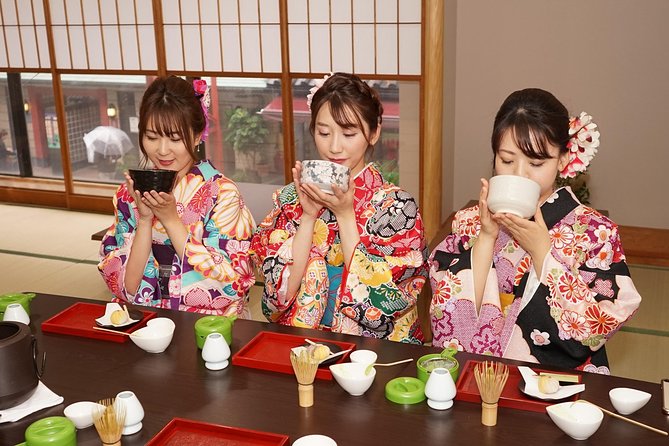
The most appealing part of this Asakusa activity is the stone-mill start. You do not simply receive a prepared bowl of matcha. You grind first-harvest tea leaves from Uji, Kyoto, then taste the powder with a refined Japanese sweet. That small bit of work gives the drink a clear connection to how matcha is made.
I like two things here: the use of rare ichibancha leaves, which are milder than ordinary bitter matcha, and the easy 50-minute format near Sensoji Temple. The main consideration is that English help is limited to menus and written explanations, so you should not expect a long, fully guided English lecture.
- Freshly ground Uji matcha: Start with first-harvest tea leaves from Kyoto.
- A gentler introduction: Taste matcha made to challenge the usual bitterness.
- Traditional preparation: Use a real stone mill and a supplied tea utensil set.
- Japanese sweet pairing: Try the tea with jo-namagashi, a high-quality confection.
- Easy Asakusa location: Visit before or after Sensoji Temple and Asakusa Shrine.
- Short, affordable format: Spend about 50 minutes for $23.91 per person.
Grinding Uji’s First-Harvest Leaves in Asakusa
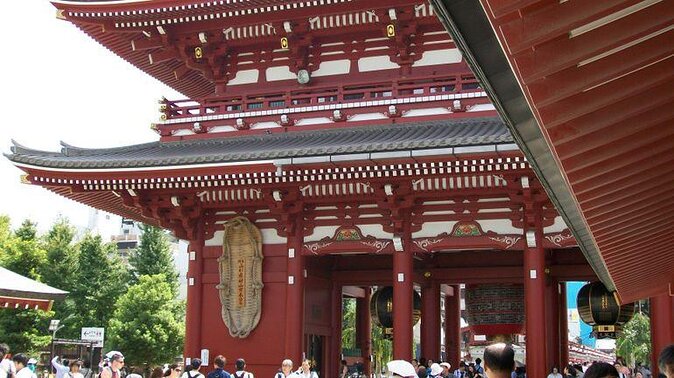
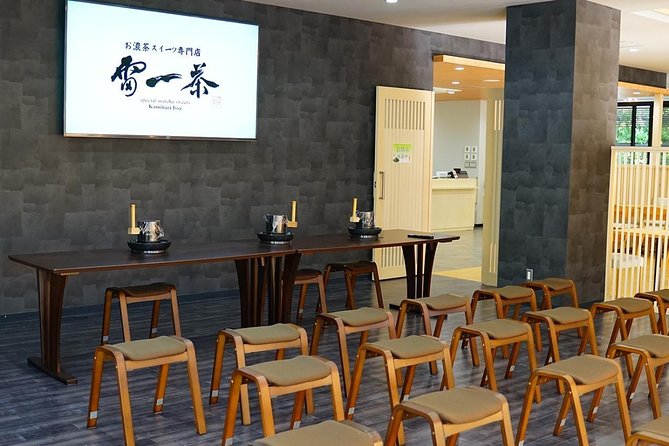
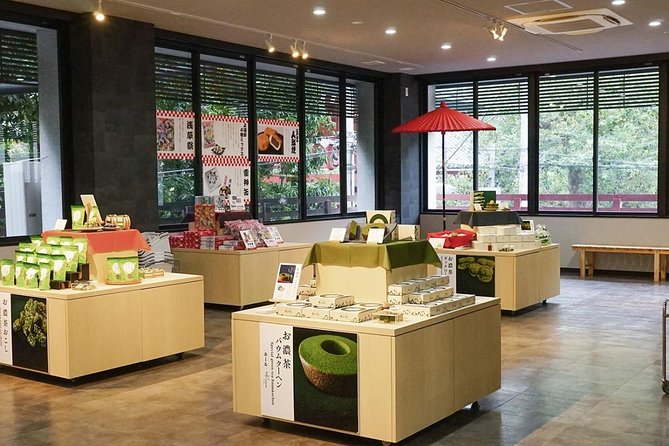
This is a compact tea lesson held at Matcha Sweets Kaminari-Issa, a specialty shop for matcha sweets at 2-chome-7-3 Asakusa. The setting matters. You are not being taken far from Tokyo’s sightseeing core or asked to give up half a day. You can fit the activity around a visit to Sensoji Temple, Asakusa Shrine, or the surrounding shopping streets.
The session begins with tea leaves and a real stone mill. You grind the leaves into powder before preparing the drink. That step gives you a useful look at matcha production, since the finished powder is not just ordinary loose-leaf tea ground at random. Matcha is made from tea leaves processed into a fine powder, and the quality of those leaves has a direct effect on taste.
The activity explains the path from cultivation and harvesting to production and drinking. That wider view is one reason this is more useful than a simple tasting. You get a sense of why some matcha is prized, why the first harvest matters, and why the final drink can taste so different from the bitter green tea often served in inexpensive sweets.
The stone mill also slows the experience down in a good way. You are given a simple task to focus on before the tasting begins. For some people, this hands-on step will be the most memorable part of the visit. For others, it may feel more like a short demonstration than a serious tea-school lesson. The format is casual, not formal or ceremonial in the strictest sense.
Why Ichibancha Tastes Milder
The central idea here is ichibancha, meaning the first tea harvest of the year. These young leaves are gathered in limited amounts from older tea trees in Uji, Kyoto. The tea is presented as a high-grade choice with a fresh young-leaf fragrance and a mellow taste.
That distinction is useful if you have tried matcha before and decided it was simply too bitter. Matcha has different grades, and lower-quality powder can have a sharper, more forceful taste. Here, the chosen leaves are meant to give you a softer introduction, with less bitterness and a more pleasant aroma.
You should still expect the characteristic flavor of matcha. This is not a sweet green drink, and the powder is not hidden under milk or syrup. The point is to taste the tea itself, then see how the Japanese confection changes the experience.
The activity also places matcha in a wider food culture. Matcha supplies color and flavor in many sweets and other foods, but drinking the tea plain shows you what the ingredient is like before it is mixed into anything else. If you have only tried matcha in cakes, ice cream, or lattes, this gives you a more direct comparison.
More Matcha Experiences in Tokyo
- Matcha Making Class in Tokyo with Authentic Japanese Sweets Set
★ 5.0 · 744 reviews - Tokyo: Matcha Making Experience with Mochi Sweets in Asakusa
★ 4.9 · 388 reviews - Asakusa Cultural Walk & Matcha Making Tour
★ 5.0 · 245 reviews
Whisking the Tea and Pairing It With Jo-Namagashi
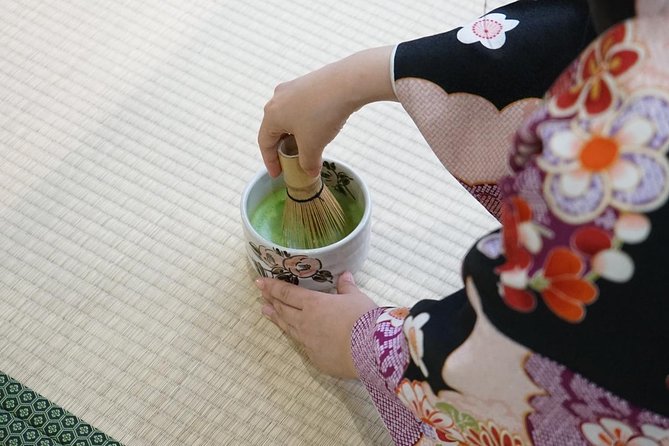
After the leaves have been ground, you prepare the matcha with a set of tea utensils supplied as part of the session. The exact movements are presented in a casual way, so this suits a first-time visitor better than a formal tea ceremony requiring strict posture and etiquette.
The freshly prepared tea is paired with jo-namagashi. This is a high-quality Japanese confectionery designed to be enjoyed with tea. The pairing is not an extra snack added to fill out the booking. Sweet food helps balance matcha’s natural bitterness and lets you notice its fragrance and texture more clearly.
I find this pairing especially useful for beginners. Take a small taste of the sweet, then try the matcha. The confection changes how the tea comes across, and you can see why Japanese tea service often includes a carefully chosen sweet rather than a bowl of sugar.
The session includes coffee and/or tea in the listed inclusions, but the main focus is clearly the matcha preparation and tasting. It also includes the tea utensils, jo-namagashi, and guidance fees. Transportation and personal spending are not included, and kimono rental is not part of the plan.
A Casual Lesson, Not a Formal Tea Ceremony
The name calls this a casual tea ceremony experience, and that is the right way to approach it. You will learn the basic story of matcha, grind leaves, prepare the drink, and enjoy a confection. You should not book it expecting an elaborate performance with a long sequence of formal rituals.
That relaxed structure is an advantage for many visitors. A formal ceremony can be beautiful but difficult to follow if you are unfamiliar with the customs. Here, the focus stays on taste, preparation, and a few practical ideas about tea quality.
The instructor is described as friendly and funny, and the teaching covers cultivation, harvesting, production, and the differences among matcha grades. No guide name is provided, so you should not expect a named host to be guaranteed in advance.
English support deserves a clear explanation. English menus and written explanations are available, but the included guidance is not described as full spoken English interpretation. You can still follow the hands-on steps, but visitors who want detailed conversation about Japanese tea may find the language support modest.
I would treat the written material as part of the activity rather than a problem. The physical process is easy to understand by watching and copying. Still, if you want a long question-and-answer session in English, this may not be the best match.
Fitting the 50-Minute Visit Into Asakusa
The meeting point is Matcha Sweets Kaminari-Issa in Asakusa, and the activity returns to the same place. The location is near public transportation and close to two major sights, Sensoji Temple and Asakusa Shrine.
That makes the timing practical. You might schedule the tea session before visiting the temple area, or use it as a quiet break after walking through the district. Since the activity lasts about 50 minutes, it is short enough to fit beside other plans without taking over your day.
You need to allow extra time to reach the shop and find the meeting point. The exact route is not provided, so check your map before leaving. A mobile ticket is accepted, which means you can keep the booking on your phone rather than carrying a printed voucher.
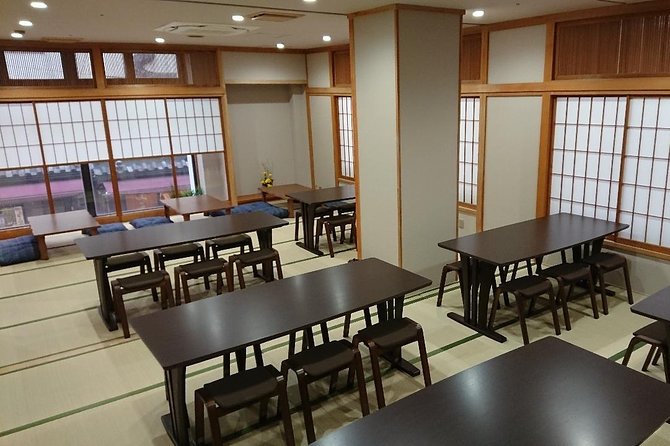
The activity has a maximum of 40 participants. That is a fairly large possible group for a hands-on tea session. The actual number may be smaller, but you should not assume an intimate private lesson. If a group is full, personal attention could be limited, especially during the stone-mill and preparation steps.
The shop has free Wi-Fi and a Western-style toilet. These are small details, but they make the stop easier to manage during a full day of sightseeing. The activity both starts and ends at the shop, so you are not left searching for a second location afterward.
More Tea Ceremonies in Tokyo
- Kimono Tea Ceremony at Tokyo, Asakusa Maikoya
★ 5.0 · 638 reviews - Tokyo: Traditional Tea Ceremony with a Tea Master
★ 5.0 · 528 reviews - Tea Ceremony Workshop in Tokyo by the Experienced Instrucor
★ 5.0 · 189 reviews - Asakusa: Kimono Tea Ceremony with Matcha and Sweet
★ 4.9 · 153 reviews
What the $23.91 Price Really Covers
At $23.91 per person, this is priced as a short cultural activity rather than a luxury ceremony. You are paying for the tea, confection, utensils, instruction, and the chance to prepare matcha from selected leaves. The cost also buys a convenient stop in one of Tokyo’s most visited areas.
The value is strongest if you want a hands-on introduction. A regular tea purchase would cost less, but it would not include the stone mill, the explanation of matcha grades, or the guided preparation. You also get to taste the tea with jo-namagashi, which gives the session more substance than simply ordering a bowl at a cafe.
The value is weaker if you already know how to prepare matcha or are mainly seeking a long formal ceremony. The session is only 50 minutes, and the English guidance is limited. You are paying for a focused introduction, not an advanced lesson.
I also like that the price does not depend on hiring a kimono. Kimono rental is not included, and that keeps the basic booking straightforward. You can take part in ordinary sightseeing clothes rather than treating the activity as a full costume package.
Who Will Get the Most From This Experience
This is a good pick for first-time matcha drinkers, especially if you have been put off by bitterness. The use of first-harvest Uji leaves gives the tasting a clear purpose. You are not just being told that matcha comes in different grades. You get to taste a selected version yourself.
It also suits visitors who enjoy food activities with a little history and process. Grinding leaves, preparing the powder, and learning about cultivation creates more involvement than a standard snack stop. The experience works well for couples, friends, and families who can follow simple written directions and enjoy trying something new together.
The short schedule helps people with crowded Tokyo itineraries. You can pair it with nearby temples, shopping, and sightseeing rather than building an entire day around it. The central Asakusa location is a practical advantage.
I would be more cautious if you need detailed spoken English, a very small group, or an exact formal tea ceremony. The maximum group size is 40, and the included English support is menu-based and written. Those details do not ruin the experience, but they shape what you should expect.
Practical Booking Advice Before You Go
This activity is often booked about 21 days in advance, so reserving ahead is sensible if your Tokyo dates are fixed. Confirmation is sent within 48 hours of booking, subject to availability. Do not leave the reservation until the last minute if the session is important to your plans.
The booking is non-refundable and cannot be changed for any reason. That makes date selection important. Check your schedule, transportation plans, and the meeting point before paying.
Plan to arrive with enough time to locate Matcha Sweets Kaminari-Issa. Since the activity begins and ends there, being late can affect the short 50-minute schedule. Keep your mobile ticket ready on your phone.
You do not need to arrange transportation through the activity. Transportation costs are separate, and the location is near public transportation. The shop provides free Wi-Fi and a Western-style toilet, which can be useful during a longer day in Asakusa.
Should You Book the Asakusa Matcha Session?
Book it if you want a friendly, hands-on introduction to matcha that fits neatly into a day around Sensoji Temple. The first-harvest Uji leaves, stone-mill preparation, and jo-namagashi pairing give the 50-minute visit a clear focus. At $23.91, the price is reasonable for a guided tasting with utensils and a small cultural lesson.
Think twice if your priority is a formal ceremony, private attention, or extensive spoken English instruction. The group may reach 40 people, and English information is provided through menus and written explanations.
For most curious first-time drinkers, I would choose it as a simple way to meet matcha on better terms. You get to make the powder, taste the ceremonial-grade tea, and decide for yourself if matcha really has to be bitter.
FAQ
How long does the matcha experience last?
The activity lasts approximately 50 minutes.
Where does the activity take place?
It takes place at Matcha Sweets Kaminari-Issa, located at 2-chome-7-3 Asakusa, Taito City, Tokyo 111-0032, Japan.
Where does the activity end?
It ends back at the meeting point, Matcha Sweets Kaminari-Issa.
What kind of matcha is used?
The experience uses ichibancha, the first tea leaves picked of the year, from Uji in Kyoto.
Is food included?
Yes. The experience includes jo-namagashi, a high-quality Japanese confectionery, to enjoy with the matcha.
Is English guidance available?
English menus and written explanations are provided. The included information does not promise full spoken English guidance.
Is kimono rental included?
No. Kimono rental is not included in the plan.
Can I cancel or change my booking?
No. The experience is non-refundable and cannot be changed for any reason.
Newly steeped around Tokyo
- Yokohama : Tea Ceremony with Sweets and Souvenir★ 5.0 · 5 reviews
- Walking Tour: Yanaka,Nezu& Sendagi: Tea Ceremony & Old Tokyo★ 5.0 · 3 reviews
- Private Mochi・Matcha sweets Making Class Near Shibuya Area★ 5.0 · 22 reviews
- 2 Hours Mochi &Nerikiri Making & Matcha Class in Bunkyo★ 5.0 · 21 reviews
- Private Kimono and tea ceremony at local home near Tokyo Disney★ 5.0 · 6 reviews
- Kimono and Tea Ceremony in Asakusa Private Food Tour With Guide★ 5.0 · 4 reviews
- Giant Sushi Cooking Class: Make a 1.5m Sushi Roll in Tokyo★ 5.0 · 9 reviews
- Tokyo Tea Ceremony Class at a Traditional Tea Room★ 5.0 · 2 reviews
Matcha Experiences, compared.
World Heritage Kyoto & Nara Uji Authentic Matcha Experience
Read our review →
Matcha Making Class in Tokyo with Authentic Japanese Sweets Set
Read our review →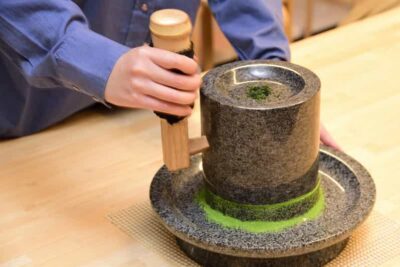
Kyoto: Tea Museum Tickets and Matcha Grinding Experience
Read our review →
Kyoto: Tea Ceremony Meditation – Make Matcha with Tea Master
Read our review →
Tokyo: Matcha Making Experience with Mochi Sweets in Asakusa
Read our review →
Kyoto: Kimono Tea Ceremony with Matcha and Sweet
Read our review →
Browse the lists this tea experience appears in