
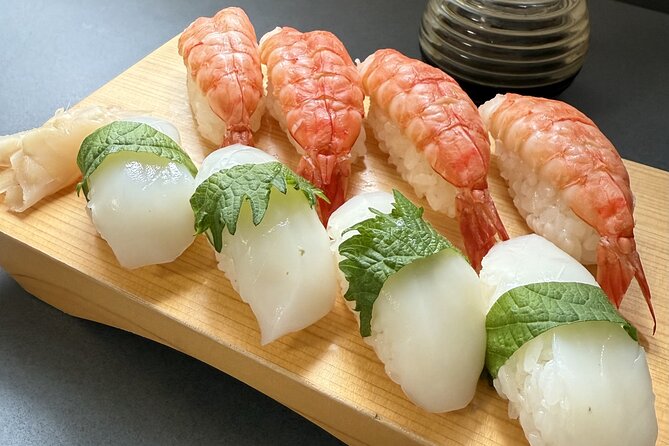
Review · TOKYO
Tokyo Sushi Making Class : Sake Ceremony & Matcha Experience
Opening a sake barrel with a group chant gives this Asakusa class an unusual start. You help perform kagami-biraki, call out Yoisho together, and raise a toast before moving on to sushi. The mood is social from the first few minutes, but the class still leaves room for real hands-on practice.
I like the mix of classic nigiri technique and the playful torched salmon mayo gunkan. I also like that the class ends with whisked matcha, so you get three distinct Japanese food traditions in one short session.
The main consideration is time. At about 90 minutes, this is a compact introduction rather than a full culinary course, and a group of up to 20 people may mean less individual attention during busy moments.
Key points to know before booking
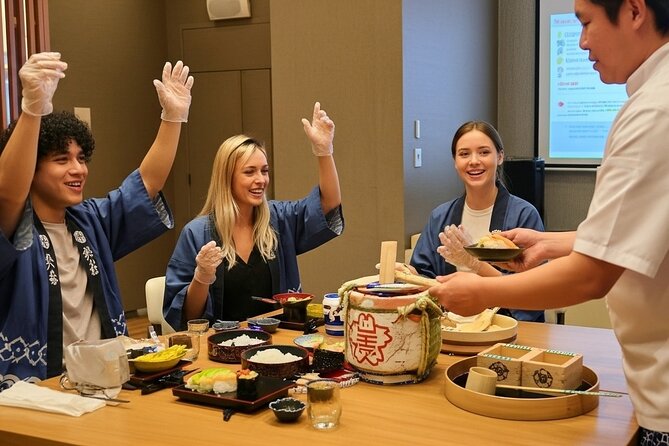
- Kagami-biraki begins the class: Help open a sake barrel and join the Yoisho chant.
- You make 6 to 12 pieces: The class includes nigiri and rolls, with instruction on rice, toppings, and presentation.
- The torched salmon gunkan is the playful centerpiece: Add salmon and mayonnaise, then finish it with a quick torch.
- Matcha closes the experience: Whisk your own bowl and drink it after the sushi.
- It is built for beginners: Instructions cover basic shaping, topping, and assembly in clear steps.
- The class stays in one location: Meet and finish at Sushi Meets Matcha, at 1-chome-10-16 Hanakawado in Taito City.
Starting with a sake barrel in Asakusa
The class begins at Sushi Meets Matcha in Asakusa, a useful setting for an activity that joins food with ceremony. Rather than starting with a cutting board and a list of instructions, the group first takes part in kagami-biraki, the traditional opening of a sake barrel to mark a new beginning.
You will join the group in calling Yoisho three times as the barrel is opened. It is a small ritual, but it gives the class a shared beginning. You are not simply arriving, sitting down, and waiting for a demonstration. You have a role right away.
The toast is designed for mixed groups. If you drink alcohol, sake is part of the celebration. If you do not, you can choose water or warm Japanese tea. That makes the opening comfortable for people with different tastes and for anyone avoiding alcohol.
I see this as one of the best reasons to choose this class over a basic sushi lesson. The food instruction matters, but the ceremony gives you a little cultural context without turning the class into a lecture. It also helps a group of strangers loosen up quickly.
More Matcha Experiences in Tokyo
- Matcha Making Class in Tokyo with Authentic Japanese Sweets Set
★ 5.0 · 744 reviews - Tokyo: Matcha Making Experience with Mochi Sweets in Asakusa
★ 4.9 · 388 reviews - Asakusa Cultural Walk & Matcha Making Tour
★ 5.0 · 245 reviews
Learning the basics of nigiri
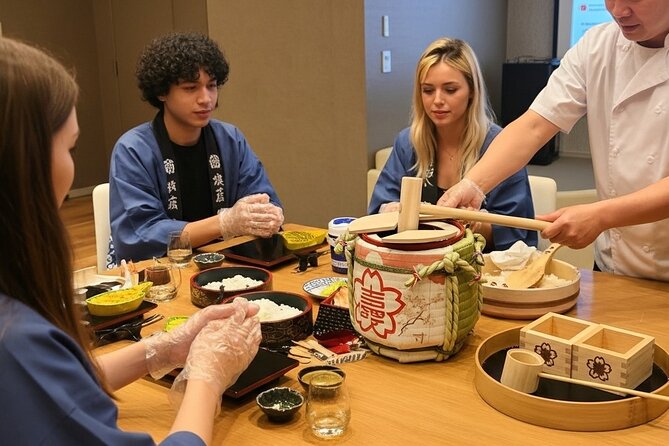
After the opening toast, the focus shifts to sushi technique. The lesson covers the essentials of nigiri: shaping the rice, handling the toppings, and placing the fish neatly. These steps sound simple, but the pressure of your fingers can change the shape and texture of the finished piece.
You will work through the process with guidance rather than being expected to know what to do. The aim is not to train you as a sushi chef in one session. It is to show you the basic movements clearly enough that you can make sushi with confidence during the class and perhaps repeat the idea at home.
Rice shaping is especially useful for beginners. A piece that is packed too tightly can feel heavy, while one that is too loose can fall apart. The class gives you a chance to feel that difference while making your own food.
The topping stage also rewards care. You will learn how to handle the ingredients and place them cleanly over the rice. That attention to order and presentation is part of the pleasure here. Even simple pieces look better when the rice is shaped evenly and the topping sits in the right place.
The final result is not meant to match the work of a master sushi chef. It is meant to give you a practical feel for the craft. I like that approach. You get a real skill to practice, but the atmosphere stays friendly rather than strict.
Making 6 to 12 pieces by hand
The class produces about 6 to 12 pieces, including nigiri and rolls. The exact number sits in a useful middle ground. You make enough to practice more than once, but you are not spending several hours preparing a large meal.
For you, the range may matter depending on how quickly you work and how much you enjoy the shaping process. The class is short, so the emphasis is on trying each main step rather than producing a huge platter.
Making both nigiri and rolls also gives you variety. Nigiri shows the importance of rice shape and topping placement. Rolls give you a different way to combine ingredients and form a finished piece. The result is a better introduction than a session devoted to only one style.
You will also eat what you make, which makes the practice feel useful right away. Instead of preparing food only for display, you can taste how the rice, topping, and sauce work together. That immediate result helps you understand why the technique matters.
A group size of up to 20 people keeps the class social, but it is not an intimate private lesson. If you want constant one-to-one correction, this format may feel broad. If you prefer a lively activity where you can work alongside others, the group setting should suit you well.
The torched salmon mayo gunkan moment
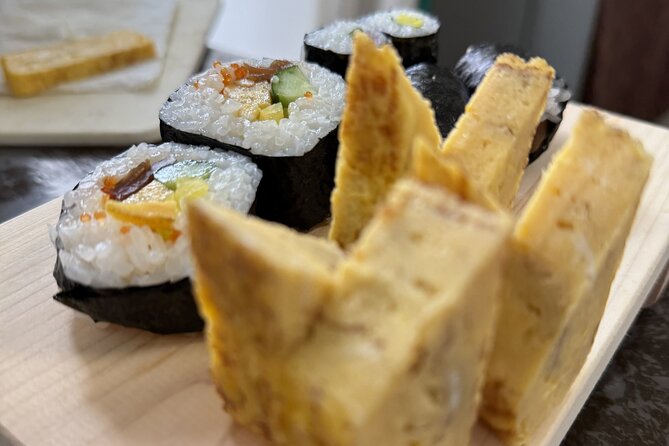
The most playful part of the menu is the WASSHOI torched salmon mayo gunkan. This is not presented as traditional Edomae sushi. It is a modern Tokyo-style bite built around salmon, mayonnaise, and a quick torch finish.
You pile the salmon high, add a zigzag of mayonnaise, and finish the piece with heat. The torch brings a smoky note to the creamy, savory combination. It is a simple technique, but it changes the character of the bite and gives the class a small performance moment.
The group chants Wasshoi three times, and photos are taken at the best point. That makes this section feel more celebratory than the careful nigiri lesson. You get a chance to make something that looks dramatic without needing advanced culinary skills.
I appreciate the clear contrast between the two styles. The nigiri lesson introduces traditional form and control. The salmon gunkan lets you play with a popular, contemporary flavor. If you want only strict classical sushi instruction, this modern recipe may not be what you are seeking. If you enjoy trying a Tokyo-inspired variation, it adds welcome fun.
The torch also gives the class a memorable visual detail. You are not just assembling food. You are seeing how a quick finishing step can affect taste, aroma, and presentation.
Same leaf, a different ritual:
- Kimono Tea Ceremony at Tokyo, Asakusa Maikoya
★ 5.0 · 638 reviews - Tokyo: Traditional Tea Ceremony with a Tea Master
★ 5.0 · 528 reviews - Dynamic Tokyo: Tokyo Tower, Tea Experience, Bay Cruise Day Tour
★ 4.5 · 521 reviews - Mt. Fuji & Lake Kawaguchiko Ropeway Panorama Full-Day Tour
★ 4.6 · 236 reviews
Finishing with your own matcha
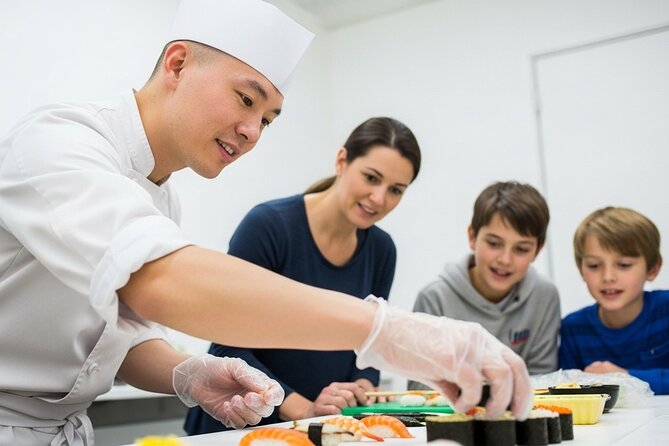
The final part is a matcha lesson. You will whisk your own bowl and learn how to create a smooth, foamy drink. After the lively sake opening and the hands-on sushi work, this quieter finish changes the pace.
Matcha is a good ending because it gives you one last technique to try. You are not only served a drink. You prepare it yourself, then taste the result. The whisking motion is simple to watch but takes some practice to do smoothly.
This closing section also rounds out the cultural range of the activity. In 90 minutes, you encounter a ceremonial sake opening, sushi preparation, a modern torched topping, and matcha making. None of these parts is long enough to become a full standalone course, but together they create a varied introduction.
I would not book this solely as a matcha lesson. The matcha portion is a finish, not the main event. Still, it adds balance and helps the session end on a calm note rather than stopping immediately after the meal.
Why the 90-minute format works
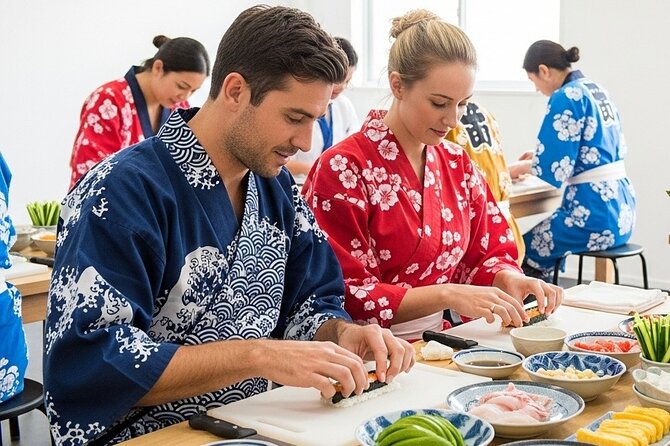
A 90-minute class is easy to fit into a Tokyo day. You can place it between sightseeing stops in Asakusa without giving up half a day. Since the activity begins and ends at the same address, you do not need to manage a transfer during the lesson.
The short format also keeps the energy high. You move from ceremony to instruction, then to the torching and matcha. There is little space for the experience to drag.
The tradeoff is depth. You will learn the basics, but not the full range of sushi preparation. There is no indication that the class includes an extended discussion of fish selection, knife work, market shopping, or advanced sushi presentation. If those subjects matter most to you, search for a longer specialist course.
For a first sushi activity, though, the compact length makes sense. You get enough repetition to understand the process, then leave before the work becomes tiring.
The value of the $45.77 price
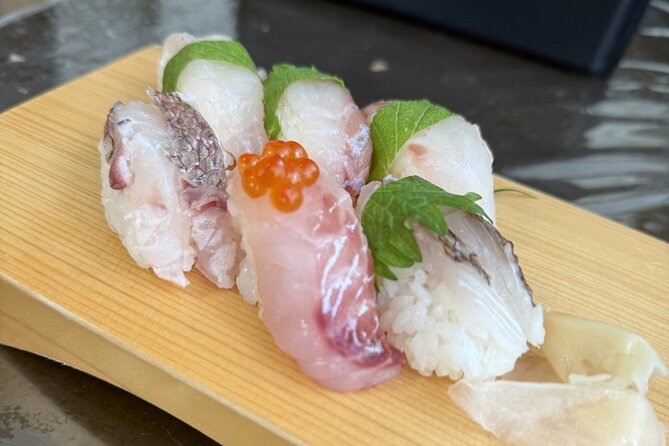
At $45.77 per person, the value comes from the combination rather than from the amount of food alone. You are paying for guided sushi practice, a group sake-barrel ceremony, the torched salmon activity, matcha preparation, and the chance to eat what you make.
A simple sushi meal might cost less, especially if you are comparing only food prices. That is not a fair comparison here. This is a short class with instruction and cultural activities included, not just a restaurant visit.
The price looks strongest for someone who wants an easy, organized introduction. You do not need prior cooking skills, and the class supplies a clear sequence of activities. It can also be a good choice for couples, friends, families, or solo visitors who want a social food experience.
The value is less obvious if you already make sushi regularly or want a serious chef-training session. The class aims at enjoyment and basic confidence. It is not designed to replace a longer professional workshop.
With 5 or more bookings in the previous month and a 5.0 rating from 48 reviews, the experience has clear demand and a strong record. I would still focus on the format rather than the rating alone. The right question is whether you want a cheerful, beginner-level cultural activity that fits into a short day.
Who will enjoy this class most
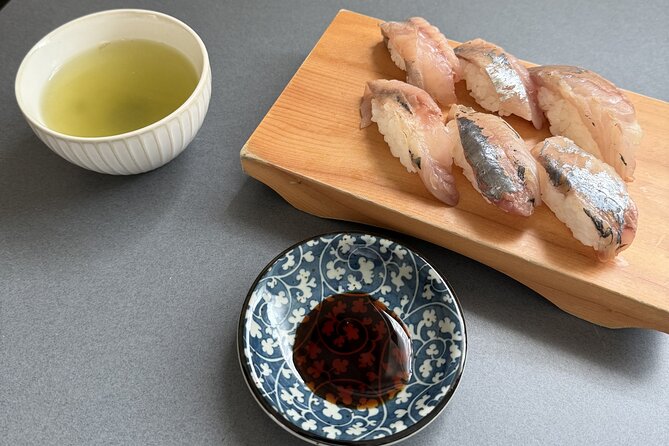
This experience suits first-time sushi makers best. You get step-by-step help with the main tasks, and the menu includes both traditional and modern elements. You do not need to arrive with cooking experience.
It also works well for people who want more than a meal but less than a long cooking school. The sake ceremony gives you a shared event, while the sushi and matcha sections keep your hands busy.
Families and mixed-age groups may appreciate the range of activities, though the supplied information does not specify a minimum age. If you are booking for children, confirm age requirements before paying.
It should also suit solo visitors who like group activities. The chant, shared preparation, and photo moment create natural points of contact with the rest of the class.
I would be more cautious if you need a private setting, advanced sushi instruction, or a large meal. The group can reach 20 people, and the food portion is part of a wider cultural program rather than a full restaurant-style feast.
Location, meeting point, and practical details
You meet at Sushi Meets Matcha, Tokyo Sushi Making Class and Matcha Experience, at 1-chome-10-16 Hanakawado, Taito City, Tokyo 111-0033, Japan. The activity ends back at the same meeting point, which keeps the plan simple.
The location is near public transportation. You should still allow enough time to reach the exact address, since a 90-minute class starts with the opening ceremony and does not leave much room for late arrival.
A mobile ticket is available, and booking confirmation is provided at the time of booking. The maximum group size is 20 people. Those details make this a straightforward choice for a day of sightseeing, but you should check your phone and meeting point before setting out.
Free cancellation is available if you cancel at least 24 hours before the start time. Cancellations made less than 24 hours before the experience are not refunded, and late changes are not accepted. The cut-off follows Tokyo local time.
Should you book the Asakusa sushi and matcha class?
I would book this if you want a short, cheerful introduction to Japanese food culture with real participation. The strongest features are the sake-barrel opening, the chance to make 6 to 12 sushi pieces, the smoky salmon mayo gunkan, and the matcha finish.
You should think twice if you want advanced sushi skills, a private lesson, or a long meal. The class is group-based and moves quickly. But for $45.77, the mix of ceremony, cooking, tasting, and matcha offers solid value for a first-time visitor.
The best fit is someone who wants to leave Asakusa with more than a photograph of sushi. You will leave with a few basic techniques, a shared chant, a memorable torch-finished bite, and a better sense of how several Japanese food traditions fit into one compact experience.
FAQ
Where does the sushi and matcha class take place?
The class takes place at Sushi Meets Matcha, Tokyo Sushi Making Class and Matcha Experience, at 1-chome-10-16 Hanakawado, Taito City, Tokyo 111-0033, Japan.
How long does the experience last?
The activity lasts approximately 1 hour and 30 minutes.
Where does the activity end?
The experience ends back at the same meeting point where it begins.
How many people can join the class?
The maximum group size is 20 people.
Do I need previous sushi-making experience?
No. The class is designed for beginners and provides step-by-step guidance on shaping rice, handling toppings, and assembling sushi.
Is alcohol included?
The class begins with a sake-barrel opening and group toast. Water or warm Japanese tea is available as a non-alcohol option.
Can I cancel for a full refund?
Yes. You can receive a full refund if you cancel at least 24 hours before the experience start time. Cancellations or changes made less than 24 hours before the start time are not accepted for a refund.
Newly steeped around Tokyo
- Yokohama : Tea Ceremony with Sweets and Souvenir★ 5.0 · 5 reviews
- Walking Tour: Yanaka,Nezu& Sendagi: Tea Ceremony & Old Tokyo★ 5.0 · 3 reviews
- Private Mochi・Matcha sweets Making Class Near Shibuya Area★ 5.0 · 22 reviews
- 2 Hours Mochi &Nerikiri Making & Matcha Class in Bunkyo★ 5.0 · 21 reviews
- Private Kimono and tea ceremony at local home near Tokyo Disney★ 5.0 · 6 reviews
- Giant Sushi Cooking Class: Make a 1.5m Sushi Roll in Tokyo★ 5.0 · 9 reviews
- Kimono and Tea Ceremony in Asakusa Private Food Tour With Guide★ 5.0 · 4 reviews
- Tokyo Tea Ceremony Class at a Traditional Tea Room★ 5.0 · 2 reviews
Matcha Experiences, compared.
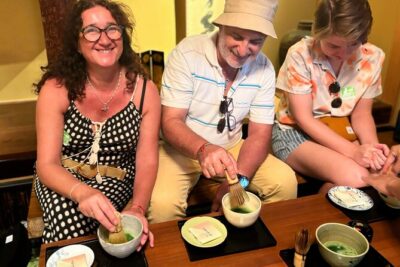
World Heritage Kyoto & Nara Uji Authentic Matcha Experience
Read our review →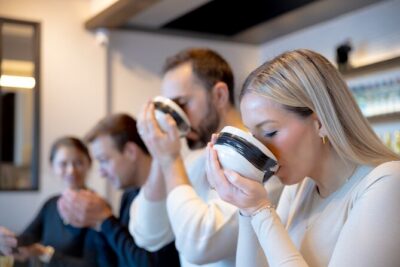
Matcha Making Class in Tokyo with Authentic Japanese Sweets Set
Read our review →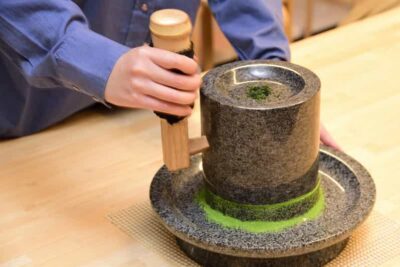
Kyoto: Tea Museum Tickets and Matcha Grinding Experience
Read our review →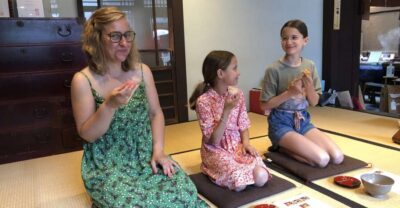
Kyoto: Tea Ceremony Meditation – Make Matcha with Tea Master
Read our review →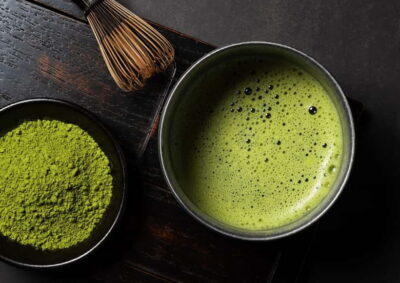
Tokyo: Matcha Making Experience with Mochi Sweets in Asakusa
Read our review →
Kyoto: Kimono Tea Ceremony with Matcha and Sweet
Read our review →
Browse the lists this tea experience appears in