
Review · XIAN
Xi’an Chinese Calligraphy Workshop: Ink Art & Tea Tasting
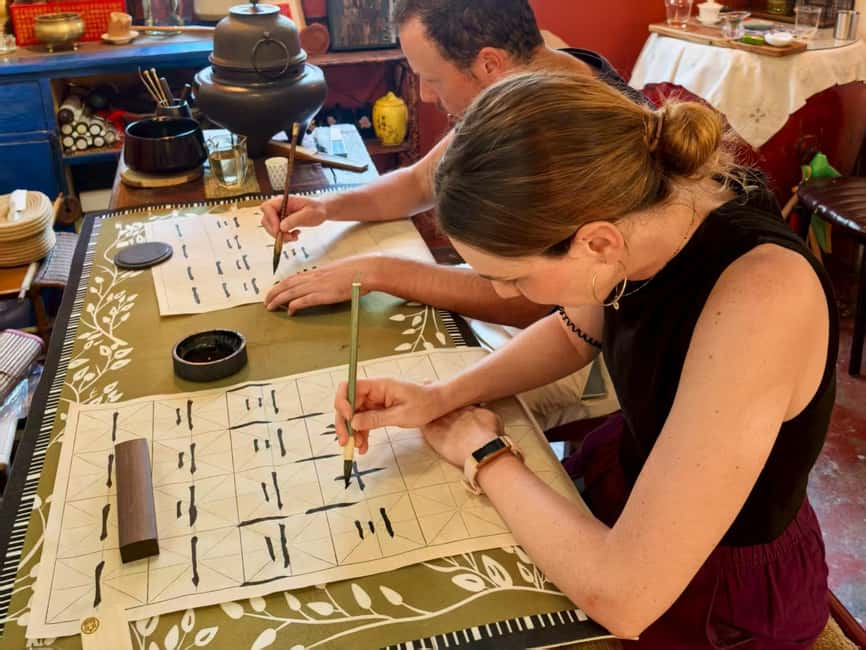
Chinese calligraphy becomes far less mysterious when you hold the brush yourself. At this Xi’an workshop, you learn basic strokes, practice useful characters, write your name in Chinese, and turn your work into a fan or scroll. Tea and local snacks keep the pace relaxed, while Yunyun explains how characters changed over some 3,000 years.
I especially like the small group of eight or fewer, since calligraphy depends on seeing how your hand moves and getting patient correction. I also like the clear personal payoff: you leave with a painted fan or traditional scroll, plus bookmarks, rather than only a few practice sheets.
The main consideration is time. Three hours is enough for a thoughtful introduction, not a full course in brush calligraphy. Children under 12 cannot join, and the residential meeting address in Beilin District may take a little care to find.
Key points at a glance
- Practice real Chinese characters: Start with simple forms such as one, ten, big, small, rice, forever, dragon, martial, and love.
- Learn with Yunyun in English: Her patient, clear instruction suits complete beginners who cannot read or speak Chinese.
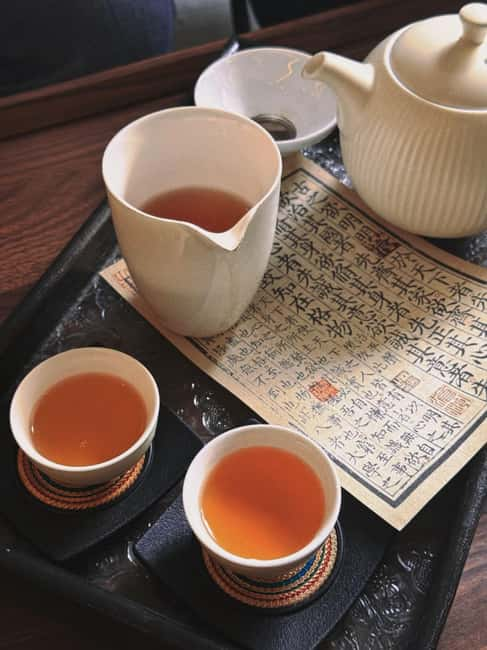
- Enjoy a scholar-style tea setting: Tea service and local snacks break up the writing practice and add cultural context.
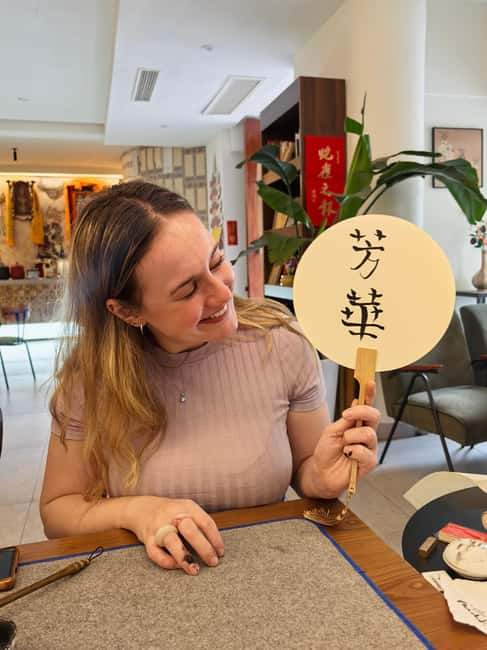
- Take home personal artwork: Choose a painted folding fan or traditional scroll, and make personalized bookmarks.
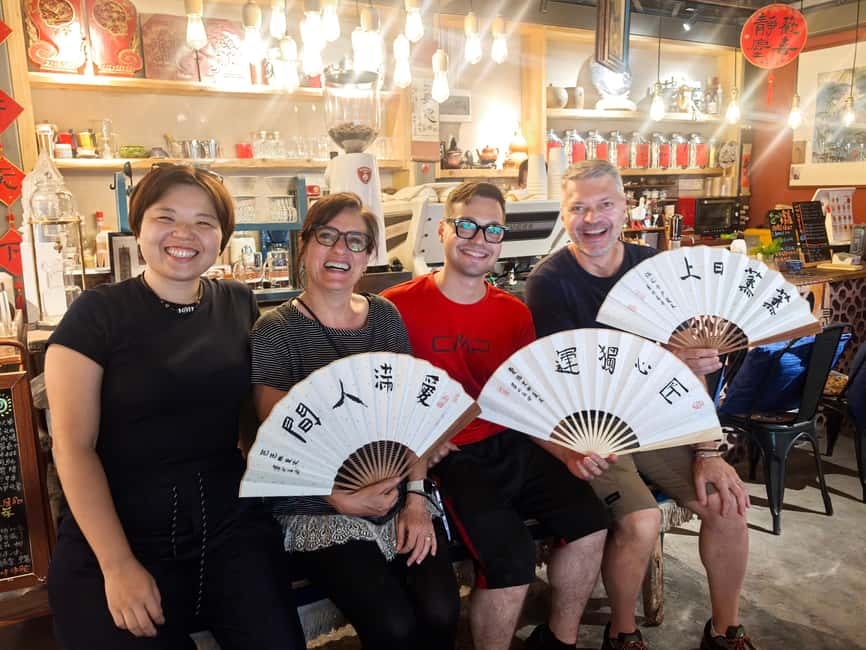
- Travel in a tiny group: With no more than eight participants, you get room for questions and brush guidance.
- Allow three unhurried hours: This works best as a calm cultural pause between Xi’an’s larger sights.
Why brush calligraphy is worth three hours in Xi’an
Xi’an is often treated as a city of major sights: the Terracotta Warriors, the old city wall, the Bell Tower, and the Muslim Quarter. Those places matter, but they can also fill your day with looking and walking. This workshop gives you a chance to sit down and make something with your hands.
Chinese calligraphy is not simply Chinese handwriting in a different script. The shape, balance, and order of each stroke matter. A brush can create a thin line, a heavy line, or a soft turn depending on pressure and speed. You do not need artistic skill to begin, but you do need to slow down and watch what the brush is doing.
That slower pace is part of the appeal. I would recommend this activity to anyone who wants a break from sightseeing that still connects directly to Chinese culture. You are not just hearing about an old art. You are trying its basic movements and seeing why the written character carries meaning beyond its sound.
The setting also helps. Tea, snacks, ink, paper, and the traditional tools create a scholar-style atmosphere without requiring you to know anything in advance. You can arrive unable to recognize a single character and still take part.
More Tea Tastings in China
- Tea Tasting and Pairing Concept Workshop
★ 5.0 · 57 reviews - Biking Real Shanghai& Tea Tasting Experience
★ 4.5 · 45 reviews - Private Shanghai City and Zhujiajiao Combo Tour with Boating, Tea Tasting, Lunch
★ 5.0 · 15 reviews
Meeting Yunyun and getting settled with tea
The instructor is Yunyun, and the activity is conducted in English. That is important here. Calligraphy instruction can become confusing when the teacher is trying to explain pressure, direction, and character structure through gestures alone. Yunyun’s role is not just to demonstrate a brush. She explains the meaning behind the forms and helps beginners follow each stage.
The group is limited to eight participants. That number is small enough for individual help, especially when everyone is holding a brush at a different angle or trying to control too much ink. A larger class could turn the activity into a demonstration where you copy from a distance. Here, you have a better chance to ask questions and receive direct correction.
The meeting point is Room 0102, Unit 1, Building 7, No. 6 Xiamaling, Beilin District, Xi’an City, Shaanxi Province. The Chinese address is 西安市碑林区下马陵6号第7幢1单元0102室垣里私厨. Save the Chinese version on your phone, since it may be easier to show when you are locating the building.
Tea service and local snacks are included. This is more than a pleasant extra. Tea creates natural pauses between writing exercises, and it gives Yunyun a way to discuss traditional Chinese customs as part of the session. You are not rushing from one craft task to the next.
One practical note: the supplied information describes the setting as a charming tea room at a hotel, while the official meeting address points to the Xiamaling location. Confirm the exact starting instructions when you book, and allow time to find Room 0102.
Starting with the building blocks of Chinese writing
The workshop introduces the history of Chinese characters across roughly 3,000 years. You will hear how written forms developed and why certain characters look the way they do. This background makes the practice more memorable, because a character is no longer just a pattern of lines on paper.
The first exercises use basic strokes and simple characters. The examples include 一 for one, 十 for ten, 大 for big, 小 for small, and 米 for rice. These are good starting points because they let you focus on brush control without facing a complicated character right away.
You will practice how to begin and finish a stroke, how to vary pressure, and how to keep the character balanced. Even the shortest mark has a direction and a rhythm. A horizontal line that looks easy on the page can take several attempts when made with a traditional brush.
This is where patience matters. You may produce a few uneven lines at first. That is normal, and the small class gives Yunyun time to show you what to change. I like that the workshop does not assume you already have a feel for the brush. The exercises are built for people starting from zero.
The character choices also carry meaning. 永 means forever, 龙 means dragon, 武 refers to martial spirit, and 爱 means love. You learn not only how to write the forms, but also why these words make appealing subjects for personal artwork.
Moving from simple strokes to meaningful words
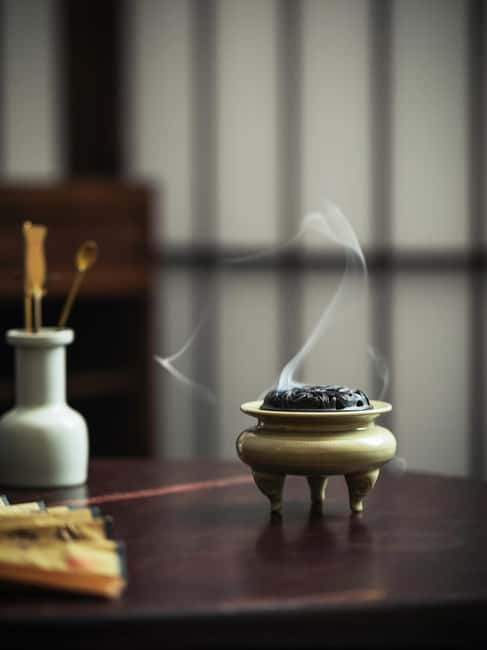
Once you have practiced the basic movements, you work with characters that need more balance and control. The transition from 一 or 十 to a character such as 龙 or 爱 gives you a clear sense of progress. The forms are more involved, but the earlier exercises have prepared your hand for them.
The workshop also teaches you how to write your name in Chinese characters. This is one of the most useful parts for many people, since your finished work becomes personal rather than a generic souvenir. You can see how your name is represented in Chinese writing and then practice it with the brush.
Names in another writing system can be a little tricky, and the information provided does not promise a fixed translation method for every name. Yunyun helps you with the Chinese characters used for your name during the session. Treat this as part of the cultural lesson, not as a formal language class.
You also have the chance to choose favorite words or sentences for your artwork. The supplied details mention both individual words and sentences, so you can aim for something simple or select a phrase that has personal meaning. Ask about the length and complexity of your choice before the final piece is prepared.
This part makes the workshop particularly suitable for couples, friends, and families with older children. Each person can work on a different character or phrase, while still sharing the tea and instruction. Children under 12 are not permitted, so the activity is designed for participants aged 12 and above.
More Tea and Calligraphy Workshops in China:
- Beijing Culture: Tea Ceremony, Heritage Instrument & Calligraphy
★ 5.0 · 57 reviews - Beijing Culture Event: Tradition Music, Tea Ceremony, Calligraphy
★ 5.0 · 11 reviews - Beijing Hands-On Culture Tour: Tea, Instrument, Calligraphy
★ 5.0 · 6 reviews - Xi’an Calligraphy & Tea Ceremony – Dive into Ink & Brush Artistry
★ 5.0 · 4 reviews
Making a painted fan or traditional scroll
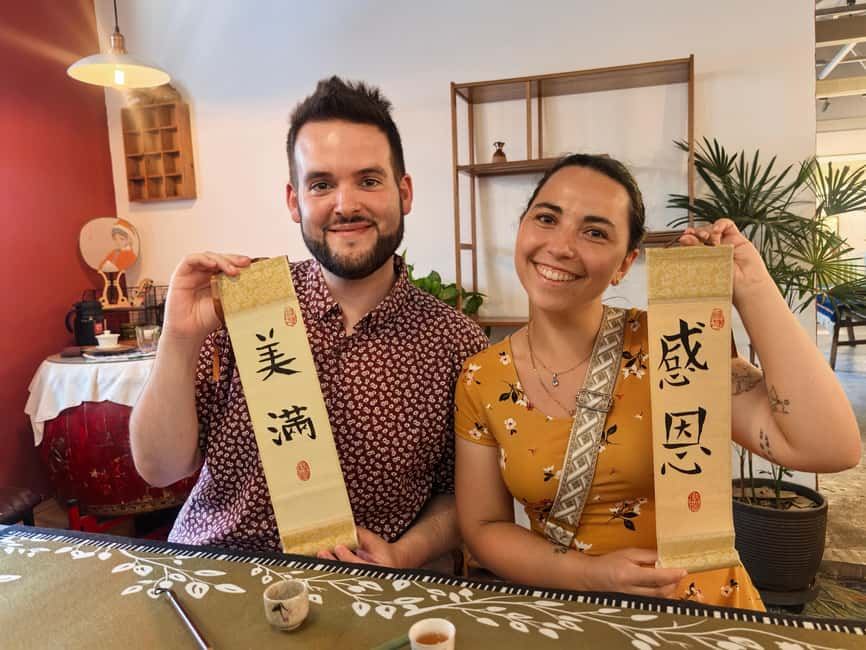
The final artwork is the part you can display at home. You choose between a painted folding fan and a traditional scroll painting. The activity includes the piece itself, the writing materials, and instruction, so you are not paying extra for the main souvenir.
A folding fan is easy to pack and gives you a useful surface for a character or short phrase. It also has a clear connection to traditional Chinese arts. A scroll makes a more formal display piece and may suit you if you want something for a wall or a special corner at home.
The finished object will reflect a beginner’s work, not the output of a professional calligrapher. That is part of its value. You are taking home something you created with guidance, not a mass-produced item from a shop. If you want a very polished result, keep your chosen word or sentence fairly simple and listen closely during practice.
Personalized bookmarks are included as well. These are smaller and easier to finish, so they give you another keepsake even if your fan or scroll takes several attempts. They also make practical gifts for friends and family.
The supplied details refer to a painted fan or traditional scroll painting, so clarify the exact format available on the day if you have a strong preference. The main choice is between the folding fan and the scroll, not an unlimited menu of art projects.
Tea, snacks, and a calmer side of Xi’an
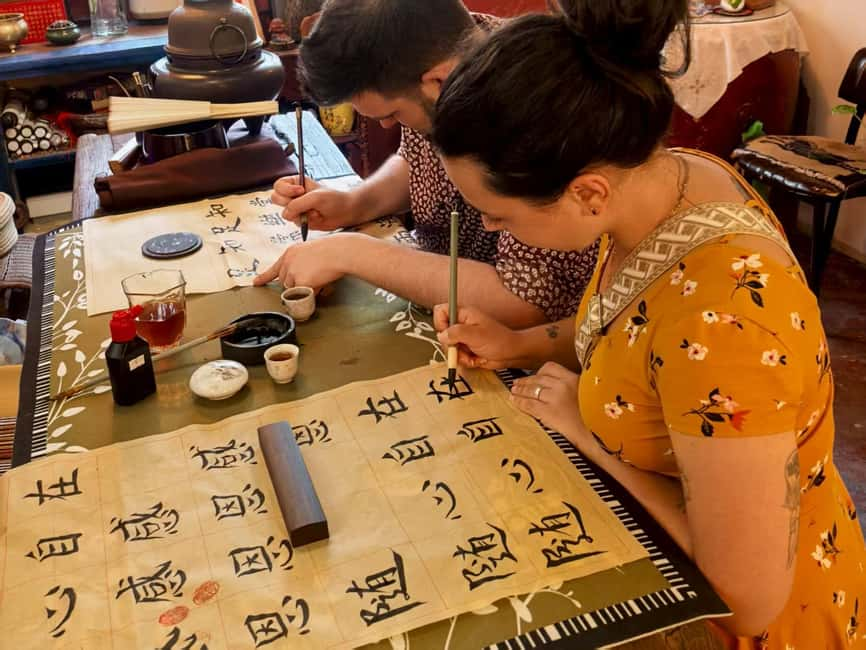
The tea tasting is woven through the workshop rather than treated as a separate stop. You enjoy traditional Chinese tea with local snacks while learning about tea and calligraphy. That pairing makes sense: both arts reward attention, patience, and small movements.
This is not presented as a formal tea ceremony with a long list of rules. It is a relaxed chance to taste tea and understand more about its place in Chinese culture. If you are curious about tea but do not want to book a stand-alone tasting, this gives you a useful introduction alongside the brush work.
The atmosphere also helps people settle in. Calligraphy can feel awkward during the first few minutes, especially when you are worried about making a poor line in front of others. Tea and conversation remove some of that pressure. Yunyun is described as friendly and close with participants, which matters in an activity where beginners need to feel comfortable asking for help.
I would schedule this when you have enough mental space to enjoy it. It is not the best choice immediately before a tightly timed attraction, since the session lasts three hours and includes several stages. It works well as a quieter part of a Xi’an stay, especially after a morning of walking.
What the $55 price includes
At $55 per person, this is not the cheapest cultural activity you can add to a Xi’an itinerary. It is also more than a quick souvenir workshop. The price covers three hours of English instruction, tea and local snacks, ink, paper, an inkstone, brush materials, a fan or scroll, and personalized bookmarks.
That package gives the price reasonable value if you want hands-on teaching and a finished piece to take home. Buying art supplies separately would not give you the same explanation of characters, and a short museum visit would not let you practice the writing yourself.
The small group affects the value, too. Eight participants or fewer means the fee includes access to individual guidance rather than only a group talk. For a couple or small group of friends, the personal instruction and shared activity may be worth more than a standard sightseeing stop.
The value is weaker if you only want a professional piece of Chinese calligraphy. In that case, buying a finished scroll may be simpler. Book this workshop when you want the process, the cultural explanation, and the memory of making the piece yourself.
The reserve-now, pay-later option can help if your Xi’an plans are still moving around. Free cancellation is available up to 24 hours before the activity for a full refund. Check the available start times before choosing your day, since the duration is fixed at three hours.
Who will enjoy this workshop most
This is made for beginners. You do not need Chinese language skills or previous brush experience. The activity also suits culture enthusiasts who want more than photographs and facts from their time in Xi’an.
I would especially suggest it for:
- Adults who want a calm, hands-on cultural activity
- Couples who prefer a shared keepsake to a standard souvenir
- Small groups of friends who enjoy learning together
- Families with children aged 12 and older
- People interested in tea, writing, or traditional Chinese arts
- Anyone looking for a quiet break from busy city sightseeing
The English instruction makes it accessible to international visitors, and wheelchair access is listed as available. The age rule is firm: children under 12 cannot take part.
It may not suit you if you dislike sitting for several hours, want a fast activity, or expect to become skilled at calligraphy in one session. You will learn the foundations, but brush control takes continued practice.
Practical tips for a better session
Save the full Chinese meeting address before leaving your hotel. The location includes a building, unit, and room number, so do not rely only on the English street name.
Arrive ready to focus on technique rather than speed. A brush is not held and moved like a ballpoint pen, and the first strokes may feel unfamiliar. Listen to the order of the strokes and copy the instructor’s movement carefully.
Think about your preferred souvenir in advance. If you want a fan, choose a short word or phrase that will fit comfortably. If you prefer a scroll, you may have more room, but the final design still depends on the format offered during the activity.
You can also prepare a few questions about your name, the meaning of a favorite character, or the differences between Chinese writing styles. The workshop includes cultural explanation, so a little curiosity will make the three hours more rewarding.
Final verdict: should you book it?
Book this Xi’an calligraphy workshop if you want to slow down, learn from an English-speaking local instructor, and take home artwork that carries your own choices. Yunyun’s patient teaching, the small group, the tea, and the chance to write your name make it more personal than a basic craft demonstration.
The $55 price is fair for three hours with materials, refreshments, instruction, and a fan or scroll included. Just keep your expectations realistic. You are getting a friendly introduction, not professional-level training, and the residential meeting point requires careful attention.
For first-time visitors who want a quieter connection with Chinese culture, I would make room for it. For anyone seeking only major Xi’an landmarks or a quick activity, spend the money elsewhere.
FAQ
How long does the Xi’an calligraphy workshop last?
The workshop lasts three hours. Check the available start times when booking.
What language is the instruction in?
The instructor teaches in English.
Who leads the calligraphy workshop?
The instructor is Yunyun, from YunyunTours.
What is included in the price?
The $55 price includes professional calligraphy instruction, tea and local snacks, writing materials such as ink, paper, and an inkstone, a choice between a painted folding fan and traditional scroll painting, and personalized bookmarks.
Can beginners join?
Yes. The workshop is designed for complete beginners and culture enthusiasts. You practice basic strokes, meaningful Chinese characters, and your name in Chinese.
Are children allowed to participate?
Children under 12 are not suitable for this activity. Participants aged 12 and above may join.
Where is the meeting point?
The meeting point is Room 0102, Unit 1, Building 7, No. 6 Xiamaling, Beilin District, Xi’an City, Shaanxi Province, China. The Chinese address is 西安市碑林区下马陵6号第7幢1单元0102室垣里私厨.
Can I cancel the booking?
You can cancel up to 24 hours in advance for a full refund. A reserve-now, pay-later option is also available.
Newly steeped around China
- Full-day Tour: Spectacular Sunrise, Tea Plantation & Sunset★ 5.0 · 3 reviews
- Unlock Chinese Tea: Culture, Science, Tasting & Hands-on Brewing★ 5.0 · 12 reviews
- Shanghai Mahjong Experience in Local Tea Bar★ 5.0 · 4 reviews
- Chinese Tea Ceremony Experience★ 5.0 · 3 reviews
- Private Tour Hangzhou West Lake and Tea Fields Discovery★ 5.0 · 3 reviews
- Hangzhou West Lake and Tea Plantation Half Day Tour★ 5.0 · 4 reviews
- Private Hangzhou Day Tour to West Lake, Lingyin Temple, Tea Village, Old Pagoda★ 5.0 · 17 reviews
- Half-Day Hangzhou Private Tour with Green Tea Village and Lingyin Temple★ 5.0 · 3 reviews
Tea & Calligraphy Workshops, compared.
Osaka: Tea Ceremony, Calligraphy, and Kimono Experience
Read our review →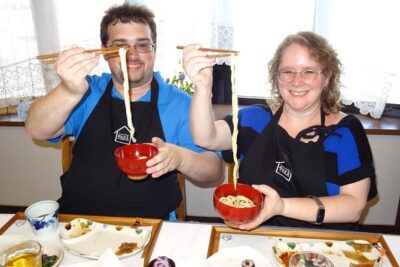
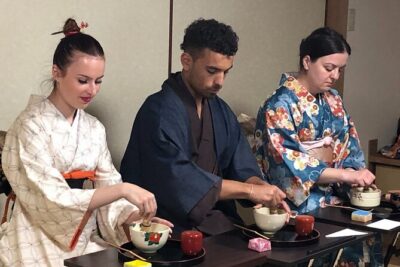
An Amazing set of Cultural experience: Kimono, Tea Ceremony and Calligraphy
Read our review →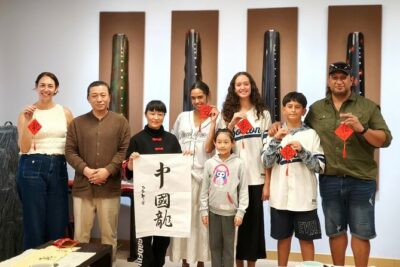
Beijing Culture: Tea Ceremony, Heritage Instrument & Calligraphy
Read our review →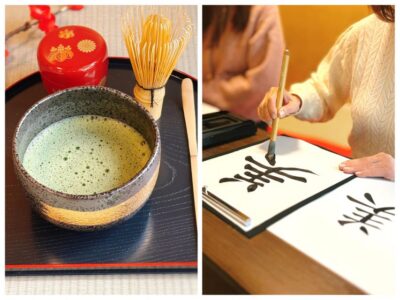
Osaka: Private Tea Ceremony and Calligraphy Experience
Read our review →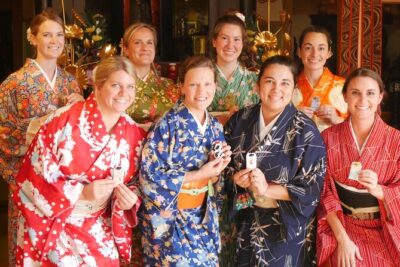
Cultural Activities :Kimono, tea ceremony, Calligraphy and Amulet
Read our review →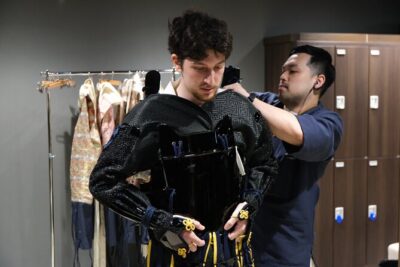
Samurai dress-up and shows, plus Tea Ceremony & Calligraphy
Read our review →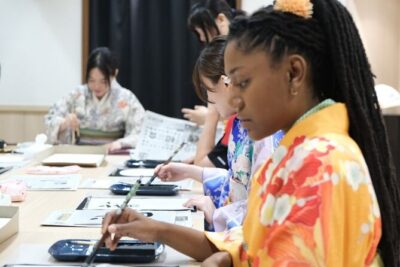
Premium Kimono Dressing, Tea Ceremony, Calligraphy, Samurai show
Read our review →Browse the lists this tea experience appears in