
Review · BEIJING
Beijing Hands-On Culture Tour: Tea, Instrument, Calligraphy
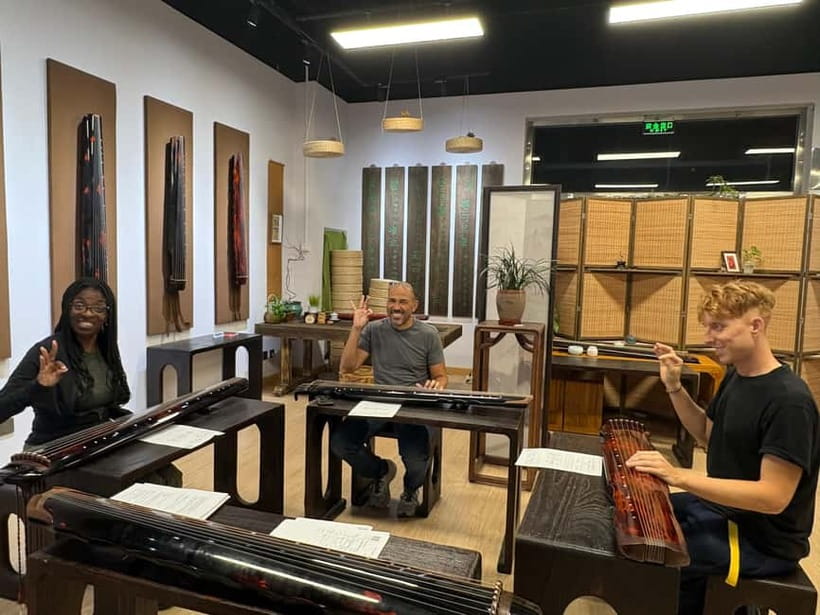
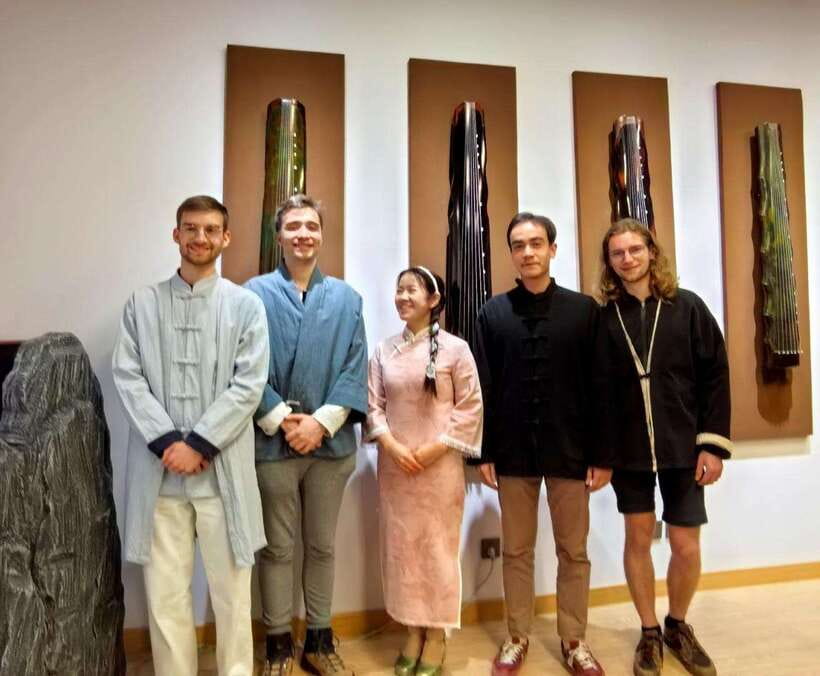
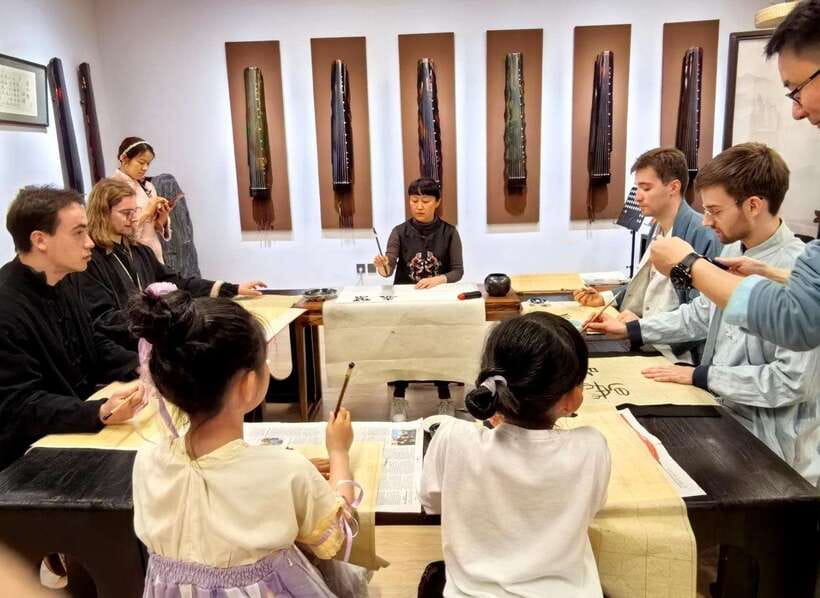
The most memorable part of this Beijing experience is that you do not sit at the back and watch. You brew tea, pluck the strings of a Guqin, handle brush and ink, and dress in Hanfu for photographs. I especially like the small groups of up to 10 and the careful English guidance, which make unfamiliar customs easier to follow. I also like the mix of quiet arts and hands-on fun, a good fit for families.
The main consideration is timing. The activity is advertised as lasting three hours, while the hands-on cultural program is also described as about two and a half hours. That is still good value at $15, but you should allow a full three hours and arrive 10 minutes early.
Key points at a glance
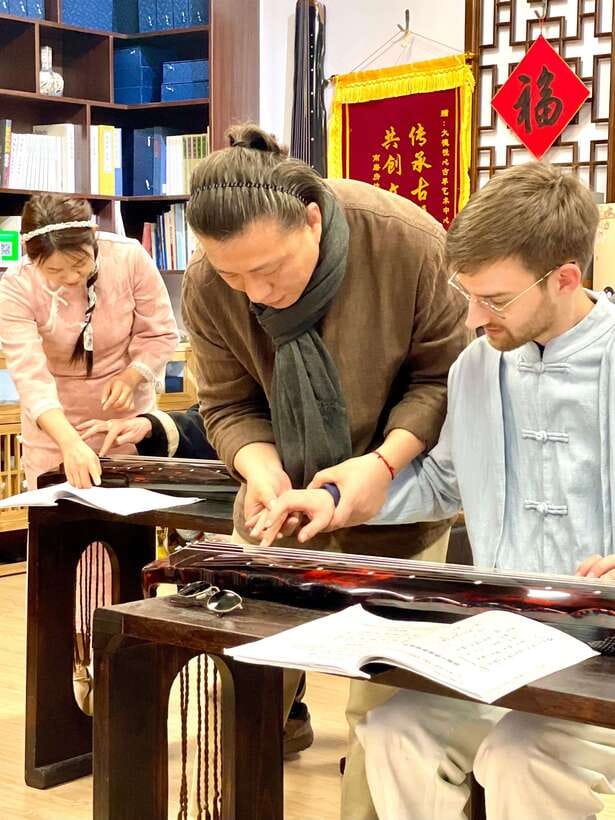
- Play a complete Guqin melody: You receive step-by-step help rather than simply listening to a demonstration.
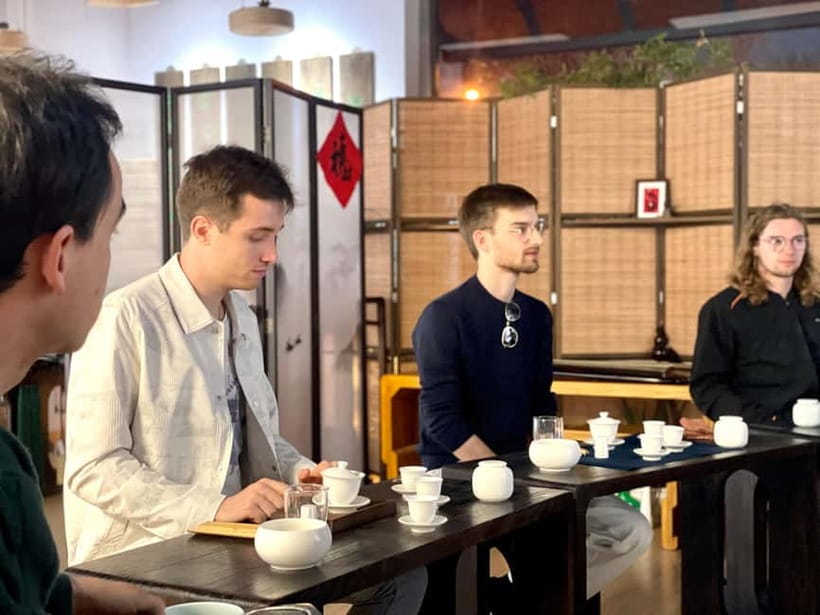
- Brew three kinds of tea: The session covers red, green, and floral teas, along with a six-step tea ritual.
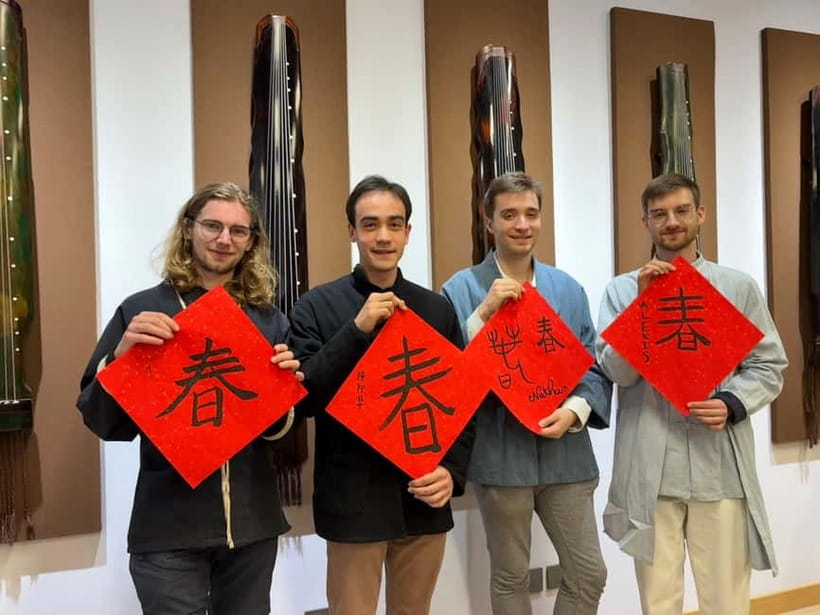
- Write your own Chinese calligraphy: Use real brush and ink to create your name, peace, blessing, or another meaningful word.
- Wear Hanfu and take photographs: Costume rental and a photo session are included.
- Learn from cultural specialists: The guide connects the gestures, sounds, and symbols to Chinese history and philosophy.
- Get a calm indoor setting: The air-conditioned art center is welcoming for children, older adults, and wheelchair users.
A compact introduction to Chinese culture
Beijing can give you grand sights in great quantity, but its traditional arts often take more patience to understand. A temple courtyard or museum display may show you the object. This workshop lets you handle it.
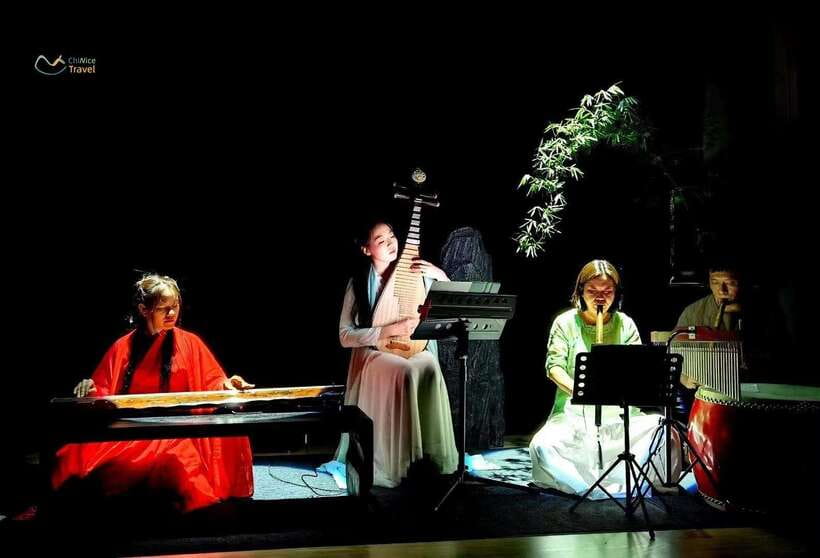
The format brings several activities together in one place: tea, Guqin music, calligraphy, Hanfu clothing, cultural rituals, and guided conversation. It is a useful choice if your Beijing schedule is tight but you want more than a quick photograph beside a historic building.
I would not describe the session as a formal academic class. It is a friendly introduction with enough explanation to give each activity meaning. You will learn what you are doing, then try it yourself. That simple pattern works well, especially if you are new to Chinese customs.
The setting is a certified private art center rather than a crowded public attraction. That matters. Tea preparation and Guqin music both benefit from a quieter room, and children are less likely to be swept along by a large group.
More Tea and Calligraphy Workshops in Beijing:
- Beijing Culture: Tea Ceremony, Heritage Instrument & Calligraphy
★ 5.0 · 57 reviews - Beijing Culture Event: Tradition Music, Tea Ceremony, Calligraphy
★ 5.0 · 11 reviews - Beijing:Learn Calligraphy & Enjoy Kung Fu Tea Ceremony
★ 5.0 · 2 reviews
Tea, served one careful step at a time
The tea portion begins with a six-step ritual taught by a professional tea master. You brew three types of Chinese tea: red, green, and floral. The point is not just to identify different flavors. You are shown how aroma, taste, preparation, and tradition fit together.
Tea ceremonies can feel mysterious when you only watch them. Small movements such as warming a vessel, pouring, serving, and holding the cup have meaning, but a visitor may miss the reason behind them. Here, the guide explains the process in English and gives you a chance to repeat it.
I like this part because it is active without being demanding. You do not need prior knowledge, a trained palate, or special equipment. You simply pay attention to the tea, the order of the steps, and the way the ritual slows the room down.
The three teas also give the session a useful range. Green tea can show a lighter, more delicate side of Chinese tea culture, while red tea offers a fuller taste. Floral tea adds another layer through scent. The activity does not promise a full tea education, but it gives you a practical starting point.
Water and tea are included. Meals and other drinks are not, so do not treat this as a meal stop. If you have allergies, the guide Sylvia has asked participants about them in advance so arrangements can be made. It is wise to share that information when booking.
The Guqin lesson is the musical centerpiece
The Guqin is one of China’s oldest and most respected instruments. It has a long, narrow body and a quiet, mellow sound. The appeal here is not a loud performance or a quick novelty try. You are guided through the instrument slowly and taught to play a full ancient melody.
A Guqin master leads the session, with the professional guide also helping in English. You will be shown where to place your fingers and how to find the rhythm. The description does not promise that you will become a musician in one afternoon, but it does promise a complete melody under instruction.
That distinction matters. Many cultural activities let you hold an object for a photograph, then move on. Here, the instrument becomes something you use. Even a simple melody gives you a better sense of the control and patience required to play it.
The sound itself is part of the lesson. The Guqin is associated with calm and reflection, and its low, soft notes suit the indoor art-center setting. You may find this the quietest part of the visit, especially after the social energy of dressing and photographs.
Families can approach the activity at different levels. A child may enjoy the novelty of making a sound. An adult may be more interested in the instrument’s place in Chinese culture. The small group limit gives the instructor room to help each participant.
Brush, ink, and a name you can keep
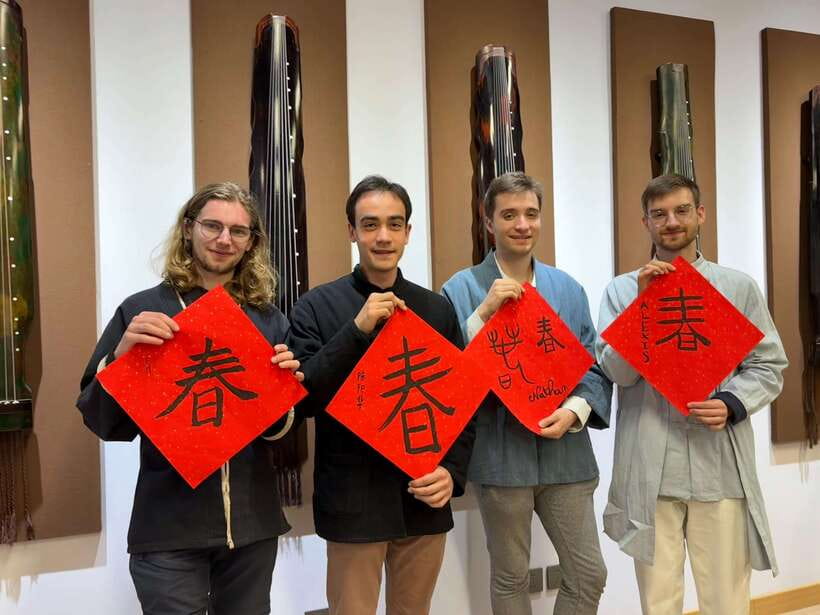
The calligraphy session begins with an explanation of how Chinese writing developed. You then use a real brush and ink to write your own name or a meaningful word such as peace or blessing.
This is more satisfying than copying a decorative character without knowing what it means. The guide gives you context before you put brush to paper, so the finished piece has personal value. You may not produce museum-quality calligraphy, but you will understand why balance, pressure, and stroke order matter.
Calligraphy also changes the pace of the workshop. The tea ritual asks you to slow down and observe. The Guqin asks you to listen. Brushwork asks you to control your hand. Together, the three activities give the experience a pleasing variety.
The session is suitable for beginners because you do not need to know Chinese. English guidance helps you understand the character you are writing and the symbolism behind it. If you want a practical souvenir, this is one of the strongest parts of the program. Your work is tied to your own name or chosen word, not a generic item picked from a shop.
More Tea Experiences around Beijing:
- Traditional Chinese Tea Ceremony Experience
★ 4.7 · 74 reviews - Chinese Tea ceremony in Beijing Hutong courtyard
★ 4.7 · 26 reviews - Beijing: Mutianyu Great Wall and Tea House Private Tour
★ 5.0 · 11 reviews - Beijing: Temple Of Heaven+Tai Chi Class+Tea Ceremony
★ 5.0 · 8 reviews
Hanfu dressing and photographs
Hanfu rental and a photo session are included. Wearing traditional clothing gives you a physical sense of how costume changes posture, movement, and presentation. It also adds a light, playful element to an otherwise thoughtful cultural lesson.
You are advised to wear comfortable clothes for the dressing session. That is useful advice, since you will spend time changing into the costume and taking photographs. Bring your own camera if you want extra pictures beyond the included photography.
The photo session can be especially appealing to families. One family with children aged 9 and 14 enjoyed having several art forms in one place, and another family found the program worked well for ages 11 through 40. That range tells you something practical: this is not designed only for serious art students or adults.
The costumes are not the main reason I would book the workshop, but they help break up the quieter sections. You get a visual memory to go with the tea, music, and calligraphy. Just keep your expectations sensible. This is a cultural activity with photographs, not a full professional fashion shoot.
A guide who does more than translate
English support is central to the experience. The guide is not there only to repeat instructions. You are given explanations about history, philosophy, symbolism, and the role of each art form.
That makes a real difference. Without context, the tea steps could seem fussy, the calligraphy could seem like handwriting practice, and the Guqin could seem like an unusual string instrument. Good explanation connects the actions.
Sylvia has also helped with practical arrival details. She met one family at the metro entrance and guided them to the art center after they sorted out their train tickets. That kind of help can be valuable in Beijing, where finding the correct exit or entrance may take longer than expected.
The available languages are Chinese and English. The group size is limited to 10, so you should have a more personal session than you would at a large stage show. The activity also welcomes wheelchair users, though you should still share any specific needs when arranging your booking.
Why the $15 price is strong value
At $15 per person, this is an unusually inexpensive way to try several traditional arts in one sitting. The price includes tea and water, the cultural show, Hanfu rental, photography, the Guqin class, professional instruction, and original souvenirs.
The value comes from the number of active parts, but also from the setting. You are not paying separately for a costume activity, a tea tasting, a music demonstration, and a calligraphy lesson. They are combined into one program with English help.
The experience will not replace a dedicated tea course, a full Guqin concert, or a serious calligraphy workshop. Each section is necessarily an introduction. Still, that breadth is its strength. If you are choosing between a short cultural stop and no cultural activity at all, this gives you a lot in a manageable block of time.
Meals and personal purchases are not included. Transportation to and from the venue is also your responsibility. These exclusions are easy to handle, but remember to budget time and money for reaching the art center.
Getting there and planning your time
The activity lasts three hours, with the central program also described as about two and a half hours. I would plan around the longer figure. Arrive 10 minutes early so you can prepare, especially if you are traveling with children or need help finding the entrance.
The venue is in northern China, in Beijing, and the exact meeting details should be checked when you book. Transportation is not included. One useful option is the metro, and Sylvia has met participants at the metro entrance to help them reach the art center.
An air-conditioned indoor venue is a practical advantage during Beijing’s hot or cold seasons. It also means the program is less dependent on weather than an outdoor sightseeing stop. The room is described as stress-free and welcoming, but the exact comfort level can still depend on the group and the day.
Free cancellation is available up to 24 hours before the activity for a full refund. You can also reserve and pay later, which helps if your Beijing schedule is still changing.
Who will enjoy this most
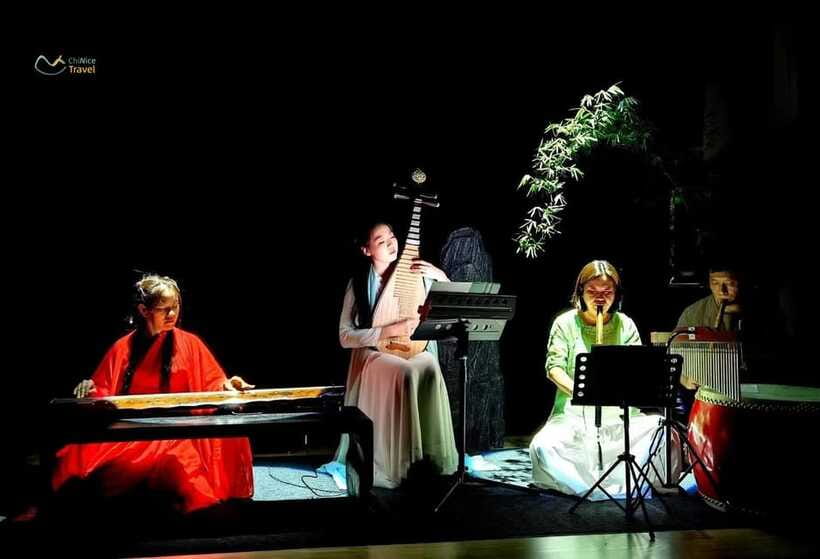
I would recommend this for families, first-time visitors to China, and anyone who wants a cultural activity with clear instruction rather than a lecture. The combination of costume, music, tea, and writing keeps the pace varied.
It is also a good choice for parents traveling with children or teenagers. The hands-on tasks give younger participants something to do, while the explanations provide enough substance for adults. The group experiences described for ages 9 through 40 show how broadly the format can work.
Older adults may appreciate the calm indoor setting and the social side of the program. The small group makes it easier to ask for help, and wheelchair access is listed as available.
You may want to choose something else if your main aim is a long, specialist lesson in one art. Serious tea students, musicians, or calligraphers will find the classes introductory. You should also avoid booking it too close to another fixed appointment, since the three-hour window leaves little room for delays.
Should you book the Beijing culture workshop?
Book it if you want to try several meaningful Chinese traditions in a short, well-supported session. The Guqin lesson is the strongest reason to go, while the tea ritual and personalized calligraphy give the afternoon more depth. Hanfu and photographs add a fun visual memory without taking over the program.
At $15, the risk is low, but the time commitment is real. Allow three hours, arrange your own transport, wear comfortable clothing, and arrive early. If you prefer watching a polished performance from beginning to end, this may feel too participatory. If you want to touch, taste, play, write, and ask questions, it is one of the better-value cultural activities in Beijing.
FAQ
How long does the activity last?
The activity is listed as three hours. The hands-on cultural program is also described as about two and a half hours, so you should allow a full three hours.
How much does the experience cost?
The listed price is $15 per person.
Which languages are available?
The experience is offered in Chinese and English.
What activities are included?
You take part in a tea ceremony, Guqin class, Chinese calligraphy, cultural rituals, Hanfu dressing, and a photo session.
Is tea included?
Yes. Tea and water are included. Meals and other drinks are not included.
Is transportation included?
No. You must arrange transportation to and from the venue. Sylvia may meet you at the metro entrance to help you find the art center.
Do I need prior experience in music or calligraphy?
No prior experience is stated as necessary. The Guqin lesson and calligraphy session are guided by instructors and designed as hands-on introductions.
Is the activity suitable for children?
Yes. The format is suitable for families, and the supplied information includes family participation with children aged 9 and 14, as well as a group ranging from 11 to 40.
Can I cancel the booking?
You can cancel up to 24 hours in advance for a full refund. Reserve now and pay later is also available.
Newly steeped around Beijing
- Private Tour to the Temple of Heaven and Tea tasting at the Maliandao Tea city★ 5.0 · 3 reviews
- Temple of Heaven Private Tour and Tea Tasting at Maliandao Tea Street★ 5.0 · 2 reviews
- Private Beijing Spiritual Tour with Lunch and Tea Ceremony★ 5.0 · 2 reviews
- Beijing Tai Chi and Tea Ceremony Experience★ 5.0 · 4 reviews
- Traditional Chinese Tea Ceremony Experience★ 5.0 · 7 reviews
- 3-Hour Private Hutong Walking Tour with Drum Show at Drum Tower and Tea Tasting★ 5.0 · 3 reviews
- 3-hour Morning/Afternoon Tea Tasting on Maliandao Street & Dimsum★ 5.0 · 7 reviews
- Beijing: Temple Of Heaven+Tai Chi Class+Tea Ceremony★ 5.0 · 8 reviews
Tea & Calligraphy Workshops, compared.
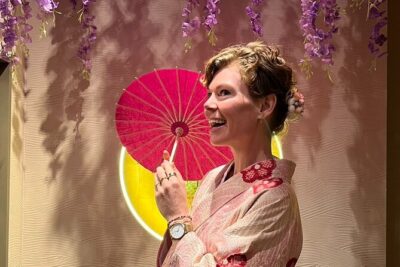
Osaka: Tea Ceremony, Calligraphy, and Kimono Experience
Read our review →
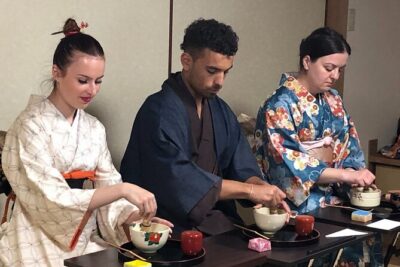
An Amazing set of Cultural experience: Kimono, Tea Ceremony and Calligraphy
Read our review →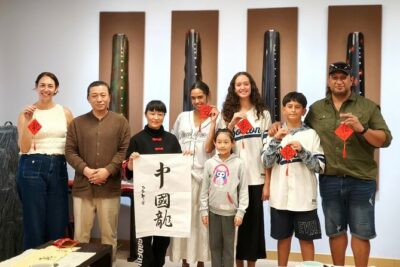
Beijing Culture: Tea Ceremony, Heritage Instrument & Calligraphy
Read our review →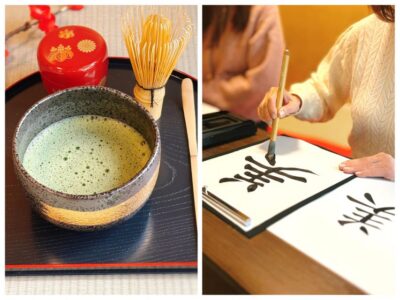
Osaka: Private Tea Ceremony and Calligraphy Experience
Read our review →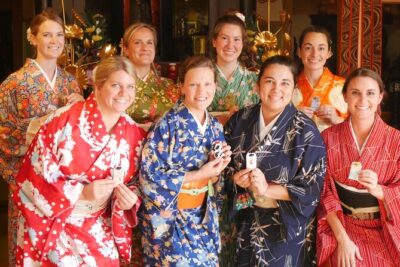
Cultural Activities :Kimono, tea ceremony, Calligraphy and Amulet
Read our review →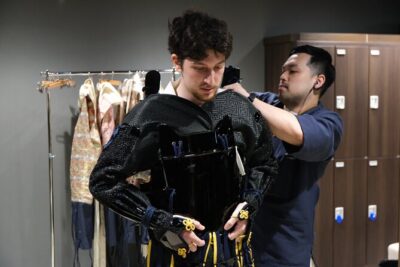
Samurai dress-up and shows, plus Tea Ceremony & Calligraphy
Read our review →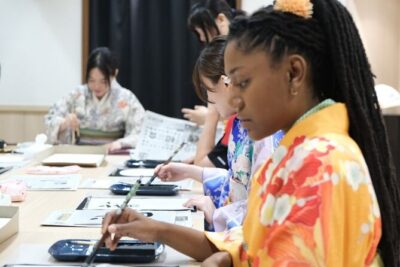
Premium Kimono Dressing, Tea Ceremony, Calligraphy, Samurai show
Read our review →Browse the lists this tea experience appears in