
Review · TOKYO
At an Antique Shop, Tea Ceremony and Japanese Sweets Forming
A tea ceremony in a 100-year-old antique tableware shop feels far more memorable than one held in a plain apartment room. You begin by looking through old dishes, choose a teacup for the ceremony, and then shape Nerikiri, a soft Japanese sweet made with mochi flour.
I like the hands-on sweets lesson, which works much like colorful clay work, and I like the relaxed chair-based tea room. The main consideration is communication: the host is an artisan whose English may be limited, so this suits you best if you enjoy patient, simple conversation rather than a polished stage show.
Key points
- Choose from antique teacups: Some cups are several hundred years old, giving the tea service a real sense of place.
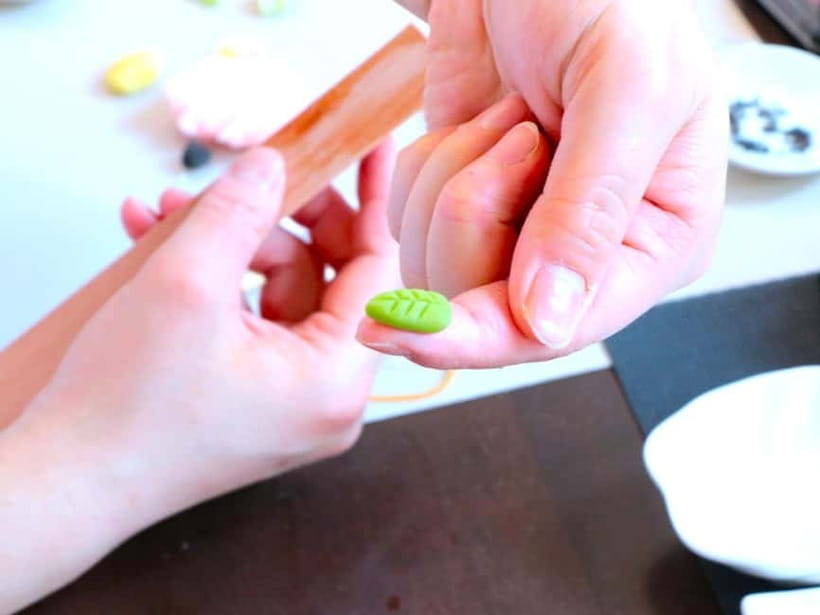
- Make seasonal Nerikiri: Shape colored dough by hand, then add fine lines and details with small tools.
- Visit a century-old shop: The setting is a working antique tableware store rather than a rented classroom.
- Sit in a chair-based tea room: You do not need to kneel on the floor for the ceremony.
- Ask questions freely: Conversation is part of the experience, though English ability may vary.
- Allow time near Nippori: The shop is about 10 minutes from Nippori Station, with the exact location sent after booking.
Why this tea experience feels different
Tokyo offers plenty of tea ceremony classes, but the setting changes the mood. Here, the activity takes place in a roadside antique shop that has been operating for about a century. The shop was also interviewed by CNN, which gives you a sense of its unusual character, but the real draw is simpler: you are surrounded by old tableware before you ever sit down for tea.
That matters because Japanese tea is closely tied to its bowl, cup, sweets, season, and setting. In a modern classroom, you may learn the movements. In this shop, you also get a look at the objects that help make the ceremony meaningful.
You begin with time to inspect the antique dishes. This is not just filler before the class. It lets you see the range of Japanese tableware and notice how a cup can have its own shape, color, and history. If you are interested in ceramics, this first part may be the strongest reason to choose this experience.
The shop also sells antique tableware. Buying something is optional and not included in the $57 price, so you can simply browse without feeling that shopping is part of the lesson.
More Tea and Sweets Making in Tokyo
- Matcha Making Class in Tokyo with Authentic Japanese Sweets Set
★ 5.0 · 744 reviews - Tokyo: Matcha Making Experience with Mochi Sweets in Asakusa
★ 4.9 · 388 reviews - Make Traditional Nerikiri Sweets & Matcha experience in Shibuya
★ 5.0 · 130 reviews
Arriving from Nippori Station
The meeting point is about 10 minutes from Nippori Station. You receive the detailed location after making a reservation, so you will want to leave enough time to find the shop and arrive before the scheduled start.
Nippori is a useful part of northern Tokyo for an experience like this. The activity is not presented as a sightseeing walk, and you should not expect a guided tour of the neighborhood. Still, the station connection makes the shop easier to reach than a venue far outside central Tokyo.
Plan carefully. A late arrival does not extend the activity, and the program finishes at its original scheduled time. That is especially important here because the experience has several connected parts: browsing, sweets forming, and tea. Missing the opening can reduce the time available for the rest.
The rules are practical but strict. You cannot bring a stroller, and baby carriages are not allowed. Bare feet, smoking, chewing gum, alcohol, and drugs are also prohibited. Anyone who is unwell or intoxicated will not be admitted, with no refund.
Browsing tableware in a century-old shop
Once you arrive, you have time to look around the antique tableware shop. The setting is the main contrast with a generic tea class. Instead of entering a plain room and immediately sitting down, you first encounter shelves and objects connected to Japanese dining traditions.
You can choose the teacup used during your ceremony. Some cups are several hundred years old, so this choice is more than a decorative touch. It gives you a small role in the ceremony and lets you pay attention to the object in your hands.
Do not expect every item to be explained in a long museum-style presentation. The host is described as a Japanese artisan rather than a commercial presenter. That can make the experience feel personal, but it also means the pace and explanations may be less polished than those of a large tourism company.
If you like ceramics, ask questions as they come to you. The host welcomes questions, and conversation is treated as part of the tea experience. Simple, direct questions will likely work best, since the host may not speak English with complete ease.
Forming Nerikiri with colored mochi dough
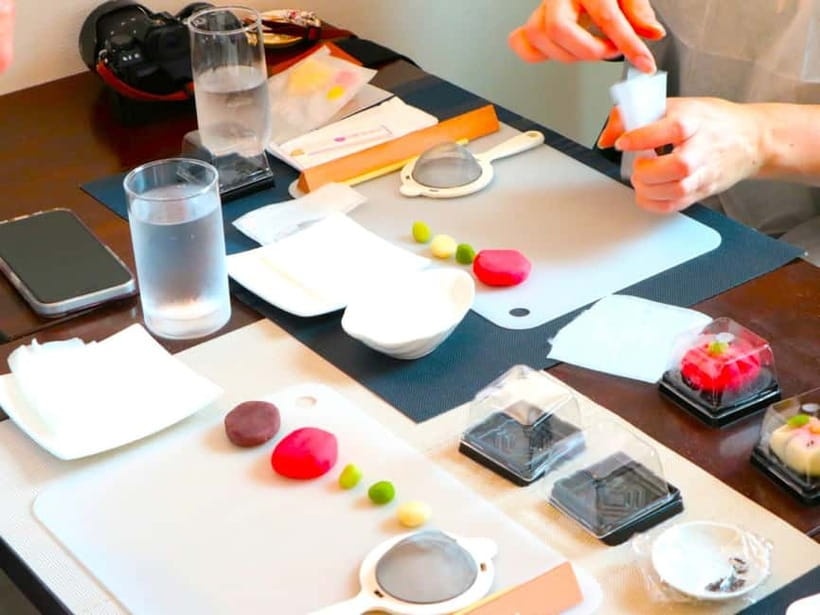
The sweets portion focuses on Nerikiri, a Japanese Wagashi sweet made with mochi flour. You work with several colored materials and shape them into the design selected for the day.
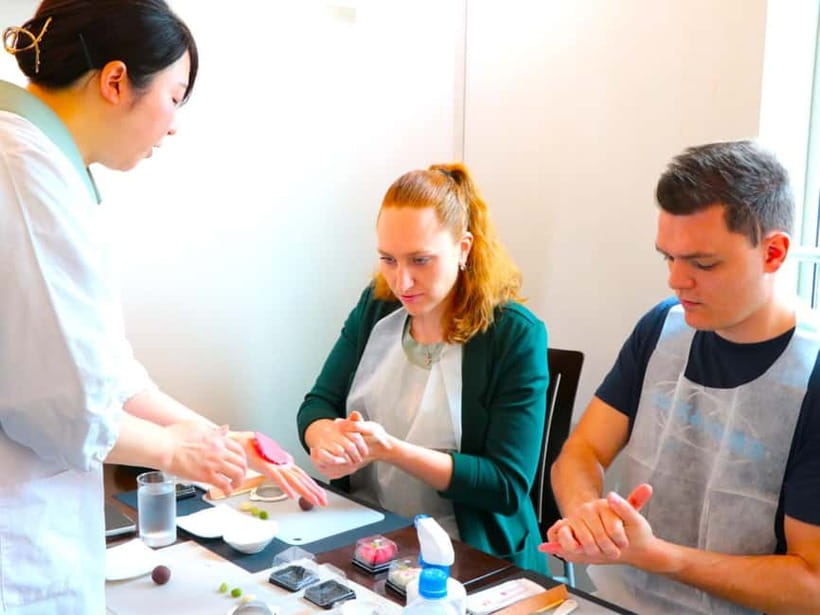
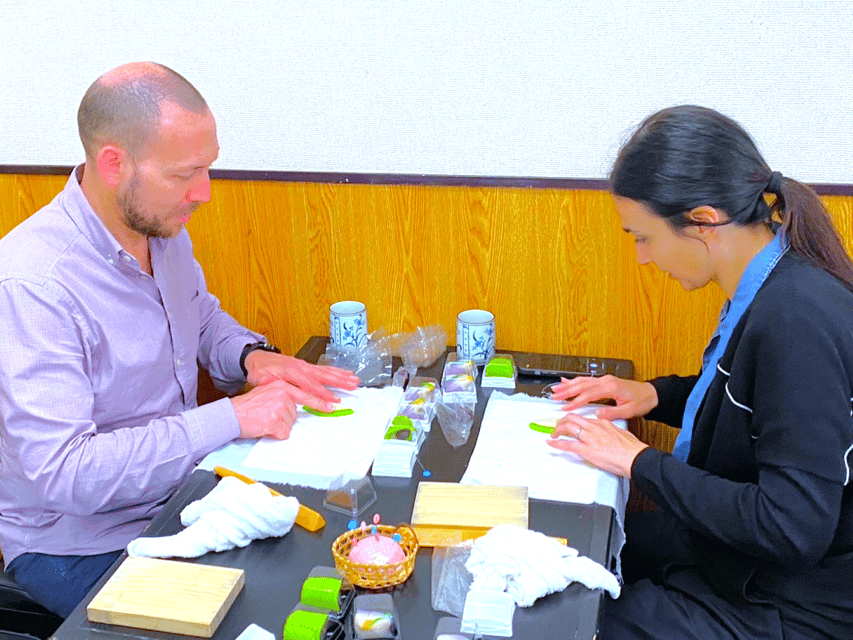
The activity is compared to working with colorful clay, which is a useful way to picture it. You are not expected to have professional cooking or artistic skills. The host guides you through the process, helping you form the dough, create the intended shape, and add lines with tools.
This is a tactile activity rather than a lecture. You will use your hands to shape the sweet delicately, then use small tools to suggest seasonal beauty. The exact design changes by day, so the final figure is not specified in advance.
That seasonal element gives the lesson more meaning. Nerikiri is not simply a sweet shaped for decoration. Its colors and forms can reflect the time of year, and the careful shaping prepares you to notice the connection between food and season in the tea ceremony that follows.
The sweets lesson is also a good fit if you are unsure about participating in a formal ceremony. You get an easy starting point and something concrete to do. The work is creative without requiring advanced cooking skills, and the finished sweet becomes part of the next stage.
Take your time with the fine details. Pressing too hard or rushing the lines can affect the shape, so a calm hand helps. The point is not to produce a perfect professional sweet. It is to understand how a small handmade confection is formed and presented.
More Tea Ceremonies in Tokyo
- Kimono Tea Ceremony at Tokyo, Asakusa Maikoya
★ 5.0 · 638 reviews - Tokyo: Traditional Tea Ceremony with a Tea Master
★ 5.0 · 528 reviews - Tea Ceremony Workshop in Tokyo by the Experienced Instrucor
★ 5.0 · 189 reviews - Asakusa: Kimono Tea Ceremony with Matcha and Sweet
★ 4.9 · 153 reviews
Entering the chair-based tea room
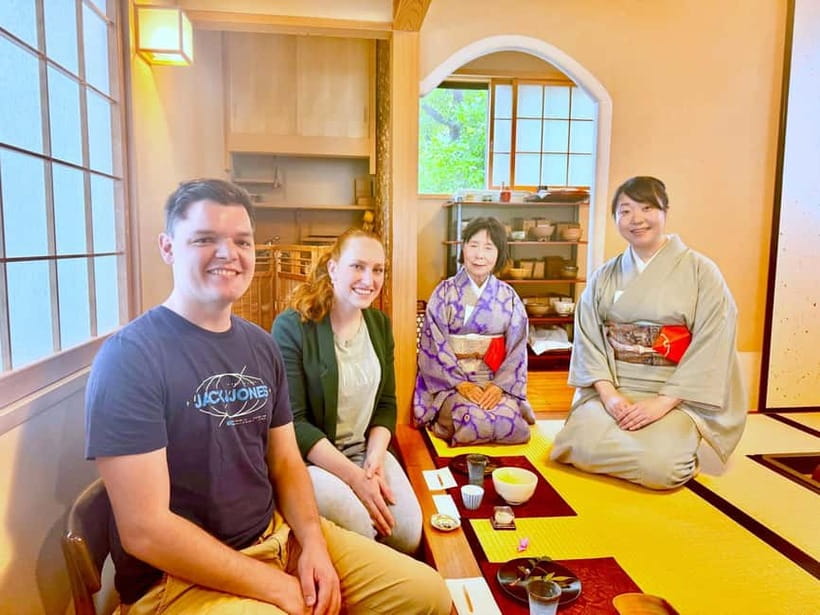
After forming the Nerikiri, you move to a dedicated tea room. The room is designed for sitting in chairs, which makes the ceremony more accessible than formats that require kneeling or sitting on the floor.
The host serves your confection first, followed by real matcha. The information specifically distinguishes the tea from a sweetened drink, so you should expect powdered green tea with its characteristic strong, earthy taste rather than a sugary café-style beverage.
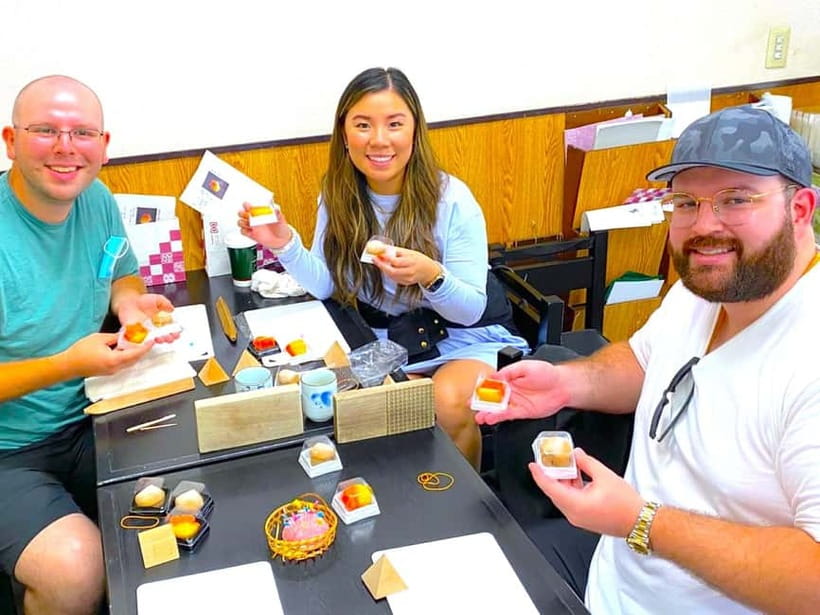
Your handmade Nerikiri gives the tea service a personal connection. You have just shaped the sweet yourself, and now you can taste it in the setting where it is meant to be enjoyed. That order also helps you understand the traditional relationship between a sweet and matcha, since the confection balances the tea’s bitterness.
The ceremony is not described as a silent performance. Questions are welcomed, and conversation is considered an important part of the experience. I like that approach for first-time visitors. Formal gestures can seem mysterious when you only watch them, but asking why something is done gives the ritual more context.
At the same time, keep your expectations realistic. The host may not speak English fluently, and the experience does not promise a professional interpreter. You may need patience, gestures, and straightforward questions. For many people, that informal exchange will feel more genuine than a rehearsed presentation. If you need detailed historical explanations in fluent English, this may not be the best choice.
What the $57 price includes
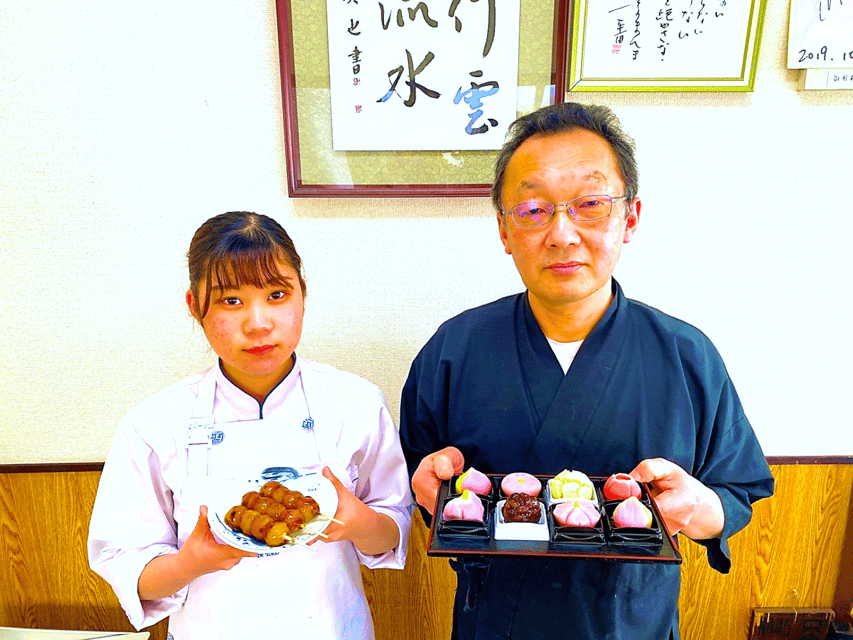
The $57 fee covers the experience itself, facility use, tools, the materials for the Nerikiri and matcha, and consumption tax. You do not need to pay separately for the equipment used in the sweets lesson or tea service.
The value depends on what you want from a Japanese cultural activity. If you only want to taste matcha, a café will cost less. If you want a quick demonstration with no hands-on work, another class may be enough.
Here, your fee covers three linked elements: access to an unusual antique shop, a guided sweets-forming activity, and a tea ceremony with your own confection. The antique setting and the chance to choose a historic teacup add something that a standard classroom may not offer.
I consider the price reasonable for someone who values a small, focused cultural activity rather than a long sightseeing tour. The experience does not include transportation, a neighborhood tour, or an antique purchase. You are paying for the setting, instruction, materials, and tea, not for a full day of activities.
The strongest value comes if you take time to look closely at the tableware and ask questions. Rushing in, making the sweet, and leaving would miss much of what makes this program unusual.
Who will enjoy this experience most
This activity suits adults, couples, older teenagers, and anyone interested in Japanese craft, food, or ceramics. Participants must be at least 13 years old, and anyone under 18 must attend with an adult.
It is especially suitable for you if:
- You like small, quiet cultural activities.
- You want to make something with your hands.
- You are curious about Japanese tableware.
- You prefer chairs to floor seating.
- You enjoy asking questions and learning through conversation.
- You want an activity that works in English but does not require fluent English from the host.
The format may be less suitable for young children. Participants under 13 are not accepted, and strollers or baby carriages are not allowed. The experience is also not suitable for wheelchair users, people with vertigo, people with epilepsy, or people with a cold.
You should also consider your comfort with a slower pace. This is not a loud, fast-moving class with constant entertainment. Its appeal comes from careful shaping, looking at objects, and taking part in a calm tea service.
Practical advice before booking
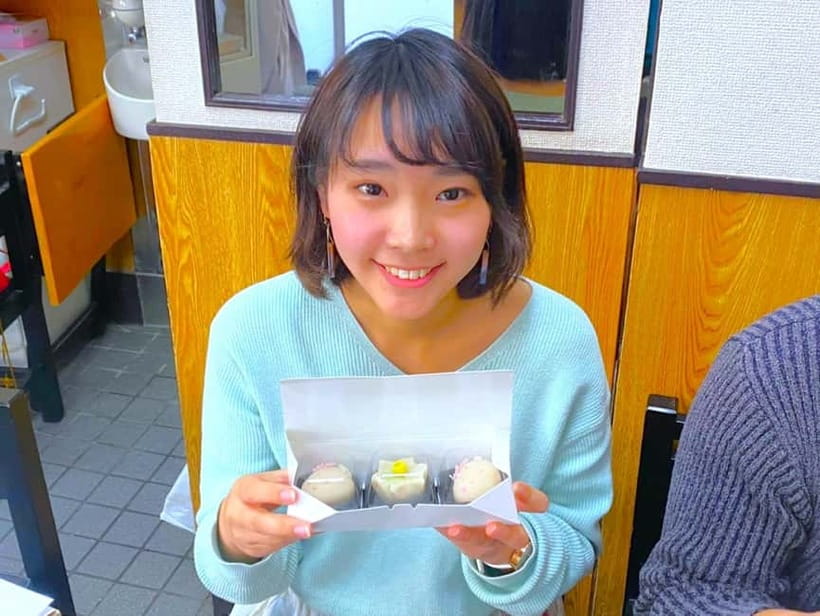
Wear clothing that lets you work comfortably with your hands. The supplied rules require you to avoid bare feet, so arrive with socks or other foot covering.
Arrive early enough to locate the shop. The precise location comes after reservation, and late arrivals do not receive extra time. Since the activity ends back at the meeting point, you do not need to arrange a separate return location.
If you want to buy antique tableware, set aside time and budget for that separately. Purchases are optional and not part of the program fee. You may find the browsing more interesting if you already know whether you want a cup, dish, or simply a look at older Japanese wares.
Use the conversation well. Ask about the teacup you select, the seasonal design, the matcha, or the tools used to shape Nerikiri. The host welcomes questions, and this is where the activity can become more than a set of demonstrations.
Cancellation is allowed for a full refund up to seven days before the experience. After that point, you should check the booking terms carefully before changing plans.
Should you book this tea ceremony?
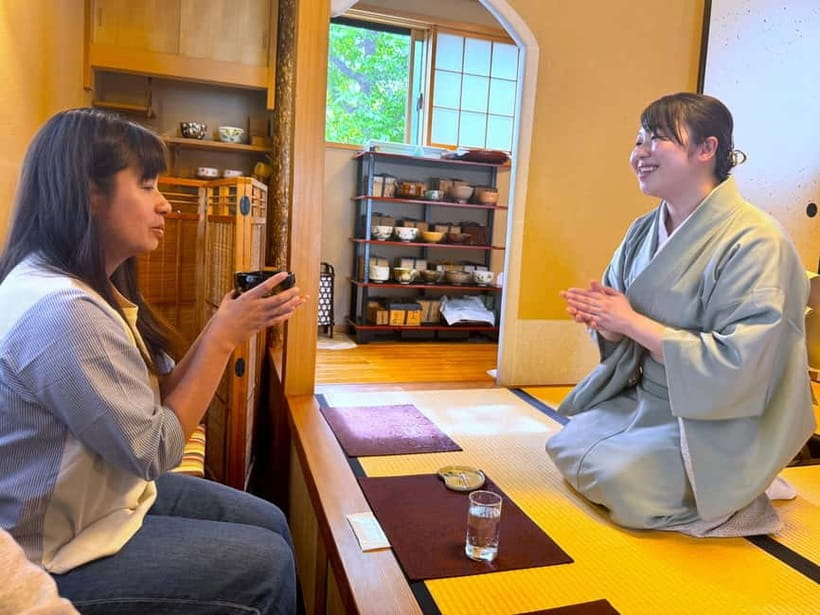
Book it if you want a hands-on Japanese experience with a real sense of place. The century-old shop, antique teacup choice, handmade Nerikiri, and chair-based tea ceremony create a well-connected visit rather than three unrelated activities.
The highest praise belongs to the sweets lesson and the calm, friendly instruction. You get to make something yourself, then enjoy it with matcha in a traditional setting. The activity also works well for people who feel nervous about formal tea ceremonies because you can begin with an approachable craft.
Skip it if you need fluent English instruction, wheelchair access, a child-friendly activity for anyone under 13, or a fast schedule. Also skip it if the main goal is shopping, since antique purchases are not included and the program is built around participation.
For the right person, $57 buys more than tea and a sweet. It buys time in an unusual old shop, contact with Japanese tableware, and a simple way to understand how craft, season, and hospitality meet in the tea ceremony.
FAQ
Where does the tea ceremony and Nerikiri experience take place?
It takes place in a 100-year-old roadside antique tableware shop in the Tokyo area of Honshu. The shop is about 10 minutes from Nippori Station.
How do I receive the exact meeting location?
Detailed location information is provided after you make a reservation.
What is included in the $57 price?
The price includes the experience fee, facility use, tools, matcha, Nerikiri materials, and consumption tax.
Can I choose the teacup used during the ceremony?
Yes. You can choose the teacup you use, and some of the cups are several hundred years old.
What kind of Japanese sweet will I make?
You will make Nerikiri, a Wagashi sweet made with mochi flour. You form colored materials by hand and add details with tools.
Is the tea room suitable for people who cannot kneel?
The tea room uses chairs, so the ceremony is not based on sitting on the floor. However, the activity is not suitable for wheelchair users.
Is the experience conducted in English?
English is listed as the available language. The host is a Japanese artisan who may not speak English fluently, but questions are welcomed and the host aims to guide participants through the activity.
What age restrictions apply?
Participants must be at least 13 years old. Anyone under 18 must be accompanied by an adult.
Newly steeped around Tokyo
- Yokohama : Tea Ceremony with Sweets and Souvenir★ 5.0 · 5 reviews
- Walking Tour: Yanaka,Nezu& Sendagi: Tea Ceremony & Old Tokyo★ 5.0 · 3 reviews
- Private Mochi・Matcha sweets Making Class Near Shibuya Area★ 5.0 · 22 reviews
- 2 Hours Mochi &Nerikiri Making & Matcha Class in Bunkyo★ 5.0 · 21 reviews
- Private Kimono and tea ceremony at local home near Tokyo Disney★ 5.0 · 6 reviews
- Kimono and Tea Ceremony in Asakusa Private Food Tour With Guide★ 5.0 · 4 reviews
- Giant Sushi Cooking Class: Make a 1.5m Sushi Roll in Tokyo★ 5.0 · 9 reviews
- Tokyo Tea Ceremony Class at a Traditional Tea Room★ 5.0 · 2 reviews
Tea & Sweets Making, compared.

Matcha Making Class in Tokyo with Authentic Japanese Sweets Set
Read our review →
Tangier: Sunset, Tea, Sweets, Camel Ride, and Hercules Caves
Read our review →
Tokyo: Matcha Making Experience with Mochi Sweets in Asakusa
Read our review →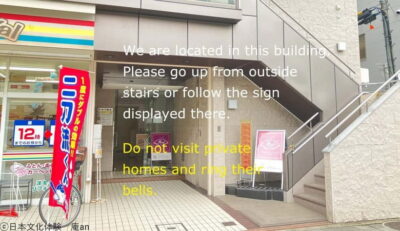
Kyoto: Japanese Traditional Sweets Making and Tea Ceremony
Read our review →
Osaka: Matcha Making Experience with Japanese Sweets
Read our review →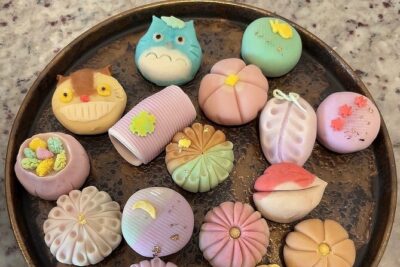
Make Traditional Nerikiri Sweets & Matcha experience in Shibuya
Read our review →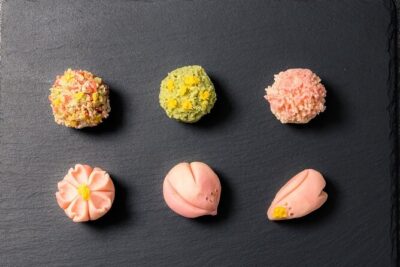
Sweets Making and Kimono Tea Ceremony at Tokyo Maikoya
Read our review →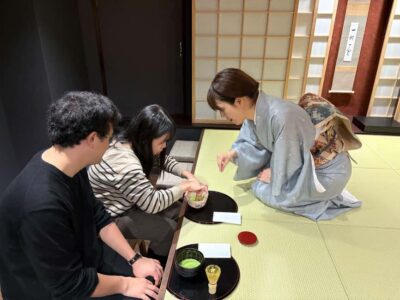
Kyoto: Traditional Tea Ceremony with Matcha & Sweets in Gion
Read our review →Browse the lists this tea experience appears in