
Review · TOKYO
Tea Ceremony Experience in a Private Tea Room in Shibuya
A quiet tea room sits only eight minutes on foot from Shibuya Station, yet the noise of Tokyo quickly fades once you step inside. This experience combines a formal Japanese tea ceremony with a friendly lesson on matcha, led by Tatsuya, also known as Tatsu. The private setting and the chance to make your own tea are the real draws.
I like the rare organic matcha, said to represent only about 2 percent of Japan’s total circulation, and the traditional sweets from a wagashi shop with more than 200 years of history. The main consideration is the room’s small size and lack of a toilet, so plan ahead before you enter.
Key points to know before you book
- Eight minutes from Shibuya Station: Meet outside The OneFive Tokyo Shibuya hotel, close to Hachiko, the Scramble Crossing, and other central sights.
- A private tea room in an apartment building: The entrance may look ordinary, but the room is arranged in a calm, traditional style.
- Premium organic matcha: You taste high-grade tea and learn how production methods affect flavor.
- A hands-on lesson: After watching the formal preparation, you whisk your own matcha with guidance.
- Traditional wagashi sweets: The tea comes with sweets from a long-established Japanese confectionery shop.
- A relaxed cultural introduction: English and Japanese are available, and the host leaves time for questions and souvenir shopping.
From Shibuya crowds to a quiet tea room
Shibuya is one of Tokyo’s busiest districts. The station serves as a useful base for the Hachiko Statue, Shibuya Scramble Crossing, Meiji Shrine, and the Pokémon Center. This tea experience gives you a different view of the neighborhood, one based on quiet attention rather than bright signs and crowded streets.
You meet at the front entrance of The OneFive Tokyo Shibuya hotel at 1-8-11 Jinnan, Shibuya-ku. Look for the guide holding a sign marked TEA ROOM KAKOI. From the station, the walk takes about eight minutes, though you’ll want to allow extra time if you are unfamiliar with the station’s many exits.
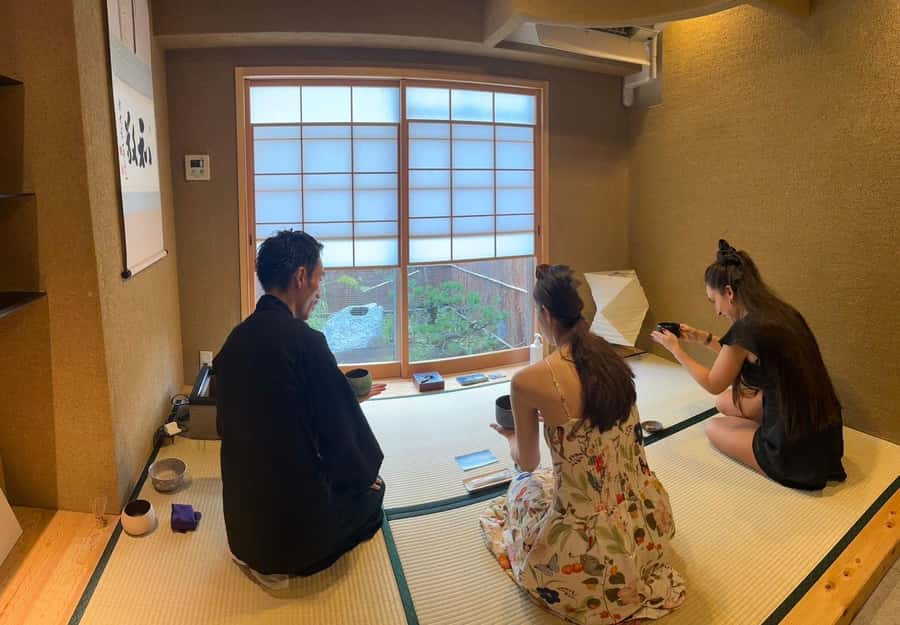
The tea room is in an apartment building opposite the meeting point. That detail may briefly make you wonder if you are in the right place. Once inside, however, the contrast is part of the appeal. An ordinary Tokyo building opens into a compact room designed for tea, with a much slower mood than the streets outside.
Because the room is small, this is not the right pick if you want a large theatrical performance or plenty of space to move around. It is better for you if you prefer a close, personal lesson where you can see the tools clearly and ask questions without shouting.
More Private Tea Experiences in Japan
- Tokyo: Private Tea Ceremony with Matcha and Sweet
★ 5.0 · 2 reviews - Private Tea Ceremony and Sake Tasting in Kyoto Samurai House
★ 5.0 · 163 reviews - Kyoto: Private Tea Ceremony with a Garden View
★ 4.9 · 61 reviews
What the opening lesson explains
The experience begins with an introduction to the Japanese tea ceremony and matcha production. You learn why matcha is different from ordinary green tea, how it is made, and why the powder has become prized around the world.
The ceremony is not simply a method for making a hot drink. The movements, objects, pace, and way of serving the tea all carry meaning. The host explains how to show respect for the bowl and other tools, as well as the proper way to receive and drink the tea.
This explanation makes the formal steps easier to understand. Without some context, a tea ceremony can look like a series of precise gestures. With the background, you can see the care behind each action and understand why the host handles even simple objects with attention.
Tatsuya brings a personal connection to the subject. He comes from a family with two generations of tea farms, and that experience gives the discussion a practical side. You are not only hearing broad facts about Japanese culture. You can also ask about cultivation, quality, and the differences between matcha varieties.
The information is delivered in English or Japanese. The session is meant to be approachable, not intimidating, so you do not need prior knowledge of tea ceremony customs.
Watching the formal preparation
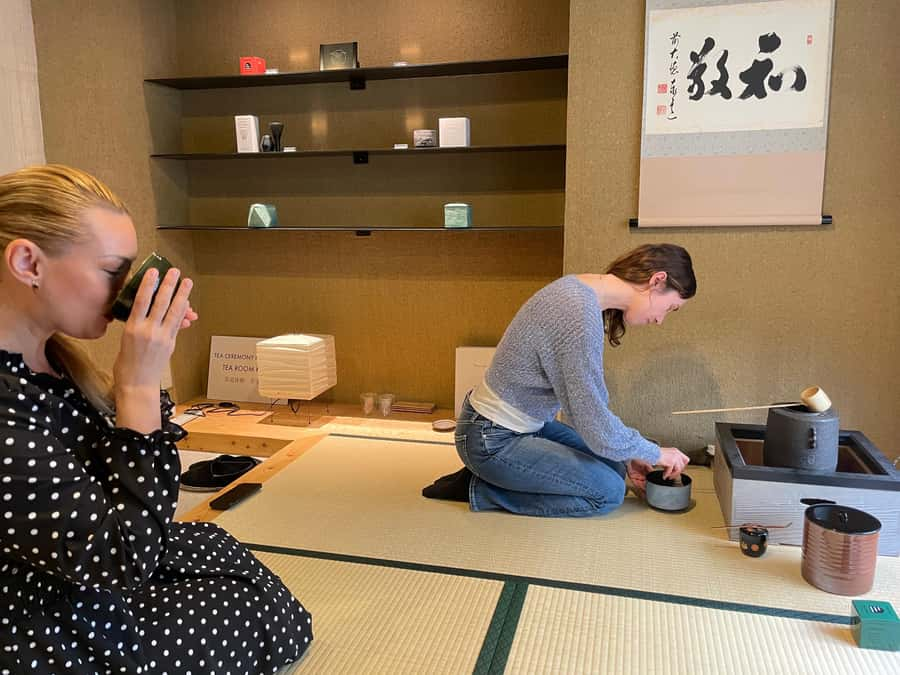
After the introduction, the host prepares matcha in the formal tea ceremony style. This is the part where the pace changes. The gestures are deliberate, and the room’s quiet design helps you focus on the bowl, whisk, scoop, and sound of preparation.
The ceremony offers a useful reminder that Japanese tea is about more than taste. It also concerns presentation, hospitality, and awareness of the moment. You learn how to receive the bowl, how to drink the tea properly, and how to treat the objects used in the ceremony.
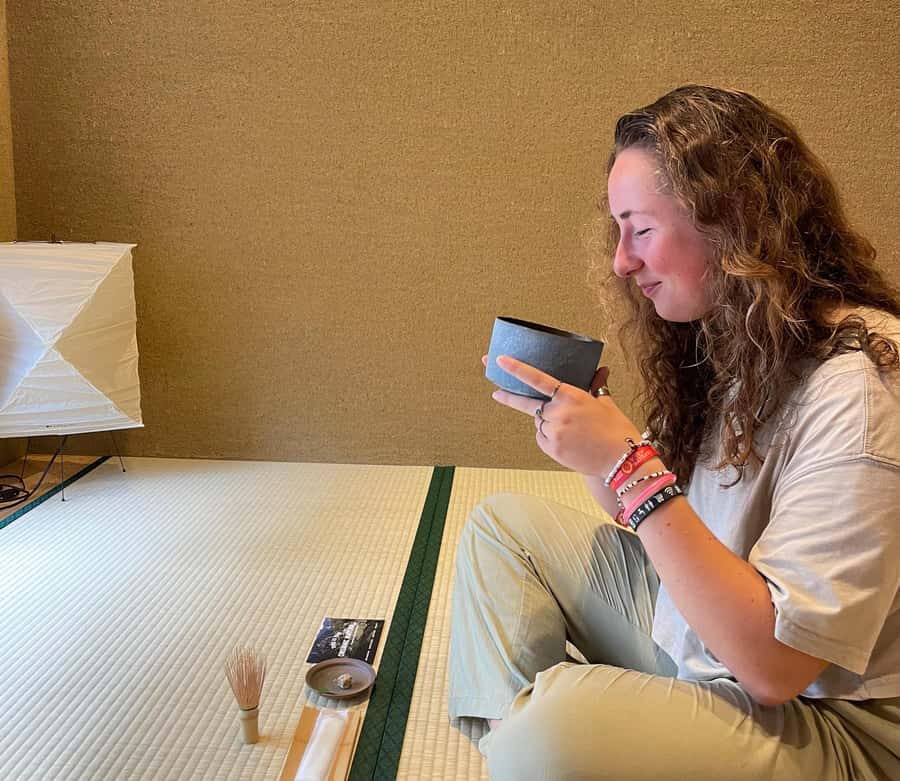
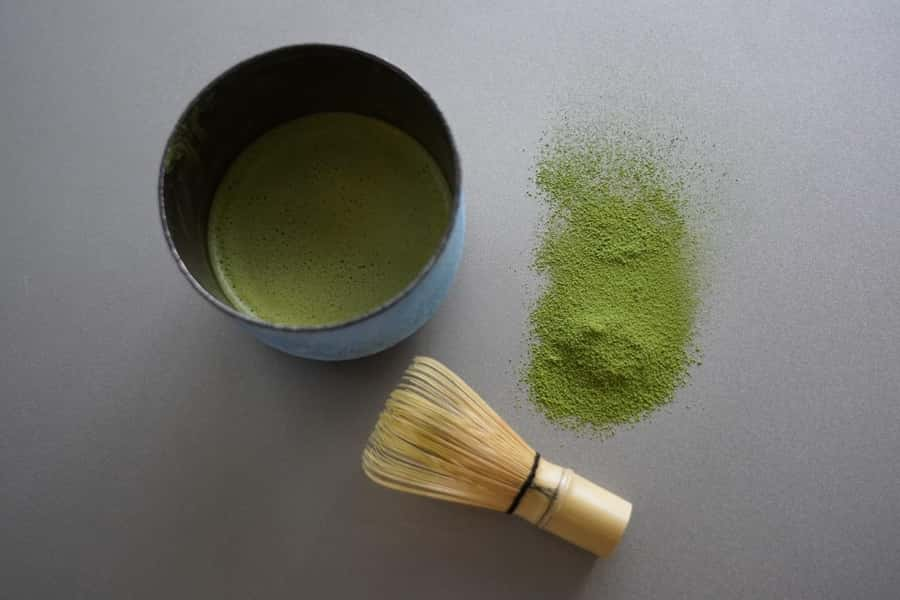
You then taste the premium organic matcha with a traditional Japanese sweet. The sweet is supplied by a wagashi shop with more than 200 years of history. Its role is practical as well as pleasurable: the gentle sweetness helps balance matcha’s strong, grassy flavor.
The tea is described as a rare, high-grade organic matcha that accounts for only about 2 percent of Japan’s total circulation. That does not mean you should expect a flavor everyone will love. Matcha can be earthy, bitter, or intense, and it contains caffeine. Still, this is a good setting for learning why quality matters and how preparation affects the cup.
If you are used to sweetened matcha drinks, the taste may come as a surprise. The host can explain the difference between ceremonial-style matcha and the more familiar café versions. This comparison is one of the useful parts of the session because it gives you a better basis for judging matcha later in your trip.
Making your own bowl of matcha
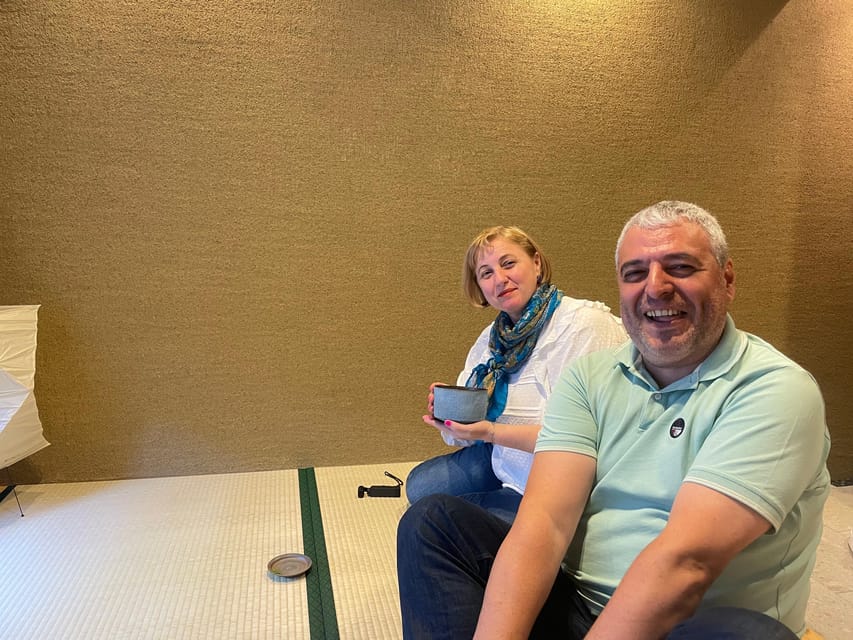
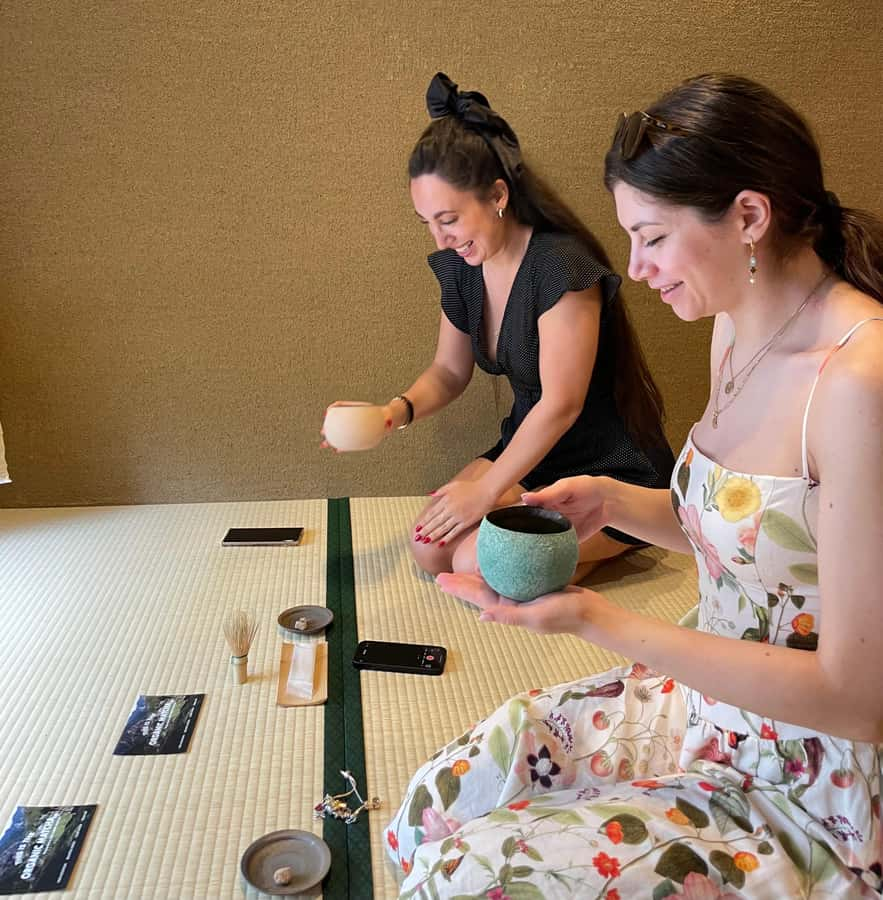
The hands-on section follows the demonstration. The host shows you how to measure the powder, add water, and use the bamboo whisk to create the proper texture. You do not need to arrive with a steady hand or any tea-making experience.
This is where the experience becomes more than a demonstration. You can try the technique yourself, notice how the whisk feels, and see how small changes affect the result. The host guides you through the process patiently, correcting technique when needed and explaining why each step matters.
The whisking motion may look simple, but getting a smooth layer of fine foam takes practice. That is part of the fun. You are given enough guidance to understand the method without turning the activity into a test.
You also have time at the end to ask about the ceremony, tea farms, production, and matcha varieties. If you are interested in Japanese food culture, this question period may be as valuable as the formal ceremony itself. You can focus on the subjects that caught your attention rather than following a fixed script.
More Tea Ceremonies in Tokyo
- Kimono Tea Ceremony at Tokyo, Asakusa Maikoya
★ 5.0 · 638 reviews - Tokyo: Traditional Tea Ceremony with a Tea Master
★ 5.0 · 528 reviews - Tea Ceremony Workshop in Tokyo by the Experienced Instrucor
★ 5.0 · 189 reviews - Asakusa: Kimono Tea Ceremony with Matcha and Sweet
★ 4.9 · 153 reviews
Why the small room works
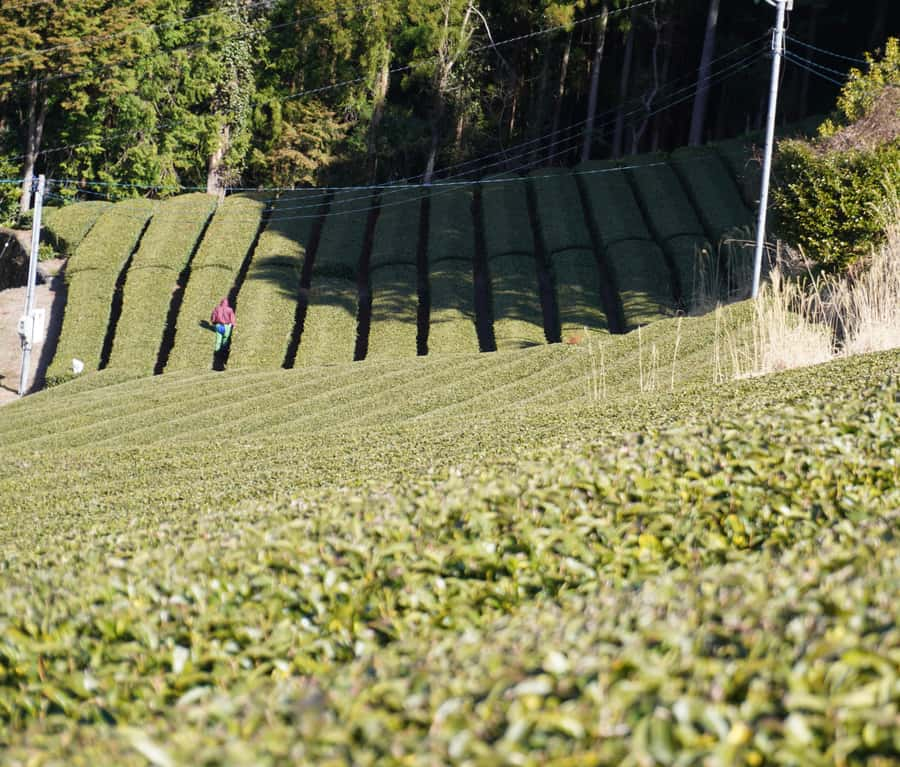
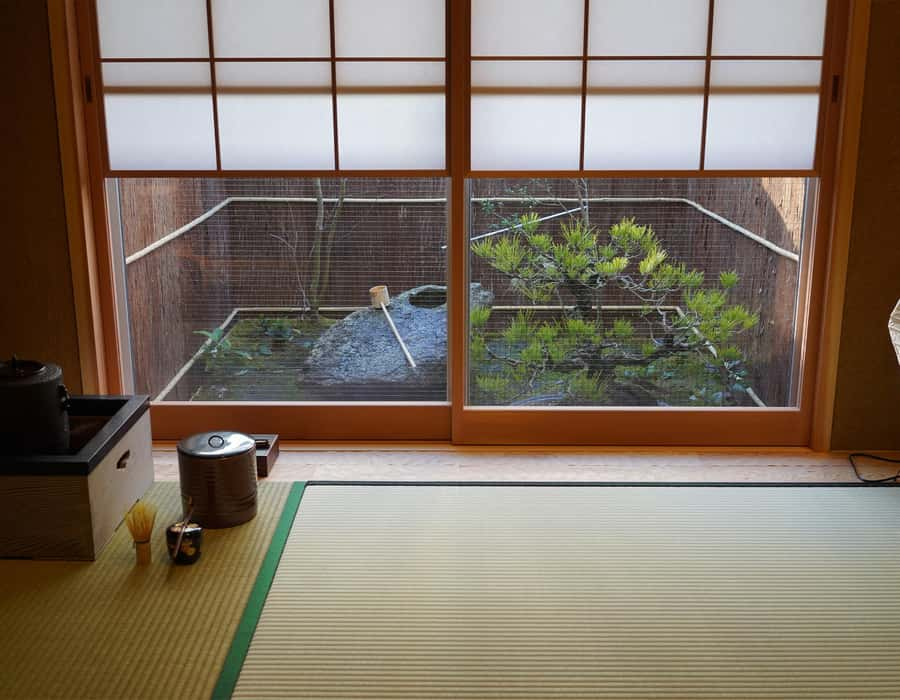
The tea room is described as authentic, peaceful, and beautifully decorated. Its small scale helps create the calm atmosphere that many people seek from a tea ceremony. You are close enough to watch the host’s hands and see the tools clearly.
The setting also makes the experience feel personal. Tatsuya is able to speak directly with you, answer questions, and adjust the explanation to the group. The session is a good choice for people who want a gentle introduction rather than a highly ceremonial event where they might worry about making a mistake.
There is a tradeoff. A compact room can feel confined, especially if you prefer open space or have difficulty sitting comfortably in a traditional setting. The provided information does not specify seating arrangements, so you may want to ask ahead if that is important to you.
There is also no toilet in the tea room. Use facilities before meeting the guide, especially since you may be combining this activity with a full day in Shibuya.
What the $30 price gets you
At $30 per person, the value comes from the complete package rather than the drink alone. You receive premium organic matcha, a traditional sweet, a formal preparation, a practical matcha-making lesson, and an opportunity to ask questions.
A café visit would cost less if your only goal were to taste matcha. It would not usually give you the cultural context, formal service, or guided practice. This experience makes more sense if you want to understand what you are drinking and learn a skill you can remember after returning home.
The presence of a host connected to tea farming adds another layer. You can ask about how matcha is produced and why some tea is considered rare. For someone already interested in tea, this personal background helps justify the price.
The activity also makes efficient use of your time in Shibuya. You do not have to travel across Tokyo to find a traditional tea setting. You can visit the ceremony, then continue to the Scramble Crossing, Hachiko, Meiji Shrine, or the Pokémon Center.
The price does not include a large meal, a sightseeing tour, or a long visit to a tea farm. You are paying for a focused cultural session in a central location. That is good value if you want a quiet break and a substantial introduction to matcha, but less useful if you are looking for a full-day food experience.
Who will enjoy this Shibuya activity
I would choose this for adults and older children who are curious about Japanese customs, tea, or food traditions. Children under 10 are not accepted, so families with younger children will need another activity.
It suits first-time visitors because the host explains the basic rules clearly. You do not need to know how to kneel, hold the bowl, or whisk matcha before you arrive. The lesson gives you enough structure to take part without feeling lost.
It also suits experienced tea drinkers. The rare organic matcha, family connection to tea farms, and chance to ask detailed questions make the experience more than a quick cultural photo stop.
Couples, solo visitors, and small groups can all fit the mood. The intimate room is especially helpful for solo visitors, since it provides a natural chance to speak with the host rather than simply watch from the back of a large group.
This is not suitable for children under 10, babies under 1, or pregnant women according to the activity information. Matcha contains caffeine, so keep that in mind if you are sensitive to it.
Practical details that matter
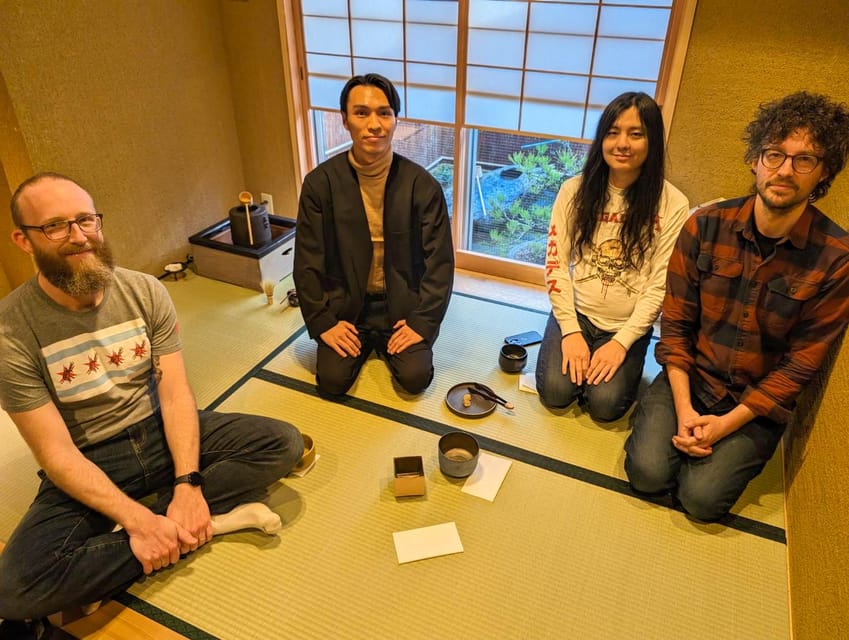
The meeting point is outside The OneFive Tokyo Shibuya hotel, and the guide holds a TEA ROOM KAKOI sign. The activity ends back at the same meeting point, which makes planning your next stop simple.
English and Japanese are available. The host is expected to explain the ceremony, matcha production, and preparation techniques in a clear, patient way.
You can reserve now and pay later, which may help if you are still arranging your Tokyo schedule. Cancellation is allowed up to 24 hours in advance for a full refund.
You may also buy high-quality organic matcha and original tea tools at the end. There is no pressure to purchase, but this is a useful option if you want to recreate the experience at home. Buying the same type of tea you tasted gives the souvenir a clear connection to the activity.
The tea ceremony itself is calm, but Shibuya Station can be confusing. Give yourself more than the stated eight-minute walk if you are carrying luggage, arriving during a crowded period, or trying to find a particular station exit.
Should you book the Tea Room Kakoi experience?
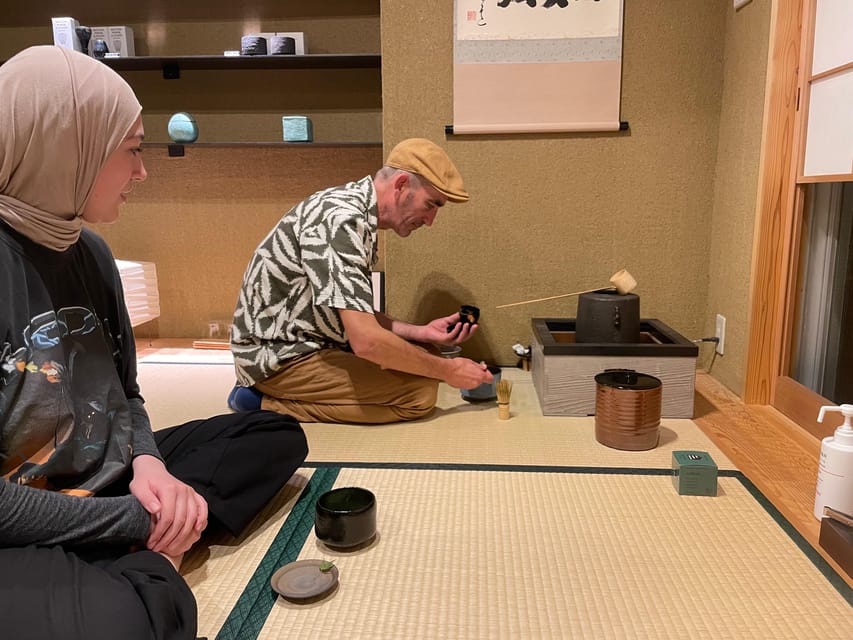
Book it if you want a personal introduction to Japanese tea culture, especially if you value explanation and participation over spectacle. The combination of a private room, rare organic matcha, traditional wagashi, and hands-on whisking gives you plenty to do for the $30 price.
I would be especially likely to recommend it to tea lovers, first-time visitors, and anyone who wants a quiet pause in central Tokyo. The strongest reasons to go are Tatsuya’s family connection to tea farming, the careful explanation of ceremony customs, and the chance to make your own bowl.
Skip it if you dislike small rooms, cannot use the toilet before the session, or want a broad sightseeing tour instead of a focused cultural activity. For everyone else, this is a thoughtful way to see a quieter side of Shibuya without leaving the center of Tokyo.
FAQ
Where does the tea ceremony begin?
Meet at the front entrance of The OneFive Tokyo Shibuya hotel at 1-8-11, Jinnan, Shibuya-ku, Tokyo, 150-0041. The guide holds a sign marked TEA ROOM KAKOI.
How far is the meeting point from Shibuya Station?
The tea room can be reached in about eight minutes on foot from Shibuya Station.
Where does the activity end?
The activity ends back at the meeting point outside The OneFive Tokyo Shibuya hotel.
What is included in the experience?
The price includes premium organic matcha, traditional Japanese sweets, the formal tea ceremony, a matcha-making session, and the equipment needed for the activity.
Can I make matcha myself?
Yes. The host guides you through the process of preparing your own matcha and explains the techniques involved.
Is the activity available in English?
Yes. The experience is offered in English and Japanese.
Is there a toilet in the tea room?
No. There is no toilet in the tea room, so use one before the activity begins.
Can I buy matcha after the ceremony?
Yes. You can purchase high-quality organic matcha and original tea tools as souvenirs if you wish.
More Private Tea Experiences in Tokyo
- One-Day Hangzhou Dragon Well Tea Culture & West Lake Private Tour
★ 5.0 · 98 reviews - Kyoto Private Tea Ceremony with Tea Master at Home
★ 5.0 · 58 reviews - Tangier Private Tour with a Local Writer (Includes Tea & Sweet)
★ 5.0 · 52 reviews - Osaka: Private Tea Ceremony and Calligraphy Experience
★ 5.0 · 50 reviews
Newly steeped around Tokyo
- Yokohama : Tea Ceremony with Sweets and Souvenir★ 5.0 · 5 reviews
- Walking Tour: Yanaka,Nezu& Sendagi: Tea Ceremony & Old Tokyo★ 5.0 · 3 reviews
- Private Mochi・Matcha sweets Making Class Near Shibuya Area★ 5.0 · 22 reviews
- 2 Hours Mochi &Nerikiri Making & Matcha Class in Bunkyo★ 5.0 · 21 reviews
- Private Kimono and tea ceremony at local home near Tokyo Disney★ 5.0 · 6 reviews
- Kimono and Tea Ceremony in Asakusa Private Food Tour With Guide★ 5.0 · 4 reviews
- Giant Sushi Cooking Class: Make a 1.5m Sushi Roll in Tokyo★ 5.0 · 9 reviews
- Tokyo Tea Ceremony Class at a Traditional Tea Room★ 5.0 · 2 reviews
Private Tea Experiences, compared.
Private Tea Ceremony and Sake Tasting in Kyoto Samurai House
Read our review →
One-Day Hangzhou Dragon Well Tea Culture & West Lake Private Tour
Read our review →
Kyoto Private Tea Ceremony with Tea Master at Home
Read our review →
Osaka: Private Tea Ceremony and Calligraphy Experience
Read our review →
Private Tour: Royal High Tea At Kensington Palace Gardens
Read our review →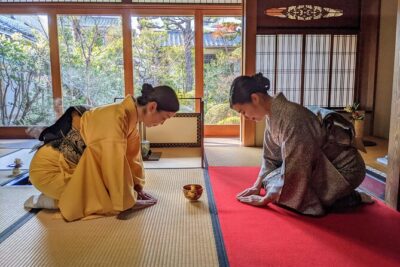
Stunning Private Tea Ceremony: Camellia Garden Teahouse
Read our review →
Private tour from Auckland – Waitomo Glowworm Caves, Zealong Tea & Kiwi Bird
Read our review →Browse the lists this tea experience appears in