
Review · TOKYO
Asakusa Cultural Walk & Matcha Making Tour
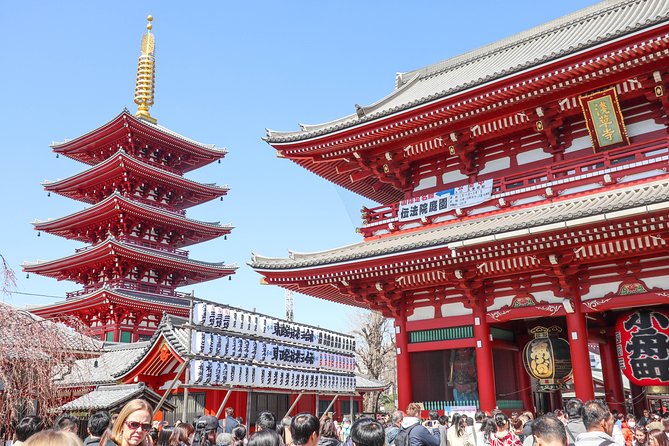
Asakusa is at its best when you can slow down and connect its sights with everyday customs. This three-hour tour does that neatly, pairing a rickshaw ride and temple walk with snacks, matcha preparation, and a lunch you cook yourself on a table grill.
I like the small group limit of seven, which gives guides room to answer questions and help with temple customs. I also like the food balance: traditional sweets along Nakamise, a matcha-making session, and okonomiyaki or monja-yaki for lunch. The main drawback is the fixed food menu. Gluten-free requests cannot be handled, and allergy-free meals are not guaranteed.
Key points
- Ride and walk through old Asakusa: See Kaminarimon, Nakamise Shopping Street, Sensoji Temple, and Asakusa Shrine.
- Make your own matcha: Learn about matcha preparation and take part in a hands-on tasting session.
- Cook lunch at the table: Prepare okonomiyaki or monja-yaki with one included drink.
- Small group, maximum seven: The format allows more personal help and easier conversation with your guide.
- Guides add practical value: Aoi, Mai, Yuki, Mihori, Hana, and others are praised for English skills, cultural explanations, photos, and help with local arrangements.
- Plan for summer heat: Tokyo can be hot and humid, so bring water and wear a hat.
Why this Asakusa tour works so well
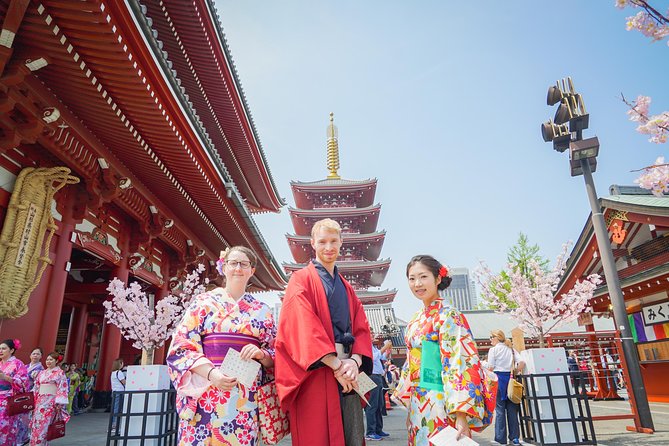
Many Tokyo tours rush through Asakusa, pointing at Sensoji and moving on. This experience gives the district a more useful shape. You begin with the streets and food, continue into religious customs, then finish with two activities that let you do something rather than simply watch.
The tour starts at 11:00 a.m. near the Kaminarimon Police Box. It lasts about three hours and returns to the same meeting point. That timing works well if you want a late morning introduction to Asakusa without giving up an entire day.
The format is especially good for a first or second day in Tokyo. You get basic cultural context, a look at one of the city’s oldest-feeling districts, and a meal built into the schedule. It is not a specialist temple tour or a serious food crawl. Think of it as a friendly introduction with several hands-on stops.
More Matcha Experiences in Tokyo
- Matcha Making Class in Tokyo with Authentic Japanese Sweets Set
★ 5.0 · 744 reviews - Tokyo: Matcha Making Experience with Mochi Sweets in Asakusa
★ 4.9 · 388 reviews - Tokyo: Matcha and Kimono Experience
★ 4.7 · 219 reviews
Kaminarimon and the first look at Asakusa
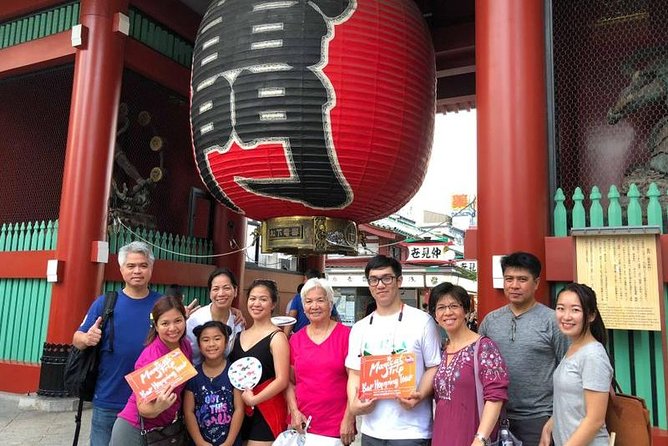
The meeting point is beside Kaminarimon, the large entrance gate associated with Sensoji. From here, the tour begins in one of Asakusa’s most recognizable areas, where the gate, shopping streets, and temple precinct form a natural walking route.
The tour includes time around Asakusa Kaminarimondori Shopping Street, followed by a ride through the district by rickshaw. The rickshaw gives you a different view from a normal walking tour. You can cover ground while taking in the older street layout, and the guide can point out details that are easy to miss when you are focused on Tokyo traffic and maps.
The exact rickshaw timing is not broken out separately, so do not expect a long private sightseeing ride. It is one part of a compact half-day route. Still, it adds variety and gives your feet a short break before the walking and food stops.
Sweets and shopping on Nakamise
Nakamise Shopping Street leads toward Sensoji and is lined with stalls selling souvenirs, small gifts, and Japanese snacks. The tour includes traditional sweets and other food samples, with about 20 minutes listed for this stop.
That time is enough for an introduction, a few tastings, and a quick look at the shops. It is not enough for a leisurely shopping session, so keep your expectations sensible. Several guides have made a point of allowing time for purchases, but the overall tour still follows a schedule.
This is a useful place to ask your guide what a snack is, when it is normally eaten, and how it differs from similar sweets. The food samples are not just filler. They give you an easy way to start asking questions about Japanese ingredients and local habits.
If you want souvenirs from Nakamise, note what catches your eye and return later if your schedule allows. The tour ends back at the starting point, which makes that practical.
Sensoji Temple and Asakusa Shrine
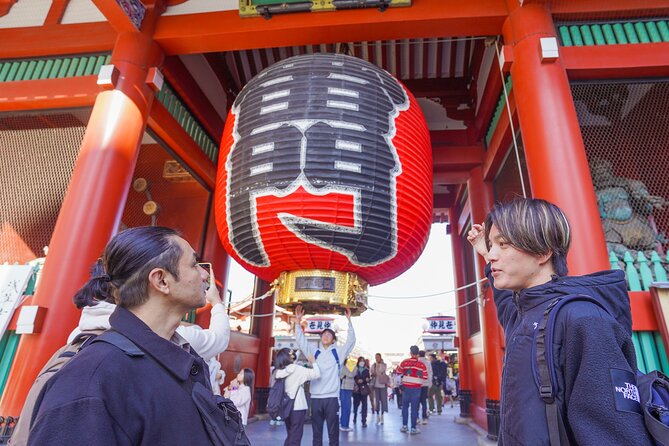
Sensoji receives about 30 minutes on the route. You will see the temple, learn how people pray, and have a chance to try customs such as fortune-telling and using the incense burner. One familiar practice is fanning incense smoke toward yourself, as it is believed to have healing benefits.
This is where a good guide matters most. The rituals may seem simple, but it is easy to copy what others do without knowing the order or meaning. Guides including Aoi, Mai, Yuki, Meg, Hana, and Mihori have been praised for explaining customs in clear English and helping participants feel comfortable taking part.
Next door, Asakusa Shrine receives another 30 minutes. The pairing is convenient because you can compare a Buddhist temple setting with a Shinto shrine in the same compact area. The tour does not treat either place as a museum exhibit. Instead, it shows you how people use these religious sites for prayer, fortune-telling, incense, and everyday visits.
One fair limitation is that the temple explanation may feel brief if you already have a strong interest in Japanese religious architecture or Asakusa’s past. One participant wanted more historical detail about Sensoji. If you want a long lecture on temple history, you may prefer a specialist tour. For a first visit, the practical customs are likely to be more useful.
Crowds are another factor. Sensoji can be very busy, especially in late May and other popular periods. The group size helps, but it cannot make the temple quiet. Keep your belongings close, stay aware of the guide, and allow extra patience for photographs.
Same leaf, a different ritual:
- Kimono Tea Ceremony at Tokyo, Asakusa Maikoya
★ 5.0 · 638 reviews - Tokyo: Traditional Tea Ceremony with a Tea Master
★ 5.0 · 528 reviews - Dynamic Tokyo: Tokyo Tower, Tea Experience, Bay Cruise Day Tour
★ 4.5 · 521 reviews - Mt. Fuji & Lake Kawaguchiko Ropeway Panorama Full-Day Tour
★ 4.6 · 236 reviews
Matcha making instead of just drinking tea
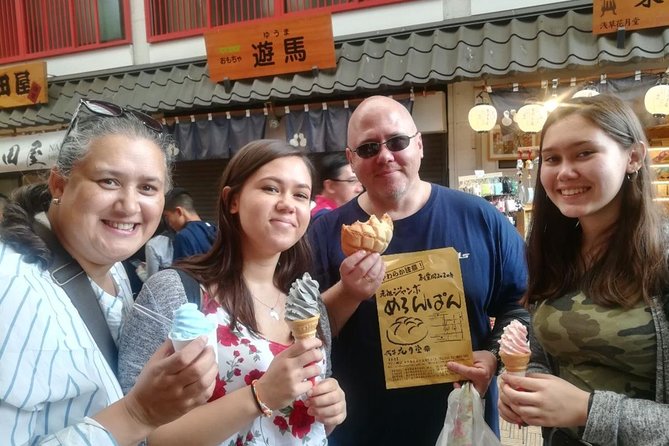
The matcha session is one of the tour’s more distinctive parts. You do not simply receive a cup and move on. You learn about matcha preparation, make the tea, and taste it as part of the experience.
The included matcha activity gives the afternoon a slower rhythm after the streets and temple grounds. It also suits people who want a cultural activity without committing to a formal, lengthy tea ceremony. The exact venue and setup can vary, so you should expect instruction and participation rather than a grand ceremonial performance.
Several guides have been singled out for making this part easy to follow. Mai has been praised for providing an authentic tea experience, while Mihori and other guides have been described as clear when explaining the cultural background. A private matcha session has also been part of some visits, though you should not assume the entire tour will be private.
The matcha stop is a good fit for families and teenagers because it gives everyone a task. It also creates a quieter chance to ask questions that may not come up while crossing a busy street.
Cooking okonomiyaki or monja-yaki for lunch
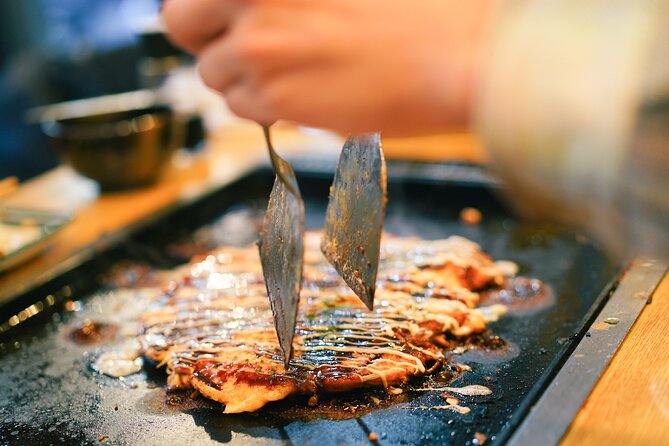
The tour finishes with lunch at a traditional restaurant. You receive okonomiyaki or monja-yaki and one drink, then prepare the food on a grill at the table. The hands-on setup is more memorable than being served a standard restaurant meal, and guides can help with the process.
Okonomiyaki is a savory Japanese pancake made from a batter and other ingredients. Monja-yaki is a softer grilled dish often associated with the Tokyo area. The tour does not promise that you can choose freely between every possible ingredient, but it lists okonomiyaki or monja-yaki as the lunch options.
This final meal is a strong reason to consider the tour. You get to eat, learn, and take part in the cooking instead of losing time searching for a restaurant after the walk. Some groups have had an upstairs restaurant area to themselves, but that is not guaranteed and should be treated as a pleasant possibility, not a feature to count on.
Food restrictions need careful attention. Vegetarian meals are available, but the tour cannot accommodate gluten-free requests. The provider also cannot promise allergy-free food because the meals are prepared in kitchens it does not control. Substitutions may not be possible at every stop, though the guide may try to compensate at another stop.
If you have a serious allergy, contact the operator before booking and be prepared for the tour not to meet your needs. The included lunch and snacks are valuable, but only if the menu works for you.
What the guides add to the day
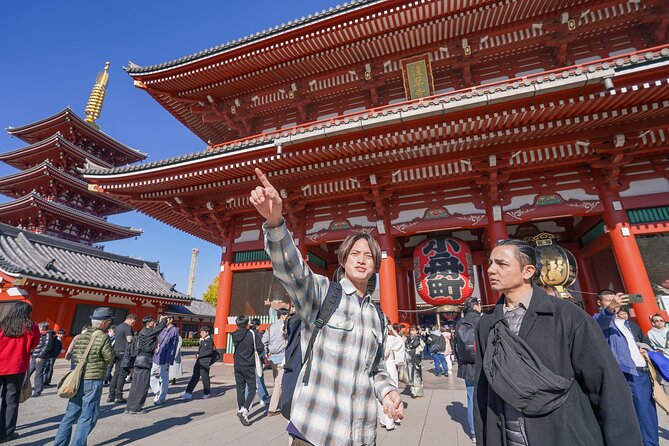
The guide is central to this experience. The route itself is easy to find, but the explanations and small acts of help turn it into a guided cultural visit.
The guide names praised in the feedback include Aoi, Yuki, Hena, Meg, Nori, Hana, Mihori, Mai, Hiroshi, Rina, and Mami. Guides are not assigned by request in the information provided, so you should expect a different person depending on the date. The strongest pattern is clear English, friendly conversation, cultural explanations, photography, and help with local questions.
Photo help comes up often. If you want pictures of your group at the temple or shopping streets, tell the guide early. Some guides also help with restaurant reservations or translation, which can be useful when you continue exploring Tokyo after the tour.
The small group limit of seven matters here. With only a few people, the guide can explain a ritual, answer a question, or help at the grill without trying to manage a large crowd. On quieter dates, the group may be much smaller, even just two people, but you should book expecting a maximum of seven rather than a private tour.
Is $90.86 a fair price?
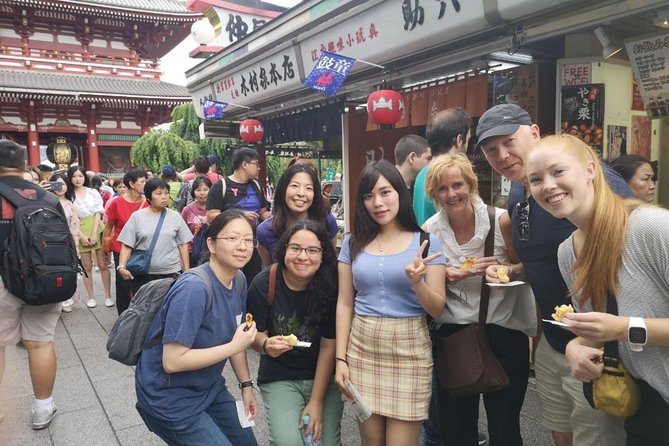
At $90.86 per person, this is not the cheapest way to see Asakusa. You can walk past Kaminarimon, Nakamise, Sensoji, and Asakusa Shrine on your own for very little money.
The price makes more sense when you count what is bundled in: a certified guide, food samples, traditional sweets, matcha making, lunch, one drink, the rickshaw portion, and tour photos. You are paying for structure and interpretation, not simply admission. The ability to sit down for lunch and cook your own meal also saves the effort of finding a suitable restaurant in a busy part of Tokyo.
I would call it good value for someone who wants a guided introduction with food and activities. It is weaker value for an independent visitor who already knows Asakusa, has strong dietary restrictions, or wants to spend most of the day shopping and photographing the temple at their own pace.
The tour has free cancellation up to 24 hours before the 11:00 a.m. start time. Cancellations or changes made less than 24 hours ahead are not refunded, so keep that cutoff in mind.
Who should book this experience?
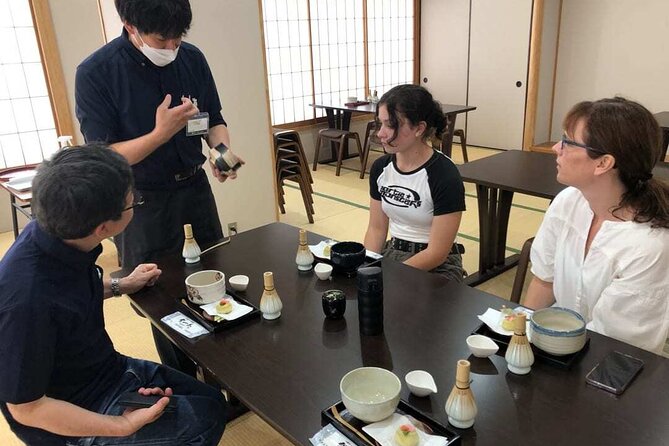
This tour suits first-time Tokyo visitors, families, couples, and small groups who want several different activities in one morning. Teenagers may appreciate the changing pace: rickshaw, snacks, temple customs, matcha, and cooking.
It is also a smart choice if you have just arrived in Tokyo. The route gives you a clear sense of Asakusa, and the guide can answer practical questions about Japanese customs and other things to do during your stay.
You may want a different experience if you prefer long historical talks, unstructured wandering, or a serious food tour. The route is compact and introductory. Crowds around Sensoji can also soften the calm of the temple visit, especially during busy seasons.
Wear comfortable shoes, bring water, and use a hat in summer. Tokyo’s heat and humidity can make a three-hour outing feel longer than expected. The tour is near public transportation, and most participants can take part, but the provided information does not give detailed mobility guidance.
Should you book the Asakusa Cultural Walk?
Book it if you want Asakusa explained through food, customs, and simple hands-on activities rather than only through sightseeing. The best parts are the small group, the matcha preparation, and the cook-your-own okonomiyaki or monja-yaki lunch.
Skip it if gluten-free food is essential, if you need guaranteed allergy-safe meals, or if you already know Asakusa well. For everyone else, $90.86 buys a well-organized introduction with a useful mix of local streets, temple etiquette, snacks, and conversation. It is a practical first look at Tokyo’s older district, with enough food and participation to keep the morning lively.
FAQ
How long is the Asakusa Cultural Walk and Matcha Making Tour?
The tour lasts approximately three hours.
What time does the tour start?
The tour starts at 11:00 a.m.
Where does the tour meet?
It meets at the Kaminarimon Police Box at 1-chōme-3-1 Asakusa, Taito City, Tokyo 111-0032, Japan.
Where does the tour finish?
The activity ends back at the meeting point.
What food is included?
The tour includes Japanese snacks and sweets, plus lunch of okonomiyaki or monja-yaki with one drink. A vegetarian menu is available.
Can the tour accommodate gluten-free or allergy-free meals?
No. Gluten-free requests cannot be accommodated, and allergy-free food cannot be guaranteed. Substitutions may not be available at every stop.
How large is the tour group?
The maximum group size is seven participants. On some dates, the group may be smaller.
Can I cancel for a full refund?
Yes. You can cancel at least 24 hours before the local start time for a full refund. Cancellations or changes made less than 24 hours before the start are not accepted for a refund.
Newly steeped around Tokyo
- Yokohama : Tea Ceremony with Sweets and Souvenir★ 5.0 · 5 reviews
- Walking Tour: Yanaka,Nezu& Sendagi: Tea Ceremony & Old Tokyo★ 5.0 · 3 reviews
- Private Mochi・Matcha sweets Making Class Near Shibuya Area★ 5.0 · 22 reviews
- 2 Hours Mochi &Nerikiri Making & Matcha Class in Bunkyo★ 5.0 · 21 reviews
- Private Kimono and tea ceremony at local home near Tokyo Disney★ 5.0 · 6 reviews
- Kimono and Tea Ceremony in Asakusa Private Food Tour With Guide★ 5.0 · 4 reviews
- Giant Sushi Cooking Class: Make a 1.5m Sushi Roll in Tokyo★ 5.0 · 9 reviews
- Tokyo Tea Ceremony Class at a Traditional Tea Room★ 5.0 · 2 reviews
Matcha Experiences, compared.
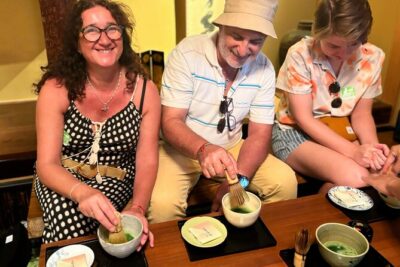
World Heritage Kyoto & Nara Uji Authentic Matcha Experience
Read our review →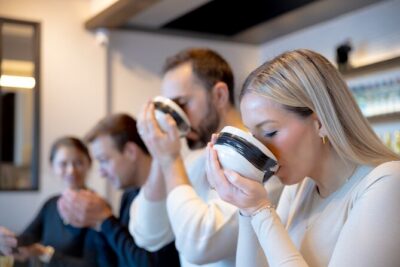
Matcha Making Class in Tokyo with Authentic Japanese Sweets Set
Read our review →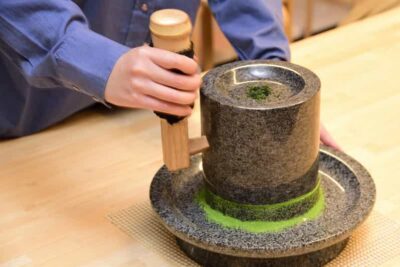
Kyoto: Tea Museum Tickets and Matcha Grinding Experience
Read our review →
Kyoto: Tea Ceremony Meditation – Make Matcha with Tea Master
Read our review →
Tokyo: Matcha Making Experience with Mochi Sweets in Asakusa
Read our review →
Kyoto: Kimono Tea Ceremony with Matcha and Sweet
Read our review →
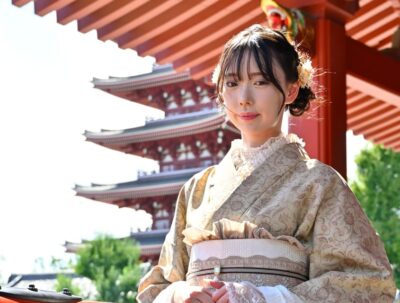
Tokyo: Asakusa Kimono Dressing and Matcha Experience
Read our review →Browse the lists this tea experience appears in