
Review · KYOTO
Kyoto Private Tea Ceremony at a Japanese Inns
Kyoto’s temples close at night, but this private candlelit ceremony offers a fine after-dark alternative. Inside a historic ryokan, you’ll enter a 20-tatami banquet room normally closed to the public, dress in traditional clothing, sit through a short Zen meditation, and make your own matcha.
I like the small private group, limited to two to six people, and the friendly help from Matsuda and Mayumi. I also like the translator devices, which let children and adults ask questions in their own languages. The main drawback is the price: at $97.98 per person, this is not a quick cup of tea, and the full program lasts only about 59 minutes.
Key points to know before booking
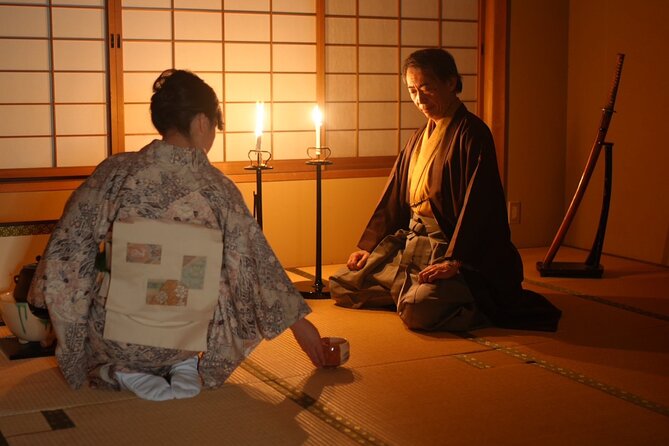
- A private ryokan room: Your group uses a 20-tatami banquet hall that is normally closed to the public.
- Four-part program: Allow roughly 15 minutes for dressing and photos, 4 minutes for meditation, 20 minutes for the tea demonstration, and 20 minutes to whisk your own matcha.
- Traditional costumes and props: You may wear a bridal uchikake or a men’s haori and pose with items such as folding fans and swords.
- Language help is built in: Translation devices support communication, so Japanese is not required.
- A calm evening activity: It works well after the city’s major temples have closed, though the short duration means the tea ritual is an introduction rather than a full-day cultural study.
- Private means personal: Only your own group participates, with space for two to six people.
A candlelit introduction to Kyoto tea culture
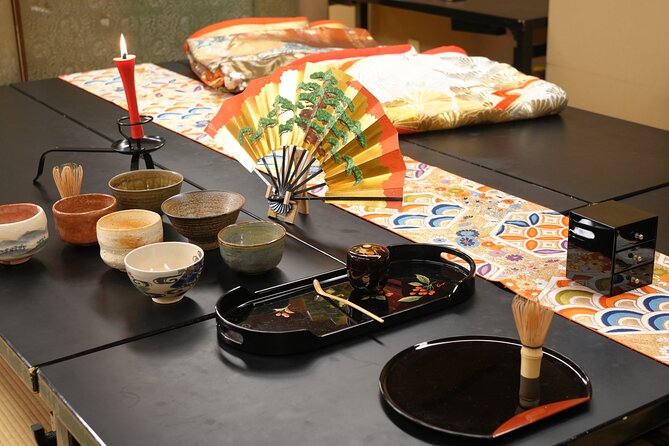
The appeal here is the setting. You are not sitting in a busy café or watching a demonstration in a large classroom. You enter a traditional Kyoto inn and use a 20-tatami banquet room, a large tatami space usually kept away from the public.
The room is lit by candlelight, creating a quiet, theatrical mood. That atmosphere matters because a tea ceremony is not only about drinking matcha. It is also about posture, pace, attention, and the careful way a host welcomes a guest. The low light gives the evening a special character, though it may not suit you if you prefer bright rooms and a fast-moving activity.
The entire session takes about 59 minutes. That makes it easy to fit before or after dinner, and it avoids taking half a day from your Kyoto sightseeing. At the same time, the short schedule limits how much history or technique can be covered. Think of this as a polished introduction to several Japanese traditions, not a full course in tea ceremony.
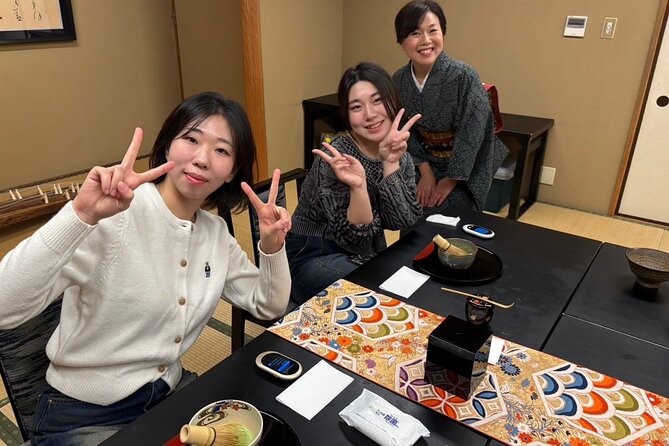
Your booking is private, with only two to six people in your party. That is a useful advantage for families, couples, or a small group of friends. You can ask questions without waiting for a large class to move along, and staff can help with photographs throughout the session.
More Private Tea Experiences in Japan
- Private Tea Ceremony and Sake Tasting in Kyoto Samurai House
★ 5.0 · 163 reviews - Kyoto: Private Tea Ceremony with a Garden View
★ 4.9 · 61 reviews - Kyoto Private Tea Ceremony with Tea Master at Home
★ 5.0 · 58 reviews
The kimono and haori photo session
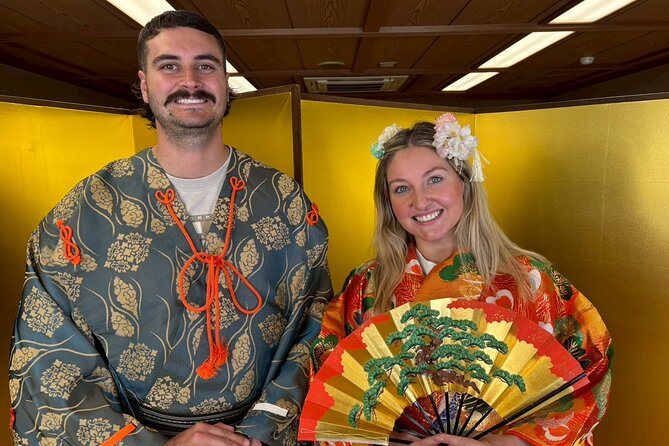
The first part lasts about 15 minutes and begins with traditional dress. Depending on the participant, the costumes include a bridal uchikake or a men’s haori. Props can include folding fans and swords, and professional lighting is used for the photographs.
This is more than a quick rental-counter snapshot. The costume and lighting give you a clear visual memory of the evening, and staff assist with photography so you do not have to manage every picture yourself. Photos are welcome throughout the activity, not only during this opening section.
The costume choice also makes the session work well for families. A child may not follow every detail of tea etiquette, but dressing up and posing with a fan or sword gives them an immediate way into the experience. The translation equipment helps here too, especially if younger participants want to ask questions in a language other than English or Japanese.
Keep your expectations sensible. Fifteen minutes is enough for dressing and pictures, but not enough for an extended kimono fitting or a formal portrait session with many costume changes. If photographs are a priority, use the staff’s help early and take advantage of the photo-friendly moments during the rest of the program.
Four quiet minutes of Zen meditation
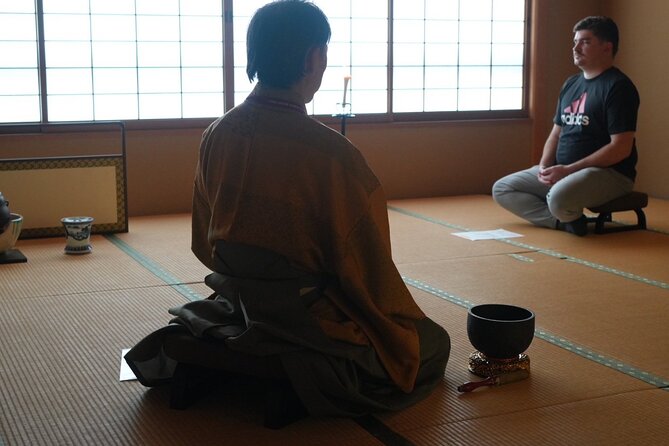
After the photographs, the group moves into a short Zen meditation lasting about four minutes. It is brief, but the timing makes sense. You have just been talking, posing, and adjusting to the room. The meditation gives everyone a chance to settle before the tea ceremony begins.
This is not presented as a long lesson in Zen practice. It is a pause, a change of pace, and a simple way to focus on the ceremony ahead. If you have never meditated, the four-minute length keeps the exercise approachable. If you already practice meditation, you may find it too short to be substantial.
The candlelit room does much of the work here. The dark space and quiet atmosphere encourage you to slow down, even within a compact program. Families with young children may find the silence harder, but the limited duration helps keep the moment manageable.
Watching the 20-minute tea ceremony
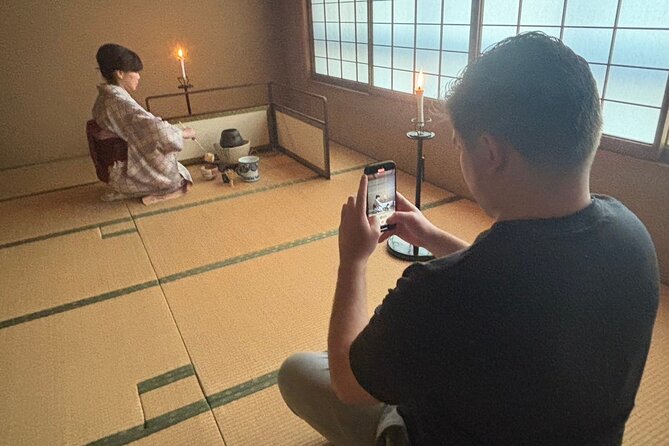
The central demonstration lasts about 20 minutes. You are welcomed as a guest, watch the flow of a traditional tea gathering, receive a bowl of matcha, and have Japanese sweets with the tea.
The value of this section is the sequence. You are not simply handed a green drink. You see how a host prepares and presents the tea, and you take part as a guest within that structure. The ceremony offers a glimpse of the care placed on movements, utensils, presentation, and hospitality.
The staff use tea ceremony utensils along with the costumes and other traditional items. A licensed guide is included, and translation devices allow questions and explanations to continue across language barriers. That is particularly helpful because small details can otherwise pass quickly in a formal ritual.
Matcha has a distinctive taste, and it is not the same as a sweet café latte. The included sweets provide a traditional pairing, but you should not book this as a dessert stop or a meal replacement. The focus is the ritual and the experience of being welcomed into it.
The ceremony is also a good reason to arrive ready to pay attention. In a large sightseeing schedule, it is tempting to treat the tea as a quick photo opportunity. Here, the room, lighting, and deliberate pace invite you to watch the hands and follow the order of events.
More Private Tea Experiences in Kyoto
- Stunning Private Tea Ceremony: Camellia Garden Teahouse
★ 5.0 · 28 reviews - KYOTO: Private Tea Ceremony in Hidden Townhouse (Kid-Friendly)
★ 5.0 · 20 reviews - Kyoto Private Tea Ceremony at a Japanese Inns
★ 5.0 · 3 reviews - Kyoto Newly Opened Private Tea Ceremony – Sanjo Chasuian
★ 5.0 · 2 reviews
Making your own matcha
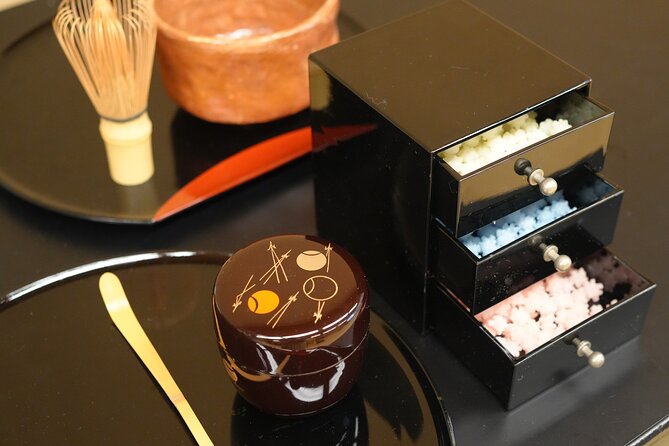
The final major section lasts about 20 minutes and lets you whisk your own matcha. This hands-on part may be the most memorable for first-time participants because you move from watching to doing.
You receive guidance with the tea utensils and the preparation process. The point is not to produce a perfect bowl on your first attempt. It is to understand the work behind the drink and to feel the change between a formal demonstration and your own practice.
This section adds real value to the price because it turns a passive show into a cultural activity. You can also ask questions through the translation devices while you work. That makes the session useful even if you have never encountered tea ceremony customs before.
Twenty minutes is enough to give everyone a turn, but the program remains introductory. You are unlikely to study every movement in depth or compare different schools of tea ceremony. If your goal is a detailed technical lesson, you may want a longer specialist class. If your goal is to take part in a graceful Kyoto tradition without spending several hours, the timing is well judged.
How the private format changes the evening

The two-to-six-person limit is one of the strongest features. You do not have to share the room with a large tour group, and the staff can help with photographs, costumes, questions, and matcha preparation on a personal level.
A private booking also lets the experience fit your group’s mood. Couples may appreciate the quiet candlelit setting. Families can use the costumes and props to keep children involved. Friends can take photographs together and then share the matcha-making portion without strangers in the room.
The format does not mean the activity is completely flexible. The listed program has a set order and approximate timing, and the full session remains under an hour. You should also remember that the experience takes place at a traditional inn, where tatami rooms and formal customs may feel less casual than a modern attraction.
Translation devices and the role of the hosts
No Japanese is required. Translation devices are used to support communication, which removes one of the main worries many international visitors have when booking a cultural activity.
The hosts, Matsuda and Mayumi, are identified with the experience and handle the welcome and instruction. Their role is important because tea ceremony can seem formal or difficult to approach. Friendly guidance helps you understand what is happening without making you feel that you are about to break a rule.
The language support is especially useful for families. A child who cannot speak English can still ask questions in their own language through the device. That gives younger participants a better chance to take part rather than simply watch adults receive instructions.
Technology and tradition may sound like an odd pairing, but here the translator helps preserve the human part of the activity. You can focus on the room, the tea, and the ceremony instead of worrying about missing every explanation.
Is $97.98 per person good value?
At $97.98 per person, this is a premium one-hour activity. The value depends on what you want from your Kyoto evening.
You are paying for more than matcha. The fee covers a private room in a long-established inn, traditional clothing, photography assistance, professional lighting, props, Zen meditation, a tea demonstration, sweets, your own matcha-making session, translation support, and a licensed guide.
For a couple or small group that wants a private cultural activity, the package is reasonably substantial despite the short duration. The photographs and costume session also add something you would not receive from a basic tea tasting.
The value is less convincing if you mainly want to drink tea or learn formal tea ceremony technique in depth. You could spend less on a simple matcha stop, while a specialist class might give you more time for detailed instruction. This program is best understood as a compact cultural performance with hands-on participation and strong visual appeal.
The supplied adult price is also given as ¥15,000, so check the final amount shown in your booking currency before paying. Children under 15 are listed at ¥3,000, which can make the activity more practical for families than the adult price alone suggests.
Location, timing, and practical details
The meeting point is ZEN: Tea Ceremony Experience in Kyoto, at 490 Kanayacho, Green Wind Villa, fourth floor, in Kyoto’s Shimogyo Ward, postal code 600-8323. The experience begins and ends at this meeting point.
The location is near public transportation, which makes it suitable for an evening plan. You should still allow enough time to locate the building and reach the fourth floor, since the activity takes place inside a ryokan rather than at a major temple entrance.
The mobile ticket is convenient. Confirmation is provided at booking, and advance reservation is required. Because the group size is limited to two to six people, I would not leave this until the last minute if the timing matters to your itinerary. The average booking lead time is about eight days.
Free cancellation is available until 24 hours before the local start time. Within 24 hours, the amount paid is not refunded and changes are not accepted. The activity also requires good weather and a minimum number of participants. If poor weather or insufficient numbers cause cancellation, you are offered another date or experience, or a full refund.
The weather condition is worth noting even though much of the program happens indoors. Keep some flexibility in your Kyoto schedule, particularly during unsettled weather.
Who should book this Kyoto tea ceremony?
I would recommend it to you if you want a private, well-paced introduction to several Japanese customs in one sitting. It suits couples, families, and small groups that care about photographs, atmosphere, and personal instruction.
It is particularly good for:
- First-time visitors who want more than temple sightseeing
- Families who need costumes, props, and translation help to keep children engaged
- Couples looking for a quiet evening activity
- Anyone who wants to try making matcha rather than only watching
- Visitors whose schedules are full during the day and open after the temples close
I would be more cautious if you want a long, scholarly lesson in tea ceremony, extensive kimono dressing, or a full meal. The 59-minute format gives you a taste of many elements, but each part is necessarily compact.
Should you book it?
Book this experience if you value privacy, atmosphere, and participation more than a low price. The candlelit ryokan room, costume photographs, short meditation, tea demonstration, and matcha whisking create a neatly arranged Kyoto evening, with Matsuda and Mayumi helping bridge language gaps.
Skip it if your main goal is simply to drink matcha cheaply or study tea ceremony at an advanced level. For everyone in between, this is a thoughtful way to add Japanese hospitality and hands-on tradition to an itinerary after the city’s major sights have closed.
FAQ
Where does the tea ceremony take place?
It takes place at ZEN: Tea Ceremony Experience in Kyoto, located at 490 Kanayacho, Green Wind Villa, fourth floor, in Kyoto’s Shimogyo Ward.
How long does the activity last?
The experience lasts approximately 59 minutes.
How many people can join a private booking?
The private activity is available for groups of two to six people.
Is Japanese language ability required?
No. Translation devices are available to support communication regardless of language.
What is included in the experience?
The program includes matcha green tea, Japanese sweets, costumes, a bridal uchikake or men’s haori, props such as folding fans and swords, tea ceremony utensils, photography assistance, and a licensed guide.
Can children participate?
Yes. Children under 15 have a listed price of ¥3,000. The experience also includes costumes, props, and translation support that can help younger participants take part.
What is the cancellation policy?
You can cancel at least 24 hours before the local start time for a full refund. Cancellations or changes made within 24 hours are not accepted and are not refunded. If the activity is canceled because of poor weather or because the minimum number of participants is not met, you are offered another date or experience, or a full refund.
More Tea Ceremonies in Kyoto
- Kyoto: Tea Ceremony in a Traditional Tea House in Kiyomizu
★ 4.9 · 3,519 reviews - Kyoto: Tea Ceremony Ju-An at Jotokuji Temple
★ 4.9 · 3,207 reviews - Kyoto: 45-Minute Tea Ceremony Lesson Experience
★ 4.3 · 2,378 reviews - Kyoto: Table-Style Tea Ceremony at a Kyo-Machiya
★ 4.9 · 1,211 reviews
Newly steeped around Kyoto
- Whisk Your Own Matcha: A Zen Matcha Experience at Temple★ 3.6 · 7 reviews
- Uji Walking Tour – Byodo-in temple and Tea Ceremony from Kyoto★ 3.5 · 3 reviews
- Kyoto: Authentic Tea Ceremony in a Small Group★ 5.0 · 7 reviews
- Tea ceremony at Kyoto’s Zen Temple Teahouse★ 5.0 · 2 reviews
- Tea Ceremony Experience in Traditional Kyoto Townhouse★ 5.0 · 19 reviews
- Tea Ceremony in 150 Years Old Townhouse with Tables and Chairs★ 5.0 · 22 reviews
- Sencha-do the Japanese Tea Ceremony Workshop in Kyoto★ 5.0 · 21 reviews
- Silent Beauty of Kyoto Zen Walk and Tea Experience★ 5.0 · 2 reviews
Private Tea Experiences, compared.
Private Tea Ceremony and Sake Tasting in Kyoto Samurai House
Read our review →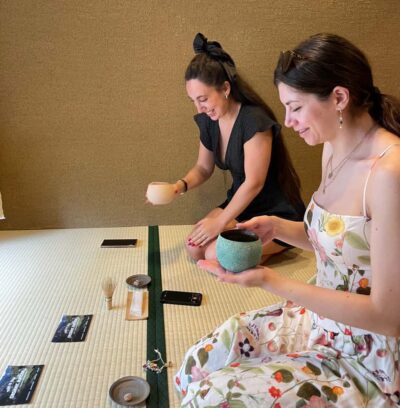
Tea Ceremony Experience in a Private Tea Room in Shibuya
Read our review →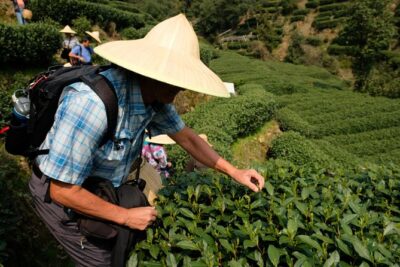
One-Day Hangzhou Dragon Well Tea Culture & West Lake Private Tour
Read our review →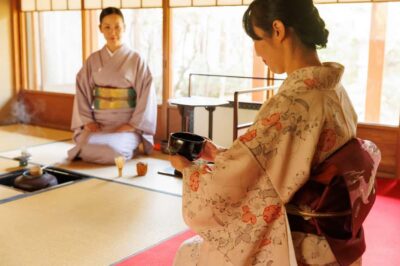
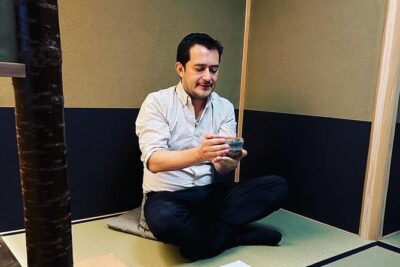
Kyoto Private Tea Ceremony with Tea Master at Home
Read our review →
Osaka: Private Tea Ceremony and Calligraphy Experience
Read our review →
Private Tour: Royal High Tea At Kensington Palace Gardens
Read our review →
Stunning Private Tea Ceremony: Camellia Garden Teahouse
Read our review →Browse the lists this tea experience appears in