
Review · KYOTO
Kyoto Private Tea Ceremony at a Japanese Inns
A candlelit tea ceremony in a historic 20-mat tatami room is the heart of this Kyoto evening. The 75-minute program also includes Zen meditation, a kimono fitting, and photographs with folding fans and a replica Japanese sword. It gives you several pieces of Japanese culture in one compact visit.
I like the private format, which gives your group a calmer setting than a large scheduled show. I also like the photo session, since the kimono, traditional room, and props give you something tangible to remember. The main consideration is language: the instructor is Japanese, and translation devices are provided, but this is not a long guided talk in several spoken languages.
- Candlelit ryokan setting: Meet on the fourth floor of a traditional inn near Higashi Honganji Temple.
- Three-part cultural program: The visit moves from greeting and Zen meditation to tea ceremony and kimono fitting.
- Choice of traditional clothing: Select a bridal kimono or men’s haori for the photo session.
- Authentic-looking props: Use folding fans and replica Japanese swords in a 20-mat tatami room.
- Private 75-minute visit: Your group receives an exclusive cultural session rather than joining a large crowd.
- Translation help included: Multi-language devices support communication with the Japanese host.
A candlelit evening near Higashi Honganji
You begin at the front desk of the ryokan, then go to the venue on the fourth floor. The setting near Higashi Honganji Temple gives the experience a useful Kyoto connection, though you should think of this as an indoor cultural appointment rather than a temple tour.
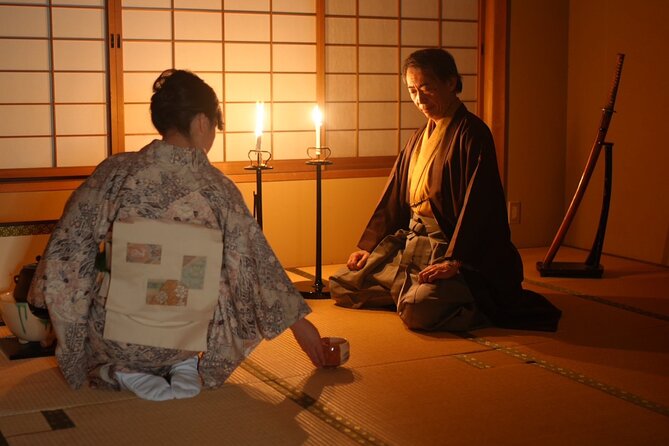
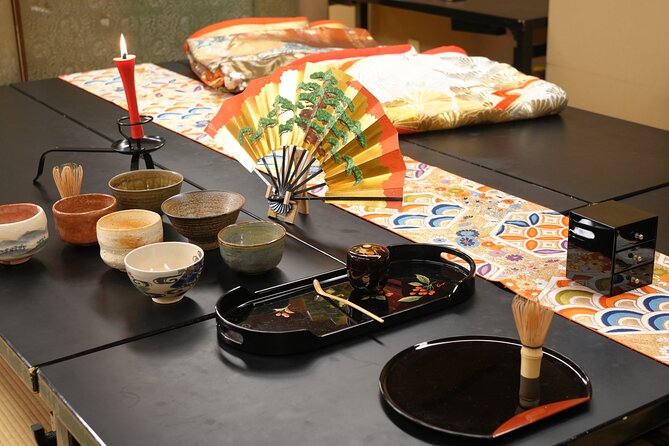
Inside, the soft light of traditional candles changes the mood at once. A large tatami room, measuring 20 mats, provides the backdrop for the whole session. That matters because the room is not just a place to sit for tea. It also becomes the stage for meditation, clothing, and photographs.
The host greets you and explains the program before anything begins. The instructor is Japanese, and translation devices are available to help you communicate. You should not expect a fully bilingual presentation, but the device gives you a practical way to ask questions and follow directions.
Because the activity lasts only 75 minutes, the introduction is likely to be brief. That is a benefit if you want several cultural activities in one evening, but it also means the session cannot explore every detail of tea practice, Zen, or traditional dress.
Zen meditation before the tea
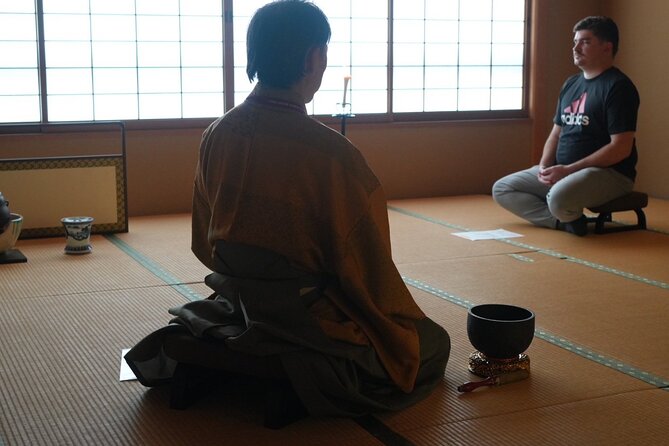
The first activity after the greeting is a Zen meditation session. This gives the evening a quiet opening and helps you settle into the tatami-room setting before the more visual parts of the program begin.
The meditation is a good fit if you want a pause from Kyoto’s busy streets. You do not need to make this a test of spiritual discipline. Treat it as a short introduction to stillness in a traditional Japanese room.
The supplied information does not specify the length of the meditation or the exact posture and instruction. Keep your expectations measured. You are receiving a cultural experience that includes Zen meditation, not signing up for an extended retreat or a formal religious course.
I like the order of the activities. Starting quietly makes the tea ceremony feel more considered, instead of rushing straight into costumes and photographs. If your group includes children or anyone who finds meditation difficult, the brief format may be easier than a longer silent session, though the exact timing is not stated.
More Private Tea Experiences in Japan
- Private Tea Ceremony and Sake Tasting in Kyoto Samurai House
★ 5.0 · 163 reviews - Kyoto: Private Tea Ceremony with a Garden View
★ 4.9 · 61 reviews - Kyoto Private Tea Ceremony with Tea Master at Home
★ 5.0 · 58 reviews
The tea ceremony in a traditional room
After meditation, you take part in the tea ceremony. This is the feature that attracts most people to the booking, and the calm room and candlelight give it a distinct evening character.
A tea ceremony is valuable not only because of the drink. The setting, gestures, pace, and attention to the moment are part of the experience. Here, you can observe those elements while sitting in a traditional tatami room rather than watching a performance from a distance.
The program is private, so your group can focus on the host’s instructions without the distraction of a large audience. That privacy also helps if you have questions. Use the translation device to communicate, and remember that the instructor’s primary language is Japanese.
One verified booking from Spain in June 2025 gave the experience five stars and described it as highly recommendable and the best tea ceremony the person had attended. That is a strong endorsement of the central activity, though it comes from a very small number of published ratings. I would treat it as encouraging rather than as proof that every visitor will have the same reaction.
The tea ceremony portion is best for you if you want atmosphere and participation. If your main goal is a long explanation of tea history or a detailed lesson in every utensil and movement, confirm the available detail before booking, since the program also needs time for meditation and dressing.
Choosing a bridal kimono or men’s haori
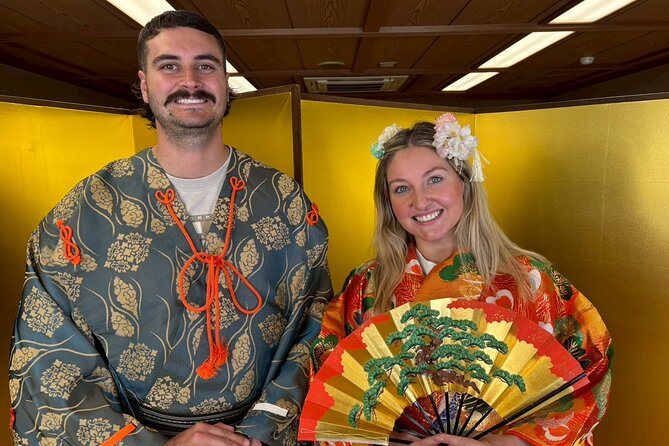
The clothing portion gives the experience its most personal touch. You choose between a bridal kimono and men’s haori, then take part in a fitting before the photo session.
The options are not presented as a full wardrobe selection, so do not book expecting a broad costume studio with many styles and colors to compare. Instead, think of this as a clear choice between two traditional Japanese outfits. The bridal kimono suits the formal, ceremonial mood, while the haori provides a traditional men’s option.
The fitting is included in the price. That is important because you are not paying extra for the clothing portion once inside. The available information does not give fitting times, sizing details, or whether additional garments are worn underneath, so contact the operator if those points affect your decision.
I like that the outfit is tied to the room and the ceremony rather than offered as a separate dress-up stop. You move from meditation and tea into clothing that fits the setting, then use the same room for photographs. The sequence feels more coherent than a quick costume change in a plain studio.
You should also allow yourself time to enjoy the process. The 75-minute schedule includes all three main activities, so the fitting cannot take up the entire evening. If photographs are your top priority, tell your group in advance so you do not spend the whole session deciding on poses.
Photos with fans and a replica sword
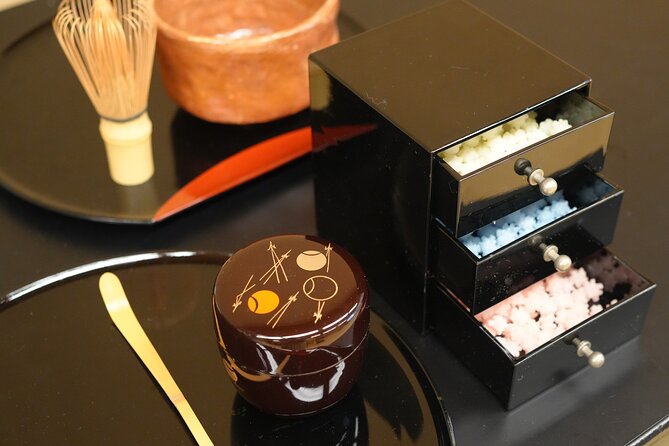
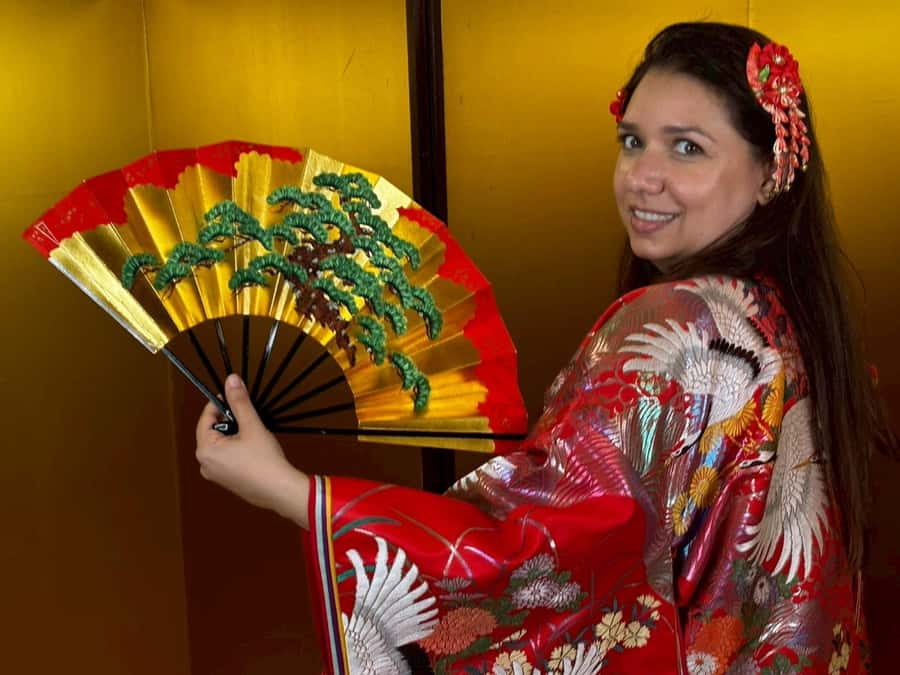
The commemorative photo session uses folding fans and replica Japanese swords as props. These details give the pictures a stronger sense of place than a simple portrait in rented clothing.
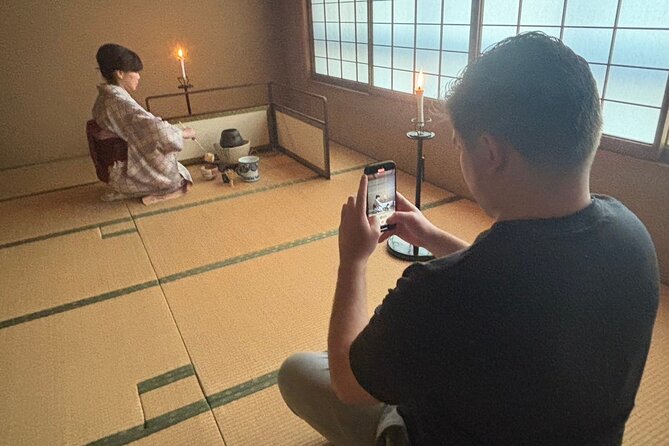
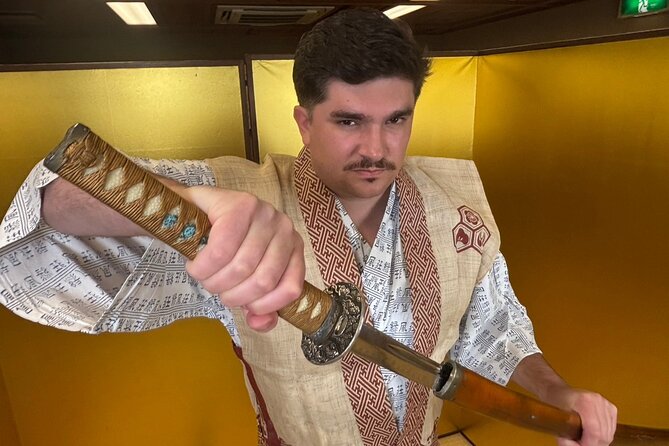
The sword is a replica, not a weapon. That makes it a visual prop for photographs, and you should handle it as directed by the host. Flash photography is not allowed, so bring a camera or phone that can take clear images in a dim room without flash.
The candlelit setting may produce softer, moodier photographs than a brightly lit studio. That can look attractive, but it also means you should not assume every image will be sharply lit. Follow the host’s instructions and avoid interrupting the ceremony with constant picture-taking.
The props are especially useful if you want a shared group memory. Folding fans work well for simple portraits, while the replica sword creates a more theatrical pose. The room itself supplies much of the visual interest: tatami, low seating, candlelight, and traditional clothing.
The photo session is included, but the information does not specify how many images you receive, who takes them, or whether professional digital files are supplied. Ask if those details matter. You may need to rely on your own device or have a member of your group take the pictures.
More Private Tea Experiences in Kyoto
- Stunning Private Tea Ceremony: Camellia Garden Teahouse
★ 5.0 · 28 reviews - KYOTO: Private Tea Ceremony in Hidden Townhouse (Kid-Friendly)
★ 5.0 · 20 reviews - Kyoto Private Tea Ceremony at a Japanese Inns
★ 5.0 · 12 reviews - Kyoto Newly Opened Private Tea Ceremony – Sanjo Chasuian
★ 5.0 · 2 reviews
What the $161 price really covers
At $161 per person, this is not a budget tea stop. The price makes more sense when you count what is bundled together: a private group setting, Zen meditation, tea ceremony, kimono fitting, commemorative photographs, props, and translation devices.
You are paying for a short, staged cultural program in a special room, not just a cup of tea. The private format is the key value point. If you are traveling as a couple, family, or small group and want a controlled setting for photographs, the cost may feel reasonable.
The value is less clear if you only want to drink tea. You would be paying for clothing, photography, meditation, and the private venue even if those parts do not interest you. In that case, a simpler tea experience may suit you better, though this program offers more variety in a single appointment.
The price also saves you from arranging separate activities. Instead of booking a tea ceremony, a kimono rental, and a photo session on different days, you receive all three elements in 75 minutes. That convenience is useful during a short Kyoto visit.
I would compare the price with your priorities rather than with the cost of tea alone. For a special evening, a birthday, an anniversary, or a first introduction to Japanese customs, the package has a clear purpose. For an in-depth study of any one tradition, the short schedule may limit the return.
Timing, access, and practical details
The experience runs for 75 minutes, with starting times based on availability. It is presented as an evening activity, which works well after a day of sightseeing, but check the precise start time before you commit to dinner or another reservation.
You must book at least one day ahead. The meeting procedure is simple: register at the front desk, then proceed to the fourth-floor venue. There is no transportation included, so you are responsible for reaching the ryokan near Higashi Honganji Temple.
The activity is wheelchair accessible. The supplied details do not explain the exact route, elevator access, or whether the tatami-room layout creates any special considerations, so contact the provider if you need specific mobility information.
Flash photography is not allowed. This rule protects the atmosphere and avoids harsh light in the candlelit room. Bring a device that can work without flash, and do not plan on using a bright external light during the ceremony.
Free cancellation is available up to 24 hours before the start, and you can reserve now and pay later. Those policies give you some flexibility, but they do not remove the need to check your starting time and arrival route carefully.
Who will enjoy this Kyoto experience
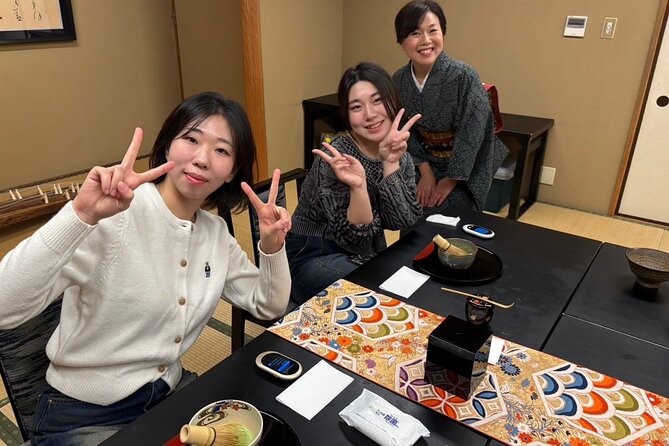
I would recommend this program to you if you want several traditional activities in one place and prefer a private setting. It is especially well suited to couples, families, and small groups who want photographs in formal Japanese clothing.
It also works for first-time visitors who want a gentle introduction to tea ceremony and Zen without committing to a longer class. The translation device makes the language gap less worrying, though you should still expect Japanese to be the instructor’s main spoken language.
The experience may not suit you if you dislike staged photographs, costume fitting, or short scheduled programs. It is also not the best choice if you want to spend a full afternoon studying tea preparation or meditation in depth.
The program has a strong visual side, but it is not only a photo opportunity. The meditation and tea ceremony give the evening structure, while the kimono and props add a memorable personal element. You get the most from it when you take part in all three parts rather than treating the tea as a quick stop before posing.
Should you book this private tea ceremony?
Book it if you want an elegant, compact Kyoto evening that combines tea, Zen, traditional clothing, and photos. The candlelit 20-mat room, private format, and included translation devices make the experience easy to approach, especially for a first cultural visit.
Think twice if $161 feels high for a 75-minute activity or if you want a deeply detailed lesson in tea ceremony. The limited public feedback is very positive, including a five-star verified booking from June 2025, but there is not enough feedback to judge every possible situation.
For most people considering this as a special Kyoto memory, the package offers good value when all its parts matter to you. Arrive ready to follow instructions, leave your flash switched off, and allow the room, clothing, and quiet pace to do much of the work.
FAQ
Where does the tea ceremony take place?
It takes place in a traditional Kyoto ryokan near Higashi Honganji Temple. You check in at the front desk and proceed to the venue on the fourth floor.
How long does the activity last?
The complete experience lasts 75 minutes.
What activities are included?
The program includes Zen meditation, a tea ceremony, kimono fitting, a commemorative photo session, and the use of multi-language translation devices.
What clothing can I choose?
You can choose a bridal kimono or men’s haori, both traditional Japanese outfits.
Are photographs included?
Yes. A commemorative photo session is included, with props such as folding fans and replica Japanese swords.
Can I use flash photography?
No. Flash photography is not allowed during the experience.
Is the activity private?
Yes. It is offered as a private group experience.
Is the venue wheelchair accessible?
Yes. The activity is listed as wheelchair accessible.
Is transportation included?
No. Transportation to and from the venue is not included.
More Tea Ceremonies in Kyoto
- Kyoto: Tea Ceremony in a Traditional Tea House in Kiyomizu
★ 4.9 · 3,519 reviews - Kyoto: Tea Ceremony Ju-An at Jotokuji Temple
★ 4.9 · 3,207 reviews - Kyoto: 45-Minute Tea Ceremony Lesson Experience
★ 4.3 · 2,378 reviews - Kyoto: Table-Style Tea Ceremony at a Kyo-Machiya
★ 4.9 · 1,211 reviews
Newly steeped around Kyoto
- Whisk Your Own Matcha: A Zen Matcha Experience at Temple★ 3.6 · 7 reviews
- Uji Walking Tour – Byodo-in temple and Tea Ceremony from Kyoto★ 3.5 · 3 reviews
- Kyoto: Authentic Tea Ceremony in a Small Group★ 5.0 · 7 reviews
- Tea ceremony at Kyoto’s Zen Temple Teahouse★ 5.0 · 2 reviews
- Tea Ceremony Experience in Traditional Kyoto Townhouse★ 5.0 · 19 reviews
- Tea Ceremony in 150 Years Old Townhouse with Tables and Chairs★ 5.0 · 22 reviews
- Sencha-do the Japanese Tea Ceremony Workshop in Kyoto★ 5.0 · 21 reviews
- Silent Beauty of Kyoto Zen Walk and Tea Experience★ 5.0 · 2 reviews
Private Tea Experiences, compared.
Private Tea Ceremony and Sake Tasting in Kyoto Samurai House
Read our review →
Tea Ceremony Experience in a Private Tea Room in Shibuya
Read our review →
One-Day Hangzhou Dragon Well Tea Culture & West Lake Private Tour
Read our review →
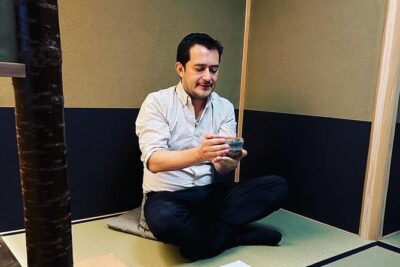
Kyoto Private Tea Ceremony with Tea Master at Home
Read our review →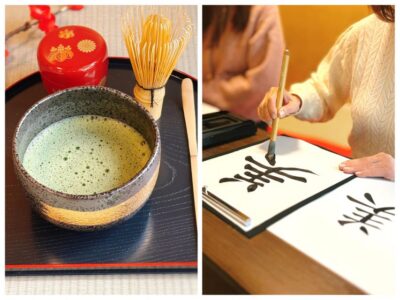
Osaka: Private Tea Ceremony and Calligraphy Experience
Read our review →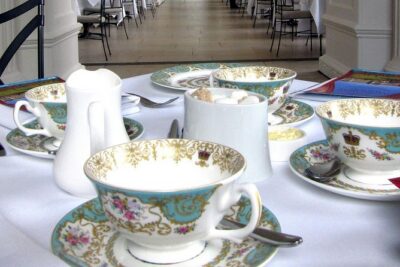
Private Tour: Royal High Tea At Kensington Palace Gardens
Read our review →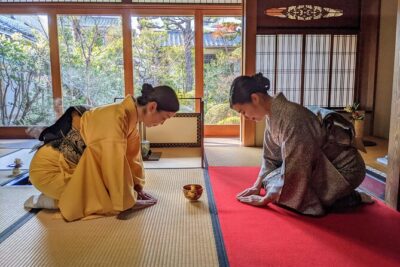
Stunning Private Tea Ceremony: Camellia Garden Teahouse
Read our review →Browse the lists this tea experience appears in