
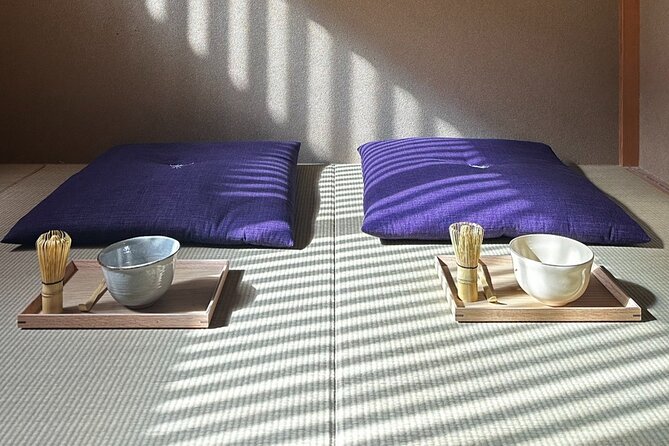
Review · KYOTO
KYOTO: Private Tea Ceremony in Hidden Townhouse (Kid-Friendly)
A short film about tea plantations, a stone mill, and your own bowl of matcha make this private Kyoto tea ceremony more hands-on than a simple demonstration. At WOM-Way of Matcha, Yuki guides your group through the process, from powdered tea to the final whisked cup.
I like the personal attention and the chance to learn a method you can repeat at home. I also like the family-friendly format, especially for children who may find a silent, formal ceremony hard to follow. The main consideration is time: at about 45 minutes, this is a compact introduction rather than a long traditional tea gathering.
- Stone-milled matcha: See and take part in grinding tea powder with a traditional stone mill.
- Private townhouse setting: Your own group takes part, without strangers sharing the session.
- Yuki’s personal guidance: The host explains each stage carefully and gives you time to try it yourself.
- Tea and latte making: Prepare matcha, taste it, and make a matcha latte during the visit.
- Good for families: Children are welcome, and the private format allows a more flexible pace.
- Simple Kyoto logistics: Meet and finish at WOM-Way of Matcha, at 863-41 Jurakucho in Kamigyo Ward.
A Private Tea Lesson in a Kyoto Townhouse
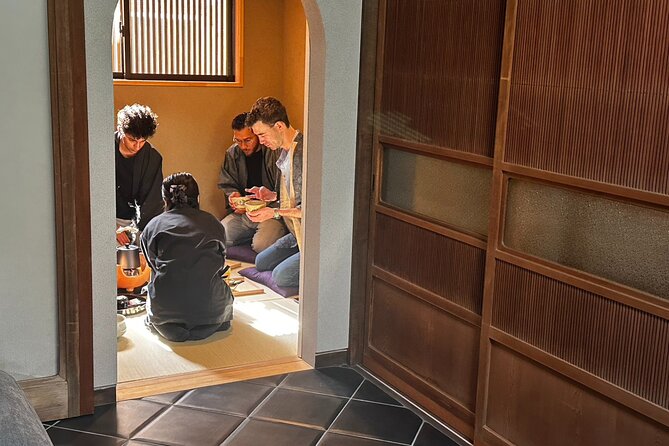
The appeal here is not only drinking matcha. You get to see how the powder is made, watch the ceremony performed, and then take control of the bowl yourself. That progression gives the experience a clear shape, even though the whole visit lasts less than an hour.
The setting is a private townhouse in Kyoto. The address is 863-41 Jurakucho, in Kamigyo Ward, and the activity starts and ends there. You should plan to arrive at the stated meeting point rather than expect a pickup or a walking tour through the city.
The private arrangement matters. Only your group takes part, so you are not trying to hear an explanation across a room full of people. It also gives families some breathing room. If a child has questions, needs a moment, or wants to try the whisk, the experience is built around your group rather than a fixed crowd.
Yuki is the host named in the feedback, and the strongest praise centers on his polite, friendly, careful way of explaining the activity. That is useful to know because tea ceremony can feel intimidating when you do not know the customs. Here, the instruction is designed to help you follow along rather than simply sit and watch.
First, Watch How Tea Begins
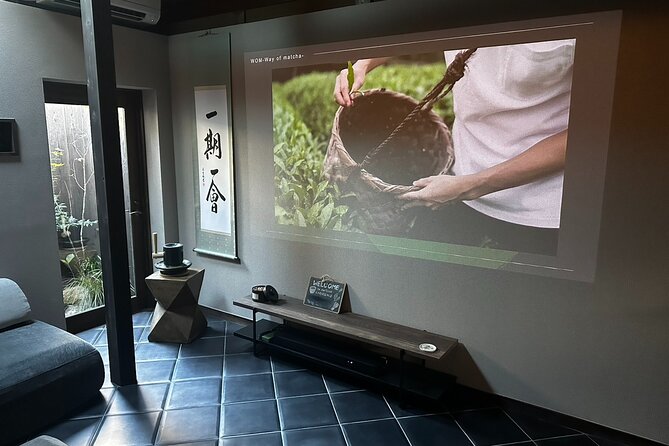
The session opens with footage of tea plantations. This may sound like a quiet start, but it gives useful context before you handle the powder. You see that matcha is not just a bright green drink scooped from a packet. The activity first places the tea in its growing and production setting, then moves toward the cup in front of you.
Because the film is short, it should not take over the experience. Its role is to prepare you for the hands-on stages that follow. If you are visiting Kyoto with children, this opening can also make the subject easier to understand before the more formal tea ceremony begins.
There is no promise of a plantation visit, so keep your expectations clear. You watch footage rather than travel out to a tea field. That keeps the activity practical for a short Kyoto stop, but it also means the experience focuses on preparation and tasting instead of farming.
More Private Tea Experiences in Japan
- Private Tea Ceremony and Sake Tasting in Kyoto Samurai House
★ 5.0 · 163 reviews - Kyoto: Private Tea Ceremony with a Garden View
★ 4.9 · 61 reviews - Kyoto Private Tea Ceremony with Tea Master at Home
★ 5.0 · 58 reviews
Grinding Matcha with a Stone Mill
Next comes the most unusual practical feature: making matcha powder with a stone mill. This step gives you a physical sense of the work behind the drink. Instead of seeing only the finished green powder, you take part in the process that turns tea into the fine texture used for whisking.
The stone-milling stage is especially useful for anyone who wants to understand why matcha feels different from ordinary steeped tea. The powder is not removed after brewing. You mix it into water and drink it, so the texture and preparation matter.
Do not expect to produce a large supply of matcha in this short session. The point is to learn the technique and feel the method, not to run a small tea factory. Still, this is the kind of detail that makes the visit more memorable than a standard cup served without explanation.
For children, the mill may be one of the easiest parts to grasp. It offers a clear action with a visible result. Adults can appreciate the traditional tool, while younger participants get a chance to see how the powder changes from the tea-making process.
Watching the Tea Ceremony Demonstration
Once the matcha is prepared, Yuki demonstrates the tea ceremony. This gives you a chance to watch the sequence before you try it. The ceremony is not presented as a test, so you can pay attention to the movements, the order of preparation, and the way the tea is handled.
A demonstration also helps if you have never taken part in a Japanese tea ceremony. Some visitors worry about making a mistake, especially when the setting feels formal. Seeing the process first reduces that pressure. You know what comes next, and Yuki can explain the purpose of the actions along the way.
The private setting makes this part easier to follow. In a large group, you may watch from a distance or miss small movements. Here, the format is intended for your personal party, so the demonstration can feel more like a lesson than a stage performance.
At the same time, this is a short experience. You should not expect a lengthy study of tea ceremony etiquette, Japanese aesthetics, or the many schools of tea. The focus is an accessible introduction, with enough structure to give you a feel for the ritual without asking for a full morning.
Making Your Own Bowl of Matcha
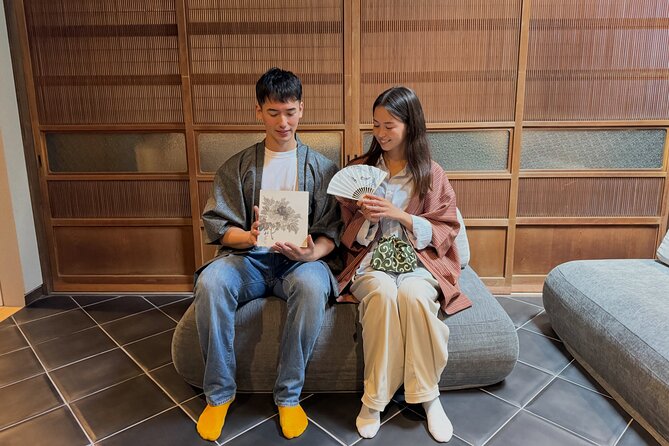
After watching, you make your own tea. This is where the activity pays off. You are no longer just receiving information from a host. You are using the tools and following the preparation steps yourself.
The chance to recreate the technique at home is one of the best reasons to book. You leave with a practical understanding of how matcha is made, rather than only a photograph of someone else preparing it. The exact home equipment is not specified, so you should not assume you will receive a kit or ingredients to take away. The value is in learning the method during the session.
The host’s careful explanations are important here. Matcha can seem simple, but small actions affect the finished drink. Yuki’s role is to guide you through the process and help your group understand what to do. The feedback about his friendly and attentive manner suggests that first-time participants should feel supported rather than left to guess.
You also have time to take photos. That may sound minor, but it matters in a tea ceremony setting, where the tools, bowl, green powder, and townhouse surroundings are part of the memory. Be respectful of the pace of the activity, but you should have an opportunity to record your own preparation.
More Private Tea Experiences in Kyoto
- Stunning Private Tea Ceremony: Camellia Garden Teahouse
★ 5.0 · 28 reviews - Kyoto Private Tea Ceremony at a Japanese Inns
★ 5.0 · 12 reviews - Kyoto Private Tea Ceremony at a Japanese Inns
★ 5.0 · 3 reviews - Kyoto Newly Opened Private Tea Ceremony – Sanjo Chasuian
★ 5.0 · 2 reviews
Tasting Tea and Making a Matcha Latte
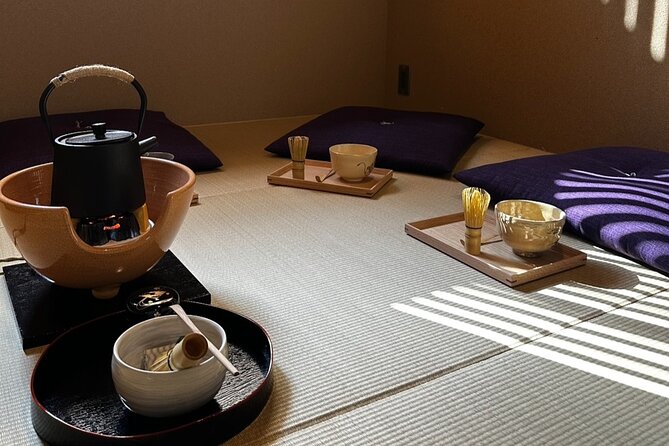
The session includes tasting and making a latte. This broadens the appeal beyond people who already enjoy strong green tea. If the traditional preparation tastes too concentrated for you, the latte gives you another way to experience matcha.
I see this as a smart family feature. Children may be more curious about making a latte than drinking a traditional bowl of tea. Adults get the chance to compare the more classic preparation with a familiar café-style drink.
The available details do not specify the ingredients, sweetness, milk type, or whether you can choose different flavors. You should therefore treat the latte as part of the guided activity, not a custom café order. The important point is that you get more than one way to taste what you have prepared.
The tasting also closes the loop neatly. You watch tea production, grind the powder, observe the ceremony, make your own bowl, and then try the result. In 45 minutes, that is a fair amount of activity, though the pace may feel brisk if your group wants to linger over every stage.
Why the Private Format Helps Families
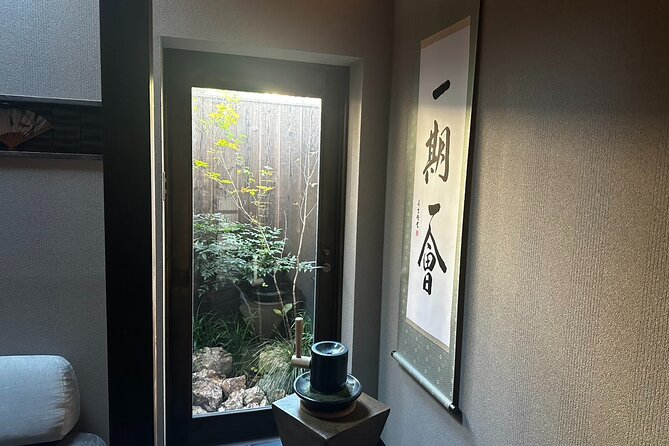
A private booking is the central practical advantage. The experience is suitable for families with children, and that suitability comes from more than a simple age label. A private group can ask questions freely and take part without worrying about slowing down strangers.
Children can also get a more direct role. The information does not specify a minimum age or a separate children’s program, so you should not expect special activities designed only for young kids. Still, the combination of milling, whisking, tasting, and latte making gives younger participants several things to do.
The format may also work well for couples, friends, or a small family who want a quiet cultural activity between sightseeing stops. You do not need to commit to a long formal ceremony. The session is brief, focused, and returned to the same place where it began.
There is one tradeoff. A private activity often feels more personal, but it does not automatically make the ceremony more traditional or more extensive. If your goal is an advanced study of tea etiquette, this introduction may feel too short. If your goal is to understand matcha and try the basic process, the format is a good match.
What $51.24 Means in Practice
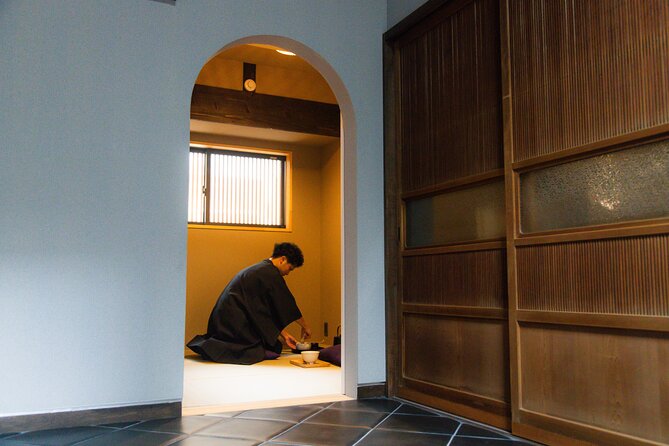
The price is $51.24 per person. That is not the cheapest way to drink matcha in Kyoto, and you should not judge it as a simple beverage stop. You are paying for a private session, a host’s time, the demonstration, the stone-milling activity, hands-on preparation, tasting, and latte making.
For a group that values privacy and participation, the price can make sense. A public demonstration may cost less, but it may not give you the same chance to ask questions or make the tea yourself. The strongest value here comes from the teaching and the personal attention, not from the amount of tea consumed.
The 45-minute duration also helps with planning. You can fit the activity into a busy Kyoto day without giving up half a morning or afternoon. On the other hand, the short length means you should not expect a wide meal, a long cultural lecture, or a tour of several tea-related sites.
The experience has a 4.9 rating from 20 reviews, with 100 percent recommending it. Those figures point to a consistently strong reception, while the written comments focus on the host’s kindness, clear explanations, and the appeal of a private traditional setting. I would use those points to judge the experience as a well-regarded introduction, not as proof that every visitor will want the same level of formality.
Finding WOM-Way of Matcha in Kamigyo Ward
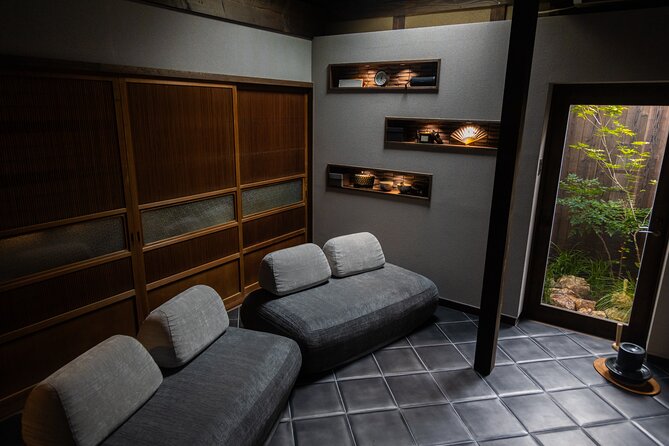
The meeting point is WOM-Way of Matcha at 863-41 Jurakucho, Kamigyo Ward, Kyoto, 602-8156, Japan. The activity finishes back at that same meeting point, which makes the plan simple once you arrive.
Because no transport service is included in the supplied details, you should arrange your own way to the townhouse. The mobile ticket is useful for keeping the booking available on your phone. Confirmation arrives at the time of booking, so you should have the essential booking information ready before setting out.
I would allow enough time to locate the address without rushing. A tea ceremony depends on arriving ready to pay attention, and a late arrival could cut into a 45-minute session. The details do not state accessibility information, hotel pickup, or parking, so contact the provider if any of those points affect your plans.
Free cancellation is available if you cancel at least 24 hours before the start time. A cancellation made less than 24 hours ahead is not refunded, and changes inside that window are not accepted. The cut-off follows local Kyoto time.
Who Should Book This Tea Ceremony
I would choose this for a first introduction to matcha, especially if you want to do more than sit in a formal room and watch. It suits families, couples, and small private groups who value a calm setting and direct instruction.
It is also a good choice if you want a cultural activity that does not consume half a day. The sequence is varied enough to keep the visit moving: film, stone milling, demonstration, hands-on tea, tasting, and latte making.
I would think twice if you want a full-length tea ceremony with extended etiquette instruction or a detailed study of tea production. The program is compact, and the available information does not promise a plantation visit, a meal, or a broader tour of Kyoto’s tea culture.
Book it if you want to understand how matcha is prepared and would enjoy making it yourself. Skip it if your main goal is simply to buy a quick drink or watch a lengthy ceremonial performance. For most first-time visitors, the private format, child-friendly pace, and practical tea-making lesson give the $51.24 price a reasonable purpose.
FAQ
How long does the private tea ceremony last?
The experience lasts approximately 45 minutes.
Where does the activity take place?
It takes place at WOM-Way of Matcha, 863-41 Jurakucho, Kamigyo Ward, Kyoto, 602-8156, Japan.
Where does the activity finish?
The activity ends back at the meeting point.
Is this a private experience?
Yes. Only your own group participates in the activity.
Are children welcome?
Yes. The experience is described as family-friendly, and children are welcome.
What happens during the tea ceremony?
You watch footage of tea plantations, make matcha powder with a stone mill, watch a tea ceremony demonstration, make and taste tea, and make a matcha latte.
Can I cancel for a full refund?
Yes, if you cancel at least 24 hours before the experience start time. Cancellations made less than 24 hours before the start time are not refunded.
More Tea Ceremonies in Kyoto
- Kyoto: Tea Ceremony in a Traditional Tea House in Kiyomizu
★ 4.9 · 3,519 reviews - Kyoto: Tea Ceremony Ju-An at Jotokuji Temple
★ 4.9 · 3,207 reviews - Kyoto: 45-Minute Tea Ceremony Lesson Experience
★ 4.3 · 2,378 reviews - Kyoto: Table-Style Tea Ceremony at a Kyo-Machiya
★ 4.9 · 1,211 reviews
Newly steeped around Kyoto
- Whisk Your Own Matcha: A Zen Matcha Experience at Temple★ 3.6 · 7 reviews
- Uji Walking Tour – Byodo-in temple and Tea Ceremony from Kyoto★ 3.5 · 3 reviews
- Kyoto: Authentic Tea Ceremony in a Small Group★ 5.0 · 7 reviews
- Tea ceremony at Kyoto’s Zen Temple Teahouse★ 5.0 · 2 reviews
- Tea Ceremony Experience in Traditional Kyoto Townhouse★ 5.0 · 19 reviews
- Tea Ceremony in 150 Years Old Townhouse with Tables and Chairs★ 5.0 · 22 reviews
- Sencha-do the Japanese Tea Ceremony Workshop in Kyoto★ 5.0 · 21 reviews
- Silent Beauty of Kyoto Zen Walk and Tea Experience★ 5.0 · 2 reviews
Private Tea Experiences, compared.
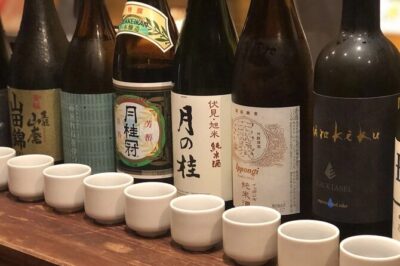
Private Tea Ceremony and Sake Tasting in Kyoto Samurai House
Read our review →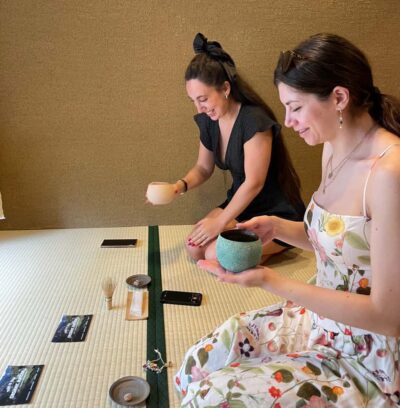
Tea Ceremony Experience in a Private Tea Room in Shibuya
Read our review →
One-Day Hangzhou Dragon Well Tea Culture & West Lake Private Tour
Read our review →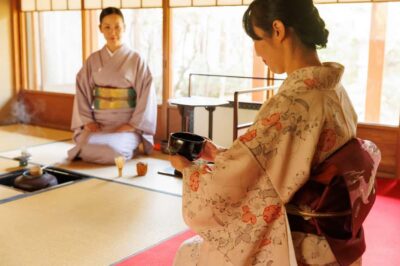
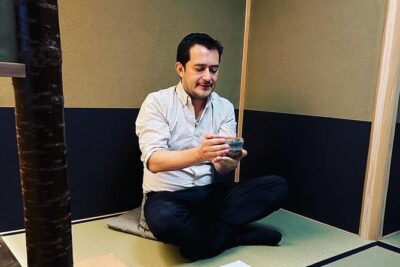
Kyoto Private Tea Ceremony with Tea Master at Home
Read our review →
Osaka: Private Tea Ceremony and Calligraphy Experience
Read our review →
Private Tour: Royal High Tea At Kensington Palace Gardens
Read our review →
Stunning Private Tea Ceremony: Camellia Garden Teahouse
Read our review →Browse the lists this tea experience appears in