
Review · TOKYO
Tokyo: Two Types of Japanese Sweets Making and Tea Ceremony
The clever part of this Tokyo experience is its three-part design: you make a dry sugar sweet, shape two bean-paste sweets, and prepare matcha. It gives you a better sense of Japanese confectionery than a simple tasting does. You handle the ingredients, learn why the sweets look different, then eat your work with tea.
I like the use of Kyoto-made white and red bean paste and the focus on seasonal designs. I also like that the tea ceremony is kept casual, so you can learn the basic motions without needing prior experience. The main drawback is language: the instructor speaks Japanese, with English translation provided as much as possible, so some explanations may be brief or uneven.
Key points to know before booking
- Three hands-on activities in 125 minutes: Ohigashi, two styles of nerikiri, and matcha preparation.
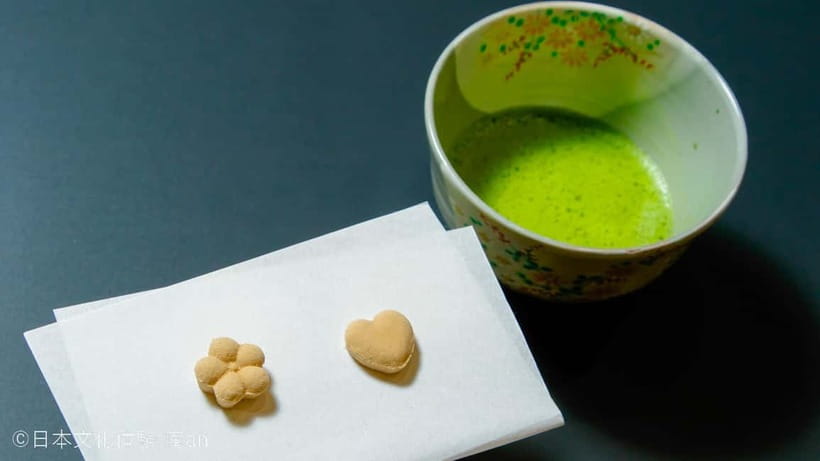
- Ohigashi uses wasanbon: This traditional Japanese sugar creates a dry, delicate sweet rather than a soft cake.
- Two seasonal nerikiri shapes: You make a flower-shaped sweet and a kinton-style sweet with Kyoto bean paste.
- The matcha section is practical: You see a grinding demonstration, then whisk your own tea.
- The price is modest for the length: At $28 per person, the session offers more than a short tea tasting.
- English help is available, but not guaranteed in full: Japanese is the stated language of the instructor.
Why this Tokyo sweets class is different
Many Japanese food activities ask you to watch, taste, and take a few photos. This one gives you three jobs to do. That matters because Japanese sweets are built around texture, shape, season, and presentation. You get a small lesson in all four.
The session takes place at AN TOKYO Japanese Culture Experience. You meet there for a 125-minute program that moves from sweets to tea. The pace is structured, but it is not an all-day workshop. You get enough time to make each item without giving up half your sightseeing day.
The format suits curious first-time visitors. You do not need to know the rules of tea ceremony or have experience with Japanese confectionery. You simply follow the instructor and copy the methods shown to you.
At $28, the value is strong if you want an activity rather than another food stop. The price includes the full set of three experiences. Small extras cost more: a sweets take-out box is 100 yen, added coloring is 200 yen, and a completion certificate is 300 yen. You can skip all three and keep the basic price down.
More Tea and Sweets Making in Tokyo
- Matcha Making Class in Tokyo with Authentic Japanese Sweets Set
★ 5.0 · 744 reviews - Tokyo: Matcha Making Experience with Mochi Sweets in Asakusa
★ 4.9 · 388 reviews - Make Traditional Nerikiri Sweets & Matcha experience in Shibuya
★ 5.0 · 130 reviews
Starting with wasanbon ohigashi
The first sweet is ohigashi, a dried Japanese confection made with wasanbon. Wasanbon is a traditional Japanese sugar known for its fine texture and gentle sweetness. This is not the sticky, chewy bean-paste sweet many visitors first picture when they hear Japanese wagashi.
The instructor begins with an explanation of traditional Japanese sweets, then shows you how to form the ohigashi. The work is described as the easiest of the three making activities, which makes it a sensible opening exercise. You learn how the mixture behaves before moving to the more delicate nerikiri.
I like this part because it shows that Japanese sweets are not all about red bean paste. Ohigashi has a different feel and purpose. Its dry texture gives you a useful contrast with the soft sweets that follow.
You also get a quick lesson in restraint. These sweets are often small and carefully shaped. The goal is not to make a huge portion. It is to create something neat enough to serve with tea.
A short break follows at about the 20-minute mark. That pause helps the class reset before the more detailed shaping work begins.
Shaping two seasonal nerikiri sweets
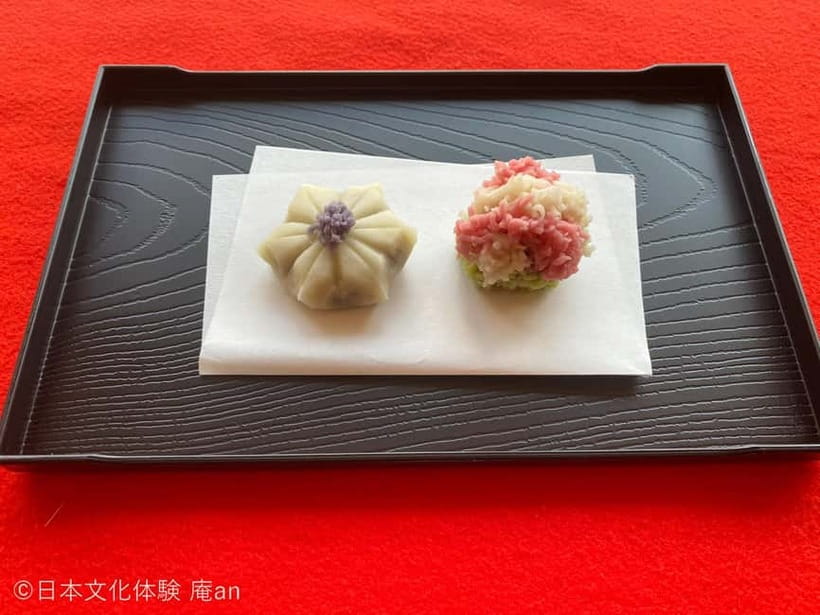
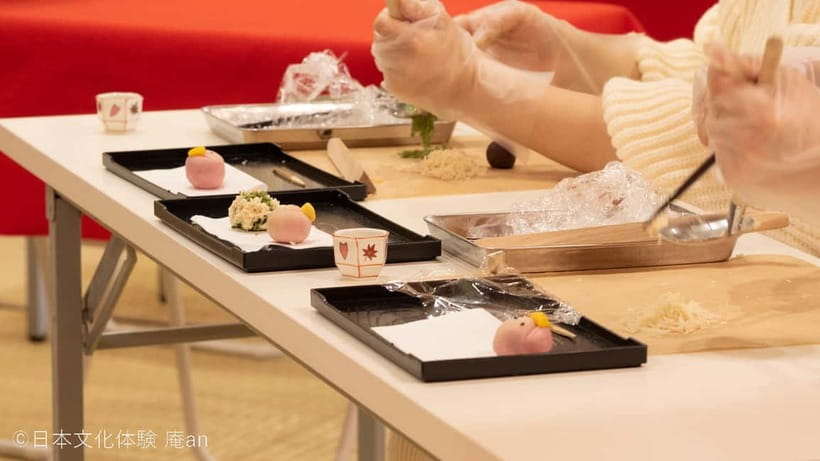
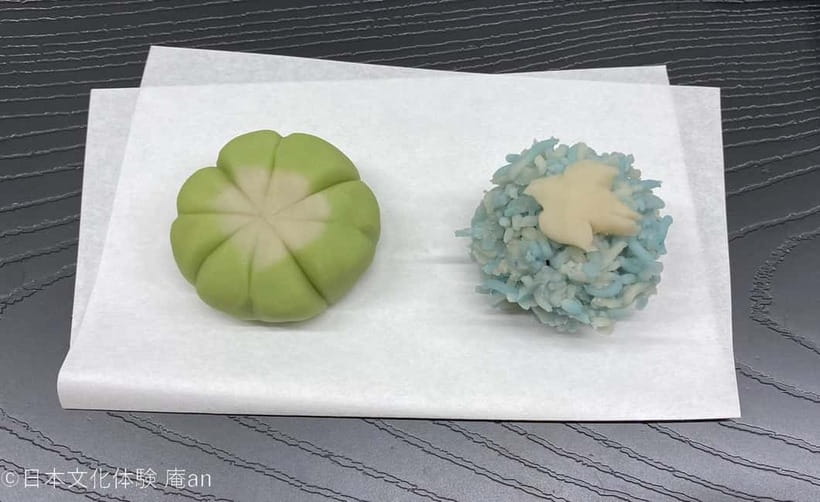
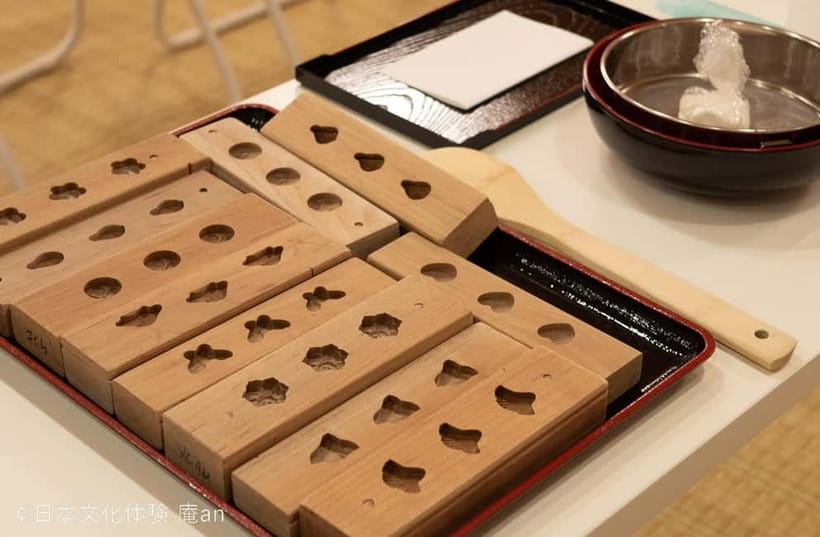
Nerikiri is the centerpiece of the workshop. You make two seasonal sweets from white and red bean paste supplied by long-established shops in Kyoto. The exact designs match the season, so the appearance of your sweets can change depending on when you visit.
The first is a flower-shaped nerikiri. The second is a kinton nerikiri. Kinton sweets have a more textured, thread-like appearance, so the two pieces give you different shaping tasks rather than repeating one simple method.
This is where the class becomes more hands-on. You need a light touch and some patience. The soft paste can be shaped, pressed, and refined, but it does not forgive rough handling. If your first attempt looks a little lopsided, that is part of the fun. Japanese confectionery is precise, and your fingers may need time to catch up with the instructor’s.
The use of Kyoto bean paste is an important detail. The paste is the main body of these sweets, so its flavor matters as much as the shape. The white and red bean versions also show you how Japanese sweets can use a mild sweetness rather than the heavier sugar hit common in Western desserts.
The seasonal element gives the activity a cultural point. A flower design is not just decoration. Japanese confectionery often reflects the time of year through color and form. You are not simply making a snack. You are making a small edible image of the season.
Expect this section to take the most concentration. One German participant found ohigashi easy, while the nerikiri required more delicacy. That is useful advice: do not rush this part, and do not compare your finished sweet too closely with the instructor’s model.
After the two nerikiri pieces are finished, there is another break. The scheduled timing places this pause at about 85 minutes into the program. It gives you a chance to relax before the tea portion.
Learning matcha without a formal ceremony headache
The final activity introduces matcha and the basics of a tea ceremony. The atmosphere is casual, which makes this a good first encounter for people who might feel nervous about formal etiquette.
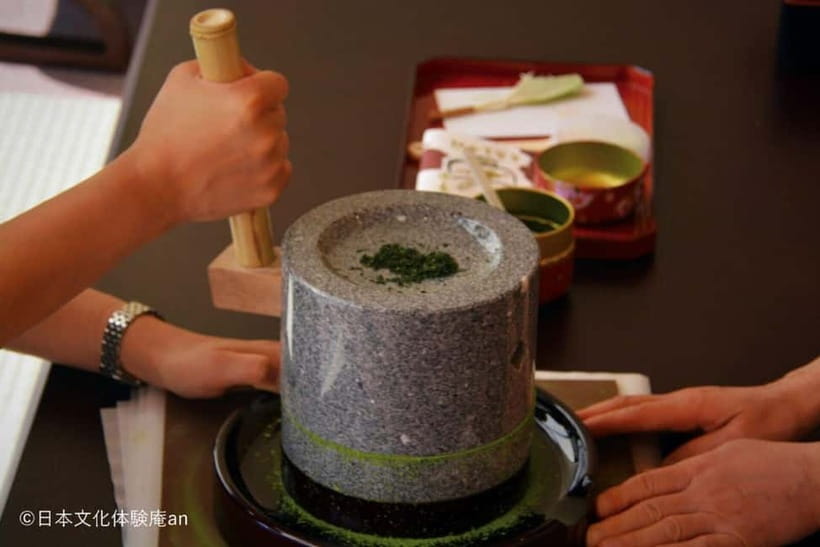
You begin with an explanation of tea, followed by a demonstration of grinding matcha. The activity uses single-origin special matcha, so the session includes more than a generic green tea pour. You see how matcha differs from ordinary green tea and learn why the powder is prepared in a distinct way.
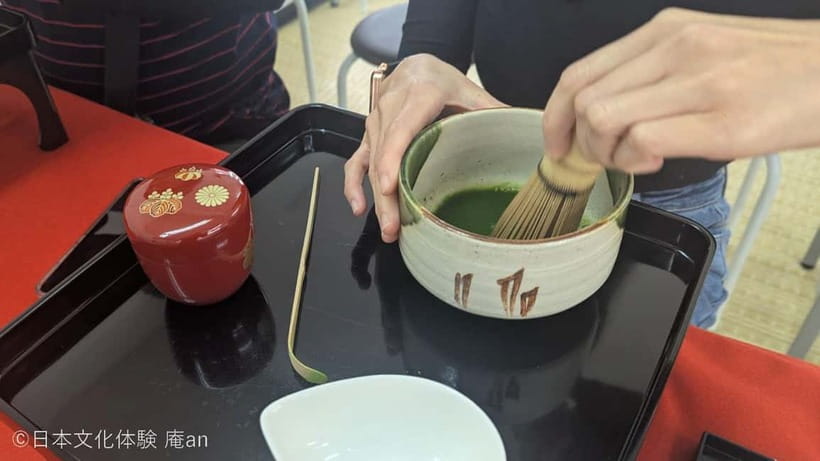
Then you make your own matcha. The key task is whisking the powder with hot water until it becomes foamy. This sounds simple, but it gives you a direct feel for the technique. The experience is less about producing a perfect bowl and more about understanding the movement and ritual.
This part is also where the sweets make sense. Ohigashi and nerikiri are traditionally served with tea because their sweetness balances matcha’s bitter, grassy flavor. You can eat what you made and drink the tea together, rather than treating the sweets and matcha as separate activities.
The tea section begins around the 95-minute mark. There is time for a picture session near the end, followed by eating and drinking before you leave at about 125 minutes.
More Tea Ceremonies in Tokyo
- Kimono Tea Ceremony at Tokyo, Asakusa Maikoya
★ 5.0 · 638 reviews - Tokyo: Traditional Tea Ceremony with a Tea Master
★ 5.0 · 528 reviews - Tea Ceremony Workshop in Tokyo by the Experienced Instrucor
★ 5.0 · 189 reviews - Asakusa: Kimono Tea Ceremony with Matcha and Sweet
★ 4.9 · 153 reviews
What the 125-minute schedule feels like
The schedule is tightly organized:
- Around 0 minutes: Introduction to Japanese sweets
- Around 0 to 20 minutes: Ohigashi making
- Around 20 to 30 minutes: Break
- Around 30 to 85 minutes: Flower-shaped nerikiri and kinton nerikiri
- Around 85 to 95 minutes: Break
- Around 95 to 115 minutes: Tea explanation, matcha grinding demonstration, and tea ceremony
- Around 115 to 125 minutes: Photos, tasting, and departure
This timing gives you a clear progression. You start with the simplest sweet, move to the most delicate work, then finish with tea. It also means the class does not leave you sitting through a long lecture before touching anything.
The two breaks are useful, especially if you are traveling with children or have packed several activities into the day. They also make room for the sweets to be prepared and the class to shift from one section to the next.
Do arrive on time. The event cannot be held for late arrivals, and the organizer does not compensate you for travel costs if you miss it. Tokyo travel can take longer than expected, so leave a proper buffer before the start time.
Language and instruction
The instructor is Japanese, and Japanese is the listed language. English translation is provided as much as possible. That wording is worth taking seriously. You should be able to follow the physical demonstrations, but not every explanation may be given in polished English.
The activity received strong marks for friendly instruction and clear help with English. The instructor also explains different kinds of Japanese sweets and the difference between green tea and matcha. Those details add value because you leave with a bit of context, not just a set of finished sweets.
Still, this is not the best choice if you need a fully English-language lecture. You will get the most from it if you are comfortable watching closely, copying hand movements, and asking simple questions.
The making itself crosses language barriers well. When the instructor presses, folds, or whisks, you can see what to do. The more abstract cultural explanations may require patience.
The flavor and texture lesson
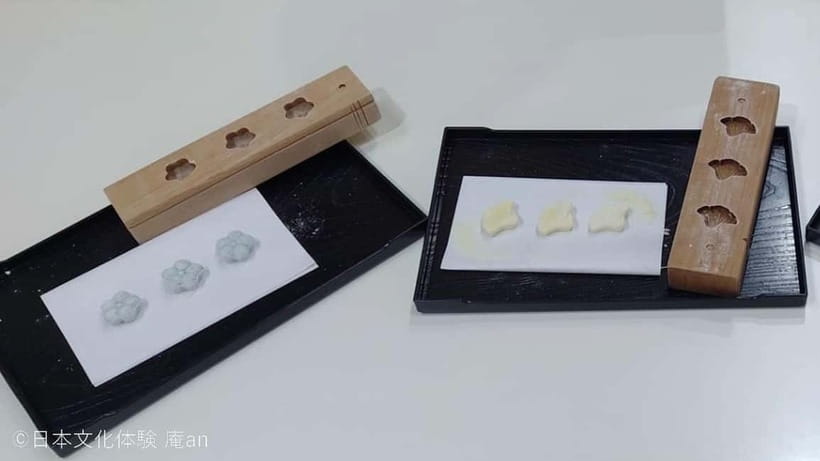
One quiet strength of this class is the contrast between the three sweets. Ohigashi is dry and fine. Nerikiri is soft, smooth, and bean-based. Kinton nerikiri adds a more delicate surface texture. Matcha brings bitterness and a light foam.
You may already know matcha from lattes or desserts, but this is a different taste. The tea is prepared as a powder whisked into water, so you drink the tea leaves rather than filtering them out. Pairing it with the sweets helps explain why traditional Japanese confectionery tends to be sweet but not overpowering.
The nerikiri is likely to be the favorite if you enjoy soft bean paste. One German participant particularly liked the taste of the finished nerikiri. If you prefer crunchy, baked, or creamy desserts, the texture may take some getting used to.
This is a culture class with food at its center, not a meal. The portions are designed for tasting and learning. Plan another meal afterward if you are hungry.
Extra costs, photos, and taking sweets home
The basic admission covers the three experiences, but a few optional items cost extra. A take-out box for the sweets is 100 yen. That is a small add-on if you want to carry your work away, though the sweets are also part of the tasting at the venue.
Adding color costs 200 yen. The activity already involves seasonal forms, but the color option may appeal if you want more control over the look of your sweets. A completion certificate costs 300 yen and is not needed for the experience itself.
There is picture time near the end. You can photograph the finished sweets and the tea setup, then eat and drink before departure. Since the program has a planned photo period, you do not need to spend the whole class trying to document every step.
If you want a keepsake, bring a little extra cash for the box or certificate. If not, the included experience remains straightforward at $28.
Who will enjoy this experience most
I would recommend this for:
- First-time visitors who want a hands-on introduction to Japanese culture
- Food lovers who want to make rather than simply sample sweets
- Couples or friends looking for a calm indoor activity
- Families with children old enough to follow shaping instructions
- Matcha beginners who want a relaxed introduction to tea ceremony
- Visitors who enjoy seasonal design and careful craft
Children under two who sit on a parent’s lap are free. Anyone who participates needs a booking, and people who are not taking part cannot enter the activity area.
This may not suit you if you want a fast tasting, a full meal, or a strict traditional tea ceremony. The tea section is intentionally casual. It teaches the basics and gives you a chance to prepare matcha, but it is not presented as a formal, highly ceremonial performance.
It also may not be ideal if you have no room for a two-hour activity in your Tokyo schedule. The session takes 125 minutes, plus the time needed to reach AN TOKYO Japanese Culture Experience.
Booking, timing, and cancellation advice
The operating hours are 10:00 to 17:00. Reservations received after 17:00 are processed the next day, so do not expect an immediate reply late in the evening.
You can reserve now and pay later, which is useful if your Tokyo plans are still shifting. Free cancellation is available up to 24 hours before the activity for a full refund.
The most important practical rule is punctuality. The class cannot wait for delayed arrivals, and missed transport costs are not covered. Check your route to the meeting point in advance and plan to arrive early enough to find AN TOKYO without rushing.
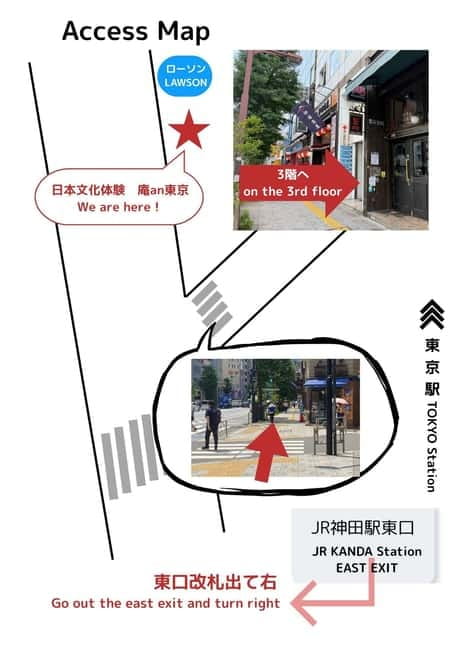
The meeting point is listed as AN TOKYO Japanese Culture Experience. No transport details are provided here, so confirm the exact address and start time when you book.
Should you book this Japanese sweets and tea class?
Book it if you want one compact activity that combines making, tasting, and cultural context. The mix of wasanbon ohigashi, two seasonal nerikiri, and matcha gives you more variety than a basic wagashi workshop or tea demonstration.
The $28 price is fair for 125 minutes of guided work, especially since the main materials are included. The Kyoto bean paste and single-origin matcha add substance to the activity, while the seasonal forms give it a clear Japanese identity.
Go in knowing that nerikiri takes a light touch and that English support may be partial. If you can follow demonstrations and enjoy a little trial and error, this is a pleasant, useful introduction to Japanese sweets. If you need a fully English class or a strict formal tea ceremony, choose with caution.
With a 4.6 rating from 26 reviews and repeated praise for the kind instruction, this is an easy pick for a first Japanese confectionery class. Bring patience, arrive early, and save room for the matcha pairing.
FAQ
How long does the Japanese sweets and tea experience last?
The experience lasts 125 minutes, or just over two hours.
How much does the experience cost?
The listed price is $28 per person.
What sweets will I make?
You will make one dried sweet called ohigashi and two seasonal nerikiri sweets. The nerikiri include a flower-shaped design and a kinton-style design.
What is ohigashi made from?
Ohigashi is made from wasanbon, a traditional Japanese sugar.
What are the nerikiri made from?
The nerikiri are made from white and red bean paste produced by long-established shops in Kyoto.
Is matcha included?
Yes. You will learn about tea, see a matcha grinding demonstration, prepare your own matcha, and take part in a casual tea ceremony.
What language does the instructor speak?
The instructor is Japanese, and Japanese is the listed language. English translation is provided as much as possible.
Can I take my sweets home?
Yes. A sweets take-out box is available for an additional 100 yen.
Are there other optional costs?
Adding color costs 200 yen, and an experience completion certificate costs 300 yen.
Can I cancel for a refund?
You can cancel up to 24 hours in advance for a full refund. The event cannot be held for late arrivals, and travel expenses are not compensated if you miss it.
Newly steeped around Tokyo
- Yokohama : Tea Ceremony with Sweets and Souvenir★ 5.0 · 5 reviews
- Walking Tour: Yanaka,Nezu& Sendagi: Tea Ceremony & Old Tokyo★ 5.0 · 3 reviews
- Private Mochi・Matcha sweets Making Class Near Shibuya Area★ 5.0 · 22 reviews
- 2 Hours Mochi &Nerikiri Making & Matcha Class in Bunkyo★ 5.0 · 21 reviews
- Private Kimono and tea ceremony at local home near Tokyo Disney★ 5.0 · 6 reviews
- Kimono and Tea Ceremony in Asakusa Private Food Tour With Guide★ 5.0 · 4 reviews
- Giant Sushi Cooking Class: Make a 1.5m Sushi Roll in Tokyo★ 5.0 · 9 reviews
- Tokyo Tea Ceremony Class at a Traditional Tea Room★ 5.0 · 2 reviews
Tea & Sweets Making, compared.

Matcha Making Class in Tokyo with Authentic Japanese Sweets Set
Read our review →
Tangier: Sunset, Tea, Sweets, Camel Ride, and Hercules Caves
Read our review →
Tokyo: Matcha Making Experience with Mochi Sweets in Asakusa
Read our review →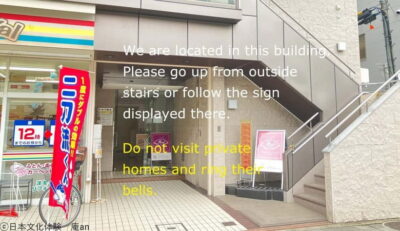
Kyoto: Japanese Traditional Sweets Making and Tea Ceremony
Read our review →
Osaka: Matcha Making Experience with Japanese Sweets
Read our review →
Make Traditional Nerikiri Sweets & Matcha experience in Shibuya
Read our review →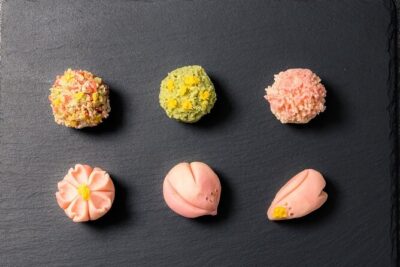
Sweets Making and Kimono Tea Ceremony at Tokyo Maikoya
Read our review →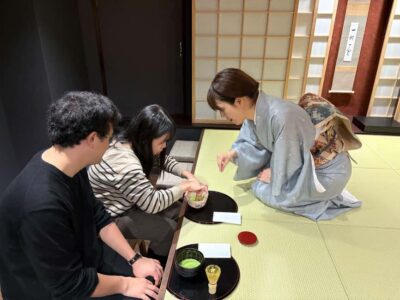
Kyoto: Traditional Tea Ceremony with Matcha & Sweets in Gion
Read our review →Browse the lists this tea experience appears in