
Review · KYOTO
Traditional Tea Ceremony with Matcha and Sweets in Kyoto
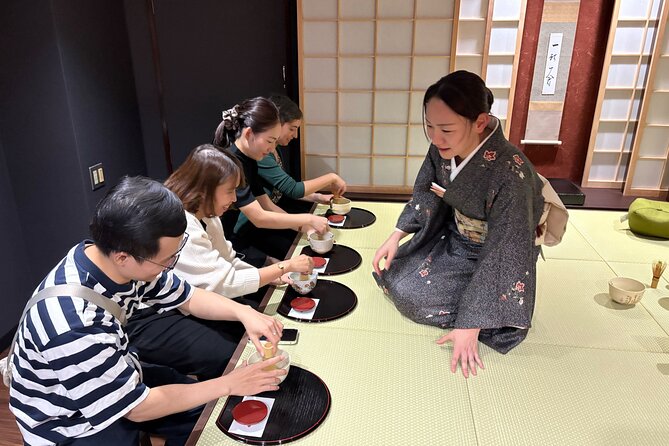
Kyoto’s tea ceremony can look solemn from the outside, but this one-hour Gion experience makes it easy to join in. You sit on chairs, watch a tea master perform the ritual up close, learn why Zen shaped chanoyu, then whisk your own bowl of matcha.
I like the mix of explanation and hands-on practice. I also like the thoughtful food detail: sweets come from long-established artisans, while the matcha comes from a family-run farm. The possible drawback is the short format. You get a clear introduction, not a full study of tea ceremony etiquette.
- Watch the ceremony at close range: A tea master demonstrates the graceful movements before you try matcha yourself.
- Learn the meaning behind the ritual: The session covers tea history, Zen philosophy, and omotenashi, or Japanese hospitality.
- Taste Kyoto sweets: Carefully selected traditional sweets balance the strong, grassy taste of matcha.
- Sit comfortably on chairs: You can take part without kneeling on a tatami floor.
- Keep the group small: The maximum is 13 people, giving the session a personal feel.
- Meet in Gion: The activity begins and ends at 1 Yamatocho, Higashiyama Ward, near public transportation.
A Gentle Introduction to Tea in Gion
The meeting point is in Kyoto’s Gion district, an area closely linked with traditional arts, teahouses, and old Kyoto culture. The address is 1 Yamatocho, Higashiyama Ward, in the Gion Tanakaya Building.
This location matters because the setting gives the subject some context before the session even begins. You are not learning about tea in an anonymous conference room. You are in one of Kyoto’s best-known traditional districts, where the city’s older customs still shape the feel of the streets.
The exact surroundings and interior details are not specified, so I would treat the address as a practical meeting point rather than expect a grand tea house. Bring the mobile ticket shown at booking, and allow enough time to find the building in Gion.
The activity lasts about an hour and ends where it starts. That makes it easy to fit between sightseeing stops, especially if you are spending the day around Higashiyama. It also means you should arrive ready to listen and participate, since there is little spare time for a late start.
Watching a Tea Master Before You Try
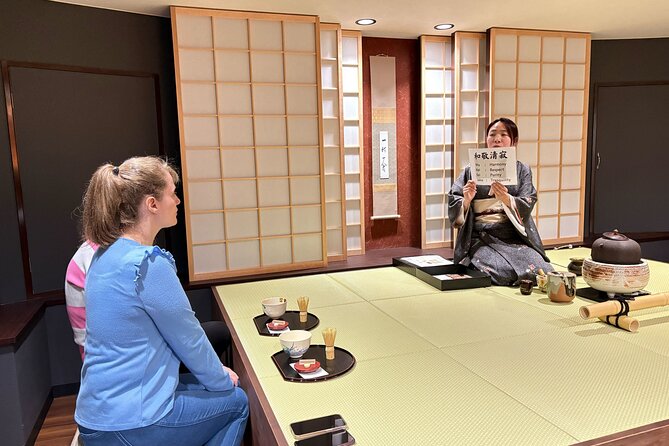
The first part focuses on demonstration and explanation. A tea master shows you the controlled movements of chanoyu, the Japanese tea ceremony, while explaining the ideas behind them.
This is important. Matcha preparation is not simply a matter of stirring green powder into hot water. The order of movements, the handling of utensils, and the attention given to the person receiving tea all carry meaning. Watching the process first helps you understand what you are doing later.
The session also explains how tea developed in Japan and how Zen philosophy shaped the ceremony. You learn about the value of focus, calm, respect, and presence. The emphasis is not only on the drink, but on the way tea creates a quiet exchange between host and guest.
The experience has been led by instructors including Mitsune and Yuki. Yuki, in particular, is noted for explaining the philosophy with a clear personal connection to the practice. If you enjoy cultural activities that explain the ideas behind a custom, this part should be more useful than a simple demonstration with no context.
The teaching is designed for newcomers. You do not need prior knowledge of Japanese tea ceremony, and you are not expected to know the correct gestures before arriving. That makes this a good first encounter rather than a test of etiquette.
More Matcha Experiences in Kyoto
- Kyoto: Arashiyama Bamboo Forest, Monkeys, Matcha & Temple Tour
★ 5.0 · 759 reviews - Kyoto: Tea Ceremony Meditation – Make Matcha with Tea Master
★ 4.8 · 406 reviews - Kyoto: Kimono Tea Ceremony with Matcha and Sweet
★ 4.9 · 249 reviews
Learning Omotenashi Through a Bowl of Tea
One useful idea introduced during the session is omotenashi, the Japanese spirit of hospitality. In tea ceremony, hospitality is shown through care, preparation, timing, and attention to the person receiving the tea.
This gives you a better way to read the ritual. A quiet bow or carefully placed bowl is not empty formality. It reflects the host’s effort to create a respectful moment for the other person.
I like this approach because it gives the ceremony a human center. You are not asked to admire complicated movements simply because they are old. You are shown how those movements express thoughtfulness.
The experience also presents tea ceremony as something approachable. Traditional chanoyu is often associated with strict rules and formal rooms. Here, the teaching focuses on understanding and participation, so you can appreciate the art without feeling intimidated.
That relaxed tone does not make the ceremony casual in a careless way. Instead, it gives you a way to notice small details. The slower pace, careful preparation, and repeated gestures become easier to appreciate once you understand their purpose.
Traditional Sweets Before Your Own Matcha
The second half includes traditional Japanese sweets selected from long-established artisans. These are not just a small extra with your drink. Sweets play an important role in the tea experience because their sweetness prepares your palate for matcha.
Matcha has a strong, vegetal taste that can surprise you if you have only tried sweetened green tea drinks. The confection helps balance that flavor. Pay attention to the contrast between the delicate sweetness and the sharp, earthy tea.
The details of the individual sweets are not specified, so you should not expect a particular pastry or seasonal design. What you can expect is a traditional sweet chosen to work with matcha and to introduce you to an important part of Japanese tea culture.
This is one reason the experience offers more value than a basic cup of green tea. You are learning how the food and drink work together, not simply sampling matcha on its own.
If you have a sweet tooth, this part may be a highlight. If you prefer a full meal, keep your expectations in check. The sweets are part of the ceremony, not a substitute for lunch.
Whisking Premium Matcha From a Family Farm
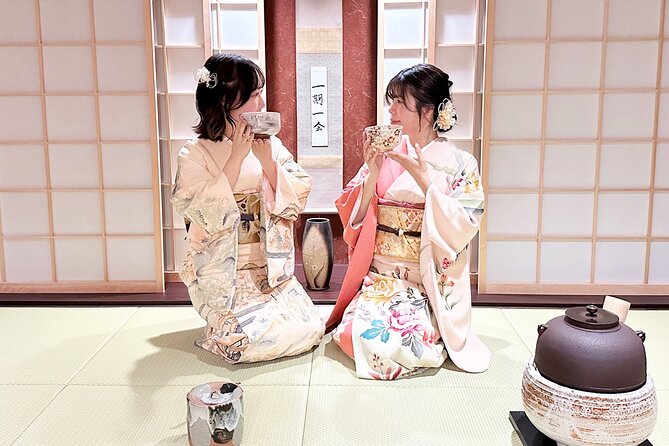
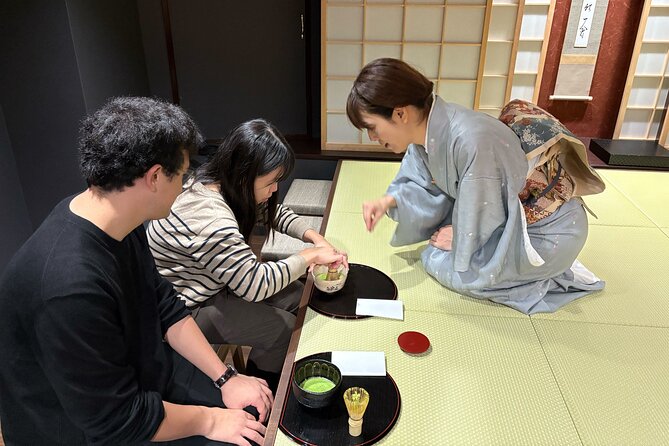
After watching the demonstration, you make your own bowl of matcha. The tea is sourced from a family-run farm, and the activity gives you a chance to handle the preparation yourself.
This hands-on step is what turns the session from a talk into a practical cultural experience. You see the difference between observing a ceremony and taking part in one. The process also gives you a better sense of the skill involved, since even a simple-looking bowl depends on controlled whisking.
You will be guided through the preparation rather than left to guess. The exact utensils and sequence are not described, so I would not arrive expecting a specialist lesson in every tool or school of tea. Think of it as a well-supported first practice.
Your finished bowl may not look as polished as the tea master’s. That is part of the value. When you try it yourself, you notice how much care goes into creating a smooth, balanced drink.
The matcha is described as premium and family-farm sourced. You can expect the tea itself to be a serious part of the session, not a generic green powder added as an afterthought. Several comments specifically praised the flavor, though taste remains personal and matcha can be an acquired taste.
More Tea and Sweets Making in Kyoto
- Kyoto: Japanese Traditional Sweets Making and Tea Ceremony
★ 4.4 · 314 reviews - Kyoto: Traditional Tea Ceremony with Matcha & Sweets in Gion
★ 4.9 · 27 reviews - 2 Types of Japanese Sweets making and Tea Ceremony
★ 4.6 · 17 reviews - Kyoto near Fushimiinari Wagashi making&Small Group Tea Ceremony
★ 5.0 · 14 reviews
A Short Format With Plenty to Take In
At about one hour, this is a compact activity. I see that as both a benefit and a limit.
The benefit is easy planning. You can add it to a day of temples, shrines, and Gion walks without giving up half a day. It works well for a first morning activity, a midday pause, or a cultural stop before dinner.
The limit is that you cannot cover every part of tea ceremony in depth. Japanese tea has many schools, rules, utensils, seasonal ideas, and forms of etiquette. This experience offers an introduction to the core spirit and a chance to prepare matcha, but it will not make you an expert.
The shorter version may suit you if you want substance without a long formal sitting. One comment specifically appreciated the concise presentation. If you already study chanoyu or want a highly traditional, extended ceremony, you may find the format too basic.
For most first-time visitors, the balance is sensible. You get history, philosophy, demonstration, sweets, practice, and questions in a single hour.
Chairs Make the Ceremony Easier to Join
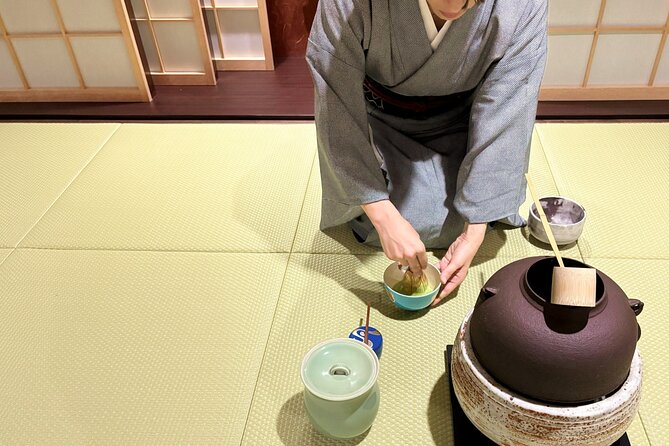
A major practical feature is the seating. You take part from chairs rather than sitting on the floor.
That matters for anyone unfamiliar with floor seating, and it helps if you have limited mobility or simply do not enjoy kneeling. You can focus on the ceremony instead of worrying about your legs, posture, or how to stand up afterward.
The chair seating also makes the activity more welcoming for mixed groups. One person may be eager to try a traditional custom while another may be nervous about physical discomfort. Here, both can take part together.
This does slightly change the physical feel of a traditional tea setting. If your ideal experience involves kneeling on tatami in a formal tea room, this modern arrangement may feel less traditional. The tradeoff is comfort and access, and for a short introductory class, I think that is a fair exchange.
The activity is near public transportation, and the group is capped at 13 people. That is small enough to keep the demonstration visible and the questions manageable, though it is not a private lesson.
Questions at the End Help Tie It Together
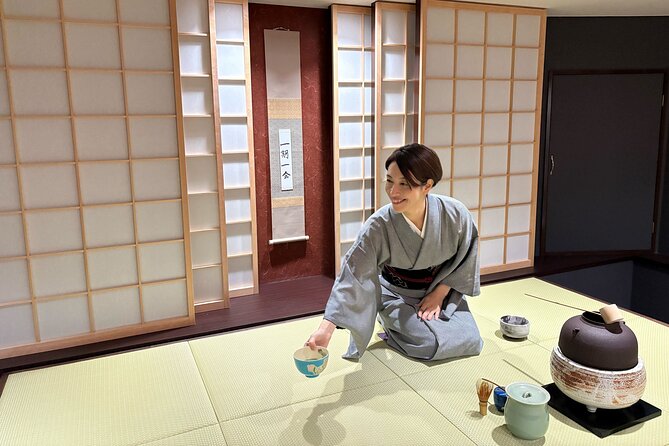
The session finishes with a question-and-answer period. This is a useful close because tea ceremony raises practical questions that may not occur to you during the demonstration.
You can ask about the movements, the philosophy, the tea itself, or details of Japanese customs discussed during the session. The exact length of the question period is not stated, so I would view it as a final chance for clarification rather than a long private consultation.
The instructors’ passion is an important part of the experience. Mitsune is praised for making the history and preparation approachable, while Yuki is noted for her insight into the ceremony’s philosophy. Those teaching strengths matter because the quality of a cultural activity often rests on how well the guide explains small details.
A good demonstration can show you what happens. A good teacher also helps you understand why it happens. This experience aims for both.
Is $22.86 Good Value?
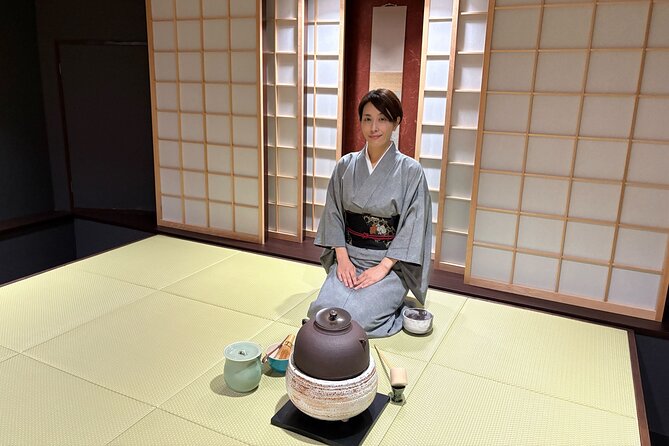
At $22.86 per person, the price is reasonable for a one-hour cultural activity in central Kyoto. You receive instruction, a tea ceremony demonstration, traditional sweets, your own matcha preparation, and a question period.
The value is strongest if you want participation rather than a photo opportunity. You are not only watching someone make tea. You are learning the background, tasting the traditional pairing, and preparing a bowl yourself.
The price is less compelling if you only want to drink matcha or see a quick ritual. Kyoto has many places where you can buy tea and sweets at a lower cost. This activity earns its price through the teaching and guided practice.
The maximum group size of 13 also helps. It is not an intimate one-on-one class, but it is small enough that the experience should feel more focused than a large demonstration.
Free cancellation is available if you cancel at least 24 hours before the start time. Changes or cancellations made within 24 hours are not accepted for a refund, so keep that deadline in mind when arranging a packed Kyoto schedule.
Who Should Book This Kyoto Tea Ceremony?
I would recommend this activity if you want a clear first step into Japanese tea culture. It suits first-time visitors, returning visitors who missed tea ceremony on an earlier trip, and anyone who likes understanding the ideas behind a custom.
It is also a good choice for people who prefer active cultural experiences. You are not merely sitting quietly while someone else performs. You watch, taste, whisk, and ask questions.
Families and mixed-age groups may appreciate the chair seating, though the supplied information does not specify a minimum age or child policy. Anyone with mobility concerns should still judge the full route to and from the meeting point for themselves.
You may want something else if you seek a long, highly formal ceremony or a specialist lesson in a particular tea school. The one-hour format is intentionally welcoming and compact.
Should You Book It?
Book this tea ceremony if you want a friendly, practical introduction to chanoyu in Gion. The strongest reasons are the hands-on matcha preparation, the explanation of Zen and hospitality, the artisan sweets, and the comfortable chair seating.
I would skip it only if you want an advanced or lengthy ceremony, or if your main goal is simply to buy a cup of green tea. For $22.86, this is a useful way to slow down, learn the meaning behind a familiar Kyoto tradition, and take part rather than just watch.
FAQ
Where does the tea ceremony take place?
It begins at 1 Yamatocho, Higashiyama Ward, Kyoto 605-0802, in the Gion Tanakaya Building. The activity ends back at the meeting point.
How long does the experience last?
The tea ceremony lasts approximately one hour.
Do I need experience with Japanese tea ceremony?
No. The session is designed to be approachable for people unfamiliar with chanoyu. You learn the history and ideas behind the ceremony, watch a demonstration, and then prepare your own matcha.
Will I need to sit on the floor?
No. The experience uses chairs, making it easier for people who are unfamiliar with floor seating or have limited mobility.
What is included in the experience?
You learn about Japanese tea history, Zen philosophy, and omotenashi, watch a tea master, taste traditional sweets, prepare your own bowl of matcha, and take part in a final Q&A.
How many people can join the activity?
The maximum group size is 13 people.
More Tea Ceremonies in Kyoto
- Kyoto: Tea Ceremony in a Traditional Tea House in Kiyomizu
★ 4.9 · 3,519 reviews - Kyoto: Tea Ceremony Ju-An at Jotokuji Temple
★ 4.9 · 3,207 reviews - Kyoto: 45-Minute Tea Ceremony Lesson Experience
★ 4.3 · 2,378 reviews - Kyoto: Table-Style Tea Ceremony at a Kyo-Machiya
★ 4.9 · 1,211 reviews
Newly steeped around Kyoto
- Whisk Your Own Matcha: A Zen Matcha Experience at Temple★ 3.6 · 7 reviews
- Kyoto: Authentic Tea Ceremony in a Small Group★ 5.0 · 7 reviews
- Tea ceremony at Kyoto’s Zen Temple Teahouse★ 5.0 · 2 reviews
- Uji Walking Tour – Byodo-in temple and Tea Ceremony from Kyoto★ 3.5 · 3 reviews
- Tea Ceremony Experience in Traditional Kyoto Townhouse★ 5.0 · 19 reviews
- Tea Ceremony in 150 Years Old Townhouse with Tables and Chairs★ 5.0 · 22 reviews
- Silent Beauty of Kyoto Zen Walk and Tea Experience★ 5.0 · 2 reviews
- Traditional Tea Ceremony in Kyoto★ 4.5 · 3 reviews
Tea & Sweets Making, compared.
Matcha Making Class in Tokyo with Authentic Japanese Sweets Set
Read our review →
Tangier: Sunset, Tea, Sweets, Camel Ride, and Hercules Caves
Read our review →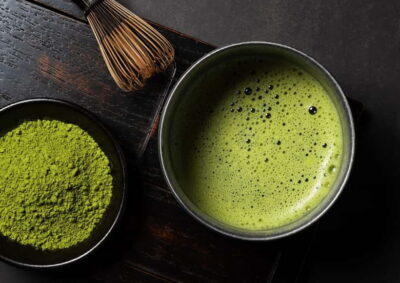
Tokyo: Matcha Making Experience with Mochi Sweets in Asakusa
Read our review →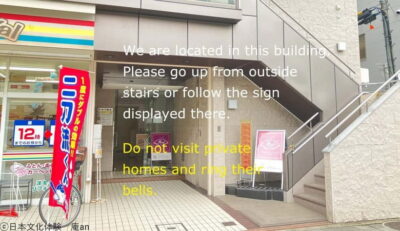
Kyoto: Japanese Traditional Sweets Making and Tea Ceremony
Read our review →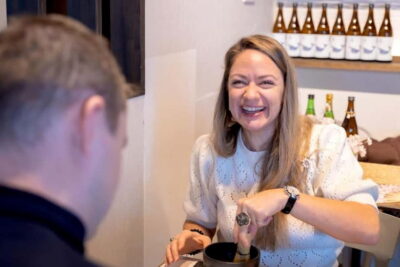
Osaka: Matcha Making Experience with Japanese Sweets
Read our review →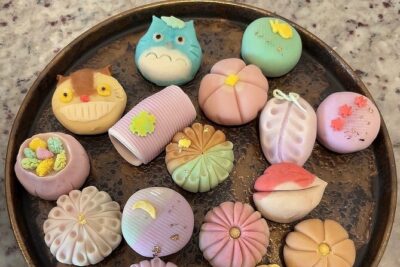
Make Traditional Nerikiri Sweets & Matcha experience in Shibuya
Read our review →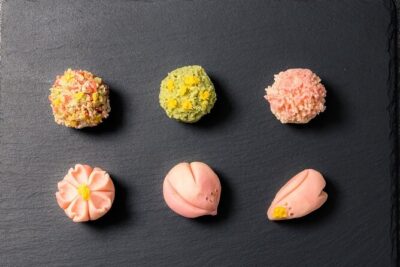
Sweets Making and Kimono Tea Ceremony at Tokyo Maikoya
Read our review →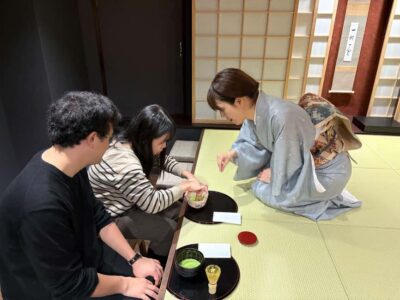
Kyoto: Traditional Tea Ceremony with Matcha & Sweets in Gion
Read our review →Browse the lists this tea experience appears in