
Review · TOKYO
Japan’s Customs of Ikebana Art, Tea Ceremony & Kimono Welcome
The most appealing part of this Tokyo experience is its combination of ikebana and matcha in one small, private lesson. You do not simply watch a ceremony from the sidelines. You learn how to place seasonal flowers, prepare your own tea, and enjoy both in a traditional Japanese home with a garden.
I like the calm setting and the gentle pace. I also like that you can sit on tatami mats or use regular chairs, a useful choice if floor seating is uncomfortable. The main drawback is the price: at $173.34 per person for 1 hour and 45 minutes, this is a premium cultural activity, especially since kimonos and equipment are not included.
Key points to know before booking
- Two Japanese arts in one visit: Learn the basics of ikebana and matcha preparation during a single private session.
- Seasonal flower arranging: Create your own arrangement after watching a professional demonstrate the craft.
- Traditional home setting: Meet your instructor in a Japanese house with a garden rather than in a large commercial venue.
- Flexible seating: Choose authentic tatami mats or regular chairs during the lesson.
- Private format: Only your group participates, allowing the instructor to give direct help.
- Easy station access: Meet near Toritsu-daigaku Station in Meguro City, with the activity returning to the same point.
A quiet introduction to two Japanese traditions
This is a compact cultural lesson designed for people who want more than a quick photo opportunity. In less than two hours, you get hands-on time with flowers, tea utensils, matcha, and Japanese sweets.
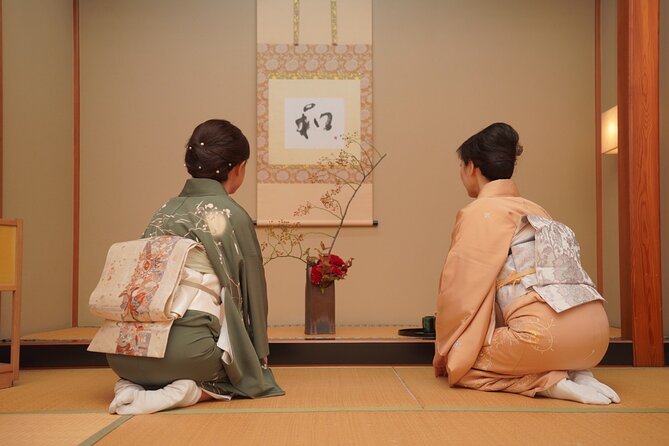
The setting matters. You meet at a traditional Japanese home near Toritsu-daigaku Station, in the Meguro area of Tokyo. The instructor welcomes you in a kimono, which sets the tone before the lesson even begins. You are entering a domestic-style space rather than a hotel conference room or a busy sightseeing venue.
That makes the activity especially appealing if you want a slower hour in Tokyo. It gives you a chance to notice small details: the tatami, the garden, the flower arrangement, and the deliberate movements involved in preparing tea. The lesson is still structured, but it does not sound rushed.
The activity is private, so only your own group takes part. That is a real advantage for beginners. You can ask questions, request help with your flower arrangement, and take your time without feeling watched by a large class.
More Kimono and Tea Ceremonies in Tokyo
- Kimono Tea Ceremony at Tokyo, Asakusa Maikoya
★ 5.0 · 638 reviews - Tokyo: Matcha and Kimono Experience
★ 4.7 · 219 reviews - Tokyo: Asakusa Kimono Dressing and Matcha Experience
★ 4.9 · 173 reviews
Meeting the instructor near Toritsu-daigaku Station
Your starting point is 1-chōme-5-1 Nakane, Meguro City, Tokyo 152-0031, Japan, near Toritsu-daigaku Station. The area is served by public transportation, but you should still allow enough time to find the exact address. A traditional home can be harder to identify than a hotel lobby or major attraction.
The activity begins and ends at the same meeting point. That keeps the logistics simple, especially if you are fitting this lesson between other plans in Tokyo. You do not need to arrange a separate return transfer after the tea and flower session.
The available operating period is listed from January 16, 2025, through November 26, 2026, with hours from 8:30 AM to 8:00 PM daily. Your exact start time will depend on the booking you make. Since the setting is a private home, arriving on time is particularly important.
Entering the traditional home and choosing your seat
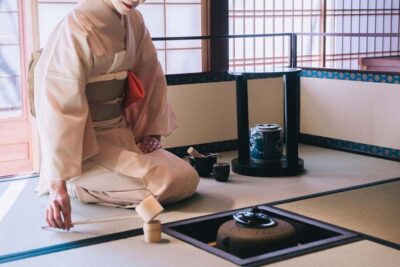
At the house, a kimono-clad instructor welcomes you. The clothing is part of the atmosphere, but it is not a costume rental for you. Kimonos are specifically not included, so do not book this expecting a dress-up session.
You can sit on tatami mats in the traditional style or use a regular chair. I like this option because it lets you enjoy the Japanese setting without forcing you into a position that may be uncomfortable. If you have trouble sitting on the floor, tell the instructor when you arrive and choose the chair.
The house and garden provide a more personal backdrop than a standard classroom. You can appreciate the connection between Japanese arts and the home environment, where flowers, tea, and seasonal details have long been part of everyday cultural life.
The overall mood should suit you if you prefer quiet activities. This is not a loud group show, a food crawl, or a fast-moving sightseeing stop. You will spend most of the session seated and focused on a small set of carefully explained actions.
Watching the ikebana demonstration
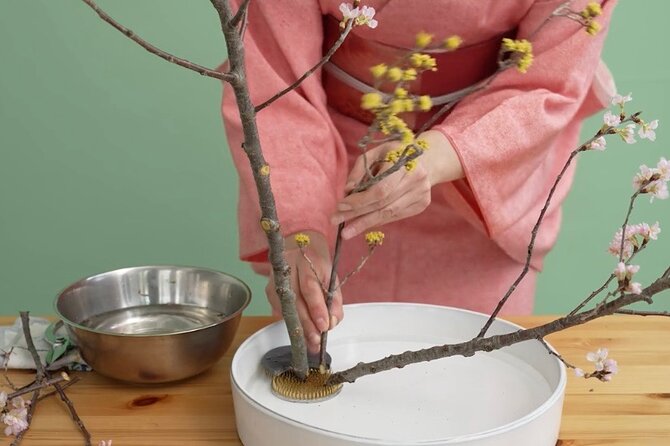
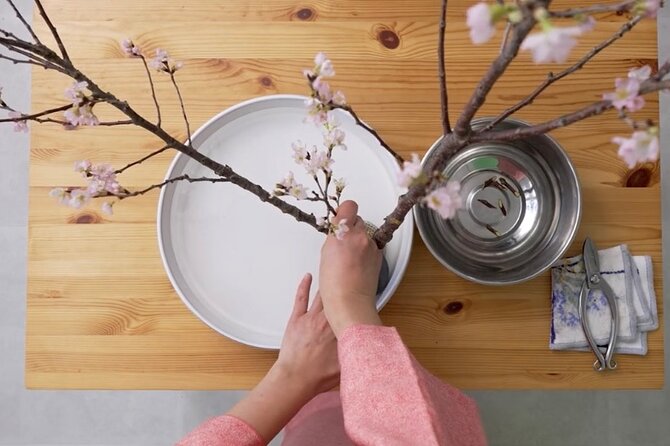
The flower portion begins with a demonstration by a professional ikebana artist. Before you touch the flowers, you can watch how the arrangement is built and how the artist considers shape, placement, and balance.
Ikebana is not simply putting flowers into a vase. The form of the branches, the spaces between the stems, and the direction of each piece all matter. The demonstration gives you a useful visual guide before you try the work yourself.
The flowers are seasonal, which adds a changing element to the activity. You will not be working with a fixed display that looks the same all year. The plant material reflects the time of your visit, so the arrangement becomes a small reminder of the season in Tokyo.
For a beginner, this stage is important. At first, you may feel unsure about cutting, placing, or adjusting the flowers. The instructor explains the process in an accessible way, and the teaching style is suited to people with no previous experience. A past participant specifically found the instructions easy to follow after feeling nervous at the start.
That is useful advice: do not worry about arriving with artistic skill. You are there to learn a basic form, not to produce a museum-quality arrangement. The pleasure comes from making decisions yourself and seeing the flowers take shape.
More Tea Ceremonies in Tokyo
- Tokyo: Traditional Tea Ceremony with a Tea Master
★ 5.0 · 528 reviews - Tea Ceremony Workshop in Tokyo by the Experienced Instrucor
★ 5.0 · 189 reviews - Asakusa: Kimono Tea Ceremony with Matcha and Sweet
★ 4.9 · 153 reviews - Tea Ceremony Experience in a Private Tea Room in Shibuya
★ 4.9 · 125 reviews
Creating your own seasonal flower arrangement
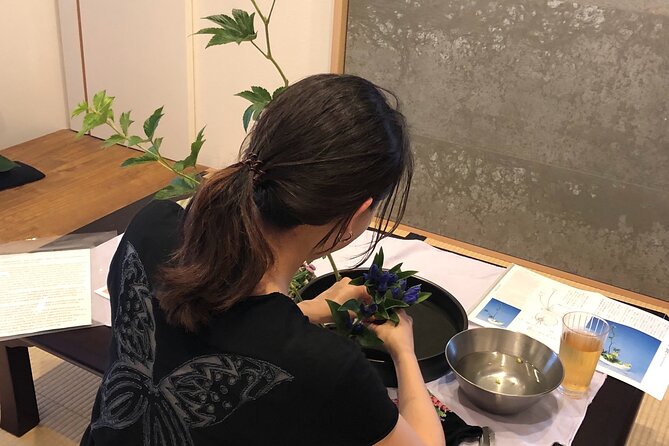
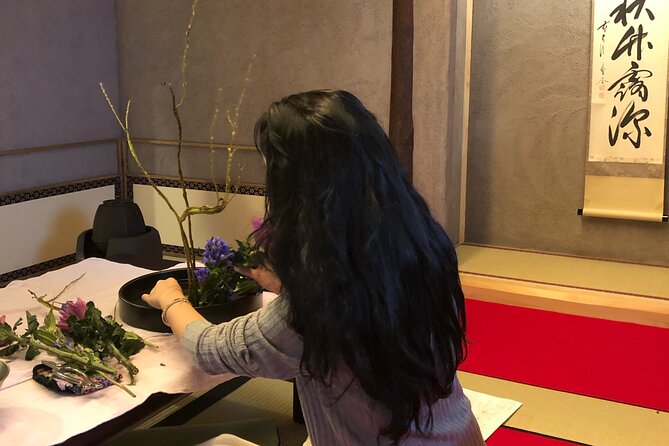
After the demonstration, you create an ikebana arrangement of your own. This is the most hands-on part of the visit, and it gives the activity more value than simply watching a professional work.
You will need to consider where each flower or branch belongs. The instructor can guide you as you work, helping you adjust the composition. Since the session is private, the advice can be directed to your group rather than delivered to a room full of beginners moving at different speeds.
The finished arrangement becomes part of the experience you can look at while enjoying your tea. That connection is a nice touch: you are not completing one activity and immediately forgetting it. Your flowers remain in view as you move into the next part of the lesson.
The supplied information does not say that the arrangement can be taken home, so you should not assume that it is a souvenir you can carry through the rest of your Tokyo trip. The same caution applies to equipment. Ikebana and tea equipment are listed as not included, which means you should treat the tools as part of the lesson rather than personal items provided with your booking.
Preparing matcha and tasting Japanese sweets
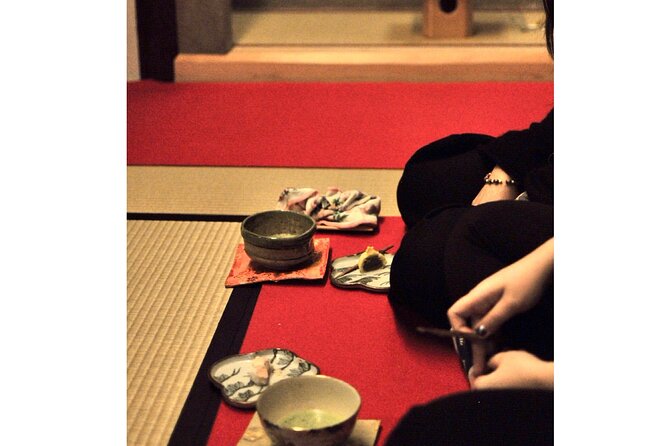
The second part introduces you to matcha preparation. You learn how to prepare the tea, then drink the matcha you have made with Japanese sweets.
This is a hands-on tea lesson rather than just a cup served to you. The simple actions of preparing the powder and making the drink help you understand the care behind the ceremony. You are not expected to arrive as a tea practitioner. The instructor leads you through the process.
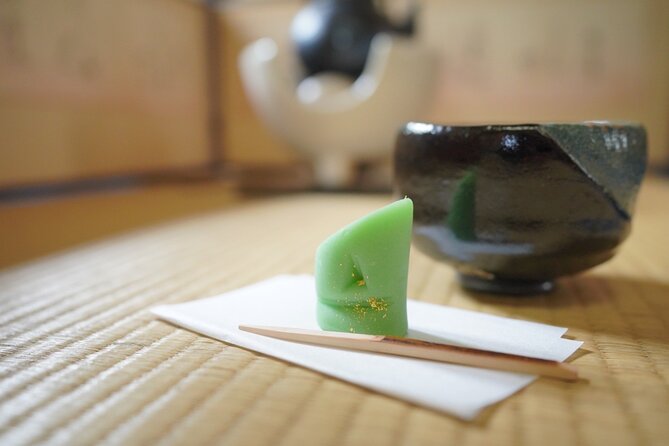
The sweets are an important part of the tasting. Japanese sweets are commonly paired with matcha because their sweetness balances the tea’s stronger, earthy flavor. Here, the sweets are included along with the matcha, so there is no separate snack purchase during the activity.
I would approach this portion with patience. The point is not to gulp down a drink and move on. You prepare the tea, taste it, and take in the setting. You can also look at your flower arrangement while you drink, which ties the two lessons together.
The experience description refers to the drink as Japanese match tea, but the activity is presented as a matcha tea ceremony. Expect matcha and Japanese sweets rather than a full meal. If you need lunch or a substantial snack, plan that separately.
Why the private format matters
Private activities can be costly, but this is where some of the price is easier to understand. At $173.34 per person, the session is not a bargain for a short class. Still, you are paying for a personal setting, direct instruction, a traditional house, a garden, both cultural activities, matcha, and sweets.
The value improves if you are traveling as a small group that wants a focused cultural lesson. You do not have to wait for a large class to finish a demonstration or compete for the instructor’s attention. Beginners can ask basic questions without feeling self-conscious.
The private arrangement also suits families, couples, or friends with different comfort levels. One person can use a chair while another sits on tatami. Someone who feels nervous about arranging flowers can receive extra guidance. The only group participating is yours.
On the other hand, solo visitors should look closely at the price before booking. The per-person cost may feel high for 1 hour and 45 minutes, particularly when kimonos and equipment are not included. If you want a broad overview of Japanese culture, a museum or larger cultural program may cover more topics for less money.
This activity makes the most sense when you specifically want personal instruction in ikebana and matcha, not simply a general introduction to Tokyo.
A good fit for first-time learners
You do not need previous experience with flower arranging or tea preparation. The lesson is designed to teach both arts from the beginning, and the instruction is described as kind and easy to follow.
That makes it a good choice if you feel nervous about formal Japanese customs. The setting may look elegant, but the lesson is not presented as an examination of etiquette. You are there to learn, make an arrangement, prepare tea, and enjoy the process.
It also suits visitors who want a quieter activity after several busy days in Tokyo. You will not be walking long distances between stops, and the entire experience lasts about 1 hour and 45 minutes. The regular-chair option adds comfort for anyone who does not enjoy sitting on the floor.
The session may be less suitable if you want a lively group atmosphere, a full kimono makeover, or a longer craft workshop. The kimono belongs to the instructor, and the listed inclusions do not cover rental clothing or personal equipment.
What the strongest praise tells you
The most consistent strengths are the combination of activities, the seasonal flowers, and the teacher’s approachable instruction. One participant began nervous but found the directions simple enough to follow. That is exactly the kind of detail that matters for a beginner deciding if this is too formal or intimidating.
Another participant described the plan as luxurious and said the teacher was kind and effective at teaching. The session passed quickly, which suggests that the two-part format keeps the hour and 45 minutes active without feeling overloaded.
The experience may even encourage you to continue studying ikebana or tea after your visit. You will only receive an introduction, not a complete course, but the lesson can show you if these traditions interest you enough to practice further.
The high rating from the two available reviews is encouraging, though the sample is small. I would treat it as evidence of a well-received personal lesson, not as proof that every visitor will find the price right for them.
Practical details that affect your decision
You receive booking confirmation at the time of reservation. The ticket is mobile, so you can keep the booking on your phone rather than printing it.
The activity is listed as available every day during the stated operating period, from 8:30 AM to 8:00 PM. Exact availability still depends on the time you select, so check the booking details carefully.
Cancellation rules are strict. The experience is non-refundable and cannot be changed for any reason. If your Tokyo plans may shift, this is an important concern. Do not reserve until you are confident about the date and time.
The activity ends where it begins, near Toritsu-daigaku Station. Transportation is not listed as included, but the meeting point is near public transportation. Kimonos, ikebana equipment, and tea equipment are not included, while matcha and Japanese sweets are included.
Should you book this Tokyo cultural lesson?
Book it if you want a small, private introduction to ikebana and matcha in a traditional home. The seasonal flowers, direct teaching, kimono welcome, garden, and flexible seating give the activity a personal feel that a standard sightseeing stop may lack.
Think twice if you are mainly looking for a low-cost activity, a full kimono rental, or a long workshop. The price is high for the length, and the strict cancellation policy leaves little room for a changed schedule.
For the right visitor, this is a focused and memorable way to spend part of a Tokyo day. You leave with a better sense of how flowers and tea can shape a Japanese cultural experience, plus the satisfaction of having made both the arrangement and the matcha yourself.
FAQ
Where does the experience begin?
It begins at 1-chōme-5-1 Nakane, Meguro City, Tokyo 152-0031, Japan, near Toritsu-daigaku Station.
Where does the activity end?
The activity ends back at the meeting point.
How long does the experience last?
The experience lasts approximately 1 hour and 45 minutes.
Is the activity private?
Yes. Only your group participates in the activity.
Can I sit on a chair instead of the floor?
Yes. You can sit on authentic tatami mats or use regular chairs.
Is a kimono included?
No. Kimonos are not included. The instructor welcomes you wearing a kimono.
Are ikebana and tea equipment included?
No. Ikebana and tea equipment are listed as not included.
Are matcha and Japanese sweets included?
Yes. Japanese matcha tea and Japanese sweets are included.
Can I cancel or change the booking?
No. The experience is non-refundable and cannot be changed for any reason.
Newly steeped around Tokyo
- Yokohama : Tea Ceremony with Sweets and Souvenir★ 5.0 · 5 reviews
- Walking Tour: Yanaka,Nezu& Sendagi: Tea Ceremony & Old Tokyo★ 5.0 · 3 reviews
- Private Mochi・Matcha sweets Making Class Near Shibuya Area★ 5.0 · 22 reviews
- 2 Hours Mochi &Nerikiri Making & Matcha Class in Bunkyo★ 5.0 · 21 reviews
- Private Kimono and tea ceremony at local home near Tokyo Disney★ 5.0 · 6 reviews
- Kimono and Tea Ceremony in Asakusa Private Food Tour With Guide★ 5.0 · 4 reviews
- Giant Sushi Cooking Class: Make a 1.5m Sushi Roll in Tokyo★ 5.0 · 9 reviews
- Tokyo Tea Ceremony Class at a Traditional Tea Room★ 5.0 · 2 reviews
Kimono & Tea Ceremony, compared.


KYOTO Tea Ceremony with kimono near by Imamiya Jinjya Shrine
Read our review →
Kyoto: Kimono and Tea Ceremony Experience at Cultural Asset
Read our review →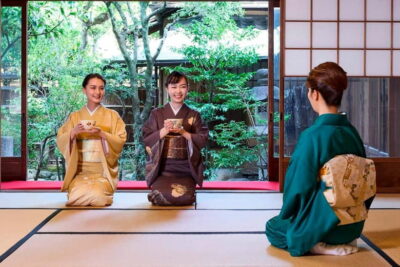
Kyoto: Kimono Tea Ceremony with Matcha and Sweet
Read our review →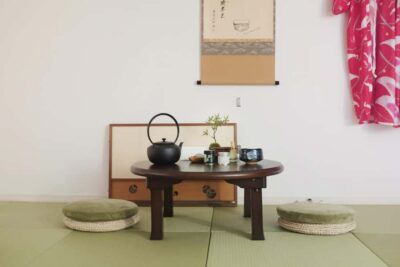
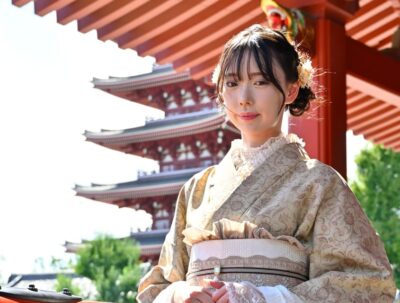
Tokyo: Asakusa Kimono Dressing and Matcha Experience
Read our review →Browse the lists this tea experience appears in