
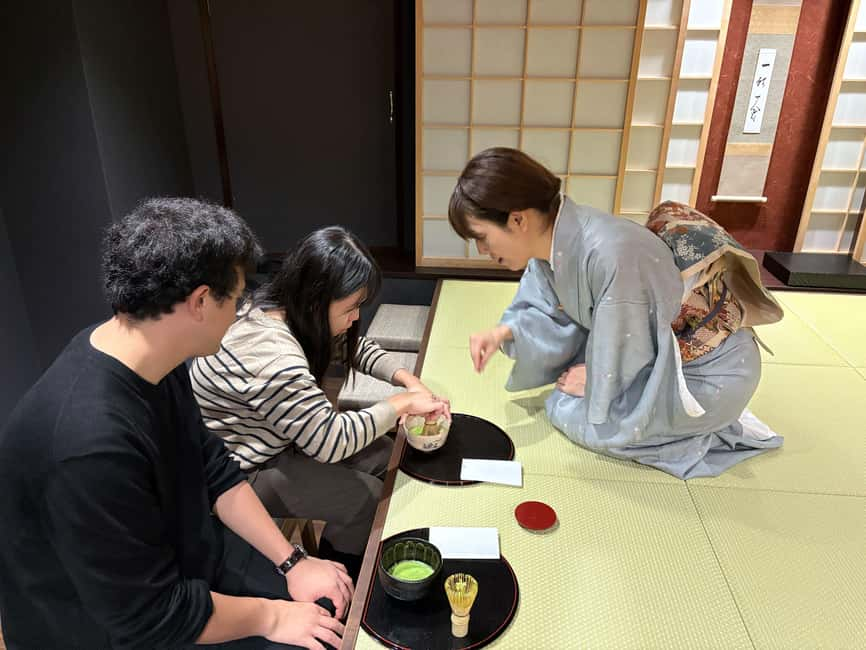
Review · KYOTO
Kyoto: Traditional Tea Ceremony with Matcha & Sweets in Gion
Kyoto’s tea ceremony can look solemn from the outside, but this Gion experience makes it friendly and easy to join. You sit in chairs, watch a tea master work at close range, taste traditional sweets, and then whisk your own bowl of matcha. I like the mix of polished technique and relaxed conversation, and I like that the tea comes from a family-run farm rather than being treated as a generic green drink.
The English-speaking host, including Mai on some sessions, explains the history, Zen ideas, and small gestures behind the ceremony without making you feel you need prior knowledge. The main thing to consider is the variable length: the experience may last from one hour to 150 minutes, depending on the option and timing you book.
Key points
- Chair seating in Gion: You can take part without sitting on the floor, a useful comfort feature for anyone with limited mobility or stiff knees.
- A real demonstration first: Watch a tea master prepare matcha before trying the process yourself.
- Matcha from a family-run farm: Your bowl uses tea sourced directly from a local tea farm.
- Sweets chosen for tea: Traditional Japanese confections are served as part of the ceremony, not as an afterthought.
- A practical souvenir: You receive a simple matcha recipe to use at home.
- A relaxed English session: The tone is friendly rather than strict, with time for questions at the end.
A gentle introduction to tea in Gion
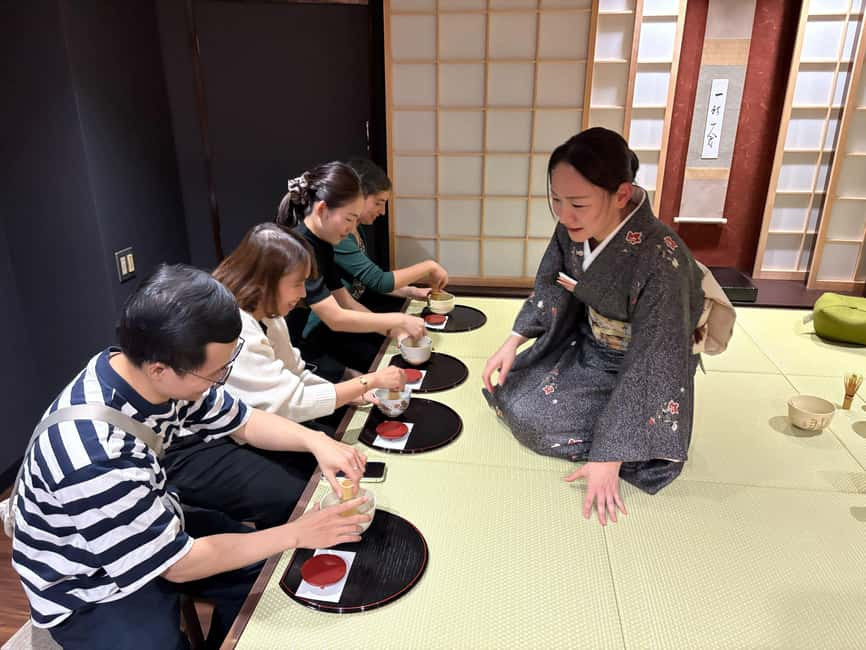
This activity takes place in Kyoto’s historic Gion district, an apt setting for learning about Japanese tea. Gion is known for its old streets and traditional atmosphere, but the experience itself is less about sightseeing outside and more about slowing down indoors.
That is a good thing. You do not need to keep moving from one landmark to another. Instead, you settle into a calm room and give your attention to the bowl, whisk, steam, sweets, and careful motions in front of you.
The session is designed for first-time visitors. You do not need to know the rules of tea ceremony, recognize Japanese tea utensils, or understand Zen practice before arriving. The host explains what matters as the activity unfolds.
I especially like the choice of chairs. Traditional tea ceremony is often linked with kneeling or sitting on tatami, which can be uncomfortable for many people. Here, you can focus on the ritual instead of worrying about your knees, hips, or ability to rise from the floor.
Do not expect an austere ceremony where you must remain silent and perfectly still. The tone is intentionally approachable. You will see formal techniques, but you will also have explanations, conversation, and a chance to ask questions.
More Matcha Experiences in Kyoto
- Kyoto: Arashiyama Bamboo Forest, Monkeys, Matcha & Temple Tour
★ 5.0 · 759 reviews - Kyoto: Tea Ceremony Meditation – Make Matcha with Tea Master
★ 4.8 · 406 reviews - Kyoto: Kimono Tea Ceremony with Matcha and Sweet
★ 4.9 · 249 reviews
Watching the tea master work
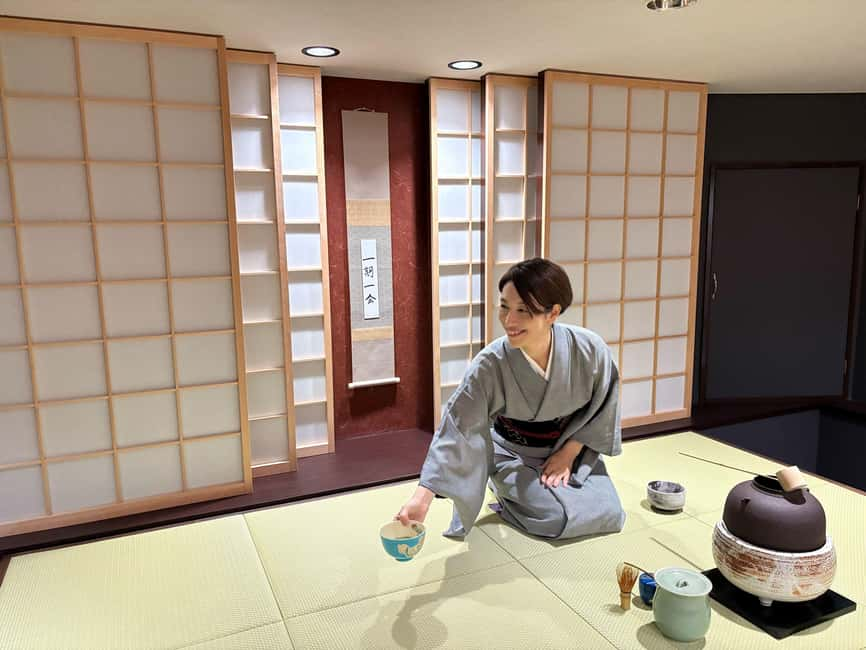
The first major part of the experience is the demonstration. A tea master prepares matcha in front of you, giving you a close view of the movements that can be easy to miss in a larger or more theatrical show.
The appeal is in the small details. The tea ceremony is not simply hot water mixed with green powder. The order of the actions, the handling of the utensils, the way the tea is presented, and the quiet pauses all help create the mood.
You will also hear how tea developed in Japan and why the ceremony is linked with Zen philosophy. This background gives meaning to the gestures. You begin to see the activity as a practice of attention and hospitality, not just a method for making a drink.
The host’s explanations are in English. Mai, named in the feedback from one session, was praised for her warm manner and clear explanations of both the ceremony and its history. The strongest feature here is not a long lecture. It is the way the host connects the ideas to what you are watching.
A useful detail is that you can ask questions at the end. That gives you a chance to clarify points that might pass quickly during the demonstration. You might want to ask about the role of Zen, the reason for certain movements, or the difference between ceremonial preparation and the matcha you can make at home.
Tasting sweets selected for matcha
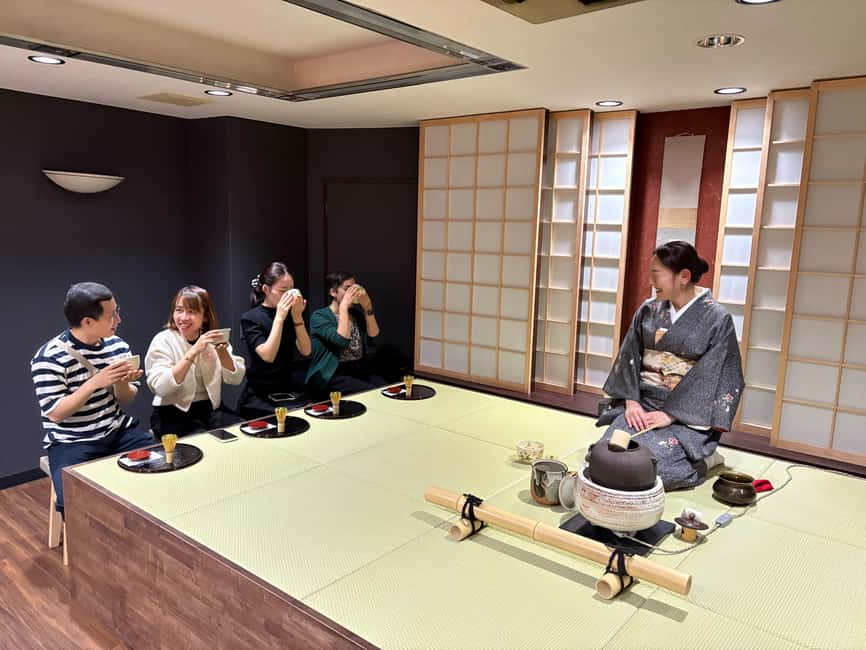
Traditional Japanese sweets come next, chosen by the tea master for the ceremony. This pairing matters because the sweets help balance matcha’s grassy, slightly bitter taste.
The sweets are from long-established confectioners, so they are part of the cultural lesson as well as a small snack. You get to see how Japanese tea service uses food to prepare the palate and create a sense of occasion.
Do not expect a large dessert course. The point is not quantity. It is the relationship between the sweet bite and the tea. Having the confection before or alongside matcha helps you notice how the flavor changes.
This is also a pleasant pause between watching and doing. You have time to settle into the setting before picking up the whisk yourself.
The tea and sweets make the activity accessible to people who are curious about Japanese culture but do not want a full-day class. You receive a focused introduction in a short sitting, with enough context to make the ritual feel understandable.
Whisking your own bowl of matcha
In the second half, you make your own matcha. The tea powder comes from a family-run local farm, which gives this part a direct connection to the source of the drink.
You will receive guidance on the process, including how to combine the powder and water and how to whisk it into a light foam. The aim is not to test your skill. It is to let you feel the rhythm of the preparation after seeing it done by a tea master.
This hands-on portion is important. Watching a ceremony can be beautiful, but making the tea turns the lesson into something you can remember through your hands. You notice how the whisk moves, how the powder changes, and how much care goes into a bowl that may take only a few minutes to drink.
One useful point from the experience is the simple recipe you can take home. It is meant for everyday use, so you can try making matcha after returning from Japan. That makes the activity more useful than a one-time photo stop.
Matcha contains caffeine, and it is not recommended for children under five. Infants and toddlers are free, but if they want to try the tea ceremony, they must use a parent or guardian’s bowl and will not receive their own matcha to prepare.
More Tea and Sweets Making in Kyoto
- Kyoto: Japanese Traditional Sweets Making and Tea Ceremony
★ 4.4 · 314 reviews - 2 Types of Japanese Sweets making and Tea Ceremony
★ 4.6 · 17 reviews - Kyoto near Fushimiinari Wagashi making&Small Group Tea Ceremony
★ 5.0 · 14 reviews - Kyoto Fushimiinari:Wagashi Making & Small Group Tea Ceremony
★ 5.0 · 14 reviews
Why the chair seating matters
The chair setup changes the character of the activity. You still see the ceremony and learn the ideas behind it, but you do not have to copy the physical demands of a floor-based tea room.
I would recommend this option to anyone who worries about sitting on tatami. It is also practical for families and mixed-age groups, since not everyone in a party may be comfortable kneeling.
Some visitors specifically seek a more formal tea ceremony on the floor. If that is your goal, this may feel less traditional in physical form. The tradeoff is clear: you give up the floor seating while gaining comfort and easier participation.
For most first-time visitors, I see that as a sensible exchange. The ceremony’s meaning comes through the preparation, hospitality, tea, sweets, and explanation. You do not need sore legs to understand it.
A calm pace, with room for questions
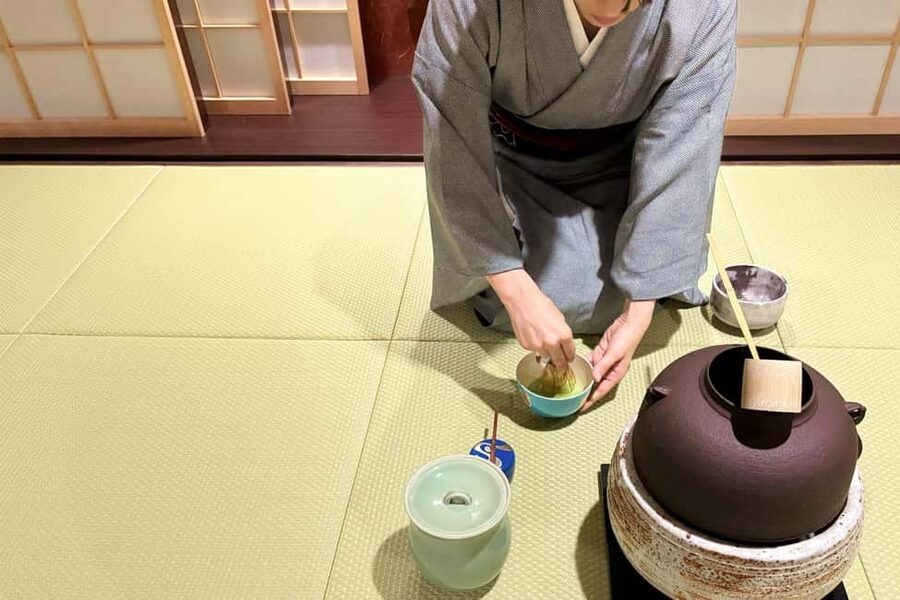
The advertised duration ranges from one hour to 150 minutes. That is a wide range, so check the exact option and start time before booking. A shorter session should suit you if you are fitting tea between Gion sights, while a longer version gives more room for explanation and questions.
The experience is available in a small-group format. Group size can shape the mood: a smaller room usually makes it easier to see the tea master’s hands and ask a question without interrupting the flow.
The tone is casual and friendly rather than rigid. That matters if you feel nervous about making a mistake. You are being introduced to a tradition, not graded on etiquette.
A calm setting also helps you notice things that can get lost in a packed sightseeing schedule. The sound of the whisk, the smell of the tea, the texture of the sweets, and the pause before drinking all become part of the lesson.
You should still arrive ready to listen and follow guidance. Casual does not mean careless. The experience keeps the ceremony’s graceful structure while explaining it in plain English.
What the $22 price includes
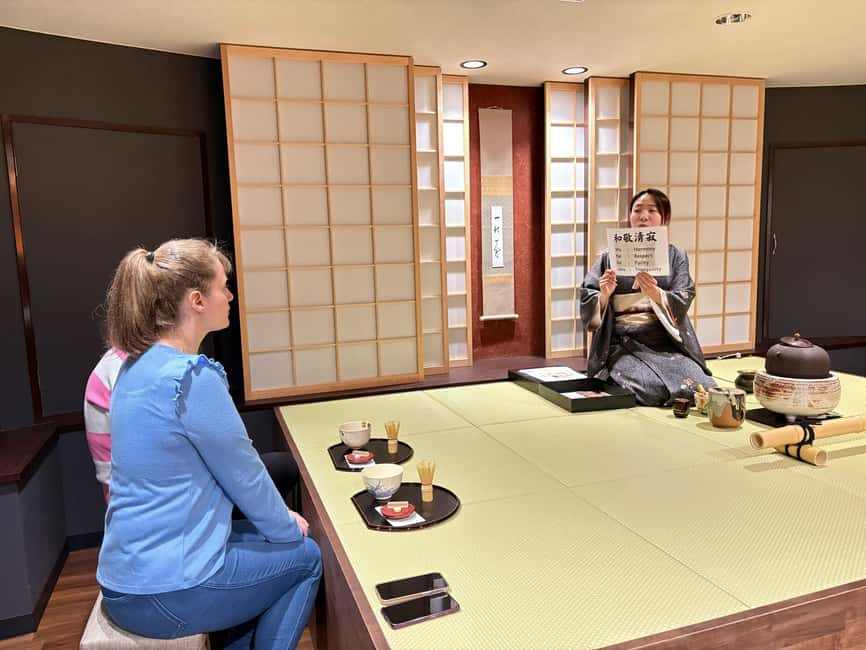
At about $22 per person, this is a good-value cultural activity in Kyoto. The price includes the tea from a local farm, instruction from a tea master, traditional sweets, the history lesson, guidance for preparing matcha, and the recipe for making it at home.
The value comes from the combination. You are not paying only for a cup of tea. You receive a demonstration, a tasting, a hands-on activity, and a cultural explanation in one sitting.
The price is especially appealing if you want a focused experience rather than an expensive formal ceremony. It also keeps the commitment modest. You can learn something substantial without giving up half a day.
The value depends partly on your expectations. If you want a lavish room, a long multi-course tea service, or an elaborate kimono package, this is not that kind of activity. It is a welcoming introduction built around matcha and conversation.
A kimono option is available for some bookings, but it changes the logistics and the schedule. The kimono rental is at Kimono Rental wargo Gion, on the fifth floor. After changing, you walk to the tea meeting point and arrive 10 minutes before the ceremony.
The listed kimono timing is fixed. An 11:00 kimono start connects with the 12:30 tea ceremony, a 12:00 start connects with the 14:00 ceremony, and a 14:00 start connects with the 15:30 ceremony. You must return the kimono by 5:30 p.m., so keep that deadline in mind when planning the rest of your day.
Who will enjoy this tea ceremony most
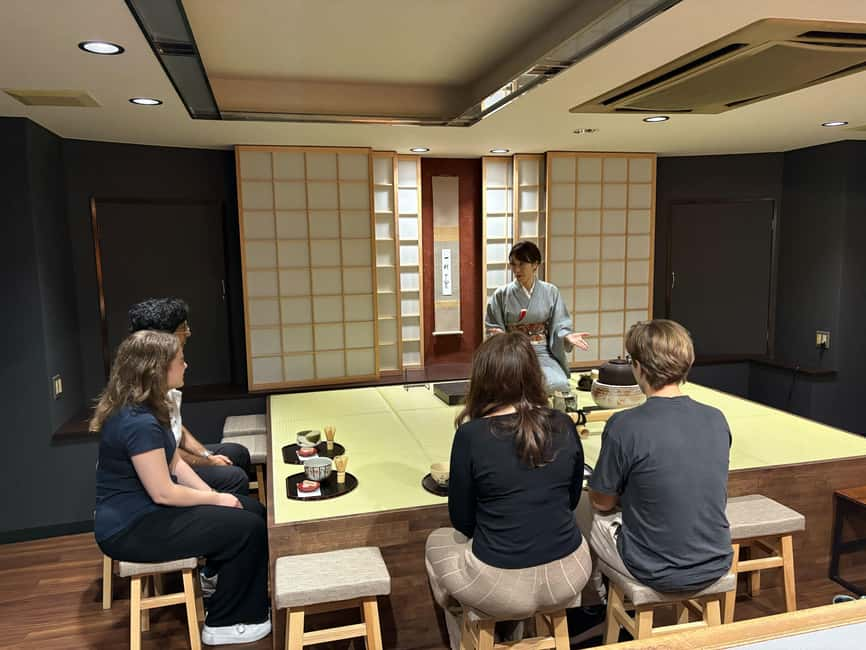
I would point this experience toward first-time visitors to Kyoto who want cultural context without a stiff classroom atmosphere. It works well for couples, families with older children, and small groups looking for a quiet break in Gion.
It is also a smart choice if sitting on the floor is a concern. The chair seating removes one of the most common physical barriers to a traditional tea ceremony.
You will get the most from it if you enjoy learning how everyday objects and gestures carry meaning. The activity is not designed as a fast photo opportunity. It asks you to pay attention, taste carefully, and try the method yourself.
Young children may not get much from the history lesson, and caffeine is a concern for children under five. Infants and toddlers can attend free, but their tea participation is limited to using a parent or guardian’s bowl.
You might choose another activity if your main aim is a highly formal ceremony with strict rules and floor seating. This session deliberately makes the tradition easier to approach.
Practical details before you book
The meeting point can vary by the option you choose, so check your confirmation rather than assuming every booking begins at the same location.
The activity is conducted in English. Free cancellation is available up to 24 hours before the start time for a full refund, and the reserve-now, pay-later option lets you hold a place without paying immediately.
For the regular tea experience, allow between one hour and 150 minutes, depending on your selected option. Since the exact starting times are subject to availability, check the schedule before arranging dinner, transport, or another timed visit.
For the kimono option, plan extra time for changing and walking to the tea meeting point. Arrive 10 minutes early for the ceremony, and keep the 5:30 p.m. return deadline visible on your day plan.
The experience provider is Japan Wonder Travel. The format is small-group when that option is selected, which should help you see the preparation and take part without a large audience.
Should you book it?
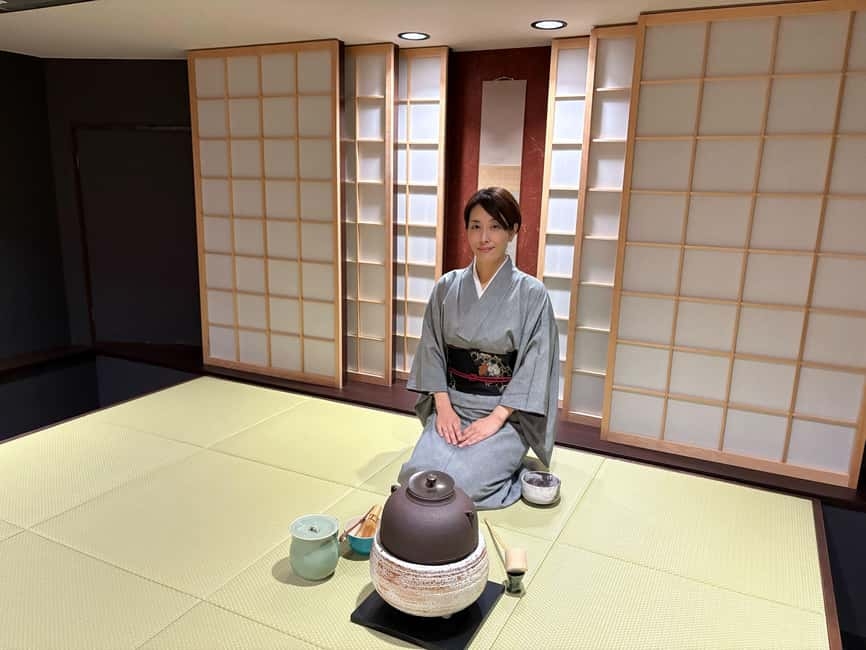
Book this tea ceremony if you want a comfortable, hands-on introduction to matcha in central Gion. The chair seating, English guidance, local tea, traditional sweets, and home recipe give you more than a quick tasting.
I would especially recommend it for anyone who has wondered what happens inside a Japanese tea ceremony but felt unsure about the etiquette. You can watch first, try the tea yourself, and ask questions without needing to act like an expert.
Skip it if you are seeking a long, highly formal ritual or a full kimono photo session. For most people looking for an affordable cultural activity, though, the $22 price and relaxed format make this an easy addition to a Kyoto itinerary.
FAQ
Where does the tea ceremony take place?
The experience takes place in Kyoto’s Gion district. The exact meeting point can vary by the option booked, so check the details for your selected session.
How long does the activity last?
The duration ranges from one hour to 150 minutes. Starting times and the exact length depend on availability and the option you choose.
Is the tea ceremony performed in English?
Yes. The instructor language is English.
Do I have to sit on the floor?
No. The tea ceremony uses chairs, making it more comfortable for people who do not want to sit on tatami or who have limited mobility.
Is matcha included?
Yes. The activity includes matcha powder from a local tea farm, instruction on how to prepare it, and a matcha drink. Traditional Japanese sweets are also included.
Can children take part?
Infants and toddlers can attend free. If they want to try preparing tea, they must use a parent or guardian’s matcha bowl and will not receive their own matcha. Because matcha is high in caffeine, it is not recommended for children under five.
More Tea Ceremonies in Kyoto
- Kyoto: Tea Ceremony in a Traditional Tea House in Kiyomizu
★ 4.9 · 3,519 reviews - Kyoto: Tea Ceremony Ju-An at Jotokuji Temple
★ 4.9 · 3,207 reviews - Kyoto: 45-Minute Tea Ceremony Lesson Experience
★ 4.3 · 2,378 reviews - Kyoto: Table-Style Tea Ceremony at a Kyo-Machiya
★ 4.9 · 1,211 reviews
Newly steeped around Kyoto
- Whisk Your Own Matcha: A Zen Matcha Experience at Temple★ 3.6 · 7 reviews
- Kyoto: Authentic Tea Ceremony in a Small Group★ 5.0 · 7 reviews
- Tea ceremony at Kyoto’s Zen Temple Teahouse★ 5.0 · 2 reviews
- Uji Walking Tour – Byodo-in temple and Tea Ceremony from Kyoto★ 3.5 · 3 reviews
- Tea Ceremony Experience in Traditional Kyoto Townhouse★ 5.0 · 19 reviews
- Tea Ceremony in 150 Years Old Townhouse with Tables and Chairs★ 5.0 · 22 reviews
- Traditional Tea Ceremony in Kyoto★ 4.5 · 3 reviews
- Sencha-do the Japanese Tea Ceremony Workshop in Kyoto★ 5.0 · 21 reviews
Tea & Sweets Making, compared.
Matcha Making Class in Tokyo with Authentic Japanese Sweets Set
Read our review →
Tangier: Sunset, Tea, Sweets, Camel Ride, and Hercules Caves
Read our review →
Tokyo: Matcha Making Experience with Mochi Sweets in Asakusa
Read our review →
Kyoto: Japanese Traditional Sweets Making and Tea Ceremony
Read our review →
Osaka: Matcha Making Experience with Japanese Sweets
Read our review →
Make Traditional Nerikiri Sweets & Matcha experience in Shibuya
Read our review →
Sweets Making and Kimono Tea Ceremony at Tokyo Maikoya
Read our review →
Tokyo: Two Types of Japanese Sweets Making and Tea Ceremony
Read our review →Browse the lists this tea experience appears in