
Review · OSAKA
Osaka: Japanese Traditional Sweets Making and Tea Ceremony
The best part of this Osaka class is that you do not just watch a tea ceremony. You make two seasonal nerikiri sweets, starting with colored white bean paste and shaping it into flowers or fruit. Then you prepare matcha and eat your handiwork with the tea.
I like the use of bean paste from long-established Kyoto shops, and I like the compact format: 95 minutes gives you a real cultural activity without swallowing half a day. The main consideration is language. Instruction is in Japanese, with English help provided as much as possible, so request translation ahead of time if you need it.
A second point is the simple, central setting near Higobashi Station. It is easy to reach by train, but the building can be hard to spot, and there is no elevator. Arrive early, especially if you are traveling with children or carrying luggage.
Key points to know before booking
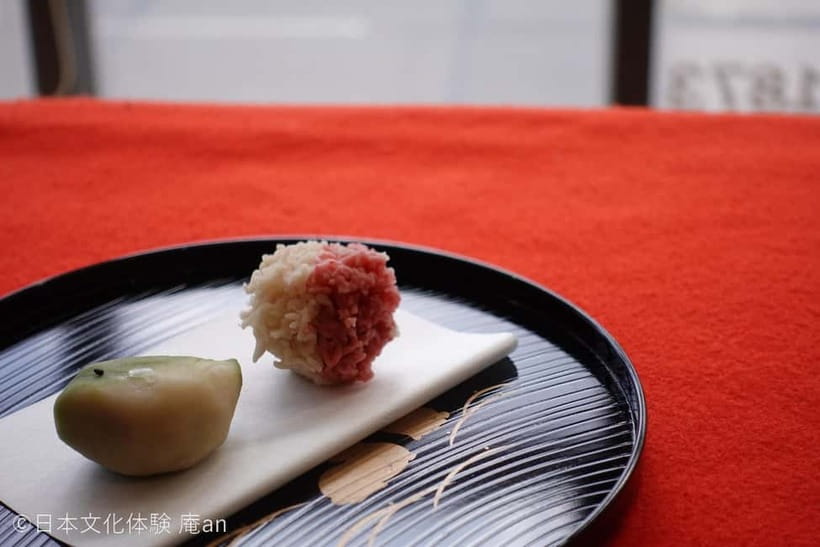
- Two sweets, not just a demonstration: You make a flower-shaped nerikiri and a kinton nerikiri, with designs linked to the season.
- Kyoto bean paste: The white and red bean paste comes from long-established Kyoto producers, giving the activity a genuine confectionery focus.
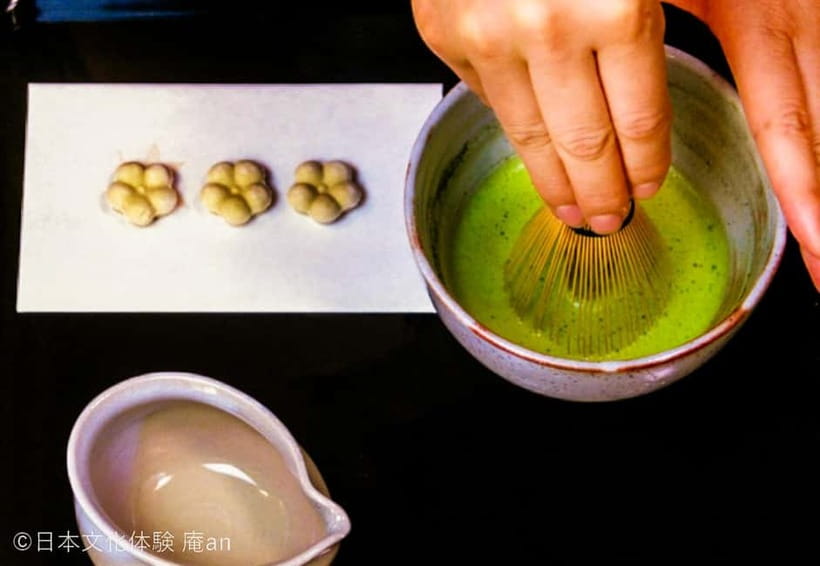
- Single-origin Uji matcha: You grind matcha, learn about the tea, and prepare a bowl to drink with your sweets.
- Friendly instruction: Instructors including Maiko, Jun, and Mihiko have led sessions in both Japanese and English.
- Central Osaka location: Higobashi Station is only a one-minute walk from Exit 10, while Osaka Station is about 15 minutes away on foot.
- Small practical catches: English translation should be requested, delays cannot be accommodated, and the building has stairs only.
What this Osaka wagashi class actually offers
Japanese traditional sweets are called wagashi, and nerikiri is among the more refined types. It uses sweetened white bean paste, colored and shaped into seasonal forms. This is not the kind of snack you grab at a station kiosk. The point is its appearance, texture, seasonality, and connection to tea.
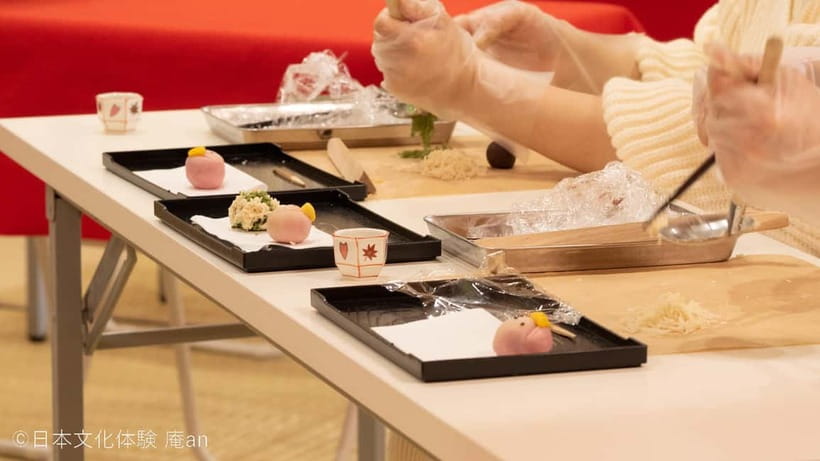
You begin with a prepared base rather than cooking bean paste from scratch. That is a sensible choice in a 95-minute class. The work is in coloring, handling, shaping, and adding detail. You get a chance to make something attractive without needing professional pastry skills.
The class uses white and red bean paste produced by established Kyoto shops. That detail matters because the bean paste is the main ingredient, not a hidden filling. Its smooth texture and gentle sweetness are meant to sit beside the sharper, slightly bitter taste of matcha.
The experience also gives you two different shapes to make. One is a flower-shaped nerikiri. The other is kinton nerikiri, a style made to look like fine strands or a delicate natural form. The exact colors and designs follow the season, so the activity can change during the year.
More Tea Ceremonies in Osaka
- Osaka: Tea Ceremony Experience
★ 4.9 · 1,426 reviews - Tea Ceremony Experience in Osaka Doutonbori
★ 5.0 · 754 reviews - Osaka: Tea Ceremony, Calligraphy, and Kimono Experience
★ 4.9 · 130 reviews
Making the first flower-shaped nerikiri
The hands-on work starts with coloring the white bean paste. You are not simply handed a finished sweet to admire. You work through the early stage, choosing and blending color before shaping the paste.
That first step is more important than it sounds. Traditional Japanese sweets often suggest a flower, fruit, leaf, or other seasonal image with very little decoration. The shape must do the work. Small changes in color and form can make the sweet look more like spring, autumn, or another time of year.
The instructor explains the process, then guides you as you form the paste. This is a careful activity, but not a high-pressure one. The material is soft, and the goal is to understand the craft rather than produce a flawless professional piece.
You should expect to use the provided tools during the class. The required tools are included in the price, so you do not need to bring equipment. The focus stays on your hands and the paste, with the teacher showing how to create the shape.
This is a good part of the class for children old enough to follow careful instructions. Two children, aged 10 and 12, enjoyed the activity, and children under two who sit on a parent’s lap are free. Younger children may need help with the detail work.
Shaping kinton nerikiri after the first sweet
The second sweet gives you a different type of task. Kinton nerikiri has a more delicate appearance, with fine strands of bean paste arranged into a seasonal form. It is less about pressing one smooth lump into shape and more about handling a fragile-looking design.
You make both sweets during the first 55 minutes of the session. That timing leaves enough room for explanation without turning the class into a rushed assembly line. It also means you can compare the two styles before the tea portion begins.
I like this two-part structure because it shows that Japanese sweets are not one single style. The sweets may look small, but their design carries meaning. Seasonal forms are part of the pleasure, and the instructor explains the ideas behind nerikiri as you work.
Do not expect a professional pastry school lesson. You will not learn every wagashi technique in one short class. You will learn the basic handling and shaping of two sweets, plus why their appearance matters. For a first introduction, that is a fair amount.
A short break before the tea portion
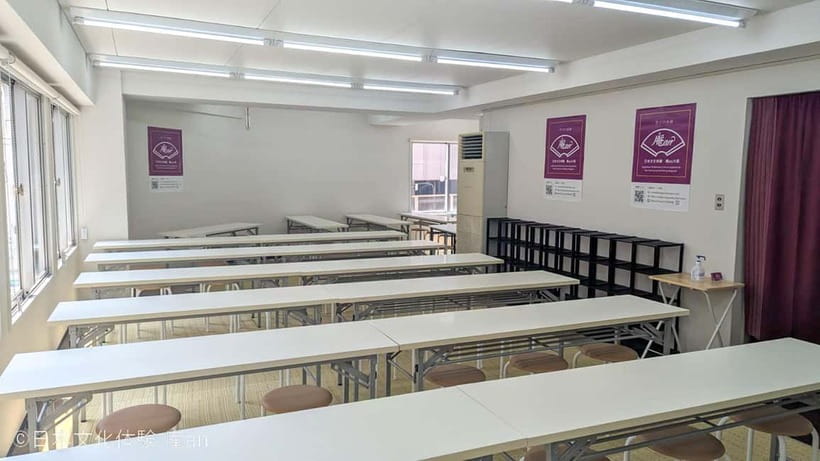
After the sweets are finished, the schedule includes a break of about ten minutes. This gives you time to pause, look at your work, and reset before the tea lesson.
The break also helps the class feel unhurried. You are handling small pieces of paste and paying attention to fine details, so a short pause is welcome. The activity then moves into the meaning and method of matcha preparation.
The class uses special single-origin Uji matcha. Uji, near Kyoto, is closely associated with Japanese tea production, and the tea’s character is central to the second half of the experience.
More Tea and Sweets Making in Osaka:
- Matcha Making Class in Osaka with Authentic Japanese Sweets Set
★ 5.0 · 509 reviews - Osaka: Matcha Making Experience with Japanese Sweets
★ 5.0 · 146 reviews - Osaka : Exclusive Tea Ceremony & Wagashi Cooking
★ 5.0 · 2 reviews - Matcha Making Class in Tokyo with Authentic Japanese Sweets Set
★ 5.0 · 744 reviews
Grinding and preparing Uji matcha
One of the most interesting details is the matcha-grinding demonstration. You get to see how tea leaves become the fine green powder used for the drink. That connects the finished bowl to the work behind it.
You then prepare your own matcha. The teacher explains the tea and shows the steps involved in making it. You also learn proper ways to drink the tea and express appreciation in Japanese tea culture.
This is a useful distinction: the class is not only a sweet-making workshop with a drink added at the end. The matcha has its own lesson, including the difference between the tea itself and the customs around serving and drinking it.
The tea portion is described as a tea-ceremony experience, but the level of formal practice can vary. In one session, the teacher explained the ceremony and traditions without having participants practice every movement. In another, the format felt more casual, which suited the group well.
That makes this class a good choice if you want an approachable introduction. If you are seeking a full, highly formal tea ceremony with strict posture, extended ritual, and a traditional tea-room setting, this may feel lighter than expected.
Eating the sweets with your own tea
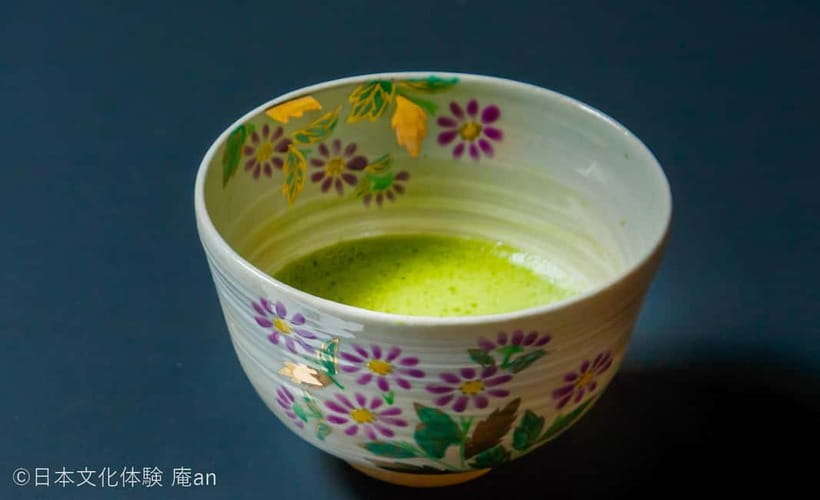
The final pleasure is simple: you eat the two sweets you made with the matcha you prepared. The bean paste is sweet, while matcha brings bitterness and depth. The pairing is the reason the two activities belong together.
This is also when you see the value of making the sweets yourself. A packaged wagashi can be beautiful, but shaping one by hand gives you a better sense of its texture and construction. Your finished pieces may not look perfect, and that is part of the charm.
There is picture time before the experience ends, followed by eating and drinking. The formal portion finishes at about 85 minutes, with room departure at 95 minutes.
If you want to take the sweets away, a box costs 100 JPY. The experience is designed around eating them there, so the box is an optional extra rather than a hidden requirement. A completion certificate is also available for 300 JPY.
The instructors and language question
The instructors are Japanese, and several sessions have been led by people named Maiko, Jun, and Mihiko. The teaching style appears warm and patient, with instructors moving between Japanese and English when possible.
You should not assume that every explanation will be fully bilingual. English translation is available as much as possible, but you are asked to contact the provider if you want it added. This is especially important if you want to understand the cultural explanation rather than simply copy the hand movements.
The language issue is less serious if you are comfortable watching demonstrations and following visual instructions. It matters more if you want detailed explanations about wagashi, matcha, and tea etiquette.
The class has handled language gaps well in some sessions, with instructors answering questions in both Japanese and English. Still, request English support in advance. That small step can make the difference between a cultural lesson and a craft activity you only partly understand.
Getting to the Higobashi meeting point
The venue is in central Osaka, close to several rail stations. The easiest approach is Osaka Metro’s Yotsubashi Line to Higobashi Station. Exit 10 is about a one-minute walk away.
You can also use Watanabebashi Station on the Keihan Nakanoshima Line, about five minutes from Exit 7. Yodoyabashi Station is about seven minutes away from Exit 10, and Kitashinchi Station on the JR Tozai Line is about ten minutes away from Exit 11-5.
From Osaka Station, allow about 15 minutes on foot from the South Central Gate. That walk is possible, but Higobashi is the smarter choice if you want to arrive calm and on time.
The building can be easy to miss. One person had trouble finding a gray building that was not obvious on the map. I would arrive at least 10 minutes early, save the map location before leaving the station, and avoid cutting the timing close.
There is no elevator, so you need to use stairs to reach the venue. The provider also cannot hold the session for late arrivals. If you are coming by car, use nearby coin-operated parking, since dedicated parking is not included.
Is 18 dollars good value?
At $18 per person, this is one of the more affordable hands-on cultural activities in Osaka. You receive the class, the required tools, two sweets, and the matcha experience. The ingredients also include Kyoto-made bean paste and single-origin Uji matcha, which makes the price look strong.
The value is best if you want to take part rather than sit and watch. A short demonstration alone would be cheaper in time but less memorable. Here, you color, shape, prepare, drink, and eat.
There are two small extras to consider. A take-out box costs 100 JPY, and a completion certificate costs 300 JPY. Neither is needed for the main activity.
The price also works well for families and short-stay visitors. You do not need to dedicate an entire morning or afternoon, and the central setting makes it easy to fit around sightseeing in Osaka.
Who will enjoy this class most?
I would recommend it to first-time visitors who want a manageable introduction to Japanese culture. It gives you food, craft, tea, and seasonal design in one sitting.
It is also a good match for families with older children. The work is creative but structured, and the sweets provide an immediate reward. Children under two may sit on a parent’s lap free of charge, while older children need their own participation booking.
Couples and solo visitors can enjoy it too. A class with only two participants has been possible, and that can make the instruction feel personal. Larger groups may bring more energy, but the intimate version can be especially comfortable for asking questions.
You may want to choose another activity if your main goal is a strict, formal tea ceremony. This experience teaches tea customs and includes matcha preparation, but it is also a relaxed sweets workshop. That blend is its strength, not a flaw, as long as you book it for what it is.
Timing, cancellation, and small practical details
The activity runs during operating hours from 10:00 to 17:00, with starting times available within that window. The full session lasts 95 minutes.
You can cancel up to 24 hours in advance for a full refund. Reserve-now, pay-later booking is available, which helps if you are still arranging your Osaka schedule.
Do not book this as a flexible stop between uncertain train connections. Late arrivals cannot be accommodated, and travel costs are not compensated if you miss the activity or it is canceled.
Only participants may enter the venue. If someone in your party plans to watch without taking part, that person will not be allowed inside. Plan bookings for everyone who wants to join.
Should you book the Osaka sweets and tea experience?
Book it if you want a reasonably priced, hands-on cultural activity near central Osaka. The combination of Kyoto bean paste, seasonal nerikiri, Uji matcha, and a short tea lesson gives you plenty to do in 95 minutes.
I especially like the balance between making and learning. You get practical instruction, a look at matcha grinding, and a chance to ask about Japanese customs. The friendly teaching style, including the efforts of instructors such as Maiko, Jun, and Mihiko, is another strong point.
Before booking, request English translation if needed, check the route to the gray building, and allow time for stairs. If you want a formal ceremony with little hands-on work, this is probably too casual. If you want to make something beautiful, learn why it matters, and eat it with good matcha, it is a very good Osaka choice.
FAQ
How long does the Japanese sweets and tea experience last?
The full experience lasts 95 minutes. The sweets-making portion begins first, followed by a short break, tea instruction, matcha preparation, picture time, and eating and drinking.
What sweets will I make?
You will make two seasonal Japanese sweets. One is a flower-shaped nerikiri, and the other is kinton nerikiri.
Is the bean paste made in the class?
The white and red bean paste is supplied by long-established shops in Kyoto. You begin by coloring and shaping the prepared paste.
What kind of matcha is used?
The experience uses special single-origin Uji matcha. You will see a matcha-grinding demonstration and prepare your own tea.
Is the class available in English?
The instructors speak Japanese, and English translation is provided as much as possible. Contact the provider ahead of time if you would like English translation added.
How do I reach the meeting point?
The venue is about one minute on foot from Exit 10 of Higobashi Station on the Osaka Metro Yotsubashi Line. It is also about five minutes from Watanabebashi Station, seven minutes from Yodoyabashi Station, ten minutes from Kitashinchi Station, and 15 minutes from Osaka Station.
Can I take my sweets home?
A sweets take-out box is available for 100 JPY. It is not included in the activity price.
Newly steeped around Osaka
- Osaka:Zen Tea Ceremony and Foot Bath Experience<45min>★ 5.0 · 7 reviews
- Osaka Japanese Cooking And Matcha Class near Osaka Castle★ 5.0 · 22 reviews
- Nara Deer Park, Uji Matcha, & Hot Spring Full-Day Tour from Osaka★ 4.0 · 21 reviews
- Osaka: Tea Ceremony, Calligraphy, and Kimono Experience★ 5.0 · 6 reviews
- Tea and Calligraphy Session at a Table in Osaka★ 5.0 · 4 reviews
- Osaka: Nara, Todaiji, Uji Matcha, and Hot Spring Tour★ 4.0 · 7 reviews
- Craft Sushi and Matcha Ice Cream in Central Osaka (3-Course Meal)★ 5.0 · 2 reviews
- ZEN therapy | Shiatsu-style massage, EnergyTherapy & Japanese Tea★ 5.0 · 5 reviews
Tea & Sweets Making, compared.
Matcha Making Class in Tokyo with Authentic Japanese Sweets Set
Read our review →
Tangier: Sunset, Tea, Sweets, Camel Ride, and Hercules Caves
Read our review →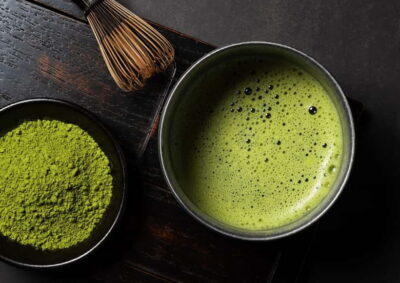
Tokyo: Matcha Making Experience with Mochi Sweets in Asakusa
Read our review →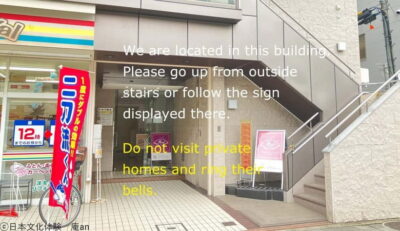
Kyoto: Japanese Traditional Sweets Making and Tea Ceremony
Read our review →
Osaka: Matcha Making Experience with Japanese Sweets
Read our review →
Make Traditional Nerikiri Sweets & Matcha experience in Shibuya
Read our review →
Sweets Making and Kimono Tea Ceremony at Tokyo Maikoya
Read our review →
Kyoto: Traditional Tea Ceremony with Matcha & Sweets in Gion
Read our review →Browse the lists this tea experience appears in