
Review · OSAKA
Learn Zen in a class of making Matcha tea near Osaka Castle
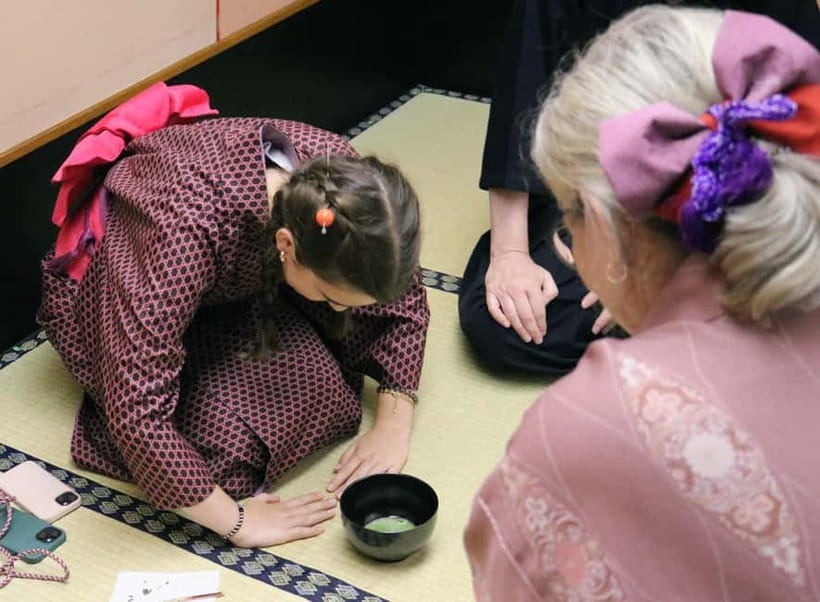
The best part of this one-hour tea ceremony is the role reversal: you are not only watching someone prepare matcha. You learn how to sit, bow, receive the bowl, and make tea for another person. I especially like the small group size and the chance to wear a kimono or samurai-style hakama, because both make the customs easier to understand and remember.
I also like the careful attention to wagashi, the seasonal Japanese sweets served with tea, and the included photo session. The main thing to consider is the short running time. Changing clothes, learning the rules, preparing tea, and taking pictures all fit into one hour, so this is a focused introduction rather than a long, quiet tea-school lesson.
Key points to know before booking
- You take part, not just watch: Learn basic tea etiquette, then prepare matcha for another person.
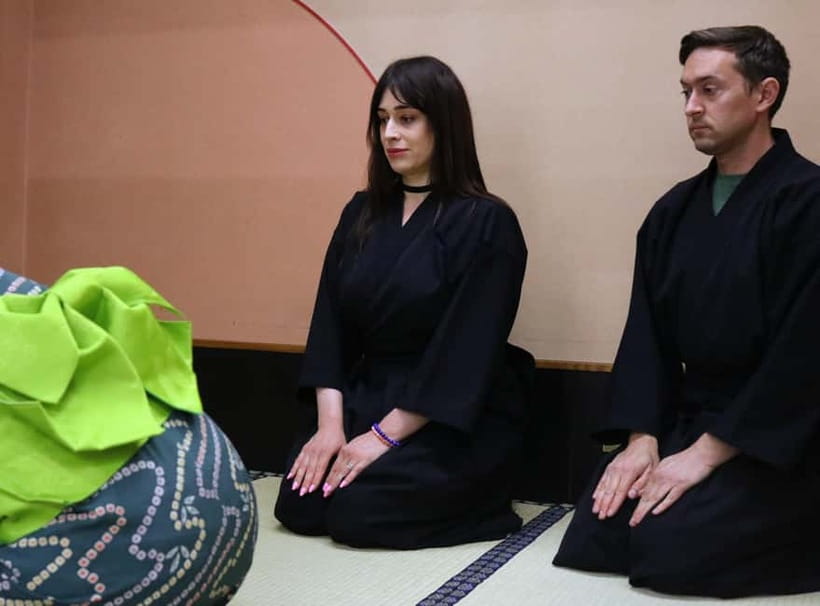
- Costumes are included: Women wear kimono, while men wear hakama and dogi in the samurai-style presentation.
- Wagashi adds cultural context: Seasonal sweets introduce wabi-sabi, Japanese beauty, food traditions, and the four seasons.
- Photos are part of the package: A photographer takes pictures during the experience and sends the files to your designated email address.
- The group stays small: No more than six participants take part, which gives you a better chance to practice.
- The address needs care: Use Google Maps for Bushi no Homare, since the supplied information says Apple Maps places it incorrectly.
Entering Bushi no Homare in Osaka
The experience takes place at Bushi no Homare, also called Samurai Honor, in Excellence Takayama 1F at 2-3-19 Shiginonishi, Joto-ku, Osaka. The activity is described as being near Osaka Castle, but you should rely on the exact address rather than assuming you are meeting at the castle grounds.
The clearest landmark is a wooden sign reading Honor of the Samurai. Look for activity pamphlets on a rack in front of the shop. Kimonos and hakama may also be hanging outside, which makes the entrance easier to spot.
Plan to arrive 30 minutes before your booked time. That early arrival is for instructions and changing clothes, not extra sightseeing. You will want the buffer, since costume changes take a meaningful part of a one-hour session.
Bring a T-shirt. Pets, alcohol, drugs, and nudity are not allowed. The activity is not suitable for children under 10, people with altitude sickness, or anyone over 95. The altitude restriction may seem surprising for an Osaka activity, but it is part of the stated participation guidance.
More Matcha Experiences in Osaka
- Matcha Making Class in Osaka with Authentic Japanese Sweets Set
★ 5.0 · 509 reviews - Osaka: Matcha Making Experience with Japanese Sweets
★ 5.0 · 146 reviews - Osaka Temple Cool Foot Bath & Matcha Experience〈45min〉
★ 4.9 · 82 reviews
Changing into kimono or samurai dress
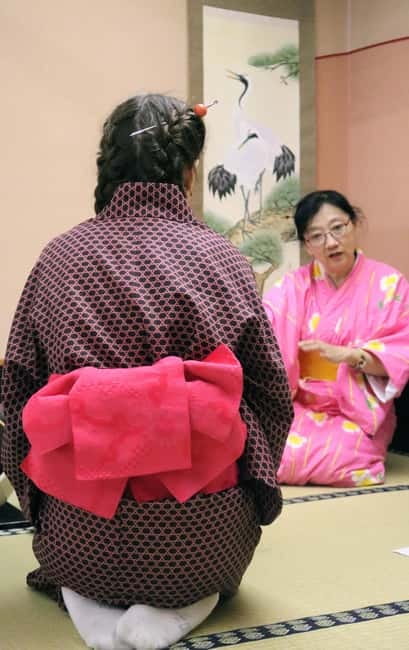
The clothing is more than a costume photo opportunity. It helps you understand the social setting of the ceremony and makes the formal movements feel less casual.
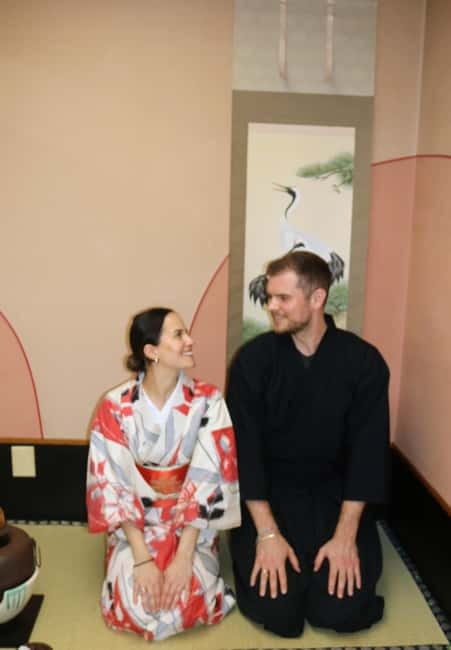
Men wear hakama, traditional pleated trousers, with dogi, a traditional robe. The presentation frames them as samurai. Women wear kimono and take on the style of Yamato Nadeshiko, a traditional ideal of Japanese femininity.
The supplied information includes kimono clothing, but lists collected hair and kanzashi, a decorative hairpin, as a paid option. One participant described having her hair arranged with flowers at no extra cost, so the exact arrangement may depend on the staff and the booking option. If hairstyling matters to you, confirm it before paying rather than assuming it is included.
Women can also pay for a broader styling package with kimono, obi, tabi socks, zori sandals, a basket bag, and outdoor photos. Men have a similar paid option with kimono, obi, tabi, geta wooden clogs, and outdoor photography. The standard experience includes clothing, but not every extra styling or outdoor photo feature.
The clothing can make ordinary movements feel deliberate. Sitting, standing, and walking become part of the lesson. That is useful, since tea ceremony etiquette is not just about the matcha itself. It is also about how you enter a room, how you bow, and how you show care for the person serving you.
Learning the spirit of chanoyu
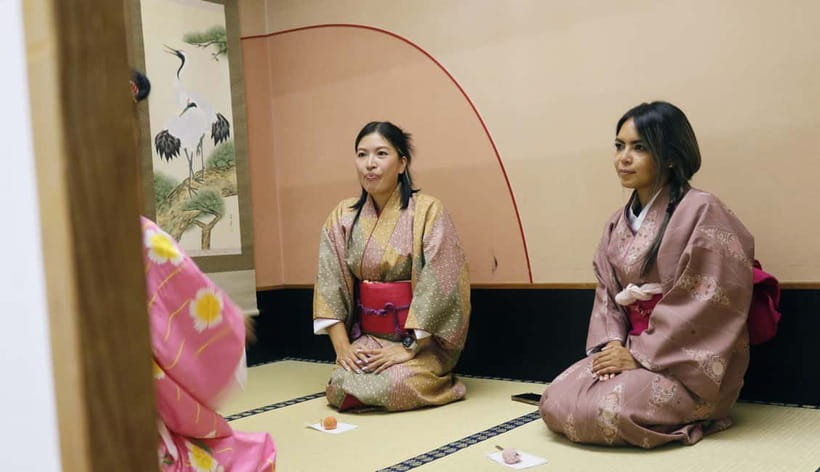
The tea ceremony is built around a shared exchange between host and guest. The host prepares and serves tea with care, while the guest responds with attention and proper manners. The point is not simply to receive a drink. Both sides help create the atmosphere.
Your instructor explains the basic rules of the ceremony, including how to sit, bow, stand, walk, and accept tea. You practice these actions rather than hearing a long lecture about them. That makes the class approachable for first-time visitors who might otherwise feel nervous about making a mistake.
The central idea is equality. Once you pass through the nijiriguchi, the low entrance to the tea room, people are treated alike regardless of nationality, age, gender, or social position. In practical terms, you leave ordinary status at the door and focus on the shared ritual.
That detail gives the session more weight than a simple matcha tasting. You are learning a way of interacting with another person. The tea bowl, the bow, and the timing all communicate respect without relying on much conversation.
The instructors speak English and Japanese. Kaori is named as one of the instructors, and the teaching includes cultural and historical explanation as well as demonstrations. Other staff members may lead the session, but the format remains small, with a maximum of six participants.
Preparing and drinking matcha
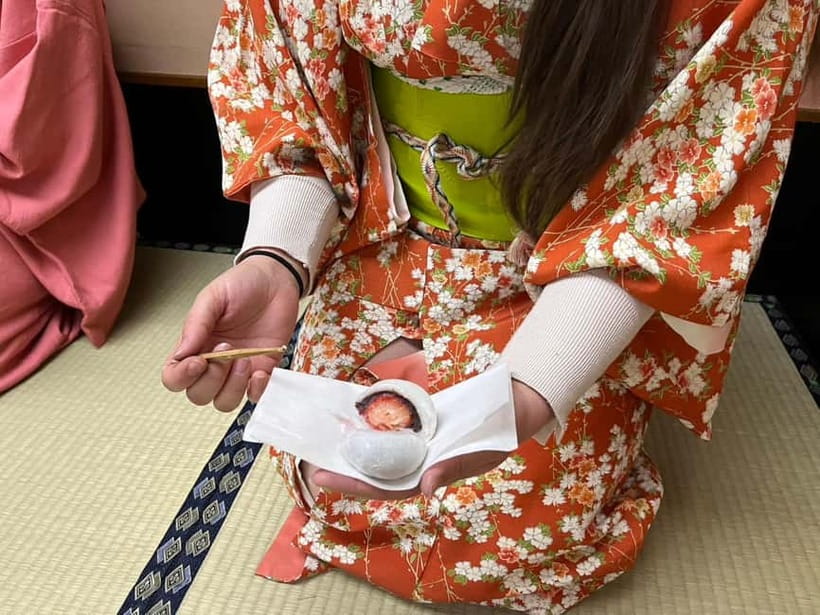
The master prepares matcha, powdered green tea, and serves it to the participants according to traditional manners. You then have an opportunity to prepare tea yourself, including making a bowl for another person.
This practice is one of the strongest reasons to choose the class instead of a short demonstration. You see the process step by step, then have to remember enough of the movements to perform them yourself. The instructor can correct your pace and posture, while the small group means you should have a reasonable chance to take part.
Do not expect a full professional tea-school course in sixty minutes. You will learn selected etiquette and gestures, not every rule associated with chanoyu. That is a fair trade for visitors with limited time, but anyone seeking a lengthy, highly formal ceremony should look for a longer specialist class.
The matcha itself is paired with wagashi, traditional Japanese sweets. The sweetness balances the bitter green tea, but the food also carries a lesson of its own.
More Zen Tea Sessions around Osaka:
- Osaka:Zen Tea Ceremony and Foot Bath Experience<45min>
★ 5.0 · 7 reviews - ZEN therapy | Shiatsu-style massage, EnergyTherapy & Japanese Tea
★ 5.0 · 5 reviews - Kyoto: Tea Ceremony Meditation – Make Matcha with Tea Master
★ 4.8 · 406 reviews - Kyoto: Mindful Tea Ceremony in 100-Year-Old Teahouse
★ 4.8 · 160 reviews
Wagashi, wabi-sabi, and the four seasons
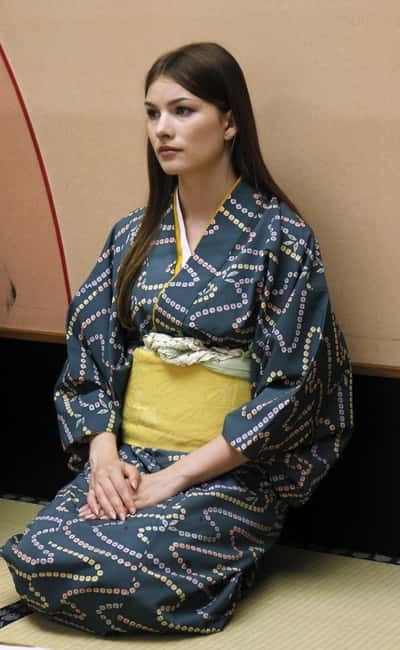
Wagashi developed alongside the tea ceremony and is closely tied to Japanese ideas of beauty. These sweets are made by hand and often shaped or decorated to suggest a season, flower, plant, or natural form.
You learn how wagashi connects with wabi and sabi, ideas often associated with simplicity, imperfection, age, and quiet beauty. The sweets may look delicate and polished, but their seasonal meaning is just as important as their appearance.
This is a good detail for families. Children can understand the immediate appeal of colorful sweets, while adults can look more closely at how the designs reflect spring, summer, autumn, or winter. Making or studying the sweets offers a direct way to talk about Japanese food culture without turning the class into a history lecture.
The careful workmanship also explains why wagashi can seem almost too beautiful to eat. Their shape and color are part of the hospitality. The host is not handing over an anonymous snack. The sweet has been selected to suit the occasion and the season.
The activity information emphasizes learning through wagashi, though the exact amount of hands-on sweet making is not clearly specified. You should expect to learn about the sweets and their role in the ceremony. If preparing wagashi yourself is essential, ask the provider what that particular session includes.
Photos that preserve the experience
Photography is included, and a photographer takes pictures during the ceremony. The files are sent to your designated email address, with one participant receiving them on the same day.
This is useful because formal tea ceremony movements can be difficult to photograph while you are taking part. You can focus on listening, handling the bowl, and enjoying the costume instead of asking a companion to document every step.
The photographs also capture details that are easy to miss in the moment: the kimono colors, the arrangement of your hands, the tea utensils, and the setting of the ceremony room. If you are traveling with children, the pictures can give them a lasting reminder of a cultural activity rather than just another posed costume shot.
Outdoor photography is listed as a paid option. The standard experience does not promise a full outdoor photo session, so check the price and timing if pictures outside the studio are important to you. A movie shoot is also available for an additional fee.
Is one hour enough for the price?
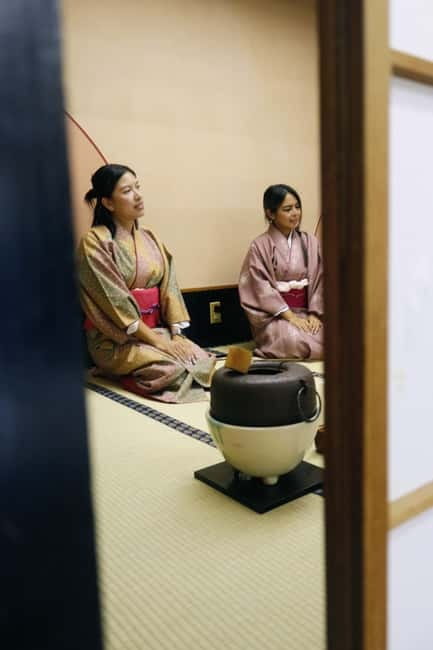
The cost is $40 per person. For that fee, you receive kimono clothing, an English interpreter guide, matcha, wagashi, a certified professional instructor, tax, tips, and photo data sent by email.
I consider that a reasonable price for a compact cultural lesson, particularly because clothing rental and photography are included. A similar costume experience without instruction might give you pictures but little understanding. Here, the tea etiquette, guest role, and seasonal food give the hour more substance.
The value depends on what you want from Osaka. If your goal is a relaxed activity that explains one small but important part of Japanese culture, the price makes sense. If you mainly want a long tea ceremony in a historic setting, the one-hour limit may feel brief.
Optional extras can increase the final cost. Collected hair, kanzashi, outdoor photos, expanded kimono styling, and movie filming are not part of the basic package as described. Ask about those additions before booking so the $40 starting price does not surprise you.
The class also offers reserve-now, pay-later booking and free cancellation up to 24 hours before the start time. Those policies help if your Osaka schedule is still shifting, though you should check the exact terms shown when you reserve.
Who will enjoy this experience most?
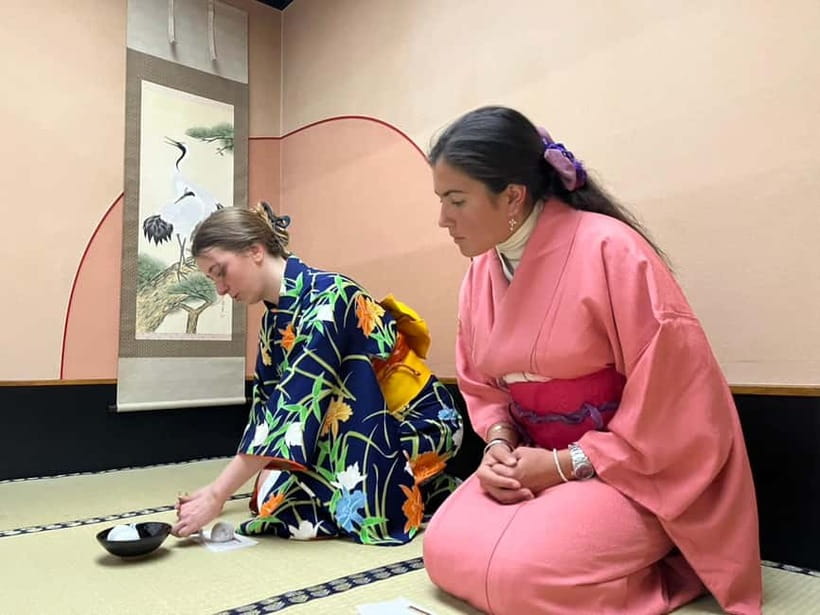
I would recommend it to first-time visitors who want a guided introduction to matcha without committing to a long formal course. It also suits couples, families with children aged 10 or older, and anyone who wants cultural context along with costume photos.
It is particularly useful for people who feel uneasy about tea ceremony rules. The instructor explains the gestures and manners, so you do not need prior knowledge. You can make mistakes in a teaching setting, then try again.
Families should note the age limit. Children under 10 cannot take part, and the formal sitting, clothing, and etiquette may not suit every older child. Still, the combination of colorful sweets, dress-up, and a hands-on tea ritual gives children who meet the age requirement a clear way to engage with Japanese culture.
The activity may not suit visitors with severe time pressure. You need to arrive 30 minutes early, and no pickup or drop-off is provided from your hotel or train station. Transportation is also not included, so allow enough time to reach the Joto-ku address.
Language support is available in English and Japanese. Italian, Spanish, French, Chinese, Thai, and Indonesian interpreters may be possible, but staff availability is limited. Ask before reserving if you need one of those languages.
What I would clarify before reserving
A few details deserve a quick check before you commit:
- Confirm the meeting address through Google Maps, not Apple Maps.
- Ask if hair styling and kanzashi are included in your chosen package.
- Confirm if your session includes making wagashi or only learning about and eating it.
- Check the price of outdoor photos and movie filming.
- Tell the provider in advance if you need an interpreter other than English or Japanese.
- Arrive 30 minutes early and wear a T-shirt under the clothing.
These questions are not deal breakers. They simply separate the basic one-hour class from the more elaborate styling and photo packages.
Should you book this Osaka matcha class?
Book it if you want active participation, traditional clothing, and clear cultural explanation in a small group. The strongest parts are the chance to prepare tea for someone else, the lesson on host and guest etiquette, the seasonal meaning of wagashi, and the included photos.
Skip it if you want a long, silent ceremony or a class centered mainly on making Japanese sweets. The one-hour format moves quickly, and some styling or photography features cost extra.
For most visitors, this is a practical way to add a personal cultural experience to an Osaka stay. You leave with a better sense of how matcha is served, why the gestures matter, and how hospitality depends on both people in the room.
FAQ
Where does the tea ceremony take place?
It takes place at Bushi no Homare, also called Samurai Honor, at Excellence Takayama 1F, 2-3-19 Shiginonishi, Joto-ku, Osaka-shi, Osaka 536-0014. Use Google Maps because the supplied information says the Apple Maps address is incorrect.
How early should I arrive?
Arrive 30 minutes before your reserved start time. This allows time for instructions and changing into traditional clothing.
Is the activity offered in English?
Yes. The instructors speak English and Japanese, and the default interpreter language is English. Italian, Spanish, French, Chinese, Thai, and Indonesian support may be available if staff schedules permit.
What is included in the $40 price?
The price includes kimono clothing, an English interpreter guide, matcha, wagashi, a certified professional instructor, tax, tips, and photo data sent to your designated email address.
Are hairstyling and outdoor photos included?
Collected hair and kanzashi are listed as a paid option, and outdoor photography is also available for an additional fee. Confirm the exact options with the provider, since the basic package does not clearly include them.
Who cannot take part?
The activity is not suitable for children under 10, people with altitude sickness, or people over 95. Pets, alcohol, drugs, and nudity are not allowed.
Newly steeped around Osaka
- Osaka:Zen Tea Ceremony and Foot Bath Experience<45min>★ 5.0 · 7 reviews
- Osaka Japanese Cooking And Matcha Class near Osaka Castle★ 5.0 · 22 reviews
- Nara Deer Park, Uji Matcha, & Hot Spring Full-Day Tour from Osaka★ 4.0 · 21 reviews
- Osaka: Tea Ceremony, Calligraphy, and Kimono Experience★ 5.0 · 6 reviews
- Tea and Calligraphy Session at a Table in Osaka★ 5.0 · 4 reviews
- Osaka: Nara, Todaiji, Uji Matcha, and Hot Spring Tour★ 4.0 · 7 reviews
- ZEN therapy | Shiatsu-style massage, EnergyTherapy & Japanese Tea★ 5.0 · 5 reviews
- Discover Japanese Tea Blending Techniques in Osaka★ 5.0 · 19 reviews
Zen Tea & Meditation Experiences, compared.
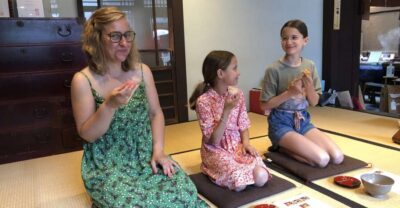
Kyoto: Tea Ceremony Meditation – Make Matcha with Tea Master
Read our review →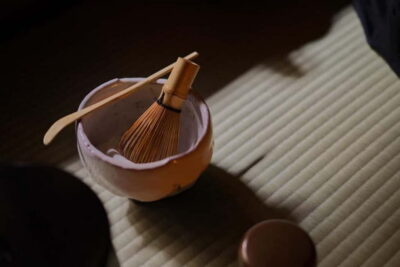
Kyoto: Mindful Tea Ceremony in 100-Year-Old Teahouse
Read our review →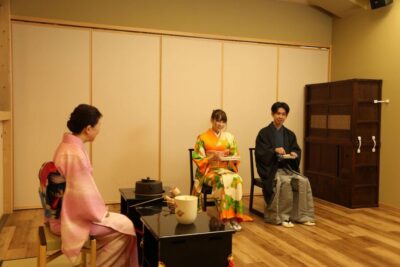
Tokyo: Practicing Zen with a Japanese Tea Ceremony
Read our review →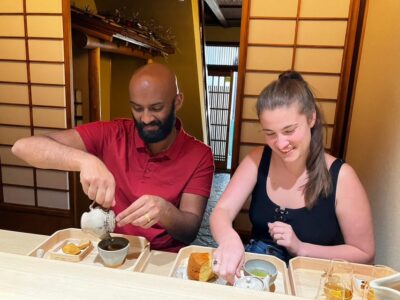
Nara:5 Type of Tea Tasting & Mindful Tea Ceremony
Read our review →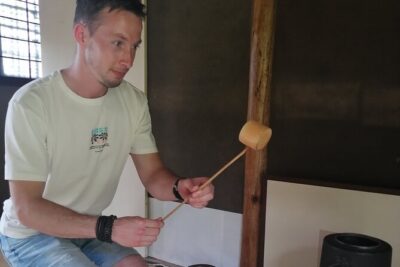
The Art of Mindful Living: Tea Ceremony in Kyoto
Read our review →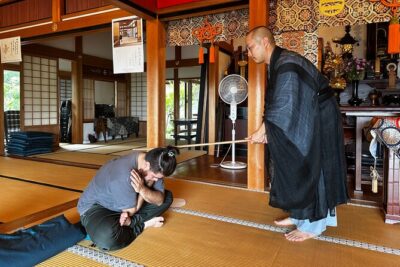
Shizuoka Shore Excursion: Zen, Matcha & Calligraphy Shimizu Port
Read our review →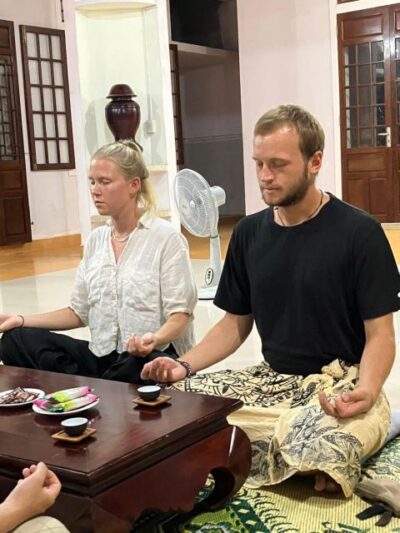
Hue Retreat: Tea and Meditation with Vegetarian Meal
Read our review →
Kyoto Hidden Riverside Zen Mediation and Uji Matcha Experience
Read our review →Browse the lists this tea experience appears in