
Review · TOKYO
Tokyo: Practicing Zen with a Japanese Tea Ceremony
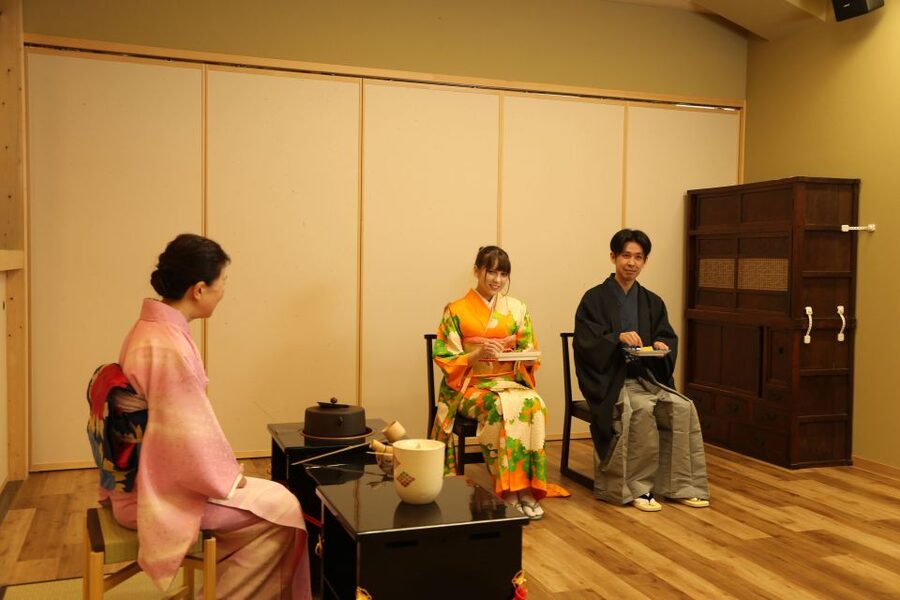
The most useful part of this Tokyo experience is that you do not only watch a tea ceremony. After your instructor demonstrates the careful movements, you prepare matcha yourself, with help. That turns a formal cultural display into something you can understand with your hands.
I like the small group of up to 10 people, which makes it easier to see the utensils and ask questions. I also like the clear link between tea, Zen, art, and architecture. The main consideration is the setting: one visitor could hear activity next door, so this may not deliver perfect silence throughout.
Key points before you book
- You make your own matcha: The second ceremony gives you a guided chance to repeat the process yourself.
- Zen is part of the lesson: You learn why the ceremony values calm attention, precise movement, and respect.
- Traditional sweet included: A Japanese confection is served with the green tea, chosen to balance its taste.
- English instruction: Guides such as Junko, Ken, and Midori explain the ceremony and its meaning in English.
- Chairs are available: You can take part without sitting on the floor, and the activity is wheelchair accessible.
- Tokyo Tower is your landmark: The meeting point is at the main entrance of Kikai Shinko Kaikan, directly opposite the tower.
What this Tokyo tea ceremony really offers
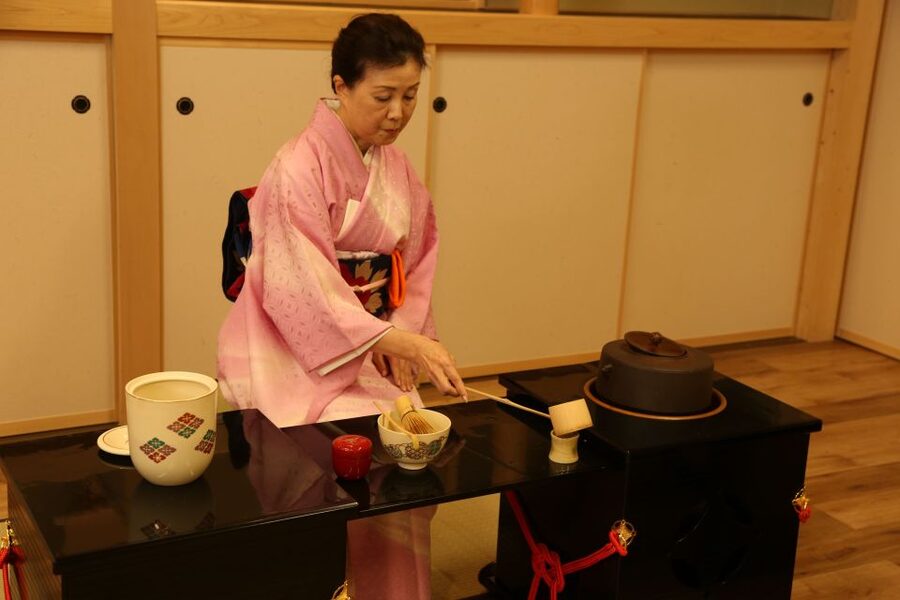
A Japanese tea ceremony can look mysterious if you only see the finished performance. Every gesture seems measured. The bowl is handled in a certain way. The whisk moves in a set pattern. The guest receives the tea with care.
This activity gives you the basic reasons behind those actions. Your instructor explains the utensils, the order of the ceremony, and the connection to Zen Buddhism before asking you to try it yourself. That makes the 75 minutes feel more like a cultural lesson than a quick cup of tea.
The ceremony is called chanoyu or sado, depending on the context and tradition. You do not need to know those terms before arriving. The useful point is that tea preparation is not treated as a rushed drink service. Attention is placed on the moment, the objects being used, the person preparing the tea, and the person receiving it.
You taste matcha with a traditional Japanese sweet. That pairing matters. Matcha has a strong, grassy, slightly bitter flavor, while the confection provides sweetness before or alongside the tea. It is a small detail, but it helps you understand why sweets are part of the experience.
More Tea Ceremonies in Tokyo
- Kimono Tea Ceremony at Tokyo, Asakusa Maikoya
★ 5.0 · 638 reviews - Tokyo: Traditional Tea Ceremony with a Tea Master
★ 5.0 · 528 reviews - Tea Ceremony Workshop in Tokyo by the Experienced Instrucor
★ 5.0 · 189 reviews
Arriving opposite Tokyo Tower
The meeting point is easy to identify if you use Tokyo Tower as your landmark. Meet your instructor at the main entrance of the Kikai Shinko Kaikan building on the first floor. The building is directly opposite Tokyo Tower.
If you cannot find the instructor at the entrance, go to True Japan Tour in Room B109 on the basement level. This is worth noting before you arrive, since a large office building can feel less obvious than a temple or traditional tea house.
Transportation is not included, so you make your own way there. Allow enough time to find the building and reach the entrance without rushing. A tea ceremony begins with calm attention, and arriving breathless after a last-minute search is not the best start.
The venue is arranged to feel like a tea room, even though you are in central Tokyo. You are not being sent out to a remote garden or an old temple compound. That is both a strength and a limitation. It makes the experience easy to fit into a Tokyo sightseeing day, but the surrounding urban setting is not especially secluded.
Watching the first ceremony
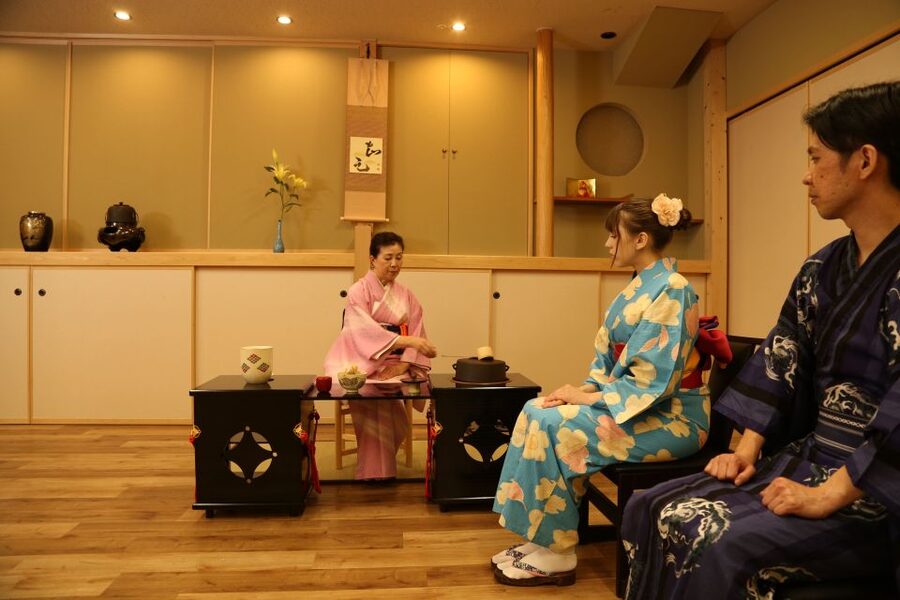
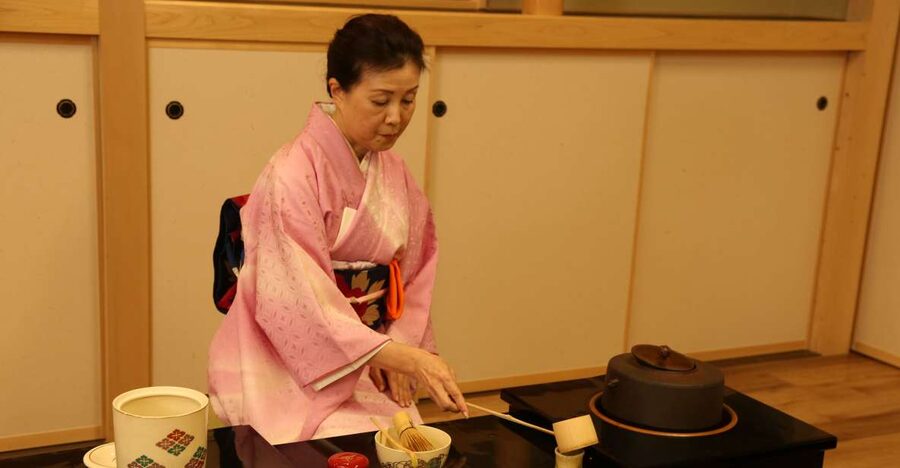
The first part is demonstration and explanation. Your instructor prepares matcha while showing you the movements that give the ceremony its shape. You learn about the bowl, whisk, and other utensils, along with the practical details of how each item is handled.
This is where the teacher matters most. Junko is named by several participants as a warm and clear guide, while Ken and Midori also led highly praised sessions. The instructors explain not only what to do, but why certain things happen in a particular order.
That distinction is important. You can watch a ceremony in silence and admire the graceful motions, but without context, it is easy to mistake the ritual for a set of fussy rules. The explanations help you see the care behind the form.
You will also learn about the role of tea ceremony in Japanese society and how it continues in modern life. The lesson does not treat the practice as a museum piece. Instead, it presents tea as a living art with links to hospitality, discipline, design, and spiritual focus.
Expect the instructor to ask you to be quiet during parts of the ceremony. Making noise is not allowed, since sound can interrupt the concentration of the person preparing tea and the people watching. This is a good activity for anyone willing to slow down for an hour, not for a group looking for a loud, casual tasting.
Matcha, utensils, and the sweet course
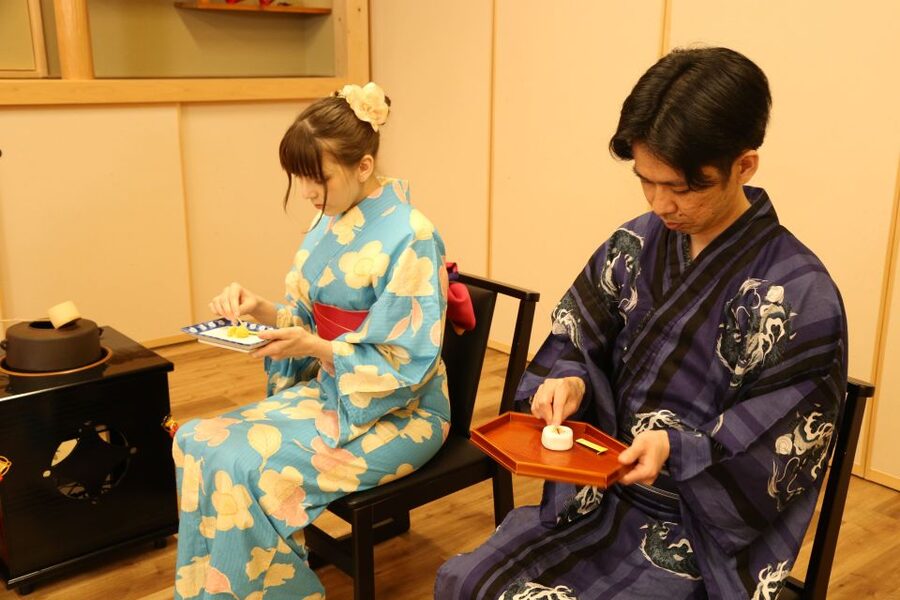
The tea and sweet are simple, but they are not an afterthought. The traditional confection is specially paired with green tea, giving you a chance to notice how the flavors work together.
You receive matcha rather than the lighter green tea often served in restaurants. Matcha is powdered tea whisked into water, so you drink the tea itself rather than straining out leaves. Its taste can surprise first-time drinkers, which is why the sweet is such a useful part of the lesson.
Your instructor also points out the utensils and explains their roles. The bowl and whisk are not just decorative objects. Their use, placement, and handling are part of the ceremony’s visual language.
I like this focus on objects because it gives you details to notice later. If you visit a Japanese garden, museum, tea room, or craft shop during your stay, you will have a better sense of why tea ware receives so much attention.
The ceremony also gives you a lesson in Japanese design. The setting, tools, movements, and seasonal elements work together without needing a large display. The point is not excess. A small bowl, a careful gesture, and a well-chosen sweet can carry the whole experience.
More Zen Tea Sessions around Tokyo:
- Kamkura: Private Zazen, Matcha at Bamboo Temple & Mindful Cuisine
★ 5.0 · 9 reviews - Practicing Zen through Japanese Tea Ceremony
★ 4.5 · 6 reviews - Tokyo Morning Japanese Tea and Meditation Experience in Japan
★ 5.0 · 2 reviews - Kyoto: Tea Ceremony Meditation – Make Matcha with Tea Master
★ 4.8 · 406 reviews
Your turn to prepare the tea
The strongest part of the activity comes after the demonstration. You conduct a second tea ceremony yourself, following the instructor’s guidance.
Do not expect to reproduce every movement perfectly on the first attempt. That is not the purpose. You are learning the sequence and the attitude behind it. Your teacher walks you through what to do, allowing you to handle the utensils and prepare the matcha instead of remaining a spectator.
This practical section also makes the Zen connection easier to grasp. Precision is not there simply to make the ceremony look elegant. It asks you to pay attention to one action at a time. You must notice the bowl, the whisk, the tea, and the person in front of you.
For me, this is where the $63 price makes the most sense. You are paying for instruction and participation, not only for a drink and a sweet. If you only want to taste matcha, you can find less expensive options elsewhere in Tokyo. If you want a guided cultural lesson that explains the meaning behind the drink, this offers more substance.
The practical lesson is especially useful for couples, solo visitors, and small groups who prefer learning by doing. It is also a good choice if you have already visited major sights and want an activity that asks less of your body and more of your attention.
How Zen fits into the ceremony
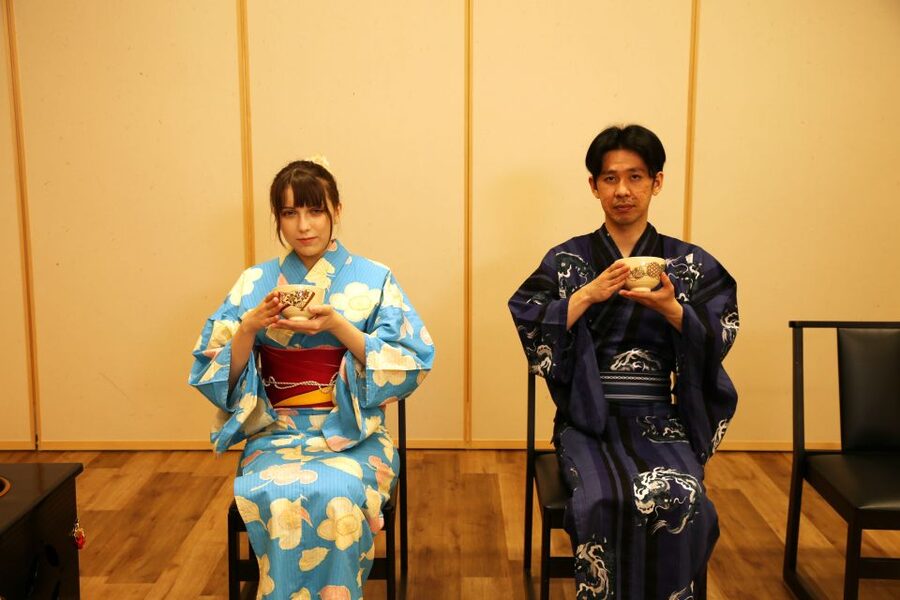
The word Zen can be used too casually in tourism. Here, the connection is explained through the ceremony’s focus and structure rather than presented as a vague promise of instant peace.
You learn how the tea ceremony expresses ideas found in Zen Buddhism through simplicity, attention, and respect for the present moment. The movements are controlled. The room is kept quiet. The host prepares something for another person, and the person receiving it responds with care.
That does not mean you will receive a full lesson in Buddhist philosophy in 75 minutes. One participant felt the separate Zen exercise was too short, and that is a fair expectation to set. The tea ceremony is the main event. Zen provides its context, rather than becoming a long meditation class of its own.
Still, the connection adds value. Without it, the activity would be a pleasant demonstration of Japanese etiquette. With it, you gain a clearer idea of why the ceremony has lasted and why people still practice it in modern Japan.
The setting also shows how architecture and art support the experience. The space is arranged to feel like a tea room, helping you focus on the ceremony even though you are in a central Tokyo building. One visitor noted sound from an activity next door, so do not book this expecting complete retreat-like silence.
Sitting on the floor is not required
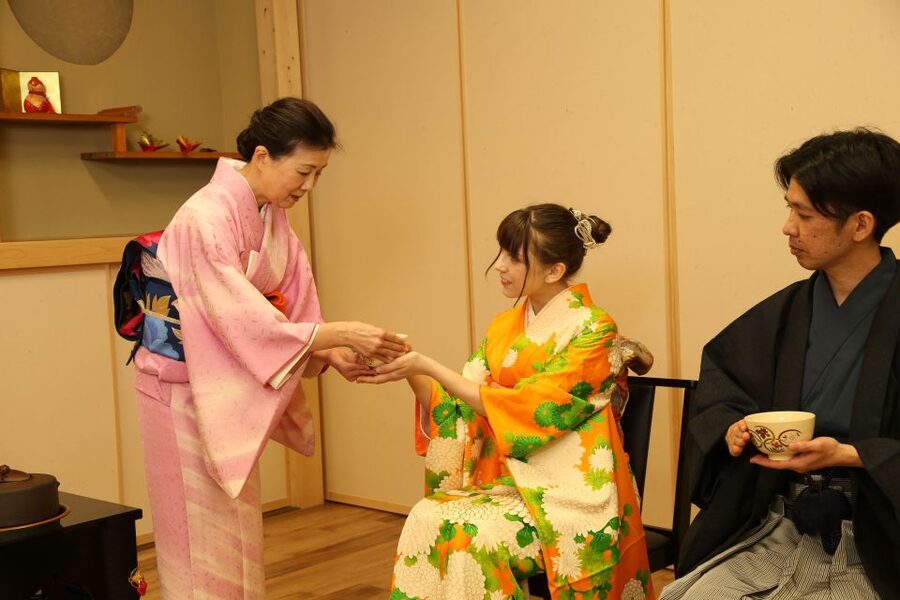
Traditional tea ceremonies are often associated with sitting on tatami mats in a formal kneeling position. That image can worry people with stiff knees, limited mobility, or back trouble.
This activity provides seats for anyone who prefers not to sit on the floor. It is also wheelchair accessible. That makes the experience more practical for a wider range of visitors, though you should still mention any needs when booking if you require specific arrangements.
The chairs do not remove the formal nature of the ceremony. You can still observe the movements, taste the tea, and prepare matcha yourself. For many people, comfort makes it easier to pay attention to the explanations.
Children under four are not permitted. Older children may appreciate the hands-on element, but the no-noise rule and formal pace may suit older children and teenagers better than very young ones.
Group size, guide quality, and the room
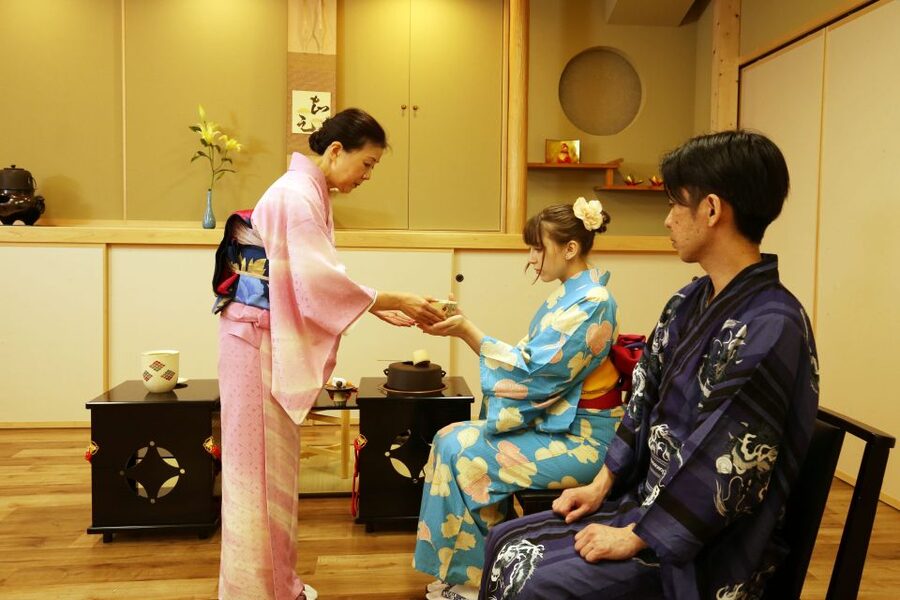
The group is limited to 10 participants. That is small enough for you to see the demonstration and hear the English explanation without feeling lost in a crowd.
A small class also helps during the practice section. The instructor can guide each person through the steps rather than simply performing once for a room full of observers. If your group is particularly interested, there is room to ask about the tea, utensils, Zen, or the role of the ceremony in daily life.
The English instruction is one of the activity’s strongest practical features. The guides are not merely showing hand movements. They explain the meaning behind them and make the lesson accessible to people with no prior knowledge.
The tone may vary by instructor. Junko is noted for her kind, personal teaching, while Ken and Midori are also named as effective hosts. The common thread is a clear effort to make beginners comfortable. You should still remember that this is a lesson with rules, not a free-form cultural chat.
Is $63 a fair price?
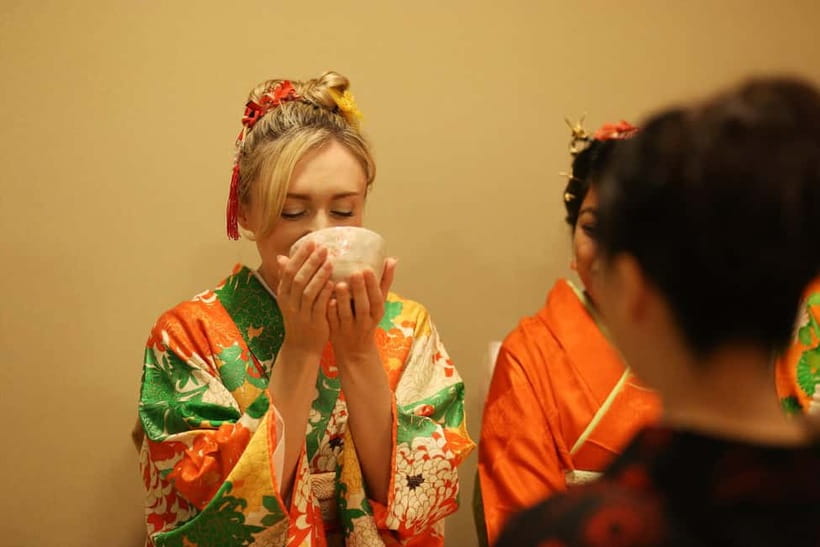
At $63 per person, this is not a budget tea stop. The price is fair if you value the instruction, the small class, and the chance to prepare your own tea.
The included items are the tea ceremony, traditional sweets, matcha, and the second ceremony performed by you. Transportation is not included, so add the cost of reaching the building to your calculation.
I would compare it with three kinds of alternatives. A café gives you matcha and a sweet for less, but not the cultural explanation. A major temple may offer atmosphere and architecture, but not always a personal lesson. A more formal tea experience may offer greater ceremony, but could feel less approachable for a first-timer.
This activity sits in the middle. It is structured, educational, and hands-on without requiring you to already understand Japanese etiquette. For a first introduction to tea ceremony, that balance is useful.
The rating is 4.7 from 105 ratings, which matches the main strengths I would look for: friendly teaching, clear explanations, and the chance to try the process. The main weakness is the possibility of noise from the neighboring activity, not the tea lesson itself.
Who should book this activity?
I would choose this for you if you want a cultural activity that fits neatly into a sightseeing day near Tokyo Tower. It suits first-time visitors who want context instead of a simple photo opportunity.
It is also a good pick for anyone curious about Japanese art, architecture, etiquette, Buddhism, or traditional crafts. You do not need previous knowledge. The instructor starts with the basics and guides you through the practical steps.
The small group makes it a better choice than a large demonstration if you want personal attention. The chairs and wheelchair access also remove one common barrier to taking part.
I would think twice if your priority is total quiet, a historic temple setting, or a long meditation session. The venue is in a city building, and the Zen element is woven into the tea lesson rather than offered as a separate, extended practice.
Free cancellation is available up to 24 hours before the start time, and you can reserve now and pay later. Those options are useful if your Tokyo schedule is still shifting.
My booking advice
Book this tea ceremony if you want to understand what you are seeing, then try it yourself. The best feature is not the cup of matcha. It is the move from watching to doing, with an instructor explaining the purpose behind each step.
The $63 cost is reasonable for a 75-minute, English-language class with a maximum of 10 people, traditional sweets, matcha, and guided practice. It is less compelling if you only want a quick taste or a silent retreat.
Plan to meet at Kikai Shinko Kaikan opposite Tokyo Tower, arrive with time to spare, and keep your voice low during the ceremony. If those details suit you, this is a thoughtful and approachable way to spend part of a Tokyo day.
FAQ
How long does the tea ceremony experience last?
The activity lasts 75 minutes.
How much does the experience cost?
The price is $63 per person.
Where is the meeting point?
Meet your instructor at the main entrance of Kikai Shinko Kaikan on the first floor, directly opposite Tokyo Tower.
What should I do if I cannot find the instructor?
Go to True Japan Tour in Room B109 on the basement level of the building.
Is the activity conducted in English?
Yes. The instructor provides the activity in English.
Is matcha included?
Yes. Matcha green tea is included.
Are traditional Japanese sweets included?
Yes. A traditional Japanese confection paired with the tea is included.
Do I get to prepare tea myself?
Yes. After watching the first ceremony, you take part in a second ceremony and prepare tea with guidance.
Can I sit in a chair instead of on the floor?
Yes. Seats are available for people who prefer not to sit on the floor.
Is the activity wheelchair accessible?
Yes. The activity is wheelchair accessible.
How many people are in each group?
The activity is limited to 10 participants.
Is transportation included?
No. Transportation to the meeting point is not included.
Are children under four allowed?
No. The activity is not suitable for children under four.
Can I cancel for a full refund?
Yes. You can cancel up to 24 hours in advance for a full refund.
Can I reserve now and pay later?
Yes. The reserve now and pay later option lets you book without paying at the time of reservation.
Newly steeped around Tokyo
- Yokohama : Tea Ceremony with Sweets and Souvenir★ 5.0 · 5 reviews
- Walking Tour: Yanaka,Nezu& Sendagi: Tea Ceremony & Old Tokyo★ 5.0 · 3 reviews
- Private Mochi・Matcha sweets Making Class Near Shibuya Area★ 5.0 · 22 reviews
- 2 Hours Mochi &Nerikiri Making & Matcha Class in Bunkyo★ 5.0 · 21 reviews
- Private Kimono and tea ceremony at local home near Tokyo Disney★ 5.0 · 6 reviews
- Kimono and Tea Ceremony in Asakusa Private Food Tour With Guide★ 5.0 · 4 reviews
- Giant Sushi Cooking Class: Make a 1.5m Sushi Roll in Tokyo★ 5.0 · 9 reviews
- Tokyo Tea Ceremony Class at a Traditional Tea Room★ 5.0 · 2 reviews
Zen Tea & Meditation Experiences, compared.
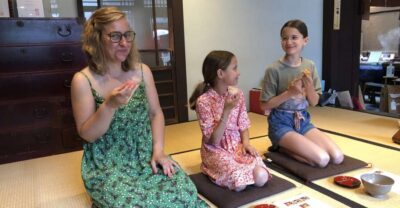
Kyoto: Tea Ceremony Meditation – Make Matcha with Tea Master
Read our review →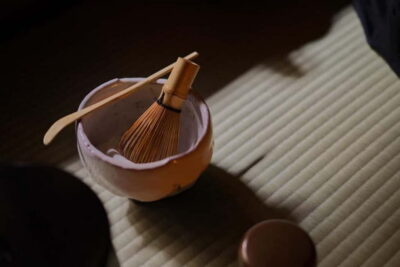
Kyoto: Mindful Tea Ceremony in 100-Year-Old Teahouse
Read our review →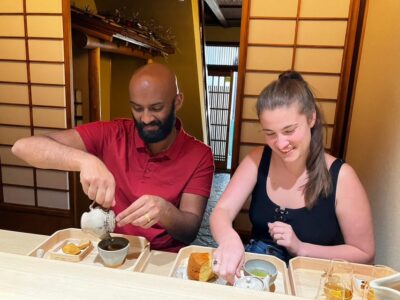
Nara:5 Type of Tea Tasting & Mindful Tea Ceremony
Read our review →
Learn Zen in a class of making Matcha tea near Osaka Castle
Read our review →
The Art of Mindful Living: Tea Ceremony in Kyoto
Read our review →
Shizuoka Shore Excursion: Zen, Matcha & Calligraphy Shimizu Port
Read our review →
Hue Retreat: Tea and Meditation with Vegetarian Meal
Read our review →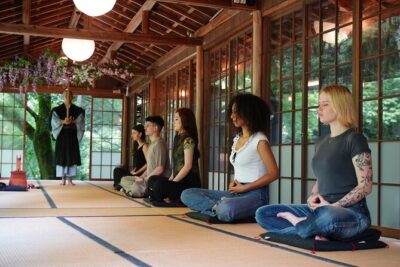
Kyoto Hidden Riverside Zen Mediation and Uji Matcha Experience
Read our review →Browse the lists this tea experience appears in