
Review · OSAKA
Osaka: Castle, Tea Ceremony, Calligraphy, and Samurai Armor!
Osaka Castle gives this experience its big opening scene, but the hands-on culture lessons are what make the day memorable. You move from a major landmark to tea ceremony and calligraphy, then finish among the signs, shops, and food stalls of Dōtonbori.
I like the mix of seeing Osaka by local train and learning by doing. The samurai show and traditional instruments add more than a standard castle visit, and guide Canned is described as warm, friendly, and professional. The main catch is that armor and kimono photos cost an extra ¥4,820, so the advertised price is not the final price for the full costume experience.
Key points to know
- Osaka Castle anchors the day: You visit the landmark and its museum, with time for photos and exhibits.
- Tea and calligraphy make the history hands-on: You do more than look at old objects behind glass.
- The samurai portion is broader than a photo stop: It includes a show, with optional armor for adults and children.
- Dōtonbori is the lively finale: Plan to browse, take photos, and try Osaka street food.
- The ¥135 price covers the core program: Samurai armor and women’s kimono experiences cost an additional ¥4,820.
- The meeting point is central but underground: Find Osaka JOINER base in B1 of Namba Walk near Exit B23.
Why this Osaka tour works as a full-day culture sampler
This experience is best understood as a compact introduction to several sides of Osaka. You get a famous castle, a museum visit, traditional arts, samurai presentation, and a stop in the city’s best-known entertainment and food district.
That variety is the strongest reason to book it. If you have only a short stay in Osaka, you can cover several major interests in one outing rather than arranging separate visits. You also get an English-speaking guide to help connect the stops.
The day is not built around one long lecture. It alternates between looking, listening, practicing, and photographing. That rhythm should suit you if you enjoy activities that keep your hands busy and your camera working.
There is a trade-off. A program covering this much ground cannot give every stop the same amount of time or depth as a private specialist tour. You should choose it for variety and convenience, not for an exhaustive study of Osaka Castle, tea, calligraphy, or samurai traditions.
More Tea and Calligraphy Workshops in Japan
- Osaka: Tea Ceremony, Calligraphy, and Kimono Experience
★ 4.9 · 130 reviews - Osaka: Private Tea Ceremony and Calligraphy Experience
★ 5.0 · 50 reviews - Samurai dress-up and shows, plus Tea Ceremony & Calligraphy
★ 5.0 · 27 reviews
Starting below Namba Walk near Exit B23
The tour begins at Osaka JOINER base on the B1 level of Namba Walk, the underground shopping street. Look for the shop near Exit B23, between the Mizuno shop and Docomo Shop. If you arrive from the Starbucks, go to the other side.
This is useful to know because Namba’s underground passages can feel like a small city of their own. Give yourself enough time to find the meeting point, especially if you are unfamiliar with the shopping arcade. The precise landmark directions are more helpful than simply being told to meet at Namba Station.
Bring cash. The supplied information specifically lists cash as something to bring, and you may need it for optional extras or personal purchases in Dōtonbori. Smoking indoors is not allowed.
The experience ends back at this same meeting point. That makes the return simple, though it also means you should not plan an evening reservation immediately afterward unless you leave a generous buffer.
Osaka Castle, museum exhibits, and the first major photo stop
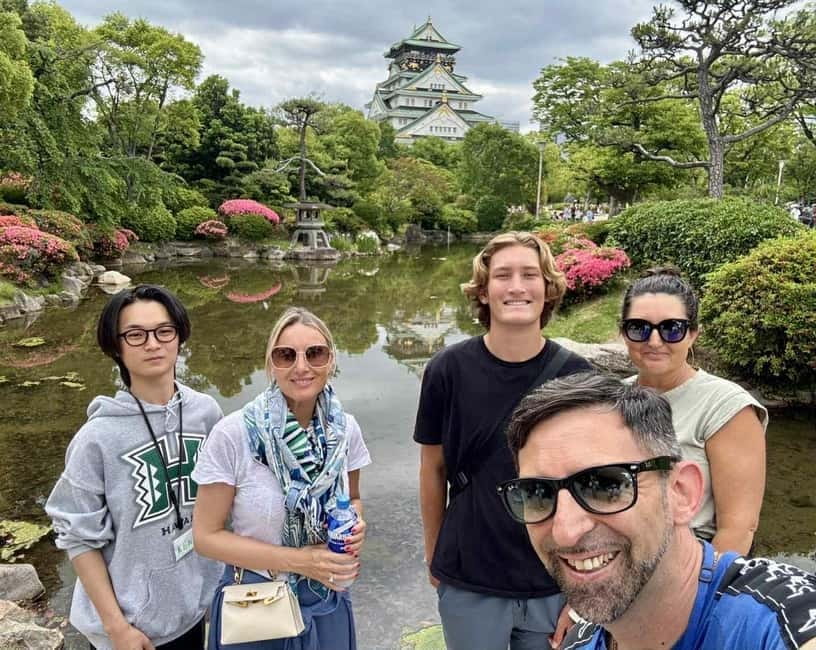
Osaka Castle is the tour’s grandest sight. You enter the castle and visit the museum, where you can look at displays connected with Osaka’s past and the castle itself.
The appeal here is partly visual. The castle provides the classic Osaka photograph, and the grounds give the day a strong sense of place before the more intimate cultural activities begin. You will have time to take photos and see the museum rather than simply viewing the building from outside.
The museum is a good fit if you want background to go with the architecture. It gives you a clearer idea of why the castle matters, while the guide can help keep the visit connected to the wider story of Osaka.
Keep your expectations practical. The information does not promise a private route, extended museum study, or special access. If you are a serious castle enthusiast, you may want extra independent time on another day. Here, Osaka Castle is one important chapter in a wider itinerary.
The route includes local train travel between parts of the experience. That is a useful touch because you see a little of how Osaka works instead of spending the entire day inside a tour vehicle. It also means you should be comfortable with station movement and ordinary urban walking. The experience is not recommended for people with back problems or for those over 70.
Tea ceremony, calligraphy, and learning by doing
After the castle, the program shifts from grand public history to traditional Japanese arts. You take part in a tea ceremony and a calligraphy session.
The tea ceremony is valuable because it shows the careful gestures and quiet pace behind a familiar Japanese custom. You are not just looking at a tea bowl in a display case. You take part in a structured activity and get a closer sense of the manners and attention involved.
Calligraphy gives the cultural portion a practical edge. You can try the brushwork yourself, which makes the session more memorable than a short explanation alone. Do not expect to leave as a trained calligrapher. The point is to experience the movement, tools, and concentration involved in the art.
I especially like this pairing. Tea asks you to slow down and observe, while calligraphy asks you to make something with your own hands. Together they offer a welcome change from castle rooms and city streets.
Your guide’s role matters here. One account identifies Canned as the guide and describes a warm, friendly, professional approach. Since the booking information lists English as the tour language, you should be able to follow the activities and explanations in English. The supplied material does not identify the exact venue or say how long each lesson lasts, so do not build your expectations around a fixed class length.
More Tea and Calligraphy Workshops in Osaka
- Premium Kimono Dressing, Tea Ceremony, Calligraphy, Samurai show
★ 5.0 · 18 reviews - Osaka: Tea Ceremony, Calligraphy, and Kimono Experience
★ 5.0 · 6 reviews - Tea and Calligraphy Session at a Table in Osaka
★ 5.0 · 4 reviews
Samurai show, armor, and traditional instruments
The samurai portion adds energy after the quieter tea and calligraphy activities. A samurai show is included, and the experience also includes playing traditional instruments such as the Shamisen, Koto, and Shinobue.
That combination gives you several ways to connect with Japanese culture. The show offers a visual performance, while the instruments let you try sounds and techniques yourself. It is a playful, accessible approach, particularly for families and first-time visitors.
Children can take part in the samurai experience with specially designed armor. That makes the optional costume element more appealing for families, although the information does not specify the children’s age range, sizes, or exact conditions. If you are booking for a child, ask ahead through WhatsApp about fit and availability.
The important price detail is easy to miss. Wearing samurai armor is not included in the $135 price. The additional charge is ¥4,820, listed as a temporary price through the end of August. You can request it on the day, or contact the provider through WhatsApp before the tour. The same ¥4,820 extra applies to the kimono option, which is listed for women only.
If your main goal is a costume photo, select or arrange that extra before you arrive. If you are happy with the show, instruments, and cultural lessons, the base tour still provides a full program without paying more.
Dōtonbori closes the day with food, lights, and people-watching
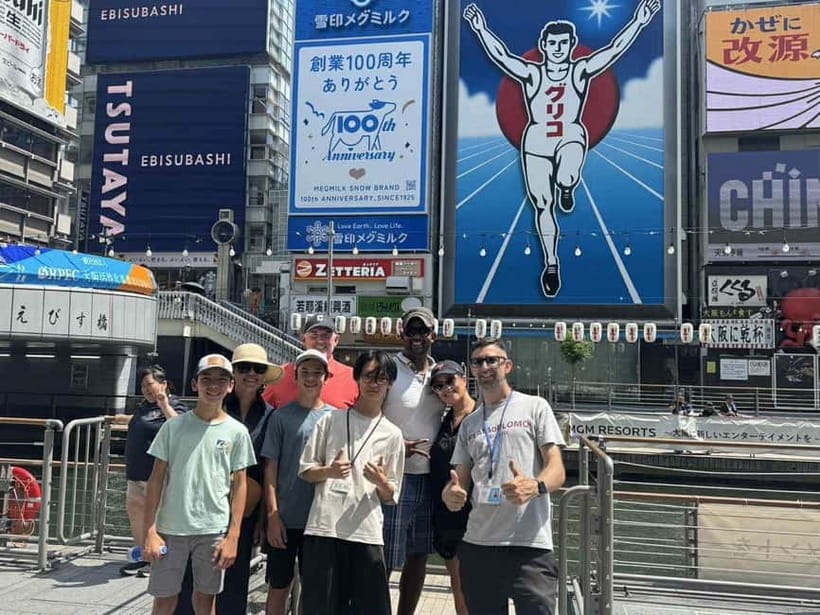
The final stop is Dōtonbori, Osaka’s famous entertainment and street food district. This is where the day shifts into modern Osaka, with shopping, food, bright signs, and plenty of good photo angles.
You can use the stop in different ways. Food-focused visitors can look for local delicacies, shoppers can browse, and photographers can work the canal-side streets and famous displays. The tour does not state that food is included, so bring money if you want to eat.
Dōtonbori can be crowded and noisy. That is part of its appeal, but it may feel like a sharp contrast after the calm of the tea ceremony. I see this as a good final stop because it lets you end the day at your own pace, even if the tour itself remains guided.
Do not expect a quiet portrait of Osaka here. Dōtonbori is designed for entertainment and spectacle. It is a useful counterpoint to the castle and traditional arts, showing you the city’s modern appetite for food, shopping, and neon.
What the $135 price really covers
At $135 per person, the value depends on how much of the included program you would otherwise arrange yourself. The price covers Osaka Castle, the tea ceremony, calligraphy, the samurai show, traditional instrument activities, a guide in English, and the Dōtonbori visit.
That is a reasonable package if you want a planned cultural day with several distinct stops. You are paying for structure and guidance as much as admission. The guide helps connect the castle, traditional arts, performance, and food district into one outing.
The price is less attractive if you only want Osaka Castle and Dōtonbori. Those two areas can be visited independently, and the extra lessons will matter only if you actually want to participate.
Budget carefully for the optional costumes. ¥4,820 is a meaningful addition, especially for a family, so decide if the photos are central to your plans. The base experience includes a samurai show and photo opportunities, but not wearing the armor itself.
The listing notes a full-refund cancellation option up to 24 hours before the experience, and it allows you to reserve and pay later. Those terms help if your Osaka schedule is still shifting.
Who should book this experience
I would point this tour toward first-time visitors who want a broad introduction rather than a specialist study. It suits couples, families, and friends who like alternating between sightseeing and hands-on activities.
It should work particularly well for you if you want:
- A guided visit to Osaka Castle with museum time
- An English-language cultural activity
- Tea and calligraphy in the same outing
- A samurai performance and traditional instruments
- A simple way to reach Dōtonbori after the cultural stops
- Optional costume photos, with an added fee
Families should note the children’s samurai armor option. Older visitors and anyone with back problems should consider the stated restrictions before booking. The information also says the activity is not suitable for people over 70.
You may want a different plan if your priority is fine-grained museum study, a long tea ceremony, or a quiet, highly traditional setting. This is a lively sampler, with several experiences packed into one day.
Practical tips for making the day smoother
Wear something comfortable for urban movement and station connections. The exact walking distance is not provided, but the tour uses local trains and moves among several Osaka locations, so easy clothing and shoes are sensible.
Keep cash with you for food, shopping, and any optional experience. If you want armor or kimono, tell the guide on the day or use WhatsApp in advance, and confirm the current ¥4,820 price because the stated rate is only guaranteed through the end of August.
Bring a camera, but leave room to enjoy the activities themselves. Osaka Castle and Dōtonbori are obvious photo stops, while the tea, calligraphy, instruments, and costume sessions offer more personal pictures.
Finally, avoid scheduling an important appointment too soon after the tour. The end point is back at Namba Walk, but no precise duration is provided.
Should you book it?
Book this experience if you want a convenient, good-value introduction to Osaka that mixes major sights with activities you can try yourself. The strongest feature is the variety: castle and museum, tea and calligraphy, samurai and instruments, then Dōtonbori food and shopping.
Think twice if you want deep time at one attraction or dislike moving between several activities. Also budget the optional ¥4,820 if wearing armor or a kimono is the main reason you are interested.
For most first-time visitors, the $135 core program offers a sensible way to see several sides of Osaka in one organized day. Go in expecting a lively cultural sampler, not a specialist course, and the experience should fit its purpose well.
FAQ
Where does the Osaka culture tour begin?
It begins at Osaka JOINER base on the B1 floor of Namba Walk, near Exit B23. The shop is between Mizuno and Docomo Shop. If you come from the Starbucks, go to the other side.
Where does the activity finish?
The tour ends back at the same meeting point at Osaka JOINER base.
What is included in the $135 price?
The price includes a visit to Osaka Castle, a Japanese tea ceremony, Japanese calligraphy, a samurai show, traditional instrument activities, and the guided visit to Dōtonbori.
Is samurai armor included?
No. Wearing samurai armor is an optional extra costing ¥4,820. You can request it from the guide on the day or contact the provider through WhatsApp.
Is kimono wearing included?
No. Kimono wearing is an optional extra costing ¥4,820 and is listed as available for women only.
Can children try the samurai armor?
Yes. Children can use specially designed armor for the samurai experience. The available information does not give specific age or size limits.
What language is the tour offered in?
The tour is offered in English.
Is the experience suitable for everyone?
The activity is not suitable for people with back problems or people over 70. Smoking indoors is not allowed, and you should bring cash.
More Tea Ceremonies in Osaka
- Osaka: Tea Ceremony Experience
★ 4.9 · 1,426 reviews - Tea Ceremony Experience in Osaka Doutonbori
★ 5.0 · 754 reviews - Osaka: Japanese Traditional Sweets Making and Tea Ceremony
★ 4.7 · 118 reviews - Samurai Show, Tea Ceremony, Japanese Traditional Activities
★ 5.0 · 56 reviews
Newly steeped around Osaka
- Osaka:Zen Tea Ceremony and Foot Bath Experience<45min>★ 5.0 · 7 reviews
- Osaka Japanese Cooking And Matcha Class near Osaka Castle★ 5.0 · 22 reviews
- Nara Deer Park, Uji Matcha, & Hot Spring Full-Day Tour from Osaka★ 4.0 · 21 reviews
- Osaka: Tea Ceremony, Calligraphy, and Kimono Experience★ 5.0 · 6 reviews
- Tea and Calligraphy Session at a Table in Osaka★ 5.0 · 4 reviews
- Osaka: Nara, Todaiji, Uji Matcha, and Hot Spring Tour★ 4.0 · 7 reviews
- ZEN therapy | Shiatsu-style massage, EnergyTherapy & Japanese Tea★ 5.0 · 5 reviews
- Discover Japanese Tea Blending Techniques in Osaka★ 5.0 · 19 reviews
Tea & Calligraphy Workshops, compared.
Osaka: Tea Ceremony, Calligraphy, and Kimono Experience
Read our review →
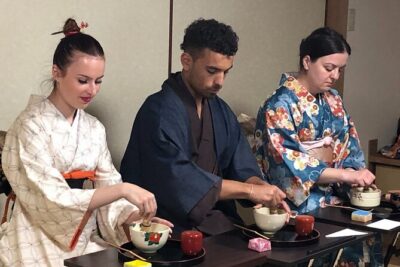
An Amazing set of Cultural experience: Kimono, Tea Ceremony and Calligraphy
Read our review →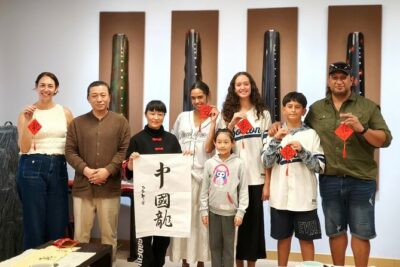
Beijing Culture: Tea Ceremony, Heritage Instrument & Calligraphy
Read our review →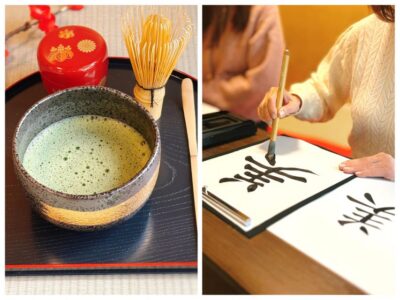
Osaka: Private Tea Ceremony and Calligraphy Experience
Read our review →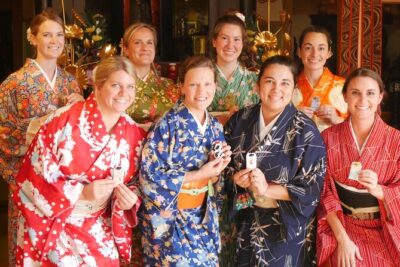
Cultural Activities :Kimono, tea ceremony, Calligraphy and Amulet
Read our review →
Samurai dress-up and shows, plus Tea Ceremony & Calligraphy
Read our review →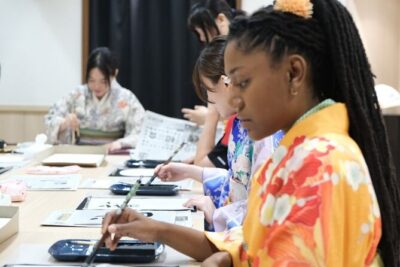
Premium Kimono Dressing, Tea Ceremony, Calligraphy, Samurai show
Read our review →Browse the lists this tea experience appears in