
Review · TOKYO
Matcha Experience with of Japanese Tea Tasting in Tokyo
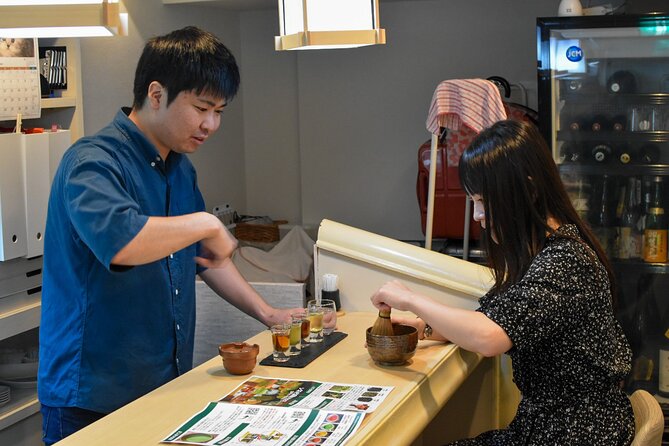
The most rewarding part of this Tokyo experience is not simply drinking matcha. It is learning how cultivation and processing change the color, aroma, and taste of leaves that may begin with the same basic plant. Chisei, a former Kyoto tea farmer, explains the process in plain terms, then lets you taste the results.
I like the five-person limit, which gives you room to ask questions, and I like the homemade sweets made by Rina. One consideration: this is a seated tea class, not a quick ceremonial photo stop, so it suits curious visitors more than anyone looking for a fast activity.
Key points to know before booking
- Former tea farmer as your guide: Chisei draws on six years of growing tea in Kyoto.
- A serious tasting in 90 minutes: You sample several Japanese teas, two matcha types, and latte variations.
- Matcha-making practice: You whisk your own ousucha, or thin matcha, with a bamboo whisk.
- Homemade sweets and tea leaves: Rina prepares sweets, and the session may include tea leaves served with ponzu.
- Tiny group setting: The class accepts no more than five people, making questions easy.
- Convenient Taito City location: Meet at Henn Na Hotel in Kotobuki, on the second floor at Sports Bar Leaf.
What this matcha class actually gives you
Tokyo has no shortage of cafés selling matcha drinks. Those cafés can be fun, but they often tell you little about what you are drinking. This class takes a different route. It treats Japanese tea as an agricultural product, a craft, and a daily drink.
That difference matters. You do not simply receive a bowl and copy a few hand movements. You first taste several teas prepared in ways meant to show their character. By the time you reach the matcha-making portion, you have a better sense of why tea can taste grassy, sweet, roasted, savory, or light.
The session lasts about 90 minutes and costs $57.98 per person. That is not the price of a single café drink, but you are paying for instruction, a broad tasting, sweets, and the chance to make matcha yourself. For anyone already planning to buy tea or a whisk in Japan, the practical value is stronger because Chisei can explain what separates one type from another.
The group limit is five people. This is important. Tea can become a lecture when the class is large, but here you have a fair chance to ask about caffeine, farming, preparation, flavor, or the teas you may have seen in shops. The class is also suitable for beginners. You do not need a working knowledge of Japanese tea, though the pace may feel full if you want long, quiet time with each cup.
More Matcha Experiences in Tokyo
- Matcha Making Class in Tokyo with Authentic Japanese Sweets Set
★ 5.0 · 744 reviews - Tokyo: Matcha Making Experience with Mochi Sweets in Asakusa
★ 4.9 · 388 reviews - Asakusa Cultural Walk & Matcha Making Tour
★ 5.0 · 245 reviews
Meeting Chisei and Rina in Taito City
The meeting point is matcha tripJapan at 111-0042 Tokyo, Taito City, Kotobuki, 3-chōme 19, Henn Na Hotel, second floor, at Sports Bar Leaf. The activity ends back at the same place, so you do not need to arrange a separate return trip.
The location near public transportation makes it practical to add to a day in eastern Tokyo. Still, allow enough time to find the correct building and second-floor space. The supplied meeting details include both the hotel and the bar name, so keep them available on your phone rather than relying only on the general neighborhood.
Chisei leads the teaching. He worked as a tea farmer in Kyoto for six years and also works as a pharmacist. That combination helps explain the class’s practical tone. He covers farming and processing, but he also answers everyday questions about how to use tea at home.
Rina prepares the homemade sweets and helps create the warm, personal feel of the class. The sweets are not just decoration. They give you a useful comparison point, especially during the Japanese black tea portion and the latte tasting. Tea changes when you drink it alone, with sugar, or alongside something sweet.
Starting with a seasonal welcome drink
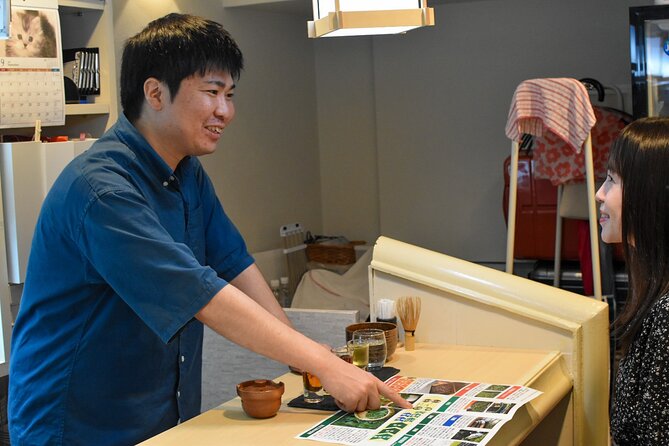
The class begins with a seasonal welcome drink. While you have it, the hosts introduce the teas you will taste and set up the basic vocabulary for the session.
This opening is useful because the tasting includes several teas that may look similar to a first-time drinker. Instead of treating each cup as an isolated sample, Chisei explains how growing and processing affect the final drink. You will pay attention to the leaf shape and color before tasting, then compare fragrance and flavor.
The class is designed for general visitors, not commercial buyers. If you want a casual education in Japanese tea, that is a good fit. If you are attending to discuss wholesale or commercial purchasing, you need to contact the provider before booking.
Comparing six Japanese teas side by side
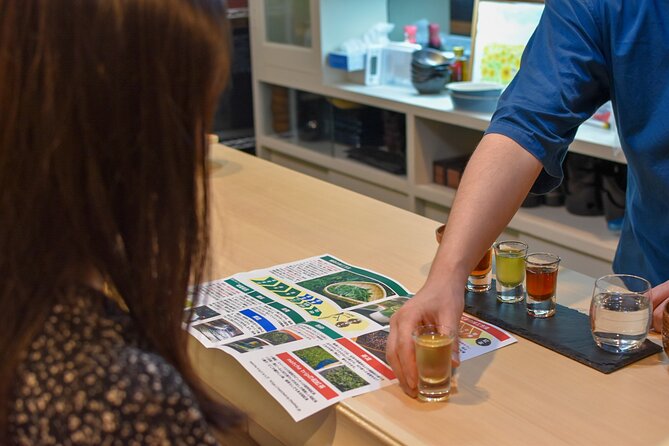
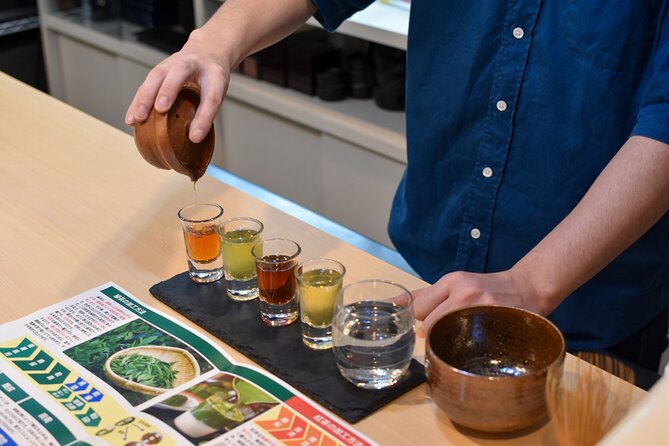
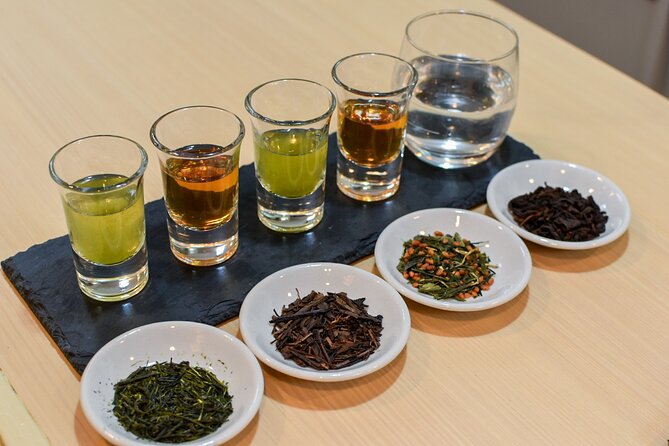
The main tasting compares six teas:
- Sencha
- Kabusecha
- Gyokuro
- Deep-steamed sencha
- Genmaicha, or brown rice tea
- Hojicha, or roasted green tea
The hosts prepare each one in a way intended to show its best qualities. You first look at the leaves, then observe the brewed color, smell the cup, and taste it. That order slows you down in a useful way. You begin to notice that tea is not just hot water with a green label.
Sencha gives you a familiar starting point. It is one of the best-known everyday Japanese green teas, so it provides a reference for the more specialized examples that follow.
Kabusecha and gyokuro introduce teas grown with more shade. The point is not simply to memorize the names. You taste how growing conditions can shape the cup and begin to understand why certain teas cost more.
Deep-steamed sencha shows how processing changes the appearance and taste of the finished tea. The leaves may look different from what you expect, and the brew gives you another useful comparison with standard sencha.
Genmaicha brings roasted rice into the picture. Its toasted quality can be easier for some beginners to enjoy, especially if straight green tea seems too sharp or vegetal.
Hojicha is roasted rather than served as a fresh green tea style. It has a warmer, toastier character and is a helpful reminder that Japanese tea is not one single flavor.
The class also includes Japanese black tea. That part broadens the lesson beyond green tea and makes a strong pairing with the homemade sweets. If you think Japanese tea means only matcha, this tasting corrects that idea quickly.
More Tea Tastings in Japan
- Authentic Japanese tea tasting: sencha, matcha and gyokuro
★ 5.0 · 12 reviews - Authentic Japanese tea tasting session: sencha, matcha, gyokuro
★ 5.0 · 11 reviews - Nara:5 Type of Tea Tasting & Mindful Tea Ceremony
★ 5.0 · 28 reviews - Nara:Tea Tasting&Private Tea Ceremony -Master Matcha Making-
★ 5.0 · 19 reviews
Why the tea-farming explanation matters
Many tea tastings tell you what is in the cup but skip the work behind it. Here, Chisei explains cultivation and processing from direct experience as a former farmer. He uses diagrams and pictures to make the differences easier to follow.
I like this part because it gives you a way to remember the teas after the class. You may not retain every technical term, but you can remember that shade, steaming, roasting, and other steps affect the final result. That makes future tea shopping less random.
The teaching style also appears suited to questions. Chisei has been praised for patiently answering detailed questions and encouraging curiosity. That matters in a small class, where you are not forced to remain silent while the instructor follows a fixed script.
You may also get a surprise lesson in using the whole tea leaf. One memorable part of the experience is eating tea leaves with ponzu. It is an unusual detail, but it gives you a direct reminder that brewed leaves still have texture and flavor.
Japanese black tea with homemade sweets
After the comparison of green teas, you try Japanese black tea with homemade sweets made by Rina. This is one of the most personal parts of the experience.
The sweets are made to go with tea rather than served as a generic snack. That makes the pairing useful. A sweet can soften bitterness, bring out aroma, or change how you notice the next sip. You will also get a break from concentrating on technical differences between cups.
The food element is modest, so do not book this expecting a meal. Think of it as a carefully chosen accompaniment during a tasting. If you have allergies, Chisei is known to ask about allergy conditions, but you should still communicate any dietary needs when booking or at the start.
Making your own matcha with a bamboo whisk
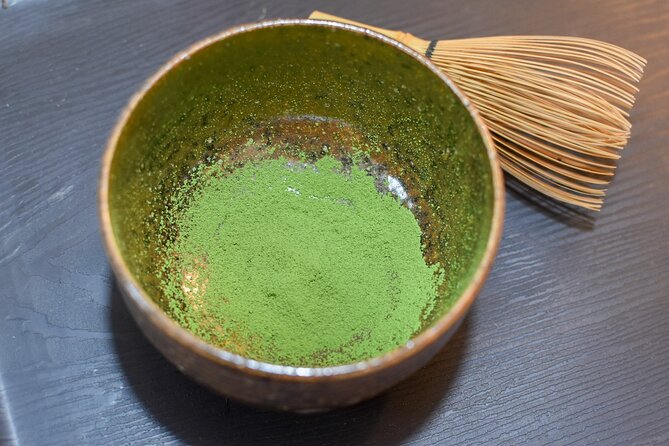
The final traditional portion is the matcha-making experience. You prepare ousucha, the thinner style of matcha, with a bamboo whisk.
This is where the earlier tasting helps. You have already seen that tea can be prepared in different ways, so whisking matcha feels like part of a larger lesson rather than a stand-alone ritual. The aim is not to perform a perfect ceremony for photographs. It is to learn a method you can repeat at home.
You may find the whisking more physical than expected. The bamboo whisk has to be used actively, and the finished bowl depends on how you handle the powder and water. The class gives you enough guidance to leave with a workable starting point.
Two matcha types are included, and the hosts also serve matcha latte. You can compare traditional whisked matcha with a softer, milk-based drink. That is useful if someone in your group enjoys cafés more than straight tea.
Matcha lattes and hojicha latte
The included drinks go beyond the formal tasting. You can try three kinds of matcha latte and a hojicha latte, giving you several ways to enjoy Japanese tea.
This section makes the experience approachable for mixed groups. A devoted tea drinker may want to compare matcha types, while a less adventurous friend may prefer the roasted flavor of hojicha or the milkiness of a latte.
The latte portion also connects the class to the drinks you see around Tokyo. You learn that matcha is not limited to a ceremonial bowl. At the same time, the class gives you enough context to understand what is lost when matcha is treated only as a sweet café flavor.
Is $57.98 a fair price?
At $57.98 per person, this is a midrange cultural activity rather than a budget tasting. The value depends on how much you want from it.
You receive roughly 90 minutes of instruction, a broad selection of Japanese teas, two matcha types, matcha and hojicha latte samples, homemade sweets, and hands-on whisking practice. You also get direct access to a former tea farmer, which is the part hardest to replace with a café visit or a quick museum display.
The price is easier to justify if you are curious about tea beyond matcha. You taste sencha, kabusecha, gyokuro, deep-steamed sencha, genmaicha, hojicha, Japanese black tea, and matcha styles. If you want only one bowl of matcha and a formal bowing lesson, this may offer more information than you need.
The small group improves the value. With no more than five people, your questions are part of the class rather than an interruption. The activity also has a perfect five-star rating from 31 reviews and 100 percent recommendation, but I would still judge it by your interests: this is an educational tasting, not a luxury tea ceremony.
Who should book this experience?
I would point this class toward several kinds of visitors:
- First-time tea drinkers who want a friendly introduction.
- Matcha fans who want to understand cultivation and processing.
- Couples and small groups looking for a quieter Tokyo activity.
- People who plan to buy tea, matcha, or tea equipment in Japan.
- Anyone who enjoys food and drink experiences with a personal host.
- Families with older children who can focus during a 90-minute class.
It may be less suitable if you dislike green tea, have no interest in tasting several varieties, or want a large-scale cultural performance. The class includes many samples in a short period, so the amount of information may feel dense if you prefer a slow, ceremonial format.
Service animals are allowed, and the location is near public transportation. Confirmation is provided at booking. The activity accepts a maximum of five people, so check availability early if your group wants to attend together.
The cancellation detail to keep in mind
You can cancel for a full refund up to 24 hours before the local start time. Cancellations or changes made less than 24 hours before the experience are not refunded or accepted.
That policy is standard enough, but it matters in Tokyo, where weather, jet lag, and changing plans can disrupt a packed schedule. Book this for a day when you can reach Taito City on time and stay for the full class.
Should you book the matcha experience?
Book it if you want to understand why Japanese tea tastes different from one cup to the next. The former tea-farming background, very small group, homemade sweets, tea-leaf tasting, and hands-on matcha whisking give the class more substance than a simple café visit.
I would especially recommend it if you are unsure whether you like matcha. You will taste roasted, shaded, steamed, black, rice-blended, and latte-style teas, so you get a fair chance to find a style that suits you.
Skip it if your main goal is a brief photo opportunity or a grand formal ceremony. For everyone else, $57.98 buys a compact, personal lesson that can change how you choose and prepare Japanese tea long after you leave Tokyo.
FAQ
How long does the matcha experience last?
The experience lasts approximately 1 hour and 30 minutes.
How many people can join the class?
The activity has a maximum of five participants.
Where does the experience begin and end?
It begins at matcha tripJapan, 111-0042 Tokyo, Taito City, Kotobuki, 3-chōme 19, Henn Na Hotel, second floor, at Sports Bar Leaf. It ends back at the same meeting point.
Which teas are included?
The tasting includes sencha, kabusecha, gyokuro, deep-steamed sencha, genmaicha, hojicha, Japanese black tea, matcha, and additional matcha and latte variations.
Are snacks included?
Yes. Homemade sweets are served with the tea, including during the Japanese black tea portion.
Do I get to make matcha myself?
Yes. You make ousucha, or thin matcha, with a bamboo tea whisk and learn a method you can use at home.
What is the cancellation policy?
You can cancel up to 24 hours before the local start time for a full refund. Cancellations or changes made less than 24 hours before the start time are not accepted or refunded.
More Tea Tastings in Tokyo
- Twinings 2-Hour Tea Tasting Masterclass in London
★ 5.0 · 105 reviews - Tea Tasting and Pairing Concept Workshop
★ 5.0 · 57 reviews - Munnar: Tea trail, Tea Factory, and Tea Tasting Tour
★ 4.9 · 47 reviews - Biking Real Shanghai& Tea Tasting Experience
★ 4.5 · 45 reviews
Newly steeped around Tokyo
- Yokohama : Tea Ceremony with Sweets and Souvenir★ 5.0 · 5 reviews
- Walking Tour: Yanaka,Nezu& Sendagi: Tea Ceremony & Old Tokyo★ 5.0 · 3 reviews
- Private Mochi・Matcha sweets Making Class Near Shibuya Area★ 5.0 · 22 reviews
- 2 Hours Mochi &Nerikiri Making & Matcha Class in Bunkyo★ 5.0 · 21 reviews
- Private Kimono and tea ceremony at local home near Tokyo Disney★ 5.0 · 6 reviews
- Kimono and Tea Ceremony in Asakusa Private Food Tour With Guide★ 5.0 · 4 reviews
- Giant Sushi Cooking Class: Make a 1.5m Sushi Roll in Tokyo★ 5.0 · 9 reviews
- Tokyo Tea Ceremony Class at a Traditional Tea Room★ 5.0 · 2 reviews
Matcha Experiences, compared.
World Heritage Kyoto & Nara Uji Authentic Matcha Experience
Read our review →
Matcha Making Class in Tokyo with Authentic Japanese Sweets Set
Read our review →
Kyoto: Tea Museum Tickets and Matcha Grinding Experience
Read our review →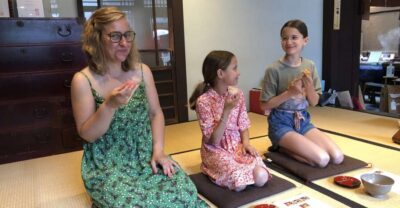
Kyoto: Tea Ceremony Meditation – Make Matcha with Tea Master
Read our review →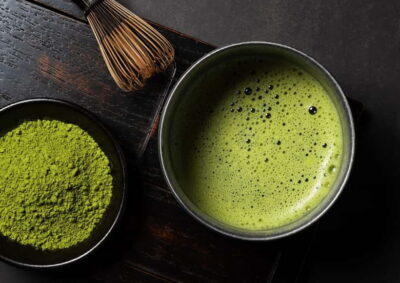
Tokyo: Matcha Making Experience with Mochi Sweets in Asakusa
Read our review →
Kyoto: Kimono Tea Ceremony with Matcha and Sweet
Read our review →
Browse the lists this tea experience appears in