
Review · BEIJING
Beijing Culture Event: Tradition Music, Tea Ceremony, Calligraphy
The most unusual part of this Beijing cultural experience is the way three old arts fit into one quiet session. You sip tea, hear a guqin played by a Beijing Guqin Association master, try a simple melody from Crouching Tiger, Hidden Dragon, then use brush and ink to write a Chinese word or phrase.
I like the small group of no more than 12, which should give you room to ask questions and try each activity without feeling rushed. I also like the price: $15 per person is unusually low for a three-hour session that includes a live performance, hands-on practice, tea, calligraphy, and an English guide. The main point to consider is the location near Huagong Road, which may not be as convenient as a central Beijing attraction.
Key points to know
- A 2,000-year-old musical tradition: Hear the guqin, an instrument long linked with scholars, dignitaries, and formal cultural occasions.
- Hands-on rather than look-and-leave: You can brew tea, play a short guqin passage, and practice brush calligraphy.
- A genuine specialist leads the music: The performer is a master from the Beijing Guqin Association.
- Good value at $15: The session combines several activities that often cost more when booked separately.
- Small and calm: The maximum group size is 12, making this a better fit for quiet cultural learning than a large stage show.
- Plan around the neighborhood: The meeting point is on Huagong Road in Chaoyang District, and the activity returns there.
Why this three-part session works
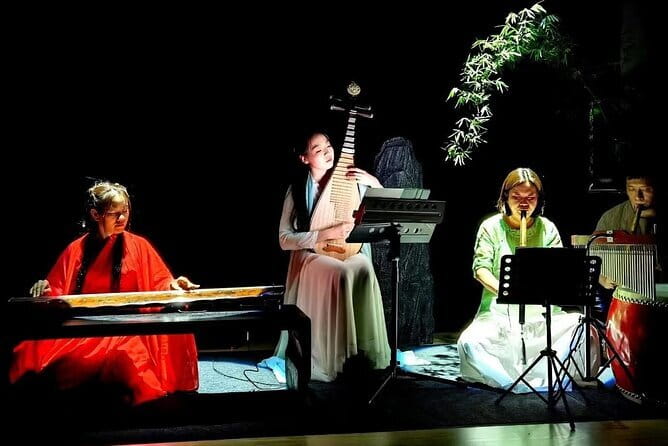
Beijing offers grand sights, crowded streets, and major historic sites. This activity gives you something different: a slower look at culture through sound, taste, movement, and writing.
The three parts are not random add-ons. Tea ceremony, guqin music, and calligraphy have long been connected with refinement, self-control, and learning in Chinese culture. You do not need a background in Chinese history to enjoy them. The guide explains the basic meaning and technique, then lets you take part.
I especially like the balance between watching and doing. The guqin performance gives you a chance to sit back and listen. Tea shows you a formal process. Calligraphy lets you make something with your own hands. That variety helps the three-hour session feel active without becoming noisy or hectic.
The tone also seems suited to people who prefer a calm introduction to culture. You are not being pushed through a long list of sights. Instead, you have time to notice the sound of the strings, the way tea is prepared, and the movement of a brush across paper.
More Tea Ceremonies in China
- Traditional Chinese Tea Ceremony Experience
★ 4.7 · 74 reviews - Beijing Culture: Tea Ceremony, Heritage Instrument & Calligraphy
★ 5.0 · 57 reviews - Chinese Tea ceremony in Beijing Hutong courtyard
★ 4.7 · 26 reviews
Tea ceremony, from etiquette to tasting
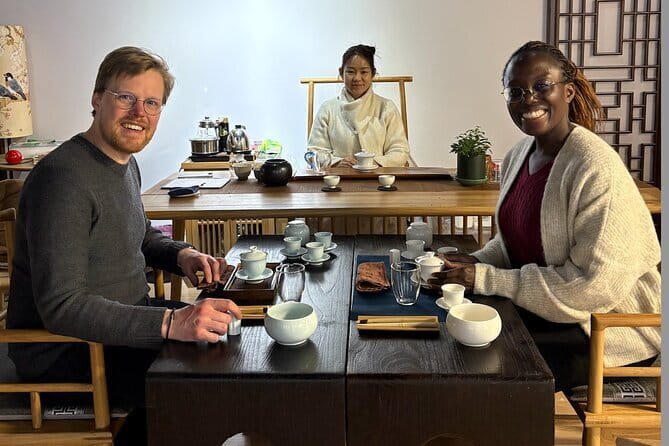
The tea portion opens the session. Rather than simply handing you a cup, the guide explains the ceremony, its etiquette, and the ideas behind it. You get to take part in traditional tea brewing and tasting, so this is more than a demonstration.
That hands-on element matters. Tea can seem like a small part of daily life until you see how much attention goes into preparing and serving it. The ceremony gives you a simple way to understand patience, order, and courtesy in a traditional setting.
You should expect the pace to be measured. That is part of the appeal, but it may not suit someone looking for constant action. The experience is designed around attention and calm, not speed.
Tea also provides an easy starting point for the rest of the session. You can settle in, listen to the English explanation, and get comfortable with the group before trying the instruments or brushwork. If you are shy about participating, this first section offers a gentle introduction.
Coffee and tea are included in the experience details, but the main focus is clearly the traditional tea ceremony. Lunch and dinner are not included, so plan this as a cultural activity rather than a meal.
The guqin, an instrument with a scholar’s history
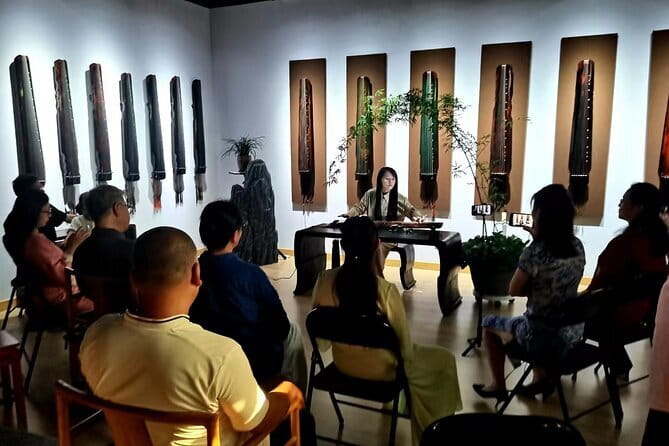
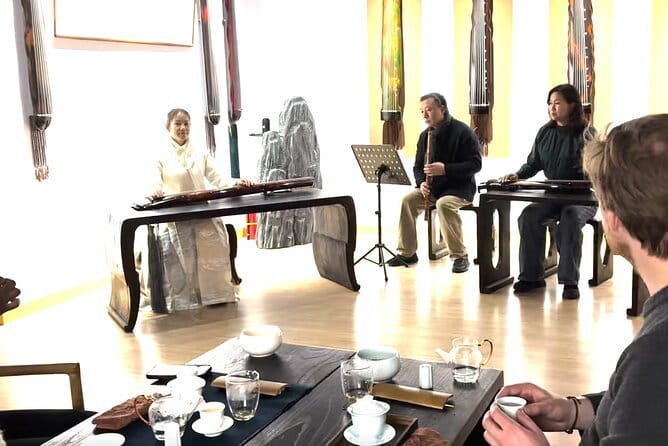
The guqin is the heart of the experience. This seven-stringed Chinese instrument has a history of about 2,000 years and is associated with scholars and high-level cultural settings. It has also been used when receiving foreign officials in formal settings, which helps explain why the experience presents it as an especially prestigious traditional instrument.
The instrument used here is described as being more than 50 years old. Its age gives the demonstration an extra sense of connection with the past, although you should not expect the instrument itself to be 2,000 years old.
The performance comes from a master of the Beijing Guqin Association. That is important because the guqin is not a familiar instrument for most international visitors. Its sound is quieter and more restrained than the bright, forceful tone of many concert instruments. The music can feel mellow, spare, and reflective.
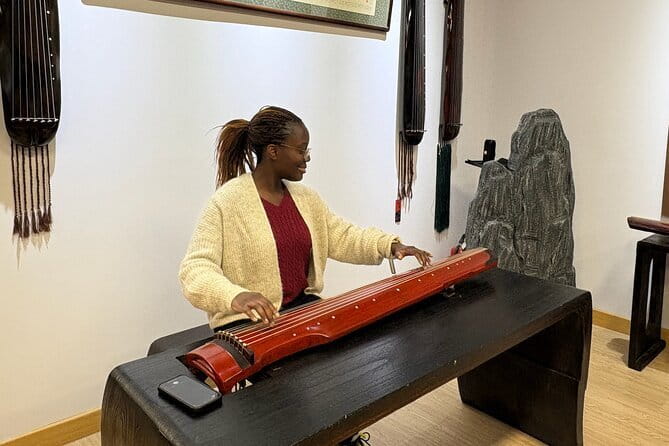
You also get to try the guqin yourself. No previous experience is required, and the lesson includes a simple tune from Crouching Tiger, Hidden Dragon. This is a smart choice for a short workshop because many people recognize the film and can connect the modern melody with an old Chinese instrument.
Do not expect to leave as a guqin player. The value is in feeling how the instrument works, learning a small musical phrase, and understanding that traditional Chinese music has its own system and logic. One particularly interesting point covered in the session is that ancient music scores can be written with Chinese characters rather than the Western notes you may know.
For musicians, this section may be the highlight. The explanation of the old notation system adds an intellectual layer to the performance. You are not just listening to an unfamiliar sound. You are getting a glimpse of how music was recorded and passed on.
Calligraphy with a personal result
The final main activity is Chinese calligraphy. The guide introduces basic brush techniques and gives you a chance to write a meaningful word or phrase.
This is one of the most useful parts for families and couples because everyone can make a personal piece. You are not only watching an expert form perfect characters. You are holding the brush, controlling the ink, and learning how pressure and movement change the mark on the paper.
Calligraphy can look simple from a distance. The difficulty becomes clear when you try it. A small change in the angle of the brush can alter the character, and a confident stroke often looks better than a hesitant one. The workshop gives you a more direct appreciation of the discipline behind Chinese writing.
I would choose your word or phrase before arriving if you already have something meaningful in mind. The supplied details do not say how much translation help is available, so keep your choice simple and ask the English guide for help if needed.
The activity can also work well as a date or family outing. Writing a character for someone else creates a more personal souvenir than buying another shop item. Just remember that the focus is learning the basic technique, not producing museum-quality calligraphy.
More Tea and Calligraphy Workshops in Beijing:
- Beijing Hands-On Culture Tour: Tea, Instrument, Calligraphy
★ 5.0 · 6 reviews - Beijing:Learn Calligraphy & Enjoy Kung Fu Tea Ceremony
★ 5.0 · 2 reviews - Osaka: Tea Ceremony, Calligraphy, and Kimono Experience
★ 4.9 · 130 reviews - Experience all of Japanese culture and Japanese food experience classes “origami, udon, Japanese food, green tea, calligraphy” in 4 hours
★ 5.0 · 105 reviews
A quiet atmosphere instead of a big performance
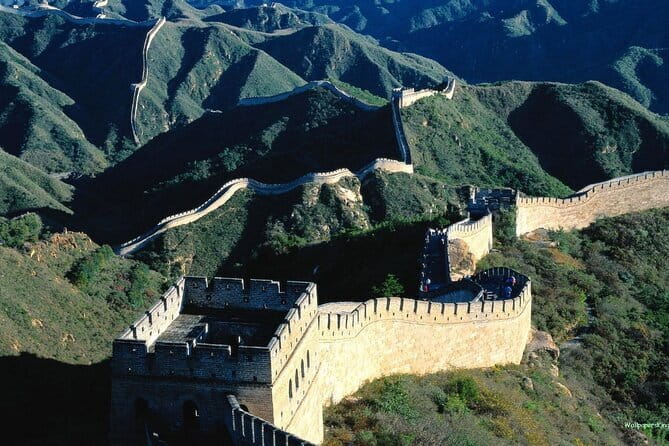
The strongest reason to choose this experience is the atmosphere. The design is intimate, and the maximum group size is 12. That makes it easier to hear the guide, follow the demonstrations, and take your turn without being lost in a crowd.
The setting is intended to feel peaceful. The tea, the low sound of the guqin, and the focused brushwork all support that mood. If you want a lively evening show with costumes, a large audience, and fast entertainment, this is not that. If you want a calm cultural break, it should fit better.
The session has also been praised for making people feel at ease, including visitors who do not enjoy being put on the spot. That is useful information if you are an introvert or are nervous about handling an unfamiliar instrument. You participate, but the format does not appear to depend on public performance.
A small group also helps if you are booking for business contacts. The tea and music provide a relaxed setting, while calligraphy gives everyone something practical to do. It offers a more memorable cultural meeting than sitting over coffee, though you should keep in mind that this is still a public group activity rather than a private client event.
What the $15 price really buys you

At $15 per person, this is one of the better-value cultural activities in Beijing if the session runs as described. You receive an English guide, tea ceremony participation, traditional music, use of the old guqin, a music lesson, and calligraphy practice.
The price is especially attractive because the activity brings together three different traditions. Booking separate private lessons for tea, guqin, and calligraphy would usually take more time and money. Here, you get a broad introduction in about three hours.
There are limits to that value. Three hours is enough for an introduction, not mastery. The guqin lesson will be short, the calligraphy will cover basic brushwork, and the tea ceremony will give you an overview rather than a complete study of Chinese tea culture.
Personal purchases are not included, and neither are lunch or dinner. You should also avoid assuming that the $15 covers transportation to Huagong Road. The meeting point is listed at Hua Gong Lu in Chaoyang District, and the activity ends at that same point.
The low price makes this a good choice for a first cultural activity, especially if you are testing what interests you. It is less suited to someone seeking a private master class or a long specialist lecture.
Getting to Huagong Road and planning your time
The starting point is Huagong Road, written as Hua Gong Lu, in Beijing’s Chaoyang District. It is near public transportation, but the details provided do not specify a station, travel time, or the best route from your hotel.
Give yourself extra time to reach the meeting point. Beijing is large, and a location that looks close on a map can take longer than expected by public transport or taxi. Check the exact meeting instructions after booking and keep the mobile ticket available.
The activity lasts about two to three hours, with the itinerary describing a three-hour session. I would keep the rest of your schedule flexible, especially if this is your first visit to the neighborhood.
Confirmation is sent within 48 hours, subject to availability. The activity is often booked about 44 days ahead, so reserve early if you have fixed Beijing dates. The maximum group size is 12, but the minimum number required is not stated. If the operator cancels because that minimum is not met, you are offered another date or experience, or a full refund.
You can cancel for a full refund up to 24 hours before the start time. Inside that 24-hour window, the payment is not refunded and changes are not accepted. The cut-off uses local Beijing time.
Who will enjoy this Beijing cultural activity
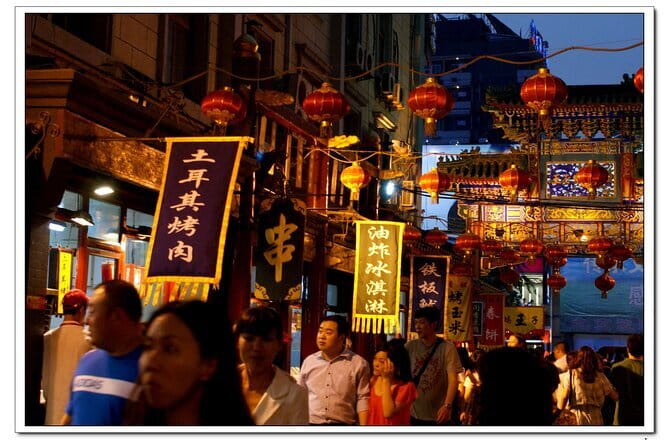
I would recommend this session to first-time visitors who want more than photographs of famous landmarks. It gives you cultural context through direct contact with objects and practices rather than through a long museum label.
It is also a strong choice for:
- Couples looking for a quiet and unusual date activity
- Families who want a shared project and a small keepsake
- Musicians curious about the guqin and Chinese music notation
- Business visitors seeking a cultural activity for clients
- Solo visitors who prefer a calm, guided setting
- People on a budget who want several traditions in one booking
Most people can take part, and service animals are allowed. The supplied information does not give detailed accessibility measurements for the venue, so contact the provider if you need specific information about seating, stairs, or room access.
Children may enjoy the calligraphy and the chance to touch a real instrument, but the calm pace may suit older children better than very young ones. Since no age range is provided, ask the operator before booking for a child.
Who may want a different experience

This is not the best pick if you want a full day of sightseeing, a large cultural show, or a meal-based activity. It also may not satisfy you if you already have serious training in tea, guqin, or calligraphy and want advanced instruction.
The central drawback is location. Huagong Road is in Chaoyang District rather than beside one of Beijing’s best-known central sights. You will need to account for the journey, and the activity itself does not include hotel pickup.
The other consideration is that the session combines several subjects. That is its strength, but also its limit. You get a thoughtful introduction to three arts, not a deep course in one. For most holiday visitors, that is a fair trade at this price.
Should you book the tea, guqin, and calligraphy session?
I would book it if you want a low-cost, small-group way to connect with Chinese culture through participation. The combination of a Beijing Guqin Association master, a traditional tea ceremony, a simple film melody, and hands-on calligraphy gives the session more substance than a standard cultural demonstration.
Book it with realistic expectations. You are paying for an introduction, not private tuition. Allow time to reach Huagong Road, confirm the meeting details within 48 hours, and keep your schedule open for roughly three hours.
For $15, this is an easy recommendation for couples, families, musicians, and curious first-time visitors. If your priority is a famous sight, a large performance, or a central location, spend your time elsewhere. If you want a peaceful activity that lets you listen, taste, play, and write, this is a smart addition to a Beijing itinerary.
FAQ
How much does the Beijing culture experience cost?
The price is $15 per person.
How long does the experience last?
It lasts about two to three hours, with the planned itinerary describing a three-hour session.
Where does the activity begin?
It begins at Huagong Road, also written as Hua Gong Lu, in Chaoyang District, Beijing.
Where does the activity end?
The activity ends back at the meeting point on Huagong Road.
What activities are included?
The session includes a tea ceremony and tasting, a traditional guqin performance, a chance to try playing the guqin, and a Chinese calligraphy workshop.
Who performs the guqin music?
The performer is a master from the Beijing Guqin Association.
Do I need previous guqin or calligraphy experience?
No previous experience is required for the guqin activity. The calligraphy portion teaches basic brush techniques.
Is an English guide included?
Yes, an English guide is included.
How many people can join the activity?
The maximum group size is 12 people.
Can I cancel for a full refund?
Yes. You can cancel at least 24 hours before the local start time for a full refund. Cancellations or changes made within 24 hours are not accepted for a refund.
More Tea Ceremonies in Beijing
- Beijing: Temple Of Heaven+Tai Chi Class+Tea Ceremony
★ 5.0 · 8 reviews - Traditional Chinese Tea Ceremony Experience
★ 5.0 · 7 reviews - Beijing Tai Chi and Tea Ceremony Experience
★ 5.0 · 4 reviews - Beijing: Chinese Culture Tea Ceremony Reservation Service
★ 4.8 · 4 reviews
Newly steeped around Beijing
- Private Tour to the Temple of Heaven and Tea tasting at the Maliandao Tea city★ 5.0 · 3 reviews
- Temple of Heaven Private Tour and Tea Tasting at Maliandao Tea Street★ 5.0 · 2 reviews
- Private Beijing Spiritual Tour with Lunch and Tea Ceremony★ 5.0 · 2 reviews
- Beijing Tai Chi and Tea Ceremony Experience★ 5.0 · 4 reviews
- Traditional Chinese Tea Ceremony Experience★ 5.0 · 7 reviews
- 3-Hour Private Hutong Walking Tour with Drum Show at Drum Tower and Tea Tasting★ 5.0 · 3 reviews
- 3-hour Morning/Afternoon Tea Tasting on Maliandao Street & Dimsum★ 5.0 · 7 reviews
- Beijing Hands-On Culture Tour: Tea, Instrument, Calligraphy★ 5.0 · 6 reviews
Tea & Calligraphy Workshops, compared.
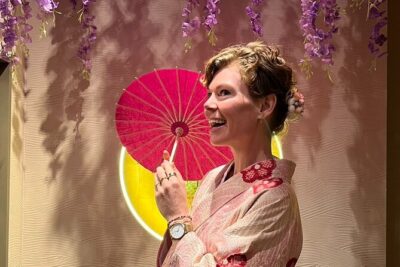
Osaka: Tea Ceremony, Calligraphy, and Kimono Experience
Read our review →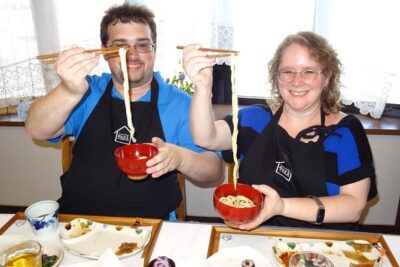
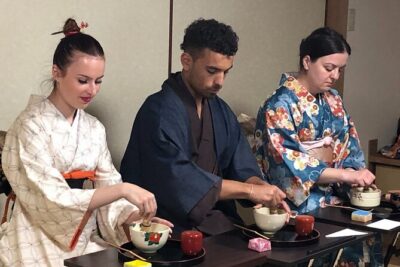
An Amazing set of Cultural experience: Kimono, Tea Ceremony and Calligraphy
Read our review →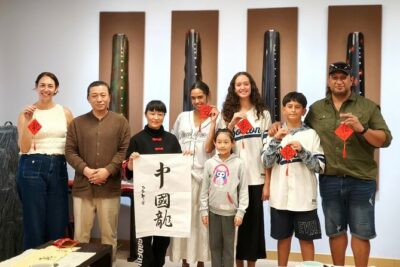
Beijing Culture: Tea Ceremony, Heritage Instrument & Calligraphy
Read our review →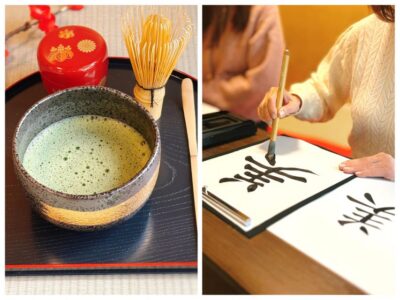
Osaka: Private Tea Ceremony and Calligraphy Experience
Read our review →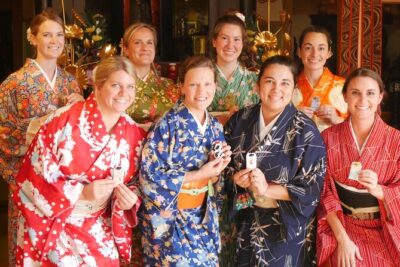
Cultural Activities :Kimono, tea ceremony, Calligraphy and Amulet
Read our review →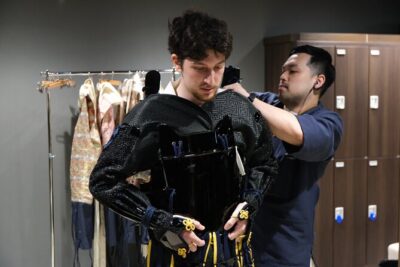
Samurai dress-up and shows, plus Tea Ceremony & Calligraphy
Read our review →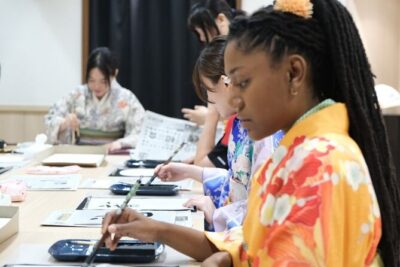
Premium Kimono Dressing, Tea Ceremony, Calligraphy, Samurai show
Read our review →Browse the lists this tea experience appears in